The Seventh Moth

Here's a bit about Ingmar Bergman and Virginia Woolf. Thanks Christina Carlson!


Film and literature are blessed with different methods of attacking the reader’s unconscious. Be it through film’s ability to represent in purely visual terms the sensation of dreaming, birth and death, or through literature’s ability to directly address in the strictest and most poetic language imaginable those same phenomena; words are the most direct line to the brain when engrossed in a novel you read the words: “"I'll give it you!" he cried, and flung himself vigorously, violently down on to Mrs. Filmer's area railings”. The immediacy of one vs. the other is not in question, but what is most remarkable is that death was of central importance in both the twentieth century novel and what could be thought of as the twentieth century art film, personified in this case by two of each form’s most talented poets, Ingmar Bergman & Virginia Woolf. Because while both told very different stories, the styles they chose to tell them in were incredibly similar. Death lurks behind the most-loved works of both which brings out in their works a fascination with life’s little mysteries. Woolf let her pen wander from the conversation of her two main characters to the comings-and-goings of those they shared a park with, be they perfect strangers or even insects. Bergman’s highly disciplined writing and incredibly focused direction stayed fixed on the psyche of only a few characters but his fleeting departures from their narrative help illustrate the fullness of life. In Woolf’s Mrs. Dalloway and Bergman’s Wild Strawberries, a single day is used to show the intricacies of life, the presence of death and while it doesn’t immediately seem so how beautiful life can be.

There may be better examples of a confrontation with death in both artists’ canon. There’s a reason, after all, that both To The Lighthouse & The Seventh Seal are thought of as representative of their respective authors’ body of work and I would venture that it’s that their not inconsiderable talent is put in service of a sprawling tale with a disparate cast of characters and a very direct attitude toward death. In each work there is a moment of clarity, a passage that lets the audience know exactly what’s on the mind of the creator. In each case it’s that death unites us all. In The Seventh Seal death is a man who follows the characters throughout the movie. In the final scene day breaks on the last surviving characters, the actor and his wife and he sees that Death has finally taken his companions for good. He looks on the ridge above them, sees his deceased friends dancing in a line and says to his bride:
I see them, Mia! I see them! Over there against the stormy sky. They are all there.…And the strict master Death bids them dance. He wants them to hold hands and to tread the dance in a long line. At the head goes the strict master with the scythe and hourglass. But the Fool brings up the rear with his lute. They move away from the dawn in a solemn dance away towards the dark lands while the rain cleanses their cheeks of the salt from their bitter tears.

This monologue and the phantasmagorical shot that accompanies it of the dance of the dead are unforgettable, but they don’t erase the sense that we were cheated of the characters that death has claimed. We were so certain that the cunning Antonius Block and his squire have made safe all those who have fallen under their protection during their journey. In To The Lighthouse, death similarly leaps from the woodworks in one of Woolf’s most remarkably unpoetic and memorable passages from any of her novels, the section entitled Time Passes. Woolf’s electric prose is rarely as captivating as it is here, and yet she undercuts her gift for crafting sentences by simply announcing death’s presence as if he had walked into the room as he does in The Seventh Seal:
So loveliness reigned and stillness, and together made the shape of loveliness itself, a form from which life had parted; solitary like a pool at evening, far distant, seen from a train window, vanishing so quickly that the pool, pale in the evening, is scarcely robbed of its solitude, though once seen. Loveliness and stillness clasped hands in the bedroom, and among the shrouded jugs and sheeted chairs even the prying of the wind, and the soft nose of the clammy sea airs, rubbing, snuffling, iterating, and reiterating their questions—"Will you fade? Will you perish?"—scarcely disturbed the peace, the indifference, the air of pure integrity, as if the question they asked scarcely needed that they should answer: we remain. (106)

As haunting and gorgeous as this is, we find this: “A shell exploded. Twenty or thirty young men were blown up in France, among them Andrew Ramsay, whose death, mercifully, was instantaneous (110).” It’s so shockingly forward it comes as a disappointment. Here was a character we’d gotten to know so well in the first part of the novel, dispatched with no romance or backwards looking or even a decent sentence; the thing’s in parenthesis for crying out loud. And they pop up all over Time Passes. To quote the film critic Mike D’Angelo’s reaction to an unprovoked murder in Badlands “…you know what, it seems disrespectful. That’s what it is.” Or in the parlance of college kids, it’s lame. It’s like death walking out of nowhere to claim the victims we thought had outsmarted him in Seal. And for that reason, both novels are both more honest than their contemporaries who grant meaning and glory to the deaths of their heroes. Woolf and Bergman have no qualms about death, they just let it happen. But what they did have was a chance to examine all the little things that do give a life, and thus a death, meaning. And they did so no more beautifully and lovingly than in Wild Strawberries & Mrs. Dalloway.
Both texts are about memory, death and about trying like hell to appreciate what you have even if circumstance tells you you got dealt a bad hand. Mrs. Dalloway’s twin narratives follow socialite and parliament member Clarissa Dalloway as she throws a party for her associates at which her two best friends who she hasn’t seen in a number of years show up. Meanwhile the shell-shocked veteran Septimus Smith tries to get through a day marked by visits to his doctor, flashbacks to a fallen friend and pervasive thoughts of the grave. Wild Strawberries follows Dr. Isak Borg on a car trip with his daughter-in-law Marianne to receive an honorary degree. The day starts with a dream foretelling his own death, is specked with shocking revelations about his son from Marianne, flashbacks and daydreams that seem to tell him he’s wasted his life or at the very least, he’s had a better one stolen from him by circumstance. But to say that Mrs. Dalloway is about a party and a veteran and Wild Strawberries is about a road trip would be to sell short the joie de vivre with which Bergman and Woolf pass the time before the conclusion.

As Wild Strawberries opens, the sweater clad Borg sits writing in his diary in the middle of an ornate and dusty study. He is quite alone and the ominous chiming of a clock before the action can only signal one thing: his time is short. “In our relations with other people we mainly discuss and evaluate their character and behavior. That is why I have withdrawn from nearly all so-called relations. This has made my old age rather lonely.” Mrs. Dalloway, Woolf’s heroine, has also been shut off, but it wasn’t by her choosing. “She had the Oddest sense of being herself invisible; unseen; unknown; there being no more marrying, no more having of children now, but only this astonishing and rather solemn progress with the rest of them… this being Mrs. Dalloway; not even Clarissa anymore; this being Mrs. Richard Dalloway (8).” Clarissa’s life has been reduced to social functions, just as Isak’s has been one of isolation. One can picture their “narrow” beds being all too similar (22). Their routines are fixed, only changed by “larks” like buying flowers on their own for a change or driving themselves to the ceremony instead of letting the maid drive (1). It is only real changes, the ones they can’t predict that bring about any kind of real shifts in their perception, fleeting though those might be.

Isak is shaken awake the morning he is to receive his degree by a “weird” dream ("weird sisters" weird) where he is confronted with a lot of bizarre imagery, all of it spelling his death, the chiming clock chief among them. When he wakes, he has decided that today is going to be different. When his daughter-in-law decides to drive with him, he is sidetracked in his reevaluation when she reminds him that his son, her husband, hates him because of the ways he’s become set in. “You’re a selfish old man, Uncle Isak.” He even misremembers the invitation he extended to Marianne a month ago when she first came to stay with him away from her husband. Her relationship with her husband, the brute Evald, is not unlike Clarissa and Richard’s, in that neither seems to understand the other, but Isak’s telling Marianne she ought to see a shrink smacks of Rezia’s cluelessness about Septimus’ condition. She and every doctor he meets thinks he just needs a little more help; he so tires of it that he throws himself out a window. Clarissa’s “dream” that awakens her comes in the form of Septimus’ death announced at her party. Her life, she realizes, is not something she herself evaluates: “Nothing could be slow enough; nothing last too long. No pleasure could equal, she thought, straightening the chairs, pushing in one book on the shelf, this having done with the triumphs of youth, lost herself in the process of living…(132)” She doesn’t think of life because she’s too busy living it. And yet she seems ambivalent at best about whether death is something she herself wants herself. She seems torn for the first time realizing what it might mean. “She somehow felt very like him–the man who killed himself…he made her feel the beauty; made her feel the fun.” It is only with death in her mind that she sees that she must make the most of herself, something both she and Isak Borg had forgotten.

It wasn’t always so, of course, as both texts lovely flashbacks tell us. Clarissa goes back to the party to be with Peter Walsh and Sally Seton, two people whom she’s had striking and powerful relationships with in the past, but who she understands she has to remain separate from. What’s past is past. And what’s past for Clarissa is an all-too-brief love affair with Sally. She remembers being kissed by Sally (“the whole world might turned upside down”) and a time when the thought of Sally walking down a hallway naked was the most exciting thing in the world. “Sally's power was amazing, her gift, her personality (24).” And yet when she meets Sally again, time has changed her. A mother of five, no longer the spirit she once was. Clarissa doesn’t come out and say it, but she understands that those things are in the past. She must live beautifully and that’s all there is for it. Borg’s flashback is given to him in the same form as his dream of death.

In a profoundly beautiful scene, Isak revisits his childhood home and as an old man relives a time from his youth in a dream. He sees the girl he once loved, pursued in secret by his older brother Sigfrid. Embarrassed by the whole family for her secret tryst with Sigfrid she runs off and through tears confesses to her sister and an invisible Isak: “Isak is so fine and good, so moral and sensitive...And he talks about sin. He’s on such a terribly high level and I feel so worthless...And Sigfrid is so bold and exciting.” Isak realizes that he has tried and failed to be the man he wanted to be. “I was overwhelmed by feelings of emptiness and sadness…” But seeing this makes him put on a much more positive attitude that extends to flirting with a passing girl, Sara and even offering a lift to her and her friends to the town where he’s receiving his degree. They also pick up a bickering couple who nearly crash the car in a heated argument; a potent reminder for both Marianne and Isak that life is simply too short to be mean-spirited or do things you regret (apologies for the semi-colon).

Clarissa realizes that her life is among party guests and that she has an all-too crucial role to play in the lives of those she hosts. Her art is being herself and even though she sees the things she’s left behind in her journey to her current self, she also sees that life is simply too wonderful to let slip by and fill with regrets and worries. Even those she leaves in her wake, Peter and Sally, see that she is right where she belongs. “What is this terror? What is this ecstasy? He thought to himself. What is it that fills me with extraordinary excitement? It is Clarissa, he said. For there she was (139).” Just as Clarissa is captivated by life anew after Septimus’ death, Isak may not have long left and precious few people to share his life with but he’s going to live what little there is to the fullest. He makes up with his maid though she rebukes his attempts at being overly familiar, just as Clarissa does with Peter and Sally, though just as he goes to sleep, Sara and her friends sing a song for him beneath his windowsill. As they part, their triangular relation reminding him of his own with Sigfrid and his one-time love. Before going Sara leans in close and says to him “It’s you I really love, you know. Today, tomorrow, always.” “I’ll remember.” He says, a look of resignation on his face. He will never hear from them again and he knows it, but he’s happy to have touched one more life before it was time. He is himself, no more, no less, and like Clarissa Dalloway, the world would be far less rich without him, now that they know what they are meant to do.

Woolf, Virginia. To The Lighthouse. Feed. Web.
Woolf, Virginia. Mrs. Dalloway. Feed. Web.

100 Albums Beyond The Canon

Seeing my friend and colleague Tucker Johnson take on the arrogant listmaking over at Rolling Stone has come to make me see that populism and crowd-pleasing have ruled the "last word" in criticism for far too long. Who gives a shit how many staff writers like The Beatles? Is that any excuse for shutting down your exploration of what must be nearly a billion albums made in the last hundred years at one band and its followers. I'd rather listen to Wilco and Elliott Smith adapting their love of those records than the genuine article anyday. So, taking a cue from Cinematical, I thought I'd share 100 albums that no major publication would ever champion despite their largely being better than what the mainstream accepts as a classic. You embrace context, nostalgia and personal taste; Yes, Exile on Main Street was important, but it's fucking boring and sounds like every other post-68 stones album. And worse still you put like two dozen greatest hits and live records which can't be judged together. An album is by a band in a studio, not assembled by money hungry suits. A live performance is also too different to be judged alongside a studio recording. You haven't been right in decades and you put reality tv stars on your magazine covers. So here are 100 fantastic albums Rolling Stone would never tell you to listen to, that I love so much more than anything in their top 20 best albums of all time. And no I'm not going to rank them. Limit one per band.

1. Echo & The Bunnymen - Porcupine
2. John Cale - Paris 1919
3. Living Sisters - Love To Live
4. Regina Spektor - Soviet Kitsch
5. Kings of Convenience - Quiet Is The New Loud
6. Kitchens of Distinction - Strange Free World
7. Stars - In Our Bedroom After The War
8. The Decemberists - Picaresque
9. Chavez - Ride The Fader
10. The Futureheads - News & Tributes
11. Grizzly Bear - Yellow House
12. Broken Social Scene - Broken Social Scene
13. Talking Heads - Speaking In Tongues
14. Wolf Parade - Apologies To The Queen Mary
15. Apostle of Hustle - National Anthem of Nowhere
16. Holy Fuck - Latin
17. Belle & Sebastian - The Boy With The Arab Strap
18. Killing Joke - Killing Joke
19. Do Make Say Think - & Yet & Yet
20. A Place To Bury Strangers - Exploding Head
21. Julie Doiron - I Can Wonder What You Did With Your Day
22. Sonic Youth - The Eternal
23. Astor Piazzolla - Lo Que Vendra
24. Supergrass - Life on Other Planets
25. Doves - Some Cities
26. Gordon Bok - Clear Away In The Morning
27. Wilco - Kicking Television
28. Yo La Tengo - Painful
29. Air - Talkie Walkie
30. John Frusciante & Josh Klinghoffer - A Sphere In The Heart of Silence
31. The A Frames - Black Forest
32. Witchcraft - Witchcraft
33. Tom Waits - Swordfishtrombones
34. Bauhaus - The Sky's Gone Out
35. Amy Millan - Masters of the Burial
36. Godspeed You! Black Emperor - Lift Your Skinny Fists Like Antennas to Heaven
37. World Leader Pretend - Punches
38. The Chills - Kaleidoscope World
39. Loose Fur - Born Again In The USA
40. Roy Orbison - Crying
41. Dungen - Tio Bitar
42. Iron & Wine - The Shepherd's Dog
43. Red Lorry Yellow Lorry - Paint Your Wagon
44. Rufus Wainwright - Want One/Want Two
45. Emitt Rhodes - The American Dream
46. Manic Street Preachers - The Holy Bible
47. Feu Thérèse - Feu Thérèse
48. Animal Collective - Strawberry Jam
49. Sondre Lerche - Phantom Punch
50. Sunset Rubdown - Random Spirit Lover
51. The Helio Sequence - Keep Your Eyes Ahead
52. Portishead - Third
53. British Sea Power - Man of Aran
54. Bundy K. Brown - Directions in Music
55. Handsome Furs - Face Control
56. The Horrors - Primary Colours
57. Patrick Watson - Wooden Arms
58. Sparta - Porcelain
59. Ali Farka Toure - Niafunke
60. The Ronettes - Presenting The Fabulous Ronettes
61. Sparklehorse - It's A Wonderful Life
62. Grandaddy - Sumday
63. The Dipers - How To Plan Succesfful Parties
64. Death From Above 1979 - You're A Woman I'm A Machine
65. Madvillain - Madvillainy
66. Fela Kuti - Zombie
67. The Von Bondies - Pawn Shoppe Heart
68. The Walkmen - Bows & Arrows
69. Bloc Party - Silent Alarm
70. Tom Vek - We Have Sound
71. Sam Roberts - Love At The End Of The World
72. J. Tillman - Vacilando Territory Blues
73. Julie Fader - Outside In
74. Kris Kristofferson - Jesus Was A Capricorn
75. The Besnard Lakes - The Besnard Lakes Are The Roaring Night
76. Nancy Sinatra - How Does That Grab You?
77. Amon Düül II - Yeti
78. Howlin Wolf - Moaning In The Moonlight
79. Nico - Desert Shore
80. David Bowie - Lodger
81. Wire - 154
82. Richard Thompson - You? Me? Us.
83. The Chameleons - What Does Anything Mean, Basically?
84. Cocteau Twins - Head Over Heels
85. Ride - Nowhere
86. French Kicks - Two Thousand
87. Chapterhouse - Whirlpool
88. Eric's Trip - Forever Again
89. Chad VanGaalen - Skelliconnection
90. Final Fantasy - Heartland
91. Nick Cave & The Bad Seeds - The First Born Dead
92. Fly Pan Am - Sédatif En Fréquences Et Sillons
93. Fairport Convention - Liege & Lief
94. The Feelies - The Good Earth
95. The Cramps - Off The Bone
96. The Mars Volta - De-Loused In The Comatorium
97. Basia Bulat - Heart of My Own
98. Women - Public Strain
99. Rolling Stones - Their Satanic Majesties Request
100. Orchestra Baobab - Specialists In All Styles

Best Films of 2011, so far

What's the name of that disorder where you see someone doing something and immediately do it. That's what happened here. I've been noticing critics already beginning their year-end listology by telling everyone what their favourite films of the year are...so far. It's only July, after all. So I thought I'd do the same with my film-going friends and contributors here. So, without further ado, here's our late-midyear round-up.

Dizzy:

Beginners
Super 8
Water for Elephants
Cowboys and Aliens
Harry Potter & Deathly Hallows, part 2


Mr. Danvers:

Certified Copy
13 Assassins
The Trip
Midnight In Paris

Nick:

Odcházení
Black Death
Super 8


Laura Jorgensen:

Bibliotheque Pascal
Kosmos

Tucker Johnson:

13 Assassins
I think I'm a lot more a fan of Takashi Miike's technical skill and personal demeanor than I am of his films. Audition and Ichi the Killer are a little too...juicy for my taste and Sukiyaki Western Django is fun but its best feature is creating Bloody Benton who only gets a little bit of screen time. But luckily 2011 allowed the world to get a glimpse of Miike's newest obsession. Samurai films. Good ones. 13 Assassins is one of those flicks that I actually take pride in recommending to people. I treat it like I made it myself (and openly wish I did). This movie does everything correctly. The serious scenes are as sharp as the swords that are fated to appear later on. The over the top villain is built up on some truly horrifying pedestals which allows the film's audience to feel as much blood lust as the villain himself. The action is as good as any film can boast and even though there are 13 main characters to remember and care about, the film is executed in such a way that you'll love then all and truly feel for them in their moments of triumph and torment alike. This film is simply a triumph.

Submarine
Wes Anderson's visual style had a baby with Robert Downey Jr's frenetic speech pattern. The result is one of the coolest flicks to hop the pond. Driven by some of the best narration in film, the story of an English teen's first crush is so funny you have to treat it like your best friend. But with ups come downs. Not in quality though. The downs come in the form of the main character's parents imminent divorce but even in a film that features heavy humor, the divorce is treated with true gravity and if you've ever experienced such a thing, you'll know that Richard Ayoade, the director must have too. He captures the mood perfectly and even though you come out of the theater quoting line after line, what really sticks is how well they treat the more serious and tender moments.

Super 8
If America had to be famous for a certain kind of film, Super 8 is the prime example for what I'd vote for. Its action packed, has kids, pets, monsters, and you don't really have to think to enjoy it. But even though this one is easy on the cerebrum, JJ Abrams definitely busted ass creating a film that nails being a kid just as well as it nails being an amateur filmmaker. The child acting is great, the special effects are explosive to use a pun, and the lens flares are rampant. I instantly fell in love with JJ's amazingly well written characters and his fast paced but never rushed story telling. Its an Amblin Entertainment Ode but I think its just as good if not better as anything that house ever put out.

Tree of Life
Long before it was polarizing audiences at Cannes, I really wanted to see this one. Terrence Malick is famous for creating overly thought out films about everything from murder and war to love and farming. Based on subject matter alone Tree of Life pales in comparison to the others. Its just about a family run by a strong willed, angry and jealous man. But because Malick disguised this pretty normal story in a near 3 hour film that also features the dawn of civilization portrayed in beautiful imagery and whispered narration audiences became outraged for some reason. We aren't talking about Un Chien Andalou or Meshes of the Afternoon here. All I know is that if I trapped these same people in a theater with a dvd of Stan Brakhage material, they'd be clamouring for Malick's “impenetrable” film. The whole reason this movie exists for me however because of Emmanuel Lubezki's cinematography. With his camera work and Malick's unparalleled ability to capture the most pure and life like moments, this film stops being about the story its trying to tell and instead becomes a kind of visual poem. An entity that taunts you into relishing its craft rather than the message its trying to sell you. It's the most beautiful film I've ever seen. Period.

Tournee (On Tour)
Mathieu Amalric plays actor/director in this documentary style film about a burlesque tour of France. At first fairly straight forward, it soon steps away from the traditional narrative in the way that only European films can do. This isn't a problem but I figured I'd mention it. All of the performers in the film are actually who they say they are and their acting is so naturalistic that at times you forget its a narrative film. The entire cast hops in and out of English and French like its nothing and to anyone else but Americans, this is pretty much the case with being bilingual. Christophe Beaucarne's cinematography is definitely worth mentioning. There's no unorthodox camera moves or angles. Instead, he makes sure to consistently fill the frame with things to look at. Every frame is splendidly colorful and there is always someone moving, talking, or both. Each frame becomes a strange work of art and its definitely something that should be emulated. And though the film doesn't rely on it, the soundtrack is perfect and definitely helps to empower many scenes and characters. I had to fight with myself to pick this one over Beginners by Mike Mills which is definitely deserving of such a list so I'll give it an honorable mention here.

Films I'm Most Looking Forward To:
Drive
The Girl With The Dragon Tattoo
Muppets


Sean Van Deuren:

5. The Trip
There’s more beneath the surface of The Trip than just hilarious impersonations and witty, improvised banter – it is a Michael Winterbottom film, after all. What really makes the The Trip exciting, just as with all of Winterbottom’s work, is the way it explores the psychology of its characters. Under examination is the semi-fictionalized friendship between Steve Coogan and Rob Brydon, who just so happen to be two of the funniest people alive today. There are no heavy plot mechanics in The Trip, instead the film relies on capturing the subtle status interactions at work within male friendships, and from beginning to end it’s a delight to watch.

4. Meek’s Cutoff
Not only is Meeks Cutoff the best existential/feminist western ever made, it’s . . . well, probably the only existential/feminist western ever made. With only her third feature, Kelly Reichardt has proven she’s one of the most exciting auteurs working today. Meeks Cutoff, her most meticulously made film yet, is slow burning and tense throughout. It is also one of the most riveting, beautiful, and surprisingly political films of the year – with an ending that’s as startling as it is inevitable, and above all wholly satisfying in it’s stark view of life.

3. Certified Copy
Rare is the art film that manages to simultaneously challenge and invite its audience in. Certified Copy – with its impenetrable relationship between a man and a woman who may or may not be married, or may or may not be complete strangers pretending to be married, or may or may not be anywhere in between – is that just kind of gem. What matters is not the specific details of the relationship anyway, but instead the examination of the universal qualities in all intimate relationships. In his first feature made outside of Iran, Abbas Kiarostami has created one of the most playful, puzzling, and emotionally honest films of the year.

2. Silver Bullets/Art History
With the wonderfully self-conscious double feature of Silver Bullets/Art History, Joe Swanberg has pushed his filmmaking to the next level. Both thematically and in terms of craftsmanship, these films display an impressive artistic growth for Swanberg, whose accomplishment may go under the radar of the uninitiated. However, for those familiar with the polarizing director’s work – and the negative reaction from his harsher critics – they prove nothing short of astonishing in their ambition and quest for honesty. In both films, we see Swanberg toying with and openly questioning his own persona as a filmmaker. These are two of the most direct and personal feeling films I’ve ever seen about the process of making movies. Silver Bullets/Art History are dark, uncomfortable films made by a filmmaker dealing with the ramifications of his obsession for capturing moments of honesty.


1. Tree of Life
Despite all the hype and curiosity surrounding Tree of Life, Terrence Malick’s long gestating film stands on its own as the most ambitious and beautiful of the year so far. Though Tree of Life is not nearly as experimental as the film’s naysayers state, what it does accomplish is so stunning because of the delicate balance between how breathtaking and yet completely familiar feeling it is. Malick is the master of threading moments together to recreate the sensation of life, and with Tree of Life he has captured a boy’s childhood. The real power of the film, though, lies in its universal quality. It’s not just one boy’s childhood, it’s everyone’s childhood; and it is awe-inspiring.

Scout (these are excerpts from what will be year-end review):

Submarine
I'm not sure whether to give credit to Joe Dunthorne's novel or Richard Ayoade's script/direction for totally understanding the things that happen inside the head of a troubled, obsessive teenage boy, but I'll go ahead and give it to Ayoade because his visual representation of these events is what hits me the most. Take for instance his decision to give Yasmin Paige's Jordana the Louise Brooks/Anna Karina/Melanie Griffith hair cut. In an instant we know everything about her we need to. She's no good, but she's the one he has to have. Zoe Preece deserves the nicest version of Oliver, but he's too damaged to be that for her. He wants Jordana and more importantly he deserves Jordana because they need to mature together. They'll never age and be better people if they don't get all the horrid out of their system at once. And that's what Submarine attempts to do: get all of the dysfunction out in the open.

13 Assassins
And then Kôji Yakusho smiles. Not only is he happy to hear that a gang has come together to overthrow the shogun, he is fucking thrilled that they've chosen him to be the one to kill him. He's been living idly, fishing, getting by, resigned to the idea that he'll die for nothing. And now this. His twisted happiness is also ours because we then spend the rest of the movie just fucking itching to watch him tear the shogun a new asshole. It's a movie that is approximately half build-up and half delivery, a near perfect treatment of the Jidai-Geki.

Tree of Life
In order to get the 'why' of Tree of Life, you don't need to get Tree of Life. Picture this if you will. It's opening day in New York in a theatre literally underground. It's the only theatre in town playing this movie so far as my search concluded, which means that it was the only screen in the north east playing it (it wouldn't open in Boston for another week and nowhere else had it yet). So naturally the theatre is full, me and my dad had to sit separately as it was too full and the movie was still twenty minutes from opening. Everyone seems to be biting their nails in anticipation. The people in front of me couldn't stop talking, but there was a nervousness to it, like they were afraid to sit in silence in anticipation. I for one couldn't keep my legs from shaking. One of the theatre employees came out at about five minutes to show time basically to remind us that we could buy food at the counter we'd all past on our way down here. Even the staff was nervous. Why? The movie had just won the Palme d'Or for christ's sakes, what did anyone have to be nervous about. I can't speak for everyone else there, but I knew this movie meant something.

NEDs
Just when you have the film pegged and you can play out his nightmare descent into drugs, Jesus steps off the cross. First to dance with him, then stab him. And then there's the knives taped to his hands and the trip to the zoo. It's entirely unpredictable and boy christ is that something I was grateful for. As wily and foolhardy as its protagonist, Peter Mullan's style and incendiary take on English life is reminiscent of the best of Lindsay Anderson in its cool viciousness and black humour. Mullan's voice tears through convention like a tornado through a trailer.

Norwegian Wood
Seeing a boy go from spending what looked like carefree time with his girlfriend to filling a car with exhaust and slowly dying from it and then seeing a spider on the forest floor did it. The spider has nothing to do with what goes on around its inclusion, but having the narrator talk about moving on after his friend's suicide while watching an image so beautiful and disorienting drew me in immediately. A few scenes later Watanabe walks through his college surrounded by a rampaging Vietnam protest, the period detail spot on, but relegated to set dressing, even less pronounced than the graffiti in Children of Men. Trần Anh Hùng had gotten every detail right and his camera was so assured, his gaze so intensely focused, yet he chose not to show off the work that they had done. All the signifiers that the film's 1969 setting had been done justice are hidden away from our view thanks to The swift editing and piercing camera work. Trần rightly sees that there is far more importance in damaged beauty Rinko Kikuchi's face as she meets with Watanabe after long absences. She's heartbreak itself and though the film moves at an unstoppable pace, throwing out one totally flooring image after another, it slows down enough to capture what infatuation and frustration feel like when mixed.

Films I'm Most Looking Forward To:
Ici-Bas
Tomboy
Melancholia

Ten Forgotten Albums of the Decade

I always feel a twinge of regret when I buy an album that's a year or two old and it becomes a favourite. I'm thrilled, obviously, but part of me wishes I had been able to rave about it at the time. Seeing that the Horrors excellent new album will be released today reminds me that I missed their sophomore release and thus missed celebrating it on time. I love doing year-end reviews because I like putting artists on pedestals. I like heaping praise at their feet. I hope that they find these words and know that they have fans eagerly awaiting what they do next, each new direction, each change of instrument. So I feel silly showing up late to the party, but I guess late is better than never. So, here are ten albums that would handily have made my best of 2000-2009 if I'd thought to include them/heard them in time. I try to explain why they didn't make the cut (I know, excuses, excuses) and celebrate what makes them so amazing. Please, please, please go out and buy these albums if you don't have them.

Nick Cave - Abattoir Blues/The Lyre of Orpheus
⁃ This album(s?) has some of Cave's best songs and some of the Bad Seeds greatest arrangements. I've long had a weak spot for Cave's black lyricism, his tales of murder and sin, but his compositions don't always present the greatest accompaniment. There's such a thing as too weird and bleak, after all. But Orpheus delivers compositions that tow the line between creepy and unforgettably catchy. There's "Fable of the Brown Ape" as the standout of the former and the awesome "Spell," "Supernaturally," and "There She Goes My Beautiful World" in the latter. There are love songs, rock songs and fittingly a few murder ballads that spell out the best of Cave's many sides. And then there are the soaring rockers which make this a record I can't help but spin every now and again.

Portishead - Third
⁃ I chalk this, like so many of these, up to just not having heard it yet. Because if I had, it definitely would have made the list. There's a lot to praise here, but to keep it fairly concise, I'll just say that loneliness and paranoia are tough to reproduce using musical instruments and a voice, especially when they seem to be effortlessly producing the best album of their career and aiming more at aloof and mysterious. They achieve all four and that's a testament to the harmony the members of Portishead work in. One of those albums that builds up phantasmagoria in your mind's eye after just a few seconds of any given song.

The Horrors - Primary Colours
⁃ Doing a stylistic 180 can be tricky. You risk alienating your fans and never getting back to the foothold you'd managed with whatever you'd become known for. The Horrors did such a tremendous job convertng themselves into potential one-hit wonders into the most vital band in England that I often forget they were once a swamp-blues band staffed by kids who dressed like The Cure. And apparently, on their latest, they've done it again. What a difference an album makes. Primary Colours proved they weren't a fluke but indeed one of the most powerful new bands on earth. Fusing elements of My Bloody Valentine and The Stone Roses with 60s Brit Pop, The Horrors have a sound that will trip a lot of wires in your brain that tell you you're listening to a classic and long after you've thought of the things it maybe reminds you of, what will linger is the astonishing production that's essentially the sonic equivalent of Christopher Doyle's cinematography, the haunting songcraft, and the overwhelming feeling that The Horrors are the coolest band alive.

J. Tillman - Vacilando Territory Blues
⁃ Some artists need less than a minute to capture your heart. Coldplay managed it on the title track of their first album. Thanks to those 46 seconds, I'll listen to everything they put out even they start to match the pomposity of their heroes, U2. The same can be said of "All You See," the 48 second opener of Vacilando, the first of two great albums the multi-instrumentalist put out in 2009. In those few seconds he demonstrates his knack for melody, his ability to nearly force you to tears just by harmonizing with himself, and his command of production. The four-track scratch of the opener doesn't ever return, but it so fits the first yawn of the piece, like a breeze carrying over waves into the porch of a beachfront cabin where sleeping lovers awake. That the song that follows is "No Occasion" is almost unfair. How could anyone write songs this good and have the audacity to put them NEXT to each other? Anyone who knows anything about my films knows that Tillman's music is beyond important to me. If you want to know why, here's where you dive in.

Guillemots - Through The Windowpane
⁃ I...ok, the reason I didn't consider this at the time is because a few of the songs are too aimless and feel more like jubilation given aural form. The sort of thing that you could see ewoks dancing too. Those things aside, I really should have just put this on here because it has a few of the best pop choruses ever written. "Made Up Love Song #43" is just the kind of thing lovers embarrass themselves saying to each other, it's first love, it's wonderful. I love its earnestness, I love the creeping happiness that overtakes you as it goes on. I love the bouncing bass, skittering drums and jangling guitar that support Fyfe Dangerfield's voice. How has the man not been called out for how fucking beautiful his voice is? Nevermind that he's written "Trains to Brazil," which ought to go in the national registry. It ought to be played in town squares. It ought to replace the bible. "Trains To Brazil" is all anyone needs and I'm convinced that it's powers fall no shorter than ending famine and world hunger if applied liberally to any crisis. The song is amazing. It's unbelievable. And then there's the album closer. While it's half the kind of nervous thing that Dangerfield usually pens, it shifts midstream and becomes the biggest, cutest, most lovable chorus in the world. "Sao Paolo" might be my favourite song if "Trains to Brazil" weren't already it. (note: I say this about a lot of songs, but these two are very near the top). Listening to the banging around of percussion that accompanies the shift, it's a little like hearing a closet full of toys come to life. The whole album is like a child's dream of first love, so why not? Leave your cynicism behind and let the record rock you to blissful sleep.

LCD Soundsystem - Sound of Silver
⁃ I have no excuse for not including this in my best of the decade. It does everything I love; it bounces and clicks like post-punk, wails like Bowie, beeps like dark wave, clangs like a kitchen come to life, and it's catchy as all fucking get out). You don't need me to tell you why this is brilliant, but I'll just say it's the one dance record that people too awkward and terrified to dance actually own. I'd wager that James Murphy has inspired more people to get a keyboard and a drum machine than all of the 80s combined. Getting sucked into one of LCD's grooves is one of the best ways to kill six minutes. Seeing this band live is something I will never forget. Hearing their albums is thankfully something I will always be able to do.

Loose Fur - Born Again In The USA

⁃ I don't know how this slipped by me. I've been listening to this album since a week before it came out (record store clerk). It's got the chewiest rock riffs of the decade, a spirit of inventiveness and improvisation and the shitkicker attitude of the best 70s cockrockers, but delivered through everyman Jeff Tweedy's beautifully wounded whisper. You might not buy him as the dick at the bar sitting hitting on your sister, but his guitar sells it well enough. He and Jim O'Rourke are a couple of goddamned phoenixes on this album. Glenn Kotche's drumming is unflashy, monochromatic even; or more precisely that muted grey/green that shows up in early 70s movies. But he's so assured and proficient that he never wastes a measure. He gets a bunch of those noise breaks that Wilco does so well in the middle of "Wreckroom" and then falls right back in line. O'Rourke's singing is pretty stunning. His few songs are well taken. His "Answers to your Questions" smacks of the late 60s California folk scene, but has something timeless in its woe. Those songs were all hope and sunshine. Those things are here by virtue of the arrangement and the beautiful lapsteel solo, but O'Rourke doesn't let them escape without clouds overhead. He does sombre well. But he also leads a rocker with the best of them. "Stupid as the Sun" is fucking boss. One of the most fun aspects of this record is trying to figure out which of the two six string dynamos is playing which lick. The game and the record never get old.

Sparklehorse - It's A Wonderful Life
⁃ Death fascinates me more than it should. Case in point, everytime a well-known artist dies, I tend to dig deep into their catalog and try to figure them out. It happened when Clarence Clemons died. Though looking back on my first flirtation with the E-Street Band, there was already something legendary about the man. He was bigger than life and so when he died, I changed very little about the way I perceived him. Mark Linkous is someone I can't quite accept as being dead even though his entire body of work seemed to come from beyond the grave. He was singing on borrowed time. Indeed without watching Guy Maddin's expressionist music video, it's tough not to picture Linkous singing the title track of his magnum opus standing in his own grave. Many singers whisper better than they sing; Linkous split the difference and held the world captive in doing so. "Gold Day" is almost a taunt in its simplicity and beauty. The optimistic flute that opens it gives way to the mournful strings and definitive drums. He'd like to be with us, but the world is full of walls and limits and the man responsible for these arrangements was too beautiful for us. His last project was held up by red tape. All he wanted was to make music but his depression and an unfair establishment kept him from doing it. I've been obsessed with It's A Wonderful Life since his death because it feels so much like a confession and a eulogy in one aching statement, a musical Morvern Callar. I never knew him but I miss him.

Lily Allen - Alright Still/It's Not Me, It's You
⁃ I have to confess that were it not for a spread in Q magazine in which Lily Allen appeared scantily clad with a pair of leopards in late 2009, I wouldn't have bothered with her music. Thank christ for leopards. Chris Blasucci had tried to get me into her but I wasn't having any of it. She was popular, thus she was meritless. But then I read into her. She had issues, she was a tabloid mess, she had had several abortions, she'd had a shit childhood. How much of that was true I have no clue, but it painted a picture of a fighter. Her lyrics confirmed as much. Taking on shithead ex-boyfriends and chronic one-night-stand artists, drugs, religious fanatics and retarded presidents, ungrateful lovers and trashy overnight sensations. She rebelled both against the people taking pictures of her and god himself. She wasn't afraid of anything and she wasn't taking any of your shit. Does it help that this scrappy warrior delivers this message from behind one of the cutest noses on earth and swathed in hooky Madchester hooks? Yes it does. But it's her pragmatism and realist lyrics. She doesn't deal in absolutes or rhetoric. She never repeats the words of her peers and forebears. I'd like to hear Madonna or Britney Spears say "I've spent ages giving head," or all but namecheck the US president and then call him a racist and an idiot. She had a song called "Fuck You" long before Cee-Lo. Lily Allen's looks/hooks are probably a hindrance for many people as they were for me initially, but the music speaks for itself. There are songs I like better than others, and my ideal album draws from both her debut and her sophomore effort, but she has a voice. And I anxiously await the next thing it says.

Feu Thérèse - Feu Thérèse
⁃ Going to Canada was the best thing to my musical sensibility since getting a job at a record store. Making Superconnected led me to follow connections I hadn't been aware of, discover new voices like Andre Ethier and Julie Fader, and to always keep an open mind when a side project emerged. On a total whim I bought several records by Constellation band Fly Pan Am and their artier side project Feu Thérèse. Good choice. I like Fly Pan Am, a lot, and while I enjoy delving into their soundscapes when I have the time, when I want sneering rock music that seems furiously yet coolly played at a concrete wall, Feu Thérèse is my drug of choice. With a remarkable beat that recalls a more experimental Steve Shelley, keyboards soar overtop of what could be guitar and bass and the odd smoky vocal. I don't like to pick it apart because I enjoy the mystery. It's quintessential art rock and the less you understand the easier it is to nod your head to the beat. I love this record because it simultaneously tears the roof off the image of gallery openings and manages to remain as elusive and wretchedly beautiful as a modern art masterpiece. It also rocks pretty hard.

The 2011 Monsieur Oscars

Favourite Fiction Film

  1. Sherlock Holmes: A Game of Shadows
  2. The Tree of Life
  3. House of Pleasures
  4. Hugo
  5. Margaret
  6. The Girl With the Dragon Tattoo
  7. A Separation
  8. Almayer's Folly
  9. The Turin Horse
  10. Beloved
  11. War Horse
  12. Anonymous
  13. Twixt
  14. The Skin I Live In
  15. Silver Bullets / Art History

Favourite Non-Fiction Film


  1. Two Years at Sea
  2. Agnès Varda: From Here to There
  3. Pina
  4. Into the Abyss
  5. The Interrupters
  6. Thurgood
  7. The Anabasis of May and Fusako Shigenobu, Masao Adachi, and 27 Years Without Images
  8. Jackass 3.5
  9. If a Tree Falls: A Story of the Earth Liberation Front
  10. George Harrison: Living in the Material World

Favourite Performance by a Director


  1. Terrence Malick - The Tree of Life
  2. Bertrand Bonello - House of Pleasures
  3. Guy Ritchie - Sherlock Holmes: A Game of Shadows
  4. David Fincher - The Girl With the Dragon Tattoo
  5. Martin Scorsese - Hugo
  6. Kenneth Lonergan - Margaret
  7. Lynne Ramsay - We Need To Talk About Kevin
  8. Chantal Akerman - Almayer's Folly
  9. Steven Spielberg - War Horse / The Adventures of Tintin: The Secret of the Unicorn
  10. Tarsem Singh - Immortals
  11. Francis Ford Coppola - Twixt
  12. Pedro Almodóvar - The Skin I Live In
  13. Christoph Honoré - Beloved
  14. Neveldine/Taylor - Ghost Rider: Spirit of Vengeance
  15. Tomas Alfredson - Tinker Tailor Soldier Spy

Favourite Performance by an Actress in a Lead Role


  1. Anna Paquin - Margaret
  2. Keira Knightley - A Dangerous Method
  3. Leila Hatami - A Separation
  4. Kate Lyn Sheil - Silver Bullets
  5. Kate Winslet - Mildred Pierce
  6. Olivia Colman - Tyrannosaur
  7. Josephine Decker - Art History
  8. Tilda Swinton - We Need To Talk About Kevin
  9. Kirsten Dunst - Melancholia
  10. Rooney Mara - The Girl With The Dragon Tattoo
  11. Mia Wasikowska - Restless
  12. Adepero Oduye - Pariah
  13. Michelle Williams - My Week With Marilyn
  14. Sarah Bolger - The Moth Diaries
  15. Tara Lynn Barr - God Bless America

Favourite Performance by an Actress in a Supporting Role


  1. Jeannie Berlin & J Smith Cameron - Margaret
  2. Noomi Rapace - Sherlock Holmes: A Game of Shadows
  3. Joely Richardson & Vanessa Redgrave - Anonymous
  4. Selma Blair - Dark Horse
  5. Jessica Chastain - Take Shelter / The Tree of Life
  6. Emily Watson - War Horse
  7. Elle Fanning - Super 8 / Twixt
  8. Kate Winslet - Contagion
  9. Charlotte Rampling - The Mill & The Cross
  10. Charlotte Gainsbourg - Melancholia
  11. Kati Outinen - Le Havre
  12. Chiara Mastroianni, Catherine Deneuve, & Ludivine Sagnier - Beloved
  13. Elena Anaya - The Skin I Live In
  14. Kathy Burke - Tinker Tailor Soldier Spy
  15. Carey Mulligan - Drive

Favourite Performance by an Actor in a Lead Role


  1. Laurence Fishburne - Thurgood
  2. Daniel Craig - The Girl With The Dragon Tattoo
  3. Brad Pitt - The Tree of Life / Moneyball
  4. Andy Serkis - Rise of the Planet of the Apes
  5. Antonio Banderas - The Skin I Live In
  6. Peter Mullan - Tyrannosaur
  7. Payman Maadi - A Separation 
  8. Val Kilmer - Twixt
  9. Gary Oldman - Tinker Tailor Soldier Spy
  10. Michael Shannon - Take Shelter
  11. Michael Fassbender - A Dangerous Method / Shame
  12. John Boyega - Attack the Block
  13. Samuel L. Jackson & Tommy Lee Jones - The Sunset Limited
  14. Jordan Gelber - Dark Horse
  15. Jean Dujardin - The Artist

Favourite Performance by an Actor in a Supporting Role


  1. Jared Harris - Sherlock Holmes: A Game of Shadows
  2. Albert Brooks - Drive
  3. Ben Kingsley, Michael Stuhlbarg & Christopher Lee - Hugo
  4. John Goodman & Michael Parks - Red State
  5. Edward Hogg - Anonymous
  6. Kiefer Sutherland - Melancholia
  7. Christopher Walken - Dark Horse
  8. Guy Pearce - Mildred Pierce
  9. Hugh Laurie & Jim Broadbent - Arthur Christmas
  10. Bruce Dern - Twixt
  11. Philip Seymour Hoffman & Jonah Hill - Moneyball
  12. Viggo Mortensen & Vincent Cassel - A Dangerous Method
  13. Nick Nolte - Warrior
  14. John C. Reilly - Terry
  15. Bruno Ganz & Frank Langella - Unknown

Favourite Performance by an Ensemble Cast


  1. House of Pleasures
  2. Melancholia
  3. The Girl With The Dragon Tattoo
  4. The Tree of Life
  5. Hugo
  6. War Horse
  7. Sherlock Holmes: A Game of Shadows
  8. Twixt
  9. Tinker Tailor Soldier Spy
  10. Drive
  11. Le Havre
  12. Moneyball
  13. Attack the Block
  14. Mildred Pierce
  15. Too Big to Fail

Favourite Original Screenplay


  1. Margaret
  2. The Tree of Life
  3. Beloved
  4. A Separation
  5. Silver Bullets / Art History
  6. Weekend
  7. God Bless America
  8. House of Pleasures
  9. Twixt
  10. Anonymous
  11. Livid
  12. Le Havre
  13. Elena
  14. Tomboy
  15. Attack The Block

Favourite Adapted Screenplay


  1. Tinker Tailor Soldier Spy
  2. The Girl With The Dragon Tattoo
  3. Mildred Pierce
  4. Moneyball
  5. Sherlock Holmes: A Game of Shadows
  6. Hugo
  7. War Horse
  8. A Dangerous Method
  9. The Three Musketeers
  10. Almayer's Folly
  11. The Turin Horse
  12. The Mill & The Cross
  13. Winnie the Pooh
  14. The Sunset Limited
  15. Oslo, 31 August

Achievement in Costume Design


  1. Sherlock Holmes: A Game of Shadows
  2. The Tree of Life
  3. War Horse
  4. The Three Musketeers
  5. Beloved
  6. Mildred Pierce
  7. Hugo
  8. House of Pleasures
  9. The Skin I Live In
  10. The Mill & The Cross
  11. Le Havre
  12. A Dangerous Method
  13. Restless

Achievement in Film Editing


  1. The Tree of Life
  2. Sherlock Holmes: A Game of Shadows
  3. The Girl With The Dragon Tattoo
  4. Ghost Rider: Spirit of Vengeance
  5. Margaret
  6. Hugo
  7. Drive
  8. War Horse
  9. The Three Musketeers
  10. Beloved
  11. We Need To Talk About Kevin
  12. House of Pleasures
  13. The Turin Horse
  14. Footnote
  15. Moneyball

Achievement in Cinematography


  1. The Tree of Life
  2. War Horse
  3. House of Pleasures
  4. The Girl With The Dragon Tattoo
  5. Sherlock Holmes: A Game of Shadows
  6. Ghost Rider: Spirit of Vengeance
  7. Almayer's Folly
  8. We Need To Talk About Kevin
  9. Anonymous
  10. Tinker Tailor Soldier Spy
  11. Melancholia
  12. The Mill & The Cross
  13. Drive
  14. Moneyball
  15. Le Havre

Achievement in Production Design


  1. Sherlock Holmes: A Game of Shadows
  2. War Horse
  3. Beloved
  4. The Tree of Life
  5. Almayer's Folly
  6. The Three Musketeers
  7. House of Pleasures
  8. The Turin Horse
  9. Anonymous
  10. The Skin I Live In
  11. Tinker Tailor Soldier Spy
  12. Livid
  13. Melancholia
  14. The Mill & The Cross
  15. Drive

Achievement in Art Direction


  1. Sherlock Holmes: A Game of Shadows
  2. War Horse
  3. The Three Musketeers
  4. Beloved
  5. The Tree of Life
  6. Mildred Pierce
  7. Anonymous
  8. House of Pleasures
  9. The Skin I Live In
  10. Livid
  11. Melancholia
  12. The Mill & The Cross
  13. We Need To Talk About Kevin
  14. Ghost Rider: Spirit of Vengeance
  15. Le Havre

Achievement in Sound Design


  1. The Tree of Life
  2. Sherlock Holmes: A Game of Shadows
  3. War Horse
  4. We Need To Talk About Kevin
  5. Tinker Tailor Soldier Spy
  6. Ironclad
  7. The Three Musketeers
  8. Beloved
  9. Drive
  10. Almayer's Folly
  11. House of Pleasures
  12. The Turin Horse
  13. Unknown
  14. Ghost Rider: Spirit of Vengeance
  15. The Girl With The Dragon Tattoo

Favourite Original Score

  1. Beloved
  2. The Girl with the Dragon Tattoo
  3. Sherlock Holmes: A Game of Shadows
  4. We Need To Talk About Kevin
  5. War Horse
  6. Immortals
  7. The Turin Horse
  8. Tinker Tailor Soldier Spy
  9. Hugo
  10. The Turin Horse
  11. Twixt
  12. Take Shelter
  13. Moneyball
  14. Into the Abyss
  15. The Adventures of Tintin: The Secret of the Unicorn
Achievement in Visual & Make-up Effects

  1. Immortals
  2. Rise of the Planet of the Apes
  3. Sherlock Holmes: A Game of Shadows
  4. Ghost Rider: Spirit of Vengeance
  5. War Horse
  6. House of Pleasures
  7. Anonymous
  8. Livid
  9. Melancholia
  10. The Mill & The Cross
  11. Super 8
  12. Take Shelter
  13. Drive
  14. Attack the Block
  15. Unknown

Achievement in Stunt Design and Performance


  1. Mission Impossible: Ghost Protocol
  2. Immortals
  3. Sherlock Holmes: A Game of Shadows
  4. War Horse
  5. Ironclad
  6. Drive
  7. The Three Musketeers
  8. The Girl With The Dragon Tattoo
  9. Ghost Rider: Spirit of Vengeance
  10. Rise of the Planet of the Apes
  11. Super 8
  12. Attack The Block
  13. Unknown
  14. Anonymous
  15. Red State

...flying thirty-six inches above the earth

Somewhere on I-285 between Roswell and Santa Fe is Vaughn, NM. It is part of the 100-mile desert nether surrounding Roswell.
Outside of Roswell, NM. There are a number of abandoned towns and structures on the route with random inhabitants.
Vaughn is the biggest ghost town on that span of highway with a population of under 500. Most of my photos taken there were exposed, not sure how.
 Of particular interest was Pintada Kid Recording. These were on a separate roll, fortunately. The signs read,

The lights were off but you found me easy.

Midwest City, OK
Britten Truck Stop, TX. Apparently this has some lore about it.
While I was pulled onto the shoulder taking this, a police officer pulled up behind me, questioned me, had me empty my pockets, searched my car.
Factory Farm on I-40 in TX.

Buddha says most folks are lost and that's birthright. I'll never pull myself together and that's liberation.


Interstate 40, between Red Rock Canyon, TN, and Oklahoma City, OK

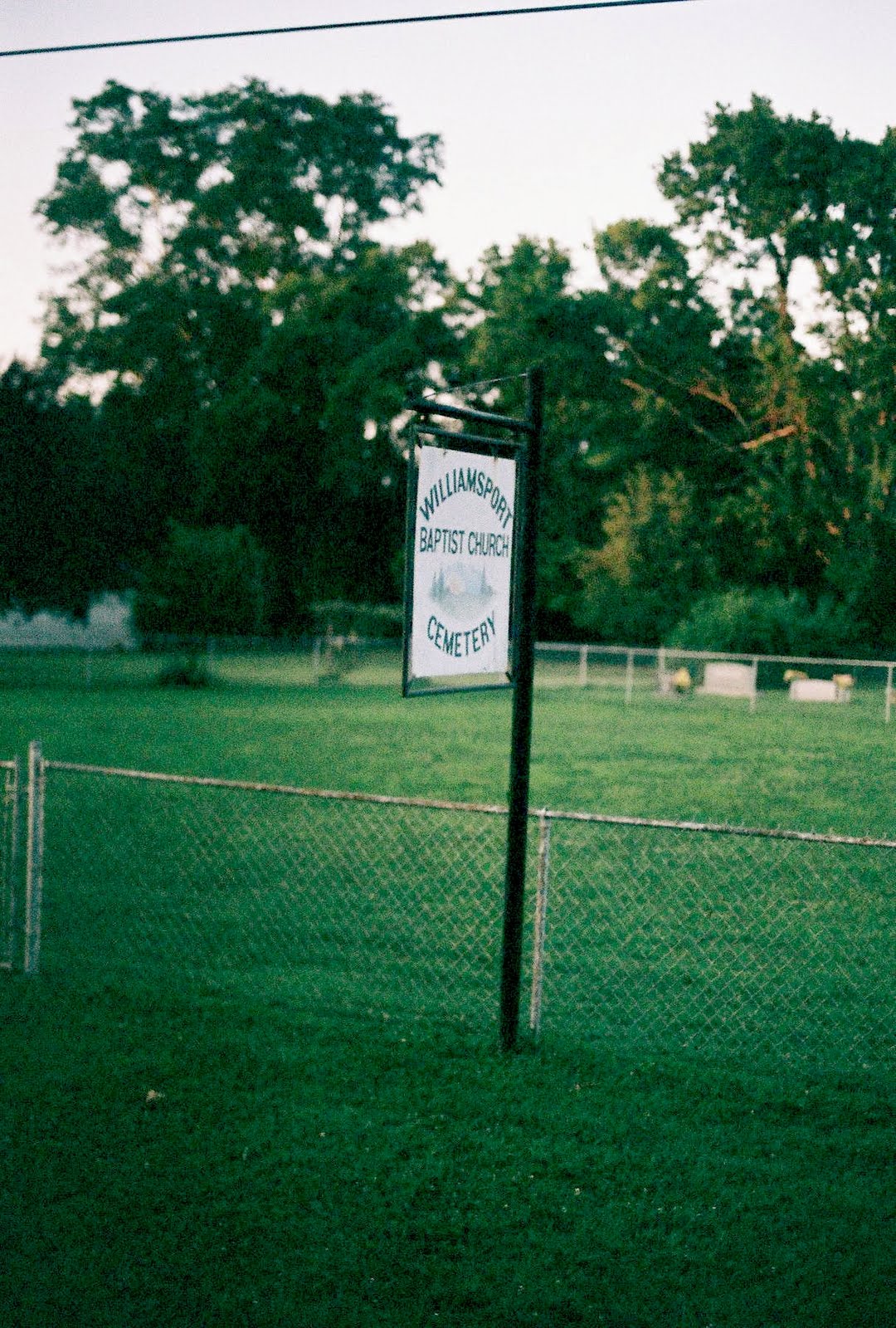
Williamsport, TN

At least it is me who is always falling apart and coming together.


Holland, NY
Niagra River, Buffalo, NY

Niagra Falls, ON

Will Review Films For Food

A little girl interacting with a deer would make all the sense in the world on a calendar or a hallmark card or, more to the point, a storybook, which is why the image is used ironically in two new cinematic fairy tales. They're shorthand to let you know that things aren't as they should be. In Hanna, a disorienting, unsuccessful actioner from England's Oscar-bait king Joe Wright (Atonement, The Soloist), it's meant to establish the fable's heroine and her unconventional relationship to the world. In The Sleeping Beauty, the latest bedtime story from unflinching arthouse provocateur Catherine Breillat (Fat Girl, Sex is Comedy) it's meant to illustrate the strange powers and journey of the princess at the heart of the story. The image not only works as shorthand for the kind of stories being told but also for the hand of each director. Wright bludgeons the viewer with assaultive and embarrassingly earnest images, taking the deer as his first victim; Breillat deftly blends it into the texture of the dream world she's created, a world in which you've already either become absorbed or remain outside by the time the princess mounts the creature and rides it across the tundra in search of her next task. The movies are both hit or miss propositions, worlds so totally and esoterically designed that there is no mistaking them for reality, but only one of them intended to be pure fantasy.


The title character in Wright's spy film is a 14 year old girl (Soairse Ronan) raised to be the ultimate killing machine by her father (Eric Bana), an American ex-pat who speaks in an inexplicable German accent. Living alone in the woods with her dad since her shadowy birth and the equally shadowy death of her mother she has learned how to detect villains even while asleep, use firearms & kill, clean and skin animals. She's Jason Bourne in the body of an "adorable" moppet, but the only thing Ronan makes us believe about the character is that she's trying really hard to seem 'foreign'. We're told that her father has trained her for every possible situation that might confront her back in the real world but he's apparently left out electricity, television, running water and how annoying English tourists can be because she's bowled over by each of these things and more while evading capture by a glowering Cate Blanchett who wishes to reclaim Hanna for the CIA. Her clumsy integration into modern life is deeply at odds with her killer instinct; you don't believe her as being capable of sneaking in and out of maximum security underground bunkers because she goes out of her way to engage in Jerry Lewis-esque clumsiness once she gets free, reacting to the world like a baboon confronted with its own image. I suspect Wright was far too busy spinning his camera and planning arrogant virtuoso tracking shots to notice that his script made no sense. So thanks to his screaming technique and his wish to make every character, situation and object seem as alien as possible, not only does the film fail to make sense but there is no continuity within the context of the story or even within any given scene. The only thing that does work is the score by the Chemical Brothers, who join Daft Punk in the ranks of musicians who've bested the films they've scored.


Meanwhile in a pocket of tiny theatres, another bedtime story plays to smaller crowds. The Sleeping Beauty is the latest from Catherine Breillat who, after taking her brand of harsh emotional exploration to its logical end in 2004's Anatomy of Hell and then suffering a stroke shortly after, reinvented herself as a teller of beautiful, historical bedtime stories. 2007's near-perfect The Last Mistress led to 2009's cute-and-twisted Bluebeard and finally to The Sleeping Beauty, a movie equal parts dream and road movie. Those familiar with the Charles Perrault story or the Disney movie know the outline but can't predict the form it takes in Breillat's modernist mold. After being cursed to die a premature death but having her sentence commuted to a long and deep sleep, princess Anastasia enters a dream world full of trolls and gypsies that leads ultimately to reality and fantasy mixing in service of discovering what it means to be worshipped and then forgotten. What starts as a parable about a girl coming of age becomes a very real examination of gender roles and male expectation. The layers of fantasy are slowly peeled away until we find ourselves looking at two kids in 21st century France trying to figure out how they can learn from an age-old story. The same problem exists in Hanna; fairy tales don't work when you bring them into the real world, no matter how much style you employ. Breillat uses costumes and natural wonders to craft a place you can recognize but not something you can confuse for Anastasia's waking life. Wright wants to blend them and fails because he has nothing to say, and even with ten times the budget can't find anything as striking or haunting as Anastasia riding her doe under the Aurora Borealis. It's a timeless image and, like the tale it reinterprets, is bigger than one telling. In Wright's movie, our heroine learns a lesson that can't be taught in good conscious: kill everyone or be killed. To ask "why" is anathema to the Hanna. To ask the same in Breillat's film yields endless possibilities. It's a rich text that I'm pleased to say I don't fully understand. "I don't want to kill you, but I'm itching to" says the gypsy princess to Anastasia in The Sleeping Beauty. At no point does anyone ask why Hanna must be set loose to kill. I'd take quizzical restraint over flashy id and generic convention any day. Put simply: a deer is more beautiful alive than dead.

The Encyclopedia of Film Criticism: Monica Castillo

Monica Castillo

Contributed to: The New York Times, The Washington Post, International Business Times, RogerEbert.com, Cosmopolitan, NPR, Remezcla, Hyper Allergic, The Wrap, Boston Phoenix, Variety, Bitch Media, The Village Voice.

Born in Tampa Bay Florida (April 17, 1990), educated at Boston University, Monica Castillo's best known (and most deeply felt) writing springs from the well of her Cuban heritage. In many pieces she speaks beautifully of what it means to be the child of first generation immigrants, and how that informs even the smallest considerations in her consumption of translation of media. She began her career writing for Boston film outlets after a chance encounter with criticism led her to abandon her major in favor of engaging with film full-time. She quickly found herself in many smaller and unconventional outlets before graduating to the likes of the Village Voice and RogerEbert.com. She was the recipient of the first ever Film Critic Fellowship at USC which led to her landing a job at the New York Times. She has since moved on to become one of RogerEbert.com's regular reviewers and still fields for many outlets for festival coverage and other major media events. She is  easily identified at festivals and aceeenings by her hair, which is frequently dyed an gorgeous neon shade of some kind or other. She’s been an important voice as Latina voices have become more prominent in media criticism, her successes an important sign that the landscape will not be expected to catch up with minority voices. She has proven that non-white, non-male film critics will take the space they deserve and make the discourse more interesting and varied whether it’s ready or not.

On Soy Cuba: 
I am Cuba (Soy Cuba) is a lovely composed postcard of various old Cuban landmarks: the nightclubs, rural countryside and city life. It captures Cuba’s haves and have nots in a period of transition, close to the start of Castro’s regime. But I always feel the director’s outsider point of view when watching Soy Cuba. The way the camera gawks at people is a compositional choice that doesn’t make me feel that I’m among my people. It makes me feel like I’m watching someone else’s culture, not my own. Its distancing lens is an artful landmark, but not one I’ve felt emotionally attached to. This wasn’t how my family saw Cuba.

On visiting Cuba for the Havana Film Festival:
"I left, why do you want to go back?" she asked me.
My mom and abuela reluctantly helped arrange my trip to stay with my great uncle, one of the few Cuban members of my family I knew in person rather then in pictures. Less than two months before my trip, he passed away. I felt guilty for not having gone sooner. My aunt took me in, and my cousin offered to help me navigate the city without a map or Wi-Fi, and hell, sometimes no electricity (apagones, or blackouts, have become so routine it's normal to carry a flashlight at all times). Several family members passed on tips on what not to eat to skirt food poisoning, to live soaked in mosquito repellent to ward off Dengue Fever, and which cabs were more likely to swindle visitors.  But all the stress, worry and sadness melted away the moment I woke up on the plane over the luscious green campo (countryside) dotted by the occasional tin-roofed farm. When we landed at the Jose Martí airport, the plane erupted in applause with some feet-stomping and sniffles. A woman behind me burst into tears, saying it had been decades since she'd seen her island. It was my first time, but I resolved to keep my face straight as I headed into the airport to have my bags searched.

On Embrace of the Serpent: 
Newly Oscar-nominated “Embrace of the Serpent” is a black-and-white fever dream about the cruelty of colonialism against the Amazon’s indigenous tribes. Shaman Karamakate (played at different ages by Nilbio Torres & Antonio Bolivar) is asked to help white scientists searching for a rare plant at different stages of his life, and their travels takes them past heartless rubber barons (notably never shown onscreen), abusive priests and cannibal cults. However, it is the heated arguments between the scientists and Karamakate that elevate the movie. Their encounters allow for the exploration of the effects of colonialism, stumbling onto one horrific historical chapter after another. Karamakate is separated from his tribe, indoctrinated by Spanish priests, but escapes to reaffirm his culture in defiance of invaders. Manduca (Yauenku Migue), an assistant to one of the scientists, is a freed slave from rubber barons who routinely beat and maim natives. Much of the dialogue doubles as a testament of the latent and overt racism that robbed tribes of their culture, even indicting the patronizing tone the scientists would sometimes use with indigenous characters. The black-and-white photography is stunning, making the rivers an ominous inky black color, and swapping the luscious jungle greens for shades of grey.