1. Phantom Thread
by Paul Thomas Anderson

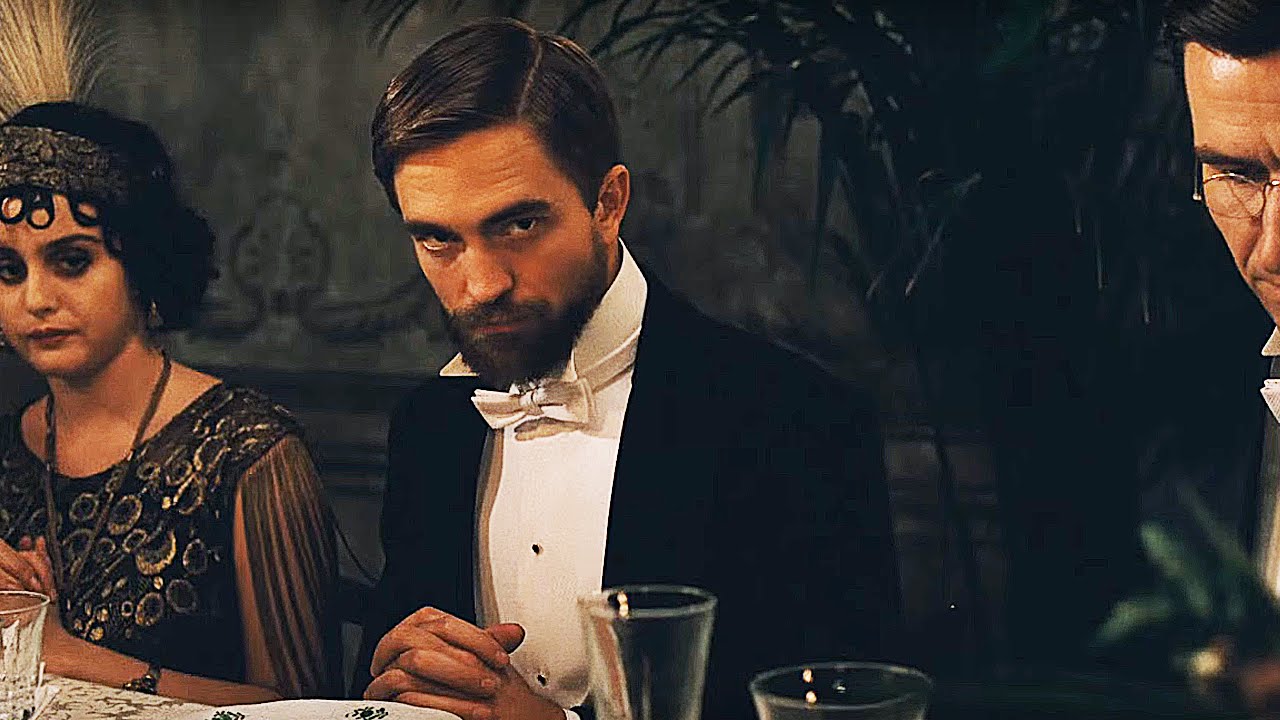
When a new movie is run through a projector, it's a rare and beautiful thing. It's more than just placing an image on a screen, it's throwing a little piece of the entire history of film onto a canvas. Seeing how an artist paints with that history, hearing sounds that have popped in the ears of cineastes for decades. Paul Thomas Anderson, by virtue of being the only director who insists his films be projected on film when they're first released, does us all a favour. He makes us remember everytime we've sat in front a projector watching 35mm film run by a stream of light. That alone would be enough. He also makes masterpieces. And I don't like that word, it's basically meaningless. I just don't know how else to begin. He begins by taking a fistful of early David Lean (Brief Encounter, Passionate Friends, Blythe Spirit) and stitching them together with fabric borrowed from Hitchcock. When we need to understand our heroes’ perspectives, we’ll suddenly find ourselves in a dynamic setting crib from Psycho or Vertigo. The two English directors are his passport to the setting, allowing him to know how tall to stand in cramped drawing rooms, how breakfast is served, how a man sits in a chair and how women know they’re being observed. And from that negative, that feeling of what is and isn’t, Anderson builds from little more than gray houses, white walls, orange halls and cancelled parties, a realm of defeat and unwanted attention, of perpetual annoyance that picks everyone up onto their toes and sets every spine straight. Anderson has made a film about the condition of being an artist that greets outright the hidden contract between every stormy male ‘genius’ and the people who care for them, every muse, wife, and wet nurse. If talent is a kind of degenerative disorder, one that requires quarantining from the rest of the world, then the only way in to their psychosis is through disease. Love must be a fever cabinet, and we must sweat out our perceived alienation from the touch of those who care. Flat on your back hallucinating one’s dead mother, we aren’t tortured geniuses, just tortured, and every prisoner needs a jailer and a doctor if they’re to live out the end of their sentence. Anderson makes no excuses for the perversity of his discovery, thank heaven, and the fetishistic parade the insane lovers lead is a tour of early sound cinema’s casual provocations. The films sounds and feels like the product of some mad fetishist from the '70s, a Losey or a Visconti, but it’s speaking to us in the present. I’ve never been more eager to answer.
2. Twin Peaks: The Return
by David Lynch

David Lynch’s retirement guarantees an altogether safer and less interesting artistic life for people all over the world. Just look at the outline of this 18 hour odyssey: people spent the last two decades waiting for him to fulfill the promise of a thoroughly compromised object he managed to half-sneak by networks and censors. He the
spends the meantime making the most violent, sexual and a-rhythmic shadowplays any American had ever attempted. So then he returns to the project after a ten year silence spent doing little other than meditate and make music in his garage and what did viewers want? Catchphrases and cute behavior? What did he do? Make a deconstructionist myth about (sexual) evil in the United States, positing the loss of our soul as the minute we uncovered a way to end civilizations and turned it on ourselves simply to measure the potential damage. In a way we did stop advancing when we discovered the bomb. When we first learned how to unleash untold destruction and horror on our enemies, how to make sure they have American flag-hued radiation scars for generations to come, before we gave houses and food to each of our own beleaguered citizens. Who are the harbingers of this unspeakable intangible horror? Vagrants. Forgotten men. Our reckoning. The people abandoned by the state apparatus, naturally they will later haunt the FBI and its army of befuddled shadows, causing them to imagine they could undo the evil they protect. And that’s the show’s MO. Those of us who believe we understand the truth or protect some rosy dream of it will be the ones hurt most by its wooly lashing sting. It breaks free from cages and mutilates the ‘innocent’ and guilty alike because we believe in the state and prop it up, as we do with our religious beliefs and capitalism. We’re the ones keeping all the lies afloat. And the best we can do is ask that our art be identical to all previous work? Lynch posits that we deserve to be trapped in time reliving our greatest failures if all we want is empty nostalgia. After all, what are we pining for? A time before ours, even less enlightened ("gotta light?"), where women and people of colour couldn't walk a city block without certainty of white violence? Our nostalgia is a privilege we didn't earn. What we thought of as a cozier time was a nightmare, and our cute show about a town of oddballs was always about a father raping his daughter. Now we can't pretend.
3. Lady Bird
by Greta Gerwig

Greta Gerwig has made a film as lovable, heedlessly emotional and improbably fluid and dextrous as she is as a performer, a slightly sunnier but no less honest prequel to her first film Nights and Weekends. She's captured the voice of white teenagers and their mothers as perfectly as I've ever seen it (I've seen these arguments, been in the room as the talking turns to shouting). Arguments and affection measuring as expressions of the horrific anxiety that comes with loving someone who stepped out of you/who made you accidentally in their image, perceived flaws and all. It's a beautifully open work about the carpeted battleground of suburban co-habitation, of worrying about money because it might mean your love changes when tuitions can't be paid. Every new idea is a war of egos, every new development in one life is a reminder of what's missing from the other. This honestly written, empathetically directed tug of war (our hero, a never-better Saoirse Ronan, rebels against her family, the idea that she herself might be overly entitled, both of her chosen boyfriends, even her own name) puts one very specifically between a mother and daughter, but also of anyone who grew up with aspirations bigger than their environment allowed. A tired priest staging Sondheim, a nun who pines for a little rebellion of her own, a Hispanic adoptee chafing against his white family. It's incredibly specific, but its spirit is universal.
4. The Rider
by Chloé Zhao

It's in this film's half-dozen tableaux of cowboys walking through an acre of dusk-lit wheat and dirt that the movie's singularity becomes overwhelming. You may have seen grainy images of lone western heroes carefully choosing the next step toward oblivion before, but when has the lead-up to these eternal footsteps felt quite so riddled with hard-fought and hard-lost emotional portent. Have we ever known so thoroughly the vituperative whim of fate as reflected through such heartbreakingly simple choices? All around our lead lie little signifiers that his freedom, his love for life, is about to come to a horrific, painful, protracted end. His sister and his best friend offer him clues of a life robbed of one's faculties. His father's weathered face and uneasy existence show the toll of unwanted responsibility. His young friends remind him of the promise he had just a few short years ago. And the horses for which he cares remind him that nothing ever stays free or wild. This film has a preternatural compassionate grace I'm not used to seeing from young filmmakers working in America. Chloé Zhao is about to become one of the greatest filmmakers who ever lived.
5. Zama
by Lucrecia Martel

Returning from nigh a decade in the wilderness Lucrecia Martel's new film shows a man reluctantly surrendering to it. This gorgeous ambling cautionary tale about colonial power is the sort of epic they used to make once every six months before the 80s steered film art on a course against ambience and stillness. Exploration used to look like this back when directors like Nelson Pereira dos Santos, Werner Herzog and Lina Wertmüller were young. Now this seems out of time. All the better for it, obviously, but a joyful anomaly. Aristocratic responsibility is rendered as the worst hangover in history, what happens when the hallucinogens, drink, smoke and pleasure have all turned to pain and curdled the unfamiliar land you no longer wish to haunt. How can you tell from the hellish, quaking, multicolored reality from your worst nightmare, especially when you lose a little more of your glory and position with each passing day? Zama's brilliantly realized loss of agency shows Martel at her most playful and irreverent, the anger of the film's message coyly buried under waves of soft music, body paint, llama staring contests, and one empty promise and building after another. Try to rebuild your civilization where it does not belong and the result will undoubtedly look preposterous and end in murder. Martel, who moved from ice cold (The Headless Woman) to sweltering hot (Zama), is at the peak of her observer's power. This gently psychedelic warm bath of a movie she has drawn for us feels like the height of cinephile luxury.
6. A Cure for Wellness
by Gore Verbinski

Gore Verbinski himself seems to have taken the cure because he's living his best life. After attempting to educate America's preteens about America's shameful genocidal past via an early cinema rollercoaster ride (and famously not making enough studio money while he was at it), some maniac gave him even more money to talk about what a corrupt superstructure capitalism is. The very reason this gorgeously insane curio cabinet exists, is to explain that the very lunatics who greenlit it are in thrall to cult mentalities and unhinged amorality. The vessel he uses to tell us all this? Tormenting uncharismatic Dane DeHaan for just about three hours, squeezing him like an eel and watch him squirm on the floor gasping for life. The most gorgeous use of digital this year, and proof that there are still a couple of maniacs throwing studio money down the toilet expressly so that kooks like me can watch in orgastic stupefaction as the movie I watch turns from The Devils to Sheitan to Phantom of the Opera and back again. Grimy, sweaty, blue black fantasia. The film I'm most grateful somehow was made in 2017.
7. Call Me By Your Name
by Luca Guadagnino

A lot of the time I walk around with the opening credits of I Am Love playing in my head. To me, the perfect fusion of architecture, light and music, which likely says as much about me as people who prefer something by the great Eugène Green. Don't get me wrong, I love Green's religious rapture in the face of ancient buildings, but there was something more modern, more perverse and propulsive about the way Luca Guadagnino did it. The film that follows was a fulsome melodrama hidden beneath a cool sheen of music, immutable lighting, set in place by an apparent remix of L'eclisse. As much as I wanted the gorgeous mirrored stage opening of A Bigger Splash to be a representative curtain raiser, the film settled into a too-busy rhythm, not taking the time to luxuriate in lust and the pleasures of eternal artistry. I liked it, but after I Am Love? Nothing short of Call Me By Your Name would suffice as a follow-up. Perhaps his Contempt, the cool sheen now belongs to the hidden emotions buried under the touching, the quick talking, the showing off, the sly movements of Armie Hammer and Timothée Chalamet as they size each other up. Reversing (inverting?) De Sica's romantic momentum (The Adults Are Watching) among new and old ruins, this sumptuous films reaches for Sufjan Stevens (in lieu of Elliott Smith), Ryuichi Sakamoto, and most perfectly, The Psychedelic Furs to do all the talking for these muted lovers-to-be. The images are manicured like the Gardens of Lucullus, light perfectly deepening every shirtless body and broken statue, hinting at the impossibility of living whole. Chalamet will remember letting go of Hammer for as long as those statues sat at the bottom of the sea. Our emotions have lives beyond us, our love sunk into the stone of villas, playable like the classical music used to seduce and disarm. This film understands the surfaces of art as reflections of our hidden desires, and ably joins the canon of the works referenced through its effortless charm and fearless emotional transparency.
8. The Young Karl Marx
by Raoul Peck

Vicky Krieps will likely be best remembered for Phantom Thread when surveys of her career are conducted, but she's a fierce, earthy presence and just as lovable and alive as Jenny Marx in Raoul Peck's delicious biopic. She's certainly a match for Stefan Konarske's Engels and August Diehl's Marx, which is handy because their ideological romance is the film's central concern, more than Marx's marriage to Jenny or Engels love for Mary Burns (Hannah Steele). The ricochet of love-as-counterargument to capitalism is a seductive idea given the full weight of historical drama. Peck and his team pull a grammatical fast one, filming, designing and costuming up a storm as if they were making Jane Austen or Tolstoy. And then he serves up the history of communism as if it were a drama about dowries. I know why people didn't like this, they're just wrong. This thing is compulsively enjoyable and rewatchable on the strength of its design and performances, to say nothing of the now-invaluable feeling of watching history being changed for the better. Can't tell you how much that means to me now. These men drank and smoke and puked in the gutter dreaming of a time less goddamn awful. Peck could have made basically anything after his runaway doc smash I Am Not Your Negro and he chose this because this information is still important.
9. Éternité
by Tran Anh Hung

Tran Anh Hung's Norwegian Wood is one of the most intelligent and exacting looks at an emotional meltdown ever recorded, the way it clouds your periphery and focuses in on nothing but pain. His follow-up spares no ounce of pain, but is in a much more relaxed and resplendent milieu, perhaps as a way to escape the chill of his last film. Éternité, his Tree of Life, is about the way pain and love become unwritten human history. A catalog of loss and coupling, births and funerals, set to a never-still classical score, shows the way we travel through other people's memories as participants and visitors. The way we build memories and express ourselves. The film has no plot, just a series of impressions each more beautiful and important than the last. Films like this frighten people, hence it never being released in the US, the way they treat life cinematically, eliding conflict and making normality its subject. Socialist-humanist art will probably never catch on in such a hateful place, but when it sneaks over here I'm always grateful. When it's this transcendent, I'm over the moon.
10. Contemporary Color
by Bill & Turner Ross

Speaking of socialist art, David Byrne recreates the kind of flag dancing that was previously a staple of Asian dictatorships and American towns during Jim Crow, and given it to the people! Which people? Well whoever might be tempted by Blood Orange, David Byrne, Nelly Furtado and St. Vincent writing original songs for a one-night-only concert event. As filmed by the Ross brothers, this event was the second coming of the Stop Making Sense tour. Everyone on stage matters, the music combines everyone's efforts in a graceful sonata of fabric, arms and legs. An odyssey of acceptance (filmed on the night the country legalized gay marriage), this film exists to transport performers' smiles to screens across the country, to show everyone what it looks like when Zola Jesus is lost in song, her head thrashing while her flag team takes over for her. That reverie is worth everything.
11. Behemoth
by Zhao Liang

Industry's malevolent arms stretching over untouched land, naked men laying on the ground like an infant workforce, and the silent calm, claiming it through influence and the ghosts it's left behind. Everything is touched by the oil-slicked designs and mangled limbs of labor, keeping the surface of the earth a deafening roar of productivity to sustain its life. Nothing waits below, no back-up plan after destruction, and nothing waits above, after, when we're on a burnt coffin of a planet. All there is, all we can hope to do, is hold up a mirror and see if the right monsters gaze inside. This is really what you're doing. This is the world you're making. This is your absent face while men work for nothing and die for less. A broken promise of more humanity.
12. My Happy Family
by Nana Ekvtimishvili & Simon Groß

Though it'd be nice to have a film like Holy Motors every year, that completely rewrites the simplest cinematic equations into some hitherto unseen formula, it's equally flooring and comforting to watch a movie like My Happy Family this far after the birth of cinema, which does little but observe a woman in crisis, and walk away feeling moved and exhilarated. A prime example of what my friend Danny Bowes once termed "Long ass movies with long ass takes in foreign fucking languages," Ekvtimishvili and Groß manufacture the right circumstances in which to press their characters and watch the incredibly expressive faces of their actors as they re-think everything they've ever done. If it's lead them to this crossroads, maybe they've made some huge mistakes. Ia Shugliashvili performs an incredible feat as she both unravels and finds herself, often in the same scene. She has to go through a trial by fire in order to prove to herself she can live without her family, but that also takes a little of her authority away from her in the eyes of her mother and children. The navigation of self worth is always going to be an inexhaustible subject, but when it's done with this much awareness of cultural expectations, as well as a woman's relative power in restrictive societies, or even in the context of a close family, every word and gesture carries atomic power. Which is why seemingly ordinary embarrassments, as when Shugliashvili has to sing for her high school reunion, become titanic tests of oneself. If she can make it to the end of the song without breaking, she can do anything. I'll never not be moved by women who have earned a little piece of mind and respect and are this close to achieving it.
13. Wormwood
by Errol Morris

An exhaustive, exhausting amount of information melted down into a tincture and dropped into your eyes, Errol Morris' latest might be the crowning achievement of his decades as a documentarian. A thousand cameras and a million words support his investigation of Eric Olson's coming of age through his investigation of his father's death. Olson, who studied collage and spent his life looking into the lie's surrounding his father's 10 storey drop to his demise, provides the wry, sticky voice of interrogation as we watch a splendid cast (Peter Sarsgaard doing what he was born to do as departed Frank Olson) re-enact the central mystery of his childhood. Like a bizarre therapeutic experiment, Morris takes equal delight framing the interviews as he does recreating a paranoid and perpetually sunless 50s, throwing new twists and turns (and a metric ton of disarming, confounding images and sounds) as Olson discovered them throughout his life. The character of the 50s are captured with unrivaled uncanniness, its sci-fi fixations, heroic drinking, buried emotions, and atomic fears lingering in every half-lit room and on the edge of every deranged smile. A film about paranoia that reveals that the paranoid were right to suspect the truth was being hidden, but wrong about what it all meant. Jumped, fell, pushed, dive...the point is Olson hit the ground. Morris knows that no matter how many ways you frame the truth, you'll always wind up there, which makes this hours long experiment an incredible feat, in that it feels like it might not end the way we know it does. The greatest generation a den of vipers, high, cracking up, depressed, lying, murdering, covering up, drunk, deranged and never held accountable. It's Shakespeare without a hero or an ending.
14. Voyage of Time/Song to Song
by Terrence Malick

When I watched these films separately I was moved, certainly, but not in the way I was by the epics (Knight of Cups, Tree of Life, The New World) and then it hit me that these films together represent a closing of a chapter in his artistic life. That's why he wanted them released so near to each other. Voyage of Time is his exploration of the beginning of mammalian existence after the big bang in The Tree of Life. Song To Song is his Garden of Eden and after story, what happens when humans walk upright and leave the breast of their creator, destroying each other, themselves, the land in the process of discovering some viable form of existing without god: the creation of art to replace him. Together these films are a perfect displaced understanding of human purpose and life, and an even more perfect look at what Malick values. He has Patti Smith play the film's god proxy, after all. That's about as personal as it gets. The world is a dense thicket of conflicted morality and true north no longer exists, every cut a blink from beyond, transporting us further than we thought possible.
15. Visages Villages
by Agnès Varda & JR

Looking back at the history of cinema is fraught with unspeakable tragedy. It's difficult to watch Chantal Akerman's movies without becoming overwhelmed with loss. That's how I've felt about Agnès Varda for awhile now. She's still with us, but her last new feature I'd seen was The Beaches of Agnès and while it's unspeakably gorgeous and life-affirming, it's also a tough act to follow. How could Varda make another film this personal, she'd already told her life story through her art? She'd built herself a house of celluloid (literally), and talked us through the death of her truest love. What was there left to do? Well, I suppose she could come up with a joyous B-side about memory and images that could unstick her legacy from the perfect melancholy of Beaches. With photographer/imp JR by her side, Varda tours the French hinterland looking for anyone who needs cheering up, and gives them a hefty dose of her enormous cinematic ambition from her point of view a few feet off the ground. I sat next to her this year to interview her about the film, and though we rambled and she was tired, the experience had no equal. Her small, wrinkled hands, her improbably fierce-yet-soft eyes, her perfectly cropped and dyed hair. I felt like I was visiting Mount Olympus, because how could such a figure, capable of the most colossal work, who changed lives with a simple flexing of her artistic muscles, be right here next to me? I wanted to hug her and thank her for everything she'd done for me, for every feeling her movies had provoked in me, but I might have traumatized her. I settled for shaking her tiny hand and smiling. I hope I was able to communicate half of what I wanted to express in that look as she can in a close-up. I never got around to mentioning that I just about cried watching her sing "Ring My Bell," because there's an all-too-thin line separating journalist from weeping fanboy. She's done enough in her 89 years, including making Visage Villages, a soufflé of joyous interactions, that I can spare her having to validate my response to her work. She made it. As always, that's enough.
16. Alias Grace
by Mary Harron

Mary Harron and Sarah Polley, possibly the coolest Canadian feminists alive, worked together to bring to life one of Margaret Atwood's slipperiest texts, giving a plum role to the eminently beguiling and Dietrich-resembling Sarah Gadon. What did we do to deserve such a gift? Nothing good, as the film, spread over six chapters, is a bitter indictment of indentured womanhood. The bonnets and aprons are mere exaggeration, there is no time period where its lessons don't apply. Polley's lithe writing and Harron's arch, thorough, and vicious direction (no surprises there) take us into not just the mind of their maybe-murderess but of a gender running the world in secret while their husbands and lovers paint over their contributions. The expected jealousies and fainting couch-surprise when the limits of their experience are reached without warning, Alias Grace shows for a time what it can feel like to fly under the radar of social expectations. What a joy it is to not be like every other woman, and what a terror it is to be at the whims of every man. Flying through memories and subliminal implications at a rate that frequently feels faster than 24 frames per second, the few potential fates for every player as the central crime becomes clearer seem more and more horrific. It was never a matter of guilt or innocence, but whether it's possible to live out one's days in anything like peace when you'll always be a stranger and a problem to the man next to you. For all its effects-driven bluster, provocative pop music, hordes of extras, and paint-thick stylization, last year's enormous adaptation of The Handmaid's Tale can't compete with the spectacle of a man and a woman having a conversation while we in the audience have to guess who has the upper hand.
17. Coco
by Lee Unkich & Adrian Molina

Pixar's stock in trade has long been making you cry whether you want to or not. They've been largely successful from day one, but it wasn't until Coco that I had the prescribed reaction when watching the first ten minutes of Up (my vote for their best film other than this), or the Sarah McLachlan interlude in Toy Story 2. And though it may be what the film was built to do, I didn't mind at all how uncontrollably I lost control of myself during the final ten minutes of Coco. My grandmother is 93 and her memory is starting to go, this movie is for me as much as anybody. The movie earns those ten minutes, of course, that's the real achievement. It's about dying twice when everyone alive forgets about you. How parents are explaining this to kids is anyone's guess, but that's just about the most devastating plot I've ever heard. Thank god the film is so vibrant and lush. The colours and set design are a neon dream, redesigning their characters and symbols as alternately poised and stumblebum Mexican melodramatic staples (if this film encourages more people to seek out classic Mexican cinema [you might want to start here], it will have more than done its job). The film is a feast for the eyes and a non-stop delight, and yes, you'll cry like a baby if you're anything like me.
18. Beach Rats
by Eliza Hittman

As I've told anyone who will listen, Eliza Hittman has decided to become our premiere neo-realist and this is her Accattone (Boardwalkattone?), a deeply sensuous look at burgeoning (and just as quickly stifled) sexual identity among the perpetually repressed. The symbols and places (a busy beach, a father's funeral, a flea-bitten motel) are all right out of the Italian passion play dictionary. Hittman's camera and editorial rhythms recall the way Kevin Shields plays guitar, turning everything into a deep rushing wave into which you're meant to dive. Her acute perception of the location and its denizens is rivaled only by her understanding of young lust and what we'd give to keep our identities a secret during certain periods in our lives.
19. The Rape of Recy Taylor
by Nancy Buirski

It occurs to me that if anyone ever needed proof that we need strong, thought-provoking and justifiably furious documentaries like The Rape of Recy Taylor, all you need to do is look at the comments under any given review. Take mine, for example. The first comment is about me being hyperbolic about race relations in this country (gonna go ahead and assume the commenter is white, just a crazy hunch), and later I'm told that I've confused real life for The Handmaid's Tale (which this person has ostensibly watched, despite not believing racial/sexual imbalance is an issue worth caring about). Everything about it is perfectly frustrating: belittle and undermine any attempt to look back at this country's hideous racial and sexual history, and swiftly put down the notion that any of that is still a problem. So I'm grateful for this film because it dares to look and speak up, dares to interview still living victims of antique racism (in case there was any doubt it's still running rampant in the goddamn streets), dares to suggest we owe our public an apology for centuries of violent, unspeakable cruelty, dares to even exist. That Buirski's surfaces, like being gently pulled across the polished marble floors of a museum, are getting even more assured and gorgeous only helps her wedge her ideas into our unconscious. This film is a terrifying road trip through a shameful chapter of American history, but we need its like now more than ever.
20. Marjorie Prime
by Michael Almereyda

Almereyda's always had a penchant for genre. His career begins in earnest with Nadja, a splendidly dream-like vampire movie, and takes many detours through post-punk horror and sci-fi. His latest, the calmly grueling Marjorie Prime, is the best Twilight Zone episode never made by John Brahm or Albert Lewin. The border between life and death is like a diaphanous sheet that could be ripped aside at a moment's notice. Like the endless glasses of consolatory whiskey drunk by the grieving central characters (including Geena Davis and Lois Smith in peak form), life here is rendered as something that could just be refilled as long as there's someone left to pour it. Watching these actors struggle with the hollow figures of departed loved ones would be wrenching if it weren't also so endless fascinating. The perfect b-side to Experimenter. Reality is a facsimile, best to accept it and try to move on, or you'll be stuck in a house of ghosts.
21. Tour De Pharmacy
by Jake Szymanski

It's easy to say that commitment to the silliest subject matter is what makes parody so effective, but what I'm still laughing about six months after first seeing this is that Szymanski manages to keep a straight face with so many of the funniest actors in the world throwing every ounce of their energy at the wall hoping not to stick. Samberg's boundless goofball energy, taped down during his Brooklyn 99 seasons, is unleashed. John Cena, Orlando Bloom, Daveed Digs, Danny Glover, Jeff Goldblum, Dolph Lundgren and Julia Ormond all clearly relish the chance to play socio and psychopaths, completely free of morality and social grace. Szymanski matches their free-for-all with tightly controlled parodic diction. It's the asides that make it, though, and the sense that everyone involved knows something's off. The blood cell cartoon is the best example of the creators complete dedication to a ten second joke that has nothing whatsoever to do with the main text, and yet is still the funniest part of the film. It's the entire project in a nutshell, in a way: it looks like the genuine article, starts funny and gets hysterical and histrionic in no time at all, before falling right back down to earth so we can get on with the show. The next joke is always the most important thing.
22. Sleep Has Her House
by Scott Barley

Barley has been hypnotizing the natural world for our benefit in small doses for almost a decade. It sits still like it's stuck in a programmed loop while he gazes at it like a doctor staring at x-rays, inviting us in to draw whatever conclusions we can. It all happens whether we're there or not, in the dead of night, pulsing with life, buzzing and chirping thanks to the animal life hiding in the dark green expanses. His images here seem almost unreal, like he had to have painted them. How could trees, a stream, a horse, a lake seem this alien, this unsettling, this new? I'm happy not to know, to be drawn in and hypnotized like his living compositions. Part of a shared dream of unseen existence, briefly tamed, watched as much by the world as we watch it.
23. Dawson City Frozen Time
by Bill Morrison

A reverie for lost potential, a song for an old town, an incantation for a dying art. Morrison's post-rock histories reach a crowd-pleasing peak with this methodical look at the shaping of this moment, using the history of film as a map.
24. Mimosas
by Oliver Laxe

The other doom metal pilgrimage released this year (see #35), Oliver Laxe's contemplative death march invents itself and its stylistic grandeur as it progresses. A film like this never seems like it has a clear goal and when it ends, it seems like both intuitive and insane that it's come here. Its natural harrowing course from death to death seems the only rational response to the world when it's over. While it's transpiring? A spell. A mystery. An exorcism.
25. Slack Bay
by Bruno Dumont

Bruno Dumont developing a sense of humour is one of my favourite phenomena of cinephilia in the 21st century. Watching him become playfully surreal in his new, nearly slapstick passion plays makes his early serious films finally fit into a productive scheme. Dumont going funny wouldn't mean the same thing without his dead prostitutes and magic murderers stalking the halls of his back catalog. This gently transcendent farce revisits his old ecumenical stomping grounds, finally locating a vein of Buñuelian absurdity to compliment his bloodthirsty religious tales. I laughed as often as I was stunned into silence.
26. I Called Him Morgan
by Kaspar Collin

A snow-covered tale of regret and timing, you can practically see the steam rising from the mouths of its interview subjects, feel the blood pooling under Morgan's cold frame, feel the slush under your feet, the white lights of a classroom or a jazz club blinding you to the inevitable as each detail is spun into silk. A film in response to Morgan's death and his art, a kind of post-bop funeral march, I Called Him Morgan is all the more tragic that this movie will be much of America's first exposure to the mad, slick genius.
27. The Meyerowitz Stories (New And Selected)
by Noah Baumbach

Noah Baumbach back in the autobiographical realm that reaps the greatest reward whenever Greta Gerwig isn’t around go make him stop moping. The moping here is, however, exceptional and uses the full force of the history of the movie nebbish to its benefit. Adam Sandler (good again after something like s decade faxing it in. Not even phoning it in), Ben Stiller, and Dustin Hoffman are the sexless scolds running in circles trying to avoid their deaths and their own hatreds. All three men specialize in unlikable pricks and so Baumbach must dig and dig and dig until he finds their humanity, forcing a family reckoning, each member having independent epiphanies between some of the sharpest gags of the 21st century. Everything has to break spectacularly before it can be patched up, and it’s always cathartic watching the seams rip in a Baumbach. The marginalization of women is acceptable only because this is a movie about the very specifically shit things that men do to each other and women.
28. Let The Sunshine In
by Claire Denis

Claire Denis’ first outright romantic comedy is exactly the languorous treat I was hoping for, a gentle, sleepy trawl through a heavily poisoned dating pool. Confidences and self esteem issues ossify after a certain age and Juliet Binoche, as our perpetually flabbergasted Denis stand-in, gets to see every way it’s possible for men to stay boys.
29. The Untamed
by Amat Escalante

Using Possession as his springboard, Mexico's cinematic Jackson Pollock throws his best work at us in buckets of unearthly images, cineaste affection and affectation, and uncommon, under-represented feeling. Putting the lie to Carlos Reygadas' nonsensical Post Tenebras Lux by making his fantastic stories make linear as well as emotional sense, The Untamed is like a cocoon of a movie, wrapping you and its characters in both metaphor and hideous yet wonderful fantasy. This is the movie The Shape of Water ought to have been, a Beauty and the Beast erotic psychodrama unafraid of what it really is that might draw a lover to another disgusting, inhuman lover.
30. Good Luck
by Ben Russell

Ben Russell’s small scale epic of the toll of labour (measured in footsteps and faces) tries to find the music hiding under the earth, the impetus for the continued fight for the soul, damaged as surely and steadily as the rock his nameless miner heroes chip away. Almost a Warholian study of the blood and sweat expended for survival, Good Luck will always be a relevant document of work.
31. In The Fade
by Fatih Akin

Manchester by the Sea reacquainted me last year with one of my favorite underexplored ideas in film and literature: the communal experience after tragedy. The way a home becomes a sight of safety from the outside world, but every object reminds one of the departed. Even so the world outside isn’t a place for the fragile. In the Fade is a study in contrasting environments, the treachery of a safe space, the clinical hostility of a courtroom, the broken paradise of a seaside retreat. Nothing means what it used to, no value you once attributed to anyone or anything holds true, nothing of which you were once certain is so. In The Fade shows what it looks like for the grief stricken to invade spaces public, private, personal, foreign, hostile, and friendly. Many were bummed at the ending, but I understand it as more than cheap symmetry. How else are you going to make everyone understand what the pain of letting go does to you. The movie’s heroine (a never better Diane Kruger) wants to send an apolitical message: do not take our purpose. The one we find in the aftermath will not make sense and it will not be pretty.
32. Blade of the Immortal
by Takashi Miike

Another long lens mini-opera of abject destruction from Takashi Miike, Japan’s foremost Rhodes scholar of pain. Hundreds of faceless opponents, maybe one for each film Miike has made, cut down in the throes of fatherly affection, the desire to know that though your life cannot be lived on your own terms any longer, you can still change the lives of others for the better. Miike’s version of a Jerry Schatzberg drama piles on the flamboyant villainy, complicated mythologies and allegiances buy stays true to his central fascination: what can the mind and heart convince the body to endure? Just about anything, it seems. This manifests itself in borderline decadent suffering but that remains a romantic outlook to which I’m always sympathetic.
33. Stronger
by David Gordon Green

Though I want the biopic (at least as it's being used in America today) to be retired permanently, Stronger ought to serve as a reminder that no form is inherently bad. As if in response to Peter Berg's deeply terrible propaganda vomit Patriot's Day, David Gordon Green recovers neatly from his last ripped-from-the-headlines disaster (let's never speak of it again) and shows the actual human cost of an act of terrorism. This poor bastard (a typically fine Jake Gyllenhaal) didn't even care about the marathon or what it represented to strong Boston. He just showed up to patch up an already busted relationship. His reward was that he gets to spend the rest of his life just as broken, superficially speaking. What the film shows in agonizing detail, is that your legs don't hold a candle to your personality if you can learn to be an adult when the time comes. Tatiana Maslany (marvelous) storms through the movie tossing lessons to every brash Boston child stuck to her life like cold sores. Her newly traumatized boyfriend, his shrewish extended family and squally mother (a revelatory Miranda Richardson); everyone needs a wake-up call. The bomb is just the start of the nightmare. Now you have to live. Green's prankishness doesn't even prove a liability, as the scenes of the childlike amputees going on binges are crucial to understanding Gyllenhaal's psychology. Even more so than Prince Avalanche, this is the film that marries the divergent threads of his filmmaking.
34. Three Billboards Outside Ebbing, Missouri
by Martin McDonagh

I will grant that if you were hoping this movie would have anything intelligent to say about race, your disappointment is justified. It doesn't. It's a film about the privilege afforded the aggrieved white masses in this country. That dying or being close to the dead or having an opinion stronger and more legitimate than the guy next to you means that you deserve to be heard. Francis McDormand's character learns, largely from her son, that being in pain doesn't make you special and it doesn't make you right. No one here has an assumption that goes unchallenged because everyone is a little stupider than they first appear. No cause is righteous in America unless it's for everyone. I'll never forget seeing Bill Cosby go on TV to talk about gun violence in America, his activism directly inspired by his child being shot to death. He spoke out because it affected him, and his activism stopped mattering the minute it became clear that his apparent value of human life didn't extend to his decision to rape dozens of women. You want to be able to do something, say anything, to express yourself some way about impossible turns of events such as this, but what can your actions and words ultimately accomplish? This, I suspect, is what McDonagh is trying to unpack. McDormand and Sam Rockwell's racist sidekick divine the same excruciating lesson from different angles: good intentions don't always beget the right actions and doing the right thing frequently doesn't mean jack shit. Everything they do is to make themselves feel more at ease with the cosmic indifference extended to their respective plights. When that fails, they take to violence because that's easier, quicker and it feels better. That's the America I know.
35. Pilgrimage
by Brendan Muldowney

When I'm president it'll be a crime to misuse Jon Bernthal, one of the sharpest and most charismatic actors in the world. Just look what Brendan Muldowney did with him robbed of a reason to have him talk. As a monstrous, mute, murdering monk, Bernthal says exactly one word and still handily carries the movie on his hunched shoulders. Richard Armitage's sickly looking knight gives him ample support, but the film would have survived if Bernthal were the only character, tearing through thickets of faceless non-believers looking for absolution. Pilgrimage's foggy Irish tableaux provide the perfect setting for private holy wars and tricksy betrayals. When god is silent, Bernthal grabs a sword and speaks up.
36. The Beguiled
by Sofia Coppola

Returning to the well of abandoned femininity, from whence sprang her magnificent career, Sofia Coppola finds a passel of misfiring libidos in the feverish heat of the Civil War-ravaged south. Lies keep the sky in place here, that their cause is righteous, that the war will end peacefully, that each woman present wants the best for the tall drink of whiskey convalescing in the parlor, that there might be a way to keep every intention a secret. Coppola presents each woman as a would-be Pietà, hoping that they might cradle the last (good looking) man on earth in their silks and perfect curls, saving all men from harm by wrapping their legs around the one. Beautifully, for once, it's only the man who loses.
37. Let It Fall: Los Angeles 1982-1992
by John Ridley

Ridley's anger got quite the workout this year, between this remarkable feast of talking heads and his dashing miniseries Guerilla, the black answer to Carlos. Here he listens carefully to everyone, rationing rope for the crackers who need it and giving a much needed window to the still-imprisoned black faces who've never recovered from being the nation's stand-in for racially motivated violence. Daryl Gates' name is ensconced forever in the fascist hall-of-fame, but the men who attempted to fight back, to take back a piece of South Central's dignity through an outstretched hand or a closed fist? Life was at least unbiased in its refusal to hand out second chances that day in 1992. They'll hear the sounds and remember the blood on their hands and shoes for as long as they live, as they all make clear through their testimony. Ridley just listens to people who have never been asked to talk, and the heartbreaking mosaic of misunderstanding ought to serve as a potent reminder of what can go wrong when a portion of the population is pitted against another by the police. Bonus: Mark Isham's blistering score giving each word an angular melancholy, forcing them back into us no matter how hard we might want to push them away.
38. Lady Macbeth
by William Oldroyd

Colonialism rendered as a kind of venereal disease, a creeping feeling of unease as one man after another spends ten minutes in the same room as a woman who has discovered that the only thing men will listen to is sex. If that's not available, neglect. Steely, seething neglect. Florence Pugh, death's eyes in the middle of a round feline countenance, has only to watch and wait as the men around her dig their graves. Her monstrousness only seems apparent when it's too late and she's become the thing she's attempted to unseat. This is how women like Ivanka Trump, Margaret Thatcher, Mary Whitehouse, and Tomi Lahren become powerful. They narrow their gaze and stop treating their peers and equals as human. Though Oldroyd presents this as Shakespeare in the Heath, there's nothing romantic at play here. Just good old fashioned sociopathy, one of cinema's most enduringly delectable subjects.
39. Operation Avalanche
by Matt Johnson

Matt Johnson's punk satire, like a Dead Milkmen record in super saturated autumnal
16mm, is the perfect back-of-the-class prank. Kubrick, the moon landing, the CIA,
Alan Pakula, and Jackass are drawn in the margins of the 60s, and given the full
confidence and weight of new effects technology. It's all seamless, which makes the
full-throttle chicanery a true wonder, beyond its smart ass script and grinning
performances. These guys all know they're getting away with something that film
school nerds have been dreaming about for decades. They just happened to be the
first guys to do it, and that enthusiasm never once falters, even when the body count
starts to pile up. This film may technically be a 2016 release, but I was so charmed
there was no way I wasn't going to write about it this year. It deserves to be seen
and lapped up.
40. On The Beach Alone At Night
by Hong Sang Soo

Every Hong movie is about the same six things. It's his warped, half-mad innovations and non sequiturs that wrench them from their creator's fetish collection and into their respective birth years. This one I'll remember as the creation of 2017, the year after his affair became public, when we all thought we knew his business. The phantom on the porch, the man we imagine, the unseen director who has scuttled poor Kim Min-Hee's dreams of a happy ending, the tiring search for meaning, closure, a second chapter of a book that's already been written, will stay with me longer than any of Hong's previous plots. This one just means more. These are the consequences of believing yourself above them. This is what loneliness looks like when you'd convinced yourself that that alone wasn't the point of a mistake. We are all, no matter how free, gorgeous and loved, mortal and beholden to public opinion. The phantom of masculinity is free, and he mocks her from every balcony and window. The man will always rebound and the woman has to make new sense of a reality for which she hadn't planned. I've always liked Hong's comedies. This one is bigger than even the best of those.
41. Loveless
by Andrey Zvyagintsev

Zvyagintsev's compositions always give one the impression that a body is defrosting just off camera. The perpetual thawing ice that is Russia's sociopolitical climate makes a disappearance into death by implication alone. Divorce is a symbolic white elephant, lending weight to every corrupt aspect of life under Putin and shuddering growth behind it. You will repeat the same mistakes, you will not change, you will run in place. And the camera is as calm and all-knowing as the state itself, which is to say, we learn everything we're meant to, and the rest is a fog. Becoming lost, searching the endless abandoned structures just to the south of civilization, every old relative's house waiting to be searched, a mixtape of old failures and new disappointments, all played with the cool abstraction of a Keith Jarrett record.
42. Endless Poetry
by Alejandro Jodorowsky

Looking back The Rainbow Thief wasn't so much the end of Jodorowsky's willingness to work with studios, though it's clearly that, for sure. It's the bridge between his willingness to embrace his own sentimentality, hitherto only glimpsed in his Au Hasard Balthazar-with-an-Elephant (and yes the proper way to shrink this is is Au Hasard Babar) movie Tusk, and even that purposely used long lens and cranes to keep away from the action and away from the wreckage done to objectivity with close-ups. With The Dance of Reality, Jodorowsky kicked the doors down because damnit the story of his childhood needed to be told. He's back with the story of his adolescence, an equally inventive, ribald and problematic look at the occasionally hateful, occasionally wonderful circus troop he called family.
43. Dark Night
by Tim Sutton

Responding to unspeakable tragedy with a split structure (it's practically an omnibus feature, given how deliberately Sutton delineates the tone of each character's segments) brings us close to understanding the way normality becomes the stuff of hideous legend just because a gun makes its way into the wrong hands. Many took umbrage at the film's attempts to find...well something in the midst of the randomness of the events it fictionalizes, but I find that this sort of answer is the best one to hope for. Not one that explains away a gunman's motivations or makes heroes out victims simply because they were both in the same space, but rather one that values the minutia of the lives of those affected. White terrorists aren't comic book villains, they're unstable creeps who like figuring out how far into other people's personal space they can crawl. And the victims of gun violence in this country? They're you and me. Just people with ordinary hopes and ordinary lives. That's what I want to see. Some measure of their ordinary lives written in light, made cinematic, not special. There is no right answer to tragedy, because gun violence isn't any longer a tragedy in America. It's ordinary. It happens every day. This film, a shimmering cross between Paranoid Park and Elephant, seeks to take the question mark from the equation of guns in the hands of lunatics. Someone always sees it coming and no one can do anything. It's the American way.
44. The Other Side of Hope
by Aki Kaurismäki

Aki Kaurismäki’s second film in his trilogy/treatise on immigration is just another of his sly ways of saying how easy it is to be a good person and a part of the community that geography dictates is home. Home here is a rundown little restaurant, a bed, the arms of s friend who will walk you to help and safety, the comforting words of a brother, knowing in your heart you might find peace when you next rest. All Kaurismäki heroes seek a sort of communal welcome; that the place you next lay your head is a symbolic gathering of hands, that you don’t leave a mess in your wake. That the world is a little better now that you’re here. This message is delivered in Kaurismäki’s always-welcome Fassbinderian lowlight and theatrical staging, not a hair (or weary traveler) out of place when the curtain falls.
45. Whose Streets
by Sabaah Folayan

Ferguson's voice heard finally without the white noise of punditry or toxic assumption clouding sentiment. The reality of the spit-upon activist, the sleepless parents of children hunted by the police, the citizens just trying to go home. Missouri was militarized in the wake of a wrongful death and order, a hollow joke, was meant to be upheld by the same trigger happy mob who put the young man in his grave. The cries from the street are this film's focus, the faces of people who are arrested and shot simply for existing. Folayan's focus is on the people brave enough to use their real names, to stand in public though it could be the last place they do so. An essential testament to the bravery required to get out of bed when you're black in America.
46. Strong Island
by Yance Ford

Yance Ford uses his own face, unblinking, tired, furious, upset, as a tool of interrogation and confrontation. This is the face of the people robbed of their brothers and sisters, this is the face white cops look at and don't see humanity, the face lawyers tell settlement amounts to right after they hear the news that no one will be held accountable. Ford's scream, a sound I'll never forget as long as I live, is the moment every one needs to see right now. It's a scream that expresses decades of loss, of frustration and sadness and blind, hot fury. The scream is all many people have. The scream will not be enough but we must scream. Yance Ford's face is meant to haunt those who have done him wrong. It haunts us all, whether we've seen it or not.
47. Good Time
by Joshua & Benny Safdie

The Safdies blinding neon New York is further grafted onto their 70s worshipping craft, a harmony of degenerate impulses, grubby opportunists, and sleek yet grainy delivery. It's in the way their camera cruises the streets of Queens, the way their hero, a rat-eyed Robert Pattinson, our finest young Brit actor, talks his way in and out of ruin, using and leaving everyone he needs at a moment's notice. He's aping the financial geniuses who made the city from the top, trying to use their disgusting beauty to his advantage, to cheat his way out of the gutter. Maybe it's plainly a movie for the moment, but we'll be watching it for decades whenever we need the genuine sting of bad people in danger.
48. Landline
by Gillian Robespierre

We all need a little more Jenny Slate than we're getting in our diet. Gillian Robespierre has armed her with two performers equal to her almost supernatural charm, the grim and hysterically joyless Abby Quinn, and the perfectly weary yet wired Edie Falco. The three women prove to each other that the perfection they're each chasing doesn't exist, allowing for them to sink to the bathroom floor of acceptance together. Their lives have developed a patina of expectation and disappointment, so they thrash around hoping for something better, or at the very least, a little change. When all is said and done they'd all kill for the normality again because change is painful. Uncommonly insightful and deeply ingratiating romantic comedy of the sort I'm glad we're starting to see more often.
49. The Square
by Ruben Östlund

Pitch black silliness broken up by visits from the deeply damaged and wanting real world. This mix of Leos Carax and Roy Andersson is built around ingenious set pieces of discomfort and atonal social interactions that almost play like feedback from an amplifier, so thoroughly wrong are they. Elisabeth Moss wins the day with her smile after escaping with a trash can full of questionably coveted male seed. Her roommate, a gorilla, is no help, but what did we expect?
50. Split
by M. Night Shyamalan

M. Night Shyamalan in shlock brute mode is one of my few remaining guilty pleasures (half-kidding, but he does go out of his way to seem a little dirty and dangerous and disreputable). This lolita-tormenting carnival sideshow is a delicious new low, so to speak, for Philadelphia's favourite Spielberg disciple, but his craft is water tight. Ratcheting tension at a rapid clip while allowing his stupidly gifted cast to show off however they can from the back of his insidiously perfect frames, Shyamalan shows a rigourousness of which I'd never known him capable. Can't wait for chapter 3.
51. Hello Destroyer
by Kevan Funk

A plunge into the sad afterlife of Canada's violent men shows dead animals, missed appointments and the disfavour of a fickle nation. Drifting with its quiet bruiser from the meager spotlight to the ass end of blue collar living, this film has the receipts for the price of performing for applause, for believing your passion will support you, that your team won't drop you when it's convenient. Dreams become cold apartments and quiet parents. A fantastically realised fall from grace.
52. Norman: The Moderate Rise & Tragic Fall of a New York Fixer
by Joseph Cedar

Richard Gere finally finds himself a role worth disappearing into, a mover and shaker in search of a surrogate family, a career boost and a new fake best friend. Cedar's New York is one I recognize, a cold, fast moving petrie dish of opportunity and quickly dissipated favour. His battery of insider information and puzzled pawns is a fabulous puzzle begging to be solved.
53. Afterimage
by Andrzej Wajda

Wajda ended his career exactly how he started it: a mosaic of the troubled nation he called home. As Poland falls to tyranny, a one-legged artist pisses at every authority figure who comes within striking distance of the old badger. Surrounded by a disspiriting grayscale world (bursts of colours popping into frame every so often like little gifts to the man who saw a world of it that escaped authorities), Wladyslaw Strzeminski, played by old co-conspirator Boguslaw Linda, rages at the dying of his light. The walls close in on him, his daughter becomes a remote presence in his life, and he realizes he might finally be dying. It's not pretty but it's all true and it's in Wajda's typically furious handwriting, some of the finest the world of film ever knew.
54. Godless
by Scott Frank

Scott Frank took a page out of collaborator James Mangold's book and wrote himself a nice big oater, replete with bloodfeuds, gun-toting lesbians, hidden mistresses, one-armed cutthroats, blind sheriffs, and a man who could shoot the head off a snake. All that overripe symbolism wouldn't be worth half a goddamn without a climax, and this film has an 80 minute finale to beat the band, a breathlessly deranged gunfight the likes of which Westerns don't seem to get around to anymore. Like a salted and cured mix of Open Range, 3:10 To Yuma and Tom Robbins.
55. Guerilla
by John Ridley

London in the 60s explodes like a powder keg and Ridley indulges in his inner John Boorman. Or rather if Boorman had gone back to London after Point Blank and tackled the country's growing racial unease, he might have made Guerilla, an enormously compelling look at the disparate factions of dissatisfied leftists and malcontents who attempted to violently assert their dignity. A racist police force digs in their heels and Ridley pours on as much gasoline as possible. The editing alone should make this essential viewing.
56. Ex-Libris: The New York Public Library
by Frederick Wiseman

Wiseman hones in on the democratization of all information, the way we access it, the work that goes into making it available, and the sorts of people who seek it. Dipping in and out of Richard Dawkins and Elvis Costello giving free talks to hungry audiences while also showing the guts of the book return system and the petty complaints at help desks accidentally explains why this was a film Wiseman needed to wait until the advent of twitter to make.
57. Princess Cyd
by Stephen Cone

Cone's latest chapter in the much needed maturation of American film's making sense of our differing theological beliefs, wrapped like a cigarette in a delicate lesbian romance meant as a mirror to an older woman's growing dissatisfaction with her loneliness. No one gets to judge anyone, but without the crashing of different lives, how can we see what we might become? Cone's sunny Chicago suburbs are a welcoming place of recovery and discovery.
58. Thelma
by Joachim Trier

Icy nordic Firestarter by the pre-eminent creator of cinematic novellas. Love and lust are deliberately mixed up with the recklessness of religion and telekinesis. One terrible power or another will challenge what you know about your body and your journey. Some of Trier's most arrestingly dark images to date help us wedge ourselves in a brain only just understanding its own strength.
59. Jungle
by Greg McLean

McLean's penchant for survivalist narratives is to put to a more globalist, historically sensitive use. Though the film wants for Wolf Creek's focus and charming nastiness, McLean can still make a patch of inhospitable land sing like Maria Callas. This film adds little gestures and symbols to his roster of indelible flourishes. A fist on a table, thrown down in anger, shows 50 years of life as a Jewish man in the 20th century. McLean makes large points by staying small, making this the inverse of Wolf Creek 2. A gorgeously haunting look at how we make life easier because we can't hack the normal stuff. What you might call 'just livin''. His heroes are never satisfied with that, and they all pay. The catch this time is we know that if Radcliffe's starving traveler lives, real change might come of it.
60. Before We Vanish
by Kiyoshi Kurosawa

Kiyoshi Kurosawa's riff on Starman is as contemplative and subtle as you'd expect, a delightfully deadpan joy, unafraid to travel to violent excesses and teenager-friendly heart-rending beats.
61. Wasteland 1: Ardent Verdant
by Jodie Mack

A terrifically exciting collage of the rift between where we come from and where we're going. Mack's homemade philosophical animations mix the wit of Hollis Frampton and the verve and technique of Brakhage, turning the incomprehensible into the personal and gleefully perverse.
62. 120 BPM
by Robin Campillo

Campillo puts a little more of himself in every movie he makes, even going so far as to recall a shot from his excellently elegiac zombie movie Les Revenants, a sobering reminder of the untold millions of dead yet to fall to AIDS, this film's primary villain after pharmaceutical companies and activist in-fighting. A community gets individualized attention from the director, who sees their youthful exuberance as both necessary and a crutch. Younger people don't have a wealth of experience, but they're unafraid of expressing themselves heedlessly, whether through coating themselves in fake blood, using their own ashes as a weapon, or the administration of a deathbed handjob. This film is loaded with perfectly lovely externalizations of anger, all sensitively rendered by Campillo, who's old enough to know how important they are.
63. The Labyrinth
by Bram Ruiter

A wriggling dislocation exercise, dancing with our perception, allowing us to detach and enjoy its tempo and delicate colours. Ruiter finds a grace in the land, in removing it from traditional context, in rendering it lightly unreal and acutely effecting. Ten minutes to watch it, months to enjoy its lingering effects.
64. See You Yesterday
by Stefon Bristol

There is not enough black sci-fi. There's no way around that, it's a sad, sobering fact. This incredible, loaded little miracle ought to mobilize more creators, because it says so much through its spectacle.
65. Alien: Covenant
by Ridley Scott

Ridley Scott, one of my first auteurs, writes himself a homoerotic cave myth, using twins to extrapolate his own uneasy feelings about his creative nature. This movie centers on the destruction of perfectly paired soul mates meant to restart civilization after we've broken our planet. It's only the nazi robot who sees that our belief in that lie, that there is such a thing as a soulmate, is what makes us so easy to study, take advantage of, and destroy. Faith is a powerful tool for conquering worlds and traveling across galaxies, but it can't stand up to unhinged creativity and a lack of scruples. This Gustave Doré-inspired slasher sleepover is exactly the sort of anomaly I want my artists to produce at a regular clip. Wholly satisfying as an autobiographical exploration.
66. The Salesman
by Asghar Farhadi

This may be the closest Farhadi comes to making an outright genre film, and I accept that. The deliberately imperfect meta-construct of the story is at once a red herring and an imperative jumpstart to understanding Iranian art. The more the film looks like it's handing you answers, the less they make sense, and the more compelling everything becomes.
67. The Assignment
by Walter Hill

Walter Hill finally made a film to solve the riddle that is Michelle Rodriguez. He made a cracking two-hander and gifted us that as well but if this was nothing but Rodriguez identity crisis, this would still be one of the most important action movies made during my lifetime.
68. Top of the Lake: China Girl
by Jane Campion & Ariel Kleiman

If nothing else its depiction of toxic, self-pitying maleness ought to have a special place in culture for being so accurate. Campion's crafted her most despicable monster yet in the child-preying pimp Alexander (David Dencik), who thinks he's figured out the capitalist world and by exploiting women he's beaten the system. Gives me hives just thinking about it. It recovers (it must, he's truly disgusting) whenever it focuses on the plethora of rich female characters meant as his opposition. They argue with each other and step on each other's toes but they're so richly drawn it hardly matters. This, for instance, is maybe my favourite Nicole Kidman performance, and if she doesn't always wear her hair like this she's missing a trick. Elisabeth Moss, portraying one of her finest creations, is like a piece of broken glass, jagged, fragile and sharp, all too aware what a horrid world she's inherited.
69. Berlin Syndrome
by Cate Shortland

After Lore Shortland fast forwards to the present to show another woman imperiled by a purity-obsessed German man's master plan. The film is up front about the casual impossibility of surviving sexual slavery, showing without drawing undo emphasis to the issue, that women are a thousand percent stronger than they're given credit for by most narratives. To simply live under these conditions is unthinkable, but she does it. Shortland's engrossing montage and razor-fine compositions of life in a bourgeoise prison do so much silent heavy lifting that it's possible in moments to forget the big picture, because each scene is so independently enrapturing and gross.
70. Ismael's Ghosts
by Arnaud Desplechin

Desplechin's most baroque fantasia yet tackles the miracles and hardships of filmmaking by being about everything but the act of directing.
71. T2: Transpotting
by Danny Boyle

Boyle and the boys' homecoming is a technicolor kaleidoscope, as full of verve and nervous energy as ever. The digital images enhance our understanding of the way these coke-snorting children age, by letting us see every pore up close, every scarred nose and shrunken, sunken eye. The film is full of good performances and guided by an appropriately sad sense of need, but to me the meat of the movie is Jonny Lee Miller, who has improved the most of everyone in the cast, waging his own private war against his urges and self-image. It's a lightning bolt of a performance, receding hairline and cracking voice putting the lie to his bluster and strength at every turn.
72. Lucky
by John Carroll Lynch

73. Paint It Black
by Amber Tamblyn

It would take something very special indeed to compete with a star turn from an electrifying Alia Shawkat, her voice finally allowed to be as low as it is, her eyes caked in shadow, unafraid finally to look like herself and be the spectacular animal she's been building to since her days as a child actress. Turns out that special thing is Janet McTeer going full Joan Crawford. These two dynamos going toe to toe is the cinematic event of the year, like Pacific Rim in an empty mansion. Amber Tamblyn's psychodrama ought to have been rolled out to every theatre in the country, because while it's unafraid of the perversity of their clash, of the puke-and-piss stained road to recovery, it's equally willing to find redemptive grace notes that don't sell the exercise short. An angry little miracle wrapped in a vintage gown.
74. Star Wars: The Last Jedi
by Rian Johnson

Rian Johnson's Fail-Safe, with a little Ken Russell, Byron Haskin, Kurosawa and Magic Schoolbus thrown in for good measure. Its message (listen to women, for the love of god), is probably the best possible use for a big hunk of space peplum like this.
75. Gunpowder
by J. Blakeson

J Blakeson begins his return to mercenary British thrillers by going full Mark of the Devil, and then building a never-yielding white knuckle thriller out of Taliban-style religious fervor. It's the missing ingredient from V For Vendetta: these people were fucking crazy. Blakeson knows it, but still does a fine job concocting a swashbuckling conspiracy thriller out of their lunacy.
76. It
by Andrés Muschietti

Productive nostalgia, essentially remaking The Breakfast Club with actual stakes and believable teenagers. We didn't need another It, we have It Follows, but this little coming of age movie is impressively drawn indeed.
77. All The Money In The World
by Ridley Scott

To return to the idea of the tragic safe space, Ridley Scott, who seems concerned only with big picture and big texture matters, somehow made an incredibly convincing version of his own traumatic healing zone. The dusty and dusk-lit Italian apartment of the bereaved Getty’s waiting to hear news of their kidnapped son was one of my favourite environments in a movie this year. Michelle Williams faded aristocratic manner trading exhausted terms with a ferocious, oily Romain Duris should have been the whole movie, but the film around these two tour de force performances is satisfying nevertheless. Christopher Plummer’s purposeful grotesquery meshes nicely with the lavish reconstruction of the purgatorial Italy where crime and punishment alike are planned and executed. The scene turns from Fellini to Costa-Gavras as glamour and money prove the curse they always were, the force that turned Getty into his own Dorian Gray portrait, and all that remains is the hope for human connection when all that money vanishes.
78. The Big Sick
by Michael Showalter

Any movie imperils itself by ditching Zoe Kazan at the first act break, so it's a goddamn good thing Holly Hunter was waiting in the wings to replace her. Another of this year's films about groups of people attempting to grieve in private, this one could have done with a little more focus and a lot less movie stand-up, but Apatow would never have allowed it. The core of the movie is the four person vortex of insecurity surrounding a medical emergency. Career woes just don't add up to much when a life hangs in the balance. Regardless the film stays utterly charming throughout, mostly because of Hunter's efficacy and Ray Romano's hangdog bluntness, a fine mix of components.
79. Joan Didion: The Center Will Not Hold
by Griffin Dunne

I aspire to Joan Didion's acerbic incisiveness every time I touch a keyboard. It was a true joy to watch her nephew pay tribute to her and her long shadow.
80. Logan
by James Mangold

A bloody father daughter field trip, equal parts Shane and Spawn, the only film I've ever seen that attempts to impart to the father figure the actual pain of childbirth. Naturally he fucking dies on the other side because he can't handle it. That's empathy. The only really good Xmen movie, though I liked Mangold's other one.
81. Get Out
by Jordan Peele

Afropunk haunted house slavery poem. The one movie everyone had to see in 2017. How do you top that?
82. Logan Lucky
by Steven Soderbergh

Like the John Denver song at its center, this film is a gentle drive down a familiar country road. Splendidly low stakes heisting and a contest for silliest accent.
83. Wind River
by Taylor Sheridan

Shockingly sympathetic work from Sheridan, who usually can't be bothered with sentimentality. Graham Greene, who's been one of my favourite actors since I was kid, carries the investigation while Olsen watches. Gil Birmingham seems to know he's outmatched by his wife's grief and so tries to go through his own pain alone, knowing full well he's only putting on a show. Jeremy Renner is the best he's been since The Hurt Locker, stoic and wounded. That the film goes where it goes and is built around something so ubiquitous it could seem like a cheap attention grab and still winds up in such a believably touching note of disarray is no mean feat. I thought Sheridan couldn't surprise me anymore. I was wrong.
84. Patton Oswalt: Annihilation
by Bobcat Goldthwait

A stand-up at both the depths of a personal terror (one we all face in some way or another) and the height of his expressive power lets us all in on the horrifying truth of just getting out of bed every morning to face the little girl for which he's responsible. Standing up has never seemed so courageous. Goldthwait's patient stare allows Oswalt's words to bloom before us, his face gently opening and allowing us to understand his pain.
85. The Wall
by Doug Liman

Something Ed Cahn or Joseph H. Lewis might have done, a gabby tale of the virtue of knowing when you're licked, something Americans never seem to know how to do.
86. Horace Tapscott Musical Griot
by Barbara McCullough

As twisty and enriching as one of his compositions, this stream of consciousness look at an old soul, who was himself a window into the history of Jazz in America and into the communal lives of black musicians. An essential document and a fabulously told series of stories.
87. Professor Marston and the Wonder Women
by Angela Robinson

Subverts biopic problems and subject matter exhaustion through refreshing intimacy and brusque communication. No one ever lies for long in this movie, and the truth usually hurts, so when the central trio aren't going to town on each other in some of the most amazingly artificial yet stunningly warm and welcome love scenes of the year, they're smoking and swearing at each other. The film's use of bondage as a powerful tool of self-investigation is genuinely touching, don't ask me how Robinson pulled that off. All that and period costumes. What's a matter, scared of having fun?
88. Nathan For You: Finding Frances
by Nathan Fielder

A disturbing close-up of the suture separating reality from fiction, a nail-biting dance with exploitation.
89. Girls Trip
by Malcolm D. Lee

Tiffany Haddish's call for prayer belongs in a much tawdrier exploitation film, but it does wind up working for this sumptuous banquet of shamelessness, sisterhood and unabashed glamour. This film is what it looks like when a bunch of people are on exactly the same page about a movie's making and its intended impact. Like an inverse F. Gary Gray morality play, this movie doesn't need to shy away from self-aggrandizement because it is only too aware how fabulously talented and gorgeous its leads are. This movie is a big gross hug from a close friend who's seen you piss yourself and still picks up the phone when you call.
90. Okja
by Bong Joon-Ho

Playing with well-worn tropes doesn't dilute Bong Joon-Ho's directorial potency any. This wild ass road movie goes for the jugular early and often, completely unafraid of alienating and shocking its audience. By turns completely horrifying and unspeakably adorable, this movie wants to give the next generation their own Babe, but makes sure they earn it first.
91. American Fable
by Anne Hamilton

Peyton Kennedy's first bonafide star turn, holding her own against Richard Schiff, among others, without breaking a sweat. This delirious little tale of backcountry betrayal cracks along on the strength of its nightmare images and Kennedy's brilliant talent for underplaying, for being normal even as it's plain she is anything but. America could use a few more films like this, simple and cunning, stacked with great undervalued performers.
92. Paris 05:59: Théo & Hugo
by Olivier Ducastel & Jacques Martineau

The film earns dozens of karma points for its frank sexuality and copious male nudity but doesn't wind up needing them because its life-or-death, Varda-quoting second and third acts have a desperate edge softened occasionally by the two men's transparent need to be needed. Though the stakes climb impossibly high (two people finding each other is no laughing matter), the film's clip is always breezy, making this work a real tightrope act for the leads, who go from no-holds-barred sex to clinging to each other for support and love in under 60 minutes. Maybe I shouldn't be so surprised it works, but it does.
93. Kojo
by Michael Fequiere
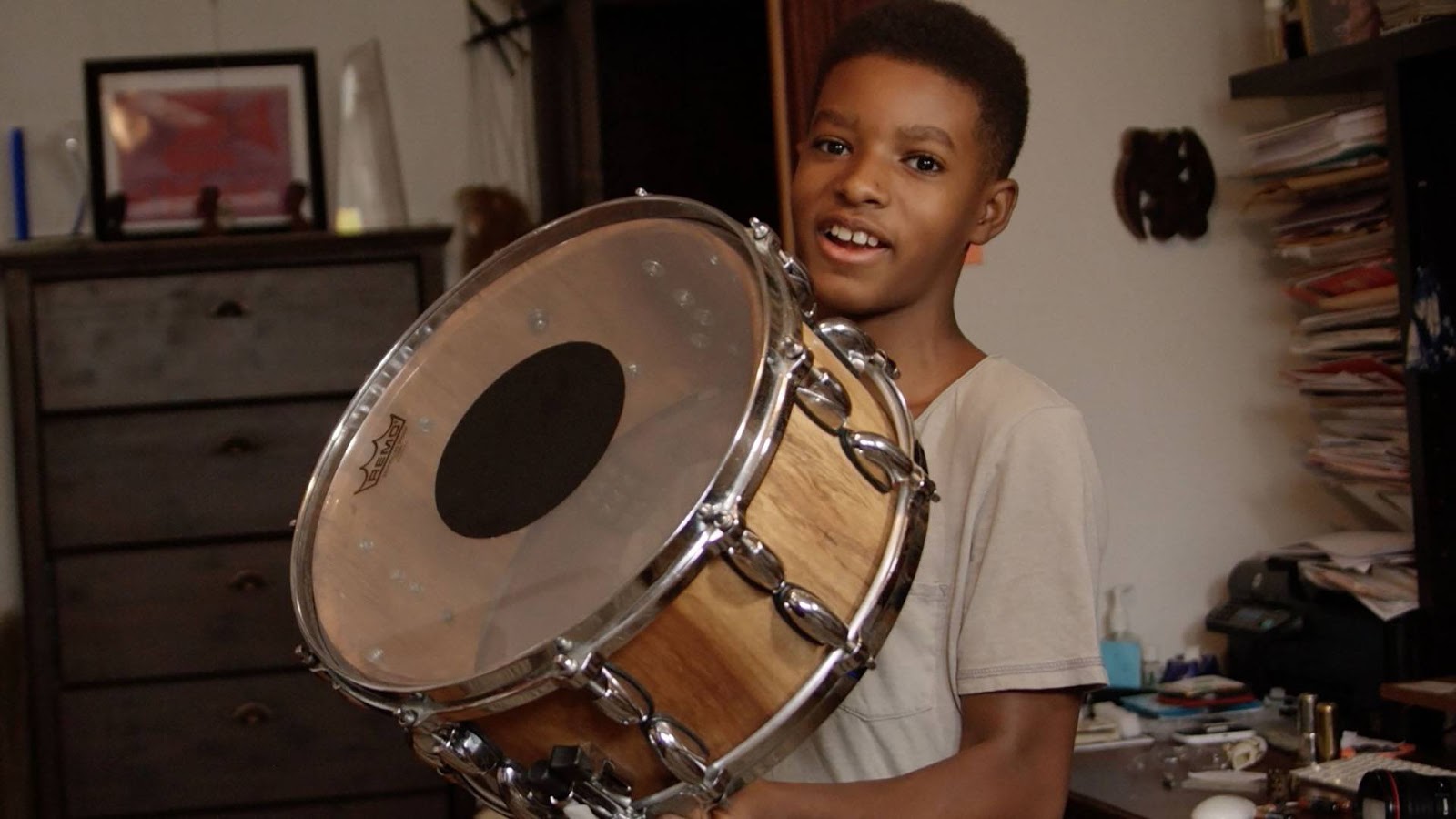
Pure joy is an eleven year old unpacking and assembling a drum kit and taking an audience of adults to school.
94. The Event
by Sergei Loznitsa

"Swan Lake," like a benediction for a country's grappling with its ugly history. We have been wrong, but we have produced beautiful things. Surely we can pull ourselves out of this mess once more. The stern black and white images don't bear out hope, only a continuity of effort.
95. Pumpkin Movie/It's Him
by Sophy Romvari

Romvari's tales of missing men and the stain/shadows they leave behind are some of the most reliably thought-provoking in Canadian film. This incidental double feature show the good and the bad sides of masculine influence, as rendered/remembered by women stuck with their legacies. Unlike Nine Behind's absent director, their influence is felt much more keenly by a grieving sister, and a pair of perpetually stalked and bothered young women. Female friendship is both consolation and armor, a way around the problem of needing men, or at the very least, being constantly battered by their existence, present or invisible. Her heroes reach for definitive hope but find only half-hearted gestures, a knowing defeated tone for describing them. The perfect surfaces she conjures for both films help the sorrow go down easier.
96. The Daughter
by Simon Stone

Australia, it turns out, is the perfect place to stage Ibsen. Unemphatically presented (the truth stings enough without the director hammering it home), this tapestry of pain is impossible not to become wrapped up in, if only because each character is so believably damaged.
97. The Great Wall
by Zhang Yimou

Zhang Yimou's attempt at both olympic pageantry and euro-pudding romantic drama ought to be the incomprehensible laff-riot most critics want you to think it is, but the director of Hero didn't get hit on the head and forget how to make movies over night. This movie is capital F-Fun and every off-kilter element, from Damon's accent to the silly CGI dragons, is just another tent in the carnival. The stained glass sequence is some of the finest work the veteran director has ever done.
98. First They Killed My Father
by Angelina Jolie

Jolie, back in humanitarian crisis mode, glides across a country's shame all to locate the indefatigable humanity of its smallest combatants. Anthony Dod Mantle scaled back his arsenal of lighting effects to keep from over-aestheticizing the horror of life as a child soldier. The land never loses its natural sheen, and our young hero never forgets that though making war is human, it's not necessary.
99. Annabelle: Creation
by David Sandberg

The cast is perhaps overqualified, but most welcome, for this surprisingly effective haunted house ride. Little girls struggle with feeling unwanted just as a demon discovers their vulnerability. Expertly acted and sharply directed.
100. The Commune
by Thomas Vinterberg

Thomas Vinterberg does his best Lukas Moodysson impression and naturally unearths a few more honestly ugly truths. This film's interpersonal dramas might be a touch generic but the looks on its female characters faces as they understand that they're not in the 21st century in which the film is made, that for all their liberal views and belief in equality, the men around them still make the world and they must exist in response to male will and whims. The film doesn't foist modern thought onto period life, for which we can be grateful. It shows women pining for a more enlightened time, so completely that they'll try to bring it about through the social equivalent of emergency surgery but the times have a way of stopping progress like a virus.