
In the following piece critics Scout Tafoya and Tucker Johnson take a look at Jordan Peele's Nope.
Scout Tafoya: When you live in a colonizing state, and you look like the people who founded it, everything you say carries with it a kind of privilege, even if you criticize the state. Straight white Americans have a responsibility with which almost none of them are prepared to fully grapple; every word you put out into the world is because of generations of trauma visited on everyone who isn’t like you. It’s easy for me to say I like many of the artifacts of colonialism - like, say, rock and roll music, the clothes I wear, or more to the point, westerns - without either feeling the need to or understanding why there is a need to examine how these things would up so easily accessible in my own life. Whether or not every single white consumer of media should be literate in the ways that power structures and one-way violence paved the way for much of what we consume every day (mostly by reflex at this point; most viewing is a passive experience today, thanks to corporate superstructures making so much of it that it’s almost impossible to imagine not seeing a colonialist narrative just sitting around your house bored, going to a bar, or getting a haircut) is a question I don’t think anyone thinks I should be answering (it's no, though. Everyone should be curious, everyone should research the history of how everything wound up in your house, no one should float through life unawares until we all can), but suffice it to say more than enough people disagree with me that when a movie like Jordan Peele’s third feature Nope hits theaters, there is a certain kind of engagement it demands and I don’t think enough people are prepared to or want to meet it head on. When you and I saw this movie, you said you’d overheard two people leaving the theatre and scowling. “Well that was his worst one!”

I’ve read reviews dedicated to picking apart the plot holes, which to me seems unfair and hostile unless you're doing that to every real movie, and I’ve read responses that complain in good faith about the thematic coherence of the piece. It’s again, perhaps not the place of a white viewer to ask why people are so skeptical of a black western, but then maybe it is the job of every viewer to examine bias in order to really place a movie like Nope in its historical continuity. All around the set Peele gives us clues what he’s up to, from the posters of Sidney Poitier westerns like Buck and the Preacher to the clip of Eadweard Muybridge’s black cowboy, something like the first photographic subject to move across three brilliant, exciting frames, setting up the film’s anti-capitalist through line. Keke Palmer’s Emerald Haywood introduces the idea of the rider as a man presented to the world in a landmark feat of photographic technology, the first time man was brought to life on a screen, to to speak, but he was made anonymous in service of the technology itself. Much as most of the history of the west is not talked about in body counts but rather in products afforded by slavery and genocide. “Molasses to rum”, as the song goes.
If you don’t know that one, it’s from 1776, a musical written by Harlem-born white composer Sherman Edwards. Theatre scholar Anne Potter suggests that 1776 is a more vicious attack on the founding fathers than something like Lin-Manuel Miranda’s Hamilton because of a number like “Molasses to Rum” in which slave owning senator John Rutledge conducts an imaginary slave auction. In his original draft, rather than having a New England delegate demand that Rutledge stop the distasteful display, he actually gets up and puts a bid in. Either way it’s damning, because for all their high flown liberal ideas, slavery wasn’t struck down in the constitution. Everyone profited from it. Sherman Edwards had lived through Hiroshima, the turning back of Jews at Ellis Island fleeing the Holocaust, the end of Jim Crow, and, as the show was getting ready to hit broadway, the Nixon administration, he’d seen white America’s evolved attitudes. Maybe a musical with an all white cast of characters in a room deciding the fate of the world wasn’t what the world needed but it was at least an honest accounting of what happens. I don’t remember anything about 1776 except “Molasses to Rum.”
The message of hypocrisy, of white men in rooms making the world, unfortunately it doesn’t ever become obsolete, because it’s still happening. There’s a straight line from that song to where we sit right now, in the hottest weather the planet’s ever recorded, unable to leave our houses for more than a few minutes at a time while police budgets skyrocket and the unhoused die on our streets. A tonic then, to see a movie that accepts the truth of the world (a room full of fidgety, obtuse white people making the rules starts the film in three ways - by spooking a horse named Lucky, a chimp named Gordy, and by keeping the Haywood family in thrall to poorly paying jobs), and then sets off in search of something new. It isn’t content, the way a work like Hamilton is, or Ari Aster’s Midsommar to pick a more recent generic offering, to show you what you’ve seen before with new faces. I think now of Ishmael Reed’s Toni Morison-funded rebuttal of Hamilton, The Haunting of Lin-Manuel Miranda, which took both the musical’s author and Charles Dickens and went looking for contemporary language to describe a world completely at odds with its own history. Miranda sought to bring history to a new generation by making the faces of slavery more relatable, to Disney them into palatability. Reed sought to bring centuries of anger into a modern vernacular using a monocultural touchstone as its center. Peele has done the same thing with Nope; taking on a failing Hollywood establishment using its own language (the blockbuster, and its subversive antagonist: the quick cash-in) and made something new out of it.
So maybe the start of the arguments on a movie like Nope is: is it enough to invert old ideas? Because that seems to be all any directors seems interested in doing (Aster takes The Wicker Man and turns it into a Rorschach blot of modern anxieties, weighted down with an “important” length of three hours to ensure it doesn’t just feel like leftovers) and frequently this isn’t done with the same gusto and talent as someone like Peele. Nope’s genre heritage can be traced back to Jaws, even if its roots go back to Muybridge, Bass Reeves, Herb Jeffries, Spencer Williams, and Sidney Poitier. After all when the camera was invented and reinvented, the American west still looked like it would later in John Ford movies. Black cowboys were in abundance in the old west, even if movies about black cowboys weren’t and still aren’t. Bass Reeves, the black sheriff famous for reading scripture to runaway fugitives and converting most of them in the process, was lately a character in Jeymes Samuel’s similarly revisionist The Harder They Fall, a film literally about the color missing from most Westerns (it’s one of the most visually splendid films from the last few years - a rebuttal to Tarantino's slavery-fixated Django Unchained). Like Nope, and like another new western The Good Lord Bird (based on a book by James McBride and directed by Albert Hughes, Darnell Martin, and Kevin Hooks among others) The Harder They Fall aims, if not to replace traditional western imagery, then to complicate it, to turn it inside out, to hotwire it in the name of making heroes out of black cowboys. To make new images out of the dust of old ones (literally in one of Nope’s stunning final tableaux). Before we get into the particular imagistic victories of Nope, that’s the question I want to ask you: is it enough for a film to just give us new images? While we were making The End of History you politely tolerated me screaming about the need for new images for weeks and weeks and while I think we’re basically on the same page about it, but, I do want to know: what is important for a new work of art to be and to say? New ideas? New cliches? New versions of old cliches? New sights? New sounds? Why did you walk out of Nope as high on it as I did?
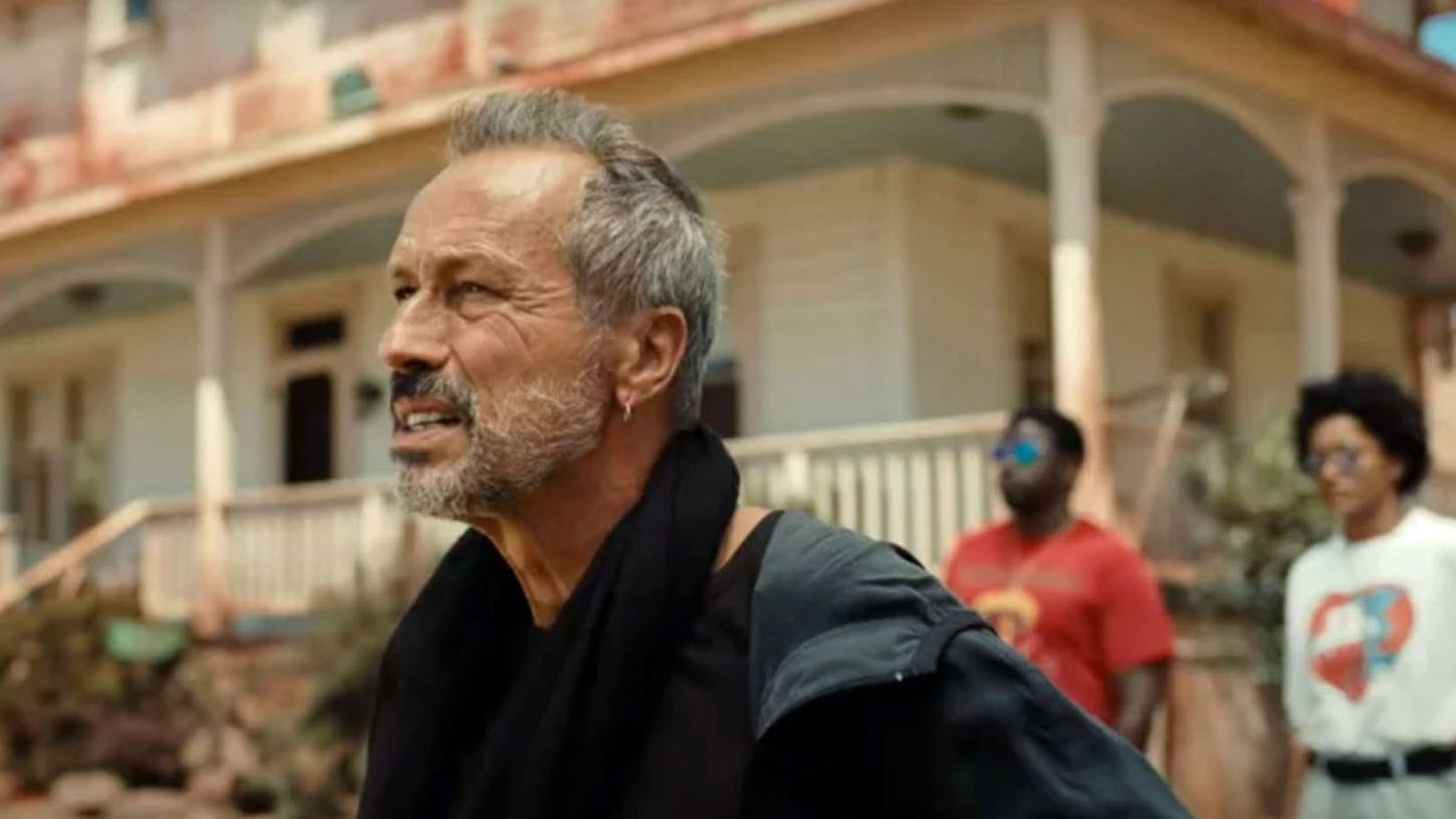
Tucker Johnson: I’m really sorry for how I’m going to start. There’s an Aziz Ansari joke (I KNOW) titled "Are White People Psyched All the Time?" In which he tells a story of being interviewed and is asked the question “are you psyched about all this Slumdog Millionaire stuff? Aziz essentially says “yes I may be Indian but believe it or not I had nothing to do with the movie. Wait are white people psyched all the time?! Back to the Future? That’s us! Godfather? That’s us!" The list goes on. Jordan Peele isn’t the first black filmmaker (though the way people talk about him, on some days you could be forgiven for thinking that's how people see him) but I think he appeared in a lightning-in-a-bottle moment in time where movies almost entirely populated by actors of color were (to the surprise of no one who’d been paying attention) getting everyone off the couch and into the theater. These weren't just niche genre films (Set It Off, Barbershop, Blood In Blood Out) or polite dramas (Saving Face, The Joy Luck Club, The Wood, Waiting to Exhale), these were blockbusters with the fullness of studio PR machines behind them (Get Out, Crazy Rich Asians, Black Panther, Coco). Yes each one of Peele’s films is racially motivated in an allegorical sense and critics and audiences alike love to pat themselves on the back while they publicly recognize that they understand what the films are about. I don’t even want to think about how many dinner parties and barrooms were filled exclusively with white people talking about race in America after Get Out took over the public consciousness for a little while. I also don’t want to condemn that idea though. Getting people talking and thinking about ideas they may not have before is one of art’s most powerful effects.
All of this to get around to answering your initial question. No, it isn’t enough to have good images. Movies are stories first and foremost and I think without a good story a movie is doomed to fail. Just as an exercise let’s remove race from Nope’s premise and it becomes "A family that owns a struggling horse stunt and wrangling business that’s been working for Hollywood for decades suddenly sees an opportunity to quell some of their financial troubles when the idea of capturing an alien on camera becomes a possibility." If instead of a trailer for Nope they just read that sentence to you would you want to see it? I can’t answer for you but I would certainly be interested. I like movies with aliens. I like movies about Hollywood and moviemaking. I love pretty much any movie that features horses prominently. In a lot of ways Nope is tailor made for me based on those story beats alone. And I think ultimately that’s where Jordan Peele is on some level a genius. Even though each of his films has a lot to say about being black in America he doesn’t start there. Honestly, because he doesn’t have to. He is black and he is in America. Those details are going to be in his work even if he purposefully worked against their inclusion. He starts with a question I really don’t think too many filmmakers ask themselves or maybe they aren’t allowed to ask themselves anymore: Is this a good story? Does the story stay interesting from scene to scene? Are the characters interesting and believable people? Will general audiences care what happens to them? I firmly believe this is the beginning of Peele’s process. I think that’s why Nope is being viewed by so many critics through Spielberg-tinted glasses. Whether or not a Spielberg film is about more than what’s on the page is irrelevant. Spielberg’s good movies are good because you can answer yes to all the questions I asked above about them. So are Peele's.
In a class at Emerson that I don’t remember we did an exercise where the professor asked the class the following: in a movie what’s more important, the visuals or the audio? Weird question for sure but the answer morphs the longer you think about it. The knee jerk response would of course be visuals right? Film is, after all, a visual medium. But let me complicate the question – what would you rather watch: a movie with pristine visuals but audio so garbled you can’t make out a single word any character says (and there are no subtitles) or a movie with visuals that are fuzzy but every word spoken is clear? Even then you may still say visuals but I think saying so is assuming the film is directed with enough care that what’s on the screen and the actor’s blocking is enough to convey the film’s meaning and premise. Let’s go a step further. Think about found footage horror. Movies with visuals that are purposefully meant to look muddy or pixelated. At least in the Hollywood produced entries in this genre, you don’t struggle to hear what characters are saying unless a scene or sequence requires it. I’m probably beating a dead horse (maybe one of the ones Jean Jacket, our extra-terrestrial, absorbs in Nope) but I want my answer to your question to be firm. Visuals aren’t enough. Neither is audio. Film is a medium of so many essential parts functioning together in harmony. It’s why most movies aren’t satisfying. Even if one or a few of those parts stop working the whole project falls apart. It’s why even with Sam Raimi’s eye behind the camera (or as much as he was allowed to be) the new Doctor Strange was a mess of gobbledygook. Too much of the action on screen was contingent on knowing hours upon hours of lore presented in other Marvel films and tv shows. I’m not even passing judgement on the movie. That’s just bad storytelling.
Every story should be able to stand on its own legs without any cliff notes or a works cited page. I think for that to happen movies just need to good dammit. Yes of course there are enormously popular and successful movies and tv series that aren’t actually very good. But I think the works that really do stand the test of time are able to do so because the stories work like fables. They’re exciting, or terrifying or hysterical to anyone who hears them regardless of social class, race or religion. When you boil all that BS away what you have left are human beings and we all want to be entertained. Human’s don’t pass down our history verbally anymore. We do so visually with film and tv and the ones you’re going to have on a shelf in your house, the ones you’re going to watch with friends and loved ones over and over again are the ones that resonate with you on a human level. Jordan Peele’s true skill is his ability to tell you a story about being human. He forces you to engage and empathize with a family that’s having trouble putting food on the table. That’s struggling to keep their loving father’s life’s work afloat. He establishes these ideas early on and we’re hooked. So when the story begins to show us how much their situation has to do with being black in America we (white people, people who may not know what it’s like to run a failing business, people who ride and love horses, people who don’t deal with condescending rich people every day, people who haven’t lost a parent, people who may or may not be interested in the future of filmmaking) are easily able to follow the bouncing ball. We see ourselves in people that might not necessarily look like us and suddenly we understand each other.
ST: I think you’re right that the tension between the dinner party liberals and your typical “release new, no matter who” moviegoer may be why Peele has succeeded as much as he has. Peele’s fans get it (black audiences who likely see in Kaluuya’s frustration with the establishment as it appears in both Get Out and Nope the same reactions they’ve had to ten thousand micro aggressions from whites of every stripe), Peele’s “fans” want to get it (people who, and I mean we have to be willing to admit we fall into this category a little to move forward, want to be able to tell people they loved and understood his work - though frankly as he moves away from the more cleanly allegorical into the more abstruse mythologizing he’s been up to the last two films, the herd might thin), and people who want to be able to say they don’t think this week’s new release and talking point is all it's cracked up to be. And then there are just people who want to think about and talk about movies. Peele’s popularity has only ever made sense, even if it was a little funny to see a cast member from Children’s Hospital become an Oscar winning sensation. He’s giving everybody what they want or what they think they want, and he’s just cagey enough about it that all of us will fill in the blanks about his intentions. Smart and savvy.
I see (if I obviously have trouble with) what you mean about stories, which I think is why I’m so frequently out of step with modern audiences and a lot of other critics. I usually don’t care what’s happening or why. I don’t listen to music for the lyrics and I don’t watch movies for the screenplay. Having said that, it is worth noting that good filmmakers, confident filmmakers, can make me care. I’m not completely stone faced in front of comedies staring at the visuals or anything. I like laughing! I like being scared! I like jumping up and down in my seat. I mean you and I are like little kids when we see movies that move us (Matrix Resurrections, West Side Story, Ambulance, and now Nope, to name some recent examples). I want to be moved. I love being transformed by a movie, why else would I pay 45 dollars for the privilege. When you spend theatre prices and get betrayed by a movie primarily aiming to outsmart you (like Alex Garland’s unfortunate Men) you’re likely to be mad. I left my house for this? Found and paid for parking, bought a 20 dollar concession in the lobby, put up with a whole theatre not wearing masks? For this confounded horseshit?
So yes I like to like movies, but I’m also, as I’m sure any casual observer will have noticed, cursed with standards. Not high standards, by any means, just peculiar ones. I want a movie to have imperative images, and I want to react to it. On its face that doesn’t sound hard, but so few movies (released in theaters, I should say) seem interested in provoking those reactions. If I like Nope it's because its rewarding to obsess over but also and importantly it’s because I was scared, I laughed, I was entertained, I punched the air, I jumped up and down in my seat. But it wasn’t until I saw Peele deliberately talking to me, the fed-up genre fan, in the climax that I knew I was watching a new favorite. Our villain is elevated horror. There may be metaphors aplenty, there may be economic hardship and traumas to overcome, but this is a movie about spectacle, about what happens next, about what’s on screen. When I saw that Peele was specifically attacking “elevated horror” of the sort made by Aster, Garland, and a lot of the A24 bench, by having his monster not be an idea but rather simply a big, empty THING in the sky, a literal elevated horror, that’s when I knew I had my answer. A good film, a great film maybe, and made by someone who is aware of an audience’s needs. If indeed what you say is true that a film needs to be a compellingly told story when stripped to bare essentials, Peele has done that as far as I'm concerned.
But of course there’s always more to it than that. The pleasures abound. The Jesus Lizard t-shirt, the diegetic Corey Hart remix, the images of Kaluuya, clad in brilliant orange emerging from nowhere to stand in deliberate tableaux evoking and striding past the images we see of the American west (represented by a beautiful shot of Keith David looking like Herb Jeffries in Harlem Rides the Range - also deliberate; it isn’t symmetrical, though it should be, thus we’re alerted to the fact that something is off in this calculous of the cowboy - sitting on a horse with a Stetson in the opening), the frequent anime cribs, and so much more. There are close-ups of Kaluuya here that tell me that Peele has been watching a lot of Khalik Allah, whose own ethnographic work occasionally borders on horror. I also loved that, while yes, it’s clear that he’s making something of a Jaws homage (complete with Quint figure in Michael Wincott, one of the best and most distinct actors on the planet, playing an ornery cinematographer named Antlers; a reference no doubt to Peele’s own Get Out), I like that he seems to be playing as much with the notion of Jaws as a kind of mirror held up to the less auspicious corners of pop culture. Antlers, after all, also evokes The White Buffalo, J. Lee Thompson’s lightly psychedelic Jaws cash-in starring Charles Bronson and Will Sampson. And what is Steven Yuen's wild west rodeo if not a cheap cash-in next to the hand-cranked Imax spectacular the Haywoods cook up on the other side of the canyon? The stark California landscape evokes the stomping ground of The Car, in which a Sataned-up hot rod with no driver stalks its prey on lonely back roads. And what is Jean Jacket but a car with no driver? Every conceivable audience got their own Jaws back in the late 70s…except for, you could argue, audiences looking for a movie with black heroes not speaking the words of white screenwriters. Peele likely noticed that no such film existed. Now it does.
The idea of a Quint character is a poignant one even now because any man willing to die in pursuit of a trophy has left one long, empty life behind them. And even people who’ve lived full lives can still relate to a Quint character; everyone has once been obsessed by something that got away. Nope is about people who realize they’re on a fast track to oblivion with no help coming, and as Kaluuya says, “I can’t fire me.” People are becoming obsolete, just like animals and old machines. Lucky proves his worth as much as Kaluuya’s wrangler and Wincott’s old hand-cranked camera when the chips are down. Everyone here proves their worth as they would on a John Ford cavalry picture, another connection this has to the old west beyond the equestrian obvious. Nope is a fun film to imagine having been made in other eras because its ideas. Sequences, and characters are so rich, even if the film speaks a 21st century vernacular. Ward Bond or maybe George Macready as Antlers, or later young Mario Van Peebles or Bokeem Woodbine or even Jeffries himself as OJ. It slots itself into American picture history so neatly while providing credible competition to the most exciting of the films of yesterday without ever being purely satisfied with gesturing towards them. Sure the finale is right out of Moby Dick or Jaws, but the build up is one thrilling and mysterious set piece after another. And, thankfully, plenty for the eye. How about you? What really stood out to you about Nope?

TJ: I certainly don’t want to walk back everything I said before about the importance of story but your focus on images is honestly where I start as well. If a film’s palette doesn’t agree with me, and I don’t have a set criteria for what that agreement looks like, I find it really hard to engage with. That visual experience begins the moment the movie starts and a lot of the time I have gut reaction before I meet a single character or learn anything about where the story might take me.
I think it’s because a film that takes time and care to make sure its visual language is thoughtful makes me trust the filmmaker (and entire crew). Once I know they are willing to put the technical work in I’m more willing to go for whatever ride they want to take me on narratively.
What specifically stood out to me is how Peele builds a mystique out of familiar imagery by tweaking things just a tad to fit them into his own sensibility. I think Nope’s teaser trailer is a perfect illustration of what I mean. You have Keke Palmer delivering her monologue about Eadweard Muybridge’s Horse in Motion, Kaluuya asking “what’s a bad miracle” and “they got a word for that?” and other than Palmer shouting “Run!” that’s all there is for dialogue. All the hype and tension is built on beautiful, sometimes off-kilter images. Gorgeous night and day shots of Kaluuya riding on or near horses. The fields full of inflatable tube people. The horse in the glass case at Yeun’s western show. The TMZ reporter on a motorcycle with the mirror helmet. Change any single detail about these images and they may not have the same mysterious quality to them. The first teaser for The Force Awakens had a similar feel. The trailer left you with almost no knowledge of what the film was going to be about. The difference here, and the genius of Peele and whoever else had a hand in cutting the Nope teaser, is that nearly all of them actually play heavily into the film. We’re getting these gorgeous, strange images with no context and we’re still excited at the prospect of what’s to come because what we’re seeing is so arresting.
Watching the teaser back having now actually seen the film is a whole new experience. Seeing the TMZ reporter’s helmet immediately makes me think of the early scene where they turn a light around right in front of Lucky and it scares the horse. I love that Peele uses the mirror as this symbol of antagonism both by the crew in the opening and by the TMZ reporter.
Yeun pulling the curtain off the glass horse paddock is another incredible image. It’s so strange without context but seeing in now and knowing the case was designed so that the audience could best see the horse doesn’t cheapen the visual at all. Peele could have used any kind of enclosure for the horse but the one he went with is the most attention grabbing. But that case also factors in heavily to the plot. It protects Lucky during that great scene where Kaluuya almost gets swallowed by Jean Jacket.
There’s a brief shot of the woman that Gordy maimed looking up into the sky, the veil that covers her wounded face moving just enough so that we can see it and be alarmed. Without context we wonder what is happening to this woman. Is the alien doing something to her? Knowing what actually happened to her only adds weight to her inclusion in the trailer. Yeun's broken showbiz lifer keeps that woman close and in so doing hinders his own ability to deal with the trauma from his youth. There’s even a shot of the bloody fist bump in the trailer which without context might be an alien’s hand rather than a chimpanzee’s.
Even the most marketed image of the movie, the string of colored flags dangling from the dark maw in the sky makes me weak in the knees. The flags help add scale to the image by connecting something familiar to something otherworldly. We see how big whatever that thing in the sky is and we’re terrified. And we haven’t even seen the movie yet.
I just love that Peele kind of gives us all the answers if we just know where to look. But of course without seeing the movie we have no idea where to begin searching for understanding of what we’re seeing and I think that’s brilliant. It makes me want to rush to the theater and figure out what all of these beautiful images mean. It makes me want to see it again right now.

ST: The teaser is excellent and kind of puts paid to the idea of the early cinema talk in the movie itself. Pretend you only have any given three seconds of an audience’s time, are you using it well? Are you guiding them to the next image? Are you taking your audience seriously? I mean, true nerd that I am, I couldn’t help but be moved by the recreation of a Muybridge three-second Zoopraxograph at the climax, but Peele knows that seconds count. Hence Holst looking at images right out of Jean Painlevé on his Steenbeck, unmoved by a young filmmaker until he sees a way into their story. History will always repeat but it won’t always be interesting. Holst wants to make sure he’s going to see something more than literally what’s right in front of him; the history of images, of one big animal eating another.
It’s funny you mention the trauma bonding, because I like that the film treats Yuen’s journey as a cautionary tale rather than as the central metaphor. I think a lesser film would have made Yuen’s character the hero, thereby making the conquering of trauma the most important journey in the movie. Yuen does marvelous things (his monologue about SNL is an immediate hall-of-famer piece of writing and acting) with a part written for Jesse Plemons, who had to duck out to make another western, and by putting someone so charismatic in the part and by giving his origin story so much centrality up front Peele is throwing us off the scent of the endgame while laying the groundwork for the film’s most important idea: nature will not act just because you call “action.” Life will not follow a script. Yuen’s character thought he had the magic touch, that because he was the lone survivor of a deadly mishap, he can be the one to tame some other unknowable force. Funny to think we got a sixth interminable Jurassic Park movie this year that has to have Jeff Goldblum say all that out loud every ten minutes because the producers trust their audience like they would a dog to park their car. Peele trusts us, though maybe he shouldn’t, we’re getting dumber and more flamboyantly persnickety all the time.
People are already complaining that Kaluuya’s mumbling affect in this is un-charismatic, especially when compared to his work in Get Out (which is…I mean, how do you type that/say that out loud and not feel like one of the white characters in Get Out?), but he’s doing a specific character type (leave your house sometime, you’ll meet him) and he’s doing it with perfectly calibrated humor and coiled body language. Even more so than his psychopathic henchmen in the superior Widows, OJ Haywood is one of the great portraits of a kind of wry, modern sarcasm. There’s obviously meant to be a little deconstructed John Wayne (we are in a Western, after all), but there has to be a little of Roy Scheider’s hungover Chief Brody from Jaws in the offing as well. He’s magnetic throughout, but I think you and I both loved the bit where he’s trapped in a truck, aware that he’s being watched from above. It’s a kind of mirror of the scene in The Car where Jennifer Salt is yelling at the demon mobile because she knows it won’t attack her and the scene in Close Encounters of the Third Kind where Richard Dreyfuss is trapped in his truck during the first alien visitation (or later when Mel Gibson has an alien in a closet in M. Night Shyamalan's Signs, with which Nope shares a few key ideas and chromosomes). Except, just as Salt and Dreyfuss represent modernity as it was being explored in the 1970s, Kaluuya’s wryness reaches back and touches early western pragmatism (“That’ll be the day,”) and links it to contemporary vernacular (“Nope…nah nah nah.”). Everybody looks up and sees god and says "Nope," but can't help but want to meet him anyway.
Though I also like that though the movie only says so silently (in repeated visual flashbacks), OJ’s quest to break Jean Jacket is not just one thing. It’s a way to make sense of his father’s passing, sure, but more than that it’s proving his worth to himself and to the memory of his father. He’s going to prove that though the universe is taking everything from him, his farm, his job, his family, his home, he won’t let it go without the kind of fight he knows how to put up. But I’ll say this, too, none of this would matter if the film weren’t exciting to watch minute to minute and I was rapt the entire time. Take the climax of Midsommar as a counterpoint. I just don’t see how it’s satisfying or exciting to watch, in silence, as Florence Pugh’s character is given the choice to let her boyfriend live or die, then we watch slowly and painstakingly as they put him in a barn, fill the barn with hay, burn the barn down, and then watch her react to it. That film presumes you’re still paying attention and care after 180 long minutes. Nope, without being cute or cloying about it, continues to earn your attention. And like you, I can’t wait to go back and give it more of mine.


