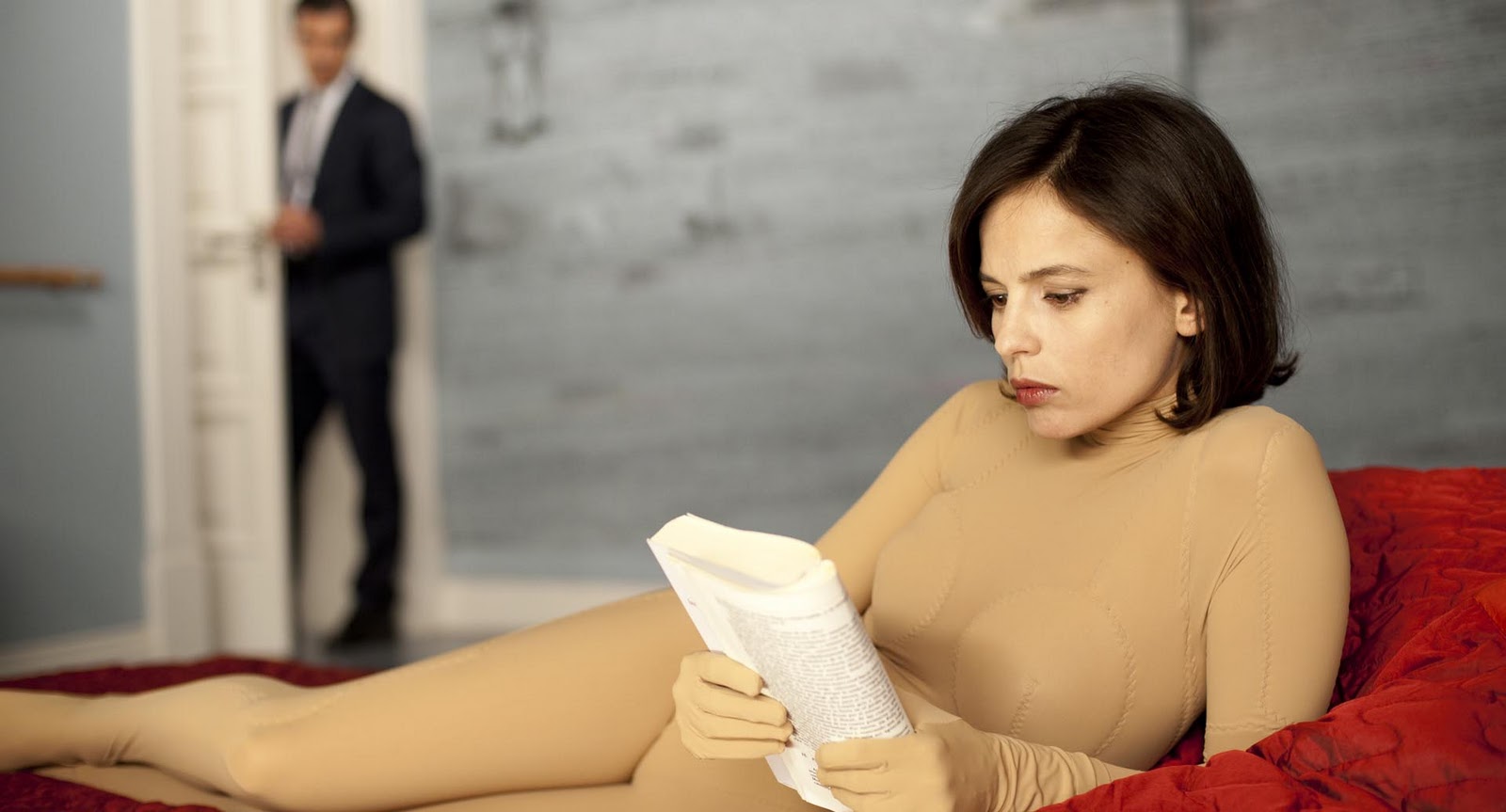
Better Late Than Never: A Latecomer's Season by Season look at The Sopranos


Season 1


I grew up without HBO. The first time I ever really learned about the possible quality of what the network had to offer was in college when I was introduced to both The Sopranos and Deadwood (the latter of which I devoured in about the exact runtime of the show played nonstop until its conclusion).
But The Sopranos eluded me. And I don't exactly know why. The show was a bit of a juggernaut as far as critics go and I'm not one to stay away from something related to the mafia. It was a bit daunting since it had finished its 6 season run (the final season is 21 episodes) and I was looking at about 86 hours of television to put myself through. At that point I really wasn't a big TV watcher anyway and had spent most of my time trying to catch up on as many films as humanly possible.
But late in my college career I discovered Mad Men, Game of Thrones and Breaking Bad, rediscovered Deadwood, and suddenly realized that though its an extreme case, television can occasionally be an art form. And after becoming an avid reader of The AV Club I came to realize that The Sopranos sits right on top of the hierarchy of quality television. All that in mind, I decided to give it a go.
The first season of most TV shows has a lot of work to do. They need to introduce a universe, and their characters. The universe is New Jersey so that's easily done. The characters, and Sopranos has a ton, was a bit more complicated. Watching the first season about 13 years after it premiered makes a lot of fashion choices on the show extremely laughable. Not because the wardrobe choices are bad but because they're true to form. We actually used to dress that way, and what's worse, a lot of people still do.
The actors that portray all the main characters are brilliant and as far as I'm concerned they're really the only thing that keeps the first season afloat. The storyline is good, not great. And the technical side of things is mediocre at best. Nothing about the show ever smacks of quality but apart from the extreme believability of the performances I don't know if I could've ever predicted the show would become the critical and cultural juggernaut it's become.
As far as the writing is concerned, David Chase the show's creator winds up doing the majority of the work which is typical for a first season. He writes well. His characters are believable and their motivations even more so. There is a familiarity to a lot of what occurs in the series so either he did his research or he's got a lot of experience with italian families. Most of the crime side of things ends up being a lot less interesting than Tony Soprano's home life or his sessions with his psychiatrist. Tony's cronies (rhymed....unintentional) are generally just there for comedic effect and the drama that arises out of Tony's nephew Christopher's attempt to rise to power takes the backseat to how much of an idiot he is.
The show survived and got renewed, as far as I'm concerned, because of Tony's sessions with Dr. Melfi, his psychiatrist. The real written power of the show emerges here. The themes, the metaphors, and the true vision of a lot of the show is hidden in these often too short sequences. Tony Soprano's obsession with a small family of ducks that live in his pool is the first real inkling the series gives you toward its true intentions and moreover I think its the reason that critics went gaga over the show from day 1. Tony Soprano is an anti-hero and no mistake and a great one at that. You won't always like him but you'll always like to watch him. And unlike a lot of attempts to create such characters in any art form, The Sopranos gives you a real shot at looking into the man's mind. Doing so keeps me watching this season.
At the end of the first season I'd give the show a pretty average score. I don't resent it at this stage in its development but based on what I've seen its still got a long way to go to become the show that so many call one of the greatest series of all time.

You know what luck is? Luck is believing you're lucky


“Don't be afraid.”
“Of what?”
“Of everything that can be."
In mid December of 2011 HBO, in their infinite wisdom decided to air a sneak peak of their upcoming series Luck. The show featured Dustin Hoffman making an extremely rare appearance on television and script that had been agonized over by David Milch, one of the few true TV auteurs. “Splitting the Atom” by Massive Attack opened an extremely slow burning pilot directed by Michael Mann. The whole episode reeked of cool. From the opening credit sequence, to Stuart Dryburgh's razor sharp horse race cinematography, to the killer dialogue that drove some incredibly developed characters (remember it's only been an hour by the time the closing credits rolled). HBO had given David Milch another shot and it had paid off in a big way. A beautiful way. A truly cool way. The show wouldn't officially air for another month and a half.

I was not happy about this.

I had been weighed. I had been measured. And I had been found wanting. Luckily the time passed quickly and I found myself ready to hunker down and enjoy another show that took real time and energy to watch. Not because its in any way bad, but because it's written with such poise that taking the time to really understand the themes and ideas being presented will ultimately make you (or in this case, Me) a better human being.

I know I know. Thats quite a bit of hyperbole for the second paragraph. But hear me out. David Milch understands a lot more about humanity than his often inaccessible writing lets on. Without going into too many details about the show, the viewer is faced with a cast of about thirteen characters to keep track of. And except for a the pair that is Dustin Hoffman and Dennis Farina, and the foursome of actors that play a strangely lucky group of gamblers, the characters are islands that rarely drift near one another. For those who are fans of Deadwood (and what I mean by this is, if you haven't watched the show by now, please please do so) you'll know that this is a similar formula to the beginnings of Milch's three season masterwork. The binding agent in both Luck and Deadwood is the setting. The titular town is a character in of itself as is the Santa Anita racetrack in Deadwood. Watching people pass by one another in such tangental manner is so much more telling of real life interaction than most television series, or films for that manner, dare to tread.

As the series progresses these characters do end up running into one another, though there is never a “wash up on the island” moment like Lost where suddenly everyone is thrown together.

What this ends up meaning is there is far more pressure put on the writers of the series. There's a storyline for seemingly every character so they need to be interesting. Now I'm talking like we're in some high stakes game here where if you don't earn your fans respect you lose. That's not the case. Not too many people watched Luck but thats from the get go. They never hemorrhaged viewers. They had a small and dedicated fan base and I think Deadwood was the same (though all the critical love since the show's cancellation has brought many more to the ill fated South Dakota camp).

Though Milch writes in a language all his own this show should've garnered more fans from the onset than Deadwood in my opinion. It boasted a few more familiar faces and was written in modern day vernacular. Deadwood was like Shakespeare. Spend enough time with it and you're golden but for virgin ears it took a bit to get into the rhythm of things. But aside from all that the show was very formulaic. Every episode represented a day and followed a slow rise to a climax represented by a horse race and then the come down as all the characters ended their respective days. And at the end of everyday the soothe sayer that quickly became Nick Nolte's character would deliver many a soliloquy in true Milch fashion to round up all the ideas that had been tossed around in the episode. These were nice bits as they helped organize my thoughts as a viewer and more importantly they showcase Nolte's true ability to act.

The show is called Luck for a very clear reason. Sure there's a quartet of gamblers who win enough prize money to win a race horse that ends up being an incredible animal right in the pilot. And one of those gamblers finds himself playing a lot of really good poker hands. But moving past those characters you learn the true nature of luck. You learn David Milch's definition of the word. I excerpted a quote at the beginning of this article that demonstrates what I mean perfectly. Ace Berstein (Dustin Hoffman) is let out of jail in the first scene. He then proceeds to methodically exact his revenge on those who put him there for a number of years. He does all this from box seats at the race track, the back of a beautiful Mercedes, or from the terrace of an incredible condo. This man made his luck years before going to prison and now that he's out he's going to do it again.

This is where the “making you a better person” angle comes in. Milch never traps any of his characters. One of his jockey characters is a hardline drug addict. In and out of rehab and such (a place Milch has been himself). But even a character who would be doomed in another series, especially because of his secondary nature to the rest of the show's cast, is given the chance to regain who he once was. Thats the real message behind Luck for me. Every person has a chance to make their life better. And the point that Milch really hits home with is this. If you were born with no chance at all, there is still time to try. And the beauty of luck is that you find it in the strangest places.

Luck was an idea very close to David Milch's heart. He's expressed a deep love for horses because of their power and grace. Even in the pilot, Milch makes it a point to have his horse trainer characters take the riding crop out of the racer's hands. He hates the mistreatment of these horses because he loves them. Its a true shame the show ended the way it did. Make whatever jokes you want to make about the title of the show versus what happened but what I said stands.

Deadwood was the first television show that I really sat down and payed attention to who was directing the episodes. I did this because Milch and his writing team were giving these filmmakers absolute gold to shoot. The same applies to Luck. Even more so actually because all the episodes were set up the same way so directors were really given a chance to express themselves and leave their mark on each episode. The horse races became the real showcase of vision for a lot of the auteurs who worked on the show's 9 episodes. Some were good. Some were incredible. Two of the races in particular ended up bringing just a hint of water to my eyes because of both their beauty and because of my amazement that they got some of the coverage they managed to get. I was quite nervous at first because Michael Mann left such a stamp on the pilot I wasn't sure the show would work without his touch. Luckily for me I was wrong and every episode has it's own spark to it.

I was really going to provide more photos of some of the horse races but its really a waste. You don't get the full effect from stills.

So it was good while it lasted. And I know its only tv but

I’m going to miss the optimistic little smile on Dustin Hoffman’s face as he watches his horse on his webcam. I’m going to miss that little goat wandering around the stable, nuts the size of pumpkins. I’ll miss Escalante murmuring advice from the stands and Walter sitting in the stable, wondering about seeing a goat from the front, a horse from the rear, and a man from all sides. I’ll even miss the bit players, like Claire or Mike or Joey, people who weren’t in the main action but were just off to the side, informing what the others did and giving us a sense of who they were as people. And I’ll miss that horse the episode ends on, craning its neck over the stall, staring off into the distance at something we don’t see, its eyes both warm and weird to us. It’s a fellow living being, yet we’ll never really understand it, much as we try. But that’s true of people, too, and still we keep trying. That's where I'll leave the show: a place where we try to keep finding understanding and keep coming up short. Yet we keep plugging away because we must.”

- Todd VanDerWerff

Thanks for reading, gang.

-Fox

In Defense of the Procedural

In the past few weeks, New York Mag has decided to take on the hefty job of determining the best TV drama of the last 25 years. Their approach, albeit nonsensical, is quite entertaining. They've set it up like a tournament, pitting one against another, then having the winner advance to the next round. This ridiculous system has led to a lot of silly match ups like "My So-called Life vs. The Wire" or "Breaking Bad vs. Friday Night Lights." It has also led to a giant fucking travesty.

http://www.vulture.com/2012/03/the-best-tv-drama-of-the-last-25-years.html


The fact is that everyone's a critic, and everyone has their opinions. And to be honest, there's literally no real-world impact of some guy saying Twin Peaks is better than Battlestar Galactica. Not to mention, no agreed definition of the word "best." No, my problem is not in what they picked (they're not done yet, though I have my suspicion), it's with how they picked them. They're on round 3 and we have, let's see, The Wire, Mad Men, Breaking Bad, and The Sopranos. All the shows have one thing in common: they are all examples of long-form TV story structures. Shows like The X-files and Buffy the Vampire Slayer get tossed to the side when pitted against long-form juggernauts and while sometimes it is an example of one show being a boundary breaking, heart-stoppingly good show, sometimes it's just bias.

For whatever reason, we've all fallen in love with long-form Television lately. And while, I'll be the first to admit there are certain stories you could only tell with long-form (Homeland being the first that comes to mind), I'm becoming increasingly aggravated with the pervading assumption that long-form=quality.

Let's talk examples: Mad Men is coming back to our living rooms this week, and with it, the customary parade of critical fellatio. Mad Men is, in my opinion, one of the most irritating long-form Dramas on TV. It has some of the worst actors I can imagine (January Jones, Vincent Kartheiser), side-plots worthy of the CW (no offense to my boys at Supernatural) that occasionally pop up and take over the show (most of these side plots involve January Jones and Vincent Kartheiser), and the constant need to punch you in the face with the 1960s. It always seems like the writers are afraid that if they don't constantly remind you what decade it is, you might forget. As if the indoor smoking wasn't enough. The show occasionally replaces plot points with long pensive shots of people smoking and staring at nothing (this happens, literally every episode), and constantly undercuts it's own characters by forcing them into archetypes so the writers can bring up some social issue (usually about sexism). Now, I want to stress that I don't hate Mad Men. Sometimes, the show manages to be really goddamn interesting and fun to watch. I just want to point out that the show has some serious problems. Problems that are so often overlooked because no one wants to be the one critic in the room not getting on his knees and facing Mad Men Mecca.

Now let's talk about the procedural. In the advent of this long-form boon, there's been two major responses I've noticed from the world of procedural TV. First, you have the unsuccessful (though one more immediately than the other) Play Boy Club, and Pan-Am. These two shows pitifully attempted to grasp on to whatever makes Mad Men so popular and cram it all into a procedural structure. Unfortunately, they both wound up listless messes because when you invite the comparison to an established AMC flagship, you might as well shoot yourself in the foot.

But there are other procedurals that perfectly merge the long-form season arc while also giving solid individual stories every episode. Shows like Justified, Luther, Doctor Who, The Good Wife, and (the late) Terriers. Shows that manage(d) to tell compelling and dynamic stories with only 45 minutes of screen time to tell them. It is an art form, and a difficult one at that, to tell a concise story. As any writer will tell you, a short story is often far more difficult than a novel. And while we're at the comparison, let's go down the Rushdie road and talk about the TV-Book comparison. A lot of popular novel writers are discovering that, to avoid the hatchet job most movies will give them, the best solution is to get a TV adaptation. The wildly popular (and increasingly annoying) True Blood, and the very big budget (and shining bastion of all that is good fantasy) Game of Thrones both stand as testaments to why any novelist worth their best-seller status should be taking their words to TV. But if a season is a book and a chapter is an episode then since when is a chapter better than a short story? This is my point, really. TV critics seem to be in the business of excusing poorly paced, or badly written moments, as long as they're leading somewhere, yet never give the proper credit to the shows that don't hide behind their ending climax, and instead just give you a brilliant episode of television with no aspirations of building towards a series finale.

Before I wrap up, I want to talk about Buffy the Vampire Slayer as I so often do. This whole tirade really began with Buffy losing to Mad Men so I guess I should at least explain why that pissed me off. Buffy is campy. It's sometimes woefully soapy, badly acted, horribly choreographed, and usually a little annoying. BUT, Buffy the Vampire Slayer produced some of television's most shining moments. The episode "The Body" took a stark and realistic look at death. And not monster caused death, just aneurysm caused death. The episode has no score, and only four scenes. The show ignored conventions to the point of being almost experimental. There's a great moment when Xander Harris punches a plaster wall out of anger, and then can't get his hand out. This constant finger pointed at the conventional while also rejecting the cliche is what makes Buffy one of my favorite shows ever. I would also gesture emphatically towards episodes like "Hush" where Whedon threw out his signature snappy dialogue in favor of a totally silent and often terrifying episode. Or "The Zeppo" which is a great dissection of being cool in high school, from sex to popularity to rebellion. Plus, the episode serves an example of Buffy making fun of itself by constantly having Xander on the sidelines, only barely involved with a fight to save the world from an apocalypse. All in 45 minutes. No pieces were set up in the previous episode to get us there. We were given the beginning middle and end of a great goddamn story that grabbed our hearts, or tickled our brains, or totally redefined what TV was and we didn't need a "previously on" to enjoy it.

So, I guess, fuck you NY Mag.

Best albums of 2011

Sorry for the delay, but we've all been a touch busy.

Tim!

Paul Simon - So Beautiful or So What

The man is 70 but after about twenty years of relatively sedated albums Paul Simon's newest entry is strangely rejuvenating. He brings back his African and Latin American influences for a subtle complicated sound that simmers beneath his insightful, touching, and often hilarious lyrics.

Tyler, The Creator - Goblin

This album is seriously sick. It's disgusting. I was physically overcome with nausea while listening to this album. That's how offensive it is. I haven't been so shocked and revolted by someone's lyrics since I first heard the Marshal Mathers LP when I was 12. And I couldn't be more pleased.

Fox!

Fleet Foxes - Helplessness Blues
The Decemberists - The King is Dead
Florence + The Machine - Ceremonials
Radiohead - King of Limbs
Coldplay - Mylo Xyloto
Tom Waits - Bad as Me
Danger Mouse - Rome
Robbie Robertson - How to Become Clairvoyant
Cliff Martinez & Various - Drive

Scout!
1. Fleet Foxes - Helplessness Blues
-Well, what'd you expect. I'm not immune to beautiful harmonies, or sundrenched folk/country mixed with indie sensibilities. They might as well be recording these things just for me. I love Fleet Foxes. I think their compositions show a growth and ambition that outstrips even the "can you believe how easy we make this sound?" effortless gorgeousness of their debut. The first time I listened to this all the way through I saw an epic, a tragedy, the spanish civil war rendered in sonic brushstrokes. Maybe I'm the crest of a wave in an immeasurable tide by putting this at the top of my list, but I cannot refuse that this album had the deepest effect on me this year.

2. The Horrors - Skying
-Maturity means something when you talk about The Horrors. Listen to their debut album and EP and see five goths looking to spook the squares with their aggressively loud swamp punk. One album later and they'd accrued a sound that made perfect sense given the influences that occasionally broke through the impish twelve bar blues and yet represented a massive amount of growth. With their third album, they've expanded that sound to something with enough hills and valleys that you can lose yourself for days. Ride, Jesus & Mary Chain, Stone Roses, Sisters of Mercy, My Bloody Valentine, sure, yeah, but there's an optimism that escaped those bands. Maybe because they know they're just getting started. I realized not too long ago that whenever I can't think of what to listen to, I just put on Skying. After the thousandth time, you think I'd be even a little bored. Don't ask me, I'm just a fan.

3. TV On The Radio - Nine Types of Light
-I hesitate to make so much of this band's legacy about the death of multi-instrumentalist Gerard Smith, because while this record is a tribute to his contributions to the group's ever-evolving sound, it's also a celebration of not only his, but all of the band member's love of life. The most upbeat and beautiful of their albums to date, Nine Types of Light feels the most like a band playing in the same room. Whereas before they were architects building worlds together or chemists experiment with the DNA of post-punk and rock-and-roll, this album found them at their most relaxed. They've always been a kind of hive-mind, as evidenced by their trademark vocal blending, which here is more about support than mixing. Tunde and Kyp sing for each other, rather than as one voice, each given the breadth and space needed to showcase the resplendency of each man's range. And all the while Dave, Jaleel and Gerard split their time between crafting the usual tapestries of sound, but also just grooving. This was the band as we've never heard them, the same but different. Their sound may change forever; if so Nine Types of Light was as enlightening a closure to this part of their lives as anyone could ask for and will always be a testament to the five blinding talents that this band houses.

4. Wye Oak - Civilian
-If I ever meet the two people who create the boundless, ecstatic rock music on each Wye Oak album, I have to first apologize for stealing one of their songs in my zombie film (I've made 70 cents so far; we can certainly split it, though my cast might be angry). Then I have to thank them for making something new and inspiring out of something so simple. Jenn Wasner's guitar works as a microcosm of the miracle of the band's sound. On "Two Small Deaths," the album's opening track, the tone is threadbare, only increasing in tremolo for the chorus, yet between that and the muffled bass, the plain keyboard hum and light drumming, there's a sound big enough to blanket a city. Wasner's voice by itself is a thing of mysterious beauty, and Andy Stack, her one-man rhythm section keeps up beautifully. They never overdo it, but every song sounds impossibly big. The whole canon of 90s rock was digested to make their sound, but it's given back in the form of an understanding hug. They've taken aggression and angst and softened it to comfort their listeners. The album has its somber passages, but the feeling one is left with is overwhelmingly hopeful, as if Wasner has seen what hurts you most and, as she professes in tragic album closer "doubt," she'd do anything for you if it felt right. An honest and humble rock album that has something deeply warming at the heart of every song.

5. The War on Drugs - Slave Ambient
-I have a weakness for bands with big, friendly sounds. Arcade Fire's oddball debut gave way to an immutable call to action. Broken Social Scene's sexy shyness has since become a clear throated shout, imploring you to feel at all costs. The War On Drugs have the same peaks in them, but their delivery is quiet, brotherly and cool. Each song, whether it's a laid back guitar painting, a slight but charging rocker or an icy wall of noise, has a welcome feeling, like a dozen hands on your shoulder affirming that you've done alright. The sound is effusively pleasant and everyone's on the same page, wrapping each other in their instruments, never letting anyone go it alone. A familial familiarity greets you with each return.

6. Dirty Beaches - Badlands
-My only complaint: I want more. Badlands couldn't serve up enough of Dirty Beaches trademark (in my head) mix of Warholian buzz and old fashioned rock and roll. Like entering an abandoned factory and breaking every window on your way in (Speedway King) Badlands soon gets down to business, playing Link Wray through a hundred year old ham radio. Taking rock arrangements, cutting them with distortion and playing them ad infinitum, Dirty Beaches does for rock what Godard did for genre; cut up it up, show you its insides and then see if his meddling makes you love it any less. A statement, sure, but also one hell of a good time.

7. Psychic Teens - TEEN
runners up: The Psychic Paramount - II/Psychic Babble - My Brother's Ears/My Sister's Eyes
-One of the best parts of editing this blog is that I get to make the rules. So while some people might recuse themselves of reviewing an album made by someone they knew, I get to celebrate them. I take no little pride in saying that I know some of the Psychic Teens and they're all awesome guys. That said, I was a fan first and TEEN is one of the best fusions of styles I've ever heard. Like Joy Division meets Lunes, Psychic have a sound I find irresistable, all reverb and gliding guitar and glorious, glorious feedback. This is dark and sexy as post-punk gets.

8. Radiohead - The King of Limbs
-A friend once said that anyone who doesn't like Radiohead is trying not to like them. Their sound's been picked apart, especially on this record which was born in the age of instant gratification and rabbit-hole style music criticism. What I will say is that after hearing this album, it very suddenly became difficult to listen to their earlier albums. If they were capable of this, why hadn't they always made albums this minimal, yet striking? It's a ludicrous question, because obviously it took years to get them here, but I couldn't be more pleased that they're here. Now if only they'd release a new record a year like the free jazz mavericks they've become. I love Radiohead and won't make excuses about including them on my top 20.

9. Real Estate - Days
-Being a fan of post-punk often makes you easy to please. Like a game of spot-the-reference, I feel happiest when I can put on a new album and hear that the people making it love the same things I do. Sometimes that's enough. Real Estate take the elements I love about The Feelies, The Replacements and R.E.M. and stir them into a shimmering, shining good time. With the layers of a Philip Glass Etude, the four members of Real Estate craft a timeless feel good record that's as relentless in its way as any metal record. The guitar sound here was chosen for a reason and its legacy is assured. By never wavering from their sound, Real Estate are placing themselves daringly in rock history. Let's see what they do next.

10. The Coathangers - Larceny & Old Lace
I like the idea of Riot Grrrl more than I've ever connected with any of its tentpole albums. I was never a girl in the 90s and so I miss out on the politics to a degree and can't see through the sound to the message as clearly as its proponents. An album with all the hallmarks of that sound but whose style is much more about the No-Wavers of the late 70s? Pull up a chair and tell me about yourself. From the first time I heard them, while filming their performance in Siren Records, the Georgia quartet roared their way into my heart. Half saccharine posturing, half dissonant violence (their named after an illegal abortion, after all), The Coathangers would be a tough listen if the hooks weren't so indelible. The fact that they're adorable in spite of themselves helps too. They have it all, really.

11. The Rapture - In The Grace of Your Love
-If this record had nothing but "Blue Bird" it'd still be on here, but it's also got the typical electro funk fusion I love so much about The Rapture. And of course, it's got Luke Jenner's one-of-a-kind voice. Loving The Rapture means loving Jenner's raspy howl first and the band's dark disco sound a distant second. This time around they prove equally adept at rockers as with their usual Parisian salon electro pop, and thank god. If they'd never written "Blue Bird" my life would be less full.

12. Lisa Hannigan - Passenger
-"Home," the name of the first song, would have made a fine album title. The Irish singer-songwriter's sophomore release is the aural equivalent of laying by a fire in a cabin with the love of your life, boundless potential stretched out in front of you. Her compositions are stronger, her arrangements richer, her sound that much more endearing, her voice as warm and sweet as hot cocoa and soft as snow.

13. St. Vincent - Strange Mercy
-Though she has the avant streak of Kate Bush, not to mention the capable voice, Annie Clark's goals are a little different. She's outthinks her rock contemporaries and outplays most of them too, like Thurston Moore doing Philipp Vandre. The hooks occasionally get lost under her dissonant orchestration, but they're there. She's at once more adventurously strange and poppy than on either of her last two records, producing pop gems like "Cruel" and "Cheerleader" and journeys like "Strange Mercy" which meanders through an electronic haze to reach one of her greatest choruses and that's saying something. It was for her that I coined the phrase "Transcendental Pop." She evolves more each time and watching her do so is always important, but the record has joys that even the uninitiated will love.

14. Gauntlet Hair - Gauntlet Hair
-Gauntlet Hair sounds like a demolished apartment building screaming its history in the seven seconds between implosion and full collapse. It shares the lives that have passed through it in abstraction and delivers it in the kind of echo-filled howl you can only hear when you live up the stairs from a passionately argumentative couple. It boils with life and feels loved and hated, angry and content. No other record this year sounded like Gauntlet Hair; rather, the feeling I got listening to it was more of a half-remember conversation, an overheard flirtation, of kids playfully laughing at a public pool. It's the rhythm of life transcribed in crashing symbols and guitar that's stuffed with chorus and reverb.

15. PJ Harvey - Let England Shake
-Again, what could I say that you haven't thought? Harvey's most cinematic and playful release in her life. Like Serge Gainsbourg producing wartime blues, Harvey's found a niche she's never explored, sounding like the kind of thing you'd hear in a tube station during the blitz or at a mod club while David Hemmings tries to solve a murder, but of course much more modern and sexy than that implies.

16. Tom Waits - Bad As Me
-Heart Attack & Vine: The Reckoning.

17. Sonic Youth - Simon Werner A Disparu
-In a cruel twist of fate, an album made for someone else, a movie that most of their fans will never see (indeed that most have never heard of), may wind up being the last Sonic Youth album. If the legendary group doesn't survive the divorce of Thurston Moore and Kim Gordon, most people will believe (through stubbornness or perfectly understandable ignorance) that The Eternal is their final statement. And in a way it is. It's the last album they grew from nothing. Simon Werner was born out of a truly sexy French film of the same name and so the image spawned the sound (though try watching the film and imagining it without SY's involvement. It's impossible), but as a career summing cap, it would stand if it had to. Though it has the simmering rock of their later records, it also draws heavily from the shimmering slinky sounds of Sister, one of their most under-appreciated records. No one says a word the whole time, they let their guitars and drums talk for them, which is how I'll remember them. Not a rock band, but four people in synch, letting their hands guide their conversation and letting beauty rise to the surface, whether by design or by accident. They might shy if you called them artists to their face; Simon Werner is a minor masterpiece. Whether or not it's their last, it's just as brilliant as any in their canon.

18. Dum Dum Girls - Only In Dreams
-Sticky sweet and lovely as sin, like The Ronettes blasted through a jet engine.

19. Chad VanGaalen - Diaper Island
-Chad will always do precisely what he wants to. His sound is unique and lovely and I hope he never changes.
20. Washed Out - Within & Without
-Diaphanous bedroom music that sounds like lovemaking instead of crying, for once.


Honorary - Thai? Dai! - The Heavier Side of the Luk Thung Underground
- A brilliant compilation of Thai psych music from the 70s. Truly amazing sound.

The Suburbs- work in progress


Hey guys! So I've been working on my song for our next album cover project thing and thought I would post a sort of work in progress version for you all to see/hear. I'm not sure who checks this blog on a regular basis, but you're here now, so I guess that's all that's important.

The Grey


Joe Carnahan is a tough director to track. He's made five features, four of them major releases and their themes and styles are split more or less down the middle. Narc, his first real feature, is a gritty and brutal cop drama filmed in insane hand cam with wild saturated colors. His two middle films are just the opposite. Smokin' Aces utilizes an enormous cast to play out a video game script thats entertaining but definitely silly. The A Team was Carnahan's true entry into Hollywood filmmaking. He had major movie stars and a 110 million dollar budget so he went to town. I enjoy all his previous efforts and his name was really the only reason I ventured into the theater to see The Grey.

I'll try not to really talk about the actual events of the film as that'd really just end up giving things away. The trailer does a fairly good job of setting the movie up though but it fails at everything else. Yes there are wolves in this movie. Yes they're antagonistic. And yes, everyone, once and again they are digitally rendered and not really the best looking. But the amount they're shown in the trailer is in stark contrast to how much they appear in the film, percentage wise. The real villain in the film is the harsh Alaskan elements themselves and I'm happy that Carnahan didn't create a digital creature film.


One thing I noticed nearly right away is the films similarity to Narc in its staging and photography. There's a lot of hand-cam and low light photography so the whole movie looks like it's covered in snow even when it's not falling. The gain onscreen forms a nice look and definitely works. But The Grey is far less manic than Narc. It's slow. Not necessarily slow paced as the two hour run time goes by pretty quickly. The slow nature of the film comes from Carnahan actually slowing down to let his cast of great character actors do their jobs. One scene in particular stands out to me. The whole scene is comprised of three angles and over the course of about ten minutes you only see about 4 edits. It's very un-Carnahan and it's actually pretty brilliant.


Now when they aren't trying not to die from the cold weather they're trying not to die from wolf attacks. They set up early on that the reason the wolves are after them is because the humans are in the wolves' territory and seen as a threat. I don't know if every viewer will buy that but I did, so, there you go. The wolves end up being incredibly scary even when you don't see them. They do an amazing job sound mixing the distant howling of a pack of wolves of unknown size. When the wolves finally are seen Carnahan does a great job of intercutting digital wolves with actual wolf footage to preserve the illusion. When the wolves actually attack the cutting of the shots is insane and incredibly frantic, making the maulings that much more intense and disorienting.
The last thing I'll say is that the films ending is a bit shocking. Not in the events that transpire but more that Joe Carnahan had the balls to end the film the way he does. It's very different from anything you would expect from him. The audience I saw it with grumbled into the lobby about it but I really loved it. I hope those of you who bother to see it will do.

My Favourite Films of 2011

If you're looking for a little suspense, you can skip to the bottom and work your way up. Me, I like suspense, but I don't kid myself, I know why you're here. Luckily the best film of the year received nothing in the way of a theatrical release before a semi-dignified DVD release with a less-than-impressive transfer and butchered subtitles. The first time I saw it, in a packed theatre, was perfect. That's the kind of experience I live for. Feeling a room moving with you in time to a movie is exhilarating to say the least. Which is why it's a mixed blessing that most of the films I saw and loved this year were done in movie houses, instead of at home. Now, that's not to say that there weren't a lot of tiny art films viewed at 2 in the morning by my lonesome in my living room, but I felt as if last year was a particularly good year for that. The only films I saw that put me back in the mindset I occupied this time last year were Lo Quattro Volte, Ne Change Rien, Archipelago & Silent Souls. Which isn't a bad thing (one more thing to think of fondly) because I love me a good time in the cinema, multiplex or otherwise. If anything I take great hope from the fact that I had as many great times in movie theatres as I did this year. People with imagination are coming back into favour after what seemed like an impossible dry spell during the Bush years. Of my top ten in 2008, I saw one of them in a multiplex. In 2009, I saw three from my top twenty in a multiplex. Last year the number jumped to eight. I just feel more optimistic about the future of big budget filmmaking and I also feel like weirder little films are starting to get bigger releases. Never would I have dreamt that the film being touted as the most over-rated by most critics this year is a silent, French dramedy, which I didn't find time to see. There are still dozens of films left that I wanted to see before making this list, but a year is a year and this one's come to an end. So without further ado, here are 100 great films I saw this year.
1. 13 Assassins
by Takashi Miike

I've been slightly disappointed to discover lately that some films have a half-life. I went and saw Drive a second time and while it's still better than most films this year (or fuckin' ever made), I noticed that it didn't have the same complete control over me that it did the first time. I could see it working on my friend Mark who was sitting next to me the second time. I could enjoy it as a piece of filmmaking and it's undeniably topshelf at that, but the feeling of being taken for a ride had cooled slightly. Which was a bummer, but I guess the rule is that if you make a film that relies on tearing up genre conventions like so many draftcards, you can only be blindsided once. And then Colin Frangicetto traded in 13 Assassins at Siren Records. I hounded Blair, the manager, to price it for me so I could buy it as soon as possible. And I tried out watching it with someone else, in this case my Dad, to see A. if it would have the same effect for him and B. if I'd still love it. The second viewing of this film had many strikes against it. Watching it on a small screen in a not terribly good transfer while my sister and her friends chatted loudly in the other room. My first viewing was at the Boston Independent Film Festival in a packed house full of people holding their breath just as intensely as Fox and I were. We lucked into the best seats in the house and were practically hitting each other we couldn't believe how amazing it was. Even with the diminished conditions, even having seen it once before my hands still shook from the moment dawn came and the scout came in to tell his companions that the enemy was in reach and numbered 200 to the moment the final head is cut off. Based on that, and much, much more, this has to be called the best movie of the year.
Following the El Santo rule of never watching a remake or a sequel without first seeing the original, I decided to watch Eiichi Kudo's Samurai Revolution Trilogy before diving head first into Takashi Miike's remake of the first chapter. I'm glad I did. Firstly because Kudo was a filmmaker with his own indelible, pitch-black worldview who to me embodies the Japanese mindset perhaps more than anyone else. I may appreciate Kihachi Okamoto's freneticism and sense of humour or Masahiro Shinoda's artistry and brute worldview more, but I think Kudo was the one guy who truly understood the emotions and code of ethics that guides Japan. Just as Nagisa Oshima sought to undo all the culture-wide conceptions about the heroics of Japan and its history, Kudo simply wanted to show them in all their ugliness. The one thing you always think while watching his movies (especially Eleven Samurai) is "is it worth it?" It's a question he never posed outright because his protagonists so thoroughly believed that it was. They'd happily kill themselves to prove how willing they were to bring about change. Having garnered this from the original films, entering the world of Miike's 13 Assassins was liking slipping into a warm bath after spending a week living in the tundra. The stakes: through the roof. The tension: practically sitting in the seat next to you and talking. The color scheme that guides the first quarter of the film is striking not only for its beauty (think Appaloosa or Images) but for the simple reason it exists. Miike usually doesn't fuck with design; his art is in his words and his violence. He's a philosopher and so to see him taking such pains to light the interiors and really present the banquet of exposition was stunning enough without it working perfectly. And then Kôji Yakusho smiles. Not only is he happy to hear that a gang has come together to defend the next shogun, he is fucking thrilled that they've chosen him to be the one to kill him. He's been living idly, fishing, getting by, resigned to the idea that he'll die for nothing. And now this. His twisted happiness is also ours because we then spend the rest of the movie just fucking itching to watch him tear the shogun a new asshole. It's a movie that is approximately half build-up and half delivery, a perfect treatment of the Chanbara. And then he gets 12 guys to do it with and they rig up an entire town into a death trap that makes Jigsaw look like the incontinent old man he is. This was all in the original film mind you, but Miike makes it come alive in a way that Kudo didn't. His approach was far more nuts and bolts because violence was a means, not an end. Miike gets to have his cake and eat it to. He's spent so much of his career squeezing himself into his viewers' head and making them watch things they would never in a million years have thought to subject themselves to. So when he wants you to get psyched for the slaughter of 200 nameless footmen, you salivate for it. I was on the edge of my seat the entire movie AND I KNEW HOW IT WAS GOING TO END! Miike is as disciplined as any samurai, even when making his nightmare inducing gore films or zany superhero fantasias. My dad pointed out to me this time that an American would have pornographically lingered on some of the film's best imagery, like the explosion that disgorges gallons of blood from a nearby building or six men crushed to death in a dead-end alley by a flaming bull. Miike knows he's got everything right so there's no need to let anything play out any longer than is absolutely necessary. Watching 13 Assassins reminded me just how flabby and undisciplined Kill Bill is by comparison. Miike isn't just a cinephile who has so studied his forebears that he could shoot this masterpiece in 2 weeks (wrap your fucking head around that one), he's a philosopher who can fill a 2 hour movie with a treatise on Japan and the way it represents itself. He can show just how fatalistic a society it can be at its most desperate and indeed that that leads to truly monstrous times, but then gets you to believe in one aspect of it. The villain of the piece openly states that he'd like to bring back the age of war because he places no value on human life and we are meant to be appalled. His allies can't even believe him when he says it. But he says so in the middle of the most impressive battle sequence ever filmed. The ideas are in there, it's not King Arthur or anything, but this movie gets so much right speaking strictly from the point of mechanics that this didn't have to be about anything and it'd still be the best samurai film since The Sword of Doom & The Seventh Samurai before it. Which is perhaps why it was a good idea to see the first one. The ideas are the plate, watching 13 men try to kill 200 is the cake. Bon Appétit.


2. Super 8
by J.J. Abrams

I've been criticized for having mainstream tastes before, though not by my family. To them I watch exclusively semi-pornographic, foreign zombie films with pretensions towards artistic obliqueness. So when I put Super 8 on, they were surprised at how much they liked it, even if it didn't meet their expectations based on my description. To wit, "like E.T. but better" doesn't quite cover it, but I wasn't about to explain to them why I loved it as much as I did, because if I wasn't careful they wouldn't even give it a chance. If I'd said that it exists in a mainstream idiom and indeed even takes place in a lovingly reconstructed small town that could be the setting for anything from a Garry Marshall sitcom to anything from the golden age of producer Steven Spielberg's Amblin imprint, but has ambitions that outstrip all that that implies; or that it was one of the most touching first love stories, as beautiful in its realistic beats and feelings as in its surviving/soldiering on despite the outsized stakes; that it's the best monster movie in years; that it deals in monumental emotional tragedy yet never feels manipulative; that it eventually gives in to the demands of the mainstream in engaging in a high-wire act of a thrilling, explosion-heavy conclusion and handles that as splendidly as it does the tiny; heartbreaking moments in bedrooms and impromptu film sets; that it's one of the many eloquent loveletters to cinema we were given this year, and is somehow both the simplest and most effective; that the CG never really looks like CG; that there are lens flares on top of lens flares; that yeah maybe it's just a sci-fi movie, but, it captures everything about the life I want, about why film is an escape from the shit hand we sometimes get dealt and why its worth all the romantic notions I have about it; if I said any of that, it might seem like I was just trying to justify a big, silly movie as some kind of artistic experience. But in my mind it's more than that. It's the kind of movie that would inspire the amateur filmmakers at the core of the story. I know it inspired me.


3. Tinker, Tailor, Soldier, Spy
by Tomas Alfredson

As an aspiring filmmaker it's tempting to talk in the future tense. That is, I'd like very much to count my favourite filmmakers as peers, but that's not particularly fair to them. They're artists who've paid their dues and sucked the words out of my brain with their unbelievable talent. They've made great art. I'm some fucking kid with a few movies no one's seen. But I swear when I talk about movie directors as part of a group I'm a part of, it's only because they keep making me wish I was in their esteemed company. Case in point Tomas Alfredson. It'd be frankly insulting to the man if I went around saying we were colleagues, peers, or even belonged in anyone's definition of cinema as an artform because Tomas Alfredson is a fucking genius who makes me glad that I was born loving films and eventually figured out that I'm going to spend my life trying to make them. Tomas is a born storyteller. Taking his latest opus, Tinker, Tailor, Soldier, Spy as a model for his strengths, he can tell decades-long stories in single scenes by lighting them properly. His every gesture and decision has the power to move mountains even as his actors don't let on that they're being made slightly uncomfortable. Ben Foster said of Tilda Swinton's performance in We Need To Talk About Kevin that it should be required viewing for all actors who want to learn how to communicate the inner life of a character; Tinker, Tailor is such a thing for directors looking to coax that out of their actors, but also production designers. Tomas Alfredson, perhaps more than any other filmmaker of his generation, understands how to show internal turmoil not only in his characters, but also his settings. His surfaces are beautiful and accurate and so you could easily spend the whole film simply admiring them, but if you do bring yourself away from them, you see that positively everything is brimming like a kettle long since boiling. Every wall and desk the characters pass has meaning to them. Every glance is loaded. Everyone means something new depending on the room they're in, the people they're surrounded by and repression keeps them all smiling politely. But Alfredson has them doing a high-wire act to keep their secrets out of the wrong hands, especially when their actual emotional involvement is concerned. It should go without saying that homosexuality is beneath so many of their exteriors and the scenes where those relations are exposed are so gorgeously underplayed. And it's so astonishing that absolutely everyone is as fully realized as they are because looking at the visuals alone might lead you to believe that Alfredson had spent the whole production making sure that every room was depressing and alive enough. I happen to be in love with the sort of production design this film deals in: greys and browns, coated in dust and dripping with evidence of their time period. So just that it attempted to capture the era through its wooden trim and office buildings would have been enough. The fact that he got them 100% right is almost too much. The clothes and offices and machines are just as stuck in their moment as the spies who can't ever bring their feelings to the surface, lest they be used against them. And all of this is delivered using the grammar of the best of 70s espionage cinema, a la French Connection, Three Days of the Condor and The Conformist. And thanks to the muting of emotions and motives, what comes through is the texture, helped immensely by a truly wonderful and expressive sound design. It occurs to me that if I'd simply said that Alfredson got everything right I could have saved time, but that wouldn't do his craft justice. There are a lot of people out their calling themselves filmmakers, myself included. Tomas is just the best of us.

4. Hugo
by Martin Scorsese

There are two sides to the ornate golden coin that is Martin Scorsese's Hugo. There is the fact that it's a beautiful children's story that manages to capture a world and experiences as a child would, a journey that children can become engaged in (if any of them came out for it) and adults can appreciate as a work of gleefully rendered art. I appreciate its story, the characters and the adventure of it all. But the other side of the coin is its place in film history. Scorsese has done more for film preservation than almost any living living filmmaker. He has done more than his fair share of making sure that so many works of art, many believed lost, others not taken care of in their time, will live on. He has a sense of responsibility to the history of the form and the many beautiful stories that have emerged from it that comes just second of his work as a storyteller himself. The history of film is folded into his best work from The Aviator to Shutter Island and not only does Hugo follow in their footsteps, it outshines them by quite some distance. For Hugo is not only about a boy trying to find his place in the clockwork of the world around him, it is about the very origin of film. And as such it's one of the most beautifully written love letters to Cinema we've ever been given. Taking the story of Georges Méliès by way of Brian Selznick storybook as the starting point for his ever-unfolding mystery, Scorsese's verve for the subject and his true appreciation for what film means shines like a beacon all through the charming children's fable. He knows all too well that film is a gateway into another world that can make even the most hopeless and horrible circumstances vanish for as long as light hits celluloid. He was once that boy, lost and trapped and it shows. With this effervescent tale, Scorsese seats himself comfortably next to heroes Michael Powell, Allan Dwan, Fred Newmeyer & Méliès himself, not only because he's a gifted creator of worlds, but because he uses his power to shine the light on the worlds that inspired him. "If you ever wonder where your dreams come from, look around; this is where they're made."


5. Norwegian Wood
by Trần Anh Hùng

I was so thoroughly knocked sideways by The Tree of Life that I'd sort of taken for granted that nothing was going to top it, despite my having reservations, for instance about the pacing of the third and fourth movements. Tree of Life tells its story in a way that I hadn't ever considered possible and I love Terence Malick for it. I respect him all the more as a filmmaker because ofTree of Life and thanks to that film I've been able to reappraise his other works and appreciate them even more. It's a remarkable achievement and I'd been operating under the belief that nothing would hit me in the same way. It'd take something both as intensely stylized andemotionally affecting to break the spell. Seeing a boy go from spending what looked like carefree time with his girlfriend to filling a car with exhaust and slowly dying from it and then seeing a spider on the floor of a forest did it. The spider has nothing to do with what goes on around its inclusion, but having the narrator talk about moving on after his friend's suicide while watching an image so beautiful and disorienting drew me in immediately. A few scenes later Watanabe walks through his college surrounded by a rampaging Vietnam protest, the period detail spot on, but relegated to set dressing, even less pronounced than the graffiti in Children of Men. Trần Anh Hùng had gotten every detail right and his camera was so assured, his gaze so intensely focused, yet he chose not to show off the work that they had done. All the signifiers that the film's 1969 setting had been done justice are hidden away from our view thanks to the swift, certain editing and piercing camera work. Trần rightly sees that there is far more importance in damaged beauty Rinko Kikuchi's face as she meets with Watanabe after long absences. She's heartbreak itself and though the film moves at an unstoppable pace, throwing out one totally flooring image after another, it slows down enough to capture what infatuation and frustration feel like when mixed. The style here is so youthful and glowing that it's hard to imagine Trần Anh Hùng behind it all. After having seen Cyclo, Hung's second film, I was picturing something far more dire and naturalistic. Here he's all business. His editing and shot length aren't all that dissimilar to Malick's, they're just more modern and self-conscious. There are long takes when he needs them (and by christ do they get your attention) but he seems driven by some unknown force, thrusting us from one beautiful place to another, his characters too numb to see that they're in the most beautiful place in the world. And that's the tragedy of Norwegian Wood. I've felt a lot of what Watanabe goes through and it makes you lose perspective. Your world becomes as small as the problem you want so desperately to solve. If you notice anything as beautiful as dawn breaking through trees outside Kikuchi's sanitarium or the smile in patient other-girl Kizo Mizuhara, you forbid yourself to pay attention or it too becomes tainted. Add to that troubling mindset Jonny Greenwood's haunting (and sickeningly perfect) score and you have the film that made me forget I'd seen anything else this year.


6. Tree of Life
by Terence Malick

In order to get the 'why' of Tree of Life, you don't need to get Tree of Life. Picture this if you will. It's opening day in New York in a theatre literally underground. It's the only theatre in town playing this movie so far as my search concluded, which means that it was the only screen in the north east playing it (it wouldn't open in Boston for another week and no place else had it yet). So naturally the theatre is full, me and my dad had to sit separately as it was too full and the movie was still twenty minutes from opening. Everyone seems to be biting their nails in anticipation. The people in front of me couldn't stop talking, but there was a nervousness to it, like they were afraid to sit in silence in anticipation. I for one couldn't keep my legs from shaking. One of the theatre employees came out at about five minutes to show time basically to remind us that we could buy food at the counter we'd all passed on our way down here. Even the staff was nervous. Why? The movie had just won the Palme d'Or for christ's sakes, what did anyone have to be nervous about. I can't speak for everyone else there, but I knew this movie meant something. It's been six years since Terence Malick's last film and this movie had been on his IMDB page pretty much since The New World lost its deserved best cinematography Oscar. I loved Emanuel Lubezki's photography in that movie; he gave the film the look of an oil painting that had come to life to whisper the secret history of our country in our ear. So I was chomping at the bit for their next collaboration because in the meantime I'd seen Children of Men and revisited all of Malick's past works over and over again. And I stayed that ready for between watching Children of Men and the time I sat in that basement. The lights dimmed and we all fell deadly quiet and no one said a word until the film was over and the couple behind me asked me to sit down so they could read the credits. Maybe it was the quality of the print or the size of the screen, but it felt very much like a spell was cast on all of us. The film, at least presented in that theatre, was the most beautiful thing I'd ever seen. Its photography was completely unique, unlike any other movie ever made. I'd tried to understand just what the motivation was, whether it was supposed to mock the energy of the children, flying around the den like one of them. But on second view I came to see it as the point of view of the god their mother believes in. The camera is everywhere at once and floats like a ghost; he sees your sins and your desires and can do nothing about them. The film, I maintain, is about the subtleties of existence, about suffering and how we all choose to live in its shadow. Do we choose to inflict it upon others, or rather can we avoid inflicting it on others? It's in our nature to do harm, but some of us are able to rise above the urge. Some of us are graceful. Malick never answers to the fact that the heavenly mother would not have the boys she wishes to instruct in the "way of grace" were it not for her brutish husband and his seemingly unquenchable anger, but its clear that he wishes we were all a little more like Jessica Chastain's saintly matriarch. A word about the performances: they're invisible. The actors are so entrenched in their world that there is no distinction for me. We are simply watching people live. That's a huge turn off for a lot of people, but for christ's sakes think of the achievement. Every movement, every word, every decision was made as this person and the fact that people don't understand why we're watching them is all the defending this movie will ever need. They don't get how outstanding the acting is because Pitt and his family are simply living. To be an actor and to be given an opportunity like that must be like being given the keys to the city. But none of this would be possible without Malick's unorthodox methods. As much as I like giving credit to the filmmakers who inspire this scene or that angle in a given film, I realized after watching The Tree of Life and then revisiting The New World that everyone who aspires to be an artist with a camera is a student of Terence Malick and he still has so much to teach us.


7. Submarine
by Richard Ayoade

At the risk of sounding completely unlikable, you kinda had to be an asshole in high school to like Submarine. Granted, you wouldn't like Submarine if you were still that asshole, so hopefully I'm doing ok. My wonderful girlfriend, god bless her, felt too bad for Zoe Preece to like Oliver Tate or Jordana Bevan, which I realize is actually the right way of thinking, which says to me that I really was something of a bastard not too long ago (or maybe I still am. I'm giving myself the benefit of the doubt). She never had to take a step back and realize she was being an egomaniacal sociopath at any point in her life, so that's a small price to pay for not seeing eye to eye on Submarine. I however did. I like to think I'm at least a slightly better person than I was in high school, otherwise I wouldn't see just how bittersweet and perfect the ending is. Or...no, let me put it another way: If I wasn't at least a slightly better person than the ending wouldn't seem so bittersweet and perfect to me. There we go. Any child with divorced parents will probably see something of him/herself in Oliver, but I especially found myself cringing at his thought process. That's how I used to think. I'm not sure whether to give credit to Joe Dunthorne's novel or Richard Ayoade's script/direction for totally understanding the things that happen inside the head of a troubled, obsessive teenage boy, but I'll go ahead and give it to Ayoade because his visual representation of these events is what hits me the most. Take for instance his decision to give Yasmin Paige's Jordana the Louise Brooks/Anna Karina/Melanie Griffith hair cut. In an instant we know everything about her we need to. She's no good, but she's the one he has to have. Zoe Preece deserves the nicest version of Oliver, but he's too damaged to be that for her. He wants Jordana and more importantly he deserves Jordana because they need to mature together. They'll never age and be better people if they don't get all the horrid out of their system together. And that's what Submarine attempts to do: get all of the dysfunction out in the open. Everyone can see it, which is rough, but so can you and that's the only way to leave it behind. His mother's beautifully understated line about giving someone a handjob cuts to the heart of the matter. If we aren't open, then we don't change. Oh, and this movie is stylized as fuck. It's like Jean-Pierre Melville directing Rushmore, with Max Fischer staging Masculin Feminin. It's fucking awesome. Ayoade manages to enter into the Wes Anderson paradigm, while remaining so fucking sure of himself that he never once appears to be reading from the playbook. His influences are the same as the likes of Anderson, but he has different entry points (the Pierrot Le Fou/Made In U.S.A. colour scheme is huge in this film) and he remains as clinically detached as Oliver until he needs the audience to melt, at which point so does he. At this point I shouldn't be so accepting of an indie movie with fireworks in it, but the fact that I didn't notice means that he's doing something right.


8. NEDS
by Peter Mullan

Peter Mullan has been an underrated director almost as long as he's been an underrated actor. I find it criminal, for instance that while Paddy Considine's Tyrannosaur, a fine film to be sure, is getting "A" reviews here and awards there, Mullan's superior and all but unseen third film NEDS receives nothing of the kind. And not only is it a little less emotionally obvious than Considine's film, it's much more sublimely strange and follows in no one's footsteps. The only point of comparison I can think of is Lindsay Anderson and there isn't much beyond a poetic otherness guiding the journey of an angry, rebellious English schoolboy to really link them. Like Anderson Mullan's approach is anarchic in the utmost, following days and nights in its protagonist's life, trying to illustrate the strange path required to lead a promising young boy into a violent, directionless existence. In the case of John McGill (played quietly and wonderfully by Connor McCarron) it takes a shit family example including a pugnacious, knife-wielding brother and an alcoholic father, friends who deride intelligence, a school system with no patience, gangs on every corner, and the lure of the only drugs available to the council flat set. Mullan has a brilliant command of mise-en-scene and NEDS moves with such swiftness into completely bizarre and unpredictable corners. Just when you think you know the film's elements and course, there's a splendid fight with knives and chains and hammers shot almost entirely from 100 feet from the action, or a meltdown where our hero duct tapes knives to his hands or a trip to the zoo or a scene in which glue sniffing leads to christ stepping off the cross for a dance. Just when you have it pegged, it surprises you everytime in the most magnificent way imaginable. A film like no other this year.


9. Margaret
by Kenneth Lonergan

Advance word pegged Kenneth Lonergan's return to the screen after ten years as less a triumph than a concession. The story, as I understood it, was that he'd spent too much money and too much time trying to edit a film he'd finished principal photography for in 2006. Not even the aid of Martin Scorsese and Thelma Schoonmaker could produce a version that both Lonergan and his bosses could agree on. And so finally it "limped" into theatres, damaged, broken and an incomplete version of what was supposed to be a profound artistic statement. Then I sat in a mostly empty theatre and watched a masterpiece, waiting patiently for Lonergan, his excellent cast or the editor to put a foot wrong. They never did. To me, it's amazing, one of the best films of its kind, a film about life, just as detailed and beautiful as Tree of Life, just darker and uglier. No other film gets inside its protagonist's head as well as Lonergan does here. Anna Paquin could have built herself a career out of this performance that might have precluded tv work entirely. If she doesn't get an oscar nomination, and she won't, there will be no chance for the academy to redeem itself and pretend it has the artform's best interest at heart. I've never seen a more rewarding go-for-broke performance of such a perfectly drawn, relatable imperfect character. She isn't hyperbolic, she isn't overwrought, she's completely believable. The truth isn't pretty and life, despite it's stunning complexity and unimaginable richness, is cruel. There's no denying that the story of Margaret is just as tragic as the film itself and though we may never see the version that Lonergan intended, what I know is that the film I saw is perfect and though I'd pay for the director's cut out of my pocket if I could, I am perfectly content with what I got: a definitive, emotionally wrecking artistic statement.


10. A Separation
by Asghar Farhadi

A Separation happens so quickly you don't really have time to think about it. The pacing is relentless, skipping between moments of conflict that starts with a divorce and ends with a car window being smashed, nothing being resolved along the way, at least conventionally. In fact nothing is conventional about A Separation. Its style is hidden away; Asghar Farhadi takes an objective eye to the problems of the Iranian family at the center of his drama, revealing only what needs to be seen for us to understand why everyone's so upset, parsing out detail to create an unbearable tension between everyone concerned. For a film that could be part of the Dogme manifesto, it feels like the most well-drawn thriller of the year. In spite of what your feelings may be for any character, whether you side with the harried mother who needs desperately to leave the repressive country she's called home until now, or the father who can't leave because he knows his father won't survive the transition, every new scene provides an upset, a new way to view these people. It's a brilliant script, playing your expectations like a fiddle, constantly making you consider every point of view. Rarely does a film make a case for every single side of a conflict, but as sad as it may be to take one side, Farhadi makes you realize that sometimes you have to face the truth, no matter how terrible an option it seems, no matter who gets hurt. It's one of the most adult treatments of both divorce and of ingrained cultural expectations (that never feel exclusive or foreign) you'll ever see. The cast are all perfect, everyone likable even at their worst (read: most afraid). Appropriately it's an exhausting watch but exhilarating cinema.


11. Shame
by Steve McQueen

There was no question about Shame being as profound and moving as Hunger. Hunger is peerless, there's nothing that can be done about that. Shame, Steve McQueen's second feature, is a different kind of film, but his ability to convey internal anguish in the most unbelievably gorgeous way hasn't dulled in the slightest. In between Hunger and Shame McQueen directed a short film called Giardini which represented an aesthetic break from his first feature. Whereas Hunger was all grime, blood shit and claustrophobic interiors, Giardini took place outdoors in beautiful, almost artificial looking spaces, cluttered by dogs who seemed to be programmed to roam perfectly within the frame and men in shadowy corners kissing each other. It's one of the best installations/short films I've ever seen and it also represents the transition from the cold prison in Ireland to the equally chilly streets of New York. Michael Fassbender is back, once again playing a man who cannot admit his greatest failing and suffers dearly for it. The sex addiction he feeds indiscriminately doesn't appear to be crippling until his sister shows up and shows what a slight change in his routine and responsibilities does to him. McQueen turns pristine, almost Bauhausian apartments and clubs into projections of Fassbender's psyche, trying desperately to erase himself between encounters, trying only to keep the aspects of his life that he's even remotely proud of visible, leaving only a glossy finish and expensive furnishings. But as he learns when Carey Mulligan's Sissy shows up, the things that define him outside of sex are becoming fewer by the day. His world becomes so small once his sister is in his house that he spends most of his time trying to shelter himself long enough to have sex with someone. Anyone. The film slips slightly at its depiction of homosexuality as the lowest he can sink, but I can't really think of a way to show when he hits bottom any better so I have to let it go, especially as its followed by the film's most affecting scene follows, an orgy framed around blinding light that shows both how committed to the piece Fassbender is and how fearless McQueen is when scouring the depths of his subjects. Though I think the real revelation in the film is Carey Mulligan. She's proven herself capable of a lot these last two years, but never as someone who can live in a moment like she does here. In conversation with Fassbender, she's more emotionally honest and open than she's ever been. She nails her character; the whole time I kept thinking of all the women I knew who she reminded me of. She blends right in. She's heartbreakingly herself, unable to be independent because she needs the help and support of other people to stay on her feet, but also because she needs other people. She's the antithesis of Fassbender; she can't live in isolation. Or, more accurately, she knows she can't live without people and can't let them get away from her once she has them in her life. Fassbender knows he needs people but is ashamed of what he takes from them. Watching him try to let people in and conquer the thing that most defines is one of the most satisfying experiences I've had in a movie theatre.


12. House of Pleasures
by Bertrand Bonello

There are better made films this year than House of Pleasures (or House of Tolerance, depending on when and where you saw it) but none that I think about as frequently. While watching it I couldn't help thinking I must be one of the only people who'd really love a movie like this, yet once a day I try to recommend it to someone before stopping myself. Very few of my close friends would put up with a two hour drift through a 19th century brothel where the sex is just as distant and colourless as the women who populate the film's elegantly dressed halls. And frankly, this is the sort of film you want for yourself. It drips with the inescapable aura of something you want kept private, something you enjoy in secret. That's not a slight, incidentally, that the women are bored and dispirited; it's just what being surrounded by wealth and power and having no access to it will do to your spirit. Bonello manages to evoke sexiness and sensuality rather than actually conjure it, a pretty stunning accomplishment when your heroine are all whores. The film drifts from scene to scene, encounter to encounter, existing primarily in the room where the men pick the girls they'll be spending their time with, rarely if ever showing sex like it's been shown before. The array of Brecthian angles Bonello finds to shoot his sex scenes (vertigo-inducing high angle, split-screen), not to mention the use of blistering soul music, says everything about his approach to the subject. He isn't interested in sex, just how it can have its meaning erased and replaced. It's done to these women, it's the one thing that binds them, it's their livelihood and you can see them struggling with the idea that it might define them. They are above sex, now. Trust and intimacy lead to cruelty and so they hang in the air never landing on one emotion for fear of what it will do to them. The example of "The One Who Laughs" keeps them dishonest, for their own safety. And so they simply drift, wearing the finest silk and ivory and cosmetics the era could offer. The film follows suit, beautifully, in and out of the most ravishing settings, one of the many films this year redolent of a living oil painting. The word cool means almost nothing these days, but you know you've stumbled upon it when the girl in the back of the class with the heavy eyelids won't talk to you and that's all you want in the world. House of Pleasures is that girl, pure ennui scribbled on celluloid with the abandon of someone who could take you or leave you.

13. Melancholia
by Lars Von Trier

At this point I've said all I can say about Melancholia in my review and in discussion of the film with Fox. Suffice it to say that I still think its depiction of depression is one of the best in cinema, its vision of the apocalypse is one of the most beautiful, its vision of a Zentropa family reunion in the form of Kirsten Dunst's wedding is one of the greatest delights of the year, its performances are amazing, and its director is the closest thing we have to Alfred Hitchcock today. If Antichrist was his Psycho, then Melancholia is his The Birds.

14. War Horse
by Steven Spielberg

Someone, I can't remember who, once told me that they were happy for Steven Spielberg because his interests and passions typically lined up with the mainstream. In other words they didn't believe he made films like Jurassic Park and E.T. because he was sure they would make money, he just genuinely loved big hearted stories with emotional cores that people of all ages and nationalities could find. It doesn't matter what religion you belong to, Schindler's List is a moving film. In one sense he's lucky, because he's second maybe to "Hitchcock" or "Camera" on the list of words people think of when anyone on earth thinks the word "movie." In another, big stories don't tend to sit well with critics. Jurassic Park is not a terribly well reviewed movie, but the spectacle put to rest most complaints people had about the baggy plot. After the tremendous critical blow he received for Indiana Jones 4, I think people started to suspect he couldn't spin a big yarn like he used to; which I have to confess was a huge bummer because the one-two punch of Munich and War of the Worlds count as career highs to me. War Horse put all that to bed. It's a film that has respectable cinephile reference points (John Ford, Stanley Kubrick, David Lean, Robert Bresson) and though it tells its story in big cathartic scenes, nobody does those better than Steven Spielberg. Let others complain about the film being too obvious; I came here to see a boy in love with a miracle horse; that it was delivered in style that I found not just pleasing but admirable was more than I bargained for. This film probably isn't for modern audiences, but anyone whose ever swooned over the images of John Wayne framed in the many doorways of The Searchers, it's heaven. The compositions and grammar are all classic Ford, the story Au Hazard Balthasar by way of Very Long Engagement. It effortlessly joins the pantheon of great films about World War I and at times evokes the rhythms of David Lean's Noel Coward adaptations (it's tough not to think of Celia Johnson when looking at Emily Watson's beaten-but-not-broken mother; similarly Peter Mullan is playing any or all of Victor McLaglen's characters for Ford, but giving them a depth and sorrow McLaglen never managed). But frankly even if I didn't find so much to place it in film history, I'd still find this story heartbreaking. It's big drama with big emotions but with a dignity that it shares with its characters. Knock them down and they'll get back up.


15. Drive
by Nic Winding Refn

If cinephilia was the defining feature of this year's arthouse heavy hitters (films that conquered art houses to be given a multiplex residence), Drive coolly sections off the dirtier parts of the 70s and 80s for itself. Giving the bug-covered windshields of The Driver, To Live And Die In LA and Sixteen Candles a detailing job (who knew gallons of blood give it that shine?), Nic Winding Refn proved that he could make anything his own, even the well-filmed streets of Los Angeles and the all-too-familiar faces of Ron Perlman, Ryan Goslin and Albert Brooks. Mike D'Angelo introduced the concept of weight classes in his review of Kim Ki-Duk's Arirang at this year's Cannes film festival, something I love. If, as he posits, Kim is a middle weight, Refn's a heavy weight and Drive is the upper cut that ends the 2011 championship bout. It drips with cool, its coated in gold, it uses slow-mo like no other film since Wong Kar-Wai's heyday, and it uses silence and space like a Joy Division record. It hits hardest the first time, so make it count, and even though I like Bronson better, there's no denying that Refn drives through LA unlike any of his predecessors. It tells a story as quietly and efficiently as possible so that it can luxuriate in the luscious moments between its two characters. Whether it's unspeakable violence or passionate kissing, Refn captures the intensity like a virus in a test-tube, examining it from every angle and injecting it into each of his viewers.


16. On Tour
by Mathieu Amalric

If you know Mathieu Amalric, it's because his face is unforgettable. See him play his special brand of flawed fuck-up and you never forget him. He gives face-planting a good name and his characters are always the most interesting thing in whatever movie they find themselves in. So it makes sense that when he fell into the director's chair for the first time, he played it as cool as one of his characters; with a style that seemed both extemporaneous and confident. He seemed like he had been there all his life, a lived-in quality he also approaches his character with. His style is a thing of beauty, a kind of cobbling together of the Dardennes, Desplechin & Dumont. Or more simply John Cassavettes looking at the world of Fellini in the early 60s. On Tour is like Killing of a Chinese Bookie without the mafia ties, Opening Night set in a dying burlesque circuit. It's all heart, documented like Amalric's manager hired a videographer for the length of their circuit and forgot they'd be documenting his failures too. He and the girls who play his burlesque troupe (all of them playing thinly veiled versions of themselves as far as I can tell) all give go-for-broke performances and I have to confess that I loved the movie more for focusing on a group of chubby women who make their living showing off their curves to appreciative audiences. Fuck yes to that, I say. Watching Amalric fail in the name of helping his girl's achieve success on their own terms is much more heartwarming than the detached style might suggest. Out of the broken romances and families, a deeper appreciation for togetherness emerges.

City of Life & Death
by Chuan Lu

In an interview with American Cinematographer, Newton Thomas Sigel said that in making Valkyrie a lot of ideas were tossed around and most of the good ones were dismissed. It's tempting to think what a more discerning and broad minded director than Bryan Singer could have done with the story of a failed attempt of Hitler's life. Sigel tantalizing hinted at what that might have looked at with two words "black" and "white." What I'm getting at is that Chuan Lu's City of Life & Death is the film Valkyrie could have been; in Singer's defense it's a tough watch. In Lu's, it's one of the best films about war ever made and at the risk of sounding alarmist, pretentious and a little condescending, Singer's a coward. Taking the same "You are right fucking there" approach as Kihachi Okamoto's bug-eyed masterpiece Japan's Longest Day, Lu chronicles the Rape of Nanking from the day the Japanese occupied the city to the last Chinese execution. It's a film of unthinkable horror, excruciating sadness and violence designed to kick you in the stomach. Like Schindler's List with all the sentimentality drained out of it, it follows as many characters as it can with the insane death toll, trying to find humanity where history proves there was none. John Rabe tries to save who he can, but his efforts only last so long; a Chinese soldier tries to lead his comrades to their deaths with dignity; a woman tries to save soldiers she barely knows at the cost of her own life; people are killed out of pity and mercy almost as often as because this is war. Lu handles the scope of the story by finding moments of simplicity, be they cruel or kind, and lets them speak about the conditions of the war. The Japanese took no prisoners and neither does Lu.

17. Take Shelter
by Jeff Nichols

Michael Shannon is America's answer to Michael Fassbender, although I'd be prepared to say that though his looks preclude his taking on Mr. Rochester, he has a better range. I've seen him play despicable, I've seen him play damaged, and now I've seen him play heartwarming. Granted there's a lot of darkness surrounding it but Michael Shannon as concerned father might be the best and most lovable guise he's yet put on. He does such a tremendous job as a man with two things separating him from his love for his family. The first is that as a man raised in the midwest, communicating his love, especially to his deaf daughter, doesn't come quite as naturally as he'd like it to (this is never stated openly, this is just in the subtlety of his performance). The second is when he begins having apocalyptic daydreams that he interprets as visions, he begins trying to prevent them from coming true in his own way, which means putting himself at odds with the people he loves most in the world. To admit he has problems would be to frighten them, risk them not understanding. What's most sad is that we in the audience know he's building impractical shelters and giving his dog away because he loves them. Jeff Nichols is a great director, I don't mean to shift focus from the tremendous fucking job he does here, but watching this side of Shannon emerging feels like a revelation. Nichols feels like the second coming of BBS and directors like Bogdanovich and Jaglom, a dusty and dark vision of the American male guiding his work. And if Nichols is Jaglom than Shannon is Jack Nicholson gearing up for the best and most creative period in his life. Maybe it's silly to think that a partnership like this could last (the same could be said of McQueen and Fassbender) but I'm looking forward to seeing their work for years to come. They can make magic, here's the proof.

18. Winnie The Pooh
by Stephen J. Anderson & Don Hall

I'm prepared to admit that not only am I a fan of things that make me remember a time when my life was simpler and was spent watching cartoons under the feet of adults I trusted, I am also a massive Winnie The Pooh fan. I love the books, I love the old films, I even loved the television series (less than the other two, but you know...). So, yes, I was beyond delighted when there was a new Winnie The Pooh movie that was getting such great notices. The rhythm and pace are a little more modern (as befitting the notion that we need to cater to children who are being raised with a shorter attention span [aside: do people not get that an attention span isn't something you're born with? That outside factors shape it?]) but this is unmistakbly the work of people who know and love the denizens of the Hundred Acre Woods. John Cleese's warm narration sets the tone for this tale of friendship and imagination spent in a (largely) lazy day in a place I know like I know my grandparents' first house or the smell of autumn carried on the breeze. I confess with just a little trepidation that all it takes is the sound of Winnie the Pooh's voice to make my eyes threaten to well up. Some things you never forget and thankfully there are some people who want to help you remember. A touching and ambling tribute to the joys of letting your imagination run wild and spending time with some old friends.

19. Silver Bullets/Art History
by Joe Swanberg

My friend Sean Van Deuren and I spent most of our last semester at Emerson College in the cult of Joe Swanberg. We watched his early work, read the advance reviews of Uncle Kent and were shocked to discover that he was the only filmmaker (in quite a few years if I'm not mistaken) to send a double feature to the Berlin Film Festival. Richard Corliss loved him and sang the praises of this new venture and like that we were hooked. Sean, Fox and I got the chance to interview him (along with people who were classmates but now I get to call colleagues) and after spending an hour being charmed by his fascinating approach to filmmaking and humour, he offered to send us that double feature. The next week we sat down in stunned silence (we're usually a pretty talky bunch) and watched the first half. Silver Bullets is not a horror film, but it has moments that will absolutely make your flesh crawl. Taking the production of a horror film as its setting, Swanberg illustrates the danger of letting your art absorb your personal life as his character (a demure, passive-aggressive version of himself) and a much more affable and laidback horror filmmaker (played splendidly by fright film auteur Ti West) compete over the same actress. The notions of freedom within the context of a role and a relationship and becoming a character are manipulated like specimens under a microscope by Swanberg, who ratchets up the tension like a seasoned horror director, introducing hallucinatory meltdowns and his typically great awkward conversations and confrontations between people who know their relationship is toxic to at least one of them. Then we took a breather and watched part 2. Art History is even more painful, even though it seems like the stakes are lower. We follow Swanberg's director in a different chapter in his life, making a film about two people that takes place largely through sex scenes. The conflict is simple but harrowing. Swanberg's director and Kent Osborne's leading man both want the lead actress. As they drift around the house they're using for the set, trying to say everything they need to without words, the conflict quietly and without warning grows to a boil. In the film's best scene (and one of the most chilling and uncomfortable of the year) Swanberg insists on take after take of a sex scene. Osborne, oblivious to Swanberg and the actress's relationship, is only too happy to oblige. Ten minutes later, you'll wish to god they'd been shooting on film so they'd have to take a break. An art house provocation on par with Michael Haneke and last year's Dogtooth, Art History is unsettling in the best way possible.


20. The Skin I Live In
by Pedro Almodóvar

Speaking of arthouse heavyweights, Pedro Almodóvar's reputation has long been as someone who deals in big, broad strokes, sexual misconduct and a distinctly Spanish texture (bright colors, delicious food and fondness for design that one-ups John Waters). But when was the last time he made a film that really made you appreciate how twisted he could be. 2002's Talk To Her and 2004's Bad Education have their fair share, for sure, but I wanted something that really went the distance. The Skin I Live In is that film. Spectacularly crafted (with help from Jean-Paul Gaultier) Skin is almost too beautiful to be a horror film, but its blood runs cold with the tradition of psychological and body horror. I can't prove it, but if I had to guess I'd say Almodóvar was as big a fan of Hammer Horror as I am because I count references to almost every Frankenstein film especially the brightly colored test tubes of The Evil of Frankenstein, the cool brutality of The Revenge of Frankenstein and more than a few plot elements, not to mention a streak of psycho-sexual maliciousness from Frankenstein Created Woman. But this film's personality is entirely its own. Though occasionally it retreats into the dank gothic cellars of the Hammer films, Skin exists in the high gloss world Victor Frankenstein scorned as the protagonist, Robert Ledgard, is much more about keeping up appearances than Victor Frankenstein was. As Ledgard, Antonio Banderas gives his best performance in years (his best work is always for Almodóvar) alternately withholding charm he doesn't seem willing to show, expressing loss that consumes and enrages him, and huffing like a rhinoceros about to charge. I never thought he could evoke anything like fear from years of thinking of him as either a lothario or an animated character, but goddamn if he isn't truly frightening, giving even Peter Cushing a run for his money (heresy, I know). Elena Anaya is equally tremendous as his victim (bringing the same naivete, fear and sweetness that Susan Denberg and Veronica Carlson brought to their time spent at the mercy of Cushing's Frankenstein), whose story we learn through a series of troubling and bewitching flashbacks, learning just how far Ledgard has gone and why. As a fan of both the heights of Almodóvar's stylistic excesses and of those symphonies of repression and explosion, Hammer Horror films, I was beyond pleased.

21. The Girl With The Dragon Tattoo
by David Fincher

I'll say it: I was no fan of the original Girl With The Dragon Tattoo. It was televisual, un-engaging and confusing. I had completely forgotten who the killer was by the time I sat down to watch the new one. The one thing that stuck with me was Noomi Rapace and as evidenced by her recent success in both Hollywood and back home, she's doing just fine. So I didn't have any reservations about David Fincher (the closest thing we have to Stanley Kubrick) retelling the story because I knew he could sort out the tangled web of exposition and make this a proper film. And by god he did; even gave it its own personality while he was at it. After a blistering opening credit sequence that betrays Fincher's background in music videos, though not necessarily in a bad way, we enter the world of the Vanger family and how disgraced journalist Mikael Blomkvist will cross paths with the girl of the title. The cinematography is beautiful, as always, the pacing is as quick as it needs to be, there's a never useless moment, the performances (especially Daniel Craig and Rooney Mara) are great, the sound design is overpowering, the film is frightening and thrilling in turn, and it felt like a movie. A really fucking good one.

22. We Need To Talk About Kevin
by Lynne Ramsay

I hate to toe an established line of critical thought if only because I feel like I should have more to say but it's tough not to agree with Mike D'Angelo's assessment of We Need To Talk About Kevin. The first half hour is the best film of the year. When it settles down the film loses a bit of its elliptical spell on you, but it's still one of the best films of the year even if it doesn't maintain its initial rhythm. But Lynne Ramsay has an eye like no one else in cinema and Kevin is a continuation of her exploration of silently suffering, unknowable women at the mercy of men who are too invested in themselves to care about anyone else. Tilda Swinton does another typically amazing job as the mother of a child who can only be called evil who grows into a theatrical and soulless murderer. Jonny Greenwood's music blankets the film in eerie waves of fear, placing the film somewhere between horror and claustrophobic suburban satire/nightmare. Ramsay keeps tight control over the endlessly unfurling, grief-fueled reminiscing, trying and failing to find the cause, the moment when her son became the murderer the world knows him as. The film is almost too cruel to watch, especially where Swinton's second child is concerned, but Ramsay's eye keeps you rooted to the spot. Nature or nurture, it was too late.

23. Kosmos
by Reha Erdem

I wish there were more films like Kosmos in a given year. I like movies with inexplicable happenings, things that could be interpreted as supernatural or hallucinogenic or something else entirely. I like films with unexplained booming noise that sound in the deep every few minutes, evidence of some unexplained conflict, the kind of thing that haunts the town of Kosmos like a whole population of ghosts. The living and the dead coexist more or less peacefully because everyone's at the mercy of the military, a kind of authority figure that will always be there to stop whatever hope arises. Kosmos is part christ allegory, part possible tribute to the likes of Teorema or Visitor Q with the rich history of Balkan/Soviet cinema coursing through its veins. Set anything in a bleak third world landscape and my feverish cinephile brain starts drawing connections, part of the fun watching films from that part of the globe. Kosmos is ostensibly about a man who might be a dervish who arrives in a war-torn hamlet to change everyone's lives for the better. Problem is not everyone wants their lives improved, and even fewer understand just what he's doing. The film's best moments are his interaction with the teahouse owner's daughter, a kind of ecstatic flourishing of the wings they were cheated of. The film's surrogate lovemaking is tender and wonderfully realized, unimaginably beautiful. Their performances are beyond committed, two planets passing into each other's orbits, the film they live in a rare and wonderful galaxy.

24. Sherlock Holmes: A Game of Shadows
by Guy Ritchie

I don't understand for a second how this was not as well reviewed as the first Sherlock Holmes. I don't understand how this wasn't well reviewed period. It's furiously well written, acted and directed. Jude Law and Robert Downey Jr. have the best chemistry of nearly any on screen pair this year, jousting and parrying with words for two hours, trying to cut each other's clothes off with the proper jab, Mask of Zorro style. Oh, and it's a franchise film that beats the shit out of a lot of art films this year and most other major releases. It's a delight; jam-packed with virtuoso filmmaking from someone I never thought capable of it. He just uses his camera and the editing room like a kid who knows how all the toys in the toystore work. The forest chase scene is an absolute marvel, making use of slow-motion, altered frame rates, color correction, sound design and a kind of fixed-camera tracking shot that makes a human running look like a cross between the earliest camera tests of nude figures in motion and Soviet claymation. The film is designed so much that you could spend the whole film looking at the upholstery, truly majestic costumes and art direction if you could take your eyes off the leads for a second. This is what I want when I pay ten dollars to see a film on a big screen.

25. Silent Souls
by Alexsei Federchenko

Silent Souls' only flaw is that its too short, not getting to know its protagonists or spin any more tangential yarns filled with really knockout imagery. The braiding of the young bride's pubic hair ranks as one of the best images of the year. Andrei Karasyov's music recalls Amon Tobin's work for György Pálfi's Taxidermia, and the similarities don't stop there. Like that film, a dying culture's traditions haunt the survivors and grotesque bodies are shown degrading; though unlike Pálfi's film, the figures and forms in this can't help but be erotic even when decomposing. The film owes a debt to Andrei Tarvovsky, from a scene shot from the back of a car (Solaris) to the burning of a lover's body (Mirror/Nostalghia) and the drifting through an alien landscape. The world it dissects is so vivid and strange that it felt like a much longer film, and I certainly wish it was. Federchenko has a real grasp on movement and I cannot wait to see what he does next. The framing of the funeral pyre scene alone is enough to grant him my attention for a lifetime of work.

26. Mildred Pierce
by Todd Haynes

There's a lot to be said about Todd Haynes resplendent reinvention of this noir classic (every detail is perfect; just thinking about the green-heavy colour scheme makes my spine tingle) but I want to take a second to talk about Guy Pearce. Kate Winslet is effervescent as the heroine, but Guy Pearce, simply put, was born to play Monty Beragon. It starts with the hair, that wavy mop, and then it's the glasses he hides behind. His eyes are just as black as the lenses so its not as though they do him any favours; you know he's bad fucking news. And yet he looks you up and down and he's already ten steps ahead dropping you at your house after sleeping with you and making it seem like he cares for you deeply. His voice drips with charm, but it's not real. The pride and the self-confidence (which morph into a sick arrogance over the course of the film's five hour running time) are real, but the charm is surface only. His character is just as needy in his way as Michael Fassbender in Shame, though he's turned it into a source of empowerment. It's how he stays afloat. Together all these elements make everyone love him, yet there's something indefinably off. When he sits in bed, having broken someone's trust for the last time, or using the word rape to describe (in positive terms I might add) what he's about to do to the woman who needs him most in the world. In hindsight the word "Oily" is all I can think to describe him, but while I was living the story the first time around I was totally in love with him. It's career-defining work, the kind of thing he gets right effortlessly (though I'm sure he worked his ass off to get this character right). Haynes deserves credit for choosing and directing him, but this is as much Pearce's film as anyone else's. You won't forget him.

27. The Interrupters
by Steve James

My mother and I watched this and afterwards all she could articulate was that the reality that awaits the mothers of the Chicago community at the center of this film is too horrifying to consider. Not knowing if your kids will come home in a given day? That's not something you should associate with life in an American city, yet that's the situation. Steve James has long been one of our greatest talents, a documentarian who never leaves a story until he has every angle and has let the human beings in front of his camera tell their story through action as well as description. Hearing a man who we met in a state of murderous rage tell one of the interrupters whose job it is to stop conflict that he did his job well and that it's because of him that he has a job and is living the life he's supposed to be living, is just unreal. We saw it happen, we know it's true, yet our eyes tell us to put distance between us and the truth. James' films are so carefully edited that they feel like fiction. The stories are true, we just wish they weren't because then there might be a happy ending.

28. Simon Werner a Disparu...
by Fabrice Gobert

How The Myth of the American Sleepover is being lauded as either perceptive, insightful, or good for anything but a laugh is beyond me. That film plays like the writer never met high school kids but heard an awful lot about them from the TV. It seems especially stilted and dumb with this sexy creature sitting on the sidelines waiting patiently for you to notice it, not that it needs your attention. Simon Werner plays like Elephant with a heavy dose of ennui and the violence cut back significantly enough that this largely stylistic exercise feels perfectly weighted; not too heavy, not too fatuous. The Sonic Youth score is the water these beautiful French kids drift on as they wade through one proper mystery (the disappearance of a classmate) and the infinite mysteries that greet anyone who kisses anyone at their high school. This film perfectly captures the maliciousness of high school, it just adds a little melodramatic angst for good measure; because let's face it, that's how kids see the world, as one big melodrama where everyone else is a side character.

29. Weekend
by Andrew Haigh

The best and most wonderful film that can actually be called a romance this year.

30. Pina
by Wim Wenders

I wish I had seen this in 3D because in 2D its just textured enough to make me think that perhaps the third dimension would buy the film that extra something. I haven't seen Palermo Shooting but I have every reason to think this is Wim Wenders' most affecting film since Wings of Desire. His friendship with Pina Bausch inspired him and every member of her company and that love makes the dancing feel all the more alive. She lives on through them, and this film is a testament to her talent and the lives she touched.


31. Poetry
by Lee Chang-Dong

A beautiful, impressionistic sadness. Be warned, this one will stay with you.

32. Contagion
by Steven Soderbergh

A disaster film as only Steven Soderbergh could imagine. A cast of experts vanish into unassuming roles being both professional and sympathetic. Soderbergh crafts a new nightmare, one that doesn't have the benefit of distance or exploitative style.

33. The Mill & The Cross
by Lech Majewski

Paints landscapes using blue screens and computer imagery. One of the most striking and interestingly told dramas this year had to offer.

34. Archipelago
by Joanna Hogg

I wish I knew just what about Archipelago made me love it so much. I think, in a word, it's that the film is so gentle. The scenery is beautiful, but muted. The performances are great, but invisible. The characters can be mean, but try hard not to be. They're wealthy, but not flashy. And all the while Joanna Hogg's camera keeps its distance, as though she's trying to stay out of their way, to coax the truth out of them by letting them be. It's enough to make you forget that everything they're saying was written beforehand. It's a beautiful way to make a film, like a weekend vacation. Tom Hiddleston leads a fine cast, giving his best performance in a year full of good ones, sweetly and subtly communicating the difference between his character and the family he loves but feels trapped in. I think my favourite aspect of Archipelago is his relationship to Rose, the inhouse cook. Even though I kept mistaking his pleasantness towards her as flirtation and I realized that a less disciplined writer and director would have led the film down that path, but his character is just nice and goes out of his way to show it. It's a lovely trait and his moments with Rose are genuine, sweet and, like the rest of the film they rest in, perfectly drawn.

35. Tomboy
by Céline Sciamma

Céline Sciamma captured the rawness of young love as good as any ever had with Water Lilies, her last film and to my mind she hasn't bested herself here, but her efficacy as a storyteller has improved. The performances by the kids are remarkable, but the film could have been silent and it still would have worked. Her images and rhythms are so evocative and rich that she could tell the story with nothing else.

36. Post Mortem
by Pablo Larraín

One of the most unassuming dictatorial nightmares, a landscape ravaged by warfare. Pablo Larraín continues exploring his fascination with Pinochet to spectacular ends.

37. Anonymous
by Roland Emmerich

If Stratfordians got off their high horse for a fucking second, they might realize that this is one of the most sumptuous epics of the last five years, with great and incendiary performances from its sprawling cast, unforgettable camera work from Anna Foerster, and not only competent but actively terrific direction from Roland Fucking Emerich. Yeah. I know. I was as shocked as anyone, but goddamnit this film is really, really well made and I don't want him to go back to making bad films so I'm going to tell everyone who will listen how good this movie is. Because goddamnit this is a good film. Put aside your prejudices and give this searing giant a chance.


38. The Turin Horse
by Bela Tarr

I can't really explain why I loved this as much as I did, but in the hypnotic drone, I lost myself and could've watched it for days.

39. Turn Me On, Goddamnit
by Jannicke Systad Jacobsen

A widgety coming-of-age story with a heavier emphasis on coming than almost any other of its kind. Its refreshing sexual honesty is just the first of its strong suits; the great performances and smart script make this one to remember. Sweet, sexy and short, this film may not be as provocative as its title suggests, but it will warm your heart without manipulating you, which counts as dangerous when put next to any American teen film. So fuck you with a hammer, America.

40. Womb
by Benedek Fliegauf

This year's Dogtooth. A Freudian Dystopia that would be terrible if it weren't so touching, and vice versa. Eva Green is the reigning queen of troubled matriarchs.

41. A Screaming Man
by Mahamat-Saleh Haroun

A tightly controlled look at what the threat of violence does to a man who has so little to spare.


42. The Descendants
by Alexander Payne

The sweetest and most lovable Payne to date.


43. The Kid With The Bike
by Jean-Pierre & Luc Dardenne

It will exhaust you, but there was no film that better showed the effects of our actions on those who never stop watching us.

44. Beginners
by Mike Mills

Is there anything more heartbreaking than Goran Visnjic looking at his deceased lover's dog and saying "He remembers me!"

45. Biutiful
by Alejandro González Iñárritu

I've given Iñárritu shit over the years, but when he tells a story this gut-wrenching I can't stay mad at him. It reviews itself, really. Stunning, striking, haunting...


46. Hierro
by Gabe Ibáñez

No other director (except maybe Guy Ritchie) made quite as extensive use of the camera and the editing room this year. Ibáñez pulled out all the stops and I was stunned by his fast and fearless exploration.

47. Meek's Cutoff
by Kelly Reichardt

Like Monte Hellman's The Shooting by way of Nicholas Ray's Johnny Guitar, this film takes its time, but is unforgettable.


48. The Innkeepers
by Ti West

A horror film with a heart of gold, Ti West shows he can tell a hell of a story when given the tools of his idols. The film is insanely well composed and lit, equal parts The Shining and The Evil Dead. The Innkeepers might not have anything on West's masterpiece, The House of the Devil, but what a great and lovable yarn with a real sense of history and humour. But most importantly there are some moments that made me scream out loud. Mission accomplished.

49. Mysteries of Lisbon
by Raúl Ruiz

Come to hear a story, stay to get lost.

50. Mission: Impossible - Ghost Protocol
by Brad Bird

A live action cartoon, like Wile E. Coyote let loose in the Kremlin. The best of the series by far and proof that blockbuster's needn't be empty headed, even if they have the weight of a three-win series on their shoulders. Real directors are taking back the mainstream and I couldn't be happier.

51. Arthur Christmas
by Sarah Smith & Barry Cook

Yeah, this is why Aardman is still the name to beat in animation. Pixar's digimation is more art than the british studio's but they cannot quite top the heart of something like Arthur Christmas.

52. Tabloid
by Errol Morris

It's not the destination, it's the journey. Trust me. A wild ride through lies, lies and more lies with a heroine who lived like she was on screen; in a way she finally made it.


53. Into the Abyss
by Werner Herzog

Don't ever go to Texas. The saga of those touched by the crimes of the two young men whose death penalty and life sentence are the thrust of this documentary is stranger than fiction (as it always is when Werner Herzog comes to town) and too sad for words.


54. We Were Here
by David Weissman & Bill Weber

Stripped down, as it should be. A story this important should have nothing standing between the tale, the teller and the audience.

55. Immortals
by Tarsem Singh

If you don't see this as high art masquerading as kick-ass spectacle, I have no time for you.

56. Moneyball
by Bennett Miller

I don't care about baseball, yet found myself rooted to the spot. Wally Pfister's camera makes boardrooms as cinematic as the fields and Brad Pitt finds a good use for his new found stature and poise. Exciting and moving.

57. Tyrannosaur
by Paddy Considine

I fought against its miserabalist approach and too-obvious musical cues at the time, but this movie has stayed with me. Peter Mullan is just too good.


58. Warrior
by Gavin O'Connor

Admittedly without Tom Hardy and Joel Edgerton this film wouldn't work half as well as it does, but its commitment to its grungy mise-en-scene is admirable and the fighting is visceral.

59. Attack the Block
by Joe Cornish

Well, you're never going to see another film like this.

60. Carnage
by Roman Polanski

Hysterically toxic.

61. We Are What We Are
by Jorge Michel Grau

It won't scare you, but it will turn you on.

62. The Princess of Montpensier
by Betrand Tavernier

A rollicking tragedy, a swashbuckling tear-jerker.

63. A Dangerous Method
by David Cronenberg

Like Scorsese's Age of Innocence with a thicker sexual subtext, A Dangerous Method is equal parts touching and sad, and my favourite of Cronenberg's films since his reinvention.

64. Le Havre
by Aki Kaurismaki

My favourite Kaurismaki. Miracles can happen.

65. The Illusionist
by Sylvain Chomet

Yes, it's well-made, but shi-it is it ever tragic. Bring tissues and a protective cynicism.


66. Les Amours Imaginaires
by Xavier Dolan

My nemesis. At 22, he's already had two films play Cannes. I'd be mad if I weren't so jealous at his expert use of colour, composition, rhythm and the way he shoots faces. He's a talent and I'm mad as hell he's so good.

67. The Adventures of Tintin: The Secret of the Unicorn
by Steven Spielberg

A high-flying adventure with one face-shaped flaw. But really a great, great time and it gives me hope that motion capture will soon do what we've been told it can do.

68. Cold Weather
by Aaron Katz

A lovely and poignant genre softening. Aaron Katz can always bring out the tenderness in people who in less capable hands would seem overly precious and self-centered. Props to the effulgent Trieste Kelly Dunn.

69. The Strange Case of Angelica
by Manoel De Oliveira

A gift. Unlike anything ever made. And not just because it was made by the oldest man to ever make a film, who, by the way, has two more in production. He's one good reason I could never be anything but a filmmaker. Je T'aime, Manoel.

70. Chico & Rita
by Tono Errando, Javier Mariscal & Fernando Trueba

A vibrant cultural history lesson told like a great romance. The Illusionist is better made, but if you're looking for a good time with your sadness, this joint is jumping.

71. The Sleeping Beauty
by Catherine Breillat

A feminist bedtime story. In a class all its own.

72. The Whistleblower
by Larysa Kondracki

A well-told left-wing tragedy. That the film received so little fanfare upon its release is a shocking testament to the way this county views international tragedy. We aren't responsible enough to be a global community. It's terrifying to watch in microcosm just how fucking horrible we can be, though it's told so well that you won't want to look away.

73. Incendies
by Denis Villeneuve

Haunting.

74. The Way Back
by Peter Weir

Peter Weir makes whatever kind of film he wants to, and always does a first-rate job.

75. Le Quattro Volte
by Michelangelo Frammartino

Made me nostalgic for last year's crop of wide-angle art films. The best portion of the film involves a truck, a fence and a lot of goats. The film soars during that section, but tires a bit in the denouement.

76. Troll Hunter
by André Øvredal

This is a splendid yarn that does something new and exciting with the found footage trope.

77. Martha Marcy May Marlene
by Sean Durkin

This film is too well-made not to make this list even if I have major issues with it. I won't bore you with them; on a craft and technical level the film is flawless. Look deeper and I have problems.

78. 50/50
by Jonathan Levine

This film's saving grace is that it doesn't take seriously even if the subject matter begs for a sober treatment. As the son of a cancer surviro I appreciated its humour and the shaggy roundabout way of telling the story.

79. Bridesmaids
by Paul Feig

I can't say this is here for any reason beyond making me laugh so hard I pissed myself. Sometimes that's enough.

80. Brighton Rock
by Rowan Joffé

This film is like trying to kiss through a razorblade, it's wonderful when it doesn't make you so nervous your hands start shaking. Sam Riley is a livewire, a treasure.

81. Jane Eyre
by Cary Fukunaga

The idea of basically remaking the end of The New World while co-opting one of the most widely read books in the English language has a kind of subversiveness to it that I like. The film is rich and gorgeous and ignores a lot of the book, but I had a wonderful time just watching these characters live and breathe around the great stacks of prose they have to get through.

82. Rise of the Planet of the Apes
by Rupert Wyatt

There's one word in this movie that earned it its place here, and once you here it, you're either with it forever or you've checked out. After hearing it, I was ready to raise my fist along with the chimps in cages and take this fight to the streets. Rupert Wyatt may never make a film as good as The Escapist but shit is it good to see him breathe life into a potential disaster.

83. Source Code
by Duncan Jones

A sci-fi parable that gets to have its Richard Matheson bleakness cake and eat it, too. I found it charming, quick-witted and engaging. Michelle Monaghan has never been lovelier.

84. The Last Circus
by Álex de la Iglesia

There's quite simply no other film like it this year. I've never cheered for self-inflicted facial mutilation before and I might never again. For fans of the outre.

85. The Sunset Limited
by Tommy Lee Jones

Cormac McCarthy doesn't have a Pulitzer for nothing. This play has a nasty existential streak that makes it irresistible. Tommy Lee Jones does it justice and Samuel Jackson makes for a hell of a sparring partner.

86. The Ward
By John Carpenter

A solid little thriller with some great scare scenes and a terrific performance from Jared Harris; not quite up to his Moriarty in Sherlock Holmes: A Game of Shadows, but still excellent. But the real treat is about twenty minutes in. In a rain storm the girls in the titular ward turn on the radio and dance to a rock song before the power goes out. Just imagining Carpenter directing this scene melted my heart. It's one of the most opulent in his filmography, a rare moment of levity worthy of the French New Wave. Goddamn genius.

87. J. Edgar
by Clint Eastwood

This film could be here for visuals alone but I also love the central love affair between Armie Hammer and Leonardo Dicaprio. It is truly touching and it breaks my heart.

88. Rampart
by Oren Moverman

A host of great actors brings this story to life. Worthy of the great 70s crime classics.

89. If A Tree Falls: The Story of the Earth Liberation Front
by Marshall Curry & Sam Cullman

When fervor becomes fire and reality seems unreal. These guys thought they were living in a movie. And looking at what was on tv, I can't blame them. The way the police treated these poor kids, whose only crime was caring about goddamned trees, is unspeakable. Do I think ELF took it too far? Only because they were ill-informed. If they'd hit their targets and stopped what they were supposed to, I don't know if I'd be able to keep the distance I have. Marshall Curry is getting better at this and I was compelled the entire way through (music editor needs a stern talking to, however). This is an important story in an age of extremism.

90. Albert Nobbs
by Rodrigo Garcia

Any film about transvestites trying to please an endlessly unimpressed heterosexual working class has my sympathy, especially when it's so pleasing to the eye.

91. Too Big To Fail
by Curtis Hanson

The film Margin Call should have been. It never pauses to let you catch up. Why should it? The banks didn't.

92. The Ides of March
by George Clooney

Admirably dark and hero-less, even if it lacks a little weight. The reason to see it is because Evan Rachel Wood has never been more warm and alluring than she is here. A total transformation and one that holds this film together.

93. Cave of Forgotten Dreams
by Werner Herzog

Starts with buffalo, ends with alligators. A trifle, but still a must for any Herzog fan.

94. My Joy
by Sergei Loznitsa

This film and its director win the Jesper Ganslandt Award for most pleasing to look at, most troubling to watch film I don't understand this year.

95. Three
by Tom Tykwer

I wish the style stayed as blinding as in its angel-winged fantasy sequences and its hopeful and ecstatic last image, but the high points are enough to carry the film through its few weak moments. Tykwer answers to no one, and that's always a joy to watch.


96. Stake Land / Apollo 18
by Jim Mickle / by Gonzalo López-Gallego

Both of these films stand as testaments to what a great director can do with a simple or bad script. Humbling direction turns them into near-classics.


97. Ne Change Rien
by Pedro Costa

As the title implies there isn't much to see here, but what's there shakes your soul a little if you let it.

98. Senna
by Asif Kapadia

A great example of how a decades old story that we know the outcome to can still be directed to produce suspense.
99. We Have A Pope
by Nanni Moretti

Sometimes, a happy ending is out of the question, even when everything seems to point to one. After an hour and a half of pleasantly ambling comedy, I was just as pleasantly surprised to see that Moretti took the hard road home. God, or whatever, bless him.


100. The Guard

by John Michael McDonagh

If I have one complaint it's that a lot of this ground was covered in Bruges, but frankly the film is too charming and funny for that to matter. From the wonderfully wry chemistry between its two ballsy leads to the truly amazing score by Calexico, this has everything you'd ever want from an old school western...except the west.