Showing posts with label Che. Show all posts

The Encyclopedia of Film Criticism - Daniel Kasman

Daniel Kasman
I must admit I saw more, much more, in something small due to the titanic vision of something almost too large. Cinema is so full of images it seems like history only remembers that which looms, towering; but perhaps the mysteries of the lesser things are those created by—if not existing on—those towers' shadows.

Contributed to: MUBI, Senses of Cinema, The Chiseler, La Furia Umana, LUMIÈRE, and Cinema Scope

Daniel Kasman (Born 1982) has been the editor at the MUBI Notebook through many changes to the site over many years and, along with Adam Cook, has kept the place a most vital destination for anyone looking for incisive and unique film criticism. He's been breaking down borders and questioning assumptions [look no further than his involvement in posthumously granting Tony Scott the respect he was denied in his lifetime] with grace and deftness since he first started writing criticism. He's a formally adventurous writer and curator, giving time to short form, image-based, long-form, epistolary and conversational criticism. In a given week he could post spare, minimalist entries in the Notebook, or long, winding diary entries about how his experiences of getting to and experiencing a festival can reflect the films on offer. I've mentioned before that his conversations with Fernando F. Croce are some of the most entertaining reads in any given year. Should one ever need a reminder that criticism is as beautiful diverse and nebulous an art form as the one it comments upon, Kasman is always up to the task of providing one. 

Take a look at this entry, a report from a trip to the 2014 Viennale:

It is a joy, of course, to see such grandiose films by Ford as How Green Was My Valley (1940) and The Searchers (1956) on vibrant 35mm prints. (The weak but comparatively experimental shaggy-dog cavalry film She Wore a Yellow Ribbon [1949] positively radiated warmth from its immaculate color quality, restored by the UCLA Film & Televsion Archive.) But better still is that pleasure particular to large retrospectives full of accepted masterpieces to encounter the smaller, more inconsequential films made in-between. Such is certainly the case for 1925's Kentucky Pride, a tale narrated by a once-favorited racing horse (!) and not so much a drama as a quintessentially Fordian combination of sentiment and silliness. Likewise 1933's Will Rogers vehicle, Doctor Bull, one of my favorites and a film, like Vincente Minnelli's The Reluctant Debutante (to pull another favorite), that's an example of a master filmmaker and an A-list actor collaborating on what feels merely a programmer between more ambitious and/or lucrative projects. Such movies have a humility to them that is utterly freeing.

"Freeing" is the keyword there because on top of being what he searches for from film culture, it's also the perfect way to sum up his approach to writing. Look, for instance at the range of entry points he provides, without slavishly sticking to one. They're not only entry points into the movies, but ways that the experience itself can impact him and the film. He's a gripping extra-textual documentarian. In this paragraph he comments first on the way the 35mm prints of the classics improves them, even a "comparatively" minor film like She Wore A Yellow Ribbon [the juxtaposition of "major" and "minor" is a pet theme], then on the way the way the program he attended presses films together in unconventional ways, allowing them to converse with each other. Then he moves onto the way reputations collide to create hybrid art, taking time to impart personal preference and speak openly about his place in the program as an audience member. Letting himself into the pieces and the films does not sap his razor-sharp focus one iota. He's one of the most refreshingly clear-eyed around. His attitude is never  that a film doesn't meet his standard, but rather that it doesn't meet the standard he knows cinema capable of. And on top of all that, his prose can be delightfully labyrinthine when he finds himself on a roll, a thing to behold. Kasman's understanding of the essence of a filmmaker makes his shorthand intensely satisfying. Look at the asides in this sentence from a review of Steven Soderbergh's Che

If The Argentine recalls Preminger and Exodus, the second part of Che, called Guerilla and detailing the man’s failed attempt to move the revolution to Bolivia, recalls Merrill’s Marauders (1962), though certainly not Samuel Fuller’s brute forcefulness as a filmmaker. A more accomplished film, though to a degree less interesting because less baffling than the indeterminate angle of attack that The Argentine takes, the second half of Soderbergh’s film grasps more firmly the physical sense of guerilla life.

His rhythm here, not to mention the "forcefulness," to use his own phrase, tonally communicate his feeling for the film as well as his individual points. His writing here and elsewhere at times recalls the style of Ghostface Killah, taking gamble after gamble on sentence structure and focus that most writers wouldn't dream of attempting, and getting it right every time. Indeed it's not hard to imagine his last sentence in one of Ghostface's verse's on the Wu-Tang Clan song "Gravel Pit." Kasman's created a safe space for exploration of every facet of film and criticism at the Notebook and his own writing has always led the charge toward ever more freedom of expression and form. 

On The Hole:
One thing I’ve found consistent in the handful of film festival experiences I’ve had is that by a certain point you’ve seen so much sloppiness that when a crafty movie comes along, one made with skilled deliberation and mature filmmaking, there is a danger of overrating its supreme comparative steadiness and experience.  At Toronto this year, Joe Dante’s The Hole is the embodiment of that phenomenon.  Its first act alone is made with such inspired knowhow of how to stage a dramatic scene, how to express and use space, and how to define in human terms genre-based characters—in short, are directed with such expressive expertise—that the relief at being in the hands of someone of obvious experienced talent was palpable, regardless of whether the film would stand as highly on its own.

The Hole suffers from a similar problem as Claire Denis’s White Material in being fundamentally rooted in its screenplay, an heavy-weighted anchor to the imagination.  Still, Dante is one of our foremost spirits of imagination, and let’s count our lucky stars that he’s still getting money to make feature films (his last was 2003’s Loony Tunes: Back in Action); unfortunately with The Hole he is hampered by the overbearing literalness of the Mark L. Smith’s script.  When a single mother (Teri Polo) and her two sons (Chris Massoglia and Nathan Gamble) arrive in a new town and the boys, along with their next door neighbor (Haley Bennett), discover a hole under their house that opens to an endless void, the potential for horror is beautifully evoked and modulated.  Dante keeps the scale of the idea in check and focuses on the various ways the kids explore their new found fantastical feature, how at first it treads the line between creating wonder and horror, and the regular, highly suburbanized ways the boys start and stop their investigations, hide their discovery from their mom, and otherwise integrate supreme weirdness into their every-days lives.  But once the titular void starts literalizing each child’s fears so that they may over come them, there’s little Dante’s directorial imagination can do to enliven a plodding series of supposedly fearful confrontations.

On Redbelt:
With a Mamet film, we can be propelled forward on the confident completeness with which the writer/director thinks he has crafted his characters. Whether or not they are whole, or even meaningful, they nevertheless exist and move like defined masses, whose only purpose is to exhibit their own definition, secureness, and resiliency by coming into volatile contact with other such masses. Lean little planets in orbit, they are dying for a galactic collision that will never come in a cinema so pre-determined. But at least in the best of Mamet there is a sense of melancholy recognition, the awareness that since everything has been set up from the beginning—in both senses, Mamet being a dialog writer above all else, and that so many of his films feature elaborate confidence games—a character should accept the sad fate of never exploding gloriously, never being truly tested for this philosophical wholeness Mamet's killer dialog encases everyone in. The over-determination eliminates the spectacular but it does provide a fast ride of confidence, stories and characters skating forward with believable momentum and weight on rails to the end of their films.

On Kinatay:
Dedicate a movie to one thing, respect the singular attention of the camera, and a film should be rich enough to overcome just about anything.  Brillante Mendoza gives almost half of his film Kinatay to the nocturnal drive of a group of policemen out of Manila to its suburbs, and another half hour of night awaits them at their destination, a police black site.  This rich vision of so much gloom, dim suspension, no action, no spectacle, no drama is a beautiful thing, something out of an avant-garde film dedicated to textures, subtle shifts in color, and spatial uncertainty of a sunless world.  There is a story of course, of a young police trainee just married (that very day!) taken along on an off -he-books mission to torture a drug addicted stripper, and for a long time Mendoza plays the story like Haneke’s Funny Games (or a Park film), building up the audience’s desire for his hero to act violently, here to lash out at his sadistic superiors.  And some of Kinatay is that tasteless, with its handholding music (riffing off of Kubrick’s synth scores for A Clockwork Orange and Full Metal Jacket) and artless, didactic cutaways That Explain Motivation by showing the cops’ horrific acts, the home that must be thought of.  But, as with Mendoza’s previous film Serbis, the rest of the movie is given as a handheld dedication to space—there, a porno theater, here, a sinister, anonymous police van traveling great distances at night for the purpose of terrible things, and later a torture house.  But it is a space of obscurity, of uncertainty in a morally certain situation, and so the space, covered and run over again and again by the roving camera, takes on an abstraction nearly outside the story itself.   A palette of sleek grays makes a death grip on this film that started—again, didactically—in daylight with a marriage, and Kinatay’s immersion into nightfall stands strong, splendidly, as independent force. 

Life and how to Die

I realized in my lists that one or more of these films needed qualification. I'm thinking specifically of my life-affirming films section. For years the notion of a movie that I was told, from the ads and promotional material and from the recommendations of friends I couldn't believe had actually seen the movies, was going to make me think about life differently. When I walked out of whatever movie it was, my life was going to be affirmed, whatever the fuck vague-ass thing that's supposed to mean. Seriously, there's nothing I hate more, especially today, of a consensus about a film's power to change lives. Lives, plural, cannot be changed all by the same repeated set of tragic/quirky circumstances that lead to the same heartwarming conclusion. The only thing more insulting than the idea that one film is going to have the same impact on everyone who sees it is the list of films who generally get stuck with the label 'life-affirming.' Think back to every movie that promised to change your life for the better. The ones that spring immediately to mind (Simon Birch, My Dog Skip, Pay It Forward) not only failed to change my life, but they also failed to not annoy the shit out of me. The one thing most of these falsely comforting movies have in common is that they all resolutely cheat you out of a real confrontation with death. Each has death in it, but the way in which they handle the subject is so nauseatingly earnest that it verges on pornographic. To address death is not enough and to treat it as the most profound thing in the life of a family (community, fictitious mob of candle-wielding followers, what have you...) is cheap. What of the survivors in the minutes that follow? The hours? Entire days with nothing to think of but what they've lost and what awaits them? That even in death they won't see those they've lost again. Death is a huge deal to everyone, that's why people have religious beliefs, but where movies supposedly about life fail is to treat that concern as anything other than internal and individual, to treat it as a spring board for discussion and box-office receipts. The reason I bring this up is to talk mostly about one of the movies toward the top of my Life movies list. Oh, and if I list a movie below and you haven't seen it, don't read on because I'm going to spoil it for you.

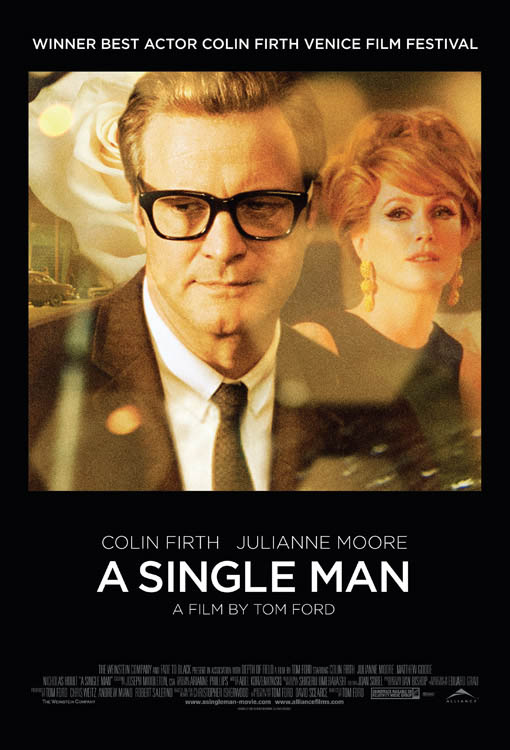
A Single Man
by Tom Ford
I knew as soon as it was done that it had an obvious kin-ship with the others on the list and then I started thinking about why it's so. Why should relative tragedies like A Single Man or The Diving Bell & The Butterfly be the ones that make us (me and a few other people I've spoken to about the films) appreciate life when they are ostensibly about death? Well I think it's because they're ostensibly about death. Diving Bell gives us life through one eye in the last months of its mind's life. Jean-Dominique Bauby knew he was nearing the end of his life but more importantly he knew that if he were ever to enjoy himself again, he would have to adapt to the shit hand he'd been dealt. Suddenly every detail becomes imperative, every second becomes crucial, every memory precious as gold. It took his death sentence to both see everything new as beautiful and everything he'd lived as really quite special and fulfilling. Stephen Soderbergh's Guerrilla or the second half of Che has a similar attitude towards death. In what amounts to no more than a minute of the film's 135 minute running time, Che, disguised for his trip to Bolivia, says goodbye to his children and then a wordless goodbye to his wife. Soderbergh does not make us privy to Che's inner-monologue (making Che almost certainly the first war film with a purposely objective view of its heroes) so we do not know what he thinks when in the end he is shot and killed, but I wouldn't hesitate to think it was the few seconds sitting wordlessly with his head pressed against his wife's. Soderbergh frames his death from his subject's point-of-view, the closest we get to being in his head, so that we can experience the man's passing first-hand. It is a grave and shocking moment that forces us to confront our own mortality and what must have been going through his head as he closed his eyes for the last time. It also takes about as long as the scene on the couch with Mrs. Guevara. But rather than tell us (Soderbergh 'just tells' us nothing), we are forced to think about his journey and our own.

Steve McQueen's Hunger (a film I might just have to start referring to with possessive adjectives, so frequently do I profess my love for it) goes the extra step in Bobby Sands, the movie's subject's death-throes. In much the same way as Soderbergh, McQueen sets up the dying moments of Bobby Sands in a piece of dialogue with almost no more importance than any of those surrounding it but when it appears just before Sands' death, it is clear that it does have importance for Sands. We are allowed in his head to see a vision of paradise before the nothingness takes hold of him. Sands spent his life as a violent, murderous revolutionary, yet McQueen posits (rightly, in my opinion) that what would come back to him, and to us, are little moments of personal significance. The memory Sands relives is one that means something to him - a personal victory and a time of sublime realization - and nothing of his struggle. Sands' life, though hardly as extraordinary, was certainly as colorful as Guevara's and that their deaths are the conclusions to their respective bio-pics is crucial. Suddenly every detail of the Maze prison becomes important because these are the last walls he'll see. And where should a boy like to be if he is to die in prison? Outside, free, a boy, innocent, the sun going down. Though the moment doesn't sound particularly heavenly, it is in its simplicity, it's every detail shining through like the last rays of the descending sun, that it becomes transcendent. Our lives probably don't flash before our eyes (Soderbergh and McQueen are in agreement here) because the cruelty of it is too sudden to be defended against. If we have time to approach it, we'll probably deny it out of fear or stubbornness. Sands is lucky enough to be visited by one final memory, a pleasant one. Guevara probably wasn't so lucky - he and Sands both lived in hellish environs before their deaths. With the memories of loved ones or incredible times in their heads Bauby and Sands pass easier than Guevara, whose head we're never privileged enough to see into. Soderbergh's ending is the most practical and thus the hardest but not the saddest of the three. Bauby has what he'll be leaving behind right in front of him so it's the most tragic when his world goes dark. Sands made a choice to die and though he attempts to escape his self-imposed death sentence in his final moments, his death isn't so tragic as Bauby's because McQueen's film is about fighting what's been given to you. Sands fights incarceration by killing himself and only fights death by putting himself out of the prison walls before it comes for him. Guevara fights death itself by swearing at his executioner. The tragedy is how unfair it is that this man, who we've lived with for the last several hours (if you've watched the whole movie, which you should have), who is so extraordinary, should be killed in so brutal and short a fashion. He was meant for more.

In A Single Man the end of life is the film's conceit, but really that's not what it's about. Based on Christopher Isherwood's novel, the story is simple enough: George Falconer, a middle-aged gay English professor loses his lover of 16 years Jim and decides to kill himself rather than fight the loneliness that's been plaguing him for another day. The film is set in the 1960s, which is important for a few reasons. Firstly it allows director Tom Ford to recreate a chic Los Angeles neighborhood in splendid and lush detail, and second it allows us to consider mortality and legacy from a time itself long dead. The details of George's day are simple and with good reason: He wakes, he eats breakfast, he teaches a class, talks to a flirtatious male student, takes all his money out of his safe-deposit box, chats up a young, Spanish hustler, sees an old-flame, a woman, goes out to buy a bottle of scotch before he kills himself but runs into the male student, they go swimming naked, then go back to George's house, they talk and appear ready to have sex but George passes out before they do so, then just after deciding not to kill himself succumbs to a heart-attack. Like Diving Bell, the movie is told through new observations and a few carefully chosen flash-backs but A Single Man is fueled by a sense of dramatic irony, that we know, because George puts a pistol in his briefcase, that he is planning to kill himself, though he never out and says it. So as we follow him throughout the day we see him really taking in, really relishing every detail of his otherwise very ordinary existence. Ford and cinematographer Eduard Grau hit upon an ingenious strategy to render their protagonist's mindset. In fact considering this is Ford's first film, the way he utilizes his camera is really quite impressive (though I understand he is a rather talented photographer, so I suppose it's not wholly unprecedented, but still...) George (played with wonderfully dry candour and tragic poise by Colin Firth) is usually framed in a dour grey, his surroundings apparently just as sad as he is. When George sees something that pleases him or engages someone and appreciates them (verbally or internally) and it brings him out of his depressed state of mind, the colors come alive too. Suddenly he's not grey and brown, but beautiful amber and flush reds and awash in heavenly hair-light. It's a brilliant technique and coupled with Firth's observations the viewer can't help but be staggered. Tom Ford makes George and us appreciate the little things.
A word about Ford. Ford is apparently a designer of some repute but such is my ignorance of that world I had never heard of him. Most commentators are wont to bring up his background as if to explain away the film's look and feel. I want to say first of all that one's background doesn't preclude you from being able to enter into any kind of discourse or a change of mediums with lessened success. Critics are the first to treat film like something sacred that bad directors or those who don't take it seriously are defacing when they throw their two-cents in. If you can make a movie as powerful as A Single Man it doesn't matter where you came from. Second of all, I do find it pretty interesting that Ford's background in fashion apparently led to some of the film's more striking visuals. Could anyone else have presented George's home (a thing of Sirkian beauty, the house I've wanted to live in since I was a boy) with such crushing simplicity and effectiveness? Well if they could, they haven't, so I'll have no disparaging talk about Mr. Ford's background. Until you people make a film as good as this, I think I'll take my movies from directors and leave prohibitive guidelines or pre-existing prejudices at the door. In fact, A Single Man makes perfect sense coming from Ford, because it cuts to the core of the things that surround us and what matters by the end isn't the stunning house or beautiful clothes we dress ourselves in, it's when we're naked and alone that it's people and our memories of people that matter.

What A Single Man does rather beautifully is to basically approach two different ends while pursuing the same thesis, that we don't appreciate life quite as much as we ought to and that surviving is the hardest thing to do. It's there everyday but when we take the time to tell people how beautifully they really look, we get strange looks because it's not expected, least of all in the conservative early 60s (free love hadn't yet arrived, though the threat of Elvis' hips do get lip service from professor Falconer). The style and design recalls Mad Men (as does an apparent cameo by Jon Hamm as Jim's brother) and the music strikes a terrific balance between the period and timelessness. Abel Korzeniowski and Shigeru Umebayashi's music is a heart-breaking entity unto itself and taken with Grau's camerawork, the lovely performances and Ford's all-seeing directorial eye, the movie is pretty flawless. There are moments in the film that make A Single Man not just a vital film, but also a key piece of motion picture history. Take the scene in which Umebayashi's variation on Bernard Herrmann's "Scotty Tails Madeleine" from Vertigo plays while George and the hustler/James Dean look-alike talk about Spain and broken dreams in front of the gorgeous blue Psycho poster in the grocery store parking lot. It's like a dream come true. One thing that is rather interesting and I don't know if this is Ford's meticulousness as a designer and director, but I found it very hard to find even the dreary scenes between each of Falconer's epiphanies to be anything less than gorgeous. More than once I was put in mind of L'Eclisse, which considering the importance of fascinating architectures and vast interiors to Antonioni's film is no mean feat. But I digress. George is in pain because Jim has died and left him alone - it takes the decision to follow him for George to realize that there is beauty all around him. Knowing he'll soon know nothing of it, he allows the scenery, the beautiful hustler and the cute boy in his English class enchant him. He does whatever seems a good idea because though he has resigned himself to death I think he's looking more for a reason not to. Even though reliving the memories he has of Jim seem designed to make him tighten his grip on life. Ford wants us to see that though George is careening towards a destiny he chose, he is open to life's little charms. He also comes to see the impact he has on the world he admires. When he visits his friend Charlotte (Julianne Moore, who I believe owns the rights to the 1960s because she seems to appear in every film that explores the underbelly of that decade. Don't get me wrong, she's excellent in these roles, and in this film particularly - who knew her posh English accent was so good? - but I do find it funny that no one makes a film about the sadness of the 60s middle class without asking her along) he sees that her happiness depends on him and though she has selfish motivations for doing so, cares for him deeply. Moore is pretty thrilling and nearly steals the movie with her maybe twenty minutes of screeentime. It is here that the film takes its most intriguing detour. As in L'Eclisse and countless other films about and during the early 60s, there is a break to dance. George and Charley dance to Booker T. & The MGs after dinner and like Marcello Mastroianni in La Notti Bianche, George abandons himself for a beautiful few seconds and I think it's here that he decides not to go through with his plan. Ford confirmed my thesis when we see the contents of George's troubled mind just before the end and we're given a flash of this scene. The scene is beautiful, not just in composition and photography, but in its showing George as willing to embarrass himself for his friend until it's no longer anything he has any self-consciousness about. This scene and George's last memory of Jim are the film's most beautiful moments - though the last conversation with Kenny the English student comes close.

Charlotte and George argue about George's inability to love her as more than a friend, but ultimately return to memories and in this become friends again. He leaves her in a haze of memory and promises to see her soon - the one place they can both hide is the past, though they know they need to escape it. Charlotte wants to use George as an escape, a new future, but George wants to believe she'll be fine without him given his plan. She is fragile and has been eternally good and patient with him and probably wouldn't survive his loss - it's a problem that could maybe be solved but not in the few hours he's allotted for himself. Their encounter takes it out of him - he needs scotch but he's out. He runs to the bar where he first met Jim, the most important thing in his life, and here he meets Kenny. Kenny had flirted with him and tried to enchant his professor earlier in the day; even bought him a colorful pencil sharpener, which George produces when they sit down to a glass of scotch each. "Enjoy the little things,” he says, placing it on the table. The film's thesis made concrete. Ford seems to be letting us know that someone as sly and sensual as George here couldn't leave behind a world he seems to know all the secrets of. They swim naked, George cuts himself somehow, and they wander back to George's home nearly naked. Here, in the firelight, is the beauty of two people together. George and Kenny never kiss or make love, but they hint at the possibility. George drinks himself quietly to sleep and wakes up a few minutes later. His flashback of his and Jim's last meaningful conversation is both a little too naked and terrifying in its frankness. Jim and George sit together reading, discussing plans, the neighbors, the upcoming trip, which will claim Jim's life. It's in the banality, the well-meaning back-and-forth, the freedom to read what they want, to love each other (to live in such a gorgeous house) to be, to exist, to do nothing with their days, that is most beautiful. Jim knows it and says so, sending ripples into George's future; it's why he has such trouble surviving, because Jim is gone. He gave so much of himself to the idea that he would be able to spend evenings with Jim, reading quietly and now he has to live past perfection. I think it's plainly those words that made George walk through his last day making sure to let every sensation knock him over with its very being. One fire-lit scene gives way to another and George finally sees what Jim meant for him - not to give up, but to find beauty in everything, to let the world in. Jim was able to find it in their simply existing in the same space, their lives wonderfully entwined. To leave it all behind would be to prove the love of his life wrong, which is the last thing George wants to do.

He burns his "read after my death" letters and prepares for another day but the only problem is how could another day be as precious as this. Jim is still gone but more importantly he lived today like it was his last, believing it was, how could tomorrow measure up? We only get one of these, Ford seems to say. By the time any of us thinks to live like George does, to find beauty in the everyday it is of course too late. Jean-Dominique Bauby, Bobby Sands, Che Guevara and George Falconer - the odd, fictitious man out - all see too late that life has all we're looking for. Jim steps out of his memory and kisses George's softly, as if to say that he had earned this gesture, that he had done all that Jim could have hoped for. His kiss and the last memory both resemble scenes in Solaris another rumination on love, death and loss. George's memory, something unreal and floating in his mind, and his dance with Charlotte both bring to mind the scenes of Kris and Hari floating above their bed in Solaris. They are out of time and out of place - memories come to life, like George's. When Jim steps out and becomes concrete for a moment, it has the same impact as Kris' final goodbye in Tarkovsky's sci-fi epic - they must escape the past to understand what it meant to them. George had learned and lived for his love, fulfilled his wish in death, and lived beautifully, even if only for a day. He finally learned what Jim meant that last night by the fire, reading together, living the same life. He learned to embrace life. His reward: one last memory, one final moment with Jim after the most beautiful day he had ever lived, the one he really been alive for. If he had seen it during Jim's lifetime, his death wouldn't have come so hard for George. Jim needed to die for George to see what Jim saw when he looked around the living room that night.
I'm a young person as I write this and though it’s safe to assume I do have a long life ahead of me, thoughts of dying are inescapable. I've been obsessed with death for much longer than is healthy or recommended for kids, but I don't guess I can help it. I do know that the times I'm in no danger of thinking about it are when I'm with people, specifically people I love. It seems every few months I see a movie that makes me take a long hard look at how I live (Time of the Wolf, Synecdoche, NY, Let The Right One In, The Road) and I encounter movies that always promise to do that and fail to by design. Yet this year especially seemed to produce an uncanny amount of films about how precious life is. No one else has changed - we're still ruining the earth and keeping marriage illegal, aren't we? I guess it would make sense for me to not change, to keep on, to not appreciate what I have until I die like the heroes of so many of my beloved films. But for once I feel like maybe I'm living like I should. I can't say I don't waste time - whole days, even - but I feel as if I get why movies like A Single Man are so absolutely necessary and profound and why they have the effect they do on me. There is no changing that it must happen or that I'm not wild about the idea, but I can see now (thanks in large part to films - call me what you will but it has to come from somewhere, doesn't it?) that shying away from it isn't the answer. It's time to start letting the little things become big things only when they promise happiness. I know that I have to let life and all its wonders wash over me. I'm lucky enough to be able to thank my friends for being that to me and letting me find meaning in their kindness and being able to take nice feelings away from their successes. I know I only have so much time and that I have to admire them and everything else I encounter before one of us disappears. This is why I watch films and why I want to make films - it might be meaningless, but there is so much to be loved and enjoyed that I would be stupid not to try to both see and capture it all. It's also why I take so much comfort in being able to spend time with some people, because I can just enjoy the best parts of the world by being with them. I may not be climbing the Himalayas or taking pictures of myself in front of the Eiffel Tower, but the beauty of people is the same everywhere. I don't have to go anywhere to know that - I don't even have to watch a film, though that won't stop me.

Experiencing Recession

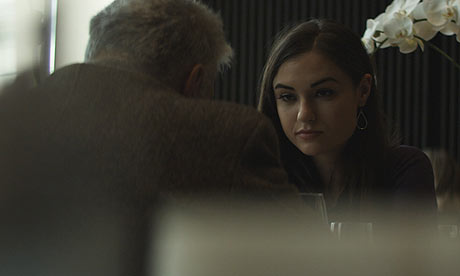
For a little while now I've been keeping a running tab of the best films of the new millennium in the hopes that I might be able to publish a book. I came across a film recently that is the subject of a little bit of controversy, at least among film crowds. it started a few months ago, for me anyway, when I read in Rolling Stone about a pornstar who'd been cast in the next Steven Soderbergh film (the Boston premiere of Che was a few weeks away, so I wasn't worried about Soderbergh losing his mind and casting Jenna Jameson as Aleida Guevara). The weeks went by and no word about the film reached my ears until January when the film premiered at Sundance. Suddenly everyone (relative term) was abuzz about The Girlfriend Experience. I heard a number of takes on the film, most of them negative, and thought the best way to cut through the hype was to track the damn thing down and see for myself. I found it, of all places, in a hotel room (I guess it's sort of fitting to have found it On Demand along with Interracial Orgies and Who's Nailin' Paylin?) in Washington DC. The perfect setting for an indiscretion...

The Girlfriend Experience
by Steven Soderbergh
Christine is a high-priced escort. Her boyfriend Chris is a personal trainer. They both work in glamorous, glossy environments making rich people sweat for criminal sums of money. Christine is into Astrology and one gets the notion that she puts a lot of faith into fad spirituality; her beliefs lead her to think about leaving Chris for a client who shares her birthday and zodiac sign. She and Chris have a real relationship despite her flakiness and they do seem to genuinely care for each other, even though they live and work in an almost entirely superficial world. Most of the time they spend at work revolves around the economic crisis; everyone needs money and can't really afford the luxury of a personal trainer or an escort anymore. Christine gives a free evening to a reviewer in the hopes that it will bring her clout and expand her business; this backfires spectacularly, causing her incredible distress. The ending is ambiguous, but there seems to be hope for the two protagonists.

Steven Soderbergh is much more rebellious than people give him credit for. Granted he, like Christine, works in a world of superficiality and dollar signs, but name one other major studio director who's paid tribute to Michelangelo Antonioni, Ingmar Bergman, Andrei Tarkovsky, Jean-Luc Godard, Robert Siodmak, Franz Kafka, Che Guevara, and Carol Reed. Name someone else who can make multi-million dollar art films and get them accepted for international distribution and then break to make relentlessly audacious micro-budget films with no recognizable protagonist. And don't say Quentin Tarentino cause I'll put a pencil through your hand. Soderbergh has basically done whatever the hell he wants to without becoming completely polarizing. He's cleaned up at the Oscars, Cannes, Sundance, Film Critics Awards, and the Directors Guild Awards. So just what is The Girlfriend Experience?

Soderbergh, in the wake of Traffic's unprecedented critical and financial success, seems to be out to challenge himself and everyone else. Hence his remake of Solaris (which I loved), his tribute to The Third Man and post-war noir, The Good German (which I didn't), his essentially objective biopic Che (half and half) and The Girlfriend Experience. The film is non-linear and refuses to side with or fully abandon its protagonist. There is no non-diegetic music, just snatches of street performers playing in their element. Soderbergh's camera is an uninvolved observer; taking in the cold eye of Christine as she pretends to be someone she is not. She changes her character constantly in keeping with her profession and lets so little of herself show; many have chalked this up to Sasha Grey's inability to act properly, but really all it does is add to the impenetrability of that world. I personally had no problem with her acting, she's certainly no worse than Marilyn Chambers in Rabid (which I also liked), one of this film's very few precedents. At one point Chris goes to Las Vegas with a client and his friends in a private jet; Soderbergh edits snatches of their trip into the action in New York. Their conversation is idle and irreverent. Though their dialogue is lengthy, they speak essentially of nothing; they shout their opinions of women, drinking and dating over the rushing sound of the jet's engine. It's docu-style realism of nothingness and non-events which seems to be important enough to the thematic throughline (the non-actors are all pretty amazing, actually with a few exceptions), but Soderbergh's camera is weirdly flat and unconcerned and the fact that each clip is basically identical means that the sort of talking they do is counter-productive. It isn't quite as sad in tone as when Chris asks for more hours from his gym or when Christine spies the new call girl on the block. There's emotion to be found beneath the flatness of Soderbergh's characters; like David Cronenberg's Crash, another claustrophobic study of urban sexuality, The Girlfriend Experience just happens to catch its characters doing one specific thing. Here they work and they mask their emotions.

Christine has to conceal her actual emotional involvement from everyone in her lives. There's one exception, the aforementioned girl sighting (the girl is moving in on her territory) and when she has to confront Chris about her moving in with a client. She tries to hide her emotions so that she can make an impulsive decision seem like a smart, rational one and one gets the sense that her life is made of moments like this. It's defined by decisions that most people couldn't rationalize in a hundred years, leastways not in ordinary circumstances. She lives a life of privilege, but it comes from professionally removing her emotions; hiding all the real things about her including her name (one of a few parallels to Grey's real life). Said gloss is shown expertly by our auteur who acts as cinematographer, too. Soderbergh doesn't brag about it, but he's a hell of a photographer. Solaris was one of the best looking sci-fi films I've ever seen, and that's saying something, as the genre is built on interesting visuals. He shot Girlfriend on a RedOne (look it up) and utilizes lowlight and found-light to its utmost potential; the film is gorgeous, even if it is grainy. The silky, dim interiors and lavish boutiques and restaurants that she inhabits are almost always on display, almost to act as a distraction from all the lying.
The fact that the film is one of Soderbergh's least expensive may have been purposive rather than out of necessity. He may be the only living filmmaker who intentionally limits himself, and he's a better filmmaker for it. Made for under 2 million dollars, the film is what I'd call meta-cinematical in that it pays attention to people whose money has been dripping away and it features a pornstar playing a prostitute who takes her clothes off exactly once in near-darkness. The publicity the film's been getting (not to mention the garish poster art) will probably give you the wrong idea about what its like (I know it did for me). It is one of the only presentational American fiction films I can remember seeing that wasn't made in the 60s and is incredibly interesting to dissect. The negative space forces us to load them with our own conceptions, made easier by the offscreen meaning burst of casting a pornstar. Soderbergh has basically given critics a blank canvas and they're totally squandering the oppurtunity. I've yet to read a positive review. I get that this isn't exactly Amelie or Pretty Fucking Woman but come on, it's a beautifully shot objective character study. How many of those do we have right now? Anyone been to a movie theatre recently who doesn't live in Chelsea? Would you guys prefer X-Men Origins or Transformers 2? I had to drive an hour and some to see Tulpan the other day, I'm not exactly swimming in options. So while I see that the film has only so much to offer, I liked what I got. Ignore the poster (but damn it' good...), ignore the trailer, just see it.