When I first started reviewing movies I was a bored high school senior looking to thumb my nose at the established school curriculum and teach friends of mine about how zombie films are just as relevant as great pieces of literature in explaining the zeitgeist of the date of their release. David Cronenberg's
Rabid, I would argue is just as rich a text as
The Yellow Wallpaper when examining feminine roles in society. But then, my theories haven't exactly been adopted by the masses and taught at Ivy League schools, have they? So while the jury is still out on the relevance and/or sanity of some of my ideas, I would like to say that examining the history and thematic content of horror films is important. Texts don't have to be pedagogical to be informative, they can can in fact be pulpy and comic. And in order to appreciate their impact, one must examine their inception and their relation to other art works at the time. Which brings me to Jean Cocteau’s
La Belle et la Bête or as you'll know it
Beauty and the Beast. It has been called the greatest cinematic fairy tale and I wholeheartedly agree but I'd like to posit that it is also a fairy tale for adults because no matter how fantastic it gets, it's purpose is never outside of the ordinary. It is a film that even now, sixty three years after it's release at the time of my writing, has the uncanny ability to excite, mystify and enchant. It seems fitting to start this by miming those oft-repeated signifiers of the fantastical as the director himself does at the opening of his film: Once upon a time...
La Belle et la Bête
by Jean Cocteau

Belle is a poor country girl who lives to serve her father and (less favourably) her two piggish sisters. Her brother, Ludovico is 'a scoundrel and proud of it' and spends much of his time gambling and drinking with his friend Avenant. Avenant has had designs on Belle for sometime but she refuses his frequent proposals of marriage because she will not leave her father's side. He has fallen on hard times and his latest investment, cargo of some sort being transfered in a number of ships, has apparently dried up as none of the ships showed up. Creditors are breathing down his neck so when news that one of those ships has finally shown up, he rushes off to get it. Belle is happy to see her father in high spirits again, her sisters are happy because the wealthy lifestyle they've been faking can finally become a reality again, and Ludovico is happy because he's racked up serious gambling debts and needs his father's earnings to pay them off. Before departing, their father asks if they would like anything brought back from his trip. Belle, wanting to be humble, asks only for a rose, a request that though pure of intention (her sisters ask for a monkey and a parakeet) will wind up changing everybody's life.
The news of the ship turns out to be a wash as creditors have seized the cargo by the time the poor man arrives to collect it. He doesn't even have enough money to stay at an inn so, defeated, he rides home in the dark...or attempts to, I should say. Somewhere in the forest he happens upon an estate that looks to have fallen into slight disrepair, majestic though it seems. In fact there's something downright spooky about it; doors open for him before he reaches them and the entry way is lit by a row of disembodied arms supporting candelabra. The hands guide him to a dinner table set with finery and he is half-shocked, half-relieved when more arms serve him wine and food; he's so at ease in the strange place that he falls asleep. When he awakes, to the sound of an animal's roaring, not unlike a lion, he runs for the exit. Finding no master of the house present, he seems ready to leave but remembering his promise to Belle, he plucks a rose on his way out. This brings the master, a six foot tall beast with a lion's face and the clothes of a lord, around at once. He tells the old man that because he has stolen the rose, the thing he loves most, he shall now have to die unless one of the daughters he mentions feels like taking his place. Before the man can protest, the beast sends him off on an enchanted horse back to his house. When he's through explaining the terrifying detour to his children, Belle is determined to make up for her error. She leaves under cover of darkness for the beast's castle and prepares to accept her punishment.
La Belle et la Bête is an incredibly important film for a number of reasons. It represents that rare time that the concept of 'love' is given the proper fantastical treatment. In reality, the notion is just as silly to think of as would a far-off kingdom where your dreams come true and Jean Cocteau, I believe, realized that there was a good deal of power in his story. To let yourself be seduced by the world of La Belle et la Bête is to be persuaded that the idea of romantic love is very real. It's no wonder Walt Disney and a generation of bottom-line chasing television executives would use the story (originally by Lepince De Beaumont) ad nauseam for the next 60 years. Subsequent adaptation and most straight fairy tales have nothing of Cocteau's wonderful command of the story. For not only does the movie tell a beautiful story, the telling is just as remarkable. The images of the beast's castle are all amazing; the effect shots of the arms that 'dress and arrange Belle's hair' remain impressive and haunting. Everything in the castle is lit and shot imaginitively, making everything appear just as otherworldly as they're described. The beast himself is actually pretty well-executed. Jean Marais' face and visible appendages are covered in fur and it is rather conspicuous, but at the same time he has a dignity and frightening quality (an otherness that comes across in the full commitment to the make-up) missing from Lawrence Talbot or Will Randall. He needs that bit of dignity of course because we have to fall in love with him long before Belle does. Her trip home would be nothing but a detour through the first act again without the weight built in of his mental state. Cocteau can be forgiven for not making him a bit scarier (it was 1946, after all, there were only so many ways to make a beast) as we ultimately have to sympathize with him, but I like him all the same. Marais characterization is pretty excellent and there is a bit of the sexual fury one might expect in such a character. Nowhere near as vile as Walerian Borowczyk's take, Marais instead appears in front of Belle's door, his fur smoking (part of his legend stipulates it does so whenever he kills something), covered in blood and roaring like a lion. That stuff works doubly well because it mirrors the kind of romantic situation that so often crumbles under scrutiny. How often does the perfect man turn out to be an abusive brute? Tennessee Williams would got a lot of mileage out of the same dichotomy. So did the makers of poetic realist films, a retroactively labeled genre of movies that ended with the onset of World War 2, largely because the makers of those films fled to safety. Movies like Les Bas-Fonds, Le Jour Se Leve, Pépé le Moko, Le Quai De Brumes and La Bête Humaine all fetishized lost men prone to violent outbursts whom women tragically fall in love with. Marcel Carne's Les Enfants Du Paradis was seen by some as the genre's swansong, but I like to think of La Belle et la Bête is the more fitting concluding chapter in the saga as it flirts directly with fantasy, instead of just romantic love, and gives all of those lost men and sad girls the happy ending they never got, while also explaining why they were never supposed to work. It has much of the genre's template (tragic romance, temperamental hero, obscene amounts of hair-light) except that for once the female is the center of attention, though she's often upstaged by Marais. It was the poetic realist film that embraced all the previously posed "what ifs" and second to Jean Renoir's Le Grande Illusion, it is more enjoyable than most of the classic poetic realist films (to clarify, I don't count Renoir's Le Règle De Jeu among those films, as it's completely alone in a genre of its own making). To see the sombre stories of the pre-war era come to a charming and transcendent post-war conclusion was a relief that French audiences needed. To see a character they liked and wanted to succeed fall victim to society and die before finding happiness was not an option now that such a tremendous tragedy had befallen the people of France; those characters, given such life by people like Jean Gabin and Marcel Dalio weren't just in the cinemas, they were on the streets and they needed a happy ending.
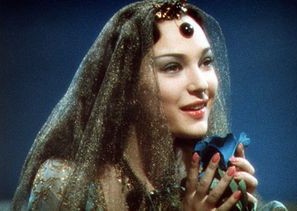
The 1946 release date brings with it implications that can't help but colour the narrative for better or worse. Nazism had just fallen, and the non-existent (or at least not filmed) kingdom of heaven that the prince offers Belle certainly carries more weight than just a typical fairy tale ending. As a gay man in France who'd just seen thousands of homosexuals murdered by a fascist regime, Cocteau was more than aware that dreams are not to be trusted. In fact before he started making films, he was well-known for a novella he'd written about 'deviant' sexual behavior that caused an uproar when it was first published in the 30s. He wasn't exactly in the fairy tale business at the start of his career. We can then see the brute man, hairy and violent yet elegant as an object of fantasy for both men and women (he never actually kisses Beauty, he simply stomps outside her door and holds her hand). Marais and Josette Day (who portrays Belle) both look as Aryan as can be and so a world where they can live with their dreams fulfilled is kept distinctly out of the realm of possibility (they exit in a cloud of mist or gas before their dream is fulfilled). Though Belle and her sisters have nordic builds and complexions, their father and Ludovico are typed like two Jewish men. Outsiders resigned to their lot in life, they live vicariously through Belle's experience with the beast, the king of deviants, who lives in a secluded and wonderful place, who, though bitter and lonely, is in thrall to no one and preys on deer to his heart's content. Marais' longing and distraction when he sees the stag is one of many excellent moments where he shines in his performance, even from behind all that make-up.
There's a cruciality to Marais portraying his three roles. As Avenant, he represents a handsomely mounted argument to leave her father (most likely to die) and become servile to his masculine wiles; in essence collaborating. As the beast, he is the world's forgotten and aberrant, living in exile, the problems of her dying father not really of any interest to him; tormented, persecuted, mocked, sexual, animal. As the prince in the conclusion, the answer supposedly to Belle's dreams, he is a strange compromise. They make reference to the fact that the prince is just a more attractive version of Avenant, which can be read a number of different ways, not the least of which is to simply be thankful for what you have. Avenant and the beast were in front of her for a long time and her indecision lead to a hybrid of the two, supposedly the best qualities of each. Of course that they then ride off into the clouds to a magical kingdom where she'll 'reunite with her father' (has he died?) and where 'her sisters will carry the train of her gown'. Romantic love perfectly fulfilled - she has her beast and her handsome french men in one elegantly dressed package - thus given the same magical quality as paradise, the same mystical place that thousands died believing they were headed to in the conflict whose death toll was still being calculated when La Belle et la Bête hit theatres. It's no coincidence that her dream is born out of the simultaneous death of both Avenant and the Beast. Cocteau's ending is thus a double-edged sword; we believe in the happy ending awaiting Belle behind all that smoke and the end titles because that is how fairy tales end and because we want her to have happiness but we also know that the idea of love being granted to a poor farm girl is just as ludicrous as anything else in the story and she may as well be headed for a mythic afterlife.
Of course, La Belle et la Bête isn't all morbid subtext. Cocteau's script is one of the most clever of the era. Cocteau doesn't get the credit he deserves for his wit (he was often called in to write the dialogue of other films when they lacked that extra something). The opening is a riot, with the deluded pauper girls trying to arrive at a party in a dignity befitting a wealth and class they no longer possess. Ludovico's comments to them are deft and hilarious pretty much throughout. Whenever Avenant interacts with the sisters, hilarity generally ensues as when Ludovico first urges Avenant to slap his sister, then staunchly defends her honor as soon as he's done it. His slightly drunk characterization is just as effective and believable as Marais' various turns and provides much needed respite from the shrewish sisters and the grave scenes with the beast. In this film is one of the earliest instances of dead-pan, Arrested Development-type humour I can remember seeing anywhere. Just after Belle's father comes home and announces they might once again be wealthy, Ludovico tries to turn the argument against Avenant, who moments earlier proposed to Belle. Belle's deadpan response after both men's histrionic accusations is perfectly executed and it's really very interesting to see such a well-worn, modern comic trope given the same kind of treatment it receives today to the same effect. I could see Jason Bateman delivering the same line just as well. Which brings me to my original point, that fuzzy monsters and romantic castles in the sky aside, this movie is as much for adults as for children. The richness of Cocteau's images and his dialogue has not subsided in the intervening years and I could see them captivating a child just as easily as they do aged critics and cranky cinemaphiles. I know of a good many twenty year old girls who adore the film because of its dream-like míse-en-scene and romantic storyline. The film has a nearly universal appeal (Philip Glass's opera, written to be performed as the film is projected, speaks to that) because it's such an engrossing story, with razor-sharp writing, broad comic gestures that anyone can appreciate, a romance with a million different interpretations waiting to be discovered and because, no matter what's really going on, who doesn't love a fairy tale with happy ending?