This is part of my effort to write about my 100 favorite films in two pages or less. This one is still in it's rough stages.
The Last Of The Mohicans
by Michael Mann
In order for one to understand my love for this film, one must know the role it has played in my life. My childhood had a very definite incidental soundtrack; my parents loved music and movies more than anything else I can think of. Along with the music of Richard Thompson, R.E.M., and Talking Heads, there were films that both my mom and dad loved enough to watch regularly. The film that enthralled me most of these white noise pictures was Michael Mann’s Last of the Mohicans. As a child it was easy to understand why I loved it: the sound of cannons and muskets firing, that visceral score, swordsmen on horseback, chaotic atmosphere, intense fighting with knives and hatchets, what’s not to love? As I got older and began to remember the film, I felt I probably had an incomplete picture as I don’t think I had ever sat down and watched it all the way through. When I finally took the time to view our battered VHS copy, I was amazed there was so much I had missed. It took a few years to appreciate the nature of the romantic direction it takes, the criticism of the colonial mindset, and that the reason I loved watching every second was because of the unbelievably gorgeous cinematography, but I did know that this film was going to last forever because at its core was unbridled passion the likes of which I’d never encountered before and have rarely seen since.
The plot, though idiosyncratic to boot, might be the most satisfying love story ever filmed. In the forests of an America caught in the midst of the French Indian War, a white man raised by Mohawk Indians and the daughter of a Scottish general fighting the French meet by chance. When the English regiment assigned to protect the woman, Cora Munroe and her sister on their way to their father’s garrison, they are ambushed by a Huron war party. The man, Hawkeye (Nathaniel by birth), his adopted father and brother come to their rescue and escort the sisters and Cora’s inept suitor Duncan to the fort. Nathaniel and Cora do not understand each other, and are at odds for a time due to their differences. When they see that perhaps they are not so different, they begin to fall in love, unfortunately this happens to coincide with Nathaniel’s decision to lead the colonial militia stationed at Munroe’s fort to leave the fort to check on their families (the Huron war party has evidently been busy). Nathaniel is nearly hanged for conspiracy to aid sedition, but a brief truce with the French leads the English army out of the fort and into the arms of the waiting Huron. It seems their leader, Magua, has a blood feud with Munroe and wishes to see both the man and his two daughters killed. This proves to be a greater obstacle than British shackles for Nathaniel, who must rescue Cora after she is taken north to the Huron land by force, but it is also the single greatest display of love ever filmed.
As a kid, I got that this movie was different from most others; I returned to this before I re-watched many of the movies intended for my age group. I know that this is due mostly to my love of the film’s soundtrack. Trevor Jones’s half of the score sounds like the musical equivalent of thunder and makes everything on screen ten thousand times as urgent and romantic. It was because of the music that I understood that though the violence is what attracted me to the film, it is the boundless love between the heroes that makes this film transcendent of its time and constraints. The movie is powerful enough, for example, to leave its weak source materials behind (which include James Fennimore Cooper’s unwieldy novel and the 1936 movie starring Randolph Scott). This is a movie that benefited from the time of its conception as much as it did the people who crafted it. There are the two composers (Randy Edelman was brought on due to time constraints to score lighter sections of the film, the standout being the scene in which a courier is dispatched from the fort), Jones’ music being some of the greatest ever written for a film (the source of his recurring theme was a Celtic traditional). The two greatest scenes of the film (Hawkeye’s race across the battlefield to rescue Cora, and the final clash between the Mohicans and Hurons) would be flat were it not for Jones’ compositions. His music is so important because so much goes unspoken. Michael Mann and co-writer Christopher Crowe were smart enough to leave much of the feelings (the resentments especially) silent so that the resolution of these conflicts could be simple and effective. When Magua murders his enemy, he makes a point of telling him why; when he fights with Chingachgook, Hawkeye’s father, they have no need for words. When Hawkeye and Cora first kiss passionately to Jones’s swooning strings, they don’t utter so much as a word. Mann knows that words aren’t always good enough, nor are they always necessary.
Who better to capture the urgency and passion of a man who discovers how much he will do for love than Daniel Day-Lewis. He may have spent 8 months in the woods learning how to run and fire a musket at the same time, but what makes his performance is the fire in his eyes when Cora is in danger. Today’s stable of leading men simply pale in comparison to Day-Lewis, who is at much at home throwing a knife as he is madly declaring his love with what little language his Hawkeye knows. Because we love the character, because we wish him to succeed, we suspend our disbelief. Could three men continually outfight entire regiments of armed soldiers? When the outcome is so pleasing, it’s hard to answer truthfully. With the music pounding, the brilliantly choreographed battle raging in the background, and the heroine in danger, belief is happily given over to the beauty of the film. Michael Mann has always been a master of building tension, and here he shows the simplest way to achieve it; two lovers are apart, one is in danger, the other starts running and will not stop.
Dante Spinotti may not have a lot of other work to his name, but he more than earns his place among the world’s greatest cinematographers here. Spinotti succeeds in making the woods and water that surround the characters as beautiful as the story itself. In a film about an America untainted by capitalism or the age of industry, he shows just how flawlessly and effortlessly gorgeous the natural world is. His footage of the North Carolina woodlands is stunning and has few rivals. While Mann’s compositions are doing their part, it’s the fathomless color of an endless world that captures the eye. From the opening pursuit of a buck, where every flash of moving bodies swims in a chasm of glorious, untouched scenery. The surroundings lose much of their charm when the greedy English occupy the frame (in one striking example, a perfectly composed shot of a bridge and its reflection on the pond below is slowly crossed by horse-drawn carriages). When the soldiers transporting Cora and her sister are ambushed, the scene is dark, dusty, and surrounded by dying foliage. The makeshift road is a pale brown and the forest is enshrouded in gun smoke and the red from uniforms and blood (as in the mesmerizing clash between the Hurons and the English refugees). When Nathaniel and his family take charge and lead the three survivors to Munroe’s fort, they immediately happen upon a small river framed in a rock bed. Between the deep green of the forest that extends for miles around, and the pristine water and stone, it is perfection. The lesson that Cora learns by falling in love with Hawkeye, that one must abandon material foibles and the petty English gentrification of the land, is one that Spinotti’s camera has already taught the audience subconsciously. This is a film that not only celebrates the love between two disparate people, but also declares its love for the land like fire from a cannon.

It's alright! It's alright! It's all been approved! I'm an American!

My Favourite Film Number 3
This is part of my effort to write about my 100 favorite films in two pages or less. This one is still in it's rough stages.
Night of the Living Dead
by George A. Romero
Though his body of work is small and uneven, George A. Romero has done more to influence trends in independent cinema than John Cassavetes. Entire production houses have been built on love for Romero’s movies; their homages, no matter how carefully considered, are never as satisfying as the real thing. Much of horror cinema can be traced back to a cemetery in Butler County, PA. George A. Romero wasn’t a film student, he was just a kid who loved films. He used to rent reels of films so he could watch films like Tales Of Hoffmann in his grandparents house in New York City where he lived at the time. He spent his youth consuming movies and at his earliest possible opportunity, gave back to the world he loved so much. Initially hanging out at editing labs, he quickly became head of a Pittsburgh production house and started directing commercials. It was when he and a few friends each contributed six hundred dollars and long hours of their time that history was forever changed.
A shy woman named Barbra and her obnoxious brother Johnny arrive at a cemetery in the middle of the nowhere to plant a wreath on their father’s grave. They argue, wonder about the dead radio reception, pray, and then a man in a suit assaults Barbra and murders Johnny with his bare hands. Barbra runs and the man chases her all the way to an empty farmhouse next to a gas pump. She locks the doors, but the man is outside, and soon more men just like him show up. No American film had ever thrust its audience so deeply into harm’s way. The man is dead, the woman is catatonic and alone, danger has nothing preventing its entry into the house to make short work of her. Audiences must have experienced the ultimate double-take when the hero finally shows up and he is a handsome, strong black man. Duane Jones, the best actor Romero was acquainted with at the time, gives the performance of a lifetime as Ben, the resilient, forward thinking brains and brawns in the small house of survivors. The monologue he delivers about wanting to drive his truck into the group of the living dead is pitch-perfect. Next to the bitter Mr. Cooper, the biting Mrs. Cooper, the invalid Karen, the slow-witted Judy, the well-meaning dope Tom, and vegetative Barbra, Ben is the only protagonist worthy of the name. He is the most levelheaded, the most reasonable, and yet it is his actions that lead to everyone’s demise. And even when the story seems to have brought us out of the fire with the arrival of local law enforcement, Romero has one last cruel ace up his sleeve.
This film was the start of not just Romero’s life as a director, but of his career as a maker of existential horror films. His movies present heroes with more than just the movie monsters they by definition have to fight. The real threat is in the oppressive air that surrounds the characters at all times, the feeling of utter helplessness. In all of his horror films the real reason to be frightened isn’t necessarily because of the ghastliness of the zombies, vampires, or killer, but because that thing has invaded your well-being and done all it can to erase it. In Night we are shown immediately what this is like when Barbra’s brother is killed in front of her very eyes and the man who does it just has time to wipe his mouth before he starts in on her. Ben’s troubles really start when the cowardly Mr. Cooper comes up from the basement and begins acting unreasonable apropos of nothing. He ends doing battle more seriously with Cooper than the ghouls who wait patiently for them to self-destruct.
This being a horror film, it is the horrific elements, not the well-crafted characterizations, that it is remembered for, and this film became infamous for one scene. After reports on television advise all survivors to head to rescue stations, Ben, Tom, and Judy try to fuel up Ben’s truck. When things go awry and the truck goes up in flames, the undead hoards partake of the newly barbecued lovers in what is cinema’s most important gore scene. Thanks to black and white cinematography, real meat, and the impassive looks on the zombie extras faces, a macabre scene was achieved that was wholly original at that point in history. This scene was what put the film into production limbo; it’s the reason that it can be found in every dime horror bin across the country, why there are legions of zombie film fans all over the world, and why I want to make movies.
There are a few titles that will always spring to mind when horror movies as a genre are brought up in conversation; George A. Romero’s Night of the Living Dead will always be one of those names. The images of crowds of the undead roaming about and eating flesh are unforgettable and have been copied more times than can be easily counted (even if they were borrowed from lesser known films from a few years earlier). This was also effectively the catalyst of the "cabin in the woods" genre. Even if you’ve never seen Night of the Living Dead, you know it by reputation; it is one of ‘those’ films, the ones with unspeakable things that are never elaborated on in polite conversation. These are the films I spent my youth searching for; these are the films I plan to make someday. It was Romero’s drive that most influenced my decision to make movies. He had no permit, he had no money, the only thing he had was ambition and friends.
The acting, cinematography, music, and editing are all solid considering the budgetary restraints. Compare Duane Jones' or Judith O’Dea’s performance to those of the leads in any Jack Hill or Roger Corman movie and a few things become clear. The first is that Romero’s family was incredibly supportive and functional. The second is that Romero was capable of working with people in ways that maybe only John Cassavetes understood as well. His movies would not seem quite so scary were it not for the actor’s capability of showing how far from comfort they have fallen. Cooper acts out of concern for his pride, but he also has a family to worry about. When he and Ben clash, sympathy initially falls in Ben’s court, but then consider that Cooper’s actions are understandable given the extreme circumstances. He is pig-headed and loud, but he isn’t the villain the black-and-white filmic code of ethics paints him as subconsciously. He seems the villain because a film needs a villain and the zombies just don’t cut it for the entire second act.
Since Night of the Living Dead had no producers with expectations, it could do whatever it pleased and the existential nightmare world it creates is really just the beginning. On top of its casting and gore scenes, there is that ending; it defies all expectations, all standards of decency. Just after Barbra is carried away to certain death by her zombie brother, Karen, the little girl, dies, only to be revived as one of the undead, and then she murders her mother with a jagged trough. Things like this just weren’t done in films but Romero pulled no punches. This was the end of the world like no one had ever shown it: brutal, dark, and terrifying. No other filmmaker in the world had been as bold as George Romero, and rarely has anyone taken the chances he took. When he finished editing the film, Romero through the reel into the back of a truck and drove around looking for some place to screen it. Courage and vision drove this man to his destiny, and I can only hope that I can be allowed to make films of my own and continue telling the world about George Romero and his legacy.
by George A. Romero
Though his body of work is small and uneven, George A. Romero has done more to influence trends in independent cinema than John Cassavetes. Entire production houses have been built on love for Romero’s movies; their homages, no matter how carefully considered, are never as satisfying as the real thing. Much of horror cinema can be traced back to a cemetery in Butler County, PA. George A. Romero wasn’t a film student, he was just a kid who loved films. He used to rent reels of films so he could watch films like Tales Of Hoffmann in his grandparents house in New York City where he lived at the time. He spent his youth consuming movies and at his earliest possible opportunity, gave back to the world he loved so much. Initially hanging out at editing labs, he quickly became head of a Pittsburgh production house and started directing commercials. It was when he and a few friends each contributed six hundred dollars and long hours of their time that history was forever changed.
A shy woman named Barbra and her obnoxious brother Johnny arrive at a cemetery in the middle of the nowhere to plant a wreath on their father’s grave. They argue, wonder about the dead radio reception, pray, and then a man in a suit assaults Barbra and murders Johnny with his bare hands. Barbra runs and the man chases her all the way to an empty farmhouse next to a gas pump. She locks the doors, but the man is outside, and soon more men just like him show up. No American film had ever thrust its audience so deeply into harm’s way. The man is dead, the woman is catatonic and alone, danger has nothing preventing its entry into the house to make short work of her. Audiences must have experienced the ultimate double-take when the hero finally shows up and he is a handsome, strong black man. Duane Jones, the best actor Romero was acquainted with at the time, gives the performance of a lifetime as Ben, the resilient, forward thinking brains and brawns in the small house of survivors. The monologue he delivers about wanting to drive his truck into the group of the living dead is pitch-perfect. Next to the bitter Mr. Cooper, the biting Mrs. Cooper, the invalid Karen, the slow-witted Judy, the well-meaning dope Tom, and vegetative Barbra, Ben is the only protagonist worthy of the name. He is the most levelheaded, the most reasonable, and yet it is his actions that lead to everyone’s demise. And even when the story seems to have brought us out of the fire with the arrival of local law enforcement, Romero has one last cruel ace up his sleeve.
This film was the start of not just Romero’s life as a director, but of his career as a maker of existential horror films. His movies present heroes with more than just the movie monsters they by definition have to fight. The real threat is in the oppressive air that surrounds the characters at all times, the feeling of utter helplessness. In all of his horror films the real reason to be frightened isn’t necessarily because of the ghastliness of the zombies, vampires, or killer, but because that thing has invaded your well-being and done all it can to erase it. In Night we are shown immediately what this is like when Barbra’s brother is killed in front of her very eyes and the man who does it just has time to wipe his mouth before he starts in on her. Ben’s troubles really start when the cowardly Mr. Cooper comes up from the basement and begins acting unreasonable apropos of nothing. He ends doing battle more seriously with Cooper than the ghouls who wait patiently for them to self-destruct.
This being a horror film, it is the horrific elements, not the well-crafted characterizations, that it is remembered for, and this film became infamous for one scene. After reports on television advise all survivors to head to rescue stations, Ben, Tom, and Judy try to fuel up Ben’s truck. When things go awry and the truck goes up in flames, the undead hoards partake of the newly barbecued lovers in what is cinema’s most important gore scene. Thanks to black and white cinematography, real meat, and the impassive looks on the zombie extras faces, a macabre scene was achieved that was wholly original at that point in history. This scene was what put the film into production limbo; it’s the reason that it can be found in every dime horror bin across the country, why there are legions of zombie film fans all over the world, and why I want to make movies.
There are a few titles that will always spring to mind when horror movies as a genre are brought up in conversation; George A. Romero’s Night of the Living Dead will always be one of those names. The images of crowds of the undead roaming about and eating flesh are unforgettable and have been copied more times than can be easily counted (even if they were borrowed from lesser known films from a few years earlier). This was also effectively the catalyst of the "cabin in the woods" genre. Even if you’ve never seen Night of the Living Dead, you know it by reputation; it is one of ‘those’ films, the ones with unspeakable things that are never elaborated on in polite conversation. These are the films I spent my youth searching for; these are the films I plan to make someday. It was Romero’s drive that most influenced my decision to make movies. He had no permit, he had no money, the only thing he had was ambition and friends.
The acting, cinematography, music, and editing are all solid considering the budgetary restraints. Compare Duane Jones' or Judith O’Dea’s performance to those of the leads in any Jack Hill or Roger Corman movie and a few things become clear. The first is that Romero’s family was incredibly supportive and functional. The second is that Romero was capable of working with people in ways that maybe only John Cassavetes understood as well. His movies would not seem quite so scary were it not for the actor’s capability of showing how far from comfort they have fallen. Cooper acts out of concern for his pride, but he also has a family to worry about. When he and Ben clash, sympathy initially falls in Ben’s court, but then consider that Cooper’s actions are understandable given the extreme circumstances. He is pig-headed and loud, but he isn’t the villain the black-and-white filmic code of ethics paints him as subconsciously. He seems the villain because a film needs a villain and the zombies just don’t cut it for the entire second act.
Since Night of the Living Dead had no producers with expectations, it could do whatever it pleased and the existential nightmare world it creates is really just the beginning. On top of its casting and gore scenes, there is that ending; it defies all expectations, all standards of decency. Just after Barbra is carried away to certain death by her zombie brother, Karen, the little girl, dies, only to be revived as one of the undead, and then she murders her mother with a jagged trough. Things like this just weren’t done in films but Romero pulled no punches. This was the end of the world like no one had ever shown it: brutal, dark, and terrifying. No other filmmaker in the world had been as bold as George Romero, and rarely has anyone taken the chances he took. When he finished editing the film, Romero through the reel into the back of a truck and drove around looking for some place to screen it. Courage and vision drove this man to his destiny, and I can only hope that I can be allowed to make films of my own and continue telling the world about George Romero and his legacy.
Success
The Congregation played last Saturday and we covered an Echo & The Bunnymen tune. This isn't the one, but this music video is doing things for me.
My Favourite Film Number 2
This is part of my effort to write about my 100 favorite films in two pages or less. This film is important to me for a lot of reasons, as evinced by my naming the place after it. So I only hope my words help you seek it out and uncover its mysteries.
Apocalypse Now
by Francis Ford Coppola
“You Americans are fighting for...the biggest nothing…” That’s how artists must have felt all throughout the 1970s. A friend of mine who was around for it told me that people had been predicting a progressive era before the early 60s happened. They killed everyone…the peace movement became a joke…no one seemed to believe in love anymore. The films of the 1970s all had that feel, that joy was on it’s way out. Bertolucci, Scorsese, Coppola, Makavejev, Godard, Peckinpah, Bergman; it was a tough love the great directors gave to the world in the 70s. Film theory was being tested in a big way; the old ways of the studios was essentially abandoned, and vision was now dark, elaborate, and unfathomably long. The ways of the peaceful artiste, the harmless beatnik were gone in favor of the colorful realist. The idealist was dead; murdered like the ridiculous protagonists in Easy Rider. The centerpiece of the beautiful banquet of morbidity and lost love was Apocalypse Now.
Three hours long, darker than noir and twice as violent, and astoundingly beautiful, Francis Ford Coppola’s Apocalypse Now long went unseen as he intended it (and unlike more zealous epics like 1900 or The Last Emperor, it does benefit from it’s length), and so the breadth of Coppola’s disdain for America/organized humanity was long unknown. The movie is not a war film as had ever been done before. It’s a message, an elegy to peace and love, written backwards. Based on Joseph Conrad’s Heart of Darkness, Apocalypse follows Captain Benjamin Willard on a mission up the Nung River into Cambodia during the Vietnam war to kill a renegade colonel called Kurtz. He’s asked to do it by dry higher-ups in olive fatigues, and we will slowly learn the metaphor, the real nature of the mission as Coppola and co-writer John Millius envisioned it. Williard, the hero, has been sent to murder an idea, the innocence of America. Kurtz is an affront to order, standing in the way of the tidy military operation the men in green wish they were running. He is the free love that turned sour when Charles Manson started killing people (Manson’s face makes an appearance in a newspaper that the high-strung Chef reads in the mail). He is the irony of sending a pot-smoking 17-year-old African American to murder families to make his own family proud. The politics I suppose couldn’t be more clear-cut, the recurring musical theme is a Door’s song for pete’s sake. This is a movie that fed hundreds of cynical teenagers who’d missed 1968 by a few years.
“He dies when it dies”. Dennis Hopper’s photojournalist, the last jabbering follower of the dying colonel squeals when Willard finally arrives to do the deed. When Willard kills the man (an act just as inevitable as the one in I Shot Jesse James), his armed followers, his children, throw down their guns and obey the conquering soldier, just like the baby boomers threw away their ideas, put suits on, and started their own wars. Murder is literally everywhere and men are supposed to function as people, let alone as soldiers. Kurtz’ retreat into his own world would make sense to any bored basement-dweller today, and so the legacy of the late 70s lives on. Will they act when the time comes? The Iraq War continues. During the late 70s the young mavericks were getting to use old Hollywood stock players they had so long worshipped. Wim Wenders got Nicholas Ray, Roman Polanski got John Huston, Bernardo Bertolucci got Sterling Hayden and Burt Lancaster, and Coppola got Dennis Hopper and Marlon Brando. Brando’s first appearance in the film is not unlike a child’s nightmare. Martin Sheen, the man we’ve been pulled into complicity with, our guide through the horror of war, is a man of average height. The photograph we’ve seen of Kurtz makes him look like a beast; sasquatch or a serial killer. He lies, bathed in shadows, his enormous head and hands looking inhuman next to Sheen’s. His face is always partially shrouded in shadow, just like the mission. Of course Brando is almost no match for Sheen who gives one of his strongest performances. He wears every second of combat on his face, and I feel no one else was quite capable of taking this journey from weary GI to bleary-eyed killer and staying in control.
And what a journey. This film is as much Coppola’s as it is Walter Murch and Vittorio Storaro’s. Murch, the chief editor and sound designer gives this movie it’s frantic, combat-like pace. All war films that followed were in his debt. The sounds, breaking from the background and raging to the foreground, is riveting. Like the characters, it moves in and out of fog, becoming warped here and crystal clear there. He went to great lengths to let us know the difference between the ending throws of Ray Manzarek’s organ and the guitar solo on the small tape player at the Do Lung bridge. Storaro, already one of the greatest working cinematographers, paints the most vivid picture of his career. The last trick the movie has up its sleeve is the change in color scheme. As Willard nears his objective, the danger heightens, the death toll rises, and the colors become lush and tropical. I’m always stricken by the difference between Martin Sheen’s sweating figure and the serene water behind him. Every set piece and symbol comes in colors; the purple flares, the blood, the pink tracer rounds fired from the jungle, the deep greens that constantly surround the boat. Smoke, haze, fog, rain, fire, layer upon layer, each ignited by the ferocity of their context. It is a brilliant, bold color scheme, one that is wonderfully dissonant with the muddled humanity on display. The movie tries repeatedly to evoke the feeling of a drug-induced state; I surmise that the vividness of the color, and the incredible soundscape were attempts at recreating both the feeling of war through the filter of an acid trip.
Part of the reason I love this film as much as I do is because of the history I’ve had with it. In the sixth grade, when my dreams were still hazy, I was eyeing my first electric guitar, my love for film already cemented, my teacher, a 30-something ex-soldier, used to talk to me freely, unlike the rest of my class. We would discuss music and film (I bought him a Grateful Dead bootleg for Christmas, and he lent me The Doors greatest hits), and he suggested I watch Apocalypse Now. The sound and the color were not given justice on the warped VHS tape I rented, and there were many Americans who had never heard the word Redux, but I knew this wasn’t like anything I’d ever seen before. “Do you think Kurtz was right to do that?” My teacher asked me the day after I watched it. He clearly considered doing something similar, fed up as he was with my classmates. I had no idea; I still have no idea. At the start of my senior year, after my initial foray into foreign cinema, I found it playing, heavily censored, on network television. They began running it once a week, and I made a ritual of watching it (always with guacamole chips and black bean salsa). The place where I usually tuned in was when the boat stops at a French plantation. Willard listens in a daze to the noise of an entire family (the conversation is a marvelous insight into colonial mentality, but that’s not what did it for me). After dinner Willard and Roxanne, the only member of the family not related by blood retire to the deck of the house. Her silky French tongue and the swelling synth music prepared me for something that never came; a tender love scene. Instead Roxanne takes Willard to her bedroom, gets him high like she would her deceased husband, and then undresses, a scene made more haunting in the TV edit as her naked body would become a dark blur in the lowlit room, a nightmare in the middle of a rapturous dream. The scene isn’t tender or romantic, but overpowering and urgent. Her words to him make perfect sense, more sense than anything about the Vietnam War, “All that matters is that you are alive.”
All Real Men's Likes and Dislikes
Whenever I sign out of my hotmail account I am always brought to MSN's mainpage and there is always some ridiculous article title in the center of the page. And occaisonally I'll click on it just if it is possible for the articles to get worse. And each time I am surprised to see that yes, indeed, the human race (as represented by "journalists") have less interesting or intellegent things to say.
Today I came across this article: 5 dates no guy wants to go on. By Mark Miller.
Here is the bio that is found at the end of the article: Mark Miller has written on sitcom staffs, performed stand-up comedy in nightclubs and on TV, been a humor columnist for the Los Angeles Times Syndicate, and enjoys reading National Geographic. He can be reached at mark.writer@gmail.com. For the gal’s point of view on bad date choices, read Don’t take a woman here!
Mr. Miller's article generalizes men (and women) grossly and lumps them all into one category. Everything in " " is Mr. Miller's:
"During courtship and dating, women — being the more creative gender — will often come up with the majority of suggestions for where they’d like to go and what they’d like to do with their romantic partner. You’d think this would be a positive thing. After all, their motivation appears genuine.
“'Oh, come on, it’ll be fun!' they say to us. And yet according to my latest “Aw, Jeez, Do I Have To?” survey of myself and my friends 96% of these suggestions are viewed by men as embarrassing, boring, or uncomfortable." *Because clearly, him and his friends, who all share the same exact interests, can speak for all men everywhere.* "Ladies, the following is inside information—a select listing of some of your most common activity suggestions, what men don’t like about them, and what we’d like to do instead
"Hiking
"Hiking is an activity many men look forward to with the same relish they take in reading Aristotle in the original Greek, receiving a prostate exam, or attending a Celine Dion concert." *Really? If we're using stereotypes, isn't this one backwards? I thought women were the ones who were supposed to hate hiking. Although he did say 'many men' instead of implying 'all men', hiking is something that anyone, regardless of gender, who is athletic would enjoy doing.* "The way we see it, nature is way overrated." *Fantastic. Thanks for recognizing that everyone relys on nature everyday for it's ability to grow food and provide us with medecine to name a few of numerous ecosystem services.* "How many flowers can you smell? How many sunsets can you ooh and ahh over? How many coyotes can you worry about being in the vicinity? Plus, there’s no access to the Internet or email. No TV sports." *Yes, because ALL men love watching sports on TV.* "Bugs everywhere. What about any of this spells fun? Unless you look at fun as the first three letters of funeral.
"You want your shot of nature? Invite us to the beach at sunset. Take a blanket and a six-pack, make out for half an hour," *Because apparently men only like beer and making out* "...then head home so we can get back to civilization. That’s enough nature to hold us for the next three months."
"Opera
"If given the choice of how to spend a Friday or Saturday night, what guy wouldn’t vote for putting on some uncomfortable formal clothing after spending a couple of hundred dollars for tickets, then another hefty chunk for parking, all to hear overly-costumed and overly-made-up folks belting out tunes that don’t have a beat and don’t rhyme, in a language only U.N. translators can understand?" *Yes, that's right. Only U.N translaters can understand multiple languages. Although, I would agree that the average American can only understand English and no other language. And there are operas that are sung in English.* "Exactly. And yet we still get the evil look from girlfriends when we try to stay awake during Madame Butterfly by playing a video game on our cell phones.
"If we must do something cultural and uplifting, at least make it ballet, where the women are in shape, wearing form-revealing clothing and moving their bodies in ways that cause us to imagine them with us in a variety of other non-dance situations." *Excuse me. Isn't a date normally with a girlfriend, or at least somebody that you're interested in? If you are trying to imagine having sexual relations with a ballet dancer, perhaps you shouldn't be on a date. But I guess since ALL men imagine having sex with ballet dancers, then we women must submit to the idea that our dates are interested in women who are most likely skinnier than us. "It ain’t Dancing With the Stars, but it sure beats counting down the seconds ’til it’s over when the fat lady sings.
"Travel
"If my extensive online-dating experience has taught me nothing else, it’s that, at least according to their dating profiles, the one thing every woman most enjoys is travelling. Yes, they all want to get out of the country and see the world, explore other cultures, become enriched and broaden their horizons." *So, now only women like to travel and study other cultures. And yet I know (and know of) many males who love the idea of traveling and want to do it.* These are all noble and worthy pursuits. Men, however, view travel slightly differently. We even spell it differently. We spell it this way: t$r$a$v$e$l. *I thought both genders worried about money. But I guess women always force men to spend money - never the other way around* "We also view it as time away from our jobs. This will virtually guarantee that not only will a huge stack of work be waiting for us upon our return (and that our bosses will find out the business runs just fine without our being there), but we’ll no doubt come down with some exotic disease and need to be treated in a culture where doctors are still playing catch-up with the wonders of Medieval medicine." *First, people travel all the time without getting sick. Second, all medecine is superstitous, inlcuding the medecine in the United States. Plus there are many, many countries that have the similar, and arguably more advanced medecine than us.*
"Got the travel bug, ladies? That’s why God created National Geographic. We’ll gladly treat you to a subscription." *Because National Geographic is like a vacation in magazine form!*
"Clothes shopping
"This is how men view clothes shopping: You get to follow your sweetie from store to store with the added bonus of holding her purse as she tries on one dress, blouse, or pair of shoes after another, while you struggle to convince her that each garment does not, in fact, make her butt look big. (Even the shoes!) Occasionally you meet the eyes of another girl’s boyfriend there against his will, and the look you give each other is as though you’re both begging, “PLEASE FOR THE LOVE OF GOD, PUT ME OUT OF MY MISERY NOW!”
"You want to try on clothes? Great, we’re OK with that. Just not in the mall. And we don’t care if you try to sweeten the offer with cappuccino and doing some clothes shopping for us. Instead, here’s what we would be interested in: We’ll light candles, put on some mood music, pour some wine, and you can give us a private fashion show. Oh, sure, it won’t be nearly the same without the neon lights, price tags, and judgmental stares from other women who think we’re perverts as we wait for you to emerge from the dressing room. But it’ll be close enough for us." *This has always been a stereotype of men - not wanting to go clothes shopping. And it is more true than any other the other situations that the majority of men probably do not want to go shopping with their girlfriends. I'm okay with this, given what the article is about. But still...not ALL men*
"Relationship workshops" *What couple considers a 'relationship workshop' a date? And I've never heard of any of these seminars or workshops.*
"Naturally, we men are going to want to avoid the mistakes we made in our past relationships, and we’re not averse to keeping our current romantic relationship as perfectly tuned up as our cars. But that doesn’t mean we welcome the prospect of attending the “Enhancing Couples’ Intimacy Workshop” or “The Two of You: Closer than Ever! Seminar” to which you’re so determined to drag us. It’s bad enough our intimacy needs enhancing; must we now attempt to jump-start it in a face-to-face with other romantic losers? We’d rather get up at 5 a.m. Sunday morning to join you on a bird-watching walk." *Oh, so the way to get a man to enjoy nature is to threaten to take them to a relationship workshop?* "We’d rather get in touch with our feelings and cry about what we never got to tell our fathers. We’d rather attend a taping of Ellen.
"You want to enhance our intimacy? We’re all for it. Hold our hands, kiss us passionately, give us a massage, get naked with us—you’ll be stunned at the intensity of intimacy enhancement. In fact, let’s start right now. After all, we went hiking with you; it’s your turn to do something we enjoy. Hey, where are you going? Oh, come on, it’ll be fun! *Hmm...only men enjoy sex now, and not women. A man has to force a woman to have sex with him after she forced him to go on one of the five dates no man ever wants to go on. It can be a mutally agreed on 'activity' in which both members enjoy themselves.*
After reading this, I am afraid to see what the equivalent article about females says.
Today I came across this article: 5 dates no guy wants to go on. By Mark Miller.
Here is the bio that is found at the end of the article: Mark Miller has written on sitcom staffs, performed stand-up comedy in nightclubs and on TV, been a humor columnist for the Los Angeles Times Syndicate, and enjoys reading National Geographic. He can be reached at mark.writer@gmail.com. For the gal’s point of view on bad date choices, read Don’t take a woman here!
Mr. Miller's article generalizes men (and women) grossly and lumps them all into one category. Everything in " " is Mr. Miller's:
"During courtship and dating, women — being the more creative gender — will often come up with the majority of suggestions for where they’d like to go and what they’d like to do with their romantic partner. You’d think this would be a positive thing. After all, their motivation appears genuine.
“'Oh, come on, it’ll be fun!' they say to us. And yet according to my latest “Aw, Jeez, Do I Have To?” survey of myself and my friends 96% of these suggestions are viewed by men as embarrassing, boring, or uncomfortable." *Because clearly, him and his friends, who all share the same exact interests, can speak for all men everywhere.* "Ladies, the following is inside information—a select listing of some of your most common activity suggestions, what men don’t like about them, and what we’d like to do instead
"Hiking
"Hiking is an activity many men look forward to with the same relish they take in reading Aristotle in the original Greek, receiving a prostate exam, or attending a Celine Dion concert." *Really? If we're using stereotypes, isn't this one backwards? I thought women were the ones who were supposed to hate hiking. Although he did say 'many men' instead of implying 'all men', hiking is something that anyone, regardless of gender, who is athletic would enjoy doing.* "The way we see it, nature is way overrated." *Fantastic. Thanks for recognizing that everyone relys on nature everyday for it's ability to grow food and provide us with medecine to name a few of numerous ecosystem services.* "How many flowers can you smell? How many sunsets can you ooh and ahh over? How many coyotes can you worry about being in the vicinity? Plus, there’s no access to the Internet or email. No TV sports." *Yes, because ALL men love watching sports on TV.* "Bugs everywhere. What about any of this spells fun? Unless you look at fun as the first three letters of funeral.
"You want your shot of nature? Invite us to the beach at sunset. Take a blanket and a six-pack, make out for half an hour," *Because apparently men only like beer and making out* "...then head home so we can get back to civilization. That’s enough nature to hold us for the next three months."
"Opera
"If given the choice of how to spend a Friday or Saturday night, what guy wouldn’t vote for putting on some uncomfortable formal clothing after spending a couple of hundred dollars for tickets, then another hefty chunk for parking, all to hear overly-costumed and overly-made-up folks belting out tunes that don’t have a beat and don’t rhyme, in a language only U.N. translators can understand?" *Yes, that's right. Only U.N translaters can understand multiple languages. Although, I would agree that the average American can only understand English and no other language. And there are operas that are sung in English.* "Exactly. And yet we still get the evil look from girlfriends when we try to stay awake during Madame Butterfly by playing a video game on our cell phones.
"If we must do something cultural and uplifting, at least make it ballet, where the women are in shape, wearing form-revealing clothing and moving their bodies in ways that cause us to imagine them with us in a variety of other non-dance situations." *Excuse me. Isn't a date normally with a girlfriend, or at least somebody that you're interested in? If you are trying to imagine having sexual relations with a ballet dancer, perhaps you shouldn't be on a date. But I guess since ALL men imagine having sex with ballet dancers, then we women must submit to the idea that our dates are interested in women who are most likely skinnier than us. "It ain’t Dancing With the Stars, but it sure beats counting down the seconds ’til it’s over when the fat lady sings.
"Travel
"If my extensive online-dating experience has taught me nothing else, it’s that, at least according to their dating profiles, the one thing every woman most enjoys is travelling. Yes, they all want to get out of the country and see the world, explore other cultures, become enriched and broaden their horizons." *So, now only women like to travel and study other cultures. And yet I know (and know of) many males who love the idea of traveling and want to do it.* These are all noble and worthy pursuits. Men, however, view travel slightly differently. We even spell it differently. We spell it this way: t$r$a$v$e$l. *I thought both genders worried about money. But I guess women always force men to spend money - never the other way around* "We also view it as time away from our jobs. This will virtually guarantee that not only will a huge stack of work be waiting for us upon our return (and that our bosses will find out the business runs just fine without our being there), but we’ll no doubt come down with some exotic disease and need to be treated in a culture where doctors are still playing catch-up with the wonders of Medieval medicine." *First, people travel all the time without getting sick. Second, all medecine is superstitous, inlcuding the medecine in the United States. Plus there are many, many countries that have the similar, and arguably more advanced medecine than us.*
"Got the travel bug, ladies? That’s why God created National Geographic. We’ll gladly treat you to a subscription." *Because National Geographic is like a vacation in magazine form!*
"Clothes shopping
"This is how men view clothes shopping: You get to follow your sweetie from store to store with the added bonus of holding her purse as she tries on one dress, blouse, or pair of shoes after another, while you struggle to convince her that each garment does not, in fact, make her butt look big. (Even the shoes!) Occasionally you meet the eyes of another girl’s boyfriend there against his will, and the look you give each other is as though you’re both begging, “PLEASE FOR THE LOVE OF GOD, PUT ME OUT OF MY MISERY NOW!”
"You want to try on clothes? Great, we’re OK with that. Just not in the mall. And we don’t care if you try to sweeten the offer with cappuccino and doing some clothes shopping for us. Instead, here’s what we would be interested in: We’ll light candles, put on some mood music, pour some wine, and you can give us a private fashion show. Oh, sure, it won’t be nearly the same without the neon lights, price tags, and judgmental stares from other women who think we’re perverts as we wait for you to emerge from the dressing room. But it’ll be close enough for us." *This has always been a stereotype of men - not wanting to go clothes shopping. And it is more true than any other the other situations that the majority of men probably do not want to go shopping with their girlfriends. I'm okay with this, given what the article is about. But still...not ALL men*
"Relationship workshops" *What couple considers a 'relationship workshop' a date? And I've never heard of any of these seminars or workshops.*
"Naturally, we men are going to want to avoid the mistakes we made in our past relationships, and we’re not averse to keeping our current romantic relationship as perfectly tuned up as our cars. But that doesn’t mean we welcome the prospect of attending the “Enhancing Couples’ Intimacy Workshop” or “The Two of You: Closer than Ever! Seminar” to which you’re so determined to drag us. It’s bad enough our intimacy needs enhancing; must we now attempt to jump-start it in a face-to-face with other romantic losers? We’d rather get up at 5 a.m. Sunday morning to join you on a bird-watching walk." *Oh, so the way to get a man to enjoy nature is to threaten to take them to a relationship workshop?* "We’d rather get in touch with our feelings and cry about what we never got to tell our fathers. We’d rather attend a taping of Ellen.
"You want to enhance our intimacy? We’re all for it. Hold our hands, kiss us passionately, give us a massage, get naked with us—you’ll be stunned at the intensity of intimacy enhancement. In fact, let’s start right now. After all, we went hiking with you; it’s your turn to do something we enjoy. Hey, where are you going? Oh, come on, it’ll be fun! *Hmm...only men enjoy sex now, and not women. A man has to force a woman to have sex with him after she forced him to go on one of the five dates no man ever wants to go on. It can be a mutally agreed on 'activity' in which both members enjoy themselves.*
After reading this, I am afraid to see what the equivalent article about females says.
The Underated Work of Genius: Freddie Francis
Freddie Francis was an odd duck. If you've heard of him, it's as Hammer studio's number two director (after Terence Fisher). He gave the world gems like Paranoiac and Day of the Triffids He delivered such misfires as Trog, The Creeping Flesh and The Deadly Bees to the british aisles during the 60s and 70s. Direct worth a damn he often could not; he was however, a pretty goddamned legendary cinematographer, up there with the the other Freddie of British camera magic, Young, the man behind Lawrence of Arabia. There's some adage or other about bands who aren't very interesting doing their best work covering other songs. It isn't quite the same thing but for whatever reason Francis couldn't give Christopher Lee an iota of direction in his own movies to save his life, but he was capable of making other people's work look gorgeous. Don't let me downplay his talent, he captured some of the most arresting photography ever committed to film.

Now the way that some of you may have ever encountered Francis performing his side job is if you've ever seen any of David Lynch's lesser known work. He was a cinematographer before he was a director, but before that, he apprenticed for a still photographer in Ealing, and then (like many other men in the horror film profession) became a war photographer. When he left the army he worked under cinematographers Oswald Morris and Christopher Challis on films like John Huston's Moby Dick and Powell and Pressburger's Tales of Hoffmann (little six degrees for you, George Romero's favorite film as a child was Tales of Hoffmann (he and Martin Scorsese unknowingly used to rent it while the other didn't have it out) and Romero would cement his cult status with Tom Savini's make-up effects, who, like Francis, had also been a war photographer, on their magnum opus Dawn of the Dead. Imagine if Francis had ever photographed a Romero film...man, oh man). Anyway, he soon became a cinematographer, and won an academy award for his photography on Jack Cardiff's Sons and Lovers. If Jack Cardiff trusts you behind the camera - he was no slouch there himself - then you knew a major talent had arrived. His tenure as a technician was to be short-lived, as he soon went into directing full-time.
He never came close to duplicating his success as a cinematographer when he directed films (could be because they didn't trust cinematographers to make great films, so he got handed films from the bottom of the barrell. Jospeh V. Mascelli had sort of set a precedent I suppose). As it stands, most of his films were just good ideas that showed promise, but had no follow through and precious little of the mindboggling visual flare he exhibited as a cameraman. A budget the size of a caddis fly will have that effect. In the 80s through what I take to be a sort of "he's around, why don't you ask him" series of events, Francis went behind the lens to photograph David Lynch's The Elephant Man. He would give up directing in 1986 and go on to do some pretty amazing things with a camera lens. Following The Elephant Man, Lynch hired him again for Dune (a black eye, to say the least, but nothing he couldn't recover from). Soon after he did the cinematography for Glory, for which he won his second academy award. For a 72 year old man to win an oscar for something he hadn't done professionally in 20 years must have been a hell of a thing. He deserved it too. Glory, for all the things I'm not crazy about, is a fairly beautiful film, even if it pales in comparison to the work he did earlier in his life on the likes of The Innocents. And it wouldn't even approach the beauty of his last film.
He would do Scorsese's ill-conceived remake of Cape Fear, Bob Hoskin's all-but-entirely forgotten Rainbow, but the late career work that really makes him immortal to me is work on David Lynch's The Straight Story. I wasn't expecting too too much from this movie. Produced by Disney during Lynch's downtime between being shunned by NBC and praised by college kids, I knew it was a message movie with heart and very little of Lynch's usual flare (by which I mean hyper-sexualized violent behavior and vomit-enducing, limitless villainy). No, this was a quiet sort of film. We follow an elderly man who travels several hundred miles to visit his dying brother on a lawnmower. This is based on an actual story, stars Sissy Spacek and Richard Farnsworth and is sort of like an uninteresting story someone might have told on Twin Peaks. What caught me completely off guard were the images; the midwest has never looked so striking; so breathtaking. How Francis lost the academy award I simply can't fathom. This is exactly what was missing from all Lynch's other work; images that made the story grander than itself, that could reduce anyone to tears (especially in the context of the story), that scream out for humanity. Here's what man hath wrought; we have to live with it, and this is without question the most beautiful it will ever get unless man walks back into the woods.

Francis died not long after shooting finished for The Straight Story. Lynch has since abandoned celluloid for digital. He's experience a little in the way of a resurgence in conversation about the art of cinematography, but I feel his legacy is trapped beneath his subpar work as director or his predictable work on Glory. He could work magic, but often hid his talent away. I'm glad someone thought to coax a few more truly striking images out of him before he left us for good.

Now the way that some of you may have ever encountered Francis performing his side job is if you've ever seen any of David Lynch's lesser known work. He was a cinematographer before he was a director, but before that, he apprenticed for a still photographer in Ealing, and then (like many other men in the horror film profession) became a war photographer. When he left the army he worked under cinematographers Oswald Morris and Christopher Challis on films like John Huston's Moby Dick and Powell and Pressburger's Tales of Hoffmann (little six degrees for you, George Romero's favorite film as a child was Tales of Hoffmann (he and Martin Scorsese unknowingly used to rent it while the other didn't have it out) and Romero would cement his cult status with Tom Savini's make-up effects, who, like Francis, had also been a war photographer, on their magnum opus Dawn of the Dead. Imagine if Francis had ever photographed a Romero film...man, oh man). Anyway, he soon became a cinematographer, and won an academy award for his photography on Jack Cardiff's Sons and Lovers. If Jack Cardiff trusts you behind the camera - he was no slouch there himself - then you knew a major talent had arrived. His tenure as a technician was to be short-lived, as he soon went into directing full-time.
He never came close to duplicating his success as a cinematographer when he directed films (could be because they didn't trust cinematographers to make great films, so he got handed films from the bottom of the barrell. Jospeh V. Mascelli had sort of set a precedent I suppose). As it stands, most of his films were just good ideas that showed promise, but had no follow through and precious little of the mindboggling visual flare he exhibited as a cameraman. A budget the size of a caddis fly will have that effect. In the 80s through what I take to be a sort of "he's around, why don't you ask him" series of events, Francis went behind the lens to photograph David Lynch's The Elephant Man. He would give up directing in 1986 and go on to do some pretty amazing things with a camera lens. Following The Elephant Man, Lynch hired him again for Dune (a black eye, to say the least, but nothing he couldn't recover from). Soon after he did the cinematography for Glory, for which he won his second academy award. For a 72 year old man to win an oscar for something he hadn't done professionally in 20 years must have been a hell of a thing. He deserved it too. Glory, for all the things I'm not crazy about, is a fairly beautiful film, even if it pales in comparison to the work he did earlier in his life on the likes of The Innocents. And it wouldn't even approach the beauty of his last film.
He would do Scorsese's ill-conceived remake of Cape Fear, Bob Hoskin's all-but-entirely forgotten Rainbow, but the late career work that really makes him immortal to me is work on David Lynch's The Straight Story. I wasn't expecting too too much from this movie. Produced by Disney during Lynch's downtime between being shunned by NBC and praised by college kids, I knew it was a message movie with heart and very little of Lynch's usual flare (by which I mean hyper-sexualized violent behavior and vomit-enducing, limitless villainy). No, this was a quiet sort of film. We follow an elderly man who travels several hundred miles to visit his dying brother on a lawnmower. This is based on an actual story, stars Sissy Spacek and Richard Farnsworth and is sort of like an uninteresting story someone might have told on Twin Peaks. What caught me completely off guard were the images; the midwest has never looked so striking; so breathtaking. How Francis lost the academy award I simply can't fathom. This is exactly what was missing from all Lynch's other work; images that made the story grander than itself, that could reduce anyone to tears (especially in the context of the story), that scream out for humanity. Here's what man hath wrought; we have to live with it, and this is without question the most beautiful it will ever get unless man walks back into the woods.
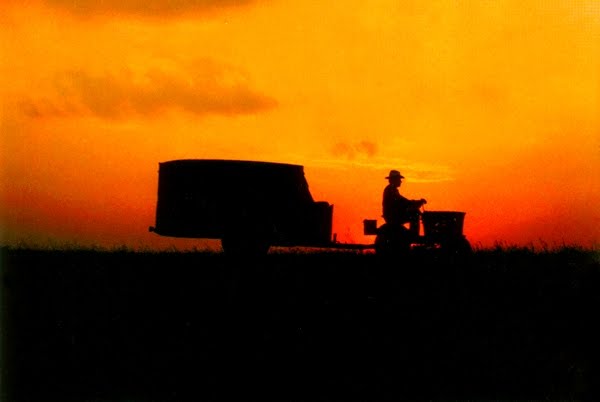
Francis died not long after shooting finished for The Straight Story. Lynch has since abandoned celluloid for digital. He's experience a little in the way of a resurgence in conversation about the art of cinematography, but I feel his legacy is trapped beneath his subpar work as director or his predictable work on Glory. He could work magic, but often hid his talent away. I'm glad someone thought to coax a few more truly striking images out of him before he left us for good.
Berlin
What makes a man do the things he does? Why do we choose one second over another? Every day men will make hundreds of tiny decisions and thus life. We decide to stop to drink from a fountain. We choose to think briefly about religion. We choose which character will live or die. There must be a reason for all of them, otherwise why would we make them. We make these decisions every minute. These thoughts come to me when I listen to music and hear all the ways the music could have gone. When I hear Joy Division's Unknown Pleasures. When paintings show women one way and not another. These thoughts come to me after I watch movies of a type. Mostly foreign movies, mostly German movies. Mostly Rainer Werner Fassbinder movies.
Berlin Alexanderplatz
by Rainer Werner Fassbinder
For a good half-dozen of his staggering output, I treated Fass like one of my cinematic nemeses; I felt ok writing off him as too strange for his own skin. He made strange movies and he made straight-forward movies, but they were all about the same stylistically. Slow, languorous, sexual, iconoclastic, claustrophobic, pensive... It seemed that until about 1978 his movies were almost always too stifling for me to sit through. He seemed to care more about the thoughts and images he was suggesting than getting a natural performance out of any of his actors (I hadn't discovered Bresson yet, reader. Pity me.) He frequently cast himself or one of a few of his stock players as people with no control over their circumstances. Men taken advantage of by those with power, women who felt old and dry because of their oppressive social surroundings. His movies were all very similar in a few ways. Their pace: running is a rarity in his films and no one speaks quickly when they can take their time. Their style; the outrageous fashion statements and bizarre characterizations. People cry, kiss, give monologues to no one, demand insane things from those below them. To me he was like the Klaus Nomi of film; the few who know him love him and defend him, but they also tend to read too much into his insanity. Not that there aren't things to be found in the canon they leave behind. I could complain about the hours that felt like days spent watching his movies hoping desperately for something to leap out of the malaise and prove Fassbinder's worth as a filmmaker, but a more interesting course of action is to ask why. Why do people love him? Not so interesting, too broad. Why did he do what he did? Why are there barely more than 60 lines of dialogue in The American Soldier? Why move from the completely unique style of the Bitter Tears of Petra Von Kant to the neorealist social drama of Fox and his Friends? It doesn't make any sense how one man could be as motivated as he was (43 feature films in 26 years, I'm not sure anyone but Joe D'Amato or Takashi Miike has matched his productivity while still leaving so distinct a stamp) could have made such lackluster examinations of the world he lived in.
He was a troubled man. He was a homosexual with two ex-wives who used production times to sleep with his leading men. His movies did scratch the surface of his problems (I feel like Fox & his Friends was as close as we come to Fassbinder the man). He tackled just about every dramatic genre there was and did his part to question (if not piss on) their assumptions. He often challenged the racist attitudes of early american films (while still perversely paying tribute to them) as in his disturbing western Whity, and his Douglas Sirk inspired melodrama Fear Eats the Soul. Learning of his admiration and later support for Sirk did a lot to warm me up to him. Fass punishes the womanizing heroes of his noir cycles (and his audiences by making them as slow and bleak as possible) and makes sure to give them sexually charged motives from both sides of the id. He spent so much time making tiny films with total control that when money started flowing in and expectations mounted there was bound to be change. Sweeping, beautiful changes.
Fassbinder loved the book Berlin Alexanderplatz for a long time before he made his film. He chose the name of its hero Franz Biberkopf, as the name of the man he plays in Fox & His Friends, the only time he built a film around himself. He used Berlin as a vehicle to display every complicated emotional hang-up he had ever experienced. He also cast just about everyone of his favorite actors. If El Hedi Ben Salem hadn't been in a french prison, I'm sure he'd have been in there too. It was a labor of love unlike any other. It took a year to complete and the finished film is nearly 16 hours long. It is among the longest movies ever made (yet somehow it feels shorter than The Bitter Tears of Petra Von Kant). It follows the life of massive, abrupt but sweet-hearted Franz Biberkopf after he is released from prison (his four year stint, we learn, was the product of his beating his girlfriend to death). He experiences unemployment, many girlfriends, deceitful acquaintances, rejection, highs, lows, insanity, love, and hatred. I was struck watching it realizing that this man had so much to offer the world but waited until this time in his life to finally let it all out. I imagined Maximilian Schell's harried lawyer Hans Rolfe in Judgment at Nuremberg "I want to leave the German people...with a shred of dignity." There has never been a more complete depiction of Weimar-era Germany. But that's not why I love this movie. Anyone could make a film about the horrors of living in Germany (Ingmar Bergman did it with David Carradine in The Serpent's Egg, and if that bizarre-o-world collaboration could yield results, then anything can), but not everyone can pour their heart into reels of film like Fassbinder did in 1980.

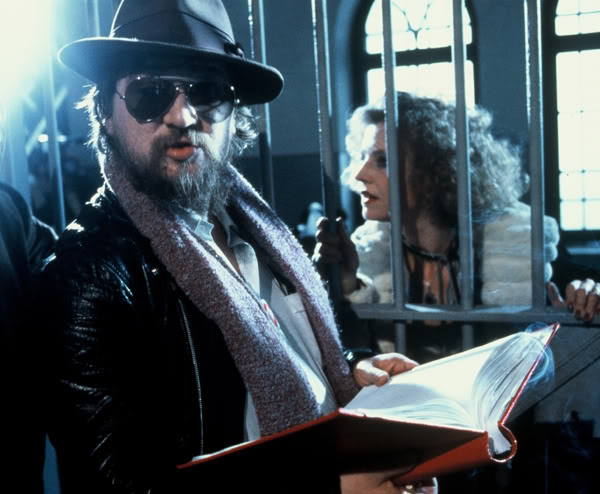
Any seasoned art fan can tell you about the many reappraisals they've experienced. In general, they're personal, chance encounters with one piece of an artists oeuvre. A boyfriend recommends a record, you spy a photograph that clashes with the pieces around it. Some people will tell you it happened when they saw Jeff Tweedy's breakdown in I Am Trying to Break Your Heart, or one of the thousands of Rolling Stones documentaries out there. I can tell you what made me want to give Rainer another chance was seeing the picture of him making Berlin Alexanderplatz. I'd seen it before on the Criterion Collection webpage above the New German Cinema page, but I had no idea it was him. I'd seen him in Fox, Whity, and Fear Eats the Soul and a few other of his movies and he looked...well, he kind of looked like me. He had a pale, round face, he was kinda short and a little out of shape and he seemed meek and unimposing. I felt bad for him in most of the roles he'd given himself. But then I saw that picture again with his name in the margins. What had happened? I knew he'd died prematurely (a drug overdose in 1982), but that didn't really explain how he'd gone from the awkward chubby guy in 1975 to the gruff, arthouse biker staring provocatively at the camera in 1980. At the end of his life, Fassbinder was a mess of a man. His lover would hang himself in prison the same year.
Berlin Alexanderplatz is a beautiful film, one of the thousand or so best. The cinematography is incredible (proto-West Wing sunbathing aplenty), the characters are fascinating, the music is perfect, the production design is remarkable, the acting is phenomenal, there isn't much wrong with the movie. It flows unlike any other Fassbinder film (which in a movie that already takes a day to watch is pretty fucking important). If I had to cite one thing that I was displeased with at the time, it was the epilogue. The movie is told in thirteen one hour chapters and a two hour epilogue. The epilogue is Fassbinder's id run wild as it never had before. Here we see the beautiful, logical, colorful narrative we've been following so closely for the last day and a half dissolve into piles of naked bodies, brothels, satanic boxing matches, biblical judgment, quarreling angels, and all kinds of other madness. Not that it isn't effective, but, I feel like there was some way to explain the madness of Franz Biberkopf better than playing Elvis and Kraftwerk in the 1920s. It's like he had spent so long making this serene movie and needed at the last to take a knife to it. To slash his canvas, as the saying goes. Was this inevitable, that someone as self-destructive as Fassbinder would unhinge the story. He couldn't get through one film without harping on bisexuality and zombie-like sexuality. Before this point, Berlin was one of the most thoughtful films I'd ever seen. It still is, but I wish he hadn't slipped up like that and felt the need to show Gottfried John kissing his cellmate or Gunter Lamprecht in boxing shorts (he looks like Tor Johnson). He needed to squeeze his caberet in the back door. But the more I've thought on it, the more I see: it wasn't his until the epilogue. The man may have vanished behind a beard, sunglasses and a leather jacket, but he was still the chubby kid from those early features, and that kid saw the world just so. I can't begrudge him these final moments to himself - they are his soul bared.

Whoever that guy is at the beginning of I Am Trying To Break Your Heart who says that ambition doesn't equal record sales couldn't have been more right. Berlin was a cult favorite when it came out, and has since disappeared. I don't think it ever got a vhs release because of its excessive length, and it appeared on American television exactly twice, in the 80s. It has to this day never been publicly shown from start to finish without interruption. I'm not sure what Rainer would have to say about this. He had to know he wasn't making Gone With The Wind (though I don't think I need to tell you which I'd prefer to watch), but still, the fact that there is a Rainer Werner Fassbinder Society and not one of them has paid to show the man's best film in its entirety in a movie theatre is a little disheartening. I can sit through anything (Female Vampire without once hitting fast forward. All of Carl Theodor Dreyer's films. Any DW Griffith film you put in front of me. All of Ed Wood's films. Gamera vs. anyone. 1900, anyone? Raymond Bernard's Les Miserables. Length or quality mean little to me. Watching movies is just what I do), but, I feel like there's gotta be someone out there who liked it as much as I did. This picture below is of him in Fox. He's the one with his eyes open. The photo below this one is of him making Berlin.

The reason I get so upset about this is because after I saw the tole that making films to the sounds of crickets had on Fassbinder, I questioned my future. If the reality of making movies or just trying to live as an artist could drive a man to this kind of devastation, what chance do I have? He might have been self-destructive, but no one had ever managed to put a leash on this guy and his work. Say what you will, his films are entirely his own. I respect him immensely even if I can take or leave a lot of his work and obviously recognize his contribution to the world I live in, but more than anything I feel some kind of connection to the guy. He was emotionally confused, clearly very awkward, stylistically alienating, and something of a pariah. Berlin Alexanderplatz is the work of a brilliant mind and his visual transformation is what confirmed this. People feel this way, I think, when they hear about Ian Curtis' suicide. What made this man so haunted? What made his world so dark that his music sounds like darkness and that made him end his life? Why did he do what he did? Why do we keep going back? Their lives frighten and excite us and their art does twice that. I'll be giving Fass and his films another chance from now on.
Berlin Alexanderplatz
by Rainer Werner Fassbinder
For a good half-dozen of his staggering output, I treated Fass like one of my cinematic nemeses; I felt ok writing off him as too strange for his own skin. He made strange movies and he made straight-forward movies, but they were all about the same stylistically. Slow, languorous, sexual, iconoclastic, claustrophobic, pensive... It seemed that until about 1978 his movies were almost always too stifling for me to sit through. He seemed to care more about the thoughts and images he was suggesting than getting a natural performance out of any of his actors (I hadn't discovered Bresson yet, reader. Pity me.) He frequently cast himself or one of a few of his stock players as people with no control over their circumstances. Men taken advantage of by those with power, women who felt old and dry because of their oppressive social surroundings. His movies were all very similar in a few ways. Their pace: running is a rarity in his films and no one speaks quickly when they can take their time. Their style; the outrageous fashion statements and bizarre characterizations. People cry, kiss, give monologues to no one, demand insane things from those below them. To me he was like the Klaus Nomi of film; the few who know him love him and defend him, but they also tend to read too much into his insanity. Not that there aren't things to be found in the canon they leave behind. I could complain about the hours that felt like days spent watching his movies hoping desperately for something to leap out of the malaise and prove Fassbinder's worth as a filmmaker, but a more interesting course of action is to ask why. Why do people love him? Not so interesting, too broad. Why did he do what he did? Why are there barely more than 60 lines of dialogue in The American Soldier? Why move from the completely unique style of the Bitter Tears of Petra Von Kant to the neorealist social drama of Fox and his Friends? It doesn't make any sense how one man could be as motivated as he was (43 feature films in 26 years, I'm not sure anyone but Joe D'Amato or Takashi Miike has matched his productivity while still leaving so distinct a stamp) could have made such lackluster examinations of the world he lived in.
He was a troubled man. He was a homosexual with two ex-wives who used production times to sleep with his leading men. His movies did scratch the surface of his problems (I feel like Fox & his Friends was as close as we come to Fassbinder the man). He tackled just about every dramatic genre there was and did his part to question (if not piss on) their assumptions. He often challenged the racist attitudes of early american films (while still perversely paying tribute to them) as in his disturbing western Whity, and his Douglas Sirk inspired melodrama Fear Eats the Soul. Learning of his admiration and later support for Sirk did a lot to warm me up to him. Fass punishes the womanizing heroes of his noir cycles (and his audiences by making them as slow and bleak as possible) and makes sure to give them sexually charged motives from both sides of the id. He spent so much time making tiny films with total control that when money started flowing in and expectations mounted there was bound to be change. Sweeping, beautiful changes.
Fassbinder loved the book Berlin Alexanderplatz for a long time before he made his film. He chose the name of its hero Franz Biberkopf, as the name of the man he plays in Fox & His Friends, the only time he built a film around himself. He used Berlin as a vehicle to display every complicated emotional hang-up he had ever experienced. He also cast just about everyone of his favorite actors. If El Hedi Ben Salem hadn't been in a french prison, I'm sure he'd have been in there too. It was a labor of love unlike any other. It took a year to complete and the finished film is nearly 16 hours long. It is among the longest movies ever made (yet somehow it feels shorter than The Bitter Tears of Petra Von Kant). It follows the life of massive, abrupt but sweet-hearted Franz Biberkopf after he is released from prison (his four year stint, we learn, was the product of his beating his girlfriend to death). He experiences unemployment, many girlfriends, deceitful acquaintances, rejection, highs, lows, insanity, love, and hatred. I was struck watching it realizing that this man had so much to offer the world but waited until this time in his life to finally let it all out. I imagined Maximilian Schell's harried lawyer Hans Rolfe in Judgment at Nuremberg "I want to leave the German people...with a shred of dignity." There has never been a more complete depiction of Weimar-era Germany. But that's not why I love this movie. Anyone could make a film about the horrors of living in Germany (Ingmar Bergman did it with David Carradine in The Serpent's Egg, and if that bizarre-o-world collaboration could yield results, then anything can), but not everyone can pour their heart into reels of film like Fassbinder did in 1980.
Any seasoned art fan can tell you about the many reappraisals they've experienced. In general, they're personal, chance encounters with one piece of an artists oeuvre. A boyfriend recommends a record, you spy a photograph that clashes with the pieces around it. Some people will tell you it happened when they saw Jeff Tweedy's breakdown in I Am Trying to Break Your Heart, or one of the thousands of Rolling Stones documentaries out there. I can tell you what made me want to give Rainer another chance was seeing the picture of him making Berlin Alexanderplatz. I'd seen it before on the Criterion Collection webpage above the New German Cinema page, but I had no idea it was him. I'd seen him in Fox, Whity, and Fear Eats the Soul and a few other of his movies and he looked...well, he kind of looked like me. He had a pale, round face, he was kinda short and a little out of shape and he seemed meek and unimposing. I felt bad for him in most of the roles he'd given himself. But then I saw that picture again with his name in the margins. What had happened? I knew he'd died prematurely (a drug overdose in 1982), but that didn't really explain how he'd gone from the awkward chubby guy in 1975 to the gruff, arthouse biker staring provocatively at the camera in 1980. At the end of his life, Fassbinder was a mess of a man. His lover would hang himself in prison the same year.
Berlin Alexanderplatz is a beautiful film, one of the thousand or so best. The cinematography is incredible (proto-West Wing sunbathing aplenty), the characters are fascinating, the music is perfect, the production design is remarkable, the acting is phenomenal, there isn't much wrong with the movie. It flows unlike any other Fassbinder film (which in a movie that already takes a day to watch is pretty fucking important). If I had to cite one thing that I was displeased with at the time, it was the epilogue. The movie is told in thirteen one hour chapters and a two hour epilogue. The epilogue is Fassbinder's id run wild as it never had before. Here we see the beautiful, logical, colorful narrative we've been following so closely for the last day and a half dissolve into piles of naked bodies, brothels, satanic boxing matches, biblical judgment, quarreling angels, and all kinds of other madness. Not that it isn't effective, but, I feel like there was some way to explain the madness of Franz Biberkopf better than playing Elvis and Kraftwerk in the 1920s. It's like he had spent so long making this serene movie and needed at the last to take a knife to it. To slash his canvas, as the saying goes. Was this inevitable, that someone as self-destructive as Fassbinder would unhinge the story. He couldn't get through one film without harping on bisexuality and zombie-like sexuality. Before this point, Berlin was one of the most thoughtful films I'd ever seen. It still is, but I wish he hadn't slipped up like that and felt the need to show Gottfried John kissing his cellmate or Gunter Lamprecht in boxing shorts (he looks like Tor Johnson). He needed to squeeze his caberet in the back door. But the more I've thought on it, the more I see: it wasn't his until the epilogue. The man may have vanished behind a beard, sunglasses and a leather jacket, but he was still the chubby kid from those early features, and that kid saw the world just so. I can't begrudge him these final moments to himself - they are his soul bared.
Whoever that guy is at the beginning of I Am Trying To Break Your Heart who says that ambition doesn't equal record sales couldn't have been more right. Berlin was a cult favorite when it came out, and has since disappeared. I don't think it ever got a vhs release because of its excessive length, and it appeared on American television exactly twice, in the 80s. It has to this day never been publicly shown from start to finish without interruption. I'm not sure what Rainer would have to say about this. He had to know he wasn't making Gone With The Wind (though I don't think I need to tell you which I'd prefer to watch), but still, the fact that there is a Rainer Werner Fassbinder Society and not one of them has paid to show the man's best film in its entirety in a movie theatre is a little disheartening. I can sit through anything (Female Vampire without once hitting fast forward. All of Carl Theodor Dreyer's films. Any DW Griffith film you put in front of me. All of Ed Wood's films. Gamera vs. anyone. 1900, anyone? Raymond Bernard's Les Miserables. Length or quality mean little to me. Watching movies is just what I do), but, I feel like there's gotta be someone out there who liked it as much as I did. This picture below is of him in Fox. He's the one with his eyes open. The photo below this one is of him making Berlin.
The reason I get so upset about this is because after I saw the tole that making films to the sounds of crickets had on Fassbinder, I questioned my future. If the reality of making movies or just trying to live as an artist could drive a man to this kind of devastation, what chance do I have? He might have been self-destructive, but no one had ever managed to put a leash on this guy and his work. Say what you will, his films are entirely his own. I respect him immensely even if I can take or leave a lot of his work and obviously recognize his contribution to the world I live in, but more than anything I feel some kind of connection to the guy. He was emotionally confused, clearly very awkward, stylistically alienating, and something of a pariah. Berlin Alexanderplatz is the work of a brilliant mind and his visual transformation is what confirmed this. People feel this way, I think, when they hear about Ian Curtis' suicide. What made this man so haunted? What made his world so dark that his music sounds like darkness and that made him end his life? Why did he do what he did? Why do we keep going back? Their lives frighten and excite us and their art does twice that. I'll be giving Fass and his films another chance from now on.

The Triumph of Style
I'm generally not one to favor that style-over-substance approach people like Guy Richie and Quentin Tarentino feel they can rely upon, but in some cases, it can be absolutely flooring. In some cases the style of a director can seem out of place in the majority of his or her films, but you put up with it because their films are interesting. I've always been a fan of Wong Kar Wai and felt that when he stepped away from his established style to make In The Mood For Love, it was the smartest thing he'd ever done (the film is beautiful in every way). Bits of the style he'd established in Chungking Express and Fallen Angels seeped into Mood, but it was essentially a departure. Departures from your established style can yield positive results (There Will Be Blood, Frenzy, Dersu Uzala), but, almost more exciting is what happens when you find the perfect use for the style you've created; the reason you had a voice in the first place.
My Blueberry Nights
by Wong Kar Wai
 It's no secret that Wong Kar Wai loves America. He loves it as Sergei Eisenstein and Akira Kurosawa did before him. He loves it almost as much as John Ford loved it. His films have all been testaments to that love; He's made manic-crime films a la Point Blank; retellings of golden age Doris Day-Rock Hudson romances; he's structured entire films around pieces of American music; he's in the middle of remaking The Lady From Shanghai. He's the Jean-Luc Godard of Hong Kong; a cinephile's cinephile. Best of all he's managed (until now) to make his films incredibly entertaining in their own right, completely divorced from his fanboy's nature. When I say until now it's because if anyone else in the world had tried to make My Blueberry Nights it would have been unwatchable. A predictable, romantic comedy/road movie where the naive girl learns lessons from the kooky characters she meets along the way, all the while sending postcards to the boy she secretly crushes on. That is about as trite a plot as they come. But what saves it from certain failure is the fact that as I was watching it, Kar Wai's style (the very thing that had given me pause while watching his other movies) makes perfect sense. To put it simply this is the movie he was born to make.
This is Kar Wai's first english language movie (and if he were smart he might make it his last movie period) and stylistically he's never going to beat himself. The slow crank speed of his cinematography, the lingering, sweaty soundtrack, the shifting narratives, the blindsiding, ambiguous heartbreak, all of it adds up here in ways it never did in his Hong Kong films. Every cliche, every silly line, every tired plot device, every piece of narration, all of it would have killed any other film. Not this one. This is Kar Wai's loveletter to America and nothing (not even Norah Jones in the worst acting turn by a singer since John Lurie's debut in Stranger Than Paradise) could ruin it. The film has faults (even the title screams "wasted hour and a half!"), but they brought more smiles than anything. Rachel Weisz can't pick an accent? No sweat! Natalie Portman as a world-weary gambler? Isn't that cute!?! Cat Power is Jude Law's supposedly Russian Girlfriend? ...Actually, I really don't know what to make of that. Sure I guess she has the bangs to look kind of Russian, but she doesn't even fake an accent. And her music's all over the soundtrack. That one's a head-scratcher. But the point is that the folksy wisdom the lead inherits from the crazies she encounters feels fresh. He gets help from co-writer Lawrence Block in capturing that feel of modern southern lore, but here it's all in the camera. Silly, idealistic stories were meant to look like this, and to see that potential fulfilled (on both ends) was strangely satisfying. Never in a million years could I be asked to care about Norah Jones finding her way back to Jude Law, but, here I let it all wash over me like the gorgeous sunset, diner grease, cigarette smoke, and winter air that drift through the reels. Nothing has ever looked quite so perfect as the fluorescent lights of a Memphis dive through a camera in drop-frame slow-mo.

As it is I think there are two kinds of people who'll enjoy this movie: girls between 12-35 who love romantic comedies/Jude Law and me. Do I recommend this film to anyone who doesn't meet that criteria? HELL NO! But I can tell you that I was so ecstatic over the absolute success of Wong Kar Wai's storytelling that the fact that it's been told a million times never bothered me for a second. Sure it's been told before, to the point of irrelevance, but never by Wong Kar Wai. Never the right way.
Earth Day
Four days ago was earth day. I don't think anyone mentioned it to me once that day. Dunkin Donuts gives out cold drinks in both plastic and styrofoam cups at the same time. We really deserve to be erased, don't we? This is a graphic Cooper Mckim made for a t-shirt design contest. I'm sorry he didn't win (not that I don't like Maggie Farrell's design, in fact I wear it as I write this); the best I can do is show it to everyone who'll look at it. Kind of like environmental problems; can't force anyone to acknowledge them, we can just do our best. Happy Earth Day, Cooper.


Woman in the Dunes

Last night I watched one of the most original films ever made. No one's ever come close to the bug-eyed weirdness of this film (plot, feel, and all). It was Hiroshi Teshigahara's Woman in the Dunes and it was truly excellent. It was made in 1964, it's not quite drama, not quite sci-fi, not quite psychological horror, but there are elements of the lot to be found. It follows an entomologist who's lured into spending the night in an isolated desert village. He's led to a rope ladder leading to a house deep in a pit surrounded by sand. The inhabitant is a single, strange looking woman who goes out at night to dig the sand, put it in buckets, and then put it in a net for the men at the top of the pit to collect. He realizes pretty quickly he's not getting out unless he escapes and spends the next three months alternately making himself comfortable and trying to get out. The sand that surrounds them is as much a character as anything else (so for that matter is Toru Takemitsu's pre-Exorcist violin scraping. This might be my favorite horror/sci-fi score of all time). It pervades their lives, their sleeping, eating, drinking, sex, livelihood, hobbies, everything. The sand is their reason for living and will be the death of them before anything else. The entomologist is also curiously in thrall to the woman he shares the house with. His feelings toward her are constantly shifting as time passes and his ambitions change. She is the bane of his existence and the siren song that pulls him in. Her sexuality is clearly an issue, but it's approached from a completely different angle. It is her sexuality that probably frightens him the most; he knows he isn't strong enough to combat his feelings about her. Films don't appear to be this emotionally complex anymore, for whatever reason, but I sincerely wish we'd try again.
It's almost a lot of things: noir, sci-fi, romance, horror, dystopia. The cinematography explores every rough texture, finding smoothness so rarely that it becomes precious when we or the entomologist stumble upon it. Human skin has never been so nuanced - never as perfect as it could be, yet paradoxically never more beautiful. Teshigahara made films like André De Toth, but with the despair writ large, rather than waiting in the wings or seeped into the faces of his characters. By contrast, all of Teshigahara's heroes are flummoxed to the point of exasperation. They don't know how to play it cool. They scream and bark and try like hell to beat a system that's gamed them from the outset. Fate is three steps ahead and they can do nothing about it except slowly get used to the idea. Even if it means kissing freedom goodbye.
My Favourite Film Number 1
This is part of my effort to write about my 100 favorite films in two pages or less. Due to the nature of this film, the essay is also available on Honors Zombie. The others that follow will be decidedly less campy, but I love it just as much as any art film I've ever seen, so here it is.
Dawn of the Dead
by George A. Romero
Dawn of the Dead? Oh yes, friends. Why this, of so many post-exploitation era zombie films? Why this at all? Dawn of the Dead and I have something of a history together. I saw this movie in the fourth grade as part of my dad’s attempt to both catch up on horror films he had missed out on as a teenager and to show me what horror cinema really is. And he was spot on really; what film represents the vanguard of 1970s horror cinema better? Director, writer, performer, and producer George A. Romero (Ed Wood and Orson Welles weren't the only ones) had gained renown for directing Night of the Living Dead, it’s indie predecessor, the godfather of budget horror, but it was with Dawn that he let the world know Night wasn’t a fluke. Unfortunately Romero never quite lived up to the standard set by Dawn; the supersaturated gore, the not-so-subtle critique of consumerism, the better-than-average performances pulled from the many non-actors filling the screen. Dawn is the action horror masterwork by which all should be judged, it features accurate representations of the culture and zeitgeist of 1978, features the height of 1970s shoe-string make-up effects and embodies the spirit of a true B-movie.
The film starts with the fevered dreams of Fran, a technician at a television station preparing an emergency broadcast, one gets the impression, for the last time. The story follows Fran, her helicopter pilot boyfriend Stephen and two cops, one black, Peter and one white, Roger. Zombies are overrunning western Pennsylvania, a surrogate for the rest of the world, and these four may be the last of civilization by the time the credits role. The film proper takes place mainly in a then-new indoor shopping mall, the potential for laughs, social criticism and discomforting violence of which never runs dry. Having grown up a few hours away from the places shown in the helicopter flight to the mall, I found these scenes particularly eerie. The forest where the zombies are killed by the dozens of hunters and soldiers looked not unlike the type I saw everyday. In this regard (as well as many others) Dawn is the movie that first led me to believe I could make movies. If Romero could put action in my backyard, why couldn’t I? I saw the same potential lying in wait in the everyday world that he did.
The handling of the crisis in the woods and the TV studio could be footage from a forgotten Maysles Brothers’ documentary; dozens of people in plain clothes interacting fanatically with one another in a believable yet alien fashion. The screaming pundits do an neat job with the exposition: “They get up and kill! The people they kill get up and KILL!” Next we see the way the authorities are handling the crisis; not well. The men in blue are holed up outside an urban tenement building that refuses to be evacuated. It’s here we see what it is everyone’s so terrified of. The scene in the basement is one that no gore-fan will ever forget. The conflict that permeates the film is whether to abandon everything and survive or to keep up the façade of normalcy and soldier on. The theme is not uncommon in war films and it’s handled with acumen uncommon to many budget horror films, especially when after weeks of living a life of relative solitude, our survivors question whether they’re doing the right thing. In a scene cut from the original theatrical run, our heroes go through the motions of life, try to prepare for the birth of Fran and Stephen’s child, their martial discord, exploring all the clever ways to while away the hours, while slowly it dawns on them that the mall has become a prison from which they might never escape.
Technically, Romero’s no Antonioni but he’s capable. In fact his blue collar working methods and mannerisms make his films seem like the filmic equivalent of Romero and his friends; a lovable, working class shaggy dog. Where he shines is in his character portrayals; the complete, believable people stuck inside this world. As anyone would if stuck in a claustrophobic nightmare such as this Romero slowly unpacks every facet of the four personalities; the neurosis, the need for control, tenderness, sorrow. The best of Romero’s characters for me is Ken Foree’s Peter, the tall black hero of the story. He looms over the crisis like a kind of detached father figure. He suffers the most when Roger succumbs to his wounds and wakes up one of the living dead; he tries in vain to patch up Stephen and Fran’s relationship, with some difficulty he is the first to admit defeat to the outside world without giving in to the hopelessness that overtakes Fran. He stays withdrawn enough to care when things go wrong, but not to let it overtake his psyche. His eyes say it all when Fran and Stephen passively battle over whether to keep the television on which has stopped all broadcasts days ago. Stephen wants to believe there’s a reason to stay and protect the mall, Fran sees that there is none and wants to leave it; Peter watches them both, undecided about what to do, but smart enough to either not have a side or just not to let on what he really believes.
It’s a competent character study, but it is much beside the point; which is of course zombies. Romero essentially picks up where he left off with the make-up. Night of the Living Dead showed you the dead freshly risen from the dead and their appearance reflected this. Now, several weeks into the crisis, livor mortis has set in. The blue corpses of the dead are much more troubling a sight then the average looking people who menaced the heroes in Night. With the crisis now extended to much larger portions of the world then just a Butler County farmhouse. With the bigger environment for the humans comes a much larger number of the living dead. Hundreds of the creatures wait hungrily outside for the doors to open and when they finally get in, Tom Savini was there with improved make-up effects. It’s tough to think of a film’s make-up that has so inspired the makers of movies than Savini’s work here. The graphic images of the invading biker gang being salvaged for meat have been copied more times than the opening shot of Jaws and with good reason. This is what people came to see and it’s what they take away from the film more than anything else. What really got me was watching the screaming victims continue struggling even as they were dismembered.
The denouement, while optimistic by definition, is complicated. The survivors, having sworn off the mall and its excesses, traps, and allure, escape in the helicopter they rode in on from the immediate threat of the zombies. What waits for them beyond the sunset is not hard to predict. They may escape the dawn of the dead, but there’s a day in front of them that can’t be any better than what they left. Romero has a penchant for never leaving a story completely told, realizing that if we don’t see the bitter end, the imagination gets to fill in the rest. He uses this trick in nearly everyone of his movies; we see enough to know how the problems at hand were dealt with, but the bigger problems lie in wait over the next hill. This kind of story telling is the kind that has had the biggest impact on me. Bring your characters in or out of the fire, but never extinguish it. There’s so much more imagination in never closing the doors you’ve spent your time and energy opening. To me, Dawn of the Dead is a perfect film (even with the over-the-top musical cues, budget constraints, limitations of many of the actors) thoughtful, never excessive, naturally performed and will be at the top of my list until the day I die. With any luck I’ll stay dead when that day comes.
Colin Meloy at the Capitol Theatre; a near-perfect evening
Sometimes, when the weather's halfway between breezy and hot, nothing is quite as perfect as reading outdoors. Sometimes, when you've got no park or grass to sit on, you do it next to a big metal power box outside the Capitol Theatre waiting for Colin Meloy to walk from his bus to the backdoor. I flipped through Heimeto Von Doderer's The Demons, volume II, as the sun went down. People walked past, cars drove by, Herr von Geyrenhoff called on Charlotte von Shlaggenberg, devil knows if she'll show, she's always late. Colin Meloy never showed up, but, I didn't mind so much. I went round front, ate crepes and coffee, met some nervous fanboys, and then walked in the front door of the capitol to watch Colin Meloy play an acoustic show. The capitol is a beautiful space (a little like the Palace in new york, but smaller and with the ambience of the Academy of Music) and reading The Demons under the balcony just felt right. The music he chose before hand is not unlike the music I'd have chosen were I in his shoes; The acoustic version of The Game by Echo & The Bunnymen, Pink Bullets by the Shins, Morrissey, british folk, etc. Rarely have I ever gotten this sensation, that the performer and I were just on the same wavelength. I felt like I knew him, like my friend Sebastian was about to take the stage, and this didn't change much when he finally stepped out.
Laura Gibson came on first and thats about when the absolute perfection of the evening made itself apparent. Laura Gibson stood, like a china doll, in a perfect white dress, her arms out at the same angle holding her guitar, which she played oh so slightly and sang like a less jazzy Regina Spektor. She looked like she belonged: here, on stage at the capitol, opening for the round faced Colin Meloy of the Decemberists. The evening was like I picture the childhood memories of Dicken's characters to be; picturesque, perfectly shaped, beset by warm feelings. No amount of thought or money could possibly reproduce the way that the evening felt; you could try, but you would fail, somethings are meant to be perfect one time for everybody. If you don't go looking for it, you might never find it. She did a cover of an old blues song that was spot-on, perfect.
Colin Meloy was a little less enthusiastic than when you hear him on his live record or the last time I saw him with the Decemberists. The touring has gotten to him, but not enough for him to not have a good time; this is the job he's chosen for himself after all. He wears Portland hipster chic; a button down plaid shirt, a sort of train-conductor's beret, and a pair of shiny jeans. His guitars are things to be envied; a beautiful battered Gibson twelve string, his Martin nylon string, and a designer guitar with words etched into the neck I didn't recognize. They all sound clear as a bell and compliment his voice, which does more of the same. His songs are wonderful and he likes a fair share of audience participation; the crowd is only too happy to oblige. The guitar solo in Perfect Crime 2, the organ in Red Right Ankle, and finally the mother's voice in Mariner's Revenge Song all became full-voiced wails of admiration. It's funny that sometimes you can see someone perform, not having listened to their music in a while, or having a few songs in your dream-setlist. He or she might not play them, but they will play a song you weren't expecting that ignites your love for their music, and music in general. His versions of Shiny and Of Angels And Angles were outstanding and soft and beautiful. Those were the songs I paid my money for; they were awesome. I wasn't really thinking about it, but when I heard the opening chords to A Cautionary Song, I got really happy, it might have been the perfect rendition. That night, Tuesday the 15th of April, might not have been perfect, but it's as close as I've come recently.

Laura Gibson came on first and thats about when the absolute perfection of the evening made itself apparent. Laura Gibson stood, like a china doll, in a perfect white dress, her arms out at the same angle holding her guitar, which she played oh so slightly and sang like a less jazzy Regina Spektor. She looked like she belonged: here, on stage at the capitol, opening for the round faced Colin Meloy of the Decemberists. The evening was like I picture the childhood memories of Dicken's characters to be; picturesque, perfectly shaped, beset by warm feelings. No amount of thought or money could possibly reproduce the way that the evening felt; you could try, but you would fail, somethings are meant to be perfect one time for everybody. If you don't go looking for it, you might never find it. She did a cover of an old blues song that was spot-on, perfect.
Colin Meloy was a little less enthusiastic than when you hear him on his live record or the last time I saw him with the Decemberists. The touring has gotten to him, but not enough for him to not have a good time; this is the job he's chosen for himself after all. He wears Portland hipster chic; a button down plaid shirt, a sort of train-conductor's beret, and a pair of shiny jeans. His guitars are things to be envied; a beautiful battered Gibson twelve string, his Martin nylon string, and a designer guitar with words etched into the neck I didn't recognize. They all sound clear as a bell and compliment his voice, which does more of the same. His songs are wonderful and he likes a fair share of audience participation; the crowd is only too happy to oblige. The guitar solo in Perfect Crime 2, the organ in Red Right Ankle, and finally the mother's voice in Mariner's Revenge Song all became full-voiced wails of admiration. It's funny that sometimes you can see someone perform, not having listened to their music in a while, or having a few songs in your dream-setlist. He or she might not play them, but they will play a song you weren't expecting that ignites your love for their music, and music in general. His versions of Shiny and Of Angels And Angles were outstanding and soft and beautiful. Those were the songs I paid my money for; they were awesome. I wasn't really thinking about it, but when I heard the opening chords to A Cautionary Song, I got really happy, it might have been the perfect rendition. That night, Tuesday the 15th of April, might not have been perfect, but it's as close as I've come recently.


The Meanest Thing Anyone's Ever Said To Pauline Kael
And as for Damnation by Béla Tarr. Do you think anyone's ever watched Stalker and thought: "You know what this has too much of? Happiness." And thus Damnation. What a miserable film. 2 hours of ennui the likes of which I've never experienced before. Even the scenes of passionate love making look two shakes from a wake. I've put myself through a lot of slow films in the past (ask anyone), but this is where I draw the damned line. Even the cinematography bored me; on paper it sounds great, and yes, the still images do look stunning, but together, with it's pacing and the fact that it looks as though it was shot on video, I can't say a thing in this movie's defense.

Guns kill people when people fire them
Yes, it's a cheap, low thing to poke fun at the recently deceased, and for that I apologize to the surviving members of the Heston family. I will however use this to talk a minute about Gun Rights. In 2004 29,569 people were killed by guns in America. To say nothing of the deaths of Iraqi civilians by American soldiers or other Iraqis, or the countless deaths at the hands of militaristic third world governments run by pugnacious religious regimes. I'm not suggesting repealing the 2nd amendment (though revision wouldn't be out of the question) though I am suggesting that more than any other constitutional amendment, it has been the cause of death and injury. The others were essentially designed to keep violence from ever becoming a part of American society. People seem to cling to the second amendment, kind of the same way they hang on to that passage from Leviticus. Maybe the rule made sense at the time, but, right now, it's killing kids on the street, murdering civilians, empowering convenience store crooks, and helping the government prove that it needs to exist. In 1923 a former head of Scotland Yard told the United States to ban firearms, as they were the thing causing most violent crimes. That was three quarters of a century ago; In the meantime, five wars, countless midnight seizures of power, dozens of assassinations (most, if not all of which, happened to equal rights advocates), millions of armed robberies, friendly fire, shoot-outs with the police, accidental deaths and gang violence. No one's given an inch because of something decreed in 1776. Here's the thing, I can see people wanting guns to protect themselves, but they wouldn't need guns if there weren't armed criminals to defend themselves from (or tell themselves they need protection from). In reality, it just makes everyone feel nervous, prejudiced, and invincible. This country doesn't need guns, neither does the planet. Nobody needs a gun.
From My Cold Dead Paws
Charlton Heston is dead. You think we can pry that gun from his hands now? You'd think in all the obituaries they'd mention his marriage to the succubus, or all the times he had to go back and keep renewing his deal with satan. You know for the enormity of his resume, you'd think there would be better roles in better films.

The Underrated Work Of Genius - News & Tributes
People often say (or intimate) that there isn’t much good music made today. Were it not for the fact that most of the music I listen to in a given week were made in the last five years, I might consider agreeing. Not because I think there is nothing but meritless music made these days, but because most, if not all, the music I listen to today takes it roots from the music made between 1969 and 1989. Most notably stolen from (or borrowed if we mean to be a bit more generous to today’s hitmakers) is the post-punk movement that took place between 1978 and 1984. Bands that started making records in the last five years that you’ll find at your average club or college radio playlist today will more than likely have done at least as much research as I have on the subject. In fact it’s tough to think of one immune from Gang of Four comparisons, and nearly impossible to think of one who doesn’t want to be Echo & The Bunnymen. Coldplay admitted they used the Bunnymen, R.E.M., and Depeche Mode as fuel for their second and third records, Bloc Party, Clap Your Hands Say Yeah, Of Montreal, Radiohead, The Arcade Fire, TV on the Radio and other indie staples all borrow heavily from the Cure, New Order, The Fall, The Bunnymen, The Smiths, Public Image LTD., and others. Even bands that were around for for the movement’s death like Yo La Tengo, Sonic Youth, and The Flaming Lips have started taking cues from the more melodic records of the time. The real test is whether these bands can learn to change. The thing that makes Post Punk so edgy and fondly remembered is that so few bands hung around to embarrass themselves like the Classic Rock or Pop bands that clung to life like residue on a tooth brush. (Picture would have happened if the Beegees or the Rolling Stones had called it quits before 1975). Radiohead, The Arcade Fire, The Stills, and LCD Soundsystem, among others, have proved themselves capable of absorbing their influences, paying homage, and then running into new territory with them; Bloc Party, The Helio Sequence, The Faint, & Interpol have all made decent records but as of this writing haven’t yet proved themselves capable of keeping their influences in check; they all sound very much like they’re borrowing from 80s bands (not that diminishes their ability to make good music, mind you). It strikes me that when a band has the courage to take what they know, hang on to it, and then go in an unprecedented direction, that’s the definition of courage and it shows more artistry than when you never leave your means as a band. When bands try this they get as much flack as praise on principle, and so it takes a lot longer to truly appreciate the effort. This is where the Futureheads come in.
News & Tributes
by The Futureheads

I’m on too many email lists for my own good, and one of the subscriptions is get is from the Futureheads. When they started talking about their new record (due in a few months), they sent out a disheartening little message about their sophomore LP.
“…but before I go in to it I would really like to thank those of you who 'got' our second record and enjoyed where we took it, perhaps not the most predictable musical diversion, but a progression none the less. It was a pretty difficult process to rejuvenate and restore our confidence after it failed to live up to the first records success. A personal challenge and a half but nobody ever said to us, ‘be a band, it'll be easy, a doddle'. We were so sure that we had made an album that would take us to places we had never been…”
I was struck by this because, though admittedly it took me some time, I loved the record. In fact I had come to think of it as one of the best records I’d ever heard. I wanted desparately to explain that I loved it, considered it as masterful as many of my other favorites (Weezer, Nick Drake, Tom Waits), and that, yes the first record might have been a bit more ‘party-all-the-time’ catchy and sounded a bit more like everyone else, I would take News & Tributes over the eponymous any day. The more I thought about I realized that their first record’s weakness was the second’s strong points; The Futureheads sounded like a post-punk record, like it had been recorded, forgotten and then found under John Peels desk when they swept his office after his death (this could of course have something to do with Gang of Four’s Andy Gill producing a handful of the songs). This is definitely a plus when you like Entertainment! or Unknown Pleasures and want to hear something that could be the half brother of either of those records, but there was almost no risk in this formula (except to be called copycat hipsters). I still love the first record it just pales when placed next to the second one.
The start of the record is one of the smartest I’ve ever encountered. A drum program slowly grows louder and then it’s replaced by live drums, which get even louder (I was in a car with the speaker all the way up the middle of the night the first time I heard it, the ideal setting for music in my opinion). Then come the guitars; striking like lightning, kicking the thing into action, like someone turning the keys all the way. Then Barry Hyde’s voice comes in “in some cases yes, in most cases no…” It’s like a warning; ‘be warned, this is an experiment and they only work half the time, but we think you’re gonna like this’. The chorus of this song was the one thing my friend Ken told me about, and it’s probably the most English-sounding thing every recorded. The four band members chant (dubbed many times over I suspect) “YES! NO! YES! NO!” You know what that sound is? It’s ambition and it’s glorious! It sounds like a football game is underway and the band is at Manchester United leading the crowd like conductors. And the best part about this song, though it’s certainly the happiest the record get, it isn’t the loudest. Next is “Cope”, like a punk, metal, rock, and pop tune all shot out of the same barrel (guitarist Ross Millard is something of metal fan with a love for Mastodon [he’s not the only one]). It’s less than three minutes long and it takes you prisoner every second. The language is just as fierce as the music when it needs to be; there is no chorus to speak of but the thing that gets repeated most often is “HOW DARE YOU!” It is an awesome song and while it may recall the crunchy anger of tunes like “He Knows” or “Le Garage” it doesn’t really sound like the Futureheads; the melody is off kilter, and the harmonies are just bizarre, somewhere between the Gibbs and the Dead. So many alien elements in so little time was initially a turn-off during the hot summer it was released during, but it won me over when winter came and bitterness was exactly what the doctor ordered. (winter is a theme for my musical habits, but that’s another article).

Next is Fallout, which relies on verses given up for voice-less passages to elaborate on the new level of production the Heads have achieved. The verse starts with a brash attack from guitarists Hyde and Ross Millard that seems to be plunged underwater for the second half. Try walking down a city street while it snows outside with this song in your earphones and see if this doesn’t make some kind of sense. The tone has gone back to their “future is a dark place” theme as it forecasts a couple trapped in a fallout shelter for days after something horrible’s happened on the surface. Something terrible is happening out there, and the idea of surviving with the few things you hold dear is really important to the Head’s music and crucial to really understanding News & Tributes. It underscores much of their music and is something I find fascinating, which is why News & Tributes works so well for me. Hyde’s lyrics seem to fixate on the idea of being drawn from someone or something close and the need to reclaim it and the feelings it holds, even if it means revisiting something painful. It helps too that he has the most British voice in rock music. The influences on the record are a little more varied than cold british post-punk, Kate Bush and science fiction. Critics have cited the Beach Boys, XTC, Big Country, Blur, The Knack, GOF, Talking Heads, & Cocteau Twins, to name just a few, as some of the audible influences on News & Tributes. More impressive than simply flipping through their record collection, they have managed to digest what made these records so great and come up with something that surprises you every second it spins.
As always there’s a weak point, and the rule that the single is the worst track on the record holds true, but only because to me it sounds too much like they were writing a pop song. It’s still a lot of fun and such, but the hook just isn’t strong enough. Anyway, I don’t mind so much because it’s followed by one of my favorite songs of the last ten years. “Burnt” is an anomaly all right, stripped down, driven by a lone bass line for most of it’s three minutes and forty-one seconds, relying on acoustic guitar for the first time on any Heads record; in short, it isn’t your average post-punk tune. The electric lead sounds alternately like a Television lick and a distorted Cello (I don’t know Ross Millard did that, but I’d give my pinky finger to find out). The chorus is addictive in the best way; it’s almost too good, dissonant with the song’s hitherto melancholia, but monumental, sounding like all the best Kinks songs smashed into one. They also, unlike most others bands in the world, found a nice balance with dynamics. Whereas most 80s-obssesed guitar bands will give you an onslaught of sound, every space and second filled with synth, acoustic guitar, leads, piano, backing vocals and other things, News & Tributes has a much-appreciated return to quiet. The best thing about Coldplay’s Parachutes, Sigur Rós’ Ágætis Byrjun or Interpol’s Turn on the Bright Lights from a theoretical standpoint is that they use silence and solitude to aid the feel of their music (No one will do this as perfectly as Joy Division did, but they do a good job nonetheless). It’s one thing to evoke loneliness by singing about it, it’s another thing to actually make us feel it in the music. Not every second is filled with overdubs or choral-style vocals. News is the one record that’s done that in the last few years. For all their studio savvy, it still sounds like four guys and they never break from the integrity of the model. The leads never overpower the rhythm and they don’t all have to play at once. It’s a simple strategy, but it’s one that
The Heads graduated very quickly from one-trick pony to electrical storm, and yet the sad email. The production, songwriting, and arrangement all matured, so why haven’t people given them the credit they deserve. There were positive notices, to be sure, but this was lost among 2006’s big nothings like Bob Dylan’s Modern Times and The Red Hot Chili Pepper’s Stadium Arcadium; records that sound like their creators have learned absolutely nothing from their many, many years making landmark records and shaking the world by the collar with stylistic 180s and abjurations of commercial appeal. It’s up to the new guys to bring about change, but most kids my age just want to listen to Van Halen and Sublime. I understand appreciating a record, but not to the point of irrelevance and not when there are people making good use of their influences. When someone flat out refuses to listen to anything not prescribed to them by their social stratum or heritage, then bands with something to say are going to be forced underground to make brilliant records that no one will ever hear.

News & Tributes
by The Futureheads
I’m on too many email lists for my own good, and one of the subscriptions is get is from the Futureheads. When they started talking about their new record (due in a few months), they sent out a disheartening little message about their sophomore LP.
“…but before I go in to it I would really like to thank those of you who 'got' our second record and enjoyed where we took it, perhaps not the most predictable musical diversion, but a progression none the less. It was a pretty difficult process to rejuvenate and restore our confidence after it failed to live up to the first records success. A personal challenge and a half but nobody ever said to us, ‘be a band, it'll be easy, a doddle'. We were so sure that we had made an album that would take us to places we had never been…”
I was struck by this because, though admittedly it took me some time, I loved the record. In fact I had come to think of it as one of the best records I’d ever heard. I wanted desparately to explain that I loved it, considered it as masterful as many of my other favorites (Weezer, Nick Drake, Tom Waits), and that, yes the first record might have been a bit more ‘party-all-the-time’ catchy and sounded a bit more like everyone else, I would take News & Tributes over the eponymous any day. The more I thought about I realized that their first record’s weakness was the second’s strong points; The Futureheads sounded like a post-punk record, like it had been recorded, forgotten and then found under John Peels desk when they swept his office after his death (this could of course have something to do with Gang of Four’s Andy Gill producing a handful of the songs). This is definitely a plus when you like Entertainment! or Unknown Pleasures and want to hear something that could be the half brother of either of those records, but there was almost no risk in this formula (except to be called copycat hipsters). I still love the first record it just pales when placed next to the second one.
The start of the record is one of the smartest I’ve ever encountered. A drum program slowly grows louder and then it’s replaced by live drums, which get even louder (I was in a car with the speaker all the way up the middle of the night the first time I heard it, the ideal setting for music in my opinion). Then come the guitars; striking like lightning, kicking the thing into action, like someone turning the keys all the way. Then Barry Hyde’s voice comes in “in some cases yes, in most cases no…” It’s like a warning; ‘be warned, this is an experiment and they only work half the time, but we think you’re gonna like this’. The chorus of this song was the one thing my friend Ken told me about, and it’s probably the most English-sounding thing every recorded. The four band members chant (dubbed many times over I suspect) “YES! NO! YES! NO!” You know what that sound is? It’s ambition and it’s glorious! It sounds like a football game is underway and the band is at Manchester United leading the crowd like conductors. And the best part about this song, though it’s certainly the happiest the record get, it isn’t the loudest. Next is “Cope”, like a punk, metal, rock, and pop tune all shot out of the same barrel (guitarist Ross Millard is something of metal fan with a love for Mastodon [he’s not the only one]). It’s less than three minutes long and it takes you prisoner every second. The language is just as fierce as the music when it needs to be; there is no chorus to speak of but the thing that gets repeated most often is “HOW DARE YOU!” It is an awesome song and while it may recall the crunchy anger of tunes like “He Knows” or “Le Garage” it doesn’t really sound like the Futureheads; the melody is off kilter, and the harmonies are just bizarre, somewhere between the Gibbs and the Dead. So many alien elements in so little time was initially a turn-off during the hot summer it was released during, but it won me over when winter came and bitterness was exactly what the doctor ordered. (winter is a theme for my musical habits, but that’s another article).
Next is Fallout, which relies on verses given up for voice-less passages to elaborate on the new level of production the Heads have achieved. The verse starts with a brash attack from guitarists Hyde and Ross Millard that seems to be plunged underwater for the second half. Try walking down a city street while it snows outside with this song in your earphones and see if this doesn’t make some kind of sense. The tone has gone back to their “future is a dark place” theme as it forecasts a couple trapped in a fallout shelter for days after something horrible’s happened on the surface. Something terrible is happening out there, and the idea of surviving with the few things you hold dear is really important to the Head’s music and crucial to really understanding News & Tributes. It underscores much of their music and is something I find fascinating, which is why News & Tributes works so well for me. Hyde’s lyrics seem to fixate on the idea of being drawn from someone or something close and the need to reclaim it and the feelings it holds, even if it means revisiting something painful. It helps too that he has the most British voice in rock music. The influences on the record are a little more varied than cold british post-punk, Kate Bush and science fiction. Critics have cited the Beach Boys, XTC, Big Country, Blur, The Knack, GOF, Talking Heads, & Cocteau Twins, to name just a few, as some of the audible influences on News & Tributes. More impressive than simply flipping through their record collection, they have managed to digest what made these records so great and come up with something that surprises you every second it spins.
As always there’s a weak point, and the rule that the single is the worst track on the record holds true, but only because to me it sounds too much like they were writing a pop song. It’s still a lot of fun and such, but the hook just isn’t strong enough. Anyway, I don’t mind so much because it’s followed by one of my favorite songs of the last ten years. “Burnt” is an anomaly all right, stripped down, driven by a lone bass line for most of it’s three minutes and forty-one seconds, relying on acoustic guitar for the first time on any Heads record; in short, it isn’t your average post-punk tune. The electric lead sounds alternately like a Television lick and a distorted Cello (I don’t know Ross Millard did that, but I’d give my pinky finger to find out). The chorus is addictive in the best way; it’s almost too good, dissonant with the song’s hitherto melancholia, but monumental, sounding like all the best Kinks songs smashed into one. They also, unlike most others bands in the world, found a nice balance with dynamics. Whereas most 80s-obssesed guitar bands will give you an onslaught of sound, every space and second filled with synth, acoustic guitar, leads, piano, backing vocals and other things, News & Tributes has a much-appreciated return to quiet. The best thing about Coldplay’s Parachutes, Sigur Rós’ Ágætis Byrjun or Interpol’s Turn on the Bright Lights from a theoretical standpoint is that they use silence and solitude to aid the feel of their music (No one will do this as perfectly as Joy Division did, but they do a good job nonetheless). It’s one thing to evoke loneliness by singing about it, it’s another thing to actually make us feel it in the music. Not every second is filled with overdubs or choral-style vocals. News is the one record that’s done that in the last few years. For all their studio savvy, it still sounds like four guys and they never break from the integrity of the model. The leads never overpower the rhythm and they don’t all have to play at once. It’s a simple strategy, but it’s one that
The Heads graduated very quickly from one-trick pony to electrical storm, and yet the sad email. The production, songwriting, and arrangement all matured, so why haven’t people given them the credit they deserve. There were positive notices, to be sure, but this was lost among 2006’s big nothings like Bob Dylan’s Modern Times and The Red Hot Chili Pepper’s Stadium Arcadium; records that sound like their creators have learned absolutely nothing from their many, many years making landmark records and shaking the world by the collar with stylistic 180s and abjurations of commercial appeal. It’s up to the new guys to bring about change, but most kids my age just want to listen to Van Halen and Sublime. I understand appreciating a record, but not to the point of irrelevance and not when there are people making good use of their influences. When someone flat out refuses to listen to anything not prescribed to them by their social stratum or heritage, then bands with something to say are going to be forced underground to make brilliant records that no one will ever hear.
Age of Progress
I will say something for digital film and
technology; it has made filmmakers a bit bolder. A fascinating offshoot in experimental filmmaking took off midway through this last decade that many revered directors have fronted. While teenage boys like Zach Snyder put their masturbatory digital effects on display for 300 and Watchmen, art house directors took the new advances in stride and used them for interesting forays into once-popular genres. Lars Von Trier used digital technology in his films Dogville and Manderlay to take on American drama and the conventions of small towns that populate a century of laconic small-town plays. He stripped down his set to an elaborate, empty stage, not unlike a black box theatre and used mostly foreign actors to comment on American hypocrisy and challenge hypocrisy Eric Rohmer used it for his film The Lady and the Duke to recreate the French Revolution using enormous spliced-in oil paintings as backgrounds for each outdoor scene, giving the film the unromantic historical feel it needs. Michel Gondry's movies wouldn't exist were it not for the things he does with digital technology. So while I will from time to time rail against digital filmmaking taking all the backbone out of epic filmmaking (Lord of the Rings, Star Wars, Pirates Of The Carribbean) there are some people who decide to use this power for good.
technology; it has made filmmakers a bit bolder. A fascinating offshoot in experimental filmmaking took off midway through this last decade that many revered directors have fronted. While teenage boys like Zach Snyder put their masturbatory digital effects on display for 300 and Watchmen, art house directors took the new advances in stride and used them for interesting forays into once-popular genres. Lars Von Trier used digital technology in his films Dogville and Manderlay to take on American drama and the conventions of small towns that populate a century of laconic small-town plays. He stripped down his set to an elaborate, empty stage, not unlike a black box theatre and used mostly foreign actors to comment on American hypocrisy and challenge hypocrisy Eric Rohmer used it for his film The Lady and the Duke to recreate the French Revolution using enormous spliced-in oil paintings as backgrounds for each outdoor scene, giving the film the unromantic historical feel it needs. Michel Gondry's movies wouldn't exist were it not for the things he does with digital technology. So while I will from time to time rail against digital filmmaking taking all the backbone out of epic filmmaking (Lord of the Rings, Star Wars, Pirates Of The Carribbean) there are some people who decide to use this power for good.
I am extremely likeable

Here we have the playbill artwork for Amulets Against the Dragon Forces, which is a popular Dungeons & Dragons module for the Forgotten Realms campaign setting:


Subscribe to:
Posts (Atom)