My Favourite Film Number 10

This is out of sequence, but I have to doctor my thing about Aliens, because it's very workmanlike and reads more like a synopsis. Enjoy the next step in the meanwhile.

Romantic love between two people is the one sensation that I believe film can capture better than any other medium. In books it is easy to describe what love feels like, what goes on when you see your beloved’ face, hear your beloved’s name, etc. In film you can say all you need to with a glance, a gesture, or a subtle change of expression. Granted love has been misrepresented more times than I care to count, but occasionally a director will get it absolutely right and you know it right away. It’s staggering and harmonious and it makes you jump out of your chair. The swimming pool kiss between Elijah Wood & Christina Ricci in Ang Lee’s The Ice Storm, the quiet honesty of Eric Rohmer’s Love In The Afternoon, and the slow flirtation between Vittorio de Sica and Danielle Darrieux in Max Ophuls’ The Earrings of Madame De… are some of the precious few times that romance has been accurately captured on screen. There is one film, however, that stands above all others as a completely honest depiction of love between two people: David Lean’s Brief Encounter.

Brief Encounter
by David Lean
Brief Encounter tells the story of two star crossed lovers, Laura a housewife (Celia Johnson) and Alec a GP (Trevor Howard), and it pulls no punches. They are both entering their middle age, both are married, have jobs, and no interest in entering such a pact, and yet neither can deny that after meeting by chance three times, going to lunch, the pictures, and a romantic boat ride that they have fallen in love with each other. Neither is unhappy with their marriage or lives, but they feel alive when in each other’s presence, and don’t want to abandon the only thing they feel passionately about. They argue about what to do, when to break it off, how far they should allow themselves to fall from grace, until the conclusion is thrust on them like a bucket of cold water. Told in flashback on the evening the affair ends, a bleak denouement seems guaranteed from the outset and yet through Lean’s characterization the ending doesn’t feel at all like the defeat we see coming all along. Brief Encounter is that brilliant film that ends in defeat, makes it both tragic and triumphant, and still feels like victory.

To love Brief Encounter is to love Celia Johnson. Her Laura is one of cinema’s great heroines. Her voice like torn silk quavering under the stress of having to chose between two exclusive kinds of happiness; her face that of a tortured animal cruelly thrust into peril. She makes clear the pain of finding happiness in the socially unacceptable using just her eyes. Though Celia Johnson was only 37 when she played Laura through her considerable strength as an actress she makes it clear that this may be perhaps the last chance for a meaningful relation in her life. Unlike the ludicrously ageist portrayals of women scorned that populate modern films, Brief Encounter feels like the real thing. Like a cross between Simone Simon and Mary Astor, Celia Johnson’s performance may just be the saddest in film history. Her humanity and her devotion to the happiness of others makes it impossible not to sympathize with her. And because she doesn’t know what she wants, we suffer right along with her, eating up every moment of her passion finally coming unbuttoned after years in polite company, and falling down hard whenever her happiness is taken from her. David Lean, perhaps more than any other director of his time, understood how hard it is to be a woman and his early films dictate how hard the job of a female can be. How can a woman seek pleasure for herself when society’s expectations chase after her no matter how hard she tries to find privacy. Between Summetime, The Passionate Friends, This Happy Breed, Madeleine, Hobson’s Choice and Brief Encounter Lean covers just about every aspect of modern femininity in relation to the stern eyes that watch a woman every day of her life all the while refusing to pass judgment. Lean was a feminist that understood how hard it is to find yourself amidst mountainous social constructs and stiff British tradition.

Brief Encounter might be called lover’s noir; there is no murder, only human emotion; no suspect to interrogate, just a woman confessing. David Lean was a filmmaker who understood human nature and crafted plots around them that rivaled any spy thriller or detective potboiler of the time; the Hitchcock of the soul or the Clouzot of the heart. Each element builds on top of his very human drama to craft a tense, layered drama that finally makes infidelity as important as a bomb at police headquarters. The frequent use of Rachmaninov’s Piano Concerto number 2 makes every action and glance sink in. Robert Krasker’s photography, just four years before his brilliant work on The Third Man, fills the screen with shadow and dusk whenever passion is afoot. What people walk away from Brief Encounter with are typically those arresting shots in the Milford train station. Along with the footage of the trains breaking the stillness of the night air and separating the lovers each night, there are those silhouettes. There to remind the audience and our heroes that someone is always watching. Their affection for one another is constantly put on hold by the arrival by one or more people (often droll acquaintances who both live within and champion the rigid confines of the bourgeoisie lifestyle that Alec and Laura are desperately trying to escape), something that anyone in a tentative romantic situation can identify with. In fact Brief Encounter is a film I find myself in tune with each time I view it. Having been in that situation and having known other people in that situation, I can say first hand that the feelings of both Laura and Alec are as true to life as they come and for a film made in 1945, that’s saying quite a bit. When we find ourselves torn between love and responsibility, the right choice is never apparent or easy to make; here is a film entrenched in that conflict.

Watching the love between two people blossom and then tragically fail is hard to do, and it’s no easier when the people are as charming and human as Celia Johnson and Trevor Howard. And yet their love fills every inch of the screen, it is unavoidably, undeniably strong. The film was mocked at the time for showing a supposedly tumultuous love affair that contained so little tumult. Though they have the stats right (Celia Johnson and Trevor Howard kiss exactly four times on screen and spend only five days together), they have missed the point altogether. Lean was not attempting to pull the wool over anyone’s eyes. He was making what remains one of the most honest films ever made, and yet somehow came out with one of the most enthralling, heart-wrenching pieces of art ever made. This might not have the prose of Shakespeare or the color of Gone With The Wind, but when Alec¬ and Laura must say goodbye publicly without the words they’d rehearsed a hundred times over, when things go wrong in the worst way possible, we are given one of the most harrowing moments in cinematic history. What happens when you cannot say goodbye to the thing you love the most? Where do those feelings go? Brief Encounter presents questions and dilemmas that are both terrifying to consider and achingly human. Is an audience allowed to root for a woman cheating on the father of her two children with a married doctor? Perhaps the reason the film’s conflict was lambasted so is because nothing, not even Krasker’s cinematography, is black and white. Every setting and problem comes wrapped in smoke and darkness. The world seems to treat the problems of Brief Encounter with contempt; society knows the answer to their problem and has ways of dealing with middle-aged dreamers who feel passion supercedes order. Brief Encounter is bold, beautiful, funny, haunting, daring, and above all else romantic.

3 Pages on One Song

Essay on DLZ
Song by TV On The Radio
Commissioned by Stuart Bogie

You could be on an empty city street after all the people have left. Trash and old newsprint flutters around the street in a feverish wind and hits telephone polls and overturned trash bins. There’s evidence that people may have been here in the recent past, but they aren’t here now. You could be the last survivor in the dirty, moist hallways of a post-H.R. Giger spaceship, stuck in a nihilistic alien parable. You could miles underground, the last of your or any other people, just waiting. Looking around corners, feeling the moisture collecting in pools, watching everything rust. You could be driving on an abandoned highway toward some perilous errand or other, the yellow lines passing beneath your headlights monotonously. Your mind is heavy, you’re very alone. All of these images, these places in the subconscious can be reached with precisely three chords and a hip-hop drum beat that can be described as a lot of things, first and foremost: aggressive. Before the lyrics, before Tunde Adebimpe’s haunting falsetto, before Gerard Smith’s organ, before Katrina Ford’s catchy, yet foreboding “lah-lah-lah”s, before the whistling that sounds like it was recorded over your grave, before anything else, there are three low, low notes on a keyboard and a drum beat.

TV on the Radio might be said to be professionals at mastering atmosphere. Their songs are hard to peg as being a part of one particular style; on any given TV on the Radio record you’ll find a hybrid of R&B, goth rock, post-punk, funk, and hip-hop, and yet you’ll be no closer to describing their overarching sound. One thing has been true from the start, however, and that is that the music of this Brooklyn band always elicit feelings and images. Any given TV on the Radio song will put you in some place new and different in your mind. The droning beauty of “The Wrong Way” or the furious chorus of “Wolf Like Me” can take any listener to a lot of very dark places and they will undoubtedly have a damn good time exploring them. Their latest album, Dear Science, takes a less forward approach to their usual mood creation. Instead of the soundtrack to a film about the end of the world, Dear Science seems to the playlist used at the party before that same end. Much more upbeat funk and soul influences come through than the mindbendingly excellent gloom they’d perfected. A stylistic shift like this one is welcome, of course, but it’s also a welcome relief to know that not every song is completely different; I did like those spookier songs. And so on Dear Science there are a few songs that capture that older sound that many fans may pine for after the psychedelic funk of side A. Foremost among those tracks that bring back a doom-laden nostalgia is DLZ.

DLZ is, as it’s lyricist and creator Tunde Adebimpe puts it, a testament to death’s lasting effects. His lyrics strive to correct the idea that after death, your legacy is done with and you can no longer achieve anything. Anyone who, like Adebimpe, lost a friend or someone close, knows this to be false. The subject matter is very heavy and in most other hands would probably be either a slow-burning post-rock ballad or a sparse, introverted tune on a battered acoustic guitar delivered coldly and nervously. Adebimpe’s take is quite different and takes on a much angrier quality than most songwriters do when Death is the subject. Injected with Adebimpe’s slick enunciation, confident delivery and the sheer musicality of his voice, DLZ is a tough song. His opening words, delivered lightly, are cryptic; if their meaning isn’t immediately clear, certainly the message is. Adebimpe’s seething near-whisper betrays his mood even if his words don’t. “congratulations on the mess you made of things, On trying to reconstruct the air and all that brings. And oxidation is the compromise you own, but this is beginning to feel like the dog’s lost her bone”. It would appear as though Adebimpe is playing devil’s advocate, fueling his own argument. Congratulations seems to mock the subject of his berating, and oxidation immediately brings up corpse imagery; despite your best efforts, you now rot, every second you’re body lies underground, death takes its toll on your human form. Thus all you’ve achieved is as impermanent as your earthly flesh.

At about this time, that spooky organ begins it’s dance behind the drums, conga, and that same three chord synth-bass line. Death must surely be the topic of debate; if you isolate that great organ line, you might just see skeletons dancing jovially about a bonfire. “You force your fire then you falsify your deeds, your methods dot the disconnect from all your creeds. And fortune strives to fill the vacuum that it feeds, But this is beginning to feel like the dog's lost her lead” This line is a bit tougher to read, but hypocrisy is still on tap. The disconnect from all your creeds could refer to the contradictory views on death in most cultures, especially those cultivated and kept in America. In my hometown, a priest who had spent a lifetime telling widows and orphans that god had sorted it all out in a master plan couldn't handle his own grief when his brother passed away late in his life. Suddenly, his life's work seemed as shambolic as a circus fortune teller. He didn't have the answers, he was just as alone as anyone else. Worse still, what did it mean that he labored over his own personal tragedies but had swept so many lives under the rug? Did these people not mean as much as the life he had lost? No, the families of the deceased whom he had spoken to beforehand just got cheated. Some of that anger seems apparent on this song.

"This is beginning to feel like the long-winded blues of the never" His pronunciation becomes assured and quick. The word never means a lot. The music matches him beat for beat, getting louder as he gets angrier. Who can say that you will never mean anything? Who can say for sure that something will 'never' happen? "This is beginning to feel like it's curling up slowly and finding a throat to choke." He spits out words like accusations at a trial all volume and fire. Death must take someone, it comes to all of us. Someone close to him. "Barely controlled locomotive consuming the picture and blowing the crows, the smoke." Death is a train now. Crows, those that haunt cemeteries, smoke all that remains once it has taken any lingering hope of legacy, burned it as fuel and continued on its way, your memory not formidable enough to stave off becoming what all people become - dust. "Static explosion devoted to crushing the broken and shoving their souls to ghost."As if it needed to be said - death. You will be forgotten. The musical elements - organ, drums, percussion, the backing vocals, a new screaming ghost-like synth line in the back of it all - all whirling around each other behind Adebimpe's mighty cries. Nearly deafening in it's combined power. "Eternalized. Objectified. You set your sights so high." To want to achieve immortality is but the wish of a immature child. "But this is beginning to feel like the bolt busted loose from the lever." An error to be corrected, nothing special.

Just when things seem at their peak - volume, anger, argument - then comes the gut punch that carries you to the end of the tune. Quiet, the eye of the storm and then Adebimpe roars out like every kid killed before his time - the choir of the unsatisfied dead. "Never you mind Death professor" like a circular saw tearing through the notion of the afterlife and every frocked consoler who champions forgetting and moving on. "Your structure's fine, My dust is better" more bitter sarcasm as the volume reaches its peak. Your way of looking at things is the superior one to mine, that I'm dust and nothing more is acceptable. I should just move on. "Your victim flies so high All to catch a bird's eye view of who's next." Heaven exists simply so that you look down onto Earth and see which of your friends will be turned to dust next. Your life on earth is just a stepping stone - now get over it. This childish world view, designed to get children to behave has infuriated intellectuals for centuries - Adebimpe's concern is simply voiced louder. Loud enough for all to hear. "Love is life, My love is better." The horns come in beneath it all like the voice of the long dead joining in on the indictment of millions of years of backwards thinking. "Eyes could be the diamonds Confused with who's next" Who shall go next? "Your shocks are fine, My struts are better. Your fiction flies so high, Y'all could use a doctor Who's sick, who's next?" The doctor quip could be a few things - those who believe in death being the next stop could need their head examined. Those who think that they should lay down and wait for death as it grants all our wishes could also use a physician to slow the decaying down. The end draws near. "Electrified, my love is better It's crystallized, so am I. All could be the diamond Fused with who's next," My love is crystallized and I am too. Like a mosquito encased in amber, all your feelings, impact, interests, passion, all of it encased forever; it is unmoving and affects no one. You're body and everything you've done are at rest never to move again.

The message has been sent, we must now receive it. The music quiets and things return from the crazed heights they'd just reached. "This is beginning to feel like the dawn of a loser forever". Perhaps birth, perhaps death. Dawn of a loser forever. Anyone who feels life is secondary to the afterlife? Anyone who died believing they meant nothing on earth and shall forever mean nothing? Anyone who, with that in mind, decided never to make anything of themselves? Anyone who thought the love they gave in their lifetime, the skin they touched, the lives they've changed, wouldn't last longer than the seconds it takes to bury them? Adebimpe repeats the line again and again as things fizzle out, as things die. The message, the song, the voice, will live on even after everyone dies.

My Favourite Film Number 8

A digression is about to take place, one that I’ve been looking forward to ever since I started writing about movies. I’ve branched into sci-fi horror but a few times, and each time it was because zombies were involved. Now I take a moment to digress fully from the living dead and tackle a series of films I’ve loved more than any other (my affections for it rival those I reserve for Romero’s Living Dead Trilogy). This is a trilogy comprised of a film that changed science fiction forever, a film that became the first prestigious monster movie, and a movie that remains one of the most famous box-office horror stories of all time. Let’s start at the beginning, with the film that ran with the smartest ad campaign ever conceived for a movie. Close-up on an egg, not unlike an ostrich egg, cracking open and pouring light out of the center. Then a tagline: “In Space No One Can Hear You Scream.”

Alien
by Ridley Scott

In actuality, the egg looks nothing like the one used in the film it advertised, and the fact that audiences in 1979 had no clue what was about to happen was just about the coolest damn thing I’d ever heard. Imagine going into the Exorcist or The Hills Have Eyes when they were new without any idea what you’re about to see (or for that matter, imagine going into Razorback), not even a vague hint as to the nature of things; that’s what audiences got in 1979. The film starts with one of those post-Star Wars miniature ship crawls, but the one here seems different from the million others you may have seen – it’s darker, less glamorous. The ship is called the Nostromo; a commercial towing vehicle on a return trip. In what will prove to be one of many brilliantly composed, devastatingly quiet, genre-breaking moments in Alien, the crew wakes up from hyper sleep and then goes to breakfast. The first to wake is executive officer Kane and then the others follow. Captain Dallas, warrant officer Ripley, science officer Ash, navigator Lambert, chief engineer Parker and his assistant Brett all wake to discover they’re being paged by some beacon or other on a planet a fair distance away from home (which is still Earth, in case you were wondering). There is also the ship’s cat Jones, but we don’t see him wake up. After trying to get in touch with traffic control in Antarctica (a Lovecraftian device), they figure out that Mother, the ship’s computer (on “company” orders, as we’ll later see) stopped them in their tracks to follow the signal. The planet is uninhabited and the weather conditions go a long way toward explaining that – it appears to be snowing nuclear debris at gale force speeds. The landing gear snags on something while they land and Parker and Brett have to fix it while Dallas, Lambert, and Kane go exploring the planet’s craggy surface to find the source of the signal. What they find is another ship, shaped like a crab claw that made a similarly calamitous crash landing and never took off again. Inside, our explorers lose radio contact with the Nostromo and then find the remains of its pilot: a behemoth alien entombed in its seat with a hole in its chest that would indicate something has burst out. Beneath the carcass is a hole leading to a cave-like basement area where a few thousand stowaways wait for our intrepid space cadets. Kane belays down into it and sees that it is full of leathery eggs that would probably come up to Kane's waist if he stood upright. Kane is understandably fascinated and thus doesn’t run like a bastard on fire when one of the eggs opens up and like the proverbial cat he pays dearly for his curiosity. Ripley has in the meantime figured out that the signal was some kind of warning (too little, too late, eh?); Ash tells her not to worry about it.

When Dallas breaks radio silence a short while later, Kane has something stuck to his face that no one has ever seen before. Ripley refuses to let Dallas, Lambert and the incapacitated Kane back on board as it’s a direct breach of safety protocol. Her objections are over-ruled when Ash lets them in anyway, much to the third officer’s chagrin. When Dallas and Ash surgically cut Kane’s mask off, they find a pale-skinned animal with eight humanoid digits for legs all clasping his face and its tail wrapped firmly around the man’s neck. X-rays reveal that it’s got a proboscis of some kind in Kane’s throat and might be feeding him oxygen. Prodding it just makes the tail clench tighter on Kane’s neck. Making a minute incision releases highly acidic blood that promptly melts through three floors worth of ceiling stopping just short of the hull. Kane is most assuredly in some hot water – Dallas is flustered and clueless. Parker and the others get the ship running again and they take off for Earth once again. Not 24 hours after they brought Kane on board, Ash looks in on his patient and discovers a paucity of space spiders – a search of the room turns up its corpse hidden in an overhead compartment. Kane wakes up in time for one last meal before they all go back into hyper sleep. Kane really ruins the jovial mood when he starts having an attack and then a wormy thing with fangs bursts through his chest and runs away leaving everyone coated in their first officer’s blood. They jettison Kane’s body into space and set about locating the culprit – what they don’t count on is that it has been growing rapidly since its escape from their friend’s anatomy. When next we see it, it’s a much more formidable opponent than it was in its spider-crab or worm stage and it appears to have no qualms about eating people.

The ways in which Alien succeeds are almost innumerable; there’s the score, the production design, the art direction, the cinematography, H.R. Giger’s creature and ship designs, Ridley Scott’s script doctoring and direction, the stellar performances, and the scare moments. In order then? Jerry Goldsmith’s score is, along with Derek Vanlint’s cinematography, the first thing we encounter in this film. Goldsmith does a very interesting thing with his compositions. The music seems to always convey a sense of doom and/or foreboding, even during lighter moments. The scene in which the ship makes for the uninhabited planet and the crew enjoys a rare moment of cooperation; everyone’s smiling but the music tells us that they’re making a grave error and that darkness lies in store. His music also greatly helps the scare scenes unforgettable like when the Alien shows up in Ripley’s mad dash for the escape pod and the horns flare up like torches. What’s better even than his moments of orchestral-filmic synergy is when his music builds up to something and then gets quiet. When the music just ceases after a build-up, moments like the climax of the chase scene in the ducts take you fully by surprise. Perhaps Scott had something to do with it, but those moments where everything is deathly quiet except for the odd faraway clanging or industrial-sounding noise are brilliant. In fact a good deal of the film’s action sequences happen in silence and they’re much the better for it. Letting the terrific sound design take over was a wise choice in those moments; the noises that accompany the alien attacks are superbly chilling.

The production design and art direction complement each other beautifully. I think the perfect example of this is in the difference between the ships dirty underbelly where Parker and Brett spend most of their time and the sterile control room where Dallas talks to Mother, the ship’s computer. Alien was the first film to make the interior of a space ship look like an old factory, which is, let’s face it, what a commercial towing space craft would look like after years of use. This was the movie that revolutionized the sci-fi film in that regard. Star Wars took steps in that direction, but Alien was really the one. The viewer is constantly confronted (in a tasteful way) with the many corridors of the big, dirty Nostromo. The color and relative size of everything is all perfect, it’s realistic and mesmerizing and best of all Ridley Scott places his actors in the thick of them, but doesn’t give them the Lord of the Rings money shots Peter Jackson gives to every one of his scene changes. Scott keeps everything reigned in and he can basically keep wowing people because all the elements are in check. His story arch is also pretty remarkable; killing the characters he does when he does is just another way to ensure that the audience is just as confused as the crew of the Nostromo. The subplot involving Ash confuses the hell out of everyone the first time they see it. Derek Vanlint’s cinematography helps a good deal; he works no small feat in making the sets of Alien look realistic; his use of low-lighting and brilliantly placed incidentals (the flamethrower, the emergency lights, the lights on the space helmets) makes everything all the more realistic and never draws you out of the action. This is key in the scenes when the creature shows up. In the wrong hands, the alien would look painfully like a guy in a suit (as it is this almost happens a few times) and that would have been a goddamned crime. Scott and Vanlint wisely keep the critter out of sight for most of the film. Nothing kills a monster film quicker than overkill; filmmakers need to know how to tease and deliver in proper doses. I choose my words carefully here. Anyone who’s seen the design of all things Alien knows about its creator’s affinity for putting sexual undertones into his work. The movie is, ostensibly, about a forced birth, so it makes a lot of sense that the creature and his home base should be a little suggestive. This is why every possible architectural hole looks like a vagina or a sphincter, like the openings to the big derelict ship or the tops of the eggs, and why the monster has what looks like a penis with teeth in its mouth that spews a viscous secretion. Giger’s work has been praised probably more than Ridley Scott’s direction, and it stands to reason I guess, as aesthetics stay with people much longer than mechanics. And when you’ve seen three people in space suits walking into a giant vulva, you don’t soon forget it.

As for mechanics, another reason why perhaps Ridley Scott isn’t the first name that comes up in a discussion of Alien is because his direction is pitch-perfect. Ridley Scott is one of those directors who can get a film to work so organically that his direction basically disappears. In other words, Alien is a movie that never lets you know it’s a movie. There are so few times where you wonder about the making of this, the placement of that, all those thoughts comes afterwards once the magic is done. Alien sucks you in so thoroughly to its man-made world that you forget that it’s man-made. The only time that the medium is revealed are in those sly close-ups Scott employs on things like the face-hugger, but those are so subtle you don't notice them. He is dead set on making sure rapt attention is paid. And the secret ingredient that ensures we aren’t constantly focusing on the little things are the unprecedented performances. In one of the few instances that a producer has been dead right about a film’s direction, Walter Hill and David Giler decided that the Dan O’Bannon/Ronald Shussett-penned script they were handed was not nearly good enough. They took liberties and rewrote the everloving crap out of O’Bannon’s script and once Ridley Scott finally got to the set, he set about making a real film out of a B script. The dialogue is a minor miracle – to capture the feel of a real, worn-down, grimy space ship, similarly worn-down people would be needed to pilot it. So, in what would become standard operating procedure for Alien films, a handful of character-actors were hired.

Alien has exactly seven characters and if they weren’t all excellent, the movie would simply not work. Tom Skerrit as Dallas is believably over-matched and tired – his flustered claim “I just run the ship” is a wonderfully timeless line and fits so many ill-fated cinematic captains like a glove, and he seems to know it. Dallas wants desperately to feel like he knows what’s best, but he makes mistake after mistake and he’s all too aware that he’s a clueless pawn and just wants to go home. Harry Dean Stanton is one of my favorite character actors and his turn as Brett is one of his most believable. Yaphet Kotto is tremendous as Parker – he is menacing just through his sheer physicality and his dialogue delivery is prosaic and full of that sort of mechanic's bravado. John Hurt and Ian Holm, the only British faces in this British movie, are both a joy to watch. They both make whatever film they’re in much the better for having them in it, and they both command their screentime well. Watch John Hurt as they take atmospheric readings of the alien planet, he does and says so little, but he’s hypnotizing. Ian Holm’s acting becomes much better after the twist has been revealed. Go back and watch the way he deflects questions and subtly pushes all action toward one objective, then you see that his ambivalence has a much more sinister edge to it and that Holm was really doing a much better job than you thought. Veronica Cartwright was by 1979 an old hand at the damsel in distress role and in some ways her over-wrought horror is the most believable. It may be the first real performance by any woman in a sci-fi film up to that point. Sigourney Weaver was the odd man out, having only done minor film roles and stage plays in England. She walked away from Alien with the best possible rewards waiting for her – I think it’s safe to say those Oscar nods she’s accumulated wouldn’t have come about were it not for her turn as Ripley. She’s a terrific and beautiful actress and it took something as intense as Alien to get her face in front of the public’s eye. So with such competent actors handling everything glamourlessly their weariness can grow as things become more and more grim. These are seven people who were already at the end of their rope who now have even less to grasp onto. Imagine for a second being woken up in the middle of the night and asked to stay awake for another 48 hours and survive constant tests of mental endurance and then fight the smartest killing machine you’ve ever encountered. You think you’d be as collected as Nicole Kidman in The Invasion, or might you look a little more like Lambert?

Finally the movie is simply terrifying. Ridley Scott had said that he didn’t want to make a film in the tradition of the B-sci-fi the script so clearly took its cues from. He wanted to make, in his own words, “The Texas Chainsaw Massacre of science fiction.” It comes closer to being The Legend of Hell House in Space, but, its horror elements are assured in any case. The Nostromo is a huge environment so the characters are able to co-exist with the creature for long stretches of time, and yet, its darkness is reminder enough that things are bad. So when the film wants to scare you, it’s already gnawed at your fear center enough to make you susceptible and despite tremendous build-up in some cases it still manages to surprise. Ridley Scott really is some kind of genius; twist after twist and we should see it coming, but somehow we never do. Alien is unquestionably one of the greatest films ever made; it's one of the greatest sci-fi films and one of the greatest horror films, all you have to do is decide which aspects you like best, but either way you'll enjoy yourself.

Best Film of 2000 B.C.E. - 2009 C.E.

Modern Depiction of the Tree of Life

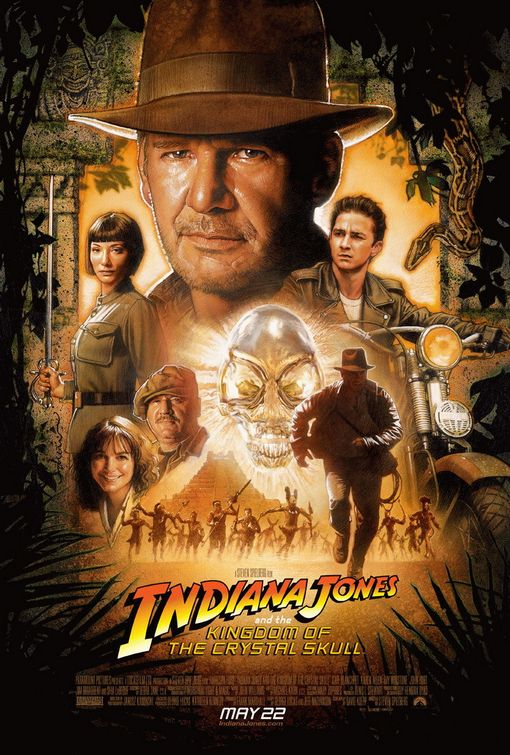
Okay you culture snobs, I think it goes without saying that you have been purposely avoiding the inclusion of Indiana Jones and the Kingdom of the Crystal Skull on your "best of 2008" lists. Spielberg's long-anticipated magnum opus clearly operates on levels of esoteric beauty and significance what has slipped under the radar. It is the timeless, cross-cultural story of the messiah archetype's journey to an ultimate reality, the Hindu concept of moksha.

Jesus-Buddha-Muhammad

Prof. Henry Jones Senior, Dr. Henry Jones Junior, and the recently-introduced Henry "Mutt Williams" Jones the third are a characterisation of the Christian idea of the Holy Trinity, expressed as a dharmic henotheistic representation. Jones Sr. is the foundational father, Yaweh, Brahma, or otherwise considered: he has paved the foundational structure upon which our road to enlightenment will be built upon. He is followed by the Jesus-Buddha figure, Indiana, who is the messiah and martyr figure. Spielberg ingeniously harkens us back nearly three decades to Indiana Jones and the Raiders of the Lost Ark, in which Indiana is crucified for trying to protect the Ark of the Covenant.

Vanguards of the New Era of Enlightenment

The ark represents not only the four cardinal virtues of both Christian and Platonist philosophy in it's fourfold geometry and tenfold (remember that in the base ten number system, ten is the unit comprised of four even quarters) commandments, but also by it's super-mundane presence in the Jungian fact of collective consciousness. The ark is the sacred knowledge of law, which Yaweh (Henry Jones Sr.) had long sought to protect alongside the blessed knowledge of all, enlightenment: the holy grail, out of which Jesus (Indiana) drank ambrosia (the Holy Water) and was bestowed with the knowledge of good & evil (and thus cured His Father, at the expense of being banished from the Garden of Eden, thus resulting in the ultimate destruction of treasury of Petra). However, this is deviating from the original topic.

A combination of Jung's "Abusive Mother" archetype and Frudian facts of the Oedipus Complex, Spielberg has all the bases covered and watched vigilantly.

Following Tibetan Buddhist tradition, the ultimate successor of the Jones lineage is found by a supernatural search: the Dalai Lama, "Junior Junior", is revealed as the perfect completion of the Triple Goddess' form.

Vishnu the Destroyer & Jesus the Preserver

Try watching Indiana Jones and the Kingdom of the Crystal Skull again with these thoughts in mind, and see if you have a change of heart. Next week I will delve further into the symbolism as it applies to the movie's turning points and thematic developments.

Best Films of 2008

Order is tough for these, they were delightful in so many different ways and inspiring in more ways than I can count. I'll keep the descriptions to paragraph length as I already made as big a deal as I could over my favorite film this year. At the bottom are Mr. Danvers' choices.

Slumdog Millionaire
by Danny Boyle

Danny Boyle is one of my favorite directors, has been for as long as I’ve loved film. Trainspotting was one of the first films I saw and viewed as something brimming with artistic merit. 28 Days Later is still one of my favorite movies; Millions is one of the most thoughtful family films I’ve ever seen; Shallow Grave remains one of the most auspicious feature debuts of all time. Slumdog Millionaire is a stylish genre bender of sorts – Danny Boyle is famous for them by now - part travelogue, part diary, part romance, part message movie. We follow the tragic love story of Jamal and Latika, two hopelessly poor, hopelessly scarred youths in the slums of Mumbai. The MIA-Heavy soundtrack is playful yet conscious, like most of Slumdog. Anthony Dod Mantle’s camera brings out the life and color of India at a pace no cinematographer has yet captured. Boyle’s characters are caught in a sweltering climate of social unrest and overwhelming odds and the worst parts are when they resign themselves to their fate as it is, quite simply, inevitable. Inevitability and destiny are under the microscope and it wouldn’t be a Danny Boyle film without a killer ending = and he more than delivers. Sometimes what you need to see are two lovers running headlong toward one another.

Let The Right One In
by Tomas Alfredson

Tomas Alfredson is some kind of genius. I wrote pretty extensively about this film after I saw it the first time and my suspicions were confirmed when I went to see it again (incidentally this was the only film this year that I felt compelled to see twice simply because I was awed by its quality. It's also one of the few that, as soon as it ended, I knew it was one of the best films I'd ever seen and felt compelled to tell any and everyone about it). This is a magical little story, one that combines filmic prose with extremes in innocence and guilt, both pulled off with ease. The story of a young vampire, the only vampire film since Near Dark with believable protagonists and vampires you could understand and sympathize with. The Twilight comparison is both inevitable and poignant; that such a brainless attempt to invent youth culture tackled the same subject matter as a little movie with a fourth of the budget and subtitles is really proof that Americans are the last people to understand what makes a good movie. Back to majesty of this yer film. Let The Right One In is a gorgeously composed movie that’s unsettling for nearly every second of it’s running time. Even during the tenderest of moments there is a feeling in the pit of your stomach like the rug’s going to get pulled any second. Tomas Alfredson is clearly a gifted man, who else could make even the most light-hearted moments feel like white-knuckle suspense. The film has you by the collar and never lets go – which is why it’s ending is so perfect because it releases you in the most perfect way.

Milk
by Gus Van Sant

Milk is a film in the finest tradition of films. Milk will be remembered as a film as grand and gripping as The Crowd, Citizen Kane, The Third Man, The Godfather, and Last of the Mohicans. Before you jump down my throat, let me clarify by saying that I don’t attempt to make quality comparisons here, I simply mean to say that it’s a sprawling political epic with a truly awesome cast of characters and a nicely winding story. It is as satisfying a filmic experience as the aforementioned classics. To watch Gus Van Sant’s best films is really something. Milk bridges the gap between his quieter films and his sappier films and is easily his best. At each turn, Van Sant and screenwriter Dustin Lance Black raise the stakes everytime there’s even the slightest lull and each actor adds to the conflict in their own unique way. Sean Penn is remarkable and more than reminds everyone why he was once considered the greatest American actor alive – he still is. When he’s directed by the best and has such a likeable character to inhabit, Sean Penn is a maelstrom. By the film’s inevitable conclusion – which is handled with the grace of an aria – it’s still heart-breaking and mesmerizing. Milk is a special achievement.


Rachel Getting Married
by Jonathan Demme
It’s almost not a movie – were it not for Demme’s cheating the Dogme manifesto by making one half of his film’s titular marriage a musician, you could almost not tell that this was staged. Jonathan Demme is a pretty excellent filmmaker and this may just be his crowning achievement as a director of actors. Anne Hathaway in particular is stunningly human – friends of mine criticize me for this, but when it appears as though you’re watching people do things, that’s when I feel an actor has done his or her job. A lot of people expect grand playing and soliloquizing or strange behavior from performers. For me it’s all in the realism. Here, some of our greatest performers – Anna Deavere Smith, Deborah Winger, Rosemarie Dewitt, Tunde Adebimpe – disappear inside their roles. Bill Irwin is never not Paul, Rachel and Kym’s anxious father plagued with troubling memory, his excitement almost frightening because of the man’s intensity. Tunde Adebimpe, an infectiously funny man in person, is the reserved husband to be, just trying to fit in and not get brow-beaten at his own wedding. Anne Hathaway. Anne Hathaway where have you been all this time? Good god, you’ve been wasting yourself! It’s a movie that takes your hand and guides you through one of the most entertaining and troubling weekends ever filmed.

[Rec]
by Jaume Balagueró & Paco Plaza

I had no expectations. I literally watched [Rec] thinking it would be passable, at best. So I watched it on my computer one night; it has yet to find U.S. Distribution of any kind. Even on youtube, even with digital cinematography and shaky-cam, even with the noise from the apartment above me this movie scared the hell out of me. If you’ve ever watched horror films – any era, any type – and wished that the people would behave like ordinary people, this is your film. Finally, reality and horrific images blend perfectly. Were it not for my knowledge of the nature of this film, I would have been fooled by its opening. A reporter and her camera man spend the evening with the firemen at a firehouse in an urban Spanish neighborhood; they kill time mostly until finally the bell rings and they go on call with Alex and Manu. They don’t find a fire, but they do find an apartment building stricken by a virus of some kind. Then the doors are locked from the outside, the whole building quarantined and the pace becomes break-neck. This film, shot on cameras that a newscrew doing a human interest story would actually use, feels like a dogme horror movie; the cutting is seemless and it hardly ever feels like a film. More so, even than The Blair Witch Project or 28 Days Later, this feels like the real thing. The way in which directors Jaume Balagueró & Paco Plaza utilize the space and personalities of each person is thrilling. When you can’t tell that you’re watching a film, when you are so drawn in that you hurry from one 8 minute segment to the next, when you’re terrified of an image that couldn’t be more than 17 inches long, a filmmaker has done his job.

Synecdoche, NY
by Charlie Kaufman
When I saw Synechdoche, NY, Charlie Kaufman was there to answer any and all questions we had. I couldn’t think of a single question he could answer. I was too awestruck to think of a single thing to want him to clarify. Sure, there’s plenty here that doesn’t make sense on the surface, but together all those crazy-ass elements form a movie that neatly personifies perfection despite a weirdness so overwhelming you simply have to shake your head. To watch the story of disintegrating theatre director Caden Cotard is basically to stare death in the face; that this movie started its conceptual life as a horror movie is no surprise. The movie starts inconspicuously enough; a man is married, perhaps things aren’t all well. He has a crush on the ticket girl in his movie theatre and he dislikes the work he’s doing. Just after we buy that maybe this will be an ordinary movie, Caden begins seeing an increasing number of specialists to see about his declining health (the most bizarre of them is the marital counselor with the swollen ankles who follows him everywhere he goes and gets some of the film’s best lines). It’s maybe two-thirds of the way into the movie, when a mammoth zeppelin crosses the skyline of an increasing claustrophobic world that you realize that in no way is this movie ordinary. This movie is like Sweet Movie, Metropolis, Brand Upon The Brain, and pressed in a waffle iron. It is one of the most extraordinary movies ever made and is the reason movies are made – Charlie Kaufman gives us elements that wouldn’t work as anything other than as film. To borrow a phrase from Werner Herzog, he is a ‘soldier’ of cinema.

Be Kind, Rewind
by Michel Gondry
Michel Gondry always picks the worst time to release films. When Eternal Sunshine came out in 2004, it was just about a month after the academy awards; people were worried voters would forget about it. Maybe they did; Kate Winslet was only nominated for best actress and it only won best original screenplay (right again, Hollywood!). Anyway, Michel Gondry has a much less emotional attached film, but a much more hysterical film for us. Be Kind, Rewind is a lovely movie about movies; Mike (Mos Def) is the manager of Elroy’s (Danny Glover) video rental place and things are looking bad. It’s about to close down because they’re losing business to DVD rental places. Due to a Charlie Kaufman-esque mishap, Jerry (Jack Black), Mike’s screw-up buddy, touches his recently magnetized hands to all of the video tapes and erases them. Mike comes up with a solution that will solve both of their problems; the two of them recreate each of the films they destroyed in 20 minutes by themselves. It’s probably the most creatively designed film Michel Gondry has done yet and it utilizes his flair for zany effects and found-object art. Jack Black and Mos Def, despite their character urges (Mos Def’s mumbling, Jack Black’s craziness) carry the film with no problem. Nearly every second of Be Kind, Rewind works, as Gondry fills it all with his double-take inducing production design and because the underplayed performances of everyone from Sissy Spacek to Paul Dinello; I laughed all the way through this and still felt like I was watching a movie instead of a series of crass lines stacked on top of each other held together by the most perfunctory of plots. Everything seems designed to bring out the best in Gondry and his crew’s strengths.

Reprise
by Joachim Trier

Scandinavia is on a role. If you’ve never heard of Reprise, that’s not something to be ashamed of. It came to the US for the 2007 Sundance Festival and then disappeared back across the Atlantic for a full year before it finally showed up again to play tiny little theatres like the County in Doylestown, which is where I saw it. This is why a year-end tally is tough, because I can’t very well have seen the damn thing before this year, but I liked it better than easily half of the other films I saw this year. So, let’s enter the heavily stylized but still stirringly realistic world of Danish Joachim Trier’s Reprise. Philip and Erik are best friends and aspiring writers who send off their manuscripts on the same day. Philip suffers from depression and his mood doesn’t improve when he unsuccessfully attempts to get back together with his one-time girlfriend Kari. Eventually, and not without problems, the two reconcile, but it doesn’t seem made to last. Though Erik has a good many problems of his own, he tries as hard as he can to make Philip see the light and improve his mood. Neither is perfect and each has his own way of dealing with problems and it makes for a compelling character study, the simplicity and integrity of which is remarkable. Erik is motivated genuinely by friendship to help Philip and often suffers for it in slightly off-kilter ways. That’s the beauty of Reprise; it strays occasionally into the unrealistic, but it never becomes less than possible. It has a quirky sort of realism to it, uncommon to most American films. Trier has a stylistic acumen akin to his cousin Lars, but Reprise is ten times cooler and easier to watch than any film in Von Trier’s canon. It also has the distinction of featuring the greatest use of any Joy Division song in cinema; the opening montage of the parade set to “New Dawn Fades” is like a whole new manifesto, a breath of fiery, crass and undeniably human life.

Youth Without Youth
by Francis Ford Coppolla
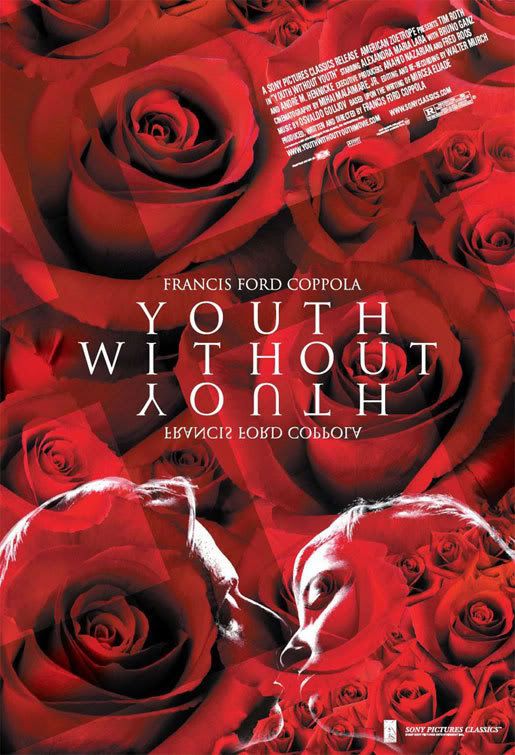
Here's why I hate the American people. Because American studio heads don't think that the American viewing public can handle a movie without explosions. And even more infuriating than this is that, for the most part, they're right. Americans wouldn't have liked this movie, at least not the people who went out to see Hancock, just as a for example. Ok, so here's why people wouldn't like this movie: it's a Byzantinely complicated movie about Tim Roth as a mathematician and philosopher who becomes an all around transcendental genius who ages backwards by 50 years after being struck by lightning. He becomes entrenched in vague Nazi intrigue, travels the world, meets a woman who speaks in tongues that get older everynight after SHE gets struck by lightning and the ending is ambiguous and depressing. I eat this stuff up, but I'm not everybody. This film is technically a year old, but as my invitation to the Telluride film festival must have gotten lost in the mail, I didn't see it until sometime this summer. And so it makes my list and all y'all can just deal with it. And you know why, because this film is beautiful. Mihai Milamaire Jr's cinematography is flooring; it's a good sign when a third time photographer makes something that rivals the best of Vilmos Zgismond and Nestor Almendros. Tim Roth does a pretty excellent job and Bruno Ganz makes much more of this role than he does with his spot in The Reader. The beautiful Alexandra Maria Lara's performance is really something; she's high-energy and subtle all at once. Coppolla may have lost something of his once-grand hold over movie-goers, but in my mind he hasn't lost his power to enchant. This is a gorgeous story about missed opportunity and legacy. What lasts is not always what is most important, and no one knows that more than Francis Ford Coppolla. Youth Without Youth is a frenetic slice of science-fiction spun like the yarn of war-time intrigue.

Paranoid Park
by Gus Van Sant
In another festival related delay, I was only able to see Paranoid Park at the tail end of 2008 and so here it is. Thank heavens I got over myself and did actually see it, for a while I was too proud to go see a skateboarding movie. I should have known better. The last in Van Sant’s trilogy on disaffected youth (rounded out by his masterful Elephant and Last Days, which I haven’t seen yet), Paranoid Park is a wandering, anomic powerhouse, which has a bit more direction and purpose than Elephant and is one of those rare films that understands what youths actually sound and look like. Our protagonist is a mumbly, awkward skateboarder, halfway between social groups and woefully overwhelmed by just about everything. His involvement in the murder of a security guard puts his alienation into overdrive, but it also helps him sort out a few priorities he’d been willfully ignoring. This, like David Gordon Green’s Snow Angels or Let The Right One In, captures the dialect of teenagers damn near perfectly, as Van Sant’s films always do. Watch the scene where our hero falls in love - a borrowed Nino Rota cue follows his gaze upon his decidedly unfeminine crush - it's devastating and it's clever. Van Sant’s experimental films are always a pleasure as they make expert use of montage, slow motion, long takes, haziness, and jump cuts makes for a breezy viewing experience, one that sums up the joys and agonies of being that age with the precision of a bomb defuser.

Mr. Danvers says:
Slumdog Millionaire - great! fun, in a terrified-of-orphanages-in-India kind of way.

The Dark Knight - too long for me but Heath was such a good actor.

Son Of Rambow - this was extremely cute and funny! Even when there were ten year olds smoking cigarettes.

Vicky Cristina Barcelona - probably not as great as the other films on this list but it might be my personal favorite film of the year! Penelope Cruz is amazing.

Rachel Getting Married - halfway through the film I thought that Anne Hathaway was actually addicted to crack.

Happy Go Lucky - simple but fun. I'd like to see it again and get a better opinion, I really liked it when I first saw it.

Milk - this better get best picture or I'm going to cry. The whole entire theater had an emotional breakdown towards the end.

WALL-E - Who's the cutest robot ever?

Best Albums of 2008

Disclaimer: I cannot have possibly heard all of the records released this year. For example, I still have not heard what almost certainly promises to be the best Of Montreal album of their career yet. I have not heard Bloc Party's latest. I never listened to Bon Iver's debut and I deliberately abstained from all those "next best thing" bands like MGMT, Santogold, Lykke Li, Yeasayer and Cut Copy (granted they might not all have new records, but you see my point). My point is, and this is something all music reviewers glance right over like a plane over most of Jersey, that there is no way in hell that everyone can possibly hear every album. So here's my criterion: It was released this year, it was made by one artist, and I heard it. On the reissue front, Chameleons' Script Of The Bridge and Honeychurch's Early Times were both excellent. Below my reviews are some other staff writer picks. Also, I chose 20, cause that's what I did last year.

I'd like to digress for a moment and talk about albums as a medium. Typically, in this radio-ready culture of ours, albums are collections of singles that have no real underlying traits in common. The songs are there to be appreciated on their own, not as a collective. Occassionally this is not the case and an album comes out sounding wildly different from song to song. This can work beautifully sometimes (French Kicks' Two Thousand or Iron & Wine's The Shepherd's Dog being two excellent examples). An album as I've come to see it this year, should be something with a recurring sonic feel. Nearly every record I listened to this year, good or bad, has had that similarity of condition, every song sounds similar in a lot of ways to all the others. This is not to say the songwriting is weak, it is simply that one gets the feeling of a band making a full, solid album with the same gear in the same sitting. Take the French Kicks' latest; each song has a very similar mood and the guitar parts are never vastly different, each one spreading lines around like a smoke machine. They sound alike, but they are not all alike. This, is what really makes an album. Neon Bible is another excellent precedent in this bubble of indie music.

In no particular order (though, as you go further down, I get more impressed):

Swimming
by The French Kicks

The French Kicks music is like taking on a portion of the world with nothing but music in your ears, all else is silent and still, simply there to be observed. Swimming is all mood, something the band has toyed with in the past, but perfected here. Granted I liked their previous album a little better, this one fills your head with its soundscapes and each song simply builds on what the last established. Swimming takes the listener from the empty streets of Chelsea at dawn to abandoned subway platforms to alienating parties where everyone talks but no communicates; the listener swims through the sound and feeling just as the singer Nick Stumpf seems to be swimming in some emotional turmoil. Swimming is an album that creates an atmosphere that is simply unavoidable. Cool malaise permeates every second of the New York band’s fourth album and it’s really alright that they aren’t so hook laden as they might have been. This is a record, dammit, and they’ve got something to say. Drums, voice, guitar, keys; they’re all there for the same thing.

You & Me
by The Walkmen

“Thank God!” I thought to myself when I heard The New Year, the first single off the Walkmen’s newest album. “Back to what they do best. I was wondering when someone was going to show up The National.” Maybe there’s no Bows & Arrows-style-organ, but this is a return to form uncanny for hipster darlings like these guys (for example, I’d put money on Bloc Party not coming back to put out a record as good as Silent Alarm). To understand why You & Me works, you should probably listen to Swimming by the French Kicks. The two bands share a rehearsal space in New York, and The French Kicks cavernous yet lazy mood music must have dripped through the walls and into the heads of The Walkmen. Here is the quietest album they’ve yet done (it erupts when it needs to, however). Hamilton Leithauser is back to doing what I loved about him in the first place; howling like a mad bastard. His lyrics are back up to snuff, he’s back to that drunken poetry he does so well. Paul Maroon’s guitar sounds more like Tom Waits’ than it ever has and the mood is feverish all around. Matt Barrick, who is more than capable of destroying his kit, keeps the whole thing anchored with his brushes and sticks, occasionally in swing or waltz time. This band has talent and it seems like they’ve settled on the role of cabaret band in the last bar on earth this time around. I can’t wait to see what they do next; they’ve done dark and brooding perfectly on You & Me, where will they go next?

In Ear Park
by Department of Eagles

Sometimes it’s a good question what half of a famous duo brings what to the table. Listen to Simon & Garfunkle’s respective solo albums and you’ll get a good sense who was responsible for what. Listening to Department of Eagles, one can get a sense of who’s doing the heavy lifting of what elements in Grizzly Bear. Listen to Daniel Rossen’s first band Department of Eagles and those murky guitars and crashing drums all of a sudden have a point of origin. It becomes apparent what happened between Grizzly Bear’s first and second albums. Anyway, to Department of Eagles. Wonderfully weird and quiet in all the right spots, In Ear Park displays Rossen and college roommate Fred Nicolaus bring the textures, noise, and pretty guitar playing together with Rossen’s recognizable production. Despite the odds and sods present throughout and harshness of sound in some places, there’s something undeniably juvenile about many of the songs. Many of these songs play like dystopian teen love songs with naivete and tenderness, just through a dark grey lens. It’s a lot of fun to listen to and it’ll do till the next Bear record.

Fate
by Dr. Dog
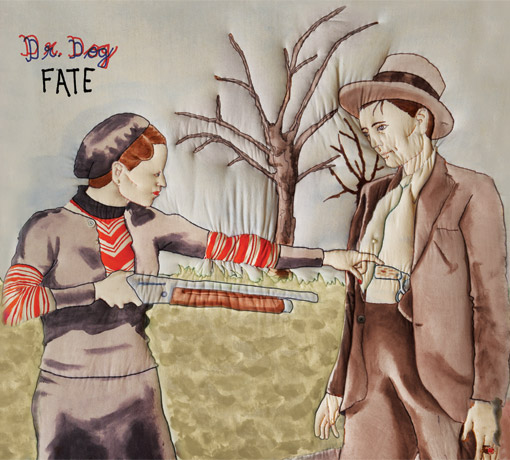
Ever wanna grip the back of a freight train? Or rob a bank with a six-gun? Spend a winter hunting for your food, building fires to stay warm and following whatever rules keep you alive? Dr. Dog do! Or anyway, this record makes a pretty good case for that sort of wistful behavior. Fate plays like a series of musical headline from 1913. A rustic menagerie of old-timey melodies and instrumentation, though not without modern flares, Fate is a timewarp in your ear. Take for example Army of Ancients, a ballad that, for a few decades, could have been written and sung by Sam Cooke. Bassist Toby Leaman’s howling really takes the reins and on the whole he makes a damn fine showing of himself and so I say the comparison is wanted. This is a linear record and each song leads nicely into the next and they all give you that warm nostalgia for times you weren’t even close to around for.

Missiles
by The Dears

I don’t see what the big deal is. Every review I read for this record led me to believe I was about to bite into a live bear sandwich wearing a suit made of honey. People were saying that because Murray Lightburn, the singer and guitarist fired everyone except his wife, Natalia Yanchuk, and recorded with hired guns that he’d somehow lost his mind and the result would give the average listener nightmares with its aimlessness. I listened to it and instead of finding the indie rock equivalent to Zombie 3, I found something that was pleasing, accessible, and easy to sing along to. Sure there’s some brooding and quietness, but Christ the man went by the nickname “the Black Morrissey” for a while. You think he’s gonna get happy cause people stopped paying attention to him? Anyway, the lyrics fall into that same sort of irreverent trap they did on the last record, Gang of Losers, but then, this whole album is like Gang of Losers in space. A lot more ethereal and not half as grounded as anything else they’ve done, Missiles never stops flying until the end when it does what 2001: A Space Odyssey does, confronts the listener with mortality, youth, and ecstatic embrace of life. A fitting comparison, if I do say so myself; that received mixed reviews when it came out. Go ahead and yell at me!

Oceans Will Rise
by The Stills

Was anyone else worried when Paul McCartney asked The Stills to open for him when he played some big Canadian dates last year? I was. What were they playing McCartney songs, now? I’m the only one? Ok, well, so, come with me for a second to 2003. The Still In Love Song, that moody, Depeche Mode-y song the Stills started their career with has just found it’s way to your ears. You listen to it for most of that year and well into 2004, by 2006, you’ve forgotten about it, until wedged between matt pond PA and Yo La Tengo on a bill at the TLA is The Stills, fresh from three years silence and obscurity. They don’t play that single you like, but the new stuff rocks pretty hard. When that album comes out, Without Feathers, it’s pretty damn good, but also noticeably different from the first record. Now it’s 2008 and they have a new record coming out. Given their penchant for changing sounds, a Paul McCartney opening date was enough to scare me that they’d be playing Wings covers. Luckily, they went back to the moodiness of their first record and added the sophistication of the second one. Oceans Will Rise is really good and I could tell from the first song. In fact, I knew it was going on this list nearly right away. It’s slick, shiny, and everything blends in nicely in that Canadian way I love so much. It’s got the rhythm of an English Beat record and the swagger of Bauhaus or something from Manchester. Wintery guitar sounds, not unlike Radiohead’s, prevail and that old Stills magic has won me over again.


Nouns
by No Age

I was in a record store with a friend and as we were checking out, I heard something on the loud speakers. I thought it was My Bloody Valentine. When the noise didn’t subside and it got faster, too fast to be anything British from 1986-1990, I looked at the Now Playing card. There, bold as brass, was that new band No Age I’d read about. The band whose guitar player wore the inside-out Obama shirt on CBS with “Free Healthcare” writ in sharpie. The noise duo with more sneer than the Black Keys. Nouns, their debut album, is all attitude and no silence. Whatever else can be said, No Age is pretty much out on their own on the style front. Alternating between incredible layered ambient tracks comprised of Randy Randall’s guitar running through every foot pedal imaginable and breathless punk/post-punk songs, this album is compositionally a dead-ringer for David Bowie’s Low. It’s not easy for a band to show up out of nowhere and give you a concrete image of them and their music through one album. The Dipers did it. The Horrors did it. No Age did it with exactly one song that I heard over the chatter of two dozen kids in a record store with a lot else on my mind. Not too shabby.

A Mad & Faithful Telling
by Devotchka

Ladies & Gentlemen, the sequel to Devotchka’s How It Ends. A Mad & Faithful telling isn’t new territory for the Colorado band, it’s simply bigger and more dramatic. Murkier production prevails throughout and it’s somehow even harder to tell what Nick Urata is saying, but the songs are up to code. It sounds as though Devotchka simply took one step further into the musical world they live in. Listen to Blessing In Disguise, Comrade Z, and Strizzalo, for example and you’ll get a pretty good idea of what I mean. The instrumentation is more complex and vicious and Urata and his bandmates focus on different instruments this time around (Bouzouki, theremin, violin, sousaphone) and electric instruments are all but invisible. Nick Urata’s delivery is more desperate and fits the music’s more dramatic turn. Devotchka isn’t just aping the sounds of a Romanian circus, they are that Romanian circus band. Some groups are content to simply emulate, Devotchka lives their music, as evidenced by the high-wire trapeze act they brought along on their most recent tour. The pop elements from How It Ends are there, they’re simply subordinate to the ethos of the band’s vision. That vision is a marching, soaring, sailing trip through mountains, oceans, and the poorest of streets.

Carried To Dust
by Calexico

After Garden Ruin, the border band’s pop-heavy last record, for a split second I worried that they’d never return to the horn-happy cantina music they’d come so close to perfecting (not that Garden Ruin isn’t a great listen). When Carried To Dust slipped in undetected earlier this years, I held off for lack of funds; a foolish mistake. Carried To Dust fuses their border music with their pop music and the result is their greatest album to date. Each song is catchier than the next and each sounds like Calexico. This isn’t something new, simply the old done perfectly. Songs like the In The Reins-esque Writer’s Minor Holiday or Slowness are saved from being ordinary thanks to the band’s stellar production and pop sensibilities (the whispery vocal melody that tails the chorus on the former song is truly dreamlike). Carried to Dust has the soul of a Cormac McCarthy novel, the feel of an old pair of boots , and the sound of a desert sunset.

The Secret Machines
by The Secret Machines
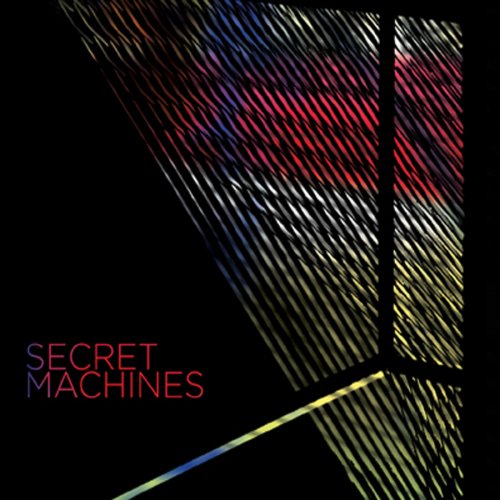
I saw Secret Machines for the first time in late 2004 on the tour where guitarist Benjamin Curtis met the future bandmates he would ditch his brother Brandon and drummer Josh Garza for. When Benjamin left, I worried, but apparently that was the push in the right direction The Secret Machines needed all along (the sword is double edged, it seems; Benjamin’s other band, School of Seven Bells is fantastic). Adopting new adventurous guitarist Phil Karnats, the Secret Machines take that crown of reigning champs of modern psych and wear it with pride. Karnats’ guitar screams like a mixture of Ed O’Brien and David Gilmour. Josh Garza’s drumming is unchanged, but the music it supports finally matches his thunderous sound. Brandon Curtis, now sole lyricist and vocalist, goes hog wild with his psych writing. We have some Deep Purple-esque marathon tracks, arrangements as complex as John Anderson’s, lyrics as batty as Peter Sinfeld’s and melodies as fast as Ian McDonald’s. Things are bright all over, but the bashing, shining asteroid that this album knows it is finally crashes with The Fire Is Waiting, it’s 11 minute Bowie-inspired closer. With frequent Bowie collaborator Tony Vischonti on the loudest woodwinds since Kevin Sheilds hired a floutist for My Bloody Valentine’s Loveless tour. As world’s crash and flames rise, the music of The Secret Machines floats freely above it all, both harbinger and narrator. If we’d listened to the lessons in the music, perhaps it wouldn’t arrive, but if it’s as mind-bending as their musical predictions, it’s almost worth destroying the earth to find out.

Do You Like Rock Music?
by British Sea Power

Kick drum. Kick drum is a good way to start an album. Especially when your album title is a challenge to the consumers of distorted guitars, crashing symbols, and chugging basslines. If you’re going to call your album Do You Like Rock Music? You had better deliver. When the guitars burst forth and the floodgate of drums and choral vocals surround the listener like an epic surge of water, the promise is kept. The whole album isn’t as poignant as the first three songs, but my what an entrance British Sea Power make. Once considered Blur-Lite by all who’d heard them and needed to write them off, British Sea Power finally have an album as distinct and flashy as any of their predecessors. Unpretentious, soaring rock music prevails and a good time is had by all. When the lead singer says “Come on, Allons-y, Let’s go.” And the music makes you pack your things and get in the car, you know you’re in capable hands. Many songs on the band’s third album simply shine as hard as they can until the band lights them on fire. Rock Music is a universal appeal to lovers of distortion, wonderfully quirky, yet meaningful lyrics, and the power of a song.

4
by Dungen

Gustav Ejstes has all my respect. He writes and plays most of the music on all of Dungen’s records and is still nice enough to shake my hand and humble enough to be legitimately flattered by a career fan. 4 is an album that showcases a band with the power to do anything, but you wouldn’t know it from a conversation with Ejstes. Dungen takes a step back from beating The Mars Volta as the champions of psych-metal and decides to hone it’s smoke-filled desert drive music. Like the soundtrack to a lost biker movie, 4 is at once laid back and vicious. Ejstes is in complete control all the time and so the parts of the album where the music is laid back and firmly locked in a stoner groove are all the more impressive because Ejstes can and does bring it all back at will. His guitar playing is still some of the best on the scene and his arrangements are still mind-blowing. Perhaps not as instantly unforgettable as Tio Bitar, but I can live with that, and clearly so can Dungen; they’re in total control.

Love At The End Of The World
by Sam Roberts

Sam Roberts is, effortlessly and free of any championing in the press, the best 60s singer making music today. Though production and music is decidedly modern, who else is singing about love for all and positive change in such terms? Like Dylan and Lennon, Sam Roberts feels out of step with the masses, wanting to change things for the better with his music, and I for one think that if this album were a touch louder, he could have done it. Love At The End Of The World’s relative lack of distortion isn’t a problem musically, cause there are incredible songs in here. Sam believes in abandoning hate, materialism, prejudice, and his strongest weapon is some sloppy early 70s rock. His lessons transcend time and could have been written anytime after the 1965; he’s a gifted lyricist where timelessness is concerned. The band really goes all in with Detroit ’67, which sounds appropriately enough, like something 40 years old. Meeting Sam Roberts and his band is one of the fondest memories I have. Sam, his band, and their manager confirmed many of my favorite assumptions concerning the kindness, creativity, and lovely nature of Canadians. Dave Nugent, Dave Spencer, Sam Roberts, James Hall, Josh Trager, and especially keyboard player Eric Fares live like folk heroes and were about as kind to me, a perfect stranger, as anyone I know. They invited me to see them play for free and when I couldn’t get into the venue, they snuck me in. Never had a band put themselves in the line of fire like that for me. For a full day, starting with my recognize them parked outside my school’s radio station and my sneaking out of class to see them play their radio set. The excitement of walking through the backdoor of a club shoulder to shoulder (shoulder to head is a bit more accurate, Eric Fares is easily two feet taller than me) with people I’d loved since their debut record hit the states, whose music I had stayed up late learning to play, whose concert I’d been dying to see for three years was unimaginable. It was like something from another time, a simpler one. The kind Sam and the band remind me of with every song they play. Note: I recognize that I’m cheating with this release as it doesn’t hit US stores till January, but Dave Spencer sent me one and I didn’t want to have to wait a year to tell everyone to buy this record because it’s damn good.


Glasvegas
by Glasvegas

If I’d known that I could read some lyrics over Moonlight Sonata and call it a song, I’d have sold a lot more records than I have now. That is to say, any. I’m joking of course, but, that’s what Glasvegas did; they took the lyrics from an old demo track called Stabbed and James Allan, the singer, read them over Wolfgang’s piece. And it really is that simple. All of Glasvegas’ music is incredibly simple, most songs don’t have more than one chord change, but therein lies the genius of Glasvegas. I saw this band open for Echo & The Bunnymen when they played their show with a ten piece orchestra at Radio City. I didn’t think anything of the performance, they sounded like The Chameleons, who I’d just gotten into. My boss, Blair Elliott mentioned a likeness to Jesus & Mary Chain. Then I got ahold of Geraldine, the best song off their debut self-titled. What’s cool about that song, indeed the whole record, is if you only hear ten seconds of it, the songs put you in Radio City Music Hall; the bass is up, the drums really sing (I mean, really), the guitars reverberate off every surface like the shouting faces of concert goers; no record’s don e that for me in a long while. James Allan’s voice ain’t Ian McColluch’s, but it’s not a far cry from Paul Haig or Mark Burgess. This album would fit in quite nicely with the new releases of October 1985. Rab Allan’s guitar basically plays the vocal melody in each song, and when it doesn’t, it’s something short and catchy; the whole album rings like bells on Christmas morning. Something funny, an aside, James Allan’s singing voice comes through his molasses-thick Scottish accent, making him sound like a tough drunkard. Listen to his words. They’re as moody as they come. Nice duplicity; the sort of thing that makes this record irresistable. I can’t tell you how much fun I have singing to myself, for the millionth time, “My name is Geraldine, I’m your Social Worker” through a Scottish accent.

Keep Your Eyes Ahead
by The Helio Sequence

When Brandon Curtis probably went through the break-up that everyone assumed fueled The Secret Machines second album Ten Silver Drops, everyone seemed to think it accounted for every possible aspect of the music. I didn’t get that; the record wasn’t even mildly somber, it was mostly wistful. Anyway, I have a feeling Brandon Summers went through a break-up, and nobody seems to care enough to guess about it’s effect on their second album. Except me! Sorry, if I’m wrong Brandon, but the lyrics and musical style have become sadder and I don’t think you pull out your Dylan impersonation for just any reason. Don’t worry, I’m not criticizing, this was the first record I heard this year and I knew right away it was one of the best. Things may have gotten sadder, but they also got a whole lot more interesting. Summers pulls out a lot of his impersonations, not the least impressive of which is his Edge. The guitars bouncing off walls inside the speakers is the best U2 homage I’ve yet encountered and the hooks are more consistent than they are on Boy, War, or October. See, I told you I had good news. Weikel’s drumming recalls Larry Mullen Jr. and Chris Frantz. These two know how to rock, despite their being on sub pop. I don’t know why they don’t get more attention; they’re a duo, they’ve cut down on the blips, they’re catchy as all get out, and they sound great. This record is pretty tremendous, especially the first two tracks. This is, perhaps by virtue of the fact that I got to it in early June, the album I’ve listened to the most this year. It helps a good deal when you live in a disgusting two room apartment and eat only what you can microwave when you can sing a song with a delightful chorus that simply repeats “I’m Living Alone, Living Alone.”

Walk It Off
by Tapes 'n Tapes

To any and everyone who said that Tapes ‘n Tapes debut The Loon is a more solid album, I say, you’re sorely mistaken. I liked The Loon, but it, like its title, was uneven and a little too quirky; it seemed they were making up for gaps in the songwriting with small doses of weird. Here, we have rock, loud boorish rock. This is the way a small band sticks around, they find what they’re good at. Where The Loon was directionless, Walk It Off finds the band exploiting their strengths. Eric Appelwick’s bass is a good example of what I’m talking about. On the first record, it had great, full tone. Here it fits in instead of standing alone. Josh Grier’s guitar does a lot of cool things. On Le Ruse, it takes the chorus on its own and really well at that. It moves, it shakes, it’s catchy, it’s crunchy, it’s fantastically lo-fi and fun. Hang Them All, Headshock, and Lines are competent rockers and the album is a whole is thoroughly satisfying and way listenable. Having seen them at Coachella where they were all volume, it finally made sense after hearing Walk It Off. I can almost see the sweat hitting Jeremy Hanson’s thoroughly abused drum kit everytime I play this record.

Something For All Of Us
by Broken Social Scene Presents: Brendan Canning
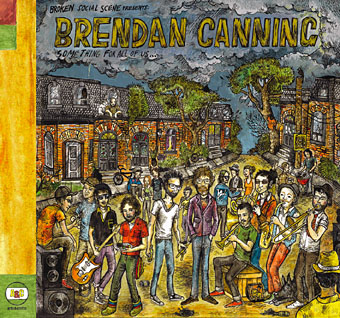
The Broken Social Scene Presents series is an incredibly useful tool for the compulsive music fan. For someone like me, who can name every member of Broken Social Scene and their respective bands like they were the presidents of the United States or the members of his family, seeing one member of an enormous band take the reins is a useful tool. I can finally see a few things. I can see what that person has been bringing to the table all along. I can see what they’re genius looks like when it doesn’t have to share, and I can see what everyone’s strengths look like funneled into a different vision. And thanks to the charming album cover I can see what every member of the band looks like as a crude cartoon character. Brendan Canning is one of the greatest people I’ve had the fortune of meeting. He and Kevin Drew let me into their show for free, the last New England date until the next Broken Social Scene record (I wear my hoodie purchased that evening with pride). Canning is the principle bass player and second most-prominent songwriter for Canada’s largest band and his songs are a bit noisier even than Kevin Drews. Fuzz is the one word I would use to sum this record up and I’d do so with a smile on my face. Full of the sort of distorted lullabyes BSS hasn’t touched since You Forgot It In People, and a number of really kickass vocal switches, Canning has chops and then some. Listen to a song like Churches Under The Stairs. The song is full of complex parts running circles around each other; how did he write this? Switching from crushing rockers to sultry funk numbers to extroverted pop arrangements in the snap of a finger, Canning gives the band it’s greatest challenge yet and they more than meet it.

Viva La Vida
by Coldplay

I call it audacity when a man stops copying John Lennon and simply becomes him for a minute and a half. Coldplay no longer sound as though they’re taking from U2 or The Beatles, they simply sound like they stepped in to replace them. The first half of 42 is perhaps the boldest damn thing Chris Martin has ever done; sounds like he’s trying to one-up Imagine, doesn’t it? And then, sly fox that he is, he makes you forget all about it because Guy Berryman, Johnny Buckland, and Will Champion join him and the song becomes the catchiest damn rock song ever written. How’s that for audacity. I may be biased in my appraissal of this album as a good deal of why I got into it was because I had the oppurtunity to see my friend Nick dancing in my living room to Viva La Vida. I have a theory, and that is that Coldplay’s been listening to The Arcade Fire. Where else did they get that compulsory change songs mid-stream thing they do every other track? Like the songs on Neon Bible, the songs on Viva La Vida are more than meets the eye. 42 changes from elegiac funeral song to super-charged brit pop and back again; Lovers In Japan/Reign Of Love turns from Madchester love song to Badly Drawn Boy-esque declaration; don’t even get me started on Yes. Yes has buried in it’s 7 minute length my favorite song of the year. Just when you think you’re listening to a desperate plea for gypsy rock favor, that song cuts out and becomes a blistering, reverb dripping tribute to Creation Records bands Ride, Jesus & Mary Chain, and My Bloody Valentine. Shimmering like the fountain of youth and pulsing like the piston of a train, the only thing wrong with Yes is that it has to end. In fact that maybe the biggest sin of Viva La Vida. Chris Martin and his band have written a number of impeccably beautiful songs, in fact, they wrote too many. They overload each song with a whole rogue’s gallery of the stunningly gorgeous and tousled-yet-charming. So when the closing track changes it’s tune for the last time, and the album’s opening chords come back, you know that by definition the album is over, yet you want more from them. How’s THAT for audacious?

Fleet Foxes
by Fleet Foxes

A band can do just about anything it wants to. If a band that has garnered all the praise that Fleet Foxes have in the year they’ve been under the main stream microscope, had done so quicker, had taken to the airwaves, had demanded world peace, they might just have gotten it. I’ve never heard of this phenomenon where a band is universally praised; I’ve yet to read a bad notice. I’m not complaining, it’s just remarkable that I’m not wrong about this album. I certainly can’t stop listening to it, and apparently no one else can either. I think singer Robin Pecknold needs to start making demands, otherwise he’s just giving it away! I know why I love Fleet Foxes; no other band has so effortlessly brought me out of a Boston subway station and into a log cabin in the middle of a wooded mountain pass surrounded by the people I love. This is an album that has a mood and a goal so clear you can taste it on the tip of your tongue. What other record is so clear about it’s intentions, to make you feel at ease, warm, and in love with the land. Talk of woodland creatures, forests, and mountains; this music is as inexorable and timeless as it’s subject matter. Robin Pecknold and his four brothers in arm craft a densely layered, rustic tribute to glory and nothing has ever been so doggedly gorgeous. Five part vocal melodies on nearly every track, floating guitar, piano, and mandolin that have the power of a string quartet, and Pecknold’s lovely songwriting; the songs are as catchy as anything Brian Wilson ever wrote and twice as much as Ray Davies. This album reminds me of a feeling a friend once told me about No Country For Old Men. So convincing and thorough was the creation of that atmosphere that when she left the theatre, she was shocked to learn she was in fact not in a Texas border town. That’s the disappointment that awaits everyone who partakes of Fleet Foxes. When it’s done you have to come to terms with the fact that the journey you were just on has come to a close. Luckily, you can always listen again.

Dear Science
by TV On The Radio

I told you so! That feels good. Ever champion something and have no one believe you? When TV On The Radio made their first appearance on late night TV in 2004, I was there. Their performance of Staring At The Sun with the addition of bass and drums was incendiary and I listened to the bootleg I made everyday until I leant it to my math teacher and never saw it again. When Return To Cookie Mountain came out and I stayed up night after night playing along to Wolf Like Me, comparing my telecaster to David Andrew Sitek’s, they all laughed. But who’s laughing now!? Me, that’s who! The band that I always knew capable of melding the minds of millions to their own collective conscious and transmit their message has finally done so and they’re finally getting the recognition I knew they had coming to them since day 1. TV On The Radio is no ordinary post-punk act. Comprised of gifted singers Tunde Adebimpe & Kyp Malone, guitarist/producer Sitek, and rhythm section Jaleel Bunton and Gerard Smith, TV On The Radio can go where no other band can go. Which is why it’s not at all surprising that they finally did and have some of written some of their best songs to date. Halfway Home, the album’s opener is a storming fuzz-laden warning about the state of things. Adebimpe starts off quiet, almost hauntingly so, and then lets out a primordial cry and starts the chorus and for my money the masses appreciation for this band; he has everyone’s attention. Next comes Crying and that’s when their latest foray comes on in earnest; afro-beat, funk, and hip-hop elements start hear. Though it starts with a compositional hint and Kyp Malone’s jump into Peter Tosh falsetto, it ends with Stuart Bogie’s Bar Kays-esque horns and keyboards, but they have an edge over their influences in Sitek’s slick production, nothing ever steps out of balance. And just as your catching your breath, Adebimpe throws himself into Dancing Choose, a lightning quick, whiplash delving into 80s hip-hop, and he sounds as intense as Chuck D and manic as Ghostface. And then the horns again. This is no ordinary reinvention, this is a hostile take-over of your expectations and your senses. Suspicions confirmed on Golden Age. How many times has your band wished they were Talking Heads, David Bowie, Chic, and Otis Redding. Well Kyp Malone must feel pretty good about himself when he sings Golden Age, one of the greatest songs of this or any year (he gets points for unironic use of the term ‘ghetto blaster’) because his band sounds like a fusion of all of them. And what’s best about this unprecedented musical triumph? It turns out that every member of this band is about as nice and genuine a human being as there is to encounter. I met the members of TV on the Radio thanks to Dizzy’s familial connections and insistent nature and so I got a chance to tell them in my way how much I love them and I got nothing but grace and integrity in response. One minute we stand sleepless on Charles street and the next we're sharing a veggie burger with Kyp, Tunde and Stuart. And they're funny, they're kind, they're laughter is infectuous, they don't perpetuate stereotype 1. It was like falling into the giant, jovial embrace of another family. Backstage, everyone who entered the room was kin instantly. Smiles, jokes, pats on the back, and all after having played one of the highest energy concerts I've yet witnessed. Anyone who can turn The Wrong Way into a revivalist tent barn-burner and then get backstage and dish with friends and perfect strangers alike about vegan food, avant garde musicians, and 180 gram vinyl is as saintly as they come in my book. Meeting your heroes and discovering how selfless they are is unlike any other experience you may have. ‘Rockstars’ these guys are not, they just happen to fall under that heading. Don’t think for a second they can’t rock, they just can’t act like sneering ingrates like so many of the people making music today. Meeting TV On The Radio started off a long chain of revelations that has led me to reappraise my faith in art, people, and the state of things. This rebirth is reaffirmed everytime I hear Family Tree, one of the most gorgeous tracks by any band with electric guitars in it. Tunde Adebimpe’s many-octave voice taking the helm and arresting everyone in earshot like he does during his vows in Rachel Getting Married. Malone, Sitek, Bunton, and Smith join him, along with strings, layers and layers of beautiful noise and every heart in spitting distance. The notes echo on into the ether and you can’t help but think that things are going to be fine. Better than fine. Things are going to be excellent because there are brilliant and kindhearted people out there singing to you.

Mr Danvers Picks:
New Amerykah part one: Fourth World War
by Erykah Badu

I'm not going to lie, I like my alternative female funk/soul singers! Erykah must ring as one the most impressive. Over the course of four albums and one crazy EP she has changed her style significantly. She is a true example of an artist deeply effected by the outside world. So much that has to reflect it straight into her music. This might be why a lot of this album does not make sense at first (besides the simple and 'sweet' "Honey"). I'm not one to judge how 'odd' it might sound to someone else though since I've listened to it so much that everything sounds extremely common and familiar. But, something that still excites me is the amazing transitions in the album. The songs move so smoothly that when I click to hear one song I end up listening to the rest of the album. Anyways, other people might write it off but her songs are really universal after a deeper insight (especially the second half of "master teacher" and "Telephone" which both deal with the funeral of a friend). Check out "Me" and "That Hump".

Venus On Earth
by Dengue Fever

Another soul diva plus really jammin instrument men. This album is amazing. I loved them before but now I really really really like them. The common category others put this album is 'Cambodian', 'Beach', and 'Soul'. If that isn't enough check out "Sober Driver" a fantastic duet about someone using you for a ride home. A more relaxed song, "Monsoon of Perfume", is so pretty it makes you wish that you knew what the hell she was saying (is Cambodian a language? I've gotten mixed answers but if so I want to learn so I can sing this song). Also check out the song and lyric translation of "Seeing Hands", a passive aggresive hate song. Its all really really good!

Reissue front: Exile in Guyville by Liz Phair
Not exactly soul diva but amazing nonetheless. Also, extremely, but oddly, catchy! I've been running around going "I want all that stupid old shit like letters and soda" enough to make my parents kill me. Go check " 6'1" " and "F**k and Run" out if you haven't heard it. fifteenth anniversary reissue.

Dizzy Picks:
Dear Science
by TV On The Radio