Showing posts with label David Fincher. Show all posts

Gone, Baby...

Just who is David Fincher? At a press conference for his latest film Gone Girl, his star Ben Affleck said that the directors he works with are typically either great technical minds or they're great writers who can work with actors well. Fincher is both the foremost expert on the nuts-and-bolts of filmmaking and he can make actors feel at ease doing the most challenging work of their career. Or to put it simply: for what other director would Ben Affleck get fully naked on camera? Only a man who'd proven his bonafides directing modern cult classics like Zodiac, Seven and Fight Club could possibly make an event out of a book as inauspicious and ordinary as Gone Girl. Only a man who knows cinema like the rest of us know our own bad habits could work miracles like this. And make no mistake, Gone Girl is a miracle. A roaring, rollercoaster of a film with a terrible screenplay and a lot of ugly things to say about people, Gone Girl just might extend cinema's lifespan.

Back in the 1950s, the invention of TV threatened the livelihood of filmmakers everywhere. If viewers could be entertained at home, why would they breach the white picket fence? Movie directors decided to go big, producing one rollicking epic after another to get viewers out of their home for thrills the small screen wouldn't provide. David Fincher has been hitting the small screen hard and low these last few years. He created a TV series strictly for people who don't have cable and he's now adapted two runaway best sellers. The first, The Girl With The Dragon Tattoo, was a head-spinning exercise in forward momentum that bordered on futurism; airport fiction rebuilt as a Rube Goldberg machine. If you see network TV walking down the street putting pressure on a headwound, muttering "You should see the other guy," that's because David Fincher administered a beatdown that it won't soon forget. Gone Girl is a whole season of TV, complete with guest stars, in two and a half hours.  

At that same press conference, Affleck described Fincher's breakthrough, Seven, as a film that was built like a swiss watch. If that's true, then here he's twisted every gear tighter, perfecting a brusque narrative flow that seems to obfuscate curiousity. He moves faster than the human mind, exploring every possibility while opening the door for six or seven variations you hadn't even considered. Gone Girl is his most precise film, if not his best, and proves that he can best any source through sheer force of will and pure cinematics. A beautifully plastic sheen falls over the memories Nick and Amy share of their courtship, which can only be perverted by the cold, unromantic light of day during the investigation scenes. Meanwhile the music by frequent collaborators and Oscar winners Trent Reznor and Atticus Ross betrays everyone, creating an inch thick layer of uncertainty that grows on every move our hero makes in his own defense. Affleck's Dunne tries to get ahead of his own story, only to realize that his public persona in the wake of Amy's disappearance has a life of its own. Everyone has more than one life in Gone Girl. Fincher delights in watching characters watch themselves on the news, their identity sculpted by pundits and headlines, sewing seeds of doubt. The way we interact with our own image is a new phenomenon for the common man, but the characters in Gone Girl must master it like old pros because everyone's already watching them. The only hope lies in choosing what they see. Paranoia is the dark heart of the film, and the tabloid television cycle keeps its blood flowing.  

Gone Girl may be the most ugly indictment of TV's power to do evil since Spike Lee's Bamboozled, and both are heavily indebted to the ultimate statement on the politics of the small screen Paddy Chayefsky and Sidney Lumet's Network. But there are older ghosts hanging from its family tree as well. In the mid-50s movies like It Should Happen To You and All That Heaven Allows cast a scathing light on what TV offers the American people. Fame and a false sense of comfort, both of which alienate you from the people you love. Other films went big, hoping to draw Americans out of their homes with thrills the glass teat couldn't offer them. Fincher wants this to be his North By Northwest, a country spanning twist-athon with images indelible and confident enough to make us believe in them. It puts the viewer in the role of judge and jury, playing with our sympathies and watching us squirm; parsing out red herrings through the jaundiced lens of broadcast news. Fincher makes Affleck throw himself on the mercy of the court of public appeal and banks on your liking or disliking him enough to stay rooted to the spot as the narrative turns darker and darker. Fincher has picked up the gauntlet thrown down by Scandal, The Good Wife, New Girl, The Leftovers, How I Met Your Mother, True Detective and Mad Men and thrown one of his own. It's a blockbuster whodunnit with more twists than your DNA and flashy, stylized support from icons like Tyler Perry and Neil Patrick Harris. The odds are great that when it's over you'll yell at the screen, begging to know what happens next week. That sound you hear is David Fincher having the last laugh. He always does.

Perfectly tuned as it is Gone Girl has a big problem. The more we learn about the girl of the title, the less we know her, the less certain we are that any outcome could be satisfying. Naturally the one we get leaves a bitter aftertaste. Which is itself a cruel inevitability. If the girl of the title could be anyone, doesn't it make sense that our hero'd get saddled with the worst possible iteration? I don't know if Fincher believes in that depressing outcome but Flynn definitely does. She pits her too-smart hero against one regressive cartoon after another and Fincher's only too happy to play her game, because it lets him change the game at regular intervals. The problem? If the film never has to make up its mind about who the girl is, then it never has to decide what it thinks about her. So ultimately what is Gone Girl? A thriller? A procedural? A horror film? A courtroom drama? It never decides. It's a film without a center. Without a soul. Good as it is, slick and entertaining and provocative, it can never transcend that absence. It will never be better than entertaining. Is that the future we're heading for? If movies don't aspire to much more than beating TV and paperback fiction at its own game, then the battle's already over. Without a beating heart, like the one in The Girl With The Dragon Tattoo or Zodiac, entertainment is hardly compensation. Not when you can be so much more. 

The Future of Film - movies since 2010

The following is a survey of the films we find most representative of the greatness of the cinematic medium since 2010. The decade is just about half over and this is our attempt to figure out what the landscape looks like right now. So everyone has picked a film they loved and talked about its important. What these movies say about the world we live, what we see in them that we want other movies to aspire to. 


Scout Tafoya

For the last few years Robert Greene has written a column on the continuing progress of cinematic non-fiction over at Hammer-to-Nail. Greene's been on the front lines, trying to talk people down from their anti-documentary bias and America's tendency to laud movies content to give you information with all the tact and grace of an infomercial. Meanwhile he's championed groundbreaking oddities like Leviathan, The Act of Killing and even line-riders like Computer Chess. More than any kind of film, what Greene pursues over everything is the truth, and that is bigger than just facts told you to be a guy in a room. The truth sometimes bypasses your brain and heads right to your guts and it's impossible to ignore. Greene's own films are an extension of his search for a better, more enlightened conversation about nonfiction, and they're like nothing you've ever seen. For the last decade-and-a-half American indie fiction has been searching for the language that Greene finally found in his second film Kati with an I, about his cousin's heartbreaking final days as a high school student. He returned a year later with Fake It So Real about the characters in a non-professional wrestling circuit. And now he's a month away from seeing his latest film, Actress, play theatres across the country. Which is good news for everyone who wants to know how close to perfect the modern non-fiction film has yet come. 

I toyed with writing this about any number of mind-blowing 'documentaries' including Manakamana, Miners' Hymns, Patience (After Sebald), Leviathan, Perhaps Beauty Has Strengthened Our Resolve, Two Years At Sea or Whores Glory or even Computer Chess and Under The Skin, but ten minutes into Actress I knew ita was special even in that rarified company. Actress follows Brandy Burre, who took a few years off from her career to have children, getting back into the world of auditions and performing. Burre is a sparky, vivacious person and a loving mother. Like any of us she has flaws that hurt her relationships, and every one of them complicates what we thought we knew about her. Filmmakers try and fail to write characters like her every day. Greene's there at every crucial juncture in Burre's life over many months including her efforts to deal with several changes to her life and daily routine, most of which she's placed there herself. She talks to Greene and the audience as if we were all sitting in her kitchen, sharing a drink with her after her kids have settled down for the night. There's immediacy and honesty, and then there's a woman pouring herself a glass of wine and telling us when she fell out of love with the father of her children. Greene's always found humanity where others would have found mere objects or figureheads, and Actress hums and shakes with it. Burre's the first of his characters who's middle aged and has a sense of her legacy and her place in the world and watching her contemplate them is impossibly compelling. Greene provides a slow-motion playback of the moments just before everything came off the rails, using little else but what Burre surrounds herself with day after day. It's gripping, but more importantly, it's fucking cinematic. 

Greene places himself where few others would dare to venture, her private rehearsals, curlers still in her hair, in the shower after one of the most taxing days of her life. He's not recording because it has anything to do with her life as a series of facts, but because he's telling her story the only way he knows how, with the language of dramatic filmmaking. A standard doc about the life of a struggling actress would be answering questions left and right, squeezing every inch of drama from her nerves, getting between the audience and the subject. Greene hangs back, no agenda, no judgment, letting Burre tell her own story through gestures on her own time. One of the film's best moments has her driving to meet someone listening to Colin Blunstone's "Let Me Come Closer To You," which has more thematic resonance than she or Greene could ever have known when the moment occurred, as Burre just drives to a train station. She's deep in thought and we only later know what's going on in her troubled mind. Then the song continues as the film jumps through her evening, but it remains the recording from the car stereo. Greene always keeps rough edges and in so doing the making of a modern documentary becomes the subtext, the third party to everyone of his character studies. You would never mistake Actress for conventional (and what greater tragedy is there then a film this heartbreaking looking like a mutation next to most distributed docs?), least of all because in spending time with a woman reliving and restarting the part of her life where she pretends to be someone else, we find the perfect encapsulation of Greene's pursuit. A headlong dive into the space between cinematic reality, life and fiction. Who is Brandy Burre? Is she her job, her family, her flaws, her characters, her hopes or fears? Greene never makes us choose because Burre herself doesn't have to. She's not a character in a movie, she's a person fighting to make sure tomorrow's better. Actress is the non-fiction film of the decade, a gauntlet thrown at anyone looking to tell the truth with a camera. Cinema, like Burre, is staring into its future. "This is what I wanted...but now I have to do it." 


Noah Aust 


Because I’m jaded and desensitized to movies. I can’t suspend my disbelief—and do I even want to? I’ve read Laura Mulvey and Brecht and is mimesis even good? Or is it just escapism/bread and circuses? Is catharsis good, or does it just satiate us so we don’t challenge the status quo? Freshman year I was fascinated by mumblecore. Joe Swanberg stripped away all the excesses of filmmaking—plot, camerawork, production values, acting, dialogue—but his movies were still powerful. By getting rid of everything that I thought made a movie, Swanberg got to the heart of what a movie really was. Or could be, anyway.

Holy Motors does the same thing from the opposite direction. There’s no suspension of disbelief. There’s no character development—no characters, really. There’s no narrative continuity. And it still works. The musical sequence is totally self-aware but it’s still tragic and moving, somehow. But tragic and moving in a way I can connect to. Tonight I saw The Immigrant and I loved it, it was beautiful and heartbreaking and melodramatic and tragic, but how am I supposed to connect to that? There’s nothing ugly or ironic or cynical in the world of that movie. How am I supposed to reconcile that with my life? I’m so cynical and jaded and I think that was keeping me from totally entering the world of the film. Whereas with Holy Motors, it’s understood that you’re jaded. It’s understood that you can’t fully commit to the reality of the story, and no one’s asking you to.

I read something a while back about how Georges Méliès never really went for suspension of disbelief in his movies. People draw a binary between him and the Lumière brothers, with them advocating realism and him advocating escapism, but it’s not that cut and dry. This writer called Méliès’ films “montages of attractions,” and to me Holy Motors went back to that. Holy Motors is so cinematic. It’s Cinema with a capital C. It’s like Léos Carax asked himself what Cinema is, what it feels like, and then compiled scenes that illustrate that. If an alien asked what movies were about, I’d show them Holy Motors. When the beggar is running through the cemetery and the Godzilla theme song comes on, there’s no reason why that should have conjured such a profound feeling in me, but it did.  The movie is beautiful. That scene at the very beginning with the forest wallpaper? Oh my god, that’s beautiful. It’s like they took out everything I don’t care about in a movie and just left the music and the images and the moods. 

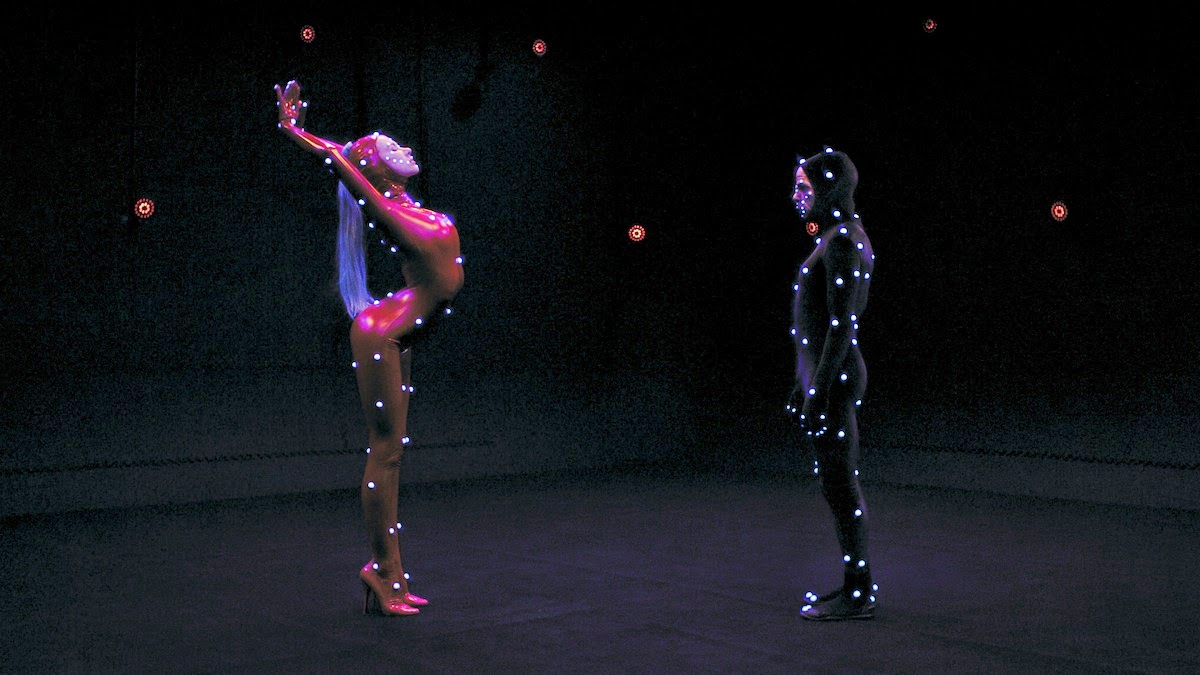
There’s also something that I can’t quite put my finger on... something about the end of film and digital cinema. I get so depressed about that stuff. Holy Motors felt like a requiem, a summing up of everything that film meant. Film is more than just a medium, it’s Cinema, it’s Melodrama, it’s Ingrid Bergman, it’s La Strada, it’s something tangible and mechanical that you watch in a theater. It’s bourgeoisie and decadent and so it’s doomed to die, but it’s beautiful. But maybe Holy Motors is also a map for how to go forward. Because it’s self-aware and digital and it still packs a punch. Léos Carax finds poetry in digital tracking markers. Just like Joe Swanberg found power in cold, sterile video,  Carax finds beauty in deconstruction and self-awareness. 

Once at Boston Underground I saw a video mixtape from the Whore Church: an overwhelming ADD onslaught of trash videos and pornos cut together at subliminal speeds. Really terrible stuff. But I was watching it and I was really struck by the vocabulary and style of it. I remember thinking, “This is new. If artists want to keep moving forward, they’re going to have to find the power in this stuff.” Then I saw M Dot Strange’s film We Are The Strange. He draws from trashy digital vocabularies: anime, 8-bit video games, 4chan stuff, but he uses that iconography to tell a really haunting story about trying to live in a world gone mad. It’s legitimate melodrama told in a contemporary style. A movie like that can reach people on a level that traditional melodrama can’t. A movie like The Immigrant can synch up perfectly with a certain kind of person, but for film students that are jaded and desensitized and filled with this buzzing anxiety, they need a movie that recognizes that and takes that into the equation. It’s like a different level of semiotics. I want movies that say "even with real life in its awkwardness and ugliness, it’s still possible for life to be beautiful and important like in the movies." I feel like melodrama is a really important aspect of human nature, and maybe it’s the most important part of cinema. I want movies like Holy Motors that say “Even when you’ve lost all suspension of disbelief, movies can still be beautiful.”


Tucker Johnson


I’m actually fairly surprised I landed on this film as the best but then I realized that out of all my possible choices I come back to this one the most. I own a fair few of my choices and I’ve definitely carved the deepest path in my copy of The Social Network. Aaron Sorkin’s screenplay took a revolutionary true story and turned it into an arguably even more interesting piece of fiction that paints the facts of Mark Zuckerberg’s rise to being the youngest billionaire of all time with broad strokes and spends far more of its time in the trenches of exactly what people will do to each other when unbridled success is waiting in the wings. He even manages to squeeze sympathy out of audiences for Jesse Eisenberg’s character by showing that despite the juggernaut that Facebook became, it was still driven by the very human needs to succeed, to impress, and to inspire forgiveness in those we care about most. But even with Sorkin churning out arguably the best screenplay of his career, the material needed a director who could handle the dialogue and work the actors hard enough to deliver it with the verve and emotion it deserved. Enter: David Fincher. 

I’m definitely biased towards David Fincher. I consider the man a master of filmmaking at this point in his career but even I remember being very wary of him taking on “the Facebook movie” early in the film’s production. I saw the film in a theater packed with an audience that was more likely expecting the kind of film that the Ashton Kutcher movie Jobs ended up being. I spent the film’s two-hour runtime in awe of Fincher’s crisp, dark visual style (aided by Jeff Cronenweth’s realistic yet beautiful cinematography) and his total control over some of the best young actors working today. He had a firm handle on Sorkin’s dialogue but still managed to direct performances that sounded like intelligent people talking rather than actors simply reading movie dialogue. All this combined with Trent Reznor and Atticus Ross’ eerie ambient score propels the film into a place that I think films rarely get to go. 


Michelle Siracusa 


From the start, something is not quite right. You are thrown all the makings of a horror story, down to ink drops that spatter like blood behind a title that's haphazardly scrawled across the screen. Stoker sputters like a volcano and stops just in time for the birds to resume their chirping. But every now and then the earth beneath us shudders again. The pressure builds: a hint of violence, of the macabre here and there. And all we have to do is sit back and wait: wait for something to surface, wait for the monster to be revealed.

It's the suspense of not knowing what route a story might take that keeps us excited and engaged, but lately, I find this can be a movie's downfall. There are too many clues, sometimes characters even stating the circumstances outright. Why tell me what you're doing when you can show me? The point of film is to be able to see a story unfold, right? Unfortunately, most movies these days can be deciphered long before the story comes to fruition. And that's the "good movies". The bad ones don't even have plots to hint at. Oftentimes, I end up paying New York City's $14 ticket price to ogle Hollywood's sexiest men and women for two hours. They hop around a green screen saying words to each other that don't mean anything in tight outfits. Don't get me wrong, this is a spectacle all it's own, but I don't consider it art. How can it be when I'm not changed by it? My eyes are just darting back and forth, convincing my mind it's being entertained. For people like me, who are hungry for a good story, who crave something that will shake their souls and rattle their brains, I suggest you watch Stoker.

From the start, something is not quite right. A father has just died. And we are introduced to a mourning family that seems a little too put together for the circumstances.  We never see them cry, but that's not what makes them stand out from the rest of the humdrum denizens that populate their town. The mother (Nicole Kidman) always appears freshly hair-sprayed and doll-like, overdressed and made-up. She makes cheery and careful small talk with fellow family and guests at the funeral reception. Here, we meet an estranged uncle (Matthew Goode). Too charming and too cool, he tells stories of having traveled the world, which is his apology for not being a present member of the family until the death of his brother. He wants to turn that all around, and everyone smiles and accepts him without question. After that all talk of the beloved late father is hushed. The mother invites the uncle to stay with her and her daughter, India (Mia Wasikowska). And the family is once again a man, a woman, and a child. From the outside, they would appear perfect, if no one knew the circumstances. This is a lovely theme that Stoker puts in place early on exploring appearances versus reality and the external versus the internal. The house is pristine, but the basement is shadowed, cob-webbed, and damp. Some people are beautiful to look at, but it doesn't mean they're beautiful to be around.

India is ivory skinned and forever curious, as young people are. She's an oddball at school, perhaps because of her sullen and quiet nature or her prim and studious demeanor. But that isn't the only reason why she's "different". She is also the only one who refuses to smile for the sake of appearances, the only one who has never gotten alone with her mother, and the only one questioning her Uncle's presence. She stands out from her family just as much as her family stands out from the rest of the town. Stoker is a coming of age tale, told through India's perspective. At moments, poetic voiceover and brilliantly composed shots show what her eyes would see or what her ears would hear. We are with her, in her head, catching glimpses of private conversations and tense moments between the other characters through cracked doors and open windows. They are all pieces of a puzzle, lava beginning to boil. And the more India learns about who to trust and who to not, the more we do as well.

There's not evidence of foul play. There's no crime. In fact, everything's peachy, but we still don't know why the father died. No one's asking. Everyone's eating ice cream or being picked on by the school bully like normal, until suddenly we catch a glimpse of a body stored in the freezer. The pressure is building. Sometimes characters stare a bit too long, unblinking, and we're reminded, something is not quite right. An explosion is imminent. The film begins with India as a young as can be, climbing trees and running through leagues of grass without a care in the world, other than finding that year's hidden birthday present. But suddenly , everything changes for her. Her father's death and her uncle's appearance become a catalyst for her growing up. We watch her trying to discover who she is and trying to find independence while dealing with her new family and their new rules. We learn that she was only ever close to her father, and, now, without her instructor and protector, she must learn to fend for herself. 

We are all that child, or we have been. We've been derailed and insecure, needing something more to feel whole. We know the wide-eyed discovery of a first sip of wine. And we know what it feels like to find something that makes us feel free. Stoker is about India's discovery of what makes her feel free, what makes her adult. The movie's grandest achievement lies in that it's both artfully constructed and relatable. The characters never state a thing outright about their family's history, but the film's intricate subtleties manage to fill us in on the mysterious Uncle's past and, eventually, expose the family's many skeletons.  Scenes are interwoven to reveal similarities between the 3 surviving family members, showing just how far from the tree the apple falls. India learns that there are some things you can't help but inherit from your genepool. I think my favorite part was never once knowing what exactly was going to happen. The script never reflected upon itself, and instead, I had the pleasure of seeing actors react to events and each other without words. Park Chan-Wook's direction was guttural and captivating, and I applaud it.

Although the volcano takes its time seething, frothing and finally exploding, Stoker had me from the start. I was so wrapped up in all that was not quite right that I forgot I was waiting for a monster to appear. I'm glad I forgot because the ending would eclipse all my expectations. Stoker isn't a typical horror film.  But, I hardly expected the monsters I was looking for to be in plain view. I had been living with them. I watched them grow and change. After 99 minutes, I knew them and sympathized with them; so that, by the time they were fully grown and evil, I was there too. Secretly having turned savage, anxious to spill blood alongside characters I'd grown to love. Stoker is a primal and dark film. It explores evolution and survival of the fittest in a modern world, where lying and confidence are your best friends. It challenges the definition of a villain. It's complex, yet simple; inspiring, yet terrifying, in suggesting that we are not responsible for who we become. We are all born with both light and darkness. It's only until we stop resisting our true wants and needs that we are finally free, finally adult, and finally content. With this realization, India becomes both our hero and our villain. She's unapologetic. I think we all want to be that girl, at least a little.


Lucas Mangum 

I'm going with The Dark Knight Rises. I'm a sucker for a good hero story, especially when the hero has to really descend before he triumphs. I also like how the ending seems upbeat (I, for one, have always wanted a Bat/Cat romance), but also carries some ambiguity. Is he really alive, or is Alfred dreaming? It came out in the same summer as The Avengers, which I loved. They had similar plots, but the Batman film felt like The Avengers' evil twin. So much bleaker.


Tim Earle


Films face a crisis these days. Home entertainment systems are high enough quality, and downloading films is easier and easier. Meanwhile, television has quietly become the preferred medium of talented, forward thinking storytellers. The Avengers is, for better or worse, the solution to this crisis. I like the film - it’s surprisingly well written for a big budget slug fest - but more than anything, I admire what it represents, in terms of historical precedent. The film is a demonstration of film learning from TV. It’s a deeply serialized story that requires an understanding of what’s happening in a previously established world. Like the Lord of the Rings series, it is a film for fans. A film for people who have maps of places that don’t exist. A film for people who like watching impossible universes built and populated with impossible people. Unlike Lord of the Rings though, its storytelling possibilities are limitless. It is the first step in a long, potentially endless story. Of course, there are dangers in making a movie franchise like this. The biggest one is that I worry studios have gotten the impression that to make real money you need bloated franchises with lots of people punching each other. What The Avengers should be teaching us is that the talking is far more important than the punching. And it is a deeply corporate entity; it’s inseparability from other films and TV is just as much a boon to its storytelling as its inseparability from toys and lunchboxes is a hindrance. But what really knocks this film out of the park for me is that the great technicians of film, George Lucas and James Cameron, have finally been dethroned by the writers. Also, “Mewling quim.”


Noah Adrien Lyons


Polydoxical Cinema Poetics for Under the Skin

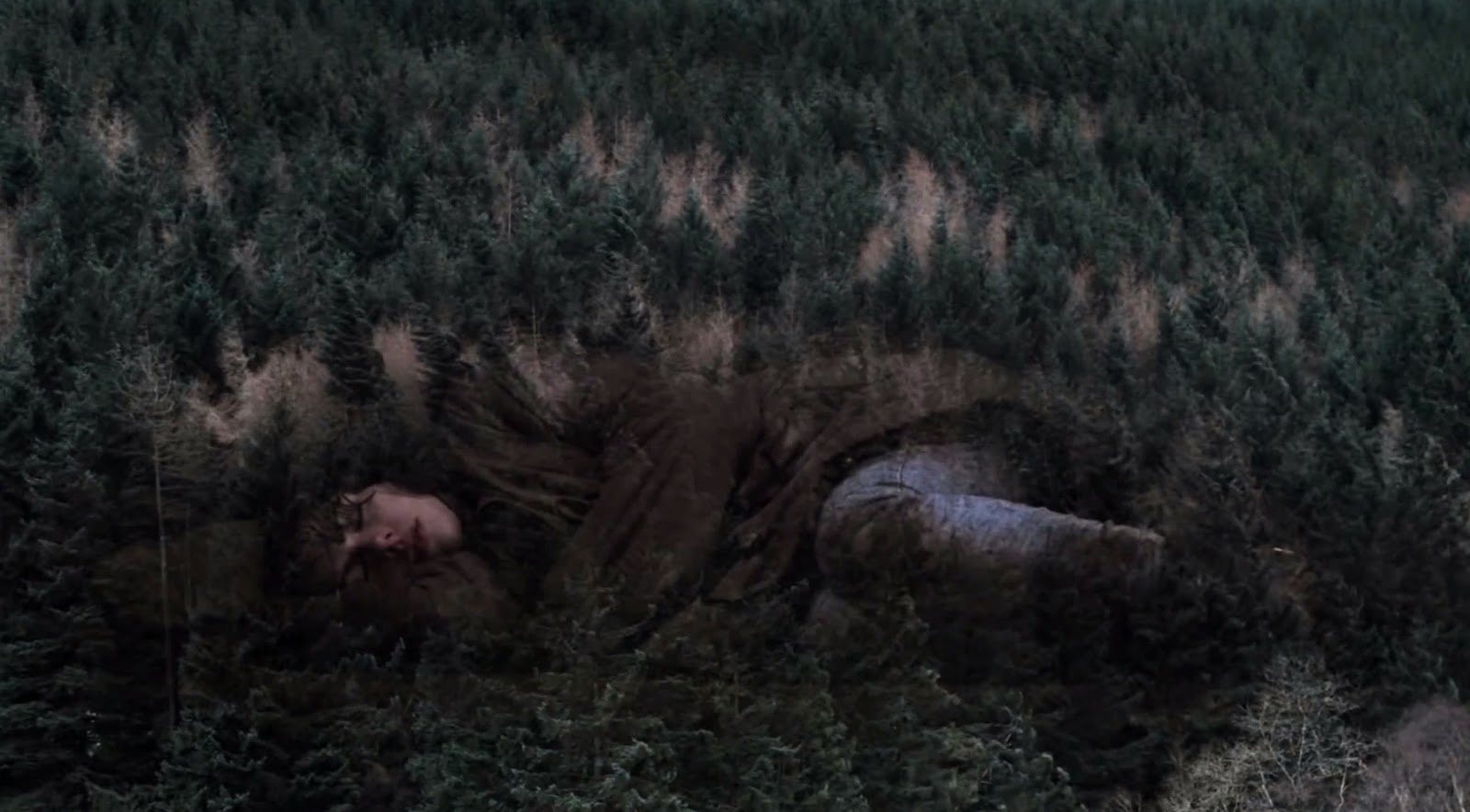
Under the Skin is the best film of this decade so far, and this is why: We now live – in our birth bodies and our avatars – in a post-secular world that has seen tidal waves of progressive and liberatory movements. Civil rights, waves of feminism, postmodernism, post-structuralism, nihilism, cold and hot wars, multiculturalism, liberational theory, queer theory….Science fiction has shifted from the hard-science and optimistic teleology of the Golden Age, through the New Wave counter-cultural ‘highbrow’ of Samuel Delany, Joanna Russ, Zelazny, Disch….then a return to optimism in the guise of cyberpunk, which glamourizes and aestheticizes the neon city, drugs, Donna Harraway’s feminist-cyborgism and modification of the self. But Rodney King, to name just one instance, demythologized the cyberpunk allure, exposing the grim reality of urban poverty and gentrification; HIV/AIDS and the War on Drugs demonized – and gave subjectivity/agency – to the marginalized and the underground. Suddenly, “The Truth is Out There”, and the government conspiracy is fantasized about to resurrect the Mythical Being (alien, god), and to place blame not on ourselves but the Government for the slow decline of community, trust, and holistic art. Y2K – HAL is back, and it’s our fault. Apocalypse is not heaven-sent or cosmic, but technological avarice and enslavement. Remember Alan Watts and the French profs, they were right. This is illusion. There must be a real body, a real affair of the heart, a real Earth. But proliferation of 2000s cynicism and media saturation obliterates this gnostic hope, and leaves tepid cynicism and submission to the internet’s “virtual” alternative to an already virtual world. This ‘time’ line I choose to end arbitrarily with the “hipster ironic” zeitgeist. A Lacanian mirror phase so perverse that to be ironic, one must not be ironic, which is in fact ironic; any actual claim like “I believe in…” or “I love…” or “This is the best fuckin  film ever” are NEVER said, because we feel we cannot believe in any truth or believe in our own opinions – for shame.

Why Under the Skin? Because it caused me to write this aporia-laden time-line of science fiction and modern solipsisms. Because it invokes past occasions, actualizes itself in the present, and ruptures open exciting and novel potentialities for the future. Because the world we live in is a soft, autumn sadness; CGI and avatars and ironic art are not explosions but dreadful, fading echoes of eschatological joy. Look and listen. See how what we were formed what we are, and what we are is more than skin or name; we are not Cartesian schizo-monads. We are others. Shed skin, ashes in snow, geometric deities yawning wide in space. Re-enchantment. Look it up if you have to. Post-secular, and polydoxy – ditto. When was the last time you touched someone? Stare hegemony straight in its slithering maw, fear it, fear irony, and scream. But do not rape the rapist. Gently hold your tattered body like the holy relics they are, and really look at your own face, tears of mourning and praise. The fire consumes, but ashes drift UNDER THE SKIN OF DAWN and perish, everlasting, atoms for those born tomorrow. 


Dan Khan

These days, I am a sucker for movies that take their time. What people generally call  boring, I call contemplative. That may sound pretentious I am aware, but I think it’s valid. There were a number of films I could’ve picked, so why did I choose Sofia’s Coppola’s Somewhere?  I still don’t quite know, but I know that I love every minute of it. After the experimental period piece misfire, Marie Antoinette, Coppola returns with something far more refined and personal. You can certainly tell there’s something close to her heart here and there’s no doubt that it’s also something quite special.

Stephen Dorff is one those actors that never really quite had the career that most actors dream about and too few people care about him. You probably remember him as the villain from Blade, but thankfully (though I admit I enjoyed that performance) he is nothing like that here. Dorff has never really been given this kind of role before and he nails every nuance, every line, every movement, every expression so naturally.  Here he plays Johnny Marco, an actor experiencing an existential crisis who has to deal with his 11-year old daughter (Elle Fanning) when his ex-wife suffers a breakdown and vanishes, leaving the girl in his care. This is a premise rife for a Lifetime movie, but luckily it’s not and it’s in the hands of someone who rises well above that sort of trite material. Coppola used her childhood experiences, recalling her father, Francis Ford Coppola making movies. The way in which the film unravels reminds one of Chantal Akerman’s masterpiece, Jeanne Dielman, 23 quai du Commerce, 1080 Bruxelles.  In that film, we see the daily routine of a a Belgian housewife. In Somewhere, we see the daily routine of an actor and how in many ways just how simple, uninspiring and repetitious that can be. 


When I saw this film the first time, way back when, I was immediately very dismissive.  I used that much reviled word “boring” to describe it.  No doubt, it’s a film that requires patience and it’s certainly not paced in a way to elicit excitement. It’s a film that demanded I give it another chance and I am glad I did, because it’s more far rewarding that I initially realized. It’s a character study in a way that unfolds unlike most others, it doesn't have a beginning, a middle and an end. It’s just life.  Coppola understands this. Dorff has never better and Fanning is as wonderful as you would hope she’d be, in fact if I have a complaint it's that I wish she was in it more. I realize, this is not a film most would choose, and while I had other classics like The Tree of Life, The Master and Holy Motors (and, I might add, Coppola's followup, The Bling Ring, is also a treasure) to choose from, I think Somewhere is as great as those or any film released in the past four years.

The Rosenbaum Test: The Greatest Living Narrative Filmmakers

A little while ago Jonathan Rosenbaum, in whose direction myself and most other critics genuflect, reposted an article of his on the master director Michelangelo Antonioni he wrote in the early 90s. The interesting thing is that he starts his article with a quick list of who he thinks might be the 12 greatest living narrative filmmakers, and of course the director of Red Desert and The Passenger made the cut. He'd have made mine too at the time. This got me and many others thinking about how to answer that question today. Kevin B. Lee got a discussion going and Richard Brody posted his own list with a complete set of guidelines. I cribbed a bit from those guidelines and tried to make my own list, which proved sensationally difficult. I love a lot of directors, but are they "the greatest"? Can their work never be equaled? Could anyone else even pretend to their style? It took some incredible concentration to get it down just to 16. Never one to suffer alone, I asked everyone else to throw their two cents in and here's what we came up with.


Scout Tafoya

1. Marco Bellocchio
2. Terence Davies
3. Claire Denis
4. Philippe Grandrieux
5. Terrence Malick
6. Chantal Akerman
7. Tsai Ming-Liang
8. Agnès Varda
9. Wes Anderson
10. Alain Resnais
11. Francis Ford Coppola
12. PT Anderson

Honorable Mentions: Manoel De Oliveira (who'd be in my top 12 but I don't want to jinx him - I want him to live forever), Léos Carax, Tomas Alfredson, Catherine Breillat, Dan Sallitt, David Lynch, Werner Herzog, Jim Jarmusch, David Cronenberg, Jean-Luc Godard, Jacques Rivette, Matteo Garrone, Paolo Sorrentino, Takashi Miike, Richard Lester, Alejandro Jodorowsky, Terry Gilliam, Volker Schlöndorff, William Klein, Roman Polanski, Sofia Coppola, & Gene Wilder.

Noah Lyons 

1. David Lynch
2. Jean-Luc Godard
3. Lars von Trier
4. Michel Haneke
5. Woody Allen
6. Werner Herzog
7. Roman Polanski
8. Alejandro Jodorowsky
9. PT Anderson
10. Steven Soderbergh
11. Yorgos Lanthimos


Dan Khan

1. Steven Soderbergh
2. P.T. Anderson
3. Lars Von Trier
4. Agnès Varda
5. Jim Jarmusch
6. Mike Leigh
7. Wong Kar-Wai
8. Terrence Mallick
9. Jean-Luc Godard
10. David Cronenberg
11. Michael Mann
12. Alejandro Jodorowsky


Gifford Elliott

1. Lars Von Trier
2. Wong Kar-Wai
3. PT Anderson
4. Jean Luc-Godard
5. Werner Herzog
6. Woody Allen
7. Roman Polanski
8. Martin Scorsese
9. Jane Campion
10. The Coen Brothers
11. Wes Anderson
12. Alfonso Cuarón

Honorable Mentions: Mel Brooks, Sofia Coppola, Terrence Malick, Steven Soderbergh, Steven Spielberg, Hayao Miyazaki, David Cronenberg, Francis Ford Coppola & Agnès Varda.


Tim Earle

1. Pedro Almodóvar
2. Park Chan Wook
3. Hayao Miyazaki
4. Steven Soderberg
5. Wes Anderson
6. Terence Malick
7. Joel and Ethan Coen
8. Steven Spielberg
9. Martin Scorsese
10. Terry Gilliam
11. Edgar Wright
12. Tomas Alfredson


Fox Johnson

1. David Fincher
2. PT Anderson
3. Joel & Ethan Coen
4. David Cronenberg
5. Ridley Scott
6. Martin Scorsese
7. Michael Mann
8. Steven Spielberg
9. Terrence Malick
10. Wes Anderson
11. Roman Polanski
12. Steven Soderbergh

Side Effects


Taken as a movie, Side Effects takes a straightforward, very specifically 80s thriller/horror plot (Soderbergh cites Fatal Attraction as his primary influence, but Body Heat and Schrader's Cat People are distantly in its lineage) and outfits it with a moral/political dilemma audiences today can't help but recognize. Anybody with even a hint of awareness about the modern pharmaceutical industry will know the score as soon as the film starts, but the film exists beyond the big-pharma milieu. He's boldly of the moment in his craft, what with his up-to-the-minute digital equipment and tackling time-sensitive bird flu or pharmaceutical intrigue, but stylistically he's outside of time. Soderbergh doesn't make message movies; he makes genre films that can't function without subtext. He understands that if, for instance, you make a movie about male strippers you cannot help but mention the fact that it's an economic neccesity and that most anyone who falls into the line of work is using it as a placeholder. But for cinephiles, the reason to watch a Soderbergh film is because he acts as his own cinematographer and thus has a very intimate relationship to the image. Everything you see is at the forefront of how films can present familiar things. He's been taking advantage of new digital cameras to help reframe cinematic convention and things as basic as architecture and conversation. No one in modern American film, and certainly no one dealing with name actors like Channing Tatum, Jude Law and Catherine Zeta- Jones and product that will play multiplexes, takes the risks he does. He pushes his actors to far corners of the screen, he puts their faces in near total darkness while the backgrounds light up. Ignatiy Vishnevetsky called Magic Mike abstract, but I think it's something more purposeful. He uses the modern world as if it were a studio set from the 50s, and treats faces and bodies like pillars in a building plan. His films would be just at home in a museum, surrounded by beautiful, alienating white walls, treating this form of digital painting as a tool worth admiring on its own. From the deep greens and reds of Haywire to the pale gold of Magic Mike, he's inventing or building alongside camera innovation, testing the limits of lighting for digital, a format that lets him get away with murder, and framing in genre fare; what shapes and angles he can get away with before it becomes 'art' in the public's mind - Girlfriend Experience on one side, Side Effects on the other. Long after the issues in the film change, it will still be a fascinating and timeless look at a director with no real peers. He uses light like only Michael Mann before him (David Fincher uses darkness in the same way), works at a rate practically unique to Americans (Japanese director Takashi Miike, South Korea's Hong Sang-Soo and Brit Michael Winterbottom are his only competition), and none of his films look quite the same. It's only in their relationship to reality, the way that he's presenting the world as it feels, rather than as it looks, that they find commonality.

The Top Ten Films (Maudit) of the 90s.

The 90s. The last era about which the phrase "they don't make 'em like they used to" can plausibly be used. Because, and many people will blame/thank digital replacing or at least competing with celluloid, the medium has changed storytelling. In microcosm, look at Jonathan English's film Ironclad. Here are some characters, here are their weapons, here's the king they oppose, here's a castle, they will defend it and die one at a time, one of them lives, the end. Efficiency? Maybe. It's easy to be efficient when you hire actors so good they're practically stock types and forget character development. Entertaining? Sure, yeah. I don't regret watching it, only that it made me see without doubt that the rules have changed. Ten years ago, Ironclad wouldn't have necessarily been a better film, just one that left a stronger imprint in its goodness or badness; Highlander or First Knight leave no room for meh's. They're fucking awful or you watch them with your friends in rotation next to Point Break and Lost Boys. With film there is a weight to every close-up and the best directors of the era knew it. Robert Redford may have lost his flair for suspense, but he still understands the weight of a shot and how to pace, which is why I didn't hate The Conspirator as much as everyone else did. Not a great movie, but it has the sturdiness of a man who learned the craft several generation changes ago. Gregg Araki still struggles with these very basic concepts; Larry Clark has actually gotten better because he had no idea about how to use film for anything other than image capture; digital's ease with light has made him a more discerning director of images. Gaspar Noe, whatever his faults, I think is still probably capable of weight if he'd slow his fucking camera down a minute. To combat the inherent drop in depth, Leos Carax has actually rooted his usually flight-prone steadicam to focus more on the faces of his protagonists, rather than following them as they float through space or run through the streets like wild animals; he's deliberate on digital in a way he only ever hinted at in his best moments on film. And no, it is not randomly that I use these names. For when the true effect of the close-up diminished by a thinness of the image so goes the power of film to really shock.

Take The Human Centipede, please. How can something that looks less substantial than a lot of senior thesis films have any power to shock or disgust, except by mere suggestion alone. Would I care to undergo the surgery myself? No. Is watching it worth the suggestion? No, because it fails to live up to its outlandish premise in execution and leaves you nothing to think about when the filth's been shed. The only thing I can think of with less formal value or narrative energy is a Jim Wynorski/Roger Corman made-for-syfy cheapie or possibly a straight-to-obscurity Geno Mcgahee horror film. I'd wager good money that the reason Ken Russell's The Devils and the few other films he produced that decade were so truly hated was because Russell's style had remained intact from his productions of The Music Lovers, The Boyfriend and Women In Love. Not only were audiences who wanted him to do justice to classic novels with modern implications disappointed by his move away from romance and into psychedelic torture and scalpel-sharp satire, they were tricked by his images, which had the same texture and moved in the same fleet way as his earlier crowd-pleasers. A fantastic rug-pull from a man who made rug-pulling his life's work. Ditto Carax, whose audiences wanted something with the same joyous air, and were instead rewarded with an accurate representation of what their expectations had done to his psyche. He used their expectations against them and brought them further into his mind than they would have ever asked to go. This was at once the definition of cinema, and so much more.


And now, the inspiration for this piece - The AV Club and Slant firing off dueling best of the 90s lists and Peter Labuza in Film Comment offering his take on the film maudit (for those who don't know the handshake, that means 'cursed film'), using Dennis Lim and Criterion's recent appreciations and restorations, respectively, of Heaven's Gate. I disagree with both of the lists strongly, because for the sake of doing the same that some of our most heralded auteurs do - throwing out the rule book for the sake of it - place the work of Paul Verhoeven higher than people who truly mastered the form to do something more than fuck with you for an hour and a half. I'm not saying Verhoeven isn't capable of great art (Black Book is really fantastic and his best film in my mind is the staggeringly awesome Flesh + Blood) but I resent anyone who tells me that Starship Troopers is a better film than Ed Wood. Subjectively speaking - they're wrong. Objectively speaking - give me a fucking break. Being in on a joke the filmmakers didn't fully comprehend doesn't make the film better, it just makes you on its wavelength, at best. If the director of that bullshit Red Dawn remake had come out and said "I'm a marxist and this is a joke," the movie wouldn't suddenly become a fucking masterpiece. But then, I suppose, that's what critics are here for. To exhume, to re-evaluate, to push their personal films above the accepted canon. Labuza points out that Andrew Sarris probably took greater pride in telling people how much he loved Lola Montès because of how poorly it had fared with critics upon its initial release. And time has vindicated both Sarris and Lola. It's a masterpiece in more than one set of eyes with a Criterion release to go with its new status, just like Heaven's Gate. And for the record I agree. Lola Montès is, to me, Ophuls' most beautiful and heartbreaking movie, and the man made more than a few beautiful, heartbreaking movies.


Which brings me to my real question, and it's nagged at me for months now. There are more film critics today than there ever have been (don't ask to see my research on this bullshit claim) which means that the odds that a film, no matter how wrongheaded, will be Universally panned are impossibly small. I grew up hating people like Paul W.S. Anderson, Michael Bay, Tony Scott and Dennis Dugan and largely the critical establishment had my back, but thanks to the internet, every one of these guys has a champion in 

'print'. In consulting reviews for Pola X from its turn-of-the-century release date, the overwhelming consensus is "it's a failure, but still worth watching." So, my question is, why? Why does a film that does not subscribe to narrative logic as we typically understand it (and film critics ought to have a broader understanding these days), have to be called a failure? Labuza cites Margaret as a film that was rescued from Maudit status in a matter of months. Of the six critics who saw it (which made up something like 34% of its first-run audience) four of them liked it enough to recommend it. The other two found it not terrible but too broad, which they failed to realize was the point. Soon the six became twelve, and so on and so on and now it's very nearly canonized. So, to quote Labuza, "One might wonder if there are even bad movies anymore..." The Kafka-esque truth is almost definitely no. I have a problem with tastemakers martyring Tony Scott, who made one masterpiece and a few good movies besides (not great, merely good) movies in a thirty year career, and lauding Brian De Palma who never once made a good film, while Margaret and Pola X have trouble getting their due because a handful of critics and distributors don't have faith in them. Heaven's Gate was blamed for the Iranian Hostage Crisis in its day; it still has its detractors, but at least now its viewed outside of the context of the curbstomping it received back when. In the age of the internet, as Labuza points out, distributors will have to try very hard to create circumstances where a film needs rescuing and can't get it. Thank god because I'm tired of reading decades old reviews that cost artists their faith in the seventh art. I fear for John Carter and Andrew Stanton, two men I want to succeed more than anything. So, while the obvious choice in response to both of these pieces was to ask my friends for their favourite films of the 90s, I also decided to go one step further. Below their choices, based solely on love and appreciation, are my selections of the best (whatever the fuck that means these days) Film Maudits of the 90s, the last decade capable of producing them. Whatever your thoughts about these 'failures,' they at least had the power to be hated.

First, our personal lists of favourites from the 90s:


Sean Van Deuren
Eyes Wide Shut
Bringing Out The Dead
Groundhog Day
Being John Malkovich
Rushmore
Magnolia
Schizoplis
The Thin Red Line
Sweet And Lowdown
Fargo

Noah Aust
The Celebration
Europa
City of Lost Children
12 Monkeys
Fight Club
Princess Mononoke
Night on Earth
Delicatessen
Being John Malkovitch
Akira Kurosawa's Dreams

Tim Earle
Miller's crossing
Fargo
The Big Lebowski
Fight Club
Porco Rosso
Toy Story 1 and 2
LA Story
Schindler's List
Being John Malkovitch
Goodfellas

Fox Johnson
Saving Private Ryan
Pulp Fiction
Fargo / Big Lebowski
Forrest Gump
Se7en
Toy Story
Jurassic Park
The Matrix
L.A. Confidential
Fight Club


Dan Khan
Three Colors: Red
Three Kings
Boogie Nights
Before Sunrise
The Sweet Hereafter
Heat
Pulp Fiction
Goodfellas
Abre Los Ojos
Breaking the Waves

Scout
The Long Day Closes
Sleepy Hollow
The Double Life of Veronique
L.A. Confidential
Rushmore
Last of the Mohicans
Trainspotting 
Pulp Fiction
Heavenly Creatures
Topsy Turvy


And now onto the maudits!


1492

by Ridley Scott

You'd think the man who reinvented/revitalized/restarted Sci-fi in the 80s could do no wrong. But Ridley Scott loves a challenge. Blade Runner and Alien back to back is a feat almost no one in his generation can touch. So we can forgive him picking the script for Legend, if it existed in any other form than cocktail napkin scribblings, because it afforded him the chance to show off majestically. Ralph Bakshi and whoever was manning the autopilot at Disney must have very seriously contemplated faking their own deaths when Legend was released and was nearly the most dazzling and diverting piece of visual art the decade produced. Did it make sense? There was no internal continuity, but that didn't stop Lord of the fucking Rings, did it? Fantasy, horror, sci-fi? What next? The erotic thriller, of course. Not exactly bountiful visual stuff, but at least he could ground them in realism and conduct stake-outs like ballet. Then the 80s action film. Still in Legend territory as far as the script's concerned, but in anyone else's hands it would have been much, much worse. One 'women's picture' later and he's ready to dive headlong back into the big budget period film he made his reputation on. Another challenge, Maestro? Make a film about Christopher Columbus, who may actually deserves the mantle reserved for Jimmy Carter as history's greatest monster, where he's the hero. Easier said than done, according to everyone but me. Do I have a complaint? The Vangelis music. Lightning didn't strike twice on that collaboration. Beyond that, 1492 feels like it was shot in 3D, such is its visual splendor and the ebullience of the sound design. It does manage to be that rare film about hubris that suffers from it, which is its own reward. Thanks to the nightmarish color corrected visuals, the foreign (to its heroes) setting of the main conflict, the practical effects and handcrafted sets, and that truly bizarre electronic score, 1492 has the distinction of being the Sorcerer of its decade. Did the world need a remake of The Wages of Fear? No, but William Friedkin turned in his one bonafide art film when given the task. Did the world need three simultaneous films about Columbus? No, but I would never have professed to being capable of feeling sympathy for the man, either, and Scott made me. That is his genius. Existing in the shadows of major studios, executives, and great big stacks of money, Ridley Scott was the lone artist capable of coming out unscathed, turning standard issue genre fare into human interest stories-cum-films noir. Can't seem to turn down a bad script, but when he can take an idea as misguided as an adventure film about the world's most famous murderer and make you empathize with him (a trick he'd repeat in Hannibal), even feel sorry for the man when his dreams are in danger of slipping away from him, then I forgive his hubris everytime. I should always like to be led astray by something so gorgeous.


Alien³

by David Fincher

Not many people know I have an unpaid internship defending Alien³ on the internet. I get paid nothing and go around looking for people who write it off or disparage it in the vain hope of one day being able to talk to David Fincher about it. This sounds like a joke, but if I could put it in on my non-existent resume, I would. In a heartbeat. Few Hollywood disaster stories interest me as much as that of the third Alien movie. On paper the names they got make sense. Ridley Scott, James Cameron, David Fincher, Jean-Pierre Jeunet. At one time or another these men could meld visual artistry with gut-level genre filmmaking that made audiences the world over swoon and empty their pockets in the same gesture. Of course the truth makes far less sense. Cameron has since dissolved into a harmless populist with no better an idea of how films fit together than George Lucas. Jeunet's film founders badly as he was, in a decision that uncannily echoes Anglo hiring François Truffaut over Jean-Luc Godard to direct Fahrenheit 451, picked to direct the most icky and philosophical film of the franchise over his much darker collaborator Marc Caro, who would have committed to the task more fully. Fincher was simply lucky or unlucky, depending on how you look at it. A film student who'd charmed his way into a career directing adverts and music videos was chosen to handle a franchise of such importance, I assume because producer David Giler assumed he'd be grateful for the job and do whatever was asked of him. Not so. Fincher immediately set about claiming his first big budget film for himself. The edit would mangle his baby beyond repair, but the initiated know that the Assemble Cut of Alien³, featuring most everything they removed from the theatrical, is the prototypical work of its creator. With Se7en, The Game and Fight Club he would push his camera beneath the surface of wealthy America (like the one occupied by his Alien³ producer/tormentors) and find the grimy secrets we all keep. His knack for dressing horrific environs was so legendary that in 2003, after Panic Room's release, marking the end of the first phase of his career, Patton Oswalt could reference "a dank, David Fincher-esque kitchen" in a stand-up bit and everyone in his audience knew what he was talking about. That all starts here. Alien³ is a fantastic directorial achievement, even if the script is aimless bullshit written by executives on a deadline. The filthy set dressing is here in full force as are the spiderweb like interiors, the air of helplessness, the sense of a higher power fucking you over for the sport of it and a color scheme that comes out from underneath Ridley Scott's legacy on the Nostromo to become something unique: a gothic fever-dream of orange hue so intense it's as if the prison is lit by Hieronymus Bosch's hellfire. Playing like a big budget sequel to Ghosts...of the Civil Dead 
with the rough edges sanded down or a Sci-Fi take on Heaven's GateAlien³ follows a group of not very convincingly repentant prisoners who've turned to jesus for salvation from themselves as they fight first temptation in the form of a never-hotter Sigourney Weaver and then face her protector/lover/rapist/creator, a phallic alien that runs around on all fours, a bastardized mutant from the first film's more elegant designs. The effects weren't ready for this film and date it badly, the performances range from sublime to dire, and the edit is one of the worst on record (if the film had any more noticeably mismatched ADR, all the dialogue would all be voice over), but none of that is on Fincher. His achievements are myriad and are the reason the film has become something of an obsession for me. Take the genius scene that properly starts the assemble cut: a lone man in a coat deliberately too big for him walks alone on a beach looking tiny next to disused construction and foundry equipment, the air so thick with pollutants it could be Pompeii circa 79. These men are all alone in the universe and Fincher finds the simplest ways of hammering home their existential dilemmas, only ever crossing the leaden symbolism line in the last minute of the movie (which definitely has the feel of a studio note). These are the angry men he'd find later in basements and in police stations. Looking for Fincher in Alien³ is hard but rewarding. David Cairns brilliantly points out that between the baldness,low-angles and oppresive lighting, Fincher was trying to make a sci-fi version of the The Passion of Joan of Arc. Picture Cameron trying that for a second. It's difficult imagining what his experience was like making the film, but when you see his fingerprints in there, it becomes hard to look away. I once watched it ten times in a week, paying careful attention, as I always do, to the stunningly strange climax in the leadworks. I've never been able to adequately explain what about this sequence I find so fascinating. Something about the inevitability of death and the way it manifests itself on the faces of the convicts who've survived everything their god can throw at them, now lining up in a labyrinth to give it away. I think maybe I love it so much because it's endemic of the whole film. Here they are on a deserted planet, underground, no less, doing something that may well save all life in the universe and no one (not even the audience of the movie, thanks to the fucking editing) will ever know about it. No one was aware that the trials of this  misbegotten, ill-advised, unnecessary sequel would pave the way for the spiritual heir to Stanley Kubrick, responsible for more trends in modern cinema than you can count one hand, untold billions of dollars and dozens of Academy Award nominations. Just as the game is about to start, one prisoner casually asks another "do you believe in this heaven shit?" I could picture that line coming from any of Fincher's heroes right on through to Noomi Rapace's Lizbeth Salander. I could picture heaven for Fincher looking a lot like a man being nominated for the highest honor we have for a director in North America, for a film he'd had complete control over. He's learned a lot in the intervening years, but I think the time has come to give credit to the man for turning a nightmare into a work of art and back again.

The Rainbow Thief

by Alejandro Jodorowsky

Of his two final films, Santa Sangre is more obviously the work of its director, Chilean madman Alejandro Jodorowsky, but The Rainbow Thief, its comparatively mawkish companion piece, is a side of the master I can't resist. Back in the 70s and between pre-production phases of his failed Dune adaptation, Jodorowsky directed Tusk, a heartfelt and completely forgotten adventure film that played like Au Hazard Balthasar by way of The Jungle Book. Tt had nothing of its auteur caustic surrealism, which probably killed it. In point of fact it's downright sentimental, something only visible in a half-second's aside in El Topo when the gunslinger cheers up his dwarf lover after they're forced to make love for some gunslingers' entertainment. This movie could have played to kids if it weren't shot entirely in extreme wide angles that destroy any sense of its human characters. They're tiny figures in a huge landscape, the titular elephant the film's only real hero. Santa Sangre is brilliant, but returns to the well that Jodorowsky dug for Fando Y Lis, El Topo and The Holy Mountain, but with a different rhythm to guide it. The Rainbow Thief is an unabashed heart-string tugger, even if its filtered through abstraction (long sections pass without dialogue, the side characters never get names or jobs beyond providing bite-sized whimsy, characters' motivations are hardly worthy of the name) and the director himself has disowned it. But I give him more credit than he gives himself. As an avid El Topo and Holy Mountain fan, you can imagine my sensibilities are a little cynical and harsh, but even my heart melts for The Rainbow Thief. How can you not love a film that reunites Peter O'Toole and Omar Sharif for only the second time following Lawrence of Arabia and Night of the Generals? How can you not love a film that worships the maligned and forgotten in ways that anticipate The Fisher King and doesn't make you suffer Robin Williams? How can you not love a film in which Christopher Lee plays not only a sympathetic character for once, but a lovable, billionaire whore monger? How can you not a love a film that brings a dog back from the dead? Jodorowsky might not want to own up to having a heart, but here's exhibit A and I respect the man all the more for taking a chance on showing it to us. He may never make another film and that would be tragic, but I feel blessed to have seen the last gift he's given us.


Bram Stoker's Dracula

by Francis Ford Coppola

Nothing I'll ever say will make Keanu Reeves' performance better. There is no healing that scar, forever on the face of this singular achievement. Many people wished it had been silent, that there'd been last-minute casting changes, that Francis Ford Coppola had never stooped back into the genre he'd started his career with, that the whole affair would have been deemed folly and smothered in its infancy. It would have saved them the time and attention they spent killing it later. I don't pretend the film's a misunderstood masterpiece, only that it is the most cinematic and unforgettable adaptation that Bram Stoker's novel received since its first, F.W. Murnau's illegal and bountiful Nosferatu. And as much as I love Nosferatu (by any measure one of the most important horror films in history), its style can't compete with star Max Schreck's performance; Bela Lugosi's hammy pantomime was the most energetic thing about the first film to have the word 'Dracula' spoken aloud; in seven movies, Hammer never gave Christopher Lee a vehicle worthy of his performance as the count; and the less said about the John Badham version, the fuckin' better. Coppola in essence gave the film the mechanized, expressionistic treatment it missed out on by being directed by Murnau, a naturalist, instead of showmen like Robert Wiene or Fritz Lang, as if George Melies himself shot second unit. Coppola and his son did all the effects in camera and their work is nothing short of magic, the kind of thing Scorsese would rhapsodize in Hugo (not many people connected the two films last year, but they're practically siblings). Nevermind the performances, Coppola had the modern equivalents of Clara Bow and Rudolph Valentino on his hands, who gives a shit if they embarrassed themselves a little? The film was the thing and it would outlive any single element. Dracula is like one of those giant clocks that Scorsese's boy hero keeps winding. The public knows the time, but can't see the gears turning. All they know is that when they're late it's the clock's fault. So when no one bought what they were seeing, Coppola walked home with the blame. Fine, sure, yeah, but has anyone who's seen this blood red adaptation ever forgotten its more bizarre tangents? Have these moments of pointed unreality ever left your nightmares for good? I'd rather go up river with Coppola anyday than watch someone spin their wheels in a genre they don't appreciate. My time will forever be his to waste.


Dead Man

by Jim Jarmusch

With each passing year I come to see Dead Man as an essential American masterpiece, warts and all. I've also come to see that there may be no such thing as a perfect western. The closest anyone's gotten would be The Searchers, followed closely by The Wild Bunch, which is the more effecting of the two. After that we run into grey areas. Surely Boetticher's paranoid chamber dramas The Tall T and Ride Lonesome deserve credit for their painterly aesthetics and ingenuity? Monte Hellman used the western to throw darts at our psychological complacency in low budget success stories Ride The Whirlwind and The Shooting. Anthony Mann surely deserves a little credit for bringing out the darkest side of Jimmy Stewart in the westerns they made together? Or how about more recent fare? James Mangold's 3:10 To Yuma kicks the shit out of the Delmer Daves original for sheer excitement, craft and performance; it's final minutes are almost too exciting for words. Andrew Dominik seems to captured more beauty in Assassination of Jesse James By The Coward Robert Ford than a lifetime of watching could ever appreciate. I'd argue that if you took the best things from these movies, you might arrive at the perfect western, but who the fuck wants perfection when all these jagged edges are so mesmerizing? Jim Jarmusch's Dead Man is his most successful toe-dipping into a genre (Ghost Dog is rough, even for a samurai film; The Limits of Control, however breath-taking, is barely the lone-killer film it masquerades as) and he gets far more mileage out of its inherent elements than he ever could breaking out of jail or into a gangster's mansion. Simply put, the western landscape he drags through is the perfect compliment to his style. Surrounded by dilapidated buildings or beautiful Spanish architecture, your mind could wander from the characters that these vistas dwarf. Not so here, where the land is the crux of its heroes journey. To paraphrase Mike D'Angelo on This Must Be The Place, every new scene is the reason the movie exists. Johnny Depp hops into the wrong bed to find comfort in a town he foolishly believed could hide any, and winds up gutshot for his sins. With the help of a sidekick who knows what it's like to lose the meaning in his life (and is thus almost as much a ghost as the dead man of the title), wanders through an unconventional western expanse to get to his point of departure, both physically and spiritually ready to die. Not for nothing was this the movie that Jonathan Rosenbaum coined the phrase 'Acid Western,' which then slid nicely into critical diction. It's almost too heady for its own good, but between Neil Young's haunting guitar accompaniment (I would also have accepted Nick Cave moaning softly) and Jarmusch turning the forest into the externalized depths of Depp's bruised and impacted psyche, it never gets ponderous; indeed, I was unexpectedly galvanized as Depp learns in his last moments to take up arms against the white men who stood in for the legacy of rape and genocide on which the country was founded. I find that in my memory, the film is simply a flood of images playing slowly over what I remember Young's guitar sounding like; a plaintive piano roll of images forever spinning in my brain. That is the power of the film. Anyone hoping for the jaunty adventures of earlier Jarmusch, the Freudian catharsis of John Ford or Howard Hawks, or the live painting demo quality of Sergio Leone will leave even more philosophically unbalanced and distressed than those with their expectations leveled properly.


Pola X

by Leos Carax

I have yet to encounter an undivided review of Pola X. Peter Bradshaw hated it, Scott Tobias praised its gynmastic camerawork and emotions but still used the word failure. Roger Ebert was the most emphatic in his praise, but even he couldn't come outright and say it, like he was worried what people would think of him if he gave his two digits to this mad chapter of French cinema. Their opinions now seem quaint, unnecessary, as they're the only people who've seen the movie - they were talking to themselves and Leos Carax. You could almost divorce Pola from its cinematic achievements and still this would be a crucial film, a one-of-a-kind artistic autopsy on a still-living subject. From the top, the one-two punch (the sort delivered by Jacques Tati in Soigne ton Gauche) of Boy Meets Girl and Mauvais Sang. The former was a cool slice of post-punk co-option; an Epstein-double exposure here, a Bressonian dialogue there. The plot is incidental except that it happens to Denis Lavant and registers on that pouting, once-a-generation face of his. Carax struck harder,  in color and in love with Juliette Binoche, in Mauvais Sang. Here he painted a paranoid, claustrophobic world in Black, Red and Whites for Lavant and Binoche to (literally) spread their wings; Nicholas Ray and Godard in one lithe body. They were so loved that when it came time to send Alex, Lavant and Carax's shared form, on his next adventure, no expense was spared, leading to the heartbreakingly raw, mega-satisfying and unbelievably romantic Lovers on the Bridge. But because of the runaway costs (shades of Cimino) and its refusal to adhere to narrative conventions or New Wave chicanery, it wasn't enough for his supposedly adoring public. This was the film Carax had threatened to make without any constraints and it was insufficiently loved (at least for my liking). It sent Carax into a depression; losing Binoche couldn't have helped. Pola X was what it was like in his mind, and thus while many people point to Lovers as the superior film, to me they're inextricable. The story, despite following the plot of the Melville novel it takes its name and story from fairly closely, is as pure an autobiography as it is a syringe full of pure cinema. The story starts on an estate in Normandy rendered in even more effulgent  detail than the hero's angelic bride. Nothing's happening at first, but it's intoxicating; circumstances built from assured, unforgettable images. Pierre, played by the almost unreally gorgeous Guillaume Depardieu, is due to wed Delphine Chuillot's almost virginal Lucie, until dark haired gypsy Isabelle, played by Yekaterina Golubeva, finds him and explains she might be his sister. And thus he finds the excuse he'd been looking for to shatter his moneyed, complacent existence in one alluring and sexy package. What follows is a descent into self-imposed madness unlike anything ever depicted. Pola X is exactly what was inside Carax's unconscious mind at the time of its creation, rendered in razor sharp detail. When Lovers failed to live up to the impossible expectations the public had built up for it, they all paid for Pola X, which was nothing short of artistic crisis and personal turmoil burned onto celluloid. And in the burning, some unearthly things are captured. Depardieu, who through what cannot be coincidence (Carax has taken my belief out of the very notion of coincidence), looks like the spitting image of Sharunas Bartas, Golubeva's husband, who plays the orchestrator of the commune Pierre and Isabelle hit rock bottom at, and is Pierre with no connection to the outside world, just Isabelle is Marie without money or privilege. When Pierre and Isabelle consummate their impossible, undeniable love, the world seems to cave in on itself. Who are watching? Depardieu? Bartas? Golubeva? Some anonymous body doubles? Who does the director want it to be, fumbling erotically in the near darkness. Carax made sure that if this was the last film he made before being immolated by his own unrequited love and ambition, he was taking the world with him.


Khrustalyov, My Car!

by Aleksei German

Imagining Werkmeister Harmonies directed by Ken Russell would still leave you inadequately prepared for this banquet of paranoia and black hilarity. Sure, there are shades of a dozen films, not the least of which are Zulawski's Devil,  Zbynek Brynych's ...And The Fifth Horseman is Fear and Piotr Szulkin's Ga-Ga - Glory to the Heroes, but there's something else at play here that defies precedent, even in that esteemed company. It seems to come from another era entirely, like it was shot around 1970 while the equipment was free between The Witches' Hammer and Valerie and Her Week of Wonders. For all I know the film stock may have expired back when the soviets had to ration it. And in the complex history of Russian cinema, Aleksei German has had a harder time getting his films viewed than probably any of his peers, if he can be said to have any. Knowing that his movies had been banned and almost burned everytime out, he left not a single image or idea on the floor when he entered his fourth decade as a director, meaning that often some of the most brilliantly warped imagery of the 90s is simply tossed off in any given three seconds of Khrustalyov - a dog in a basket stuck to a zipline in a dining room is gone before we've quite realized what we've seen. And perfectly none of this imagery ever interferes with the story, or ever seems to bother its Soviet Superofficial hero. The surreal nature of a falling empire is lost on him, as it would have been on anyone in the inner circle of a madman, as he seeks desperately for how to avoid the fall of an empire adversely effecting his power and dignity. There hasn't been a narrative film like this in many moons (for a while, the darkly comic Nero-fiddled road-movie was almost its own genre in European cinema until digital made tracking shots, the greatest weapon in their arsenal, less impressive), perhaps because by they are by their nature, too ugly? Too honest? Too near the bone? Irrelevant? Whatever the reason, German's film fell on deaf ears and resulted in more Cannes walkouts than L'Avventura. The wounds were still fresh for German who had to make movies under a repressed and deeply ashamed regime's watchful eyes (indeed, many of the film's tangents were based on his own experiences with state surveillance), but the world had moved on. Up the alley, and out of the screening room door. Cannes, for their part, was stinging from Angelopoulos's barbed 1995 dismissal of the jury and had no interest in doing anything but repairing their relationship by awarding the Palme d'Or to one of his least substantial films simply because it was his. If only they'd waited six years, he'd have given them something worthy of the honor. But back to German. Dennis Lim wagered that Michael Cimino would still be working on Heaven's Gate if he could. The same is true of German, for whom My Car! was not just autobiography, but a statement of purpose. His life as improvised roadmap for his camera, ever roving, ever following, along for a ride that seems too impossible to be true. And yet, German planned every second of this movie, and for his sins, all the time in the world to keep making it, even if only in his head.


Fear And Loathing In Las Vegas

by Terry Gilliam

There isn't much left to say about Fear And Loathing In Las Vegas, which has been all but rescued from its disastrous origins, except to say that it is a case study in adaptation. Look no further than the muted response to Walter Salles' On The Road. Handsome, dependable, even occasionally great, but it never had a prayer of replacing its source material in the eyes of its fans. The reason? Salles is too much of a fan to do it any damage or let his own style (which isn't exactly blinding at the best of times) run roughshod over the prose. So what does it become? A Merchant Ivory film in beat clothing. Harmless. The opposite of what it should be. For the record I enjoyed On The Road, but it's worth mentioning that the best director can do in adapting a book is fill up the space where prose lives between words and actions and replace it with their own demons, neuroses and obsessions, filtered through a style only they can provide. Gilliam's Fear and Loathing did the unthinkable - rendered its source material irrelevant. Hunter S. Thompson's book was nothing shy of a cultural avalanche when it first arrived, apparently coughed out during a hangover in blistering, inimitable style. Now imagine a movie that actually bests it. Gilliam's stylistic hallmarks are at their most voracious here, dutch tilts eating the frame, images of such stark oddity that they deserve whole films to themselves, and the camera all the while attached like a conjoined twin to the vicious lunatic spirits (Johnny Depp giving his best and most iconic performance as the author and Benicio Del Toro, barely recognizable behind a hundred pounds of beer gut, dark glasses and the most threatening mustache of the decade) who serve for two hours as Vegas' worst tour guides. And yet it's also maybe the most faithful adaptation since The Maltese Falcon. Gilliam came to praise Hunter Thompson and the runaway decade that spawned him, not bury them. He didn't throw the book out, he opened his brain up with a hacksaw and painted over the pages with what fell out. If that sounds like something you want to put yourself through, "Get innnn!"


Crash

by David Cronenberg

I didn't get it either when I first saw it, either, so forgive those who condemned it. Joe Bob Briggs brought this film to my attention in his unmissable tome, Profoundly Disturbing (spoiler, Crash is anything but). I watched it, as I did every other film in its pages I'd yet to see, and wondered just what in god's name I'd watched. Why did no one ever raise their voice? Why did no one seem to feel anything, even in the throes of acrobatic sex? Why the pornographic lingering over car crashes? This was before I'd discovered Bresson, mind you. So, after a lot more viewing (including every other Maudit hiding in director David Cronenberg's closet), I gave it another shot. The clouds parted and the grey skies of Toronto had never looked clearer or brighter. Cronenberg had taken the emotions and the behavior of modern North Americans and inverted them. The emotional detachment he and author J.G. Ballard witnessed behind the false smiles of most people was externalized in Crash. Their affect reflected their troubled minds and unrequited libidos. They were all desire and no release - even in a world where random sex was normalzed, politeness and conservatism had forced it underground. So people move about their day at the speed of ignorance and repression. So Cronenberg halts them in their fucking tracks and watches the sparks fly. Note: puns are hard to avoid when talking about this film, but I'll try my best. Many people are going to misunderstand a film that, as Briggs put its, is a love story told through sex scenes, especially in a culture that paved the way for 50 Shades of Grey being a housewife cause celebre. They cannot deal with the subject honestly, let alone when Cronenberg presented it in such stark, cold light. He wasn't going to busy up the frame, nothing to get in the way of the confrontational nature of the discussion of sexuality, which no one can seem to own up to. What chance did a film that uses an underground cult of people turned on by car accidents stand with Newt Gingrich trying to keep women and their periods out of trenches? But more than honest Crash is a much sweeter and more romantic film than its ever given credit for (and frankly it's rarely given credit for existing outside the pages of Film Comment, Cahiers and Senses of Cinema). Is there any more tender image than James Spader licking Patricia Arquette's leg-wound in the backseat of his car? Don't answer yet. Remember that I also think the blood-soaked kiss between two 12 year olds in Let The Right One In is the most heartwarming thing I've ever seen. Crash is a film that goes into our brains to shock us back into feeling, so naturally, we forbid children from seeing it. Heaven help us if they ever realize what we've done to intimacy.


The Hudsucker Proxy

by Joel and Ethan Coen
After years of hearing about what a joyless slog Intolerable Cruelty was, imagine my surprise when I discovered it was a delicious confectionary of expertly crafted wordplay and near-explosive levels of chemistry between its two flappable leads. "How had this happened?" I wondered, while laughing my ass off, "how could a film this good by America's cinematic sweethearts have been swept under the rug like that?" Well, anyway, The Coen Brothers were at least used to that sort of disappointment. After all, they'd made The Hudsucker Proxy. Intolerable Cruelty is a delight, to be true, an homage to Howard Hawks, Leo McCary and Preston Sturges' comedies of remarriage centering appropriately enough on a divorce attorney who tastes his own bitter medicine and as well as it works just as well as tribute and stand alone comedy (George Clooney's comedic prowess never gets enough notice for my liking). Next to Hudsucker, however, Intolerable looks more like the work of Mitchell Leisen than Preston Sturges. Sturges was the genuine article in American comedy. In his best films, The Lady Eve, Sullivan's Travels, The Palm Beach Story, The Miracle of Morgan's Creek, Hail The Conquering Hero and Unfaithfully Yours (As long as we're sticking up for the underdog here I'll just say that Unfaithfully Yours is a gem and I will hear no one besmirch it), he balanced humour so bold you wonder how it slipped past the censors, scabrous satire of values unique to wartime America and romance that shot past heartwarming into gripping. He had such a perfect hand with sentiment that he could appear to be making fun of the very notion of it, even as he freely indulged. He was one of a kind. But leave it to The Coen Brothers to make a film that pretends to his throne and earns the right to sit there. Painstakingly crafted through nostalgia-colored glasses and set in a place we recognize as our past but in no definite moment, corporate stooge Tim Robbins rockets to the top of a toy company despite having no knowledge of the job or that he's being set up for a literal and metaphorical fall by his handler, a never-sleazier Paul Newman, cashing in on his impossible-to-dislike irascibility and charm. The boardroom antics, Sturges-esque wordplay and bureaucratic chutes-and-ladders are hilarious, but once Jennifer Jason Leigh enters the story, this stops being a comedy no one laughed at and becomes a masterpiece whose failure isn't just baffling, it's a tragedy on par with the sinking of the Titanic, the execution of the Rosenbergs or the cancellation of Pushing Daisies. Leigh's portrayal of a savvy journalist who goes undercover to scoop Robbins' rise to fame mirrors Jean Arthur in Mr. Deeds Goes To Town but without hiding her unscrupulousness so disingenuously as Frank Capra does. It's a testament to the Coen's writing and feather-light direction (rendered on resplendent art deco production design, for my money their best, through the prism of Roger Deakins dark-matter heavy photography) that they pursue a route that out-bleaks famous Scrooges like Capra and Sturges, and still manages to seem more lighthearted than Meet John Doe or Unfaithfully Yours, which flirt with murder and suicide as aggressively as Leigh does with Robbins. Leigh's feisty journalist is a more endearing proto-feminist trouser-sporter than Cate Blanchet's Hepburn impersonation; better still, she brings a sexuality to her role that outstrips even the Claudette Colberts and Barbara Stanwycks of the golden age, and again, genuinely. Through the performance, through her palpably masked longing, through her robust personality. She maybe a shade of fast-talking-dames past, but she's a fully realized character, and if you don't want to marry her by the time the credits role, you must be a Franklin Pangborn character. Or worse, William Demarest. I still marvel at the level of detail that went into making Hudsucker Proxy such a loving, feel-good tribute to loving, feel-good comedies so dipped in sarcasm you could drown in it. And that's even without taking into account how fucking funny it is. It's that rare film that gets nearly everything right (wouldn't be on this list if it were actually perfect). When the film failed at the box office, I bet Preston Sturges took a belt for both Joel and Ethan Coen in auteur heaven. "Don't worry, boys. They didn't get me, either."