I'm in exactly the same theatre I was in when Tree of Life had its first public screening in the US, the basement of a Landmark. I remember the anticipation then, of everyone, including the ushers, being nervous about what we were all about to see. This was an event and the sold out theatre proved it. A man came out ten minutes before the film started and reminded us we could buy concessions upstairs. No one had ever and no one has yet to do that again before a movie screening. Ned Hinkle used to remind Brattle patrons that they could buy beer, but that was because they'd only just had the bar put in. This was different, the man in front of me was shaking almost imperceptibly, as if his job were on the line and this movie's performance was what was going to make the difference. Two years later To The Wonder is about to start and the theatre is all but empty.
It's a little earlier in the day this time, and there are more screenings planned later today (shorter runtime, more daily showings) and finally I see a man walk down the aisles. He isn't nervous. There having trouble with the DCP and would we go upstairs to wait for the next screening. Sure. I have a half hour to kill now and I'm running through all the pressnotes I've read in my head. I'm remembering Dan Kasman and Fernando Croce's correspondences about it, their measured praise. And then I remember Darren Hughes; "Where's all the shit?" The film was too clean, too pretty, too itself for Darren, who still didn't hate it. But then, even if you go in with the wrong mind for it, as Stephanie Zacharek did, and find it obnoxiously self-indulgent and embarrassing, you can't hate all of it, right? It then occurs to me, Zacharek is changing publications. So is Scott Tobias. Will this be the last film they review before the move? Like all Malick, it's a road film, so this would be a fitting departure for them, but I won't know that til later. The movie starts and I can't give this another thought.
It begins with digital. Digital images, no mistaking them. Has he embraced this? A small camera wielded by a character, man-made creation, as opposed to universal creation. But they rarely resurface. The first real shot is perfect: a woman crossing a train's tray table to be literally on the lap of and in the face of the man she has a crush on. Shot in that improbable, incredibly defined, wide angle that Malick and Emmanuel Lubezki mastered for The Tree of Life. These are people. They're in love. They effortlessly reign over the frame, divine to their director. The france stuff is new for Malick. His previous films start with undeniable force and assertion. This is about a boy who changed my life, a man who murders his boss, an American on an island he clearly doesn't belong on, a ship discovering america, a cosmic whisper and the death of a boy. Here, just people, if the most well dressed people in his canon. Clearly just people: their footprints vanish in the mud in Normandy. They soon leave France for America. A mistake.
Affleck is Gary Cooper. Maybe his best performance. He isn't speaking, and Malick knows if he talks too much then he's Ben Affleck, moviestar, and not a man with problems. His posture is different, haunched, tense and masculine, but it's a perfectly forced masculinity. It's not his, it's borrowed. Affleck gets so much right. He's a real person. He reminds me of someone I know, right down to his trouble with women. First Brad Pitt, now Ben Affleck. In remaking movie stars in the image of people he knew, Malick's finding people I know, too. People, not characters. It's Malick who makes them human, and then Lubezki makes them gods. In Tree of Life, the two men were god, looking at creation and its most insignificant organisms. There, they observed. Here they worship. The people are titans. Affleck as Cooper is a monument. He can't say anything to Kurylenko's face; he's spent years not being able or feeling welcome to articulate feeling like this. Kurylenko is a marvel. She, like Affleck, has never been better and she's a fine addittion to Malick's voiceover artists. Maybe my favourite. I think about Matt Zoller Seitz' essays on Malick, and his talking with Peter Labuza about voiceover. Did he use the word contrapuntal? Or am I imagining that? Does this count? I suppose not as they do compliment each other, the voice and the images. Except... except for the subtitles. When Rachel McAdams and Ben Affleck join the unconscious fray, their words float as well as anything, but Javier Bardem's beautifully lisping Spanish and Kurylenko's otherworldly French have to show up on screen for us to see. Does this interrupt the images. Do they pull you away from the rhythm? I wonder what Matt makes of it?
Then the film breaks. It's digital, so it doesn't really, but the technology is so new that we don't even have words for when it breaks down. That's a troubling thought and I fear for the future of film, fleetingly. We see Affleck pick Kurylenko up and swing her once, twice, then the all the colors turn a different shade of red and he keeps on swinging. Then the screen goes black. I go to get someone but another patron beats me to the projectionist whose down in the lobby. I think about Mark Kermode and the way he talks about projection. An artform. No, a performance, that's what he calls it. I think about his friend Dave Norris, the last projectionist standing. He surely wouldn't have let this happen. The audience is awfully quiet. This is clearly not the event that Tree of Life was if the audience is ok with the projector shutting off twenty minutes into the film. Or maybe...maybe the film has calmed them. I know it's done as much to me. How could I be mad? I'm watching To The Wonder. It occurs to me that this has everything to do with the voiceover and Bardem's sermons. Choice. Avoiding choice is a sin, he says. I like to think this makes our auteur pro-Abortion, but that's just me bringing that to the film. It'd be easy to make the case but who knows? No, what's clear is the answer to Hughes question. Where's all the shit? Why does no one do anything ugly in Malick films? Because we're ugly, foul things, people, we kill, we conquer and rape and steal and and piss and shit and drink and do hard drugs and hurt the people we love. But he doesn't have to show those things because those urge don't come with a lot of choice. Everyone has to relieve themselves, no different than a horse, the horses that made a mess of Hughes' property. Nothing dynamic in it. No chance of being a better person for it. No discovery. If someone decides to drink themselves to death or be violent, it's the easy choice, like peeing against a tree if you can't find a bathroom or don't feel like walking to one. It's easy to be cruel to whomever, it comes naturally in many cases. I think Morrissey said something similar.
Malick was raised by parents who split the difference between our worst urges. His dad, or what we gather of him through Pitt in Tree of Life, was a man dangerously consumed with anger. David Cairns hypothesizes that our anger comes from our having had the American Dream to fall short of. We're supposed to succeed and we don't. Because we believe in the Dream, same as we believe in a god whose looking out for us, we get real mad when our great loves look elsewhere. Here's Bardem and Affleck going into slums and seeing the lives of the unfortunate, proof that God isn't looking out for us. We have to do that. God's whatever makes you leave the comfort and security of doubt and gets you out into the world helping those to whom you can make a difference. 'God' is why Affleck remains mute for most of the film. He goes to church, same as Kurylenko, but neither of them seems to get what Bardem discovers. Going to church doesn't mean shit if you don't let it help you be the version of yourself you keep locked up: "an avalanche of tenderness." Movement. Evolution. We have to choose to evolve. Biological, behavioral theology. Finally something contrapuntal.
Kurylenko says that Malick's one consistent direction on set was that everyone had to keep moving. If you stop, he urges you on. Because the one thing he hates is when people stop, when they refuse to think for themselves, to make choices, to examine our lives and make them better.
Affleck makes for a compelling addendum to the male in Malick. A 21st century update of Badlands' Kit or Days of Heaven's Bill, with a fresh sense of willful blindness. Kit and Bill were outlaws, so had no real room to consider the feelings of their women, what they want, let alone need, but they did show them a certain level of tenderness and understanding. The Farmer in Days of Heaven came at the problem from a different angle: his heart was full of love and cared only about Abby. So when things go south he reacts violently. Affleck's too full of hang ups to quite be The Farmer, he won't give himself fully to love. What would the neighbors think? But he's a far cry from the soldiers of The Thin Red Line and The New World, always considering their place in the world, aware that they're insignificant. So there's precedent, but he's an old-fashioned male given a new coat of paint, fully in keeping with how men behave today. More evolution.
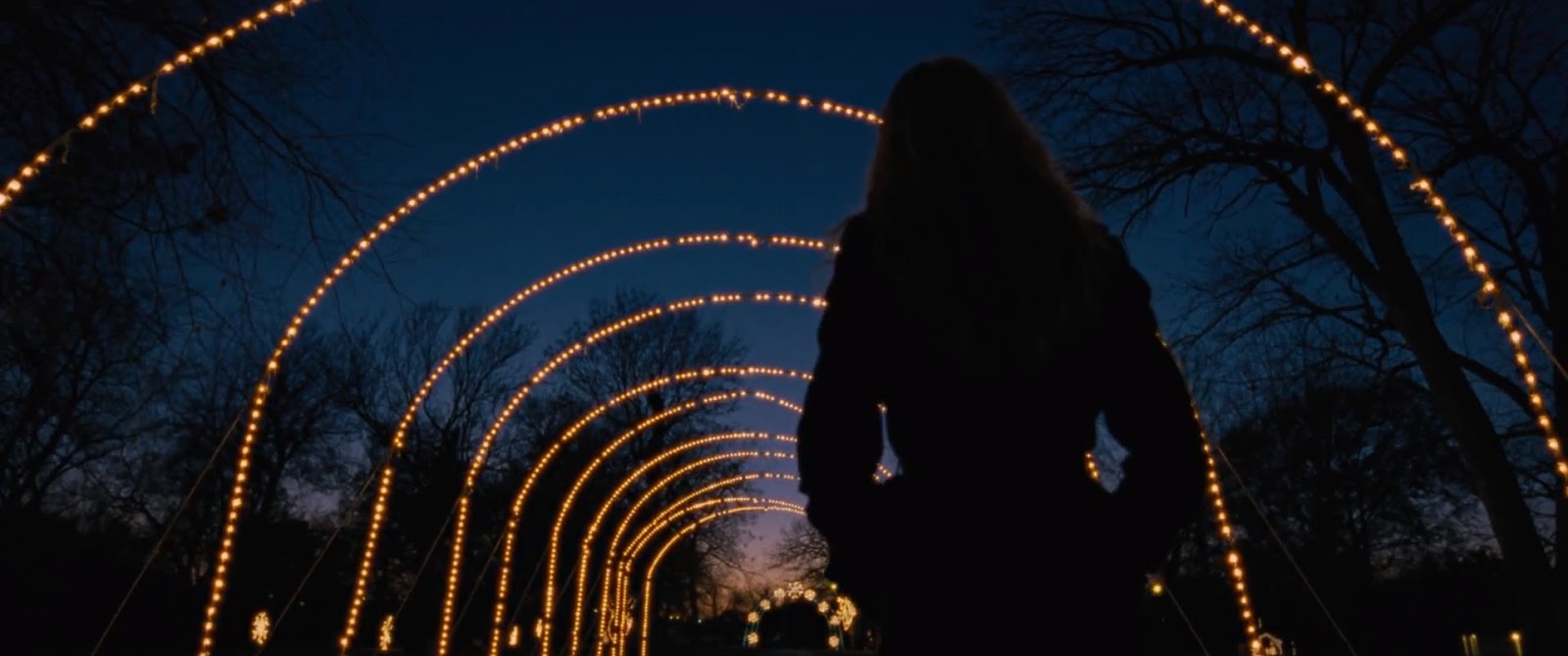
And then leaving it strikes me that the last thing Roger Ebert ever wrote was a review of this film. Which means that there's a chance it was the last movie he ever saw. I have no proof, but I'm comforted by the thought. Here are people making boundless use of their bodies, the landscape, their homes, their minds. Their thoughts and desires are laid bare for us. Roger couldn't speak any longer, but his thoughts were just as available to us, just as rich, and full of love; accepting and appreciative of life's rich details. Bardem's prayer, his interpretation of God seems perfectly in keeping with Roger's attitude toward the end of life. I thought about Roger Ebert hearing the prayer that closes the film. And it becomes more than art. It's an experience, a continuation of a man's life, and maybe the comfort another found at the end of his. It's proof of the power of film, at least to me. Proof that film criticism is part of my religion, the son of film. Or maybe if film is a religious event, then criticism is my bible, recording and interpreting the events that change our lives, like Malick does when he puts biographical info in his dreamy narratives. And just as we hear the voices of his characters in his movies, I hear film critics wherever I go. He's clearly got something there. Watching this film my brain swelled with the different takes I'd encountered, of the words of critics, of possibilities introduced by people who do little else but consider what film means, making it richer. Even if I disagree with a review it make the film richer because it stands in opposition to one reading. We can't and won't all agree, but our disagreements make us better, they help us understand what we prize about works of art. That's why Terence Malick is so important to me and his films so close to my heart. He lays everything on the table so we can do the same in response. He knows we're not perfect, but he loves us anyway and no one makes even our worst impulses beautiful like he does. Maybe we're not God, but we're the closest thing we've got.
Showing posts with label Digital Film. Show all posts
White Epilipesy and the 21st Century Problem
Leos Carax was back in New York not only ago, in discussion with Richard Brody about his movies. If anyone can offer an atmosphere condusive to Carax's interview phobia it's Brody. Both men appear to be on the same wavelength, defined by a reverence for cinema unrivaled by most. Across town at Lincoln Center a few days prior Carax's evil twin Philippe Grandrieux was in town with a new experiment to lay on our unprepared brains. I've written before that I think that Grandrieux is the best filmmaker alive; his last four features standing as testament not only to his unique powers as a director, but the very boundaries of cinema and a cinematic experience. Since the start of his feature filmmaking career, his work has just gotten stranger and more beautiful. He's slowly evaporated his narratives, turning them more and more elemental and bare; just enough to get from one end of a sensory journey to the other. His latest and second in the span of a year is his aesthetic purified of all narrative. The beguiling White Epilepsy has no plot to speak of. It's a straight-up experiment and thus doesn't fit so neatly in his ouevre. His previous work, the documentary Perhaps Beauty Has Strengthened Our Resolve - Masao Adachi was very clearly his work, even if it told someone else's story. No one else sees the world the way he does. And as he now always holds the camera himself he is presenting a view of the world that is as close to how he sees things/how his brain translates the relationship people have to their environment as possible. The world may not appear as washed out mini-dv with high grain and contrast, but I have no doubt that this is what his brain makes of it. His films seem projected from the very recesses of his sensory perception. If it fails, as it has to many, it's because there is no reprieve from his vision this time out. No story of character to comfort a viewer adrift in this hopeless, dark landscape of primal instincts. I can't say I enjoyed this as much as his other work (it stands just above his debut doc Retour à Sarajevo, another journey with no parameters), but I wager few other films will occupy my mind the way this does.
The devilish thing about film now in the hands of masters like Resnais and Oliveira is that they've had time to consider the change. They put great deals of energy into how to use digital to their advantage, rather than simply adopt it. In their latest films, they go out of their way to prove that environments can become anything through digital manipulation; their landscapes are imaginary, as deep in the brain as memories. In Gebo and the Shadow we see a young man imagined by his family, standing alone in an imagined tableaux. Nothing but the boy is real. Similarly once the characters in You Ain't Seen Nothin' Yet begin taking part in the drama they see onscreen, suddenly the world they actually inhabit becomes a green screen-aided studio set where a train can come by at any moment, killing an offscreen character. Anything becomes possible. When we dream, we can suddenly not imagine anything outside the realm of possibility, because they've taken away the safety of the concrete image. Grandrieux and Carax do the same but through rather less obvious means. In Holy Motors, Carax deliberately goes into a green screen studio to pull back the fabric of reality and admit that nothing could be real, but then sticks to the truth of an image he can actually provide. The trickery from then on is all in make-up and practical effects. Carax believes in the image's power, but knows it can be tainted, brings us right to the brink of the uncanny valley showing us its grotesque imitation and abandonment of the reality of the image and then retreats. Cinema and the purity of the image can no longer be trusted and so Carax's brand of cinema (frames so carefully chosen that they burn into your memory, as if your brain were celluloid and silver halide crystals) is now up against the challenges of the 21st century. Anything can be faked, so what's real? What was ever real? Grandrieux, Resnais and Oliveira are all masters at imprinting memories outside of the image in the mind of their viewers. They confront the 21st century problem by figuring out ways to say more than can be written. Is White Epilepsy really as simple as I recall the experience being? Or is it a devastating treatise on the conflicting instincts of the body vs the mind's search for order? It's probably both and if success is measured in what we make of the piece after it's done, it should be called one, even if I have no aching desire to rewatch and better understand the thing anytime soon, a first since Sarajevo.
Weirdly, the film that I couldn't help thinking of a sort of analog, at least presentationally, was Peter Jackson's The Hobbit: An Unexpected Journey, the sort of thing Carax so eloquently dismisses in Holy Motors. The facts of their creation: The Hobbit was shot in 3D at an unprecedented 48 Frames per second, a most unusual and supposedly groundbreaking format. White Epilepsy is shot in the same kind of lowlight that 3D unintentionally produces and in the slender frame usually associated with videos shot on an iPhone. These are two different acceptances of modern technology. The Hobbit came after an unsuccessful attempt at a new genre and was viewed by most critics and fans of the director's past work (though not necessarily fans of the idea) as a major comedown from the remarkable achievement of the first films in the series. White Epilepsy is a return to the experimental form of its director's three greatest successes after a diversion into documentary, and is seen by many as something of a comedown. The difference is that The Hobbit's changes have zero to do with the skills of its director, and everything to do with how we view them. Peter Jackson shows no overt signs of being a better director because his juggling of elements than when he took on the original Lord of the Rings films, so The Hobbit will play as stagnation to those who expected progress. In fact, to some it was viewed as devolution. By contrast, White Epilepsy is purposefully a devolution from narrative to simply a single event. So it is engineered as a comedown, in essence, even if I'm sure Grandrieux didn't make Epilepsy to be compared unfavourably to his other films, he was also very clearly following his mind to a place where his entire toolkit as a director was not needed or entirely welcome. The question that most interests me most now: which of these artists was taking the greater risk?
It's purely an immersion, after your eyes, ears and unconscious mind. It doesn't go for the tactile the way Tom Tykwer might, or touch, smell and taste like only Cate Shortland can seem to. It's about presenting visions that seem to want you to look away. The motion of the bodies on display, already deliberate before being slowed in post, is there to play games with your perception of what's really in front of you. Their shapes merge like optical illusions. Strange designs and patterns appear in their skin as if drawn on by computers. Their fists seem to seamlessly penetrate their skin as if merging into the same form. But is any of that imagined shapeshifting real? Can't be, right? Grandrieux doesn't use digital post. Or anyway, he hasn't in the past. There's something pure about his vision (an acceptable purity I associate with Tsai Ming-Liang) that precludes the thought or even the notion that he'd fuck around with green screens. He tricks you the hard way, by simply showing you images, faces and bodies in the most extreme conditions imaginable. He shows them in forms so abject and close-up, they're barely recognizable. And he's playing the same game here, so it doesn't seem right that he'd deliberately write something in the veins of his actors. Not when they've gone so far into character; they've committed to their very bones. Yet it also seems wrong that I saw his female performer's navel appear to invert before my very eyes, but the image below confirms that I didn't imagine it. But is it real simply because it's there? As a work of hypnosis, something akin to Nolan's shared dreaming or the audience gathering to sleep in the opening moments of Carax's Holy Motors, it works splendidly. Indeed my perception of the film has shifted so much since watching it that I feel as though it put a spell on me and the effects still linger. Manoel De Oliveira and Alain Resnais produce this same effect, especially in their latest works, Gebo and the Shadow and You Ain't Seen Nothin' Yet, which tellingly do manipulate their environs through digital effects. Their characters and spaces are frequently unflinching, forcing our brains to move them and see more in them. But I believe they encourage viewers to drift off, to sleep and let dreams enter the equation. My girlfriend and I both nodded off for a brief second during Gebo, which only intensified the experience, and allowed us to leave the confines of the set and into the unreal world outside that Oliveira created. One of my greatest cinematic memories is of seeing Resnais' tricksy epic Stavisky at the Harvard Film Archive, a place I have the fondest memories of (I saw the bulk of Grandrieux's films there). My friend Laura and I went on a frigid night in January and as Resnais began holding up more and more mirrors to the story and its characters, beautiful streams of information flying all around us, we both drifted off and began dreaming along with the movie. We both woke up a few minutes later. It was more like communion than a simple viewing. It's more than a film and more than a dream. I fell asleep during my first viewing of David Lynch's sublime, final film Inland Empire, and upon awakening couldn't determine what was real and what was in my head. I can't help thinking this would please the man. It felt like tapping into the film's dreams. Takashi Miike says his favourite films are often the ones that put you to sleep. I think he's got something there. What are films but dreams we're awake for? Awake in the dark, as Roger Ebert put it.
The devilish thing about film now in the hands of masters like Resnais and Oliveira is that they've had time to consider the change. They put great deals of energy into how to use digital to their advantage, rather than simply adopt it. In their latest films, they go out of their way to prove that environments can become anything through digital manipulation; their landscapes are imaginary, as deep in the brain as memories. In Gebo and the Shadow we see a young man imagined by his family, standing alone in an imagined tableaux. Nothing but the boy is real. Similarly once the characters in You Ain't Seen Nothin' Yet begin taking part in the drama they see onscreen, suddenly the world they actually inhabit becomes a green screen-aided studio set where a train can come by at any moment, killing an offscreen character. Anything becomes possible. When we dream, we can suddenly not imagine anything outside the realm of possibility, because they've taken away the safety of the concrete image. Grandrieux and Carax do the same but through rather less obvious means. In Holy Motors, Carax deliberately goes into a green screen studio to pull back the fabric of reality and admit that nothing could be real, but then sticks to the truth of an image he can actually provide. The trickery from then on is all in make-up and practical effects. Carax believes in the image's power, but knows it can be tainted, brings us right to the brink of the uncanny valley showing us its grotesque imitation and abandonment of the reality of the image and then retreats. Cinema and the purity of the image can no longer be trusted and so Carax's brand of cinema (frames so carefully chosen that they burn into your memory, as if your brain were celluloid and silver halide crystals) is now up against the challenges of the 21st century. Anything can be faked, so what's real? What was ever real? Grandrieux, Resnais and Oliveira are all masters at imprinting memories outside of the image in the mind of their viewers. They confront the 21st century problem by figuring out ways to say more than can be written. Is White Epilepsy really as simple as I recall the experience being? Or is it a devastating treatise on the conflicting instincts of the body vs the mind's search for order? It's probably both and if success is measured in what we make of the piece after it's done, it should be called one, even if I have no aching desire to rewatch and better understand the thing anytime soon, a first since Sarajevo.
Weirdly, the film that I couldn't help thinking of a sort of analog, at least presentationally, was Peter Jackson's The Hobbit: An Unexpected Journey, the sort of thing Carax so eloquently dismisses in Holy Motors. The facts of their creation: The Hobbit was shot in 3D at an unprecedented 48 Frames per second, a most unusual and supposedly groundbreaking format. White Epilepsy is shot in the same kind of lowlight that 3D unintentionally produces and in the slender frame usually associated with videos shot on an iPhone. These are two different acceptances of modern technology. The Hobbit came after an unsuccessful attempt at a new genre and was viewed by most critics and fans of the director's past work (though not necessarily fans of the idea) as a major comedown from the remarkable achievement of the first films in the series. White Epilepsy is a return to the experimental form of its director's three greatest successes after a diversion into documentary, and is seen by many as something of a comedown. The difference is that The Hobbit's changes have zero to do with the skills of its director, and everything to do with how we view them. Peter Jackson shows no overt signs of being a better director because his juggling of elements than when he took on the original Lord of the Rings films, so The Hobbit will play as stagnation to those who expected progress. In fact, to some it was viewed as devolution. By contrast, White Epilepsy is purposefully a devolution from narrative to simply a single event. So it is engineered as a comedown, in essence, even if I'm sure Grandrieux didn't make Epilepsy to be compared unfavourably to his other films, he was also very clearly following his mind to a place where his entire toolkit as a director was not needed or entirely welcome. The question that most interests me most now: which of these artists was taking the greater risk?
The Top Ten Films (Maudit) of the 90s.
The 90s. The last era about which the phrase "they don't make 'em like they used to" can plausibly be used. Because, and many people will blame/thank digital replacing or at least competing with celluloid, the medium has changed storytelling. In microcosm, look at Jonathan English's film Ironclad. Here are some characters, here are their weapons, here's the king they oppose, here's a castle, they will defend it and die one at a time, one of them lives, the end. Efficiency? Maybe. It's easy to be efficient when you hire actors so good they're practically stock types and forget character development. Entertaining? Sure, yeah. I don't regret watching it, only that it made me see without doubt that the rules have changed. Ten years ago, Ironclad wouldn't have necessarily been a better film, just one that left a stronger imprint in its goodness or badness; Highlander or First Knight leave no room for meh's. They're fucking awful or you watch them with your friends in rotation next to Point Break and Lost Boys. With film there is a weight to every close-up and the best directors of the era knew it. Robert Redford may have lost his flair for suspense, but he still understands the weight of a shot and how to pace, which is why I didn't hate The Conspirator as much as everyone else did. Not a great movie, but it has the sturdiness of a man who learned the craft several generation changes ago. Gregg Araki still struggles with these very basic concepts; Larry Clark has actually gotten better because he had no idea about how to use film for anything other than image capture; digital's ease with light has made him a more discerning director of images. Gaspar Noe, whatever his faults, I think is still probably capable of weight if he'd slow his fucking camera down a minute. To combat the inherent drop in depth, Leos Carax has actually rooted his usually flight-prone steadicam to focus more on the faces of his protagonists, rather than following them as they float through space or run through the streets like wild animals; he's deliberate on digital in a way he only ever hinted at in his best moments on film. And no, it is not randomly that I use these names. For when the true effect of the close-up diminished by a thinness of the image so goes the power of film to really shock.
Take The Human Centipede, please. How can something that looks less substantial than a lot of senior thesis films have any power to shock or disgust, except by mere suggestion alone. Would I care to undergo the surgery myself? No. Is watching it worth the suggestion? No, because it fails to live up to its outlandish premise in execution and leaves you nothing to think about when the filth's been shed. The only thing I can think of with less formal value or narrative energy is a Jim Wynorski/Roger Corman made-for-syfy cheapie or possibly a straight-to-obscurity Geno Mcgahee horror film. I'd wager good money that the reason Ken Russell's The Devils and the few other films he produced that decade were so truly hated was because Russell's style had remained intact from his productions of The Music Lovers, The Boyfriend and Women In Love. Not only were audiences who wanted him to do justice to classic novels with modern implications disappointed by his move away from romance and into psychedelic torture and scalpel-sharp satire, they were tricked by his images, which had the same texture and moved in the same fleet way as his earlier crowd-pleasers. A fantastic rug-pull from a man who made rug-pulling his life's work. Ditto Carax, whose audiences wanted something with the same joyous air, and were instead rewarded with an accurate representation of what their expectations had done to his psyche. He used their expectations against them and brought them further into his mind than they would have ever asked to go. This was at once the definition of cinema, and so much more.
And now, the inspiration for this piece - The AV Club and Slant firing off dueling best of the 90s lists and Peter Labuza in Film Comment offering his take on the film maudit (for those who don't know the handshake, that means 'cursed film'), using Dennis Lim and Criterion's recent appreciations and restorations, respectively, of Heaven's Gate. I disagree with both of the lists strongly, because for the sake of doing the same that some of our most heralded auteurs do - throwing out the rule book for the sake of it - place the work of Paul Verhoeven higher than people who truly mastered the form to do something more than fuck with you for an hour and a half. I'm not saying Verhoeven isn't capable of great art (Black Book is really fantastic and his best film in my mind is the staggeringly awesome Flesh + Blood) but I resent anyone who tells me that Starship Troopers is a better film than Ed Wood. Subjectively speaking - they're wrong. Objectively speaking - give me a fucking break. Being in on a joke the filmmakers didn't fully comprehend doesn't make the film better, it just makes you on its wavelength, at best. If the director of that bullshit Red Dawn remake had come out and said "I'm a marxist and this is a joke," the movie wouldn't suddenly become a fucking masterpiece. But then, I suppose, that's what critics are here for. To exhume, to re-evaluate, to push their personal films above the accepted canon. Labuza points out that Andrew Sarris probably took greater pride in telling people how much he loved Lola Montès because of how poorly it had fared with critics upon its initial release. And time has vindicated both Sarris and Lola. It's a masterpiece in more than one set of eyes with a Criterion release to go with its new status, just like Heaven's Gate. And for the record I agree. Lola Montès is, to me, Ophuls' most beautiful and heartbreaking movie, and the man made more than a few beautiful, heartbreaking movies.
Which brings me to my real question, and it's nagged at me for months now. There are more film critics today than there ever have been (don't ask to see my research on this bullshit claim) which means that the odds that a film, no matter how wrongheaded, will be Universally panned are impossibly small. I grew up hating people like Paul W.S. Anderson, Michael Bay, Tony Scott and Dennis Dugan and largely the critical establishment had my back, but thanks to the internet, every one of these guys has a champion in
'print'. In consulting reviews for Pola X from its turn-of-the-century release date, the overwhelming consensus is "it's a failure, but still worth watching." So, my question is, why? Why does a film that does not subscribe to narrative logic as we typically understand it (and film critics ought to have a broader understanding these days), have to be called a failure? Labuza cites Margaret as a film that was rescued from Maudit status in a matter of months. Of the six critics who saw it (which made up something like 34% of its first-run audience) four of them liked it enough to recommend it. The other two found it not terrible but too broad, which they failed to realize was the point. Soon the six became twelve, and so on and so on and now it's very nearly canonized. So, to quote Labuza, "One might wonder if there are even bad movies anymore..." The Kafka-esque truth is almost definitely no. I have a problem with tastemakers martyring Tony Scott, who made one masterpiece and a few good movies besides (not great, merely good) movies in a thirty year career, and lauding Brian De Palma who never once made a good film, while Margaret and Pola X have trouble getting their due because a handful of critics and distributors don't have faith in them. Heaven's Gate was blamed for the Iranian Hostage Crisis in its day; it still has its detractors, but at least now its viewed outside of the context of the curbstomping it received back when. In the age of the internet, as Labuza points out, distributors will have to try very hard to create circumstances where a film needs rescuing and can't get it. Thank god because I'm tired of reading decades old reviews that cost artists their faith in the seventh art. I fear for John Carter and Andrew Stanton, two men I want to succeed more than anything. So, while the obvious choice in response to both of these pieces was to ask my friends for their favourite films of the 90s, I also decided to go one step further. Below their choices, based solely on love and appreciation, are my selections of the best (whatever the fuck that means these days) Film Maudits of the 90s, the last decade capable of producing them. Whatever your thoughts about these 'failures,' they at least had the power to be hated.
First, our personal lists of favourites from the 90s:
1492
by Ridley Scott
You'd think the man who reinvented/revitalized/restarted Sci-fi in the 80s could do no wrong. But Ridley Scott loves a challenge. Blade Runner and Alien back to back is a feat almost no one in his generation can touch. So we can forgive him picking the script for Legend, if it existed in any other form than cocktail napkin scribblings, because it afforded him the chance to show off majestically. Ralph Bakshi and whoever was manning the autopilot at Disney must have very seriously contemplated faking their own deaths when Legend was released and was nearly the most dazzling and diverting piece of visual art the decade produced. Did it make sense? There was no internal continuity, but that didn't stop Lord of the fucking Rings, did it? Fantasy, horror, sci-fi? What next? The erotic thriller, of course. Not exactly bountiful visual stuff, but at least he could ground them in realism and conduct stake-outs like ballet. Then the 80s action film. Still in Legend territory as far as the script's concerned, but in anyone else's hands it would have been much, much worse. One 'women's picture' later and he's ready to dive headlong back into the big budget period film he made his reputation on. Another challenge, Maestro? Make a film about Christopher Columbus, who may actually deserves the mantle reserved for Jimmy Carter as history's greatest monster, where he's the hero. Easier said than done, according to everyone but me. Do I have a complaint? The Vangelis music. Lightning didn't strike twice on that collaboration. Beyond that, 1492 feels like it was shot in 3D, such is its visual splendor and the ebullience of the sound design. It does manage to be that rare film about hubris that suffers from it, which is its own reward. Thanks to the nightmarish color corrected visuals, the foreign (to its heroes) setting of the main conflict, the practical effects and handcrafted sets, and that truly bizarre electronic score, 1492 has the distinction of being the Sorcerer of its decade. Did the world need a remake of The Wages of Fear? No, but William Friedkin turned in his one bonafide art film when given the task. Did the world need three simultaneous films about Columbus? No, but I would never have professed to being capable of feeling sympathy for the man, either, and Scott made me. That is his genius. Existing in the shadows of major studios, executives, and great big stacks of money, Ridley Scott was the lone artist capable of coming out unscathed, turning standard issue genre fare into human interest stories-cum-films noir. Can't seem to turn down a bad script, but when he can take an idea as misguided as an adventure film about the world's most famous murderer and make you empathize with him (a trick he'd repeat in Hannibal), even feel sorry for the man when his dreams are in danger of slipping away from him, then I forgive his hubris everytime. I should always like to be led astray by something so gorgeous.
Alien³
by David Fincher
Not many people know I have an unpaid internship defending Alien³ on the internet. I get paid nothing and go around looking for people who write it off or disparage it in the vain hope of one day being able to talk to David Fincher about it. This sounds like a joke, but if I could put it in on my non-existent resume, I would. In a heartbeat. Few Hollywood disaster stories interest me as much as that of the third Alien movie. On paper the names they got make sense. Ridley Scott, James Cameron, David Fincher, Jean-Pierre Jeunet. At one time or another these men could meld visual artistry with gut-level genre filmmaking that made audiences the world over swoon and empty their pockets in the same gesture. Of course the truth makes far less sense. Cameron has since dissolved into a harmless populist with no better an idea of how films fit together than George Lucas. Jeunet's film founders badly as he was, in a decision that uncannily echoes Anglo hiring François Truffaut over Jean-Luc Godard to direct Fahrenheit 451, picked to direct the most icky and philosophical film of the franchise over his much darker collaborator Marc Caro, who would have committed to the task more fully. Fincher was simply lucky or unlucky, depending on how you look at it. A film student who'd charmed his way into a career directing adverts and music videos was chosen to handle a franchise of such importance, I assume because producer David Giler assumed he'd be grateful for the job and do whatever was asked of him. Not so. Fincher immediately set about claiming his first big budget film for himself. The edit would mangle his baby beyond repair, but the initiated know that the Assemble Cut of Alien³, featuring most everything they removed from the theatrical, is the prototypical work of its creator. With Se7en, The Game and Fight Club he would push his camera beneath the surface of wealthy America (like the one occupied by his Alien³ producer/tormentors) and find the grimy secrets we all keep. His knack for dressing horrific environs was so legendary that in 2003, after Panic Room's release, marking the end of the first phase of his career, Patton Oswalt could reference "a dank, David Fincher-esque kitchen" in a stand-up bit and everyone in his audience knew what he was talking about. That all starts here. Alien³ is a fantastic directorial achievement, even if the script is aimless bullshit written by executives on a deadline. The filthy set dressing is here in full force as are the spiderweb like interiors, the air of helplessness, the sense of a higher power fucking you over for the sport of it and a color scheme that comes out from underneath Ridley Scott's legacy on the Nostromo to become something unique: a gothic fever-dream of orange hue so intense it's as if the prison is lit by Hieronymus Bosch's hellfire. Playing like a big budget sequel to Ghosts...of the Civil Dead with the rough edges sanded down or a Sci-Fi take on Heaven's Gate, Alien³ follows a group of not very convincingly repentant prisoners who've turned to jesus for salvation from themselves as they fight first temptation in the form of a never-hotter Sigourney Weaver and then face her protector/lover/rapist/creator, a phallic alien that runs around on all fours, a bastardized mutant from the first film's more elegant designs. The effects weren't ready for this film and date it badly, the performances range from sublime to dire, and the edit is one of the worst on record (if the film had any more noticeably mismatched ADR, all the dialogue would all be voice over), but none of that is on Fincher. His achievements are myriad and are the reason the film has become something of an obsession for me. Take the genius scene that properly starts the assemble cut: a lone man in a coat deliberately too big for him walks alone on a beach looking tiny next to disused construction and foundry equipment, the air so thick with pollutants it could be Pompeii circa 79. These men are all alone in the universe and Fincher finds the simplest ways of hammering home their existential dilemmas, only ever crossing the leaden symbolism line in the last minute of the movie (which definitely has the feel of a studio note). These are the angry men he'd find later in basements and in police stations. Looking for Fincher in Alien³ is hard but rewarding. David Cairns brilliantly points out that between the baldness,low-angles and oppresive lighting, Fincher was trying to make a sci-fi version of the The Passion of Joan of Arc. Picture Cameron trying that for a second. It's difficult imagining what his experience was like making the film, but when you see his fingerprints in there, it becomes hard to look away. I once watched it ten times in a week, paying careful attention, as I always do, to the stunningly strange climax in the leadworks. I've never been able to adequately explain what about this sequence I find so fascinating. Something about the inevitability of death and the way it manifests itself on the faces of the convicts who've survived everything their god can throw at them, now lining up in a labyrinth to give it away. I think maybe I love it so much because it's endemic of the whole film. Here they are on a deserted planet, underground, no less, doing something that may well save all life in the universe and no one (not even the audience of the movie, thanks to the fucking editing) will ever know about it. No one was aware that the trials of this misbegotten, ill-advised, unnecessary sequel would pave the way for the spiritual heir to Stanley Kubrick, responsible for more trends in modern cinema than you can count one hand, untold billions of dollars and dozens of Academy Award nominations. Just as the game is about to start, one prisoner casually asks another "do you believe in this heaven shit?" I could picture that line coming from any of Fincher's heroes right on through to Noomi Rapace's Lizbeth Salander. I could picture heaven for Fincher looking a lot like a man being nominated for the highest honor we have for a director in North America, for a film he'd had complete control over. He's learned a lot in the intervening years, but I think the time has come to give credit to the man for turning a nightmare into a work of art and back again.
The Rainbow Thief
by Alejandro Jodorowsky
Of his two final films, Santa Sangre is more obviously the work of its director, Chilean madman Alejandro Jodorowsky, but The Rainbow Thief, its comparatively mawkish companion piece, is a side of the master I can't resist. Back in the 70s and between pre-production phases of his failed Dune adaptation, Jodorowsky directed Tusk, a heartfelt and completely forgotten adventure film that played like Au Hazard Balthasar by way of The Jungle Book. Tt had nothing of its auteur caustic surrealism, which probably killed it. In point of fact it's downright sentimental, something only visible in a half-second's aside in El Topo when the gunslinger cheers up his dwarf lover after they're forced to make love for some gunslingers' entertainment. This movie could have played to kids if it weren't shot entirely in extreme wide angles that destroy any sense of its human characters. They're tiny figures in a huge landscape, the titular elephant the film's only real hero. Santa Sangre is brilliant, but returns to the well that Jodorowsky dug for Fando Y Lis, El Topo and The Holy Mountain, but with a different rhythm to guide it. The Rainbow Thief is an unabashed heart-string tugger, even if its filtered through abstraction (long sections pass without dialogue, the side characters never get names or jobs beyond providing bite-sized whimsy, characters' motivations are hardly worthy of the name) and the director himself has disowned it. But I give him more credit than he gives himself. As an avid El Topo and Holy Mountain fan, you can imagine my sensibilities are a little cynical and harsh, but even my heart melts for The Rainbow Thief. How can you not love a film that reunites Peter O'Toole and Omar Sharif for only the second time following Lawrence of Arabia and Night of the Generals? How can you not love a film that worships the maligned and forgotten in ways that anticipate The Fisher King and doesn't make you suffer Robin Williams? How can you not love a film in which Christopher Lee plays not only a sympathetic character for once, but a lovable, billionaire whore monger? How can you not a love a film that brings a dog back from the dead? Jodorowsky might not want to own up to having a heart, but here's exhibit A and I respect the man all the more for taking a chance on showing it to us. He may never make another film and that would be tragic, but I feel blessed to have seen the last gift he's given us.
Bram Stoker's Dracula
by Francis Ford Coppola
Nothing I'll ever say will make Keanu Reeves' performance better. There is no healing that scar, forever on the face of this singular achievement. Many people wished it had been silent, that there'd been last-minute casting changes, that Francis Ford Coppola had never stooped back into the genre he'd started his career with, that the whole affair would have been deemed folly and smothered in its infancy. It would have saved them the time and attention they spent killing it later. I don't pretend the film's a misunderstood masterpiece, only that it is the most cinematic and unforgettable adaptation that Bram Stoker's novel received since its first, F.W. Murnau's illegal and bountiful Nosferatu. And as much as I love Nosferatu (by any measure one of the most important horror films in history), its style can't compete with star Max Schreck's performance; Bela Lugosi's hammy pantomime was the most energetic thing about the first film to have the word 'Dracula' spoken aloud; in seven movies, Hammer never gave Christopher Lee a vehicle worthy of his performance as the count; and the less said about the John Badham version, the fuckin' better. Coppola in essence gave the film the mechanized, expressionistic treatment it missed out on by being directed by Murnau, a naturalist, instead of showmen like Robert Wiene or Fritz Lang, as if George Melies himself shot second unit. Coppola and his son did all the effects in camera and their work is nothing short of magic, the kind of thing Scorsese would rhapsodize in Hugo (not many people connected the two films last year, but they're practically siblings). Nevermind the performances, Coppola had the modern equivalents of Clara Bow and Rudolph Valentino on his hands, who gives a shit if they embarrassed themselves a little? The film was the thing and it would outlive any single element. Dracula is like one of those giant clocks that Scorsese's boy hero keeps winding. The public knows the time, but can't see the gears turning. All they know is that when they're late it's the clock's fault. So when no one bought what they were seeing, Coppola walked home with the blame. Fine, sure, yeah, but has anyone who's seen this blood red adaptation ever forgotten its more bizarre tangents? Have these moments of pointed unreality ever left your nightmares for good? I'd rather go up river with Coppola anyday than watch someone spin their wheels in a genre they don't appreciate. My time will forever be his to waste.
Dead Man
by Jim Jarmusch
With each passing year I come to see Dead Man as an essential American masterpiece, warts and all. I've also come to see that there may be no such thing as a perfect western. The closest anyone's gotten would be The Searchers, followed closely by The Wild Bunch, which is the more effecting of the two. After that we run into grey areas. Surely Boetticher's paranoid chamber dramas The Tall T and Ride Lonesome deserve credit for their painterly aesthetics and ingenuity? Monte Hellman used the western to throw darts at our psychological complacency in low budget success stories Ride The Whirlwind and The Shooting. Anthony Mann surely deserves a little credit for bringing out the darkest side of Jimmy Stewart in the westerns they made together? Or how about more recent fare? James Mangold's 3:10 To Yuma kicks the shit out of the Delmer Daves original for sheer excitement, craft and performance; it's final minutes are almost too exciting for words. Andrew Dominik seems to captured more beauty in Assassination of Jesse James By The Coward Robert Ford than a lifetime of watching could ever appreciate. I'd argue that if you took the best things from these movies, you might arrive at the perfect western, but who the fuck wants perfection when all these jagged edges are so mesmerizing? Jim Jarmusch's Dead Man is his most successful toe-dipping into a genre (Ghost Dog is rough, even for a samurai film; The Limits of Control, however breath-taking, is barely the lone-killer film it masquerades as) and he gets far more mileage out of its inherent elements than he ever could breaking out of jail or into a gangster's mansion. Simply put, the western landscape he drags through is the perfect compliment to his style. Surrounded by dilapidated buildings or beautiful Spanish architecture, your mind could wander from the characters that these vistas dwarf. Not so here, where the land is the crux of its heroes journey. To paraphrase Mike D'Angelo on This Must Be The Place, every new scene is the reason the movie exists. Johnny Depp hops into the wrong bed to find comfort in a town he foolishly believed could hide any, and winds up gutshot for his sins. With the help of a sidekick who knows what it's like to lose the meaning in his life (and is thus almost as much a ghost as the dead man of the title), wanders through an unconventional western expanse to get to his point of departure, both physically and spiritually ready to die. Not for nothing was this the movie that Jonathan Rosenbaum coined the phrase 'Acid Western,' which then slid nicely into critical diction. It's almost too heady for its own good, but between Neil Young's haunting guitar accompaniment (I would also have accepted Nick Cave moaning softly) and Jarmusch turning the forest into the externalized depths of Depp's bruised and impacted psyche, it never gets ponderous; indeed, I was unexpectedly galvanized as Depp learns in his last moments to take up arms against the white men who stood in for the legacy of rape and genocide on which the country was founded. I find that in my memory, the film is simply a flood of images playing slowly over what I remember Young's guitar sounding like; a plaintive piano roll of images forever spinning in my brain. That is the power of the film. Anyone hoping for the jaunty adventures of earlier Jarmusch, the Freudian catharsis of John Ford or Howard Hawks, or the live painting demo quality of Sergio Leone will leave even more philosophically unbalanced and distressed than those with their expectations leveled properly.
Pola X
by Leos Carax
I have yet to encounter an undivided review of Pola X. Peter Bradshaw hated it, Scott Tobias praised its gynmastic camerawork and emotions but still used the word failure. Roger Ebert was the most emphatic in his praise, but even he couldn't come outright and say it, like he was worried what people would think of him if he gave his two digits to this mad chapter of French cinema. Their opinions now seem quaint, unnecessary, as they're the only people who've seen the movie - they were talking to themselves and Leos Carax. You could almost divorce Pola from its cinematic achievements and still this would be a crucial film, a one-of-a-kind artistic autopsy on a still-living subject. From the top, the one-two punch (the sort delivered by Jacques Tati in Soigne ton Gauche) of Boy Meets Girl and Mauvais Sang. The former was a cool slice of post-punk co-option; an Epstein-double exposure here, a Bressonian dialogue there. The plot is incidental except that it happens to Denis Lavant and registers on that pouting, once-a-generation face of his. Carax struck harder, in color and in love with Juliette Binoche, in Mauvais Sang. Here he painted a paranoid, claustrophobic world in Black, Red and Whites for Lavant and Binoche to (literally) spread their wings; Nicholas Ray and Godard in one lithe body. They were so loved that when it came time to send Alex, Lavant and Carax's shared form, on his next adventure, no expense was spared, leading to the heartbreakingly raw, mega-satisfying and unbelievably romantic Lovers on the Bridge. But because of the runaway costs (shades of Cimino) and its refusal to adhere to narrative conventions or New Wave chicanery, it wasn't enough for his supposedly adoring public. This was the film Carax had threatened to make without any constraints and it was insufficiently loved (at least for my liking). It sent Carax into a depression; losing Binoche couldn't have helped. Pola X was what it was like in his mind, and thus while many people point to Lovers as the superior film, to me they're inextricable. The story, despite following the plot of the Melville novel it takes its name and story from fairly closely, is as pure an autobiography as it is a syringe full of pure cinema. The story starts on an estate in Normandy rendered in even more effulgent detail than the hero's angelic bride. Nothing's happening at first, but it's intoxicating; circumstances built from assured, unforgettable images. Pierre, played by the almost unreally gorgeous Guillaume Depardieu, is due to wed Delphine Chuillot's almost virginal Lucie, until dark haired gypsy Isabelle, played by Yekaterina Golubeva, finds him and explains she might be his sister. And thus he finds the excuse he'd been looking for to shatter his moneyed, complacent existence in one alluring and sexy package. What follows is a descent into self-imposed madness unlike anything ever depicted. Pola X is exactly what was inside Carax's unconscious mind at the time of its creation, rendered in razor sharp detail. When Lovers failed to live up to the impossible expectations the public had built up for it, they all paid for Pola X, which was nothing short of artistic crisis and personal turmoil burned onto celluloid. And in the burning, some unearthly things are captured. Depardieu, who through what cannot be coincidence (Carax has taken my belief out of the very notion of coincidence), looks like the spitting image of Sharunas Bartas, Golubeva's husband, who plays the orchestrator of the commune Pierre and Isabelle hit rock bottom at, and is Pierre with no connection to the outside world, just Isabelle is Marie without money or privilege. When Pierre and Isabelle consummate their impossible, undeniable love, the world seems to cave in on itself. Who are watching? Depardieu? Bartas? Golubeva? Some anonymous body doubles? Who does the director want it to be, fumbling erotically in the near darkness. Carax made sure that if this was the last film he made before being immolated by his own unrequited love and ambition, he was taking the world with him.
Khrustalyov, My Car!
by Aleksei German
Imagining Werkmeister Harmonies directed by Ken Russell would still leave you inadequately prepared for this banquet of paranoia and black hilarity. Sure, there are shades of a dozen films, not the least of which are Zulawski's Devil, Zbynek Brynych's ...And The Fifth Horseman is Fear and Piotr Szulkin's Ga-Ga - Glory to the Heroes, but there's something else at play here that defies precedent, even in that esteemed company. It seems to come from another era entirely, like it was shot around 1970 while the equipment was free between The Witches' Hammer and Valerie and Her Week of Wonders. For all I know the film stock may have expired back when the soviets had to ration it. And in the complex history of Russian cinema, Aleksei German has had a harder time getting his films viewed than probably any of his peers, if he can be said to have any. Knowing that his movies had been banned and almost burned everytime out, he left not a single image or idea on the floor when he entered his fourth decade as a director, meaning that often some of the most brilliantly warped imagery of the 90s is simply tossed off in any given three seconds of Khrustalyov - a dog in a basket stuck to a zipline in a dining room is gone before we've quite realized what we've seen. And perfectly none of this imagery ever interferes with the story, or ever seems to bother its Soviet Superofficial hero. The surreal nature of a falling empire is lost on him, as it would have been on anyone in the inner circle of a madman, as he seeks desperately for how to avoid the fall of an empire adversely effecting his power and dignity. There hasn't been a narrative film like this in many moons (for a while, the darkly comic Nero-fiddled road-movie was almost its own genre in European cinema until digital made tracking shots, the greatest weapon in their arsenal, less impressive), perhaps because by they are by their nature, too ugly? Too honest? Too near the bone? Irrelevant? Whatever the reason, German's film fell on deaf ears and resulted in more Cannes walkouts than L'Avventura. The wounds were still fresh for German who had to make movies under a repressed and deeply ashamed regime's watchful eyes (indeed, many of the film's tangents were based on his own experiences with state surveillance), but the world had moved on. Up the alley, and out of the screening room door. Cannes, for their part, was stinging from Angelopoulos's barbed 1995 dismissal of the jury and had no interest in doing anything but repairing their relationship by awarding the Palme d'Or to one of his least substantial films simply because it was his. If only they'd waited six years, he'd have given them something worthy of the honor. But back to German. Dennis Lim wagered that Michael Cimino would still be working on Heaven's Gate if he could. The same is true of German, for whom My Car! was not just autobiography, but a statement of purpose. His life as improvised roadmap for his camera, ever roving, ever following, along for a ride that seems too impossible to be true. And yet, German planned every second of this movie, and for his sins, all the time in the world to keep making it, even if only in his head.
Fear And Loathing In Las Vegas
by Terry Gilliam
There isn't much left to say about Fear And Loathing In Las Vegas, which has been all but rescued from its disastrous origins, except to say that it is a case study in adaptation. Look no further than the muted response to Walter Salles' On The Road. Handsome, dependable, even occasionally great, but it never had a prayer of replacing its source material in the eyes of its fans. The reason? Salles is too much of a fan to do it any damage or let his own style (which isn't exactly blinding at the best of times) run roughshod over the prose. So what does it become? A Merchant Ivory film in beat clothing. Harmless. The opposite of what it should be. For the record I enjoyed On The Road, but it's worth mentioning that the best director can do in adapting a book is fill up the space where prose lives between words and actions and replace it with their own demons, neuroses and obsessions, filtered through a style only they can provide. Gilliam's Fear and Loathing did the unthinkable - rendered its source material irrelevant. Hunter S. Thompson's book was nothing shy of a cultural avalanche when it first arrived, apparently coughed out during a hangover in blistering, inimitable style. Now imagine a movie that actually bests it. Gilliam's stylistic hallmarks are at their most voracious here, dutch tilts eating the frame, images of such stark oddity that they deserve whole films to themselves, and the camera all the while attached like a conjoined twin to the vicious lunatic spirits (Johnny Depp giving his best and most iconic performance as the author and Benicio Del Toro, barely recognizable behind a hundred pounds of beer gut, dark glasses and the most threatening mustache of the decade) who serve for two hours as Vegas' worst tour guides. And yet it's also maybe the most faithful adaptation since The Maltese Falcon. Gilliam came to praise Hunter Thompson and the runaway decade that spawned him, not bury them. He didn't throw the book out, he opened his brain up with a hacksaw and painted over the pages with what fell out. If that sounds like something you want to put yourself through, "Get innnn!"
Crash
by David Cronenberg
I didn't get it either when I first saw it, either, so forgive those who condemned it. Joe Bob Briggs brought this film to my attention in his unmissable tome, Profoundly Disturbing (spoiler, Crash is anything but). I watched it, as I did every other film in its pages I'd yet to see, and wondered just what in god's name I'd watched. Why did no one ever raise their voice? Why did no one seem to feel anything, even in the throes of acrobatic sex? Why the pornographic lingering over car crashes? This was before I'd discovered Bresson, mind you. So, after a lot more viewing (including every other Maudit hiding in director David Cronenberg's closet), I gave it another shot. The clouds parted and the grey skies of Toronto had never looked clearer or brighter. Cronenberg had taken the emotions and the behavior of modern North Americans and inverted them. The emotional detachment he and author J.G. Ballard witnessed behind the false smiles of most people was externalized in Crash. Their affect reflected their troubled minds and unrequited libidos. They were all desire and no release - even in a world where random sex was normalzed, politeness and conservatism had forced it underground. So people move about their day at the speed of ignorance and repression. So Cronenberg halts them in their fucking tracks and watches the sparks fly. Note: puns are hard to avoid when talking about this film, but I'll try my best. Many people are going to misunderstand a film that, as Briggs put its, is a love story told through sex scenes, especially in a culture that paved the way for 50 Shades of Grey being a housewife cause celebre. They cannot deal with the subject honestly, let alone when Cronenberg presented it in such stark, cold light. He wasn't going to busy up the frame, nothing to get in the way of the confrontational nature of the discussion of sexuality, which no one can seem to own up to. What chance did a film that uses an underground cult of people turned on by car accidents stand with Newt Gingrich trying to keep women and their periods out of trenches? But more than honest Crash is a much sweeter and more romantic film than its ever given credit for (and frankly it's rarely given credit for existing outside the pages of Film Comment, Cahiers and Senses of Cinema). Is there any more tender image than James Spader licking Patricia Arquette's leg-wound in the backseat of his car? Don't answer yet. Remember that I also think the blood-soaked kiss between two 12 year olds in Let The Right One In is the most heartwarming thing I've ever seen. Crash is a film that goes into our brains to shock us back into feeling, so naturally, we forbid children from seeing it. Heaven help us if they ever realize what we've done to intimacy.
The Hudsucker Proxy
by Joel and Ethan Coen
After years of hearing about what a joyless slog Intolerable Cruelty was, imagine my surprise when I discovered it was a delicious confectionary of expertly crafted wordplay and near-explosive levels of chemistry between its two flappable leads. "How had this happened?" I wondered, while laughing my ass off, "how could a film this good by America's cinematic sweethearts have been swept under the rug like that?" Well, anyway, The Coen Brothers were at least used to that sort of disappointment. After all, they'd made The Hudsucker Proxy. Intolerable Cruelty is a delight, to be true, an homage to Howard Hawks, Leo McCary and Preston Sturges' comedies of remarriage centering appropriately enough on a divorce attorney who tastes his own bitter medicine and as well as it works just as well as tribute and stand alone comedy (George Clooney's comedic prowess never gets enough notice for my liking). Next to Hudsucker, however, Intolerable looks more like the work of Mitchell Leisen than Preston Sturges. Sturges was the genuine article in American comedy. In his best films, The Lady Eve, Sullivan's Travels, The Palm Beach Story, The Miracle of Morgan's Creek, Hail The Conquering Hero and Unfaithfully Yours (As long as we're sticking up for the underdog here I'll just say that Unfaithfully Yours is a gem and I will hear no one besmirch it), he balanced humour so bold you wonder how it slipped past the censors, scabrous satire of values unique to wartime America and romance that shot past heartwarming into gripping. He had such a perfect hand with sentiment that he could appear to be making fun of the very notion of it, even as he freely indulged. He was one of a kind. But leave it to The Coen Brothers to make a film that pretends to his throne and earns the right to sit there. Painstakingly crafted through nostalgia-colored glasses and set in a place we recognize as our past but in no definite moment, corporate stooge Tim Robbins rockets to the top of a toy company despite having no knowledge of the job or that he's being set up for a literal and metaphorical fall by his handler, a never-sleazier Paul Newman, cashing in on his impossible-to-dislike irascibility and charm. The boardroom antics, Sturges-esque wordplay and bureaucratic chutes-and-ladders are hilarious, but once Jennifer Jason Leigh enters the story, this stops being a comedy no one laughed at and becomes a masterpiece whose failure isn't just baffling, it's a tragedy on par with the sinking of the Titanic, the execution of the Rosenbergs or the cancellation of Pushing Daisies. Leigh's portrayal of a savvy journalist who goes undercover to scoop Robbins' rise to fame mirrors Jean Arthur in Mr. Deeds Goes To Town but without hiding her unscrupulousness so disingenuously as Frank Capra does. It's a testament to the Coen's writing and feather-light direction (rendered on resplendent art deco production design, for my money their best, through the prism of Roger Deakins dark-matter heavy photography) that they pursue a route that out-bleaks famous Scrooges like Capra and Sturges, and still manages to seem more lighthearted than Meet John Doe or Unfaithfully Yours, which flirt with murder and suicide as aggressively as Leigh does with Robbins. Leigh's feisty journalist is a more endearing proto-feminist trouser-sporter than Cate Blanchet's Hepburn impersonation; better still, she brings a sexuality to her role that outstrips even the Claudette Colberts and Barbara Stanwycks of the golden age, and again, genuinely. Through the performance, through her palpably masked longing, through her robust personality. She maybe a shade of fast-talking-dames past, but she's a fully realized character, and if you don't want to marry her by the time the credits role, you must be a Franklin Pangborn character. Or worse, William Demarest. I still marvel at the level of detail that went into making Hudsucker Proxy such a loving, feel-good tribute to loving, feel-good comedies so dipped in sarcasm you could drown in it. And that's even without taking into account how fucking funny it is. It's that rare film that gets nearly everything right (wouldn't be on this list if it were actually perfect). When the film failed at the box office, I bet Preston Sturges took a belt for both Joel and Ethan Coen in auteur heaven. "Don't worry, boys. They didn't get me, either."
Take The Human Centipede, please. How can something that looks less substantial than a lot of senior thesis films have any power to shock or disgust, except by mere suggestion alone. Would I care to undergo the surgery myself? No. Is watching it worth the suggestion? No, because it fails to live up to its outlandish premise in execution and leaves you nothing to think about when the filth's been shed. The only thing I can think of with less formal value or narrative energy is a Jim Wynorski/Roger Corman made-for-syfy cheapie or possibly a straight-to-obscurity Geno Mcgahee horror film. I'd wager good money that the reason Ken Russell's The Devils and the few other films he produced that decade were so truly hated was because Russell's style had remained intact from his productions of The Music Lovers, The Boyfriend and Women In Love. Not only were audiences who wanted him to do justice to classic novels with modern implications disappointed by his move away from romance and into psychedelic torture and scalpel-sharp satire, they were tricked by his images, which had the same texture and moved in the same fleet way as his earlier crowd-pleasers. A fantastic rug-pull from a man who made rug-pulling his life's work. Ditto Carax, whose audiences wanted something with the same joyous air, and were instead rewarded with an accurate representation of what their expectations had done to his psyche. He used their expectations against them and brought them further into his mind than they would have ever asked to go. This was at once the definition of cinema, and so much more.
And now, the inspiration for this piece - The AV Club and Slant firing off dueling best of the 90s lists and Peter Labuza in Film Comment offering his take on the film maudit (for those who don't know the handshake, that means 'cursed film'), using Dennis Lim and Criterion's recent appreciations and restorations, respectively, of Heaven's Gate. I disagree with both of the lists strongly, because for the sake of doing the same that some of our most heralded auteurs do - throwing out the rule book for the sake of it - place the work of Paul Verhoeven higher than people who truly mastered the form to do something more than fuck with you for an hour and a half. I'm not saying Verhoeven isn't capable of great art (Black Book is really fantastic and his best film in my mind is the staggeringly awesome Flesh + Blood) but I resent anyone who tells me that Starship Troopers is a better film than Ed Wood. Subjectively speaking - they're wrong. Objectively speaking - give me a fucking break. Being in on a joke the filmmakers didn't fully comprehend doesn't make the film better, it just makes you on its wavelength, at best. If the director of that bullshit Red Dawn remake had come out and said "I'm a marxist and this is a joke," the movie wouldn't suddenly become a fucking masterpiece. But then, I suppose, that's what critics are here for. To exhume, to re-evaluate, to push their personal films above the accepted canon. Labuza points out that Andrew Sarris probably took greater pride in telling people how much he loved Lola Montès because of how poorly it had fared with critics upon its initial release. And time has vindicated both Sarris and Lola. It's a masterpiece in more than one set of eyes with a Criterion release to go with its new status, just like Heaven's Gate. And for the record I agree. Lola Montès is, to me, Ophuls' most beautiful and heartbreaking movie, and the man made more than a few beautiful, heartbreaking movies.
Which brings me to my real question, and it's nagged at me for months now. There are more film critics today than there ever have been (don't ask to see my research on this bullshit claim) which means that the odds that a film, no matter how wrongheaded, will be Universally panned are impossibly small. I grew up hating people like Paul W.S. Anderson, Michael Bay, Tony Scott and Dennis Dugan and largely the critical establishment had my back, but thanks to the internet, every one of these guys has a champion in
'print'. In consulting reviews for Pola X from its turn-of-the-century release date, the overwhelming consensus is "it's a failure, but still worth watching." So, my question is, why? Why does a film that does not subscribe to narrative logic as we typically understand it (and film critics ought to have a broader understanding these days), have to be called a failure? Labuza cites Margaret as a film that was rescued from Maudit status in a matter of months. Of the six critics who saw it (which made up something like 34% of its first-run audience) four of them liked it enough to recommend it. The other two found it not terrible but too broad, which they failed to realize was the point. Soon the six became twelve, and so on and so on and now it's very nearly canonized. So, to quote Labuza, "One might wonder if there are even bad movies anymore..." The Kafka-esque truth is almost definitely no. I have a problem with tastemakers martyring Tony Scott, who made one masterpiece and a few good movies besides (not great, merely good) movies in a thirty year career, and lauding Brian De Palma who never once made a good film, while Margaret and Pola X have trouble getting their due because a handful of critics and distributors don't have faith in them. Heaven's Gate was blamed for the Iranian Hostage Crisis in its day; it still has its detractors, but at least now its viewed outside of the context of the curbstomping it received back when. In the age of the internet, as Labuza points out, distributors will have to try very hard to create circumstances where a film needs rescuing and can't get it. Thank god because I'm tired of reading decades old reviews that cost artists their faith in the seventh art. I fear for John Carter and Andrew Stanton, two men I want to succeed more than anything. So, while the obvious choice in response to both of these pieces was to ask my friends for their favourite films of the 90s, I also decided to go one step further. Below their choices, based solely on love and appreciation, are my selections of the best (whatever the fuck that means these days) Film Maudits of the 90s, the last decade capable of producing them. Whatever your thoughts about these 'failures,' they at least had the power to be hated.
First, our personal lists of favourites from the 90s:
Sean Van Deuren

Eyes Wide Shut
Bringing Out The Dead
Groundhog Day
Being John Malkovich
Rushmore
Magnolia
Schizoplis
The Thin Red Line
Sweet And Lowdown
Fargo
Bringing Out The Dead
Groundhog Day
Being John Malkovich
Rushmore
Magnolia
Schizoplis
The Thin Red Line
Sweet And Lowdown
Fargo
Noah Aust

The Celebration
Europa
City of Lost Children
12 Monkeys
Fight Club
Princess Mononoke
Night on Earth
Delicatessen
Being John Malkovitch
Akira Kurosawa's Dreams
Europa
City of Lost Children
12 Monkeys
Fight Club
Princess Mononoke
Night on Earth
Delicatessen
Being John Malkovitch
Akira Kurosawa's Dreams
Tim Earle

Miller's crossing
Fargo
The Big Lebowski
Fight Club
Porco Rosso
Toy Story 1 and 2
LA Story
Schindler's List
Being John Malkovitch
Goodfellas
Fargo
The Big Lebowski
Fight Club
Porco Rosso
Toy Story 1 and 2
LA Story
Schindler's List
Being John Malkovitch
Goodfellas
Fox Johnson

Saving Private Ryan
Pulp Fiction
Fargo / Big Lebowski
Forrest Gump
Se7en
Toy Story
Jurassic Park
The Matrix
L.A. Confidential
Fight Club
Pulp Fiction
Fargo / Big Lebowski
Forrest Gump
Se7en
Toy Story
Jurassic Park
The Matrix
L.A. Confidential
Fight Club
Dan Khan

Three Colors: Red
Three Kings
Boogie Nights
Before Sunrise
The Sweet Hereafter
Heat
Pulp Fiction
Goodfellas
Abre Los Ojos
Breaking the Waves
Three Kings
Boogie Nights
Before Sunrise
The Sweet Hereafter
Heat
Pulp Fiction
Goodfellas
Abre Los Ojos
Breaking the Waves
Scout
The Long Day Closes
Sleepy Hollow
The Double Life of Veronique
L.A. Confidential
Rushmore
Last of the Mohicans
Trainspotting
Pulp Fiction
Heavenly Creatures
Topsy Turvy
And now onto the maudits!
1492
by Ridley Scott

You'd think the man who reinvented/revitalized/restarted Sci-fi in the 80s could do no wrong. But Ridley Scott loves a challenge. Blade Runner and Alien back to back is a feat almost no one in his generation can touch. So we can forgive him picking the script for Legend, if it existed in any other form than cocktail napkin scribblings, because it afforded him the chance to show off majestically. Ralph Bakshi and whoever was manning the autopilot at Disney must have very seriously contemplated faking their own deaths when Legend was released and was nearly the most dazzling and diverting piece of visual art the decade produced. Did it make sense? There was no internal continuity, but that didn't stop Lord of the fucking Rings, did it? Fantasy, horror, sci-fi? What next? The erotic thriller, of course. Not exactly bountiful visual stuff, but at least he could ground them in realism and conduct stake-outs like ballet. Then the 80s action film. Still in Legend territory as far as the script's concerned, but in anyone else's hands it would have been much, much worse. One 'women's picture' later and he's ready to dive headlong back into the big budget period film he made his reputation on. Another challenge, Maestro? Make a film about Christopher Columbus, who may actually deserves the mantle reserved for Jimmy Carter as history's greatest monster, where he's the hero. Easier said than done, according to everyone but me. Do I have a complaint? The Vangelis music. Lightning didn't strike twice on that collaboration. Beyond that, 1492 feels like it was shot in 3D, such is its visual splendor and the ebullience of the sound design. It does manage to be that rare film about hubris that suffers from it, which is its own reward. Thanks to the nightmarish color corrected visuals, the foreign (to its heroes) setting of the main conflict, the practical effects and handcrafted sets, and that truly bizarre electronic score, 1492 has the distinction of being the Sorcerer of its decade. Did the world need a remake of The Wages of Fear? No, but William Friedkin turned in his one bonafide art film when given the task. Did the world need three simultaneous films about Columbus? No, but I would never have professed to being capable of feeling sympathy for the man, either, and Scott made me. That is his genius. Existing in the shadows of major studios, executives, and great big stacks of money, Ridley Scott was the lone artist capable of coming out unscathed, turning standard issue genre fare into human interest stories-cum-films noir. Can't seem to turn down a bad script, but when he can take an idea as misguided as an adventure film about the world's most famous murderer and make you empathize with him (a trick he'd repeat in Hannibal), even feel sorry for the man when his dreams are in danger of slipping away from him, then I forgive his hubris everytime. I should always like to be led astray by something so gorgeous.
Alien³
by David Fincher

Not many people know I have an unpaid internship defending Alien³ on the internet. I get paid nothing and go around looking for people who write it off or disparage it in the vain hope of one day being able to talk to David Fincher about it. This sounds like a joke, but if I could put it in on my non-existent resume, I would. In a heartbeat. Few Hollywood disaster stories interest me as much as that of the third Alien movie. On paper the names they got make sense. Ridley Scott, James Cameron, David Fincher, Jean-Pierre Jeunet. At one time or another these men could meld visual artistry with gut-level genre filmmaking that made audiences the world over swoon and empty their pockets in the same gesture. Of course the truth makes far less sense. Cameron has since dissolved into a harmless populist with no better an idea of how films fit together than George Lucas. Jeunet's film founders badly as he was, in a decision that uncannily echoes Anglo hiring François Truffaut over Jean-Luc Godard to direct Fahrenheit 451, picked to direct the most icky and philosophical film of the franchise over his much darker collaborator Marc Caro, who would have committed to the task more fully. Fincher was simply lucky or unlucky, depending on how you look at it. A film student who'd charmed his way into a career directing adverts and music videos was chosen to handle a franchise of such importance, I assume because producer David Giler assumed he'd be grateful for the job and do whatever was asked of him. Not so. Fincher immediately set about claiming his first big budget film for himself. The edit would mangle his baby beyond repair, but the initiated know that the Assemble Cut of Alien³, featuring most everything they removed from the theatrical, is the prototypical work of its creator. With Se7en, The Game and Fight Club he would push his camera beneath the surface of wealthy America (like the one occupied by his Alien³ producer/tormentors) and find the grimy secrets we all keep. His knack for dressing horrific environs was so legendary that in 2003, after Panic Room's release, marking the end of the first phase of his career, Patton Oswalt could reference "a dank, David Fincher-esque kitchen" in a stand-up bit and everyone in his audience knew what he was talking about. That all starts here. Alien³ is a fantastic directorial achievement, even if the script is aimless bullshit written by executives on a deadline. The filthy set dressing is here in full force as are the spiderweb like interiors, the air of helplessness, the sense of a higher power fucking you over for the sport of it and a color scheme that comes out from underneath Ridley Scott's legacy on the Nostromo to become something unique: a gothic fever-dream of orange hue so intense it's as if the prison is lit by Hieronymus Bosch's hellfire. Playing like a big budget sequel to Ghosts...of the Civil Dead with the rough edges sanded down or a Sci-Fi take on Heaven's Gate, Alien³ follows a group of not very convincingly repentant prisoners who've turned to jesus for salvation from themselves as they fight first temptation in the form of a never-hotter Sigourney Weaver and then face her protector/lover/rapist/creator, a phallic alien that runs around on all fours, a bastardized mutant from the first film's more elegant designs. The effects weren't ready for this film and date it badly, the performances range from sublime to dire, and the edit is one of the worst on record (if the film had any more noticeably mismatched ADR, all the dialogue would all be voice over), but none of that is on Fincher. His achievements are myriad and are the reason the film has become something of an obsession for me. Take the genius scene that properly starts the assemble cut: a lone man in a coat deliberately too big for him walks alone on a beach looking tiny next to disused construction and foundry equipment, the air so thick with pollutants it could be Pompeii circa 79. These men are all alone in the universe and Fincher finds the simplest ways of hammering home their existential dilemmas, only ever crossing the leaden symbolism line in the last minute of the movie (which definitely has the feel of a studio note). These are the angry men he'd find later in basements and in police stations. Looking for Fincher in Alien³ is hard but rewarding. David Cairns brilliantly points out that between the baldness,low-angles and oppresive lighting, Fincher was trying to make a sci-fi version of the The Passion of Joan of Arc. Picture Cameron trying that for a second. It's difficult imagining what his experience was like making the film, but when you see his fingerprints in there, it becomes hard to look away. I once watched it ten times in a week, paying careful attention, as I always do, to the stunningly strange climax in the leadworks. I've never been able to adequately explain what about this sequence I find so fascinating. Something about the inevitability of death and the way it manifests itself on the faces of the convicts who've survived everything their god can throw at them, now lining up in a labyrinth to give it away. I think maybe I love it so much because it's endemic of the whole film. Here they are on a deserted planet, underground, no less, doing something that may well save all life in the universe and no one (not even the audience of the movie, thanks to the fucking editing) will ever know about it. No one was aware that the trials of this misbegotten, ill-advised, unnecessary sequel would pave the way for the spiritual heir to Stanley Kubrick, responsible for more trends in modern cinema than you can count one hand, untold billions of dollars and dozens of Academy Award nominations. Just as the game is about to start, one prisoner casually asks another "do you believe in this heaven shit?" I could picture that line coming from any of Fincher's heroes right on through to Noomi Rapace's Lizbeth Salander. I could picture heaven for Fincher looking a lot like a man being nominated for the highest honor we have for a director in North America, for a film he'd had complete control over. He's learned a lot in the intervening years, but I think the time has come to give credit to the man for turning a nightmare into a work of art and back again.
The Rainbow Thief
by Alejandro Jodorowsky

Of his two final films, Santa Sangre is more obviously the work of its director, Chilean madman Alejandro Jodorowsky, but The Rainbow Thief, its comparatively mawkish companion piece, is a side of the master I can't resist. Back in the 70s and between pre-production phases of his failed Dune adaptation, Jodorowsky directed Tusk, a heartfelt and completely forgotten adventure film that played like Au Hazard Balthasar by way of The Jungle Book. Tt had nothing of its auteur caustic surrealism, which probably killed it. In point of fact it's downright sentimental, something only visible in a half-second's aside in El Topo when the gunslinger cheers up his dwarf lover after they're forced to make love for some gunslingers' entertainment. This movie could have played to kids if it weren't shot entirely in extreme wide angles that destroy any sense of its human characters. They're tiny figures in a huge landscape, the titular elephant the film's only real hero. Santa Sangre is brilliant, but returns to the well that Jodorowsky dug for Fando Y Lis, El Topo and The Holy Mountain, but with a different rhythm to guide it. The Rainbow Thief is an unabashed heart-string tugger, even if its filtered through abstraction (long sections pass without dialogue, the side characters never get names or jobs beyond providing bite-sized whimsy, characters' motivations are hardly worthy of the name) and the director himself has disowned it. But I give him more credit than he gives himself. As an avid El Topo and Holy Mountain fan, you can imagine my sensibilities are a little cynical and harsh, but even my heart melts for The Rainbow Thief. How can you not love a film that reunites Peter O'Toole and Omar Sharif for only the second time following Lawrence of Arabia and Night of the Generals? How can you not love a film that worships the maligned and forgotten in ways that anticipate The Fisher King and doesn't make you suffer Robin Williams? How can you not love a film in which Christopher Lee plays not only a sympathetic character for once, but a lovable, billionaire whore monger? How can you not a love a film that brings a dog back from the dead? Jodorowsky might not want to own up to having a heart, but here's exhibit A and I respect the man all the more for taking a chance on showing it to us. He may never make another film and that would be tragic, but I feel blessed to have seen the last gift he's given us.
Bram Stoker's Dracula
by Francis Ford Coppola

Nothing I'll ever say will make Keanu Reeves' performance better. There is no healing that scar, forever on the face of this singular achievement. Many people wished it had been silent, that there'd been last-minute casting changes, that Francis Ford Coppola had never stooped back into the genre he'd started his career with, that the whole affair would have been deemed folly and smothered in its infancy. It would have saved them the time and attention they spent killing it later. I don't pretend the film's a misunderstood masterpiece, only that it is the most cinematic and unforgettable adaptation that Bram Stoker's novel received since its first, F.W. Murnau's illegal and bountiful Nosferatu. And as much as I love Nosferatu (by any measure one of the most important horror films in history), its style can't compete with star Max Schreck's performance; Bela Lugosi's hammy pantomime was the most energetic thing about the first film to have the word 'Dracula' spoken aloud; in seven movies, Hammer never gave Christopher Lee a vehicle worthy of his performance as the count; and the less said about the John Badham version, the fuckin' better. Coppola in essence gave the film the mechanized, expressionistic treatment it missed out on by being directed by Murnau, a naturalist, instead of showmen like Robert Wiene or Fritz Lang, as if George Melies himself shot second unit. Coppola and his son did all the effects in camera and their work is nothing short of magic, the kind of thing Scorsese would rhapsodize in Hugo (not many people connected the two films last year, but they're practically siblings). Nevermind the performances, Coppola had the modern equivalents of Clara Bow and Rudolph Valentino on his hands, who gives a shit if they embarrassed themselves a little? The film was the thing and it would outlive any single element. Dracula is like one of those giant clocks that Scorsese's boy hero keeps winding. The public knows the time, but can't see the gears turning. All they know is that when they're late it's the clock's fault. So when no one bought what they were seeing, Coppola walked home with the blame. Fine, sure, yeah, but has anyone who's seen this blood red adaptation ever forgotten its more bizarre tangents? Have these moments of pointed unreality ever left your nightmares for good? I'd rather go up river with Coppola anyday than watch someone spin their wheels in a genre they don't appreciate. My time will forever be his to waste.
Dead Man
by Jim Jarmusch

With each passing year I come to see Dead Man as an essential American masterpiece, warts and all. I've also come to see that there may be no such thing as a perfect western. The closest anyone's gotten would be The Searchers, followed closely by The Wild Bunch, which is the more effecting of the two. After that we run into grey areas. Surely Boetticher's paranoid chamber dramas The Tall T and Ride Lonesome deserve credit for their painterly aesthetics and ingenuity? Monte Hellman used the western to throw darts at our psychological complacency in low budget success stories Ride The Whirlwind and The Shooting. Anthony Mann surely deserves a little credit for bringing out the darkest side of Jimmy Stewart in the westerns they made together? Or how about more recent fare? James Mangold's 3:10 To Yuma kicks the shit out of the Delmer Daves original for sheer excitement, craft and performance; it's final minutes are almost too exciting for words. Andrew Dominik seems to captured more beauty in Assassination of Jesse James By The Coward Robert Ford than a lifetime of watching could ever appreciate. I'd argue that if you took the best things from these movies, you might arrive at the perfect western, but who the fuck wants perfection when all these jagged edges are so mesmerizing? Jim Jarmusch's Dead Man is his most successful toe-dipping into a genre (Ghost Dog is rough, even for a samurai film; The Limits of Control, however breath-taking, is barely the lone-killer film it masquerades as) and he gets far more mileage out of its inherent elements than he ever could breaking out of jail or into a gangster's mansion. Simply put, the western landscape he drags through is the perfect compliment to his style. Surrounded by dilapidated buildings or beautiful Spanish architecture, your mind could wander from the characters that these vistas dwarf. Not so here, where the land is the crux of its heroes journey. To paraphrase Mike D'Angelo on This Must Be The Place, every new scene is the reason the movie exists. Johnny Depp hops into the wrong bed to find comfort in a town he foolishly believed could hide any, and winds up gutshot for his sins. With the help of a sidekick who knows what it's like to lose the meaning in his life (and is thus almost as much a ghost as the dead man of the title), wanders through an unconventional western expanse to get to his point of departure, both physically and spiritually ready to die. Not for nothing was this the movie that Jonathan Rosenbaum coined the phrase 'Acid Western,' which then slid nicely into critical diction. It's almost too heady for its own good, but between Neil Young's haunting guitar accompaniment (I would also have accepted Nick Cave moaning softly) and Jarmusch turning the forest into the externalized depths of Depp's bruised and impacted psyche, it never gets ponderous; indeed, I was unexpectedly galvanized as Depp learns in his last moments to take up arms against the white men who stood in for the legacy of rape and genocide on which the country was founded. I find that in my memory, the film is simply a flood of images playing slowly over what I remember Young's guitar sounding like; a plaintive piano roll of images forever spinning in my brain. That is the power of the film. Anyone hoping for the jaunty adventures of earlier Jarmusch, the Freudian catharsis of John Ford or Howard Hawks, or the live painting demo quality of Sergio Leone will leave even more philosophically unbalanced and distressed than those with their expectations leveled properly.
Pola X
by Leos Carax

I have yet to encounter an undivided review of Pola X. Peter Bradshaw hated it, Scott Tobias praised its gynmastic camerawork and emotions but still used the word failure. Roger Ebert was the most emphatic in his praise, but even he couldn't come outright and say it, like he was worried what people would think of him if he gave his two digits to this mad chapter of French cinema. Their opinions now seem quaint, unnecessary, as they're the only people who've seen the movie - they were talking to themselves and Leos Carax. You could almost divorce Pola from its cinematic achievements and still this would be a crucial film, a one-of-a-kind artistic autopsy on a still-living subject. From the top, the one-two punch (the sort delivered by Jacques Tati in Soigne ton Gauche) of Boy Meets Girl and Mauvais Sang. The former was a cool slice of post-punk co-option; an Epstein-double exposure here, a Bressonian dialogue there. The plot is incidental except that it happens to Denis Lavant and registers on that pouting, once-a-generation face of his. Carax struck harder, in color and in love with Juliette Binoche, in Mauvais Sang. Here he painted a paranoid, claustrophobic world in Black, Red and Whites for Lavant and Binoche to (literally) spread their wings; Nicholas Ray and Godard in one lithe body. They were so loved that when it came time to send Alex, Lavant and Carax's shared form, on his next adventure, no expense was spared, leading to the heartbreakingly raw, mega-satisfying and unbelievably romantic Lovers on the Bridge. But because of the runaway costs (shades of Cimino) and its refusal to adhere to narrative conventions or New Wave chicanery, it wasn't enough for his supposedly adoring public. This was the film Carax had threatened to make without any constraints and it was insufficiently loved (at least for my liking). It sent Carax into a depression; losing Binoche couldn't have helped. Pola X was what it was like in his mind, and thus while many people point to Lovers as the superior film, to me they're inextricable. The story, despite following the plot of the Melville novel it takes its name and story from fairly closely, is as pure an autobiography as it is a syringe full of pure cinema. The story starts on an estate in Normandy rendered in even more effulgent detail than the hero's angelic bride. Nothing's happening at first, but it's intoxicating; circumstances built from assured, unforgettable images. Pierre, played by the almost unreally gorgeous Guillaume Depardieu, is due to wed Delphine Chuillot's almost virginal Lucie, until dark haired gypsy Isabelle, played by Yekaterina Golubeva, finds him and explains she might be his sister. And thus he finds the excuse he'd been looking for to shatter his moneyed, complacent existence in one alluring and sexy package. What follows is a descent into self-imposed madness unlike anything ever depicted. Pola X is exactly what was inside Carax's unconscious mind at the time of its creation, rendered in razor sharp detail. When Lovers failed to live up to the impossible expectations the public had built up for it, they all paid for Pola X, which was nothing short of artistic crisis and personal turmoil burned onto celluloid. And in the burning, some unearthly things are captured. Depardieu, who through what cannot be coincidence (Carax has taken my belief out of the very notion of coincidence), looks like the spitting image of Sharunas Bartas, Golubeva's husband, who plays the orchestrator of the commune Pierre and Isabelle hit rock bottom at, and is Pierre with no connection to the outside world, just Isabelle is Marie without money or privilege. When Pierre and Isabelle consummate their impossible, undeniable love, the world seems to cave in on itself. Who are watching? Depardieu? Bartas? Golubeva? Some anonymous body doubles? Who does the director want it to be, fumbling erotically in the near darkness. Carax made sure that if this was the last film he made before being immolated by his own unrequited love and ambition, he was taking the world with him.
Khrustalyov, My Car!
by Aleksei German

Imagining Werkmeister Harmonies directed by Ken Russell would still leave you inadequately prepared for this banquet of paranoia and black hilarity. Sure, there are shades of a dozen films, not the least of which are Zulawski's Devil, Zbynek Brynych's ...And The Fifth Horseman is Fear and Piotr Szulkin's Ga-Ga - Glory to the Heroes, but there's something else at play here that defies precedent, even in that esteemed company. It seems to come from another era entirely, like it was shot around 1970 while the equipment was free between The Witches' Hammer and Valerie and Her Week of Wonders. For all I know the film stock may have expired back when the soviets had to ration it. And in the complex history of Russian cinema, Aleksei German has had a harder time getting his films viewed than probably any of his peers, if he can be said to have any. Knowing that his movies had been banned and almost burned everytime out, he left not a single image or idea on the floor when he entered his fourth decade as a director, meaning that often some of the most brilliantly warped imagery of the 90s is simply tossed off in any given three seconds of Khrustalyov - a dog in a basket stuck to a zipline in a dining room is gone before we've quite realized what we've seen. And perfectly none of this imagery ever interferes with the story, or ever seems to bother its Soviet Superofficial hero. The surreal nature of a falling empire is lost on him, as it would have been on anyone in the inner circle of a madman, as he seeks desperately for how to avoid the fall of an empire adversely effecting his power and dignity. There hasn't been a narrative film like this in many moons (for a while, the darkly comic Nero-fiddled road-movie was almost its own genre in European cinema until digital made tracking shots, the greatest weapon in their arsenal, less impressive), perhaps because by they are by their nature, too ugly? Too honest? Too near the bone? Irrelevant? Whatever the reason, German's film fell on deaf ears and resulted in more Cannes walkouts than L'Avventura. The wounds were still fresh for German who had to make movies under a repressed and deeply ashamed regime's watchful eyes (indeed, many of the film's tangents were based on his own experiences with state surveillance), but the world had moved on. Up the alley, and out of the screening room door. Cannes, for their part, was stinging from Angelopoulos's barbed 1995 dismissal of the jury and had no interest in doing anything but repairing their relationship by awarding the Palme d'Or to one of his least substantial films simply because it was his. If only they'd waited six years, he'd have given them something worthy of the honor. But back to German. Dennis Lim wagered that Michael Cimino would still be working on Heaven's Gate if he could. The same is true of German, for whom My Car! was not just autobiography, but a statement of purpose. His life as improvised roadmap for his camera, ever roving, ever following, along for a ride that seems too impossible to be true. And yet, German planned every second of this movie, and for his sins, all the time in the world to keep making it, even if only in his head.
Fear And Loathing In Las Vegas
by Terry Gilliam

There isn't much left to say about Fear And Loathing In Las Vegas, which has been all but rescued from its disastrous origins, except to say that it is a case study in adaptation. Look no further than the muted response to Walter Salles' On The Road. Handsome, dependable, even occasionally great, but it never had a prayer of replacing its source material in the eyes of its fans. The reason? Salles is too much of a fan to do it any damage or let his own style (which isn't exactly blinding at the best of times) run roughshod over the prose. So what does it become? A Merchant Ivory film in beat clothing. Harmless. The opposite of what it should be. For the record I enjoyed On The Road, but it's worth mentioning that the best director can do in adapting a book is fill up the space where prose lives between words and actions and replace it with their own demons, neuroses and obsessions, filtered through a style only they can provide. Gilliam's Fear and Loathing did the unthinkable - rendered its source material irrelevant. Hunter S. Thompson's book was nothing shy of a cultural avalanche when it first arrived, apparently coughed out during a hangover in blistering, inimitable style. Now imagine a movie that actually bests it. Gilliam's stylistic hallmarks are at their most voracious here, dutch tilts eating the frame, images of such stark oddity that they deserve whole films to themselves, and the camera all the while attached like a conjoined twin to the vicious lunatic spirits (Johnny Depp giving his best and most iconic performance as the author and Benicio Del Toro, barely recognizable behind a hundred pounds of beer gut, dark glasses and the most threatening mustache of the decade) who serve for two hours as Vegas' worst tour guides. And yet it's also maybe the most faithful adaptation since The Maltese Falcon. Gilliam came to praise Hunter Thompson and the runaway decade that spawned him, not bury them. He didn't throw the book out, he opened his brain up with a hacksaw and painted over the pages with what fell out. If that sounds like something you want to put yourself through, "Get innnn!"
Crash
by David Cronenberg

I didn't get it either when I first saw it, either, so forgive those who condemned it. Joe Bob Briggs brought this film to my attention in his unmissable tome, Profoundly Disturbing (spoiler, Crash is anything but). I watched it, as I did every other film in its pages I'd yet to see, and wondered just what in god's name I'd watched. Why did no one ever raise their voice? Why did no one seem to feel anything, even in the throes of acrobatic sex? Why the pornographic lingering over car crashes? This was before I'd discovered Bresson, mind you. So, after a lot more viewing (including every other Maudit hiding in director David Cronenberg's closet), I gave it another shot. The clouds parted and the grey skies of Toronto had never looked clearer or brighter. Cronenberg had taken the emotions and the behavior of modern North Americans and inverted them. The emotional detachment he and author J.G. Ballard witnessed behind the false smiles of most people was externalized in Crash. Their affect reflected their troubled minds and unrequited libidos. They were all desire and no release - even in a world where random sex was normalzed, politeness and conservatism had forced it underground. So people move about their day at the speed of ignorance and repression. So Cronenberg halts them in their fucking tracks and watches the sparks fly. Note: puns are hard to avoid when talking about this film, but I'll try my best. Many people are going to misunderstand a film that, as Briggs put its, is a love story told through sex scenes, especially in a culture that paved the way for 50 Shades of Grey being a housewife cause celebre. They cannot deal with the subject honestly, let alone when Cronenberg presented it in such stark, cold light. He wasn't going to busy up the frame, nothing to get in the way of the confrontational nature of the discussion of sexuality, which no one can seem to own up to. What chance did a film that uses an underground cult of people turned on by car accidents stand with Newt Gingrich trying to keep women and their periods out of trenches? But more than honest Crash is a much sweeter and more romantic film than its ever given credit for (and frankly it's rarely given credit for existing outside the pages of Film Comment, Cahiers and Senses of Cinema). Is there any more tender image than James Spader licking Patricia Arquette's leg-wound in the backseat of his car? Don't answer yet. Remember that I also think the blood-soaked kiss between two 12 year olds in Let The Right One In is the most heartwarming thing I've ever seen. Crash is a film that goes into our brains to shock us back into feeling, so naturally, we forbid children from seeing it. Heaven help us if they ever realize what we've done to intimacy.
The Hudsucker Proxy
by Joel and Ethan Coen

Honors, 2011
Before the Oscars go and fuck it up, I thought I'd offer my own version of who deserves what and for which.
Joe has done more to inspire me than anyone else this year. He's released some five odd films, acted in and produced a few others besides and done so for next to no money. He's never at rest and even when his films are less than entirely successful, they are constantly evolving, exploring and unraveling the world as he knows it. He gave us two masterpieces this year about the artistic condition, revolutionized self-distribution with the help of Factory 25 and shows no signs of stopping. To me and my friends, he's the spirit of independent film embodied and he's the person who's done the most this year for modern film and made it seem like our dreams of becoming filmmakers is attainable.
Script
- Tucker & Dale Vs. Evil
- Submarine
- 13 Assassins
- Neds
- Super 8
- Princess of Montpensier
- Contagion
- Hugo
- Arthur Christmas
- Tinker, Tailor, Soldier, Spy
- Margaret
- A Separation
- Carnage
- Too Big To Fail
Music
- Jonny Greenwood, Norwegian Wood, We Need To Talk About Kevin
- Alexandre Desplat, The Tree Of Life
- Michael Giacchino, Super 8
- Chico & Rita
- Cliff Martinez, Contagion/Drive
- Jeff Grace, Meek's Cutoff
- John Williams, The Adventures of Tintin/War Hors
- Mychael Danna, Moneyball
- Hans Zimmer, Sherlock Holmes: A Game of Shadows
- Sonic Youth, Simon Werner A Disparu
Actor
- Brad Pitt, The Tree of Life
- Conor McCarron, NEDS
- Mathieu Amalric, On Tour
- Javier Bardem, Biutiful
- Joel Courtney, Super 8
- Samuel L. Jackson, The Sunset Limited
- Sermet Yesil, Kosmos
- Sam Riley, Brighton Rock
- Ryan Gosling, Drive
- Michael Shannon, Take Shelter
- Peter Mullan, Tyrannosaur
- Woody Harrelson, Rampart
- Michael Fassbender, Shame
- Andy Serkis, Rise of the Planet of the Apes
Music
- Jonny Greenwood, Norwegian Wood, We Need To Talk About Kevin
- Alexandre Desplat, The Tree Of Life
- Michael Giacchino, Super 8
- Chico & Rita
- Cliff Martinez, Contagion/Drive
- Jeff Grace, Meek's Cutoff
- John Williams, The Adventures of Tintin/War Hors
- Mychael Danna, Moneyball
- Hans Zimmer, Sherlock Holmes: A Game of Shadows
- Sonic Youth, Simon Werner A Disparu
Actor
- Brad Pitt, The Tree of Life
- Conor McCarron, NEDS
- Mathieu Amalric, On Tour
- Javier Bardem, Biutiful
- Joel Courtney, Super 8
- Samuel L. Jackson, The Sunset Limited
- Sermet Yesil, Kosmos
- Sam Riley, Brighton Rock
- Ryan Gosling, Drive
- Michael Shannon, Take Shelter
- Peter Mullan, Tyrannosaur
- Woody Harrelson, Rampart
- Michael Fassbender, Shame
- Andy Serkis, Rise of the Planet of the Apes
- Antonio Banderas, The Skin I Live In
- Chris Hemsworth, Thor (he's just so dreamy)
Actress
- Rinko Kikuchi, Norwegian Wood
- Pollyanna Mcintosh, The Woman
- Kate Lyn Sheil, Silver Bullets
- Kate Winslet, Mildred Pierece
- Yoon Jeong-hee, Poetry
- Melanie Thierry, Princess of Montpensier
- Michelle Williams, Meek's Cutoff, My Week With Marilyn
- Kirsten Dunst, Melancholia
- Olivia Colman, Tyrannosaur
- Carrie Mulligan, Shame
- Anna Paquin, Margaret
- Zoé Héran, Tomboy
- Yun Jung-hee, Poetry
- Tilda Swinton, We Need To Talk About Kevin
- Elle Fanning, Super 8
- Elena Anaya, The Skin I Live In/Hierro
- Rooney Mara, The Girl With The Dragon Tattoo
And were it not totally immoral, I'd give a slot to Alexandra Maiorino for her role in my film I Need You. She's brilliant all by herself in that film, so I don't feel like I'm being too ridiculous.
Ensemble
- House of Pleasures
Ensemble
- House of Pleasures
- The Three Musketeers
- Super 8
- Tinker, Tailor, Soldier, Spy
- 13 Assassins
- NEDS
- Margaret
- A Separation
- Melancholia
- Drive
- War Horse
- Bridesmaids
- The Way Back
- Le Havre
- Carnage
- Albert Nobbs
- Tinker, Tailor, Soldier, Spy
- 13 Assassins
- NEDS
- Margaret
- A Separation
- Melancholia
- Drive
- War Horse
- Bridesmaids
- The Way Back
- Le Havre
- Carnage
- Albert Nobbs
- Sherlock Holmes: A Game of Shadows
- Simon Werner A Disparu...
- Contagion
Director
- Tomas Alfredson, Tinker, Tailor, Soldier, Spy
- Trần Anh Hùng, Norwegian Wood
- Terence Malick, The Tree of Life
- Jim Mickle, Stake Land
- Sylvain Chomet, The Illusionist
- Takashi Miike, 13 Assassins
- Richard Ayoade, Submarine
- Peter Mullan, NEDS
- Reha Erdem, Kosmos
- Stephen Soderbergh, Contagion
- Nic Winding Refn, Drive
- Lech Majewski, The Mill & The Cross
- Roland Emerich, Anonymous
- Martin Scorsese, Hugo
- Steve McQueen, Shame
- Lynne Ramsay, We Need To Talk About Kevin
- Bertrand Bonello, House of Pleasures
- Pedro Almodovar, The Skin I Live In
- Fabrice Gobert, Simon Werner a Disparu...
- Guy Ritchie, Sherlock Holmes: A Game of Shadows
- Gabe Ibáñez, Hierro
- Terence Malick, The Tree of Life
- Jim Mickle, Stake Land
- Sylvain Chomet, The Illusionist
- Takashi Miike, 13 Assassins
- Richard Ayoade, Submarine
- Peter Mullan, NEDS
- Reha Erdem, Kosmos
- Stephen Soderbergh, Contagion
- Nic Winding Refn, Drive
- Lech Majewski, The Mill & The Cross
- Roland Emerich, Anonymous
- Martin Scorsese, Hugo
- Steve McQueen, Shame
- Lynne Ramsay, We Need To Talk About Kevin
- Bertrand Bonello, House of Pleasures
- Pedro Almodovar, The Skin I Live In
- Fabrice Gobert, Simon Werner a Disparu...
- Guy Ritchie, Sherlock Holmes: A Game of Shadows
- Gabe Ibáñez, Hierro
- Joe Swanberg, Silver Bullets/Art History
- Tarsem Singh, Immortals
- Steven Spielberg, War Horse
- David Fincher, The Girl With The Dragon Tattoo
Cinematography
- Norwegian Wood
- The Tree of Life
- Submarine
- Les Amours Imaginaires
- Meek's Cutoff
- 13 Assassins
- Beginners
- Biutiful
- Stake Land
- The Strange Case of Angelica
- Miral
- Jane Eyre
- Brighton Rock
- Kosmos
- Contagion
- Melancholia
- Marcy Marcy May Marlene
- Anonymous
- Immortals
- J. Edgar
- Hugo
- Shame
- Hierro
Cinematography
- Norwegian Wood
- The Tree of Life
- Submarine
- Les Amours Imaginaires
- Meek's Cutoff
- 13 Assassins
- Beginners
- Biutiful
- Stake Land
- The Strange Case of Angelica
- Miral
- Jane Eyre
- Brighton Rock
- Kosmos
- Contagion
- Melancholia
- Marcy Marcy May Marlene
- Anonymous
- Immortals
- J. Edgar
- Hugo
- Shame
- Hierro
- Tinker, Tailor, Soldier, Spy
- The Conspirator
- The Girl With The Dragon Tattoo
Editing
- Norwegian Wood
- Super 8
- Tree of Life
- 13 Assassins
- Beginners
- Contagion
- Hugo
- Sherlock Holmes: A Game of Shadows
Editing
- Norwegian Wood
- Super 8
- Tree of Life
- 13 Assassins
- Beginners
- Contagion
- Hugo
- Sherlock Holmes: A Game of Shadows
- Tinker, Tailor, Soldier, Spy
- Mission: Impossible - Ghost Protocol
- Attack the Block
- Immortals
- The Girl With The Dragon Tattoo
Costume
- The Princess of Montpensier
- Mysteries of Lisbon
- 13 Assassins
- Les Amours Imaginaires
- Captain America
- Stake Land
- Anonymous
- Hugo
- Sherlock Holmes: A Game of Shadows
- The Mill & The Cross
Costume
- The Princess of Montpensier
- Mysteries of Lisbon
- 13 Assassins
- Les Amours Imaginaires
- Captain America
- Stake Land
- Anonymous
- Hugo
- Sherlock Holmes: A Game of Shadows
- The Mill & The Cross
- Tinker, Tailor, Soldier, Spy
- Immortals
Supporting Actor
- Guy Pierce, Mildred Pierece
- Kenneth Branagh, My Week With Marilyn
- Paddy Considine, Submarine
- Ti West, Silver Bullets
- Kyle Chandler, Super 8
- Colin Farrell, The Way Back
- Lambert Wilson, The Princess of Montpensier
Supporting Actor
- Guy Pierce, Mildred Pierece
- Kenneth Branagh, My Week With Marilyn
- Paddy Considine, Submarine
- Ti West, Silver Bullets
- Kyle Chandler, Super 8
- Colin Farrell, The Way Back
- Lambert Wilson, The Princess of Montpensier
- Christopher Plummer, Beginners,
- Will Patton, Meek's Cutoff
- Jared Harris, The Ward, Sherlock Holmes: A Game of Shadows
- Geoffrey Wright, Source Code
- Adrian Brody, Midnight in Paris
- Sean Bridgers, The Woman
- James McAvoy, X:Men: First Class
- Edward Hogg, Anonymous
- Ben Kingsley, Hugo
- Jean-Pierre Leaud, Le Havre
- Mark Strong, Tinker, Tailor, Soldier, Spy
- Peter Mullan, War Horse
- Viggo Mortensen, A Dangerous Method
- Will Patton, Meek's Cutoff
- Jared Harris, The Ward, Sherlock Holmes: A Game of Shadows
- Geoffrey Wright, Source Code
- Adrian Brody, Midnight in Paris
- Sean Bridgers, The Woman
- James McAvoy, X:Men: First Class
- Edward Hogg, Anonymous
- Ben Kingsley, Hugo
- Jean-Pierre Leaud, Le Havre
- Mark Strong, Tinker, Tailor, Soldier, Spy
- Peter Mullan, War Horse
- Viggo Mortensen, A Dangerous Method
- Sacha Baron Cohen, Hugo
- Tom Hardy, Warrior/Tinker, Tailor, Soldier, Spy
Supporting Actress
- Lesley Manville, Another Year
- Paulina Gaitan, We Are What We Are
- Hiam Abbas, Miral
- Trieste Kelly Dunn, Cold Weather
- Vanessa Redgrave, Anonymous
- Imelda Staunton/Ashley Jensen, Arthur Christmas
- Yasmin Paige, Submarine
- Lea Seydoux, Mission: Impossible - Ghost Protocol
- Keira Knightley, A Dangerous Method
- Evan Rachel Wood, Mildred Pierce/The Ides of March
Supporting Actress
- Lesley Manville, Another Year
- Paulina Gaitan, We Are What We Are
- Hiam Abbas, Miral
- Trieste Kelly Dunn, Cold Weather
- Vanessa Redgrave, Anonymous
- Imelda Staunton/Ashley Jensen, Arthur Christmas
- Yasmin Paige, Submarine
- Lea Seydoux, Mission: Impossible - Ghost Protocol
- Keira Knightley, A Dangerous Method
- Evan Rachel Wood, Mildred Pierce/The Ides of March
- Jennifer Ehle, Contagion
I'd give this to Rae Mathias for Tron Wayne Gacy, but I must recuse myself. She is something marvelous.
Production Design
- Norwegian Wood
- Jane Eyre
- Stake Land
- Mysteries of Lisbon
- Mildred Pierce
- Super 8
- Beginners
- NEDs
- 13 Assassins
- Tree of Life
- Anonymous
- Immortals
- J. Edgar
- Hugo
- Le Havre
- Sherlock Holmes: A Game of Shadows
- House of Pleasures
- The Mill & The Cross
- The Turin Horse
Production Design
- Norwegian Wood
- Jane Eyre
- Stake Land
- Mysteries of Lisbon
- Mildred Pierce
- Super 8
- Beginners
- NEDs
- 13 Assassins
- Tree of Life
- Anonymous
- Immortals
- J. Edgar
- Hugo
- Le Havre
- Sherlock Holmes: A Game of Shadows
- House of Pleasures
- The Mill & The Cross
- The Turin Horse
- Tinker, Tailor, Soldier, Spy
Art Direction
- Mildred Pierce
- Rango
- Jane Eyre
- Captain America
- Chico & Rita
- The Illusionist
- Les Amours Imaginaires
- Meek's Cutoff
- On Tour
- Submarine
- Anonymous
- Immortals
- Le Havre
- House of Pleasures
- We Need To Talk About Kevin
- The Mill & The Cross
Art Direction
- Mildred Pierce
- Rango
- Jane Eyre
- Captain America
- Chico & Rita
- The Illusionist
- Les Amours Imaginaires
- Meek's Cutoff
- On Tour
- Submarine
- Anonymous
- Immortals
- Le Havre
- House of Pleasures
- We Need To Talk About Kevin
- The Mill & The Cross
- Tinker, Tailor, Soldier, Spy
- Miral
- Attack The Block
- The Skin I Live In
- The Girl With The Dragon Tattoo
Visual Effects
- The Troll Hunter
- X-Men
- Harry Potter
- Cowboys & Aliens
- Super 8
- Tree of Life
- Immortals
- Hugo
- Mission: Impossible - Ghost Protocol
- Sherlock Holmes: A Game of Shadows
Visual Effects
- The Troll Hunter
- X-Men
- Harry Potter
- Cowboys & Aliens
- Super 8
- Tree of Life
- Immortals
- Hugo
- Mission: Impossible - Ghost Protocol
- Sherlock Holmes: A Game of Shadows
Subscribe to:
Posts (Atom)


