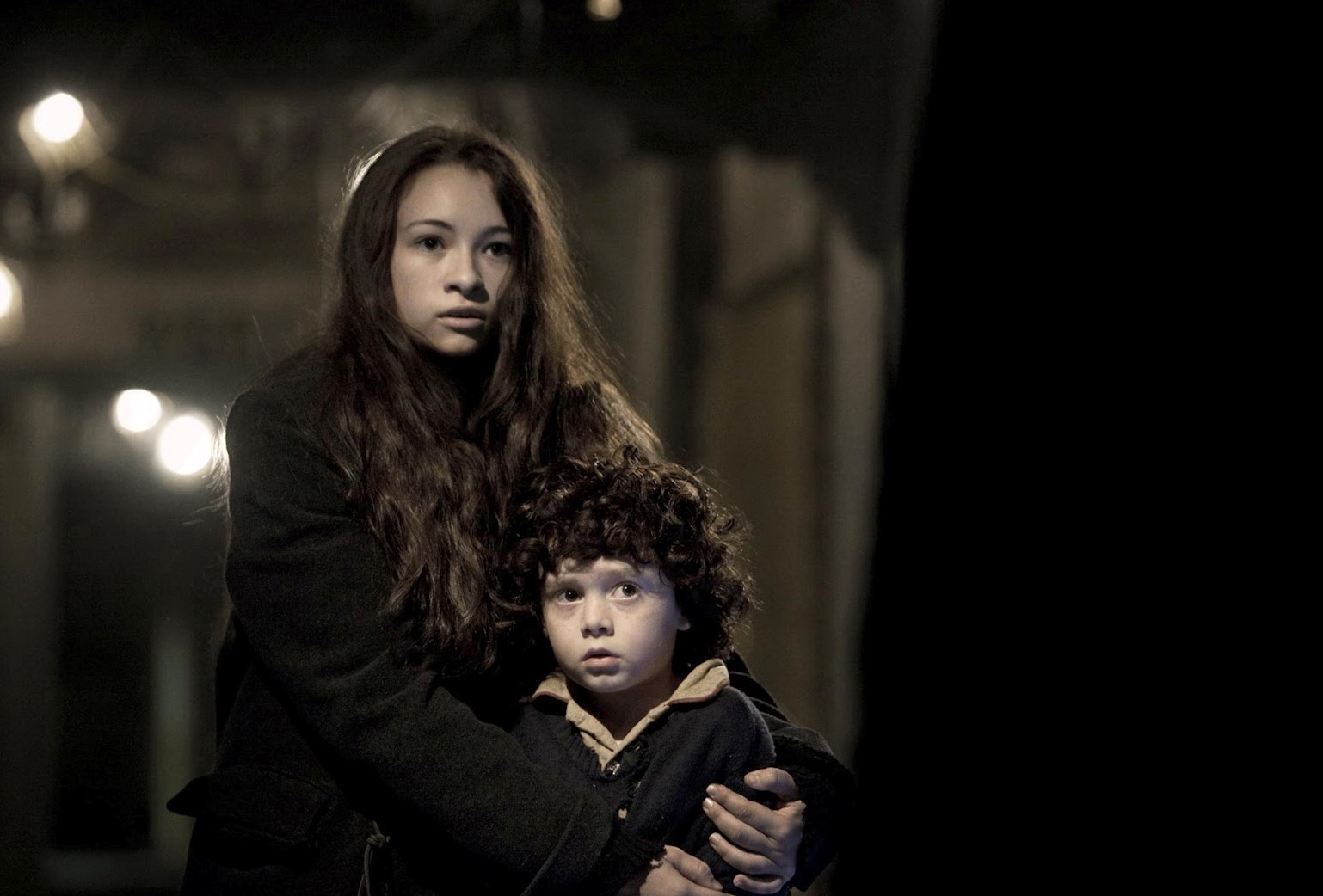
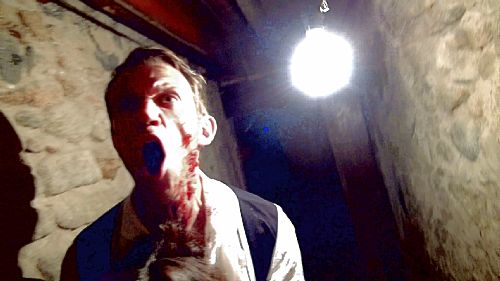
Rob Zombie is an anomaly. Not as polarizing, or as generally reviled as Eli Roth or Tom Six, as unfairly neglected as Greg McLean or Neil Marshall, nor as easily forgotten as James Wan and Darren Bousman, he is a horror filmmaker who has been nailed to many different crosses. Though most of us still remember when he made his living making metal music and the kooky videos that went with them, his switch from music to movies wasn't as inevitable (or, ahem, misguided) as the transitions made by Prince or Madonna, as enigmatic as David Byrne, nor as left-field and misguided as Fred Durst or Mr. Oizo. Zombie's a director without a steady cult, someone who's never made a film that we can all agree on. Unlike Roth or Wan his movies have gotten steadily better as he's steadied his craft and figured out what sorts of stories he wants to tell, even as he's often constrained by the demands of an increasingly horror-phobic studio system. But this past year, to my gratitude, the money was on his side, and he was given total creative autnomy on a project of his choosing and the result is Lords of Salem, a witch-burning film that despite clearly attempting to make it look and move like many others, speaks in a voice that could only be Zombie's. Mixing ghastly psychedelic imagery with disarming, effecting realism, Lords tells the story of a woman who falls prey to an ancient curse brought on by a coven of witches (played with Gleeful abandon by the always welcome Dee Wallace, Meg Foster, Patricia Quinn and a truly awesome Judy Geeson) and a satanic vinyl record. In other words, this movie speaks an old language. The question is, who's fluent these days? Lucas Mangum and I both gave it a whirl.
Lucas Mangum So what did we think of Lords of Salem?
Scout Tafoya Even as I was aware of what was going wrong from a narrative standpoint, even as a few lines of dialogue struck me as Zombie trying a touch too hard to sound unforced and normal (which...what ambition!), even as he goes too far in his penultimate freak out into Altered States territory than the film can quite handle, I was equally aware that I liked the film too much to let the problems outweigh the overall effect. Or to put it simply, I'd decided I was going to love it and I did. I like Zombie. I like him as a person as well as an artist.
I'll now refer everyone to my writing on Zombie's Halloween Films here only because Lords of Salem is the film I was wishing and hoping for when I walked out of Halloween 2. It's a horror film but the mean-spirit of his previous work has been channelled into something a little more watchable and understandable (drug addiction and sacrificial murder, as opposed to senseless murderings for the helluvit) and thus a more ambient, lived-in movie emerges. It's basically horror-as-status-quo, which is, far as I can see, kind of its own genre. The Witch Who Came From The Sea and Maniac are sort of up this alley, but they go from straight to crazy with no discernible attempt to shift the tone accordingly. Suspiria nearly achieves something similar, but I thiiiink that's because Dario doesn't speak great English or concern himself with, as he puts it, "Cartesian storytelling." Zombie is basically making an old-fashioned slice-of-life film, or maybe a better analogy is that he's making a 70s crime film, but he's replaced a heist with witch burning. Sidney Lumet efforts like The Anderson Tapes or Dog Day Afternoon jump out, because again, it's the lives of the robbers that makes the action worth watching.
I also share that piece above because I stand by the sentiments and think they apply to Lords, even if he has begun to learn from his mistakes. He's mostly maintained that beautiful unrehearsed acting style from his players, and given some of my favourite forgotten actors a chance to play it more or less straight - Ken Foree is perfectly cast, Bruce Davison and Maria Conchita Alonso don't strike me as the perfect married couple, but individually their performances are excellent and I liked the idea that Zombie thought they could convincingly play married. He's actually a far more romantic filmmaker than anyone gives him credit for - his depiction of married life is, when it's not relevant to show otherwise as in the case of Mr. and Mrs. Myers, idyllic and lovingly detailed. Also, dig the way he shows the hopeful romance/friendship between his leads. That wide shot of Whitey on the docks is heartbreaking, not to mention beautiful in that early John Boorman way.
And the Boorman quote brings me to the film's strengths. It takes its reference points in stride (the exception being the Ken Russell nods, which stick out more than they should, but, whatever, that's more a problem in mixing music video theatrics, Animation and Live action when the live action has been up to this point very well grounded - Zombie evidently didn't realize how well he'd been doing) and creates something purposefully familiar but also spins it in a way we've never seen. The compositions, those purposeful zooms, the truly bad-ass images of the witch sabbaths, we recognize them from staples like Argento, Carpenter, Coscarelli, Kubrick and Boorman (I love the shoutout to the Zardoz head!) but also lesser known influences like Mark of the Devil or Otakar Vávra's The Witch's Hammer. But the reason the appropriation works, for me, is because they're presented just outside the fringes of lives I buy, ones that involve flirtation, record players and NA meetings. He believes in his characters and their environments and sells them flawlessly. Even the villains are believably clique-y and lovable. That they're also played by genre regulars given straight roles to go to town with, the thing I liked best about his Halloween films, is icing on the cake. He's an actor's director, even if it looks like his images took years to dream up and choreograph. Just look at Dee Wallace and Patricia Quinn! They look like they're having so much fun! Wallace's hair alone is more shading than many characters get in their own movies. And how fearless is Meg Foster?! Furthermore, I feel like Sheri Moon, at this point in her life, wouldn't just take her clothes off just because - she's gotta love her husband and believe in his ideas. The space he gives his actors delivers a sense of his world view and what a giving director he is, to cast and audience alike.
In preparation for writing this I watched a film called Reverb, which takes a different approach to a similar idea. Made and shelved in 2007, it concerns a rock musician and his girlfriend given a cut-rate deal at a swank recording studio because a friend works there. They become obsessed with a song and in the wake of hearing it and falling under its spell the guy feels a creative breakthrough and follows his muse to strange ends. His girlfriend, freaked out by his obsession, finds out the origin of the phantom song and the creepy dude who wrote it. It's mostly nonsense, the studio's too clean except for a token echo chamber/kill floor, no metaphor emerges about the recording process (which is especially pathetic considering how easy that would have been) and the filmmaking's far too slick. In short, I don't know anything about the director from watching this movie. I know loads about Zombie from his few films and his muscular stylistic/grammatical evolution. He was out to provoke at first, but his worldview has since emerged through his constructions. I know the movies he likes, but I also know his opinion of people, his humanity, his ideas about what makes for a good life lived well, how far people can fall and still be up for forgiveness. And the more I learn about him through his movies, the more I like him. Plus...I mean, come on. Vinyl as the messenger of Satan? Witch burnings? Ken Foree as a DJ? Paisley wallpaper as a sign of impending doom? This thing was made for me.

Did you take to it as much as I did?
Lucas First, I have to mention that what stands out the most in the film is Zombie's adoration, not just of horror, but of film. From the wallpaper in the apartment to the camerawork, this is a guy who just loves the art of filmmaking. As much as I enjoy his music, I almost wish he would've devoted his earlier years to film, so we could have a larger body of work to explore. The dude is clearly educated on the medium and isn't afraid to show it. Hopefully we won't have to wait another four years for his next film.
I'm not sure if I like it as much as Devil's Rejects, because that film had so much to say about moral ambiguity and how a quest for revenge can really twist somebody. Lords of Salem, to me, was just him telling a story, which is fine because it was a damn fine story. If I don't like it as much as Rejects, it definitely comes in a close second. While his love of film and horror is ever-present, it never takes away from the story, never slides into being a mere tribute to the movies he likes. I'd dare say that the first two thirds are perfect. I liked the gray tint that the film has and even though I couldn't help but shake my head when I saw that Sheri Moon's love interest looks suspiciously like Rob himself, I really liked the two main characters and their dynamic. Their back and forth really revealed the complexity of their relationship and I felt like they were people I knew, which is a golden ticket for me whenever I'm reading about characters in a book or viewing them on the screen. Though he borrows liberally from Kubrick, Polanski, Argento, and even Paranormal Activity's Oren Peli (who also produced Lords of Salem), it never once feels derivative. Again, I think that's because of character, but that could just be the writer in me.
I had mixed feelings about the third act. I mean, I liked what I saw, but only because I'm a huge Rob Zombie fan. The freakout scene with the goat-riding, the grinding black metal dude, and the melting Jesus face could have easily come from any White Zombie video. So as a Rob Zombie fan, I liked it. As a movie fan, I'm kind of up in the air. At least when it comes to how everything played out in the end. I did like the final shot of Sheri though. There was something very humanistic about showing her that way after experiencing all the horror. It also gains points for being very deliberate, which a few years ago, his detractors would've surely said he wasn't even capable of pulling off. The three witches were great. The concept was fun. And the protagonists are likable, especially Sheri, who shows us that she is more than capable of playing a dramatic role. I'd say it's a winner.
I plan to watch it again and again, because there was something really refreshing about it.
Scout Agree, though this is definitely my favourite of Zombie's films, by a comfortable margin. Those compositions are...epic. Those alone place this in my tentative top ten for the year without breaking a sweat. As for your reservations, I concede that the Altered States style animation and the black metal dude were missteps that take us out of his leading ladies believable and perverse suffering, but these are forgivable sins, I think we can agree, because after all he's trying to unseat us. He just also accidentally unseats the narrative for a few seconds.
I think you're right to make mention of Peli. That guy evidently had enough money to produce a whole fleet of horror films (hence the slew of James Wans coming out left and right...jesus that man annoys me) and chose to fund a Rob Zombie in amongst the Chernobyl Diaries and Insidii (the plural of Insidious, of course). This is the smartest thing he's done since making Paranormal, and I like this film far better than Paranormal because I feel like that film took a little time and calculation and Lords took a lot of very specific detail and a very peculiar sensibility honed over many years. Again, I don't know shit about Peli from watching his movies, but I'm grateful that he chose Zombie to make something that ultimately has nothing to do with his particular brand of films. Brave choice considering how commercially iffy Zombie's been in the past and since it gave me this film, I'm grateful.
The more I think about it the more this film and its rhythms, sexuality drenched in hopelessness and the grainy look, the more it reminds me of the kind of outre desert horror films made in the early 70s. The title appearing next to the goat head is what first alerted me to the similarity, but the priest scene is a great example of capturing a feeling of hopelessness inherent in the films being made in the first place. The Wrong Way, Blood Freak, Bloodsucking Freaks, things that make Al Adamson movies seem not just professional but safe. Movies with no one who ever made another film in the cast, so there's no proof they weren't actually killed. I recently bought a Vinegar Syndrome double feature DVD whose A-side was The Suckers, the apparently legendary lost porn-version of The Most Dangerous Game. That film has the same kind of hopelessness but of course in the Zombie it's intentional, whereas in the past it's been because I've looked through the story (what little there is) and into the lives of the creators. There's always an edge to movies like that, like they shouldn't exist; like some bikers killed a guy for a camera and the resultant film was a confession.
Zombie captures a bit of that quesy magic here, more so than in Devil's Rejects, which is a little too production-designed to ever lose itself entirely in the mileau. No film with that ends with "Free Bird" could ever fool anyone into thinking there was any real murder in it. Lords has a kookiness to its images that occasionally takes you out of the professionalism and those delicious tracking shots and into the weird America of yesterday. You can't make a movie like The Suckers today because the danger and mystery of the production can't be faked. You cannot get lost in this country today; you're always accounted for. Lords harks back to a time when the 70s seemed especially long because movies would just appear in drive-ins and grindhouses with not a single name you'd heard before. It gets close to achieving that very much missed sense of despair that can sometimes come of watching American roughies of a certain vintage. And I think he gets there by not making this a routine scare-a-thon. He's not trying to scare us with his repeated image of topless, goat-headed women, or of witches flailing away by fire-light, he's just trying to fill our heads with evil, the way the catholic league of decency always assumed rock music did.
What do you think Zombie's ambition was for this film? Clearly it was sort of a commission, even if the ideas were all very obviously his, but do you think he was after something, a place in some particular canon?

Lucas I think he was going for something classic this time around. Not classic as in throwback, but I think rather than take the paths of more recent horror efforts, he was in it to give us a simple yet effective horror film. Horror over the last ten years falls into three categories for me. The first category is that of some sort of endurance test for the viewer; films like Saw and The Collection fall into this category, and Zombie himself has been guilty of it from time to time. The second category is the tribute/parody/remake where you have your Cabin in the Woods and Evil Dead. Then you have the low-budget stuff, which at best gives us Absentia and Paranormal Activity; at worst we get the stuff that just seems like a couple of drunks bought a DV camera and decided to run around an abandoned house with the night vision on. The most recent efforts that Zombie's film is comparable to would be Ti West's House of the Devil and The Innkeepers. I mention those films, because like Lords of Salem, they seem to really stand out from the majority of today's horror films. They look to the past, but rather than copy it, they pick up where the greats left off before the three aforementioned categories became such staples in the current state of the genre.
That's what I feel Zombie set out to do.
Scout And I think he achieved it, with flying colours.
Lucas You're absolutely right. It was a truly refreshing experience, and I think it will get even better with subsequent viewings.
In assessing the best horror films of 2012, I realized my scope wasn't as broad as I would have liked. I love horror, live and breathe it, but my confidence has been lately rattled. So I needed the opinion of someone who took chances and who still believed in the genre. So I asked Lucas Mangum, friend and author of Goblins and Abhorrent to augment this feature with his own list. I'm still a believer but I have doubts; Lucas' faith is unwavering, I trust his judgment and I'm thrilled to have his take to share with you! I love that our lists diverge so much. For my part there were scarier films this year (Snowtown chief among them) but I wanted to stay within the confines of the genre and so only chose out-and-out horror movies. Prometheus, for instance, has one of the most frightening and gruesome sequences of any film this year, but it's very clearly a sci-fi movie before it's a horror film.
Scout
10. Citadel
- A slight thing, but i'ts the craft that brings this up to snuff. It's a small thing, but the score makes such a difference; a rich and beautiful thing that lends weight that might otherwise have slipped through the film's fingers. Not that it's not a harrowing experience, but horror movies made on the cheap need all the help they can get, because honestly, I've seen much of this before. Philip Ridley's very fine film Heartless covers the same territory, if perhaps less claustrophobically. Citadel doesn't reinvent the wheel, but you feel every blow, scrape and fall that our terrified hero encounters. And the ending is boss enough to make up for an underlying cruel streak I wasn't entirely on board with.
9. Theatre Bizarre
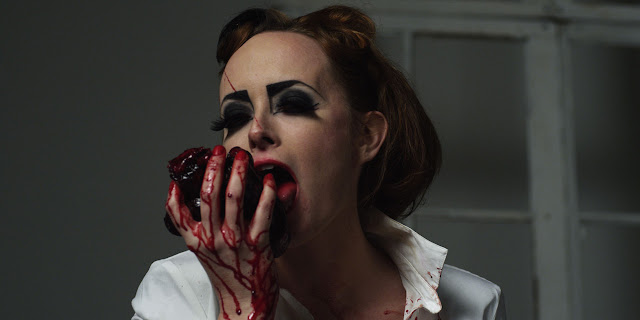
- Rarely do horror films have teeth like this. Rarer still do you find an anthology worth watching back to front. Theatre Bizarre sustains its grim, unsparing tone throughout its many segments and never relents for a moment. It builds slowly until the things it shows you are well beyond decency and taste and exist on a sublime plateau of disgust, bile and otherworldly beauty. As a fan of Ken Russell and having nearly fainted after watching The Girl With The Golden Breasts, his contribution to the decent omnibus film Trapped Ashes, I'm well aware that portmanteau films are often forces to be reckoned with. I wasn't at all shocked to hear about the fainting spells and walkouts that greeted this movie wherever it played and even if those stories are apocryphal, be aware: Theatre Bizarre takes no prisoners. Standouts include those by fellow Emerson alum Jeremy Kasten, whose host segments are endearingly warped, and David Gregory, whose finale segment is gorgeously composed and, pun intended, more than a little sweet.
8. Sinister

- Now look, I'm no fan of Scott Derricksen. His last two films were abominable and I've skipped his work on direct-to-dvd sequels because, well do I really have to explain that? And in truth he still fucks up an awful lot in this, which still must be his best film: the performances range from whatever to bad, the script is a classic example of a Roger Ebert 'idiot plot,' and I didn't give a goddamn about anyone in this movie and thus could neither enjoy nor lament the fate of its lead characters. That said, this film can be incredibly scary when it gets out of its own way. The demon at the core of the story is a terrifying creation and largely he's handled very well (a last-minute jolt appearance is really mishandled and dumb) and the ghostly children who enter the story at around the halfway point get some great moments. But what makes this worth watching is the found footage portion of the movie. I was supremely bummed out to discover that almost no part of V/H/S even pretends to be shot on VHS, but when I saw that this movie featured haunted Super 8 footage and they actually put in the effort to make it look the genuine article, I got real forgiving of the dumb shit making the plot happen. The opening shot of four hanged bodies is fantastic, a scene involving a lawnmower is far more terrifying than it ought to be, and any film that posits a hidden unearthly magic contained in celluloid's got my respect. If the film ever approaches art, it's in the making of those murder films.
7. The Bay
- Barry Levinson started his career right as disaster movies were coming to a close. The Irwin Allen school of "replace dayplayers with football players and blow shit up around gone-to-seed icons"filmmaking was on its way out. Levinson was, for a time, more interested in three dimensional characters. So leave it to the man who made Diner to make one of the most comprehensive horror movies about people ever made. Levinson is one of the few people to do a found-footage movie right by treating every denizen of a town who ever passes in front of one of the many cameras he pulls from as a real person. No one is there to get killed, which makes them dying wholesale all the more horrifying. Best of all, he works the scares organically into his concept.
6. The Awakening
- Rebecca Hall and Dominic West in the same movie, you say? I'm listening... It's a post-war anxiety ghost story set in a boarding school? Stop drilling you've hit oil! It could have a few more scares, sure, but between the tender performances, angrily broiling subtext and splendid period recreation, I had a fantastic time solving this mystery.
5. Kill List

- Anyone who's seen Kill List will probably shutter at first mention of "the hammer scene."It's about a half hour or so in and at this point we know very well that our two in-name-only heroes are dangerous, unhinged and very bad company. What we don't quite know is what director Ben Wheatley's going to do to make sure we know how far down the blood-soaked rabbit hole we'll be going. They've tied some poor bastard to a chair and you know it's going to end poorly for him but we don't know how poorly until one of them grabs a hammer. In a feat of special effects I haven't been able to parse out (as it should be), his kneecaps are smashed before a quick cut to black saves our eyes from eternal damnation. The film is horror from this point on. It ends up going on a truly wild tangent that puts us in Wicker Man territory, but that visceral feeling of watching someone apparently beaten to death in front of our eyes for a split second never diminishes. Ben Wheatley's clinical viewpoint never gives into the violence he depicts, making it all the harder to watch because he's so firmly in control; he wants you to see everything. This film has guts to spare.
4. Livide: Blood of the Ballerinas

- A slight affair, to be sure, and one limited by what was surely a tiny budget, Livide is nevertheless a stunning piece of filmmaking. I went on at length about how much I hated the directing duo Julien Maury & Alexandre Bustillo's last film, Inside, for featuring egregious violence to a baby (they later went on record as having had that thrust on them by producers, but that really wouldn't have saved the movie from being a pointless wallowing), but for whatever reason I was willing to give them a second chance. As we'll see below as well, this paid off handsomely. A riff on Suspiria that actually does something about its fixation on motherhood (albeit just as diffusely), Livide has an otherworldly story-within-a-story that makes it something like the horror film's answer to Tabu. Strange and dreamlike and because it doesn't invest its framing device with all that much intrigue, you don't mind when it goes deliciously off the rails and into the surreal and impressionistic.
3. The Tall Man

- Speaking of second chances, the only french horror film I hated more than Inside may have been Martyrs, an artless slog through misery whose point was just that. Granted I'm not a huge fan of New French Extremism as a whole but I was really unfavorably inclined toward those two - the movements' best films are the ones that unimaginative critics lumped in there because they didn't know what else to do with them (I'm sorry but works of art like La Vie Nouvelle and Pola X do not belong in the same company as cinematic hatefucks like Martyrs and Irreversible, thank you very much!). The movie I enjoyed the most from this groundswell of French horror was probably Frontiere(s), for sheer lunkheaded entertainment value. So when these enfants terrible started turning in sophomore efforts, I paid attention to see what maturity might look like from the world's pre-eminent shock hawkers. The man behind Frontiere(s) went Hollywood with his risible adaptation of Hitman and then the truly abysmal and nihilistic The Divide. Bustillo and Maury tightened up with Livide, but the real evolution was in Pascal Laughier, director of Martyrs. His newest film, and English-language debut, The Tall Man starts off already feeling like a major aesthetic improvement. The camera work is heavy, strange and fleet. You can feel the despair in every footstep its lead characters take and every piece of debris littering the lawns of the pacific northwest town it's set in. Then the story takes off: someone or something called The Tall Man is stealing children from the destitute parents of this town. And just when you get a fix on who or what it might be, the story begins doing logical gymnastics until you're no longer sure what kind of movie you're watching. I was first intrigued, than captivated, then thoroughly impressed. This was no longer just a horror film in the traditional sense but a beastly morality play with no easy answers. Laughier finally found something worth saying and a sure-footed way to say it. My hat is off to you, sir, and I ask your forgiveness for doubting you.
2. Berberian Sound Studio
- I'll save most of my breathless praise for this film in my master best of the year list, because believe me this movie is special, and simply say that as a horror movie about the making of horror movies, it's both incredibly cine-literate and genuinely unsettling. No other film like it this year.
1. The Woman In Black

-I could go on and on about the resurgence of Hammer Horror and this being the first true example of a return to form for the company (what with the lavish art direction and period set design and so on and so forth); that they got everything so right for their return that they even found someone who looks like a cross between Ralph Bates and Shane Briant to play the lead. But really the reason this is my favourite horror film of the year is a matter of mechanics. Daniel Radcliffe walks into a room and a rocking chair is moving on its own. At this point the seasoned horror fan knows exactly what's going to happen - he's going to approach the chair, at which point it will stop rocking and something will then jump out and surprise him. Knowing this, the anticipation builds. What will be the thing that jumps out? From where? The waiting is sweet agony. It's stop being disingenuous - it's easy to jump out of a closet and scare someone and director James Watkins isn't going to deny that there's a man in the closet, he's just going to punish you for knowing about him by making you wait. You see the set-up, you know what must happen, and then it does and it's more frightening than you could have imagined. This is a horror film with all the gears exposed; I knew when and how I'd be scared, but I was still completely flattened by those moments when they happened. That is what I call great filmmaking.
Lucas Mangum
10. Deer Crossing
– While much more of a crime thriller than a horror film, it has a pervasive
darkness to the overall film that will really appeal to horror fans. Somewhere between Bad Day
at Black Rock and The Texas Chainsaw Massacre, writer/director Christian Grillo offers up the contents
of his subconscious. And it ain’t pretty. Big props especially go to K.J. Linhein as the deranged
Lukas Walton.
9. Paranormal Activity 4
– Is the franchise getting a little old? Yes. However, in this entry, the
filmmakers seem to recognize this. In addition to the usual jumps that we’ve come to expect, this
entry is given a much needed sense of humor and self-awareness that keeps it from being tired.
It’s on par with the third and more interesting than the second.
8. Amateur Night
– V/H/S was a highly anticipated found footage anthology horror film that
came out this year. There was a lot to love, but it just wasn’t the game changer I was hoping it
would be. Maybe it was my fault for overhyping the film in my own mind. That said, it does
feature some of the best work in horror this year. Case in point, Amateur Night from director
David Bruckner. It’s a great execution of a wild night gone wrong and I dare anyone to watch it
and not hear Hannah Fierman saying, “I like you,” in your nightmares for months to come.
7. Lovely Molly
– After thirteen years Eduardo Sanchez (one half of the team that created
The Blair Witch Project) gave us this atmospheric, creepy possession flick. The real star here
is definitely Gretchen Lodge as the titular character. She manages to be both beautiful and
threatening.
6. Universal Soldier: Day of Reckoning
– I know what you’re thinking. "What the fuck is a Van
Damme movie doing on a horror movies list?" Hear me out. Director John Hyams took a
lot of risks with this film. While it is a continuation of the franchise (sixth if you count the two
made-for-cable sequels), he takes it in a dramatically different direction and ends up with the
best film in the series. Relying on horror movie aesthetic and cringe-worthy realism to the fight
scenes, he crafted what is essentially a twisted hero’s journey. By the end the viewer is left with
a sentiment not unlike what he or she would feel after watching most contemporary horror films.
5. 10/31/98
– Yep, a part of V/H/S lands on this list twice. This time it’s the segment directed by
filmmaking collective Radio Silence. You just can’t go wrong with this piece. It has characters
that you give a shit about and is mostly set within a truly scary haunted house. I loved the hands
coming out of the walls.
4. The Innkeepers
– For some reason, I didn’t remember that this one came out this year. With
The Innkeepers, Ti West knocks another out of the park with his brand of subtle, atmospheric
horror.
3. Detention
– Evan Dickson over at Bloody Disgusting described Detention as something like
Scott Pilgrim vs. the World meets Scream. I’d probably add meth into the equation. This one has
to be seen to be believed.
2. Absentia
– I saw a clip of this early in the year and was intrigued, but almost forgot about it
until I saw it on Netflix one day. This film deserved better than it got. Relying on subtlety instead
of in-your-face gore, Absentia recalls atmospheric greats like Phantasm and Jacob’s Ladder. Very
little is seen of the monsters, the characters are achingly realistic and the film insists on taking
itself seriously even as the outlandish details develop. I can’t say enough nice things about this
film.
1. Cabin in the Woods
– Anything I can say about this film has probably already been said. It
is not just a study in the tropes that populate the genre; it recognizes the need for the genre to
evolve, then demands that it happens. My hope is that every horror filmmaker or aspiring horror
filmmaker has watched this and will take it as a challenge. The genre must try new things and the
age of remakes must come to an end. Amen and amen.
**Disclaimer: I haven’t seen John Dies at the End, Kill List or Chained yet, so come February,
don’t be surprised if my Facebook status update says something about one of them being the best
of this year.**
You can find Lucas Mangum at http://www.lucasmangum.wordpress.com and on twitter @LMangumFiction