Showing posts with label ti west. Show all posts

Jesus Gonna Be Here

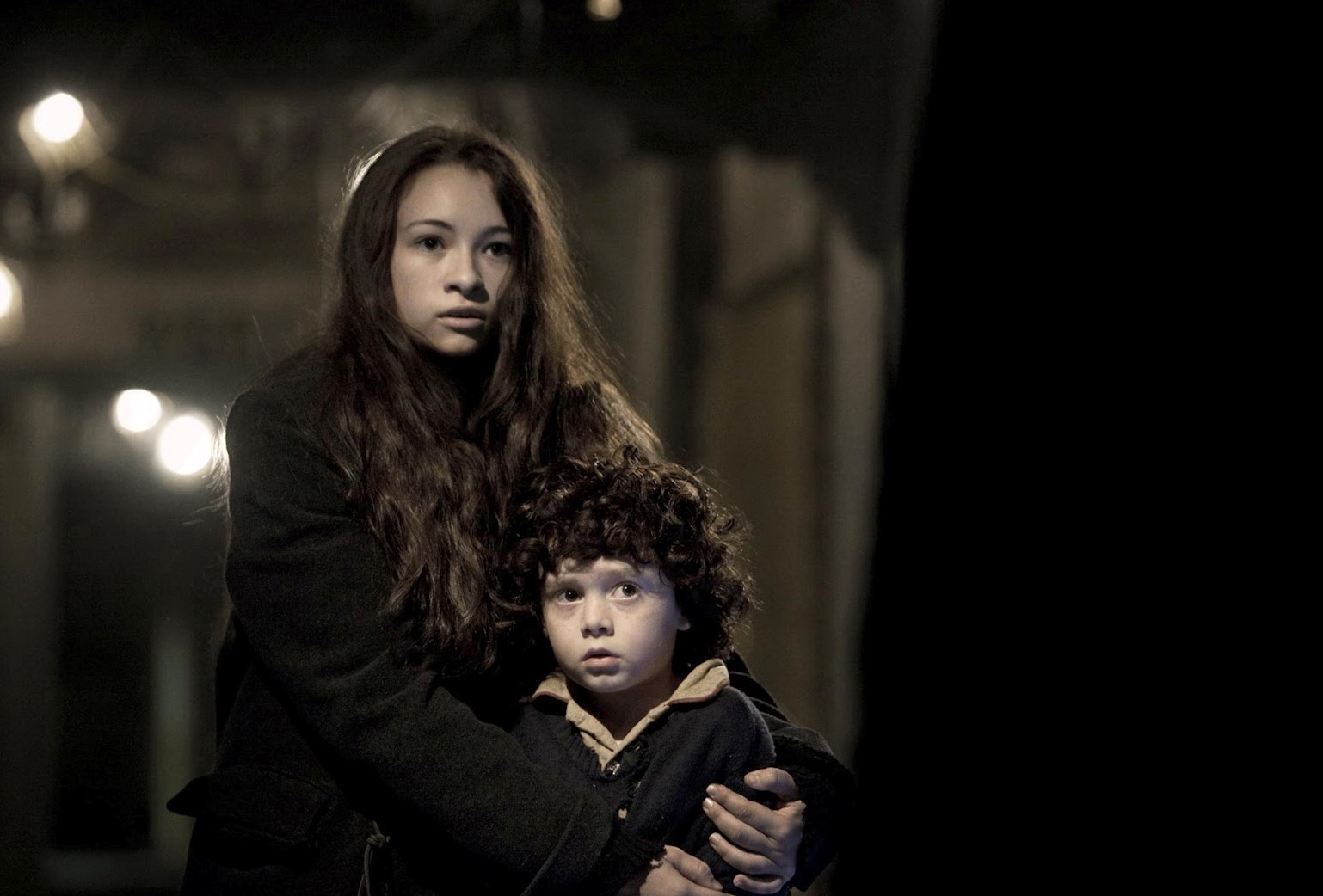
One of my favourite films from last year, the moody cannibal poem We Are What We Are is about to hit screens in the UK, so the fellows at Mostly Film have kindly let me rap about its brilliance. Stand-up guys, the Mostly Film team, and I've been honored to write for them. I've written about We Are twice on these pages, but never quite got to the heart of the matter, so I'm thrilled I got to go on at length about what it gets right. Below is my previous entry on the film, when it made my best films of the year list and topped my best horror list. 

There may be better films this year but none that managed to be completely absorbing drama as well as a very effective horror film and one of the finest remakes I've ever seen. Jim Mickle's been getting better with every film and here we arrive at something on the level of Ti West's House of the Devil, though it's far closer in style to The Innkeepers. A wife and mother of three dies, leaving them to carry on in her absence as an important ritual draws nearer. Bill Sage's father is the source of the film's terror, himself a kind of walking jump scare. Religious fervor is the subject, and the faces of children a series of reflections. Watching the way Sage trying to get his son to sing Tom Waits with him says so much about the kind of life he's inflicted on his kids. It's frightening as anything in the moment when something unexpected comes into the frame without warning, but the scare lasts longer when it's against a child's hope of the life they want. The eldest daughter's dream doesn't include her father or his way of life, and in the film's most abrupt, violent outburst, he becomes the most scary force she's ever encountered. Everything she's ever believed is shattered, and yet she can't bring herself to turn away because family is all she has. The real injustice of religious indoctrination. Mickle's film overflows with moral conundrums but none he harps on. They merely colour the precedings as things spiral further and further out of everyone's grasp. We Are What We Are grew in my estimation with every day that passed. A remake, yes, but a haunting, lovely visit with some cannibals hiding away in the woods instead of the original's percussive visit to the lower depths. The more I ruminated the more I remembered every rainy composition on the fringes of the story. Mickle is a master at flow and he's far more interested in perspective and implication than traditional build-and-release favored by many horror maestros. If there's going to be blood, he doesn't hide it. He's a dramatist at heart, wringing more tension from the inevitable than the unknown, he just happens to love horror trappings. His voice is becoming clearer with every film and this is by far his most mature and enthralling work. 

As Difficult and Tedious as ABC

Horror anthologies are almost as old as straight-up horror. There are bonafide classics (Dead of Night) and worthwhile curios (Black Sabbath, The Asylum) throughout the history of genre films and now it seems they're making a comeback. Last year's V/H/S and The Theatre Bizarre rekindled our collective interest in watching masters and new voices alike tell tiny stories on a theme. Or just seeing how much depravity can be packed into a few minutes. The latest in the craze, The ABCs of Death, with 26 directors tackling a different segment for each letter of the alphabet, leans heavily on the latter, with critics finding it largely an endeavor worth forgetting. As fans of the craze, Lucas Mangum and I gave it a shot to see how it stacks up and what it says about this moment in horror.

 Lucas Mangum So at long last, I ask: What did we think of ABCs of Death?

Scout Tafoya Well, it's hardly worth saying anymore, but some segments make others look like utter dreck. No theme seems to link them and few do little more than embarrass themselves. Some do even worse. So what we'll more than likely wind up doing is picking a few we love and discussing the ones worth discussing....so, allow me to start! I found the first three are mostly boring and started losing hope. Ernesto Diaz Espinosa does Nacho Vigalondo's Timecrimes, and Vigalondo does his own Extraterrestrial in 2 minutes.

Z has a warped early 90s energy that I half-heartedly applaud - I've seen it done better. X sort of gets there, but gets no points, what with its barely stomachable premise (PUNS!) and half-assed execution. I like director Xavier Gens' debut film (he's the only director who took the letter of his first name, if that counts for anything), even if he's struck out since then and was hoping for a glimmer of hope, that he'd return to being good at being bad. I got half of what I wanted...

Some of the folks I was most excited for supremely let me down. Angela Bettis, the only female director, seemed to have trouble executing her premise. The terrible CGI helped not at all. Andrew Traucki and Ti West, two legitimately great filmmakers, an actual fucking master in West's case, seem to have knocked theirs out in an afternoon. They don't exactly look worse for their involvement, but they probably should have politely declined, rather than get fans hopes up for something worth their personal touch. Ok, maybe West does look worse. The man made House of the Devil, for Christ's sake. He's a genius.

It was the work of Timo Tjahjanto, Hélène Cattet, Bruno Forzani, Ben Wheatley, Jason Eisener, Jon Schnepp, Jorge Michel Grau and Simon Rumley make the endeavor worth while. Tjahjanto, who we'll next see in V/H/S 2, at least does an awful lot of very convincing work with production design, performances and creatively gross nonsense. I'd rather have more to think about than less, even if I only like 2/3 of his ideas. Jason Eisener's isn't as good as it could have been, but I heartily applaud the art direction. Simon Rumley's is better and more interesting than his feature films. Schnepp's is hilarious and very off in a way I find appealing. Grau proves he's got more up his sleeve than just his marvelous debut, using texture just as splendidly as he did in We Are What We Are. Looking forward to his work on the sequel! Ben Wheatley's was far and away the funniest and most charming, the POV being put to devilish use and the writing and direction on par with each other; rare here. And you can't throw enough money at Cattet and Forzani for my liking. Those two are unstoppable geniuses.

The problem is...well, everything else. I mean, I guess expecting 26 films to adhere to the same standard of quality as its best is...foolish on my part, but with directors famous for movies that barely share the same genre (and fittingly, some barely qualify for inclusion in a film like this) it seems like a fool's errand packaging them together. How could anyone assume that fans of the Cattet and Forzani would like the Noburi Iguchi? The sensibilities are too off for it to ever work, even on paper, what possibility was there they'd work together? So between bright spots I was either bored, repulsed, or both.

Also, I genuinely think that encouraging Jake West and Srdjan Spasojevic is damaging to our culture. West thanks Adam Mason in the credits. He should have just handed him the camera and gone the fuck home.


Lucas I had a hard time viewing it all in one sitting because there was just so much content. By the last 45 minutes I was counting down how many films were left. Not because I disliked everything, it was just a little much to take. I think the filmmakers would've had more success breaking it up more. Maybe if it was a webseries...

I really enjoyed Adam Wingard's segment. It was fresh in the sense that it was funny and didn't involve dicks or toilets. Like you, I felt that A, B & C had their moments (C was at least interesting), but the first segment I thoroughly enjoyed was Marcel Sarmiento's Dogfight. The twist put a nice bit of icing on the cake for me. I also really dug the cartoonish H is for Hydro-Electric Diffusion. It was just too damn whacky for me not to get a kick out of it. Grau's segment was a truly unpleasant piece of film, but it was so effective for that reason. It was, after all, addressing a real-world unpleasant topic. I'd call it an ugly masterpiece. I felt the same way about L is for Libido, but I could've done without the little boys scene. As uncool as it may seem for someone so into horror, I do have my limits. Aside from that, I found it to be a twisted surreal journey through the world of sexual deviance. I respectfully disagree with you over Jake West's segment. It possessed a larger than life comic book style that I quite enjoyed and, while not original, I kind of dug that it was all some drug-fueled death dream. Vagitus was just really cool because it had that dystopic element to it that almost always wins me over when I see it. For some reason W & Z felt really similar for me, and I almost wished they weren't so close together. I guess that would involve fucking up the alphabet.

Scout You bring up an interesting point about pedophilia. Which is to say that films like this, and in their deliberately singling out directors known for extremity in its many forms, the curators must know and most probably hope for and encourage incredibly 'edgy' material from them.
 So my thought is, is there anything left to find in that direction? I can sort of hear "it's like Saw but with 12 year olds" being pitched in a boardroom somewhere. Like, at this point, 50 years after the invention of the gore film and 40 years after its apex with the Cannibal movies of the late 70s, and now with standards relaxed to an all-time low, what else is there? Tjahjanto putting kids in his movie is sort of like paying lip service to the big question mark hanging over the genre. If we can get away with that (and clearly we can), then what else is there left to do? 
I do sincerely hope this promotes a return to classicism and in some ways I can see it approaching (formal elegance saved Kiss of the Damned from being a total bore and the school of hyperactive Asian Frankenstein Girl movies has definitely lost the rabidness of demand it once had). 
I can only hope we get a slew of movies who count The Innocents, Cat People and The Haunting among their influences. Hell, I'd even settle for a new age of surrealism a la Alucarda or Messiah of Evil. The fact that among 26 movies by the world's supposed vanguard produced maybe a half dozen I'd ever consider watching again can't be a good sign.


Lucas 
I even feel like such subject matter can be utilized if the goal is beyond mere shock. Take a film like In a Glass Cage, for instance, in which pedophilia is a huge part of the plot. But that's just it, it's an ugly but complicated story about an ugly subject, not a thinly plotted story where such a sensitive subject is reduced to a gag for shock value's sake.


Scout Which to me is the paradox of the age we're in right now: Nothing shocks anymore, even if it churns stomachs, so why bother? I applaud Tjahjanto's inventive approach to every second of the film and the world he created, but the gag ain't much of a gag, and whether it's girls or boys, they don't mask the fact that he has nothing to say. Maybe it is meant as a commentary on our demand for the most disgusting things. If so, it's in terrible company, because no one else seems to be in an analytic mood. And frankly I'm not sure I'd buy it in Timo's case because of his gleefully sinking to the depraved depths in all their gory details. 

ABCs and V/H/S both thrive on objectification, so, even if their point is "Look how gross men can be," they're perfectly happy sinking into the shit along with them. It's not enough to say that you're pushing the envelope, because the envelope doesn't exist anymore and I think we're experiencing taboo fatigue. We get that you can show anything, so now let's please get back to understanding why we didn't settle for doing that for all those years.

 Even Men Behind The Sun had a point.


Lucas Yeah, I mean, as viewers we can only speculate. I'd love to see if Timo has commented in any way on what his intentions were for his film. Either way, ditto on the rest not being in an analytic mood.


Scout The propensity of actual onscreen toilets as plot points speaks volumes about collective ambition.


Lucas We're not the first to comment on that. You'd think the heads of this project would've said, "Um, we already have 3 toilet segments, sorry."


Scout Makes you wonder if they couldn't have searched a little longer for their contest winning T segment.

..


Lucas 
I think they should've used Maude Michaud's T is for Toothpick.


Scout 
Me too. I only hope that guys like Larry Fessenden class up the joint in the next outing.


Lucas 
Definitely. I will say that I enjoy the fact that something this large was attempted and I think the potential for making something really great is there. A few five minute segments shouldn't have exhausted me as a viewer. It should've left me exhilrated and eager for the next ones.


Scout 
And that is the tragedy of the endeavor. Some accounting of sensibilities should have been taken in the assigning of letters. The three in the front end shouldn't have been so similar, and then it's tonal schizophrenia from then on out.


 I get that surprise and diversity is a big part of the agenda. But it also shouldn't be the worst part of the film. 

The Best Horror Films of 2012

In assessing the best horror films of 2012, I realized my scope wasn't as broad as I would have liked. I love horror, live and breathe it, but my confidence has been lately rattled. So I needed the opinion of someone who took chances and who still believed in the genre. So I asked Lucas Mangum, friend and author of Goblins and Abhorrent to augment this feature with his own list. I'm still a believer but I have doubts; Lucas' faith is unwavering, I trust his judgment and I'm thrilled to have his take to share with you! I love that our lists diverge so much. For my part there were scarier films this year (Snowtown chief among them) but I wanted to stay within the confines of the genre and so only chose out-and-out horror movies. Prometheus, for instance, has one of the most frightening and gruesome sequences of any film this year, but it's very clearly a sci-fi movie before it's a horror film.

Scout


10. Citadel

    - A slight thing, but i'ts the craft that brings this up to snuff. It's a small thing, but the score makes such a difference; a rich and beautiful thing that lends weight that might otherwise have slipped through the film's fingers. Not that it's not a harrowing experience, but horror movies made on the cheap need all the help they can get, because honestly, I've seen much of this before. Philip Ridley's very fine film Heartless covers the same territory, if perhaps less claustrophobically. Citadel doesn't reinvent the wheel, but you feel every blow, scrape and fall that our terrified hero encounters. And the ending is boss enough to make up for an underlying cruel streak I wasn't entirely on board with.

9. Theatre Bizarre

    - Rarely do horror films have teeth like this. Rarer still do you find an anthology worth watching back to front. Theatre Bizarre sustains its grim, unsparing tone throughout its many segments and never relents for a moment. It builds slowly until the things it shows you are well beyond decency and taste and exist on a sublime plateau of disgust, bile and otherworldly beauty. As a fan of Ken Russell and having nearly fainted after watching The Girl With The Golden Breasts, his contribution to the decent omnibus film Trapped Ashes, I'm well aware that portmanteau films are often forces to be reckoned with. I wasn't at all shocked to hear about the fainting spells and walkouts that greeted this movie wherever it played and even if those stories are apocryphal, be aware: Theatre Bizarre takes no prisoners. Standouts include those by fellow Emerson alum Jeremy Kasten, whose host segments are endearingly warped, and David Gregory, whose finale segment is gorgeously composed and, pun intended, more than a little sweet.

8. Sinister


    - Now look, I'm no fan of Scott Derricksen. His last two films were abominable and I've skipped his work on direct-to-dvd sequels because, well do I really have to explain that? And in truth he still fucks up an awful lot in this, which still must be his best film: the performances range from whatever to bad, the script is a classic example of a Roger Ebert 'idiot plot,' and I didn't give a goddamn about anyone in this movie and thus could neither enjoy nor lament the fate of its lead characters. That said, this film can be incredibly scary when it gets out of its own way. The demon at the core of the story is a terrifying creation and largely he's handled very well (a last-minute jolt appearance is really mishandled and dumb) and the ghostly children who enter the story at around the halfway point get some great moments. But what makes this worth watching is the found footage portion of the movie. I was supremely bummed out to discover that almost no part of V/H/S even pretends to be shot on VHS, but when I saw that this movie featured haunted Super 8 footage and they actually put in the effort to make it look the genuine article, I got real forgiving of the dumb shit making the plot happen. The opening shot of four hanged bodies is fantastic, a scene involving a lawnmower is far more terrifying than it ought to be, and any film that posits a hidden unearthly magic contained in celluloid's got my respect. If the film ever approaches art, it's in the making of those murder films.

7. The Bay

    - Barry Levinson started his career right as disaster movies were coming to a close. The Irwin Allen school of "replace dayplayers with football players and blow shit up around gone-to-seed icons"filmmaking was on its way out. Levinson was, for a time, more interested in three dimensional characters. So leave it to the man who made Diner to make one of the most comprehensive horror movies about people ever made. Levinson is one of the few people to do a found-footage movie right by treating every denizen of a town who ever passes in front of one of the many cameras he pulls from as a real person. No one is there to get killed, which makes them dying wholesale all the more horrifying. Best of all, he works the scares organically into his concept.

6. The Awakening
    - Rebecca Hall and Dominic West in the same movie, you say? I'm listening... It's a post-war anxiety ghost story set in a boarding school? Stop drilling you've hit oil! It could have a few more scares, sure, but between the tender performances, angrily broiling subtext and splendid period recreation, I had a fantastic time solving this mystery.

5. Kill List

    - Anyone who's seen Kill List will probably shutter at first mention of "the hammer scene."It's about a half hour or so in and at this point we know very well that our two in-name-only heroes are dangerous, unhinged and very bad company. What we don't quite know is what director Ben Wheatley's going to do to make sure we know how far down the blood-soaked rabbit hole we'll be going. They've tied some poor bastard to a chair and you know it's going to end poorly for him but we don't know how poorly until one of them grabs a hammer. In a feat of special effects I haven't been able to parse out (as it should be), his kneecaps are smashed before a quick cut to black saves our eyes from eternal damnation. The film is horror from this point on. It ends up going on a truly wild tangent that puts us in Wicker Man territory, but that visceral feeling of watching someone apparently beaten to death in front of our eyes for a split second never diminishes. Ben Wheatley's clinical viewpoint never gives into the violence he depicts, making it all the harder to watch because he's so firmly in control; he wants you to see everything. This film has guts to spare.

4. Livide: Blood of the Ballerinas

    - A slight affair, to be sure, and one limited by what was surely a tiny budget, Livide is nevertheless a stunning piece of filmmaking. I went on at length about how much I hated the directing duo Julien Maury & Alexandre Bustillo's last film, Inside, for featuring egregious violence to a baby (they later went on record as having had that thrust on them by producers, but that really wouldn't have saved the movie from being a pointless wallowing), but for whatever reason I was willing to give them a second chance. As we'll see below as well, this paid off handsomely. A riff on Suspiria that actually does something about its fixation on motherhood (albeit just as diffusely), Livide has an otherworldly story-within-a-story that makes it something like the horror film's answer to Tabu. Strange and dreamlike and because it doesn't invest its framing device with all that much intrigue, you don't mind when it goes deliciously off the rails and into the surreal and impressionistic.

3. The Tall Man

    - Speaking of second chances, the only french horror film I hated more than Inside may have been Martyrs, an artless slog through misery whose point was just that. Granted I'm not a huge fan of New French Extremism as a whole but I was really unfavorably inclined toward those two - the movements' best films are the ones that unimaginative critics lumped in there because they didn't know what else to do with them (I'm sorry but works of art like La Vie Nouvelle and Pola X do not belong in the same company as cinematic hatefucks like Martyrs and Irreversible, thank you very much!). The movie I enjoyed the most from this groundswell of French horror was probably Frontiere(s), for sheer lunkheaded entertainment value. So when these enfants terrible started turning in sophomore efforts, I paid attention to see what maturity might look like from the world's pre-eminent shock hawkers. The man behind Frontiere(s) went Hollywood with his risible adaptation of Hitman and then the truly abysmal and nihilistic The Divide. Bustillo and Maury tightened up with Livide, but the real evolution was in Pascal Laughier, director of Martyrs. His newest film, and English-language debut, The Tall Man starts off already feeling like a major aesthetic improvement. The camera work is heavy, strange and fleet. You can feel the despair in every footstep its lead characters take and every piece of debris littering the lawns of the pacific northwest town it's set in. Then the story takes off: someone or something called The Tall Man is stealing children from the destitute parents of this town. And just when you get a fix on who or what it might be, the story begins doing logical gymnastics until you're no longer sure what kind of movie you're watching. I was first intrigued, than captivated, then thoroughly impressed. This was no longer just a horror film in the traditional sense but a beastly morality play with no easy answers. Laughier finally found something worth saying and a sure-footed way to say it. My hat is off to you, sir, and I ask your forgiveness for doubting you.

2. Berberian Sound Studio

    - I'll save most of my breathless praise for this film in my master best of the year list, because believe me this movie is special, and simply say that as a horror movie about the making of horror movies, it's both incredibly cine-literate and genuinely unsettling. No other film like it this year.

1. The Woman In Black
     -I could go on and on about the resurgence of Hammer Horror and this being the first true example of a return to form for the company (what with the lavish art direction and period set design and so on and so forth); that they got everything so right for their return that they even found someone who looks like a cross between Ralph Bates and Shane Briant to play the lead. But really the reason this is my favourite horror film of the year is a matter of mechanics. Daniel Radcliffe walks into a room and a rocking chair is moving on its own. At this point the seasoned horror fan knows exactly what's going to happen - he's going to approach the chair, at which point it will stop rocking and something will then jump out and surprise him. Knowing this, the anticipation builds. What will be the thing that jumps out? From where? The waiting is sweet agony. It's stop being disingenuous - it's easy to jump out of a closet and scare someone and director James Watkins isn't going to deny that there's a man in the closet, he's just going to punish you for knowing about him by making you wait. You see the set-up, you know what must happen, and then it does and it's more frightening than you could have imagined. This is a horror film with all the gears exposed; I knew when and how I'd be scared, but I was still completely flattened by those moments when they happened. That is what I call great filmmaking.


Lucas Mangum


10. Deer Crossing

    – While much more of a crime thriller than a horror film, it has a pervasive darkness to the overall film that will really appeal to horror fans. Somewhere between Bad Day at Black Rock and The Texas Chainsaw Massacre, writer/director Christian Grillo offers up the contents of his subconscious. And it ain’t pretty. Big props especially go to K.J. Linhein as the deranged Lukas Walton.

9. Paranormal Activity 4

    – Is the franchise getting a little old? Yes. However, in this entry, the filmmakers seem to recognize this. In addition to the usual jumps that we’ve come to expect, this entry is given a much needed sense of humor and self-awareness that keeps it from being tired. It’s on par with the third and more interesting than the second.

8. Amateur Night

    – V/H/S was a highly anticipated found footage anthology horror film that came out this year. There was a lot to love, but it just wasn’t the game changer I was hoping it would be. Maybe it was my fault for overhyping the film in my own mind. That said, it does feature some of the best work in horror this year. Case in point, Amateur Night from director David Bruckner. It’s a great execution of a wild night gone wrong and I dare anyone to watch it and not hear Hannah Fierman saying, “I like you,” in your nightmares for months to come.

7. Lovely Molly

    – After thirteen years Eduardo Sanchez (one half of the team that created The Blair Witch Project) gave us this atmospheric, creepy possession flick. The real star here is definitely Gretchen Lodge as the titular character. She manages to be both beautiful and threatening.

6. Universal Soldier: Day of Reckoning

    – I know what you’re thinking. "What the fuck is a Van Damme movie doing on a horror movies list?" Hear me out. Director John Hyams took a lot of risks with this film. While it is a continuation of the franchise (sixth if you count the two made-for-cable sequels), he takes it in a dramatically different direction and ends up with the best film in the series. Relying on horror movie aesthetic and cringe-worthy realism to the fight scenes, he crafted what is essentially a twisted hero’s journey. By the end the viewer is left with a sentiment not unlike what he or she would feel after watching most contemporary horror films.

 5. 10/31/98

    – Yep, a part of V/H/S lands on this list twice. This time it’s the segment directed by filmmaking collective Radio Silence. You just can’t go wrong with this piece. It has characters that you give a shit about and is mostly set within a truly scary haunted house. I loved the hands coming out of the walls.

4. The Innkeepers

    – For some reason, I didn’t remember that this one came out this year. With The Innkeepers, Ti West knocks another out of the park with his brand of subtle, atmospheric horror.

3. Detention

    – Evan Dickson over at Bloody Disgusting described Detention as something like Scott Pilgrim vs. the World meets Scream. I’d probably add meth into the equation. This one has to be seen to be believed.

 2. Absentia

    – I saw a clip of this early in the year and was intrigued, but almost forgot about it until I saw it on Netflix one day. This film deserved better than it got. Relying on subtlety instead of in-your-face gore, Absentia recalls atmospheric greats like Phantasm and Jacob’s Ladder. Very little is seen of the monsters, the characters are achingly realistic and the film insists on taking itself seriously even as the outlandish details develop. I can’t say enough nice things about this film.

1. Cabin in the Woods

    – Anything I can say about this film has probably already been said. It is not just a study in the tropes that populate the genre; it recognizes the need for the genre to evolve, then demands that it happens. My hope is that every horror filmmaker or aspiring horror filmmaker has watched this and will take it as a challenge. The genre must try new things and the age of remakes must come to an end. Amen and amen.

**Disclaimer: I haven’t seen John Dies at the End, Kill List or Chained yet, so come February, don’t be surprised if my Facebook status update says something about one of them being the best of this year.**

You can find Lucas Mangum at http://www.lucasmangum.wordpress.com and on twitter @LMangumFiction

I've been to Heaven, you've only read about it.

From the opening seconds of Quills, it's obvious that this is not the work of the Philip Kaufman his fans had come to love. It moves with the feverish pace of quickened breathe. The film has a sense of humour so dark you need first to excavate, sift and polish it, and this becomes evident within seconds. It has the same perplexing mix of murky color palette and silky lighting that characterizes the work of Aleksandr Sokurov and the immediacy and the youthful mobility of something shot on digital. The faces have the same chiseled strangeness and fill the frame with the same aggression as those of Tim Burton, Terry Gilliam and Michael Powell before them. Some might call it a perverse experiment from a man who'd forgotten how to make the sturdy, contemplative genre exercise in favor of a style as garish as his subject, the Marquis De Sade. Another way of seeing it (and as I'm championing it, I'll call it the right way) is that Kaufman had conquered slow-burning eroticism and was after a thrill much more imperative. The camera feels rooted to the spot, like it had grown out of a tree, in much of the director's oeuvre. There's a preternatural stillness to his take on Invasion of the Body Snatchers, the camera and the man behind it apparently aware of something that eluded so many of his peers. And the camera moves with the confidence of a master fencing champion in The Unbearable Lightness of Being. There is a studied quality in his work that until Quills had never given way to the excesses of his frenzied subject matter. Despite having traveled from inhibited bedrooms to the very edge of space, he was ever a patient and forgiving spectator, letting us in on the secrets of people we could only dream of becoming, and that most of us were quite content only to fantasize about. With Quills, he took on the characteristics of his subject, he aligned himself stylistically with the man who sits at its core. Having come off his first major assignment that truly watches like one (Rising Sun) he was as aware of the barb of the critic and apparently sought to lash out in full force, giving the despotic artist the most sympathy despite tyrannical moods no less pointlessly vindictive than Napoleon's. Kaufman stomps as angrily as the Marquis, letting a cacophonous Stephen Warbeck score leave us little doubt as to who's suffering we're meant to empathize with. The public may not understand him and he may be a bit of a shit, but he's an artist and Kaufman knows a thing or two about people comparing his work to Pornography (he's seen the business end of an NC-17 rating in his day - Henry & June's reception still stinging as if they were the lashes endured by Kate Winslet's laundry maid). The marquis' tormentor and Priestly minder are over his shoulder forbidding his work from taking shape unencumbered (or at all). They're the producer and the critic, waiting on either side of the finished product with reasons why and why not. There's even a scene dictating the journey from idea to script to screen, with all the hands the words pass through, likening those who purport to understand and help the process to jabbering, inarticulate lunatics. And his final statement: when the words of artists are not allowed to reach the ears of the public, all hell will truly break loose. Kaufman punishes those who believe that his work would do so much harm as to warrant keeping it out of the reach of children - the words of the Marquis whip the maniacs into a murderous frenzy that sets about destroying many lives. He's ready with a response to this, as well, cruel though it may seem when he hear it. The bible is just as fanciful, the same passion and violence and filth broiling beneath the pious surface. No, there is no keeping art from the masses, try as you might, it will out.

Why am I offering a defense of a mostly well regarded movie over ten years old? Well, first of all there's been a lot of attention circling Kaufman lately. Annette Insdorf just wrote a book about him, retrospectives are popping up all over the place and his new movie, Hemingway & Gelhorn, is going to play Cannes out of competition. The reason I find him so fascinating is because despite having one of the most mature and dependable bodies of work of any American filmmaker working today, critics are always guarded in their defense of him. The Right Stuff was the subject of a BFI Modern Classic, but then again so was goddamn Star Wars and The Matrix. I've never once read a defense of his early works, Invasion of the Body Snatchers is often unjustly overlooked in favor of the original, The Criterion edition of Unbearable has gone out of print, I heard none of his titles mentioned in four years of film school, and he hasn't worked in almost ten years. Why the relative silence? Sex. Just as the works regarded as Kubrickian and Hitchcockian are the product of their namesakes' later work, the films most closely associated with Kaufman, what we might call Kaufmanesque, are those films of his that deal with sexuality in the frankest manner imaginable. Which for Americans, is too frank. Henry & June, Unbearable and Quills, too, are all about the many aspects of sexual attraction; glorifying its intricacies and removing the mystery, making sex plain for all to see. America has a hard time with this most European of attitudes. Perhaps why until lately, his latest works were studio commissions; Quills just happened to come form minds a little more creative than those who handed him the script for Twisted. Kaufman was handed Quills no doubt because he had uncovered all the angles of quiet eroticism. He explored sensuality with the careful eye the subject deserves. For the realm of pornography, he directed with the intensity of a man half his age, eager to get his message to the people with the irreverence and ferocity it deserved. And it's not as though the movie is a screed, either. It's riveting, funny, thrilling, incredibly sexy and terrifying in turn and unless you were someone as in tune with the endless push and pull between executives, filmmakers and critics as I like to keep myself, there's a good chance you could watch the film and simply admire the crazed battle of wits between three kinds of lunatic. In the process of crafting this, his most uncharacteristic movie, he also captured some of the best work his actors have ever done. Geoffrey Rush is of course marvelously out of control, using physicality in a way he doesn't always get to; the whole frame is utilized to accommodate his luxurious body language and never once does he seem overwrought. Michael Caine doesn't often play a villain and here he shows what a shame that is. Joaquin Phoenix is no slouch, but his intensity is especially electrifying. In the flurry of reviews that followed the 3D re-release of Titanic, a critic lamented that in his haste to distance himself from the film, Leonardo DiCaprio has since rarely used his gift as an actor to convey happiness. One could argue that Kate Winslet's been a victim of the same choices in the wake of her breakthrough (though I wouldn't argue that in either case their decision to get serious was a misstep); indeed she and DiCaprio seem to be competing for who can choose the most punishing, austere arthouse drama, which coalesced in their both appearing in the needlessly punishing and austere Revolutionary Road. Let me reiterate, I'm glad they've done this. Anyone sorry that we have The Aviator, Mildred Pierce, Inception, Shutter Island, Contagion and Eternal Sunshine of the Spotless Mind doesn't have cinema's best interest at heart. But Kaufman does something that I call fucking magic: he elicits the same girlish charm and gorgeous smile from Winslet that anyone will tell you Cameron did in the bigger budgeted movie, although in Quills it feels genuine. And furthermore it's wrapped in passion for two diametrically opposed ends, instead of one cartoonish evil and one cartoonish good; freedom of expression drives her laundry maid, but she cannot have both the words of the Marquis and the love of her priest. It's a tug of war you can see her struggling to grasp the depth of (and how beautiful that she manages to communicate that she is struggling with the implications of this knowledge!) and in the meantime she lets her whims run away with her, throwing herself into the pursuit of pleasure with gusto. It's a splendid performance and to cap it off she's rarely looked more beautiful.

"Yes, yes," I hear you saying "you've stood on your goddamn soapbox for X directed by Y in the past." Yes, I know, quite enough of that. My reasons, finally: I do all this not simply because I adore Quills and its director, but because I do firmly believe that no one can judge the work of a filmmaker until you have seen everything they have ever done. Just as a plant is never simply a seed, evolution, growth, development, all of these are beautiful and necessary steps to witness. And is there anything more exciting than discovering something in progress, a life not yet at its potential, about to reach it? Ti West is currently one of the most incredible talents working today, but I don't think I'd appreciate that quite so much if I didn't join him on the climb up. The Roost had rough edges, but it was more than enough fun for me to look past them. Triggerman could have used a touch more weight, but I was gripped the whole time and thrilled that West had done so much with so little. If we go chronilogically we then see his first studio assignment, Cabin Fever 2, a movie taken from him in post. The Kaufman Kinship begins. It's far from good, but it's also far from the movie West envisioned. Years ago, I fear he would have been written off for a misstep such as this, despite it being out of his control. Fortunately he got to the history books first and released The House of the Devil and there stood an artist in such breathtaking control of his form that nothing can now undo his legacy. A film three times as mangled as Cabin Fever 2 would not unseat him; he's in the filmmaking unconscious. He's an auteur. And then, despite some middling reviews, came The Innkeepers, a film that is at once terrifying and heartbreaking, and once again shows growth, as if he's started climbing again. He's even had time to examine his career by playing himself in Joe Swanberg's fantastic arthouse faux-Roman à clef Silver Bullets. And he does it with humility and a self-deprecating sense of humour. Good god! Just imagine what he'll make once he reaches the next peak! This is my point. The Philip Kaufman who released Invasion of the Body Snatchers was, outwardly, simply a man inordinately (I would say overly if I didn't so enjoy these films) qualified to direct genre films. Two unconventional westerns, two widgety low-budget comedies of form and one of the best sci-fi films of all time. Nothing in that, on paper, said that he'd produce such staggering works as The Right Stuff, Unbearable Lightness of Being, Henry & June or Quills. I've seen people written off, I see it everyday in the MUBI daily round-up. A retrospective here or there, an article or dissertation on some filmmaker that was forgotten, unappreciated or hated in their time. It's a goddamned tragedy. Manohla Dargis shouldn't be the only person going to bat for Shirley Clarke, especially because she seems to miss the point of her films. We need to appreciate every corner of our artform - how many millions of dollars would we save every year if we didn't need to restore films long thought lost, or worse, unworthy of keeping. But more to the point, who could have watched the work Luis Buñuel did in Mexico and guessed at the surrealist heights he'd once again reach when he returned to France in the 60s? David Fincher's career could have ended with the botched studio cut of Alien³. We'd be quite a few Best Picture nominees short, wouldn't we? It took this long for Kaufman to be thought of (at least so far as I can see from my admittedly limited vantage point) as an auteur to be considered as thoughtfully as Welles or Fellini, and that's goddamned criminal because I have the full story in my head. I see now that he shines a light on the things we hide in darkness, the parts of ourselves too weird and dirty to show off in polite company; he holds them up to the light for us to reconsider, whether we want to or not. To him our sexual 'depravity' is effervescent and rare and should be revered as much as a passionate kiss or a triumph of justice in the storytelling toolkit. Sex is one thing we don't need society to enjoy, and yet we allow the one to intrude upon and make shameful the other. Kaufman does everything in his power to undo this thinking, to pull our puritanical urges away from us like so many garments until we stand naked and see how splendid we are without them. The human body and the sexual acts his characters engage in is more beautiful than any line of dialogue. And there's a heartbreaking conviction that runs through Quills underlining this point: take away the Marquis' pen and he'll write in blood or wine or shit. He needs to write just as he needs us to feel everything we're capable of. When the Marquis weeps upon hearing that a close friend died a virgin, crying over everything she never got to experience, I was reminded of a story I was recently told that may just have been apocryphal; when missionaries explained to South American Indians about heaven, they wept on the christians behalf. They could get to 'heaven' everyday through hallucinogenic drugs and meditation. How sad that we close ourselves off from it as a society. Kaufman is that proverbial native, his characters attempting to never let the confines of society prevent them from achieving their own heaven even if their place in the 'real' one is taken away. The artist must create and Kaufman's work is a testament to this devotion. Missteps or not, the man has made too many irreplaceable works of art, films that show complete command of the form, films well ahead of their time, to have been left off the cultural radar for as long as he has. It's easier to summarize, to write off, to turn the movie off before it's over and get on with our lives. Nothing makes me sadder than great artists being written off while they still have life in them, still have stories left to tell. If for no other reason than you simply have no authority to judge their work with any maturity or comprehension beyond the standalone artifact without having seen all that surrounds it, without understanding where they've come from, see everything because there's something beautiful in all of them - the journey from the start to the finish.

Best Films of 2009

Well, as things go, this wasn't a particularly good year for film. By which I mean the stuff that made it to first-run theatres tended to suck out loud; not all of it but, you know, most of it. In fact even the stuff that was a little left of center which critics fawned over (Inglorious Basterds, say) left me cold. This was a year of directorial titans giving it their all. Modern art house giants Ang Lee, Stephen Soderbergh, Park Chan-Wook, Tom Tykwer, Lars Von Trier, Jim Jarmusch and Wes Anderson all gave us their latest opuses alongside old favorites Marco Bellocchio, Alain Resnais, Agnés Varda, Francis Ford Coppola and Michael Mann. Granted there are a few films I still haven't seen that will have to be appraised with next year's crew. Resnais Les Herbes Folles remains tantalizingly out of reach and I've yet to find a theatre near Doylestown, PA showing either The Lovely Bones, A Single Man or The Imaginarium of Dr. Parnassus. Though I will say that despite my complaints there were a lot of very interesting movies that found their way to me, in fact I count 61+ in all that I really enjoyed. I'm going to focus on twenty specifically that were a cut above the rest and then I'll list the others below. Oh, and they go in ascending order, so I Sell The Dead is #20 and so on; it looks a little confusing, sorry. I'll get into specific things when the Oscars come around and fuck everything up. Until then, these are just the best, most satisfying over-all films I saw this year.

I Sell The Dead
by Glenn McQuaid
The first of two entries by my favorite production house, Glass Eye Pix, I Sell The Dead is a knowing pastiche of a number of different eras of horror cinema that never tries to do anything but entertain you. Dominic Monaghan and Larry Fessenden (in the role he was born to play) are resurrection men with a long and storied career. Monaghan spins many a yarn to priest Ron Perlman while waiting for his turn at the gallows and a lot of tongue-in-cheek horror clichés are sent up beautifully. McQuaid's direction and writing are efficient, knowing and lovingly carried off. He works around a small budget with panache and makes sure that the focus remains on our love and fixation on the horror genre. His hilarious treatments of vampires, zombies and aliens are just as winning as his nods to die-hards like when he ends the film with this most charming bit of post-modern tribute "A good cast is worth repeating;" as are viewings of the movie.

Black Dynamite
by Scott Sanders
This year saw a number of great pastiche films and I have to say that Scott Sanders' Black Dynamite has the most research (and fun) evident in its every scene. Sanders and star Michael Jai-White clearly did their homework as to what usually lights up the blaxploitation films of the 1970s and used nearly every cliché in the book to hilarious ends. There are poorly edited pursuits on foot, kung-fu set to brass and wah-wah guitar, a posh hideaway staffed with girls, a pimp council, a criminal conspiracy led by whitey that goes straight to the top (and I mean the very top) and of course lots and lots of gettin' it on. Black Dynamite, like Shaft, Black Sampson, Dolemite, Slaughter, Savage and Sweet Sweetback before him knows when to kick ass and when to tap it - a crass joke, sure, but that's this movie's knowingly goofy mentality. It takes a real connoisseur of blaxploitation films to get the importance of the scenes of Black Dynamite dressed up to go to the park after he's 'cleaned up the streets'. Everything from the clean blue shirt to the hitherto unseen suburban setting is pure 70s cutaway and that it could have fallen out of Coffy or Foxy Brown is really what measures Black Dynamite's success. I hadn't laughed so hard in months.

Drag Me To Hell
by Sam Raimi
One of the only things as good as being scared to death is being able to laugh at yourself for being scared. Drag Me To Hell, Sam Raimi's first proper horror film in 22 years, is full of winking terror. Even as he presents obvious scares, he outmaneuvers us by making them still more terrifying and cruel than we imagined. The story of a girl trying outwit a gypsy's curse is blackly hilarious as the terror intensifies by the minute providing classic jump-out-of-your-chair moments the likes of which rival the best moments from Raimi's first two Evil Dead films. Wonderfully cheesy performances from Dileep Rao, Justin Long, Reggie Lee, David Paymer and Lorna Raver compliment feisty farm girl Alison Lohman's hilarious lead performance. It's a rare horror film where knowing the outcome and seeing the semi-cheesy set-pieces before they happen just makes for a more endearing viewing, like a joy-buzzer, but instead of getting a mild shock, a giant horned goat demon jumps out of a closet...wait, that doesn't make sense...

Lorna's Silence
by Jean Pierre & Luc Dardenne
Though sadly this is my first film by the brothers Dardenne, I understand that they're aces at this sort of thing. This sort of thing is painfully honest portrayals of lower class relationships and the pain of needing other people who take and take and take. Lorna has married a drug addict so that she can get Belgian citizenship. Once she's done that she'll try and get rid of him (her mob connection wants to kill him) so that she can then turn around and do the same to gangsters. Arta Dobroshi as Lorna and Jérémie Renier as her drug-addled sham husband Claudy are achingly good as they use each other to achieve new lows. When Dobroshi bashes her head into a hospital wall to make a case for abuse that isn't happening it's just about the most tragic thing you'll ever see. To fill that one moment (and it looks like she's really hurting herself) with so much sombre tension is no small feat. Lorna's Silence is a story full of humanity that happens to focus on the injustices that greet those with dreams. Like the best of Ken Loach, the Dardennes have taken a sad story, someone you pass on the street but don't give a second thought to and given it the full breadth of understanding everybody deserves.

Where The Wild Things Are*
by Spike Jonze
Like Fantastic Mr. Fox, Spike Jonze's beautiful children's film isn't strictly for kids. Unlike Fantastic Mr. Fox, kids shouldn't really have any trouble understanding all of it. This is because Jonze managed to create not only a beautifully winding narrative but he managed to replicate the mindset of a child. The tone shifts are set to the rhythm of a child's mood swings and the non-sequiturs (my favorite involving a dog) are all skillfully played reminders that the movie takes place in a child's psyche. At a time when Avatar is bringing critics and nerds alike to their knees, I think it particularly appropriate to have a film whose main characters are gigantic puppets with CG faces that act circles around everyone in James Cameron's film. Jonze manages to wring an insane amount of pathos from disembodied voices (James Gandolfini deserves an oscar) issuing from giant teddy bears. Best of all is the doubly heart-breaking ending. Like another film on this list, Where The Wild Things Are knows the one surefire way to make me cry: a kid, an adult and an almost silent scene of tenderness and understanding that fills the room with warmth.

*Basho's Pick

Revanche
by Götz Spielmann
Whatever your preference cinematically, fantasy, romantic comedy, horror, western, there is an objective truth to be found in direction. You may enjoy broad comedy or slapstick or a campy slasher film but one must see that those films are not truthful, they speak a language that has nothing in common with reality. Revanche is how it is. It is an honest film even though it presents artifice and 'superficial' action; everything rings true. For a film with as promising a title as Revanche (Revenge) Götz Spielmann's portrait of a man driven by guilt and hatred is surprisingly placid for much of its running time (albeit tense). Johannes Krisch is Alex (whoever said he's inexplicably mesmerizing was absolutely right. Something about him screams 'likeable' even as he acts like a heel) who has a plan to get him and his prostitute girlfriend Tamara (Irina Potapenko in a similarly subtly awesome performance) out of their financial trouble. He tries to rob a bank but thanks to rookie cop Robert things don't go as planned. Alex holes up at his grandfather's farm contemplating revenge but discovers that maybe he isn't such a scoundrel after all. It's a complicated look at a not-so-complicated situation that becomes all the more fascinating as things level out. I think the strength ofRevanche is indefinable; I can't say exactly why I love any particular aspect, but I know I do. The film, like Alex's life, just unfolds and we have to make of it what we will; it's an honest look at a dishonest world.

Red Cliff
by John Woo
Told like a folk tale with a huge budget, John Woo's epic Red Cliff is a return to form even as it blows his previous work away. Not since his Hong Kong action days has he been this good and the reference to Hard Boiled at the start of the film tells me that he knows he's on fire. The Battle of Red Cliff is a famous Chinese battle fought in the year 208 and Woo renders it gorgeously (though his CG effects occasionally fail him). Red Cliff is about the art of the epic and the unbridled masculinity that usually carries it. Unlike, say, The Two Towers or Letters From Iwo Jima, the focus is on romanticizing nature and the love between people. The reason given for why the battle is ultimately fought is over a woman and unlike many on screen wives, she takes the offensive out of love for her husband. The reason that one side prevails isn't because they love their country more or have some convoluted notion of honor or patriotism, its through devotion to each other and to an understanding and love of the land and reading into every clue the earth gives them. It's a blast to watch and though, yes, there is a good deal of violence, Woo does get to the tragedy of just that. This is not violence for the sake of it because every death is a loss and we are made to feel it.

The White Ribbon
by Michael Haneke
Michael Haneke's The White Ribbon is a troubling and tense experience but ultimately rewarding. To see that Haneke's methods have matured and that he can both indict society and craft a classically beautiful movie capable of producing many kinds of stunned silence is worth any horror he has in store. A school teacher remembers a particularly harrowing chapter in his life in which unspeakable things started happening to pillars of his small village community. This isn't the first out-and-out mystery that Haneke's written but unlike Caché the answer isn't the thing that preoccupies us. As it becomes clearer who's actually behind the acts we want less and less to do with it because their targets become more sympathetic. The final clue is one of the more unnerving things you're likely to see even though so little actually happens. The White Ribbon plays like Cormac McCarthy's Our Town and is unsettling in the utmost but the quiet moments that break up the tension are so wonderfully underplayed that you come away feeling better than you have any right to. watching Christian Friedel's school teacher courting Eva (played with awkward charm by Leonie Benesch) is a little strange at first but very ends up being very sweet, and that Haneke can find both terror and loveliness (necessary when families are on trial) is a new direction for him.

Mother
by Bong Joon-Ho
Bong Joon-Ho is a terrific director with gonzo personal baggage. Taking the oddball dynamic of The Host and the subject matter of Memories of Murder, his previous two films, Mother is David Lynch weirdness and subtext given the rhythmic quality he's become dependable for. From Kyung-Pyo Hung's dusky cinematography to the lovingly applied technique (I don't think anyone's quite so in love with what a camera can do as Bong Joon-Ho. His tracking shots and POVs are awesome) Mother is like a theory textbook paraphrased by someone at Cahiers du Cinema. Taking familiar routes to unfamiliar territories there is enough at play for casual observers to see Hitchcock, Twin Peaks & Blue Velvet, Takashi Miike, Insomnia and other unsettling crime stories but there is a clear voice dictating the proceedings. I may not like everything that happens in Joon-Ho's films but I love the distinctness of his vision and that despite the tangents it goes on Mother's message is quite touching and the characters ultra-compelling. Mother is one of the most engaging (while simultaneously jarring) films of the year and it stops at nothing to deliver its message: we'll stop at nothing to save the ones we love.

Il Divo
by Paolo Sorrentino
Or as I like to call it, the film that Guy Ritchie wishes he had made. Il Divo is one of the most flashy and stylish movies ever made but for once that isn't the kiss of death. Rocketing from hyper-kinetic society bashes to rumbling horse races to quiet church interiors at four in the morning, Il Divo tells the story of Giulio Andreotti one of Italy's most corrupt and sinister Prime Ministers or political figures of any kind. As a companion piece to Matteo Garrone'sGomorrah (see below), Il Divo illustrates that not only is Italy one of the most dangerous places in the world to be poor but politicians and journalists are just as susceptible to crooked practices and murder as working class 40 somethings and teenagers. Caring less about verisimilitude than Garrone, Paolo Sorrentino spins a tangled web of intrigue about the facts and myths around Andreotti during his famously hellacious reign. Toni Servillo gives an unsettlingly unreadable performance, half Noseratu, half Hirohito, and he remains the unchanging face as Sorrentino turns up the crazy and calls the truth into question, by the end the only thing certain is that Il Divo is wild as hell.

Bronson
by Nicholas Winding Refn
It should stand as some testament to this film's power that I wrote a nearly twelve page essay on it the day after I saw it. No one read it but no matter, Bronson is about violence and our fixation on violence as a people. Using the body of Tom Hardy playing Charles Bronson née Michael Peterson, Britains' most famous convict, director Nicholas Winding Refn creates a world focused on and propelled by violence and our acceptance and indeed reverence for it. The film brims over with stylistic brio that matches Hardy's energetic performance punch for punch. To root for Bronson is to root for Tom Hardy is to root for Refn pulling the strings it to root for the movie and the success of charismatic trailblazers doing what they do best. A Clockwork Orange done right.

The Escapist
by Rupert Wyatt
Like a classic man's story a la John Sturges or Howard Hawks, Rupert Wyatt's The Escapist has a lot of hard-boiled conventions and one bitchin' conceit that isn't clear until the very end. You realize then that you haven't just been watching one of the more exhilarating prison break films on record but also a film as smart as it is taut. Brian Cox is Frank Perry who's settled into a life sentence until he hears that his only daughter is in trouble. Now he wants out so he can help her get off her drug addiction and out of her troubles. He turns to his cellmate Liam Cunningham and down-and-out cons Seu Jorge, Dominic Cooper and Joseph Fiennes for help breaking free from bondage, each of them delivering terrifically natural performances. Standing in there way is deranged informant Damian Lewis, playing the polar opposite of his Major Winters character from Band of Brothers, who has designs on Cooper's timid inmate Lacey and of course the prison itself. Art director Irene O'Brien and production designer Jim Furlong created an awesome prison underbelly, a gothic labyrinth that rivals David Fincher's in Alien³, another underrated English film driven by character actors. A dark and beautiful film with a grim and tough story but a starry-eyed philosophy; a crime film with ambition.

Bright Star
by Jane Campion
Maybe I'm just totally susceptible to this kind of story but I think Bright Star is actually one of the most devastating love stories ever told. John Keats and Frances Brawne's romance only lasted long enough for him to propose to her before he fell ill and died. Jane Campion's shows us love in good times and bad, in sickly pallor (cold and dull brown interiors) and good health (brilliant pastel summer landscapes). Abbie Cornish works on so many levels; her unbalanced teenaged worldview and moodswings are carried off tremendously. Her physical presence is also a refreshing departure from English and American starlets. Aside from Paul Schnieder who's performance as the Scotsman Charles Brown is just as good, she's the most captivating in a very capable cast. That Cornish's Brawne feels like a real person is one of the movie's greatest successes and it makes her heartbreak all the more effecting. A film that gets to the root of young love's problems, that there are older and in some ways wiser people over your shoulder who don't take you seriously. Not only does Brawne have to fight just to see and be near Keats, she has to beg and plead for everyone to validate her feelings. It's the saddest kind of love story but it's worth the struggle to understand how greatly she felt for him. Their final scene together is tragic and stunning and like all of Bright Star makes you feel for impossible love.

The Road
by John Hillcoat
I think the difference between the two kinds of filmgoers can be tested with films like The Road. If you hate it or can't understand it, you're in one camp, if you enjoyed it, you're in the other. Needless to say I loved The Road and found it poignant, hopeful and overall a tremendous experience. I love post-apocalyptic movies, I love movies that relish in depictions of dead natural occurrences, I love movies about family that do not take obvious routes at showing their connections and love. The Road, on top of looking gorgeous, featuring an amazing sound design, a terrific score by Nick Cave & Warren Ellis, has a myriad of excellent performances that ensure the film's realism in spite of its premise. John Hillcoat manages to fill in the gaps between McCarthy's prose with haunting visuals and quiet moments that illustrate the distance between people, even those linked by blood. It says the same thing that the novel does but in a purely cinematic form, never relying too heavily on the words of the source novel but always remaining true to its spirit.

Vincere
by Marco Bellocchio
Since his debut film Fists In The Pockets in 1965, Marco Bellocchio has been persona non grata in his home country. Picking apart the political and social problems and contradictions that have defined modern Italian life, Bellocchio has been an outspoken critic for his entire working life and he has never compromised. Going back 50 years from his last political film Good Morning, Night about the kidnapping of Aldo Moro, Bellocchio turns his attention to Ida Dalser, one of Mussolini's mistresses, and the illegitimate son she named for his father. Played with rapacious determination and fascinating, ferocious sexuality by Giovanna Mezzogiorno, Ida Dalser has more of her freedom stripped from her and soon her quest shifts from demanding that her husband recognize her to being allowed to ever see her son again. Though her struggle can be read as allegory, it's hard not to see it as the destruction of fascism from within. The Italian politics of the day were based around hatred and superiority but they cannot afford humanity in their own lives because fascists were fundamentally imperfect but had to pretend to godlike status. Dalser is the tragic castaway of human skin when Mussolini relinquished reality for a life of fiction and power and murder. Set to Carlo Crivelli's driving score, flush with bold colours and frames that could be art deco paintings thanks to Danielle Cipri's cinematography, Vincere is a rich and sumptuous work.

The House of the Devil
by Ti West
Samantha is in need of money and though babysitting for the Ulman's smells like trouble she can't say no to the $400 Mr. Ulman offers her for one night's work. Even after he admits that he and his wife don't actually have children and that it's his mother that the hapless sophomore will be watching, she agrees. Now she'll spend the rest of the night regretting she ever answered the babysitting ad. Ti West's most recent entry into the Glass Eye canon, The House of the Devil is a stunning recreation of 1980s horror films. Everything from the look to the music to the costumes is a pitch-perfect reproduction of old fashioned production values. For every film that purports to deliver old-school horror, The House of the Devil is the only one I've seen that actually delivers. Not only is it a hyper-real reproduction of any number of slasher films from thirty years ago, it is also a better and altogether more effective film than any of those movies ever managed to be. Ti West has become a master at using a small budget to his advantage and House of the Devil is his masterpiece.

A Serious Man
by Joel & Ethan Coen

Though I was concerned, that this would be another Burn After Reading and all the early buzz comparing this film to Barton Fink was not encouraging. I like every other Coen Brothers movie and that wasn't what I wanted to hear. In point of fact this is much closer to a less whimsical Hudsucker Proxy. Michael Stuhlbarg plays Larry Gopnik whose life gets worse by the minute. His wife is leaving him for famous windbag Sy Ableman, his kids hate him, his brother's using up his money and good credit with the community, one of his students is threatening to blackmail him, the list goes on. Each scene is progressively funnier and Stuhlbarg sells his ridiculous unluck with such wonderfully twitchy energy that even as his life goes further and further into the toilet, you enjoy yourself more and more, like an episode of Arrested Development stretched to feature length and given a great period setting. The message is delivered in the prologue, an episode involving a dybbuk played by Fyvush Finkel. A man brings home a demon and he's worried about being courteous to it; she's worried that it means they're cursed. Weirdly it's the least experienced of three rabbis that Stuhlbarg visits in search of answers who gets it right: you just need a little perspective. "Just look at the Parking Lot!"

Gomorrah
by Matteo Garrone
If Revanche is a film that depicts people in an honest and involving light, Gomorrah is like a slap in the face through the screen; a wake-up call. Between Roberto Saviano's book of the same name which gave the film it's five story framework and Matteo Garrone's stunning movie there is enough evidence to indict almost every corporation on earth for murder. In order to truly communicate the savagery of Saviano's work and of what really goes on in Naples, Garrone let the stories tell themselves. The performances are either pitch-perfect or they aren't performances; I've never seen an ensemble cast portray fuck ups quite so convincingly. The combined effect of Garrone's roving camera and the naturalistic performances makes it seem as if we're eavesdropping on some of the most heavy and horrifying things on the planet earth. There is never a moment's doubt watching Gomorrah that what you're seeing is real and that we should be afraid that the food we're eating didn't pass through Naples first. Though Garrone employs beautifully orchestrated plan-séquences and Marco Onorato's cinematography is frankly amazing in spite of what it captures, there isn't a self-indulgent moment to be found. It's only at the end of the film when the small print tells us that it's all real does it occur to you that everything you just saw was a movie; an incredible achievement.

The Beaches of Agnès
by Agnès Varda
Agnès Varda is one of cinema's most important figures; she was one of the first successful female directors, an important forerunner of the French New Wave, one of the most experiment-oriented filmmakers to date, and just over-all her films are marvelous. The Beaches of Agnès is a tell-all that never seems indulgent or egotistical, a beautiful tribute to the people who have shaped Varda's life and to the power of film. Varda's lucious waltz through her past, noting every little detail, is one that engages you with its humour and sadness. It's impossible not to feel for Varda as she weeps over her late husband, the great Jacques Demy and shares the footage she took just days before he died of AIDS. It's also never anything but a loving and honest portrait of a touched and incredible life. Beaches shows that not only has Varda lived well but she remains just as capable a filmmaker as she was in 1957 when she made her stunning Cléo de 5 à 7 or 1965 when she made Le Bonheur one of the most interesting and beautiful films of all time. The Beaches of Agnès is a film that adds to a prolific life while looking back on it; wildly inventive, touching, sensual, lovely, a film as beautiful as any.

And the best film of the year...

Hunger
by Steve McQueen
I may find in a few months when Hunger gets a Criterion DVD of its own that maybe I was wrong. Maybe it isn't one of the most intense films ever made, maybe it was just me, that I was in the right frame of mind, tired, alone, cold and hungry. I remember waiting for Hunger for months; it was all I could think about. Then it was out, at a theatre not a few subway stops from the apartment I was staying in at the time. I saw it, stayed until the end credits, stumbled back to the apartment wordlessly. Before I got there I had sworn off eating anything living, promised that nothing should ever suffer on my behalf again. The story isn't easy to understand at first glance: guards and prisoners in the Maze prison in 1981 fight bitterly. It's not easy to sympathize with either. Bobby Sands discusses a proposed hunger strike with his priest and then goes ahead with it, dying 66 days later. Steve McQueen turns suffering and filth into poetry; I could heap hyperbole onto it until my fingers gave out but you really need to just see it. I'll just say that I'd never reacted that way to any film in my life.

And The Rest...
21. Flame and Citron
22. Summer Hours
23. The Headless Woman
24. Zombieland
25. Moon
26. Tony Manero
27. Fantastic Mr. Fox
28. The Young Victoria
29. Brothers Bloom
30. The Hurt Locker
31. District 9
32. La Danse de la Paris Opera Ballet
33. Baader Meinhoff Complex
34. Broken Embraces
35. Up 
36. The Limits of Control
37. Pontypool
38. Sherlock Holmes
39. Big Fan
40. Star Trek
41. Coraline
42. Mesrine Parts 1 & 2
43. Tetro
44. Everlasting Moments
45. Thirst
46. Antichrist
47. Just Another Love Story
48. Tulpan
49. The Informant/Girlfriend Experience
50. The Good, The Bad, The Weird
51. In The Loop
52. Me & Orson Welles
53. Police, Adjective
54. 35 Shots
55. Three Monkeys
56. The Age of Stupid
57. The International
58. Public Enemies
59. Harry Potter & The Half-Blood Prince
60. Not Quite Hollywood!