Showing posts with label Miklós Jancsó. Show all posts

The '68 Comeback Special - The Awards

I've always wanted to be on a film festival jury, and now here's my chance! Sure it's off the books, but hell, Ima embrace it! With the right honorable David Cairns as my co-juror, we deliberated long and hard, smoked hundreds of cigarettes, drained the '68 Comeback Special greenroom of all its whiskey and wine, and made four hundred paper cranes out of unused ballot sheets. It was tense, it was nerve-wracking, it was deeply erotic. And here, ladies & gentlemen, are our decisions.

Palme d'Or – Capricious Summer

I'm beyond thrilled we decided on this. It's a film I fell head-over-heels in love with the first time I saw it and it's the sort of film that rarely walks away with the big win. It's slight, it's lovely, its ambitions are much more about improving your mood and lulling you into a cinematic spell. It's a joy, pure and simple, and runs a cool 74 minutes, occupying the same fugue state as Terence Davies The Long Day Closes and Jacques Tati's M. Hulot's Holiday, spaces of play tinged with bittersweet melancholy. You may not have your life changed, but you'll almost certainly want to live in these films.

Grand Prix – Petulia / Kuroneko
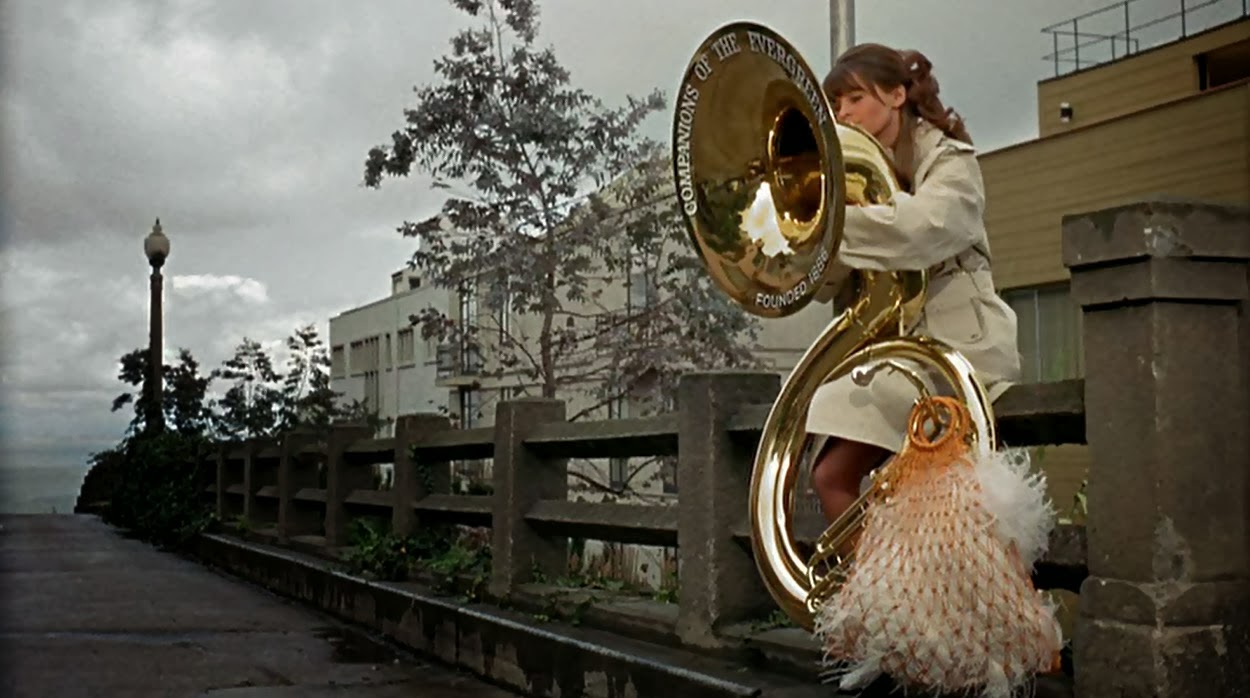
This was tougher. We both agreed that these films deserved recognition for their formal chops and ability to upset and enchant in equal measure. Their of a kind, when you get right down to it. Women punished for expecting to wait on men, now ghosts in their own lives. Richard Lester uses his pop-psychedelic montage to its greatest imaginable effect, crafting a world of facades where it's easy to understand how pain is hidden and ignored. It's easier to pretend we fit in than to really look at ourselves and our suffering. Kuroneko places the same story in the context of historical Japanese art. Kaneto Shindo presents a fourth wall-smashing miasma where women are at the mercy of men corrupted by war and honor, or lack thereof. Both are haunting, both are splendid, both uniquely cinematic stories.

Caméra d'Or – Albert Finney for Charlie Bubbles

As David pointed out in his late show-edition of the comeback special Finney only directed one movie. Like Brando before him, all it took was the failure of a film he cared about for him to kind of drop out of the artistic vanguard. Still shows up for a paycheck, and in largely decent movies, but ever since Charlie Bubbles that twinkle's been missing from his eye. Finney has a knack for innovation that proved he wasn't just idling between takes working for Tony Richardson and Karel Reisz. He dreamt a lot of ingenious devices people are still copying, discovered Liza Minelli and all the while gave one of his best performances. Not bad for a first try, is it? We almost gave the prize to Marcello Fondato, but Finney's been given almost no credit for the elegiac Charlie Bubbles so we're hoping to right some of that egregious wrong. Now, how about a blu-ray, world?


Prix du Jury – Doktor Glas
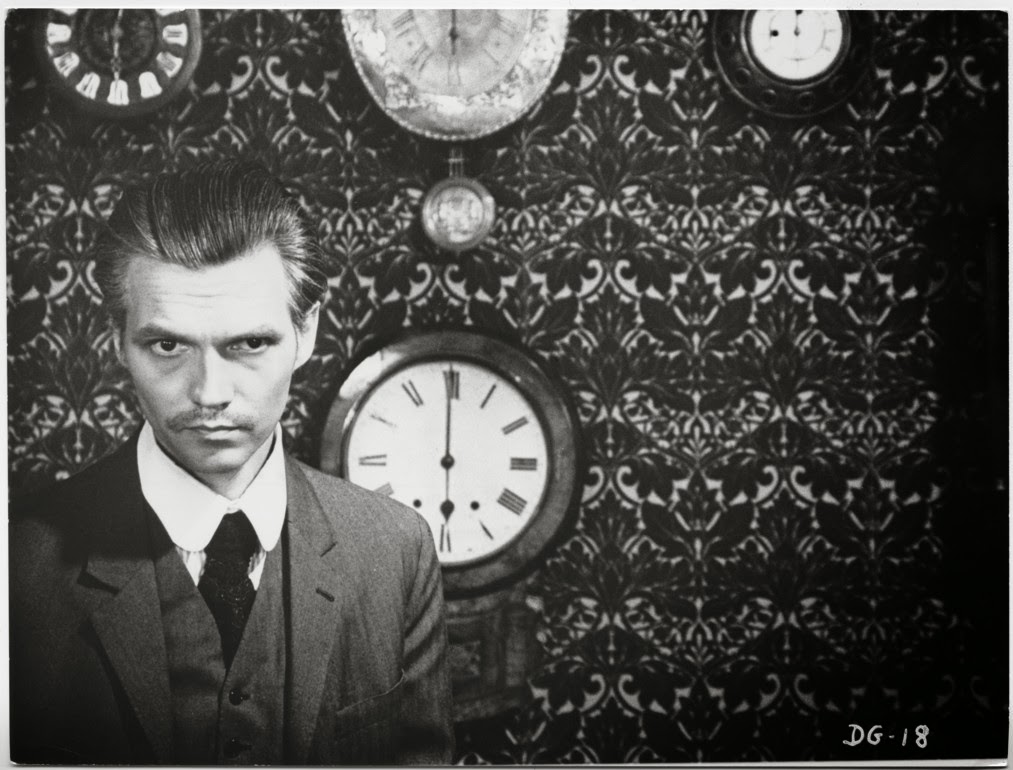
Speaking from personal experience, Mai Zetterling's Doktor Glas was the ideological pièce de résistance of the Totally Illegal Film Festival. The Long Day Closes shut us all up with its suspenseful gymnastics and raw imagery, but Doktor Glas had us all talking. About motivation, about patriarchy, about abortion, about murder, about justifications. Any film that can get a room full of people volleying interpretations at each other is worth talking about. Doubly so considering that no one talks about Zetterling. Criminal, we say! Criminal!

Prix du scénario – Firemen's Ball

Bitterly funny and warmly cynical, Firemen's Ball ties you into knots with its many strains and schools of humour, its sly critique of authority and coterie of non-plussed faces. Though directed in a style that would inform every third major American classic of the 70s, without its razor sharp script, one of the finest of an unprecedented era of charming malcontented masterpieces. And as dark as it gets, it never loses its cock-eyed wit, and makes you smile ever broader with every new defeat. 

Prix d'interprétation féminine – Lisa Gastoni for Grazie, Zia

Quite simply she's the whole film. The rest is D.O.A. Gastoni, who was not often asked to do more than look disturbingly gorgeous, seems weighted down not just by her lot in life but by the script, and her weariness is transcendent. She retains her irresistibility, her adorable remove, the untouchable quality that makes you fall for her, but her melancholy seems in danger of outweighing it. That battle is by far the most compelling conflict in the film. Her performance makes this horrible, horrible movie worth watching. That is no mean feet. 

Prix d'interprétation masculine – Woody Strode for Black Jesus

Strode is the ultimate underrated American performer. No Oscars, no Golden Globes, no retrospectives programmed around him, no tacky portraiture available in the lobby of similarly tacky Vegas hotels or wild west gift shops. He was never stretched by American directors, so much as they leaned on his chiseled features for support whenever they needed an illustration of winsome sturdiness. Not handsome so much as monumental. It took an Italian (and not Sergio Leone) to put Strode's face in the context it so richly deserved. His performance is undercut slightly by dubbing (not bad dubbing, by any means) but he's so perfectly attuned to the character of a martyr in rags that even though his death is inevitable (see: title) it becomes high tragedy. We cannot look away. We don't want to.

Prix de la mise en scène – Miklós Jancsó

Even before his tragic passing there was no question that Jancsó was the only pick for Director. As I've said 150 times, he remains the only filmmaker good enough to have two films, which, it should be noted could not be more different even if they are quite evidently the work of the same man, in competition for the highest honor at Cannes. How did this titan become, in Adrian Curry's words, "something of a forgotten man?" Perhaps it was that he was constantly denied the Palme? Or that it appears as though the majority of his films never made it to the US? Maybe he was just too embedded in his mythic modernism? Whatever excuse we've come up with isn't going to do anymore. He was a genius who made several undeniable works of beauty and he deserves more than what we've given him. As far as I'm concerned that ends today. 

The '68 Comeback Special: Peppermint Frappé

And so we come to end of this particular experiment, fittingly on one of the more experimental films that played the 1968 Cannes Film Festival. David Cairns and I have now written about every film in competition, re-throwing the cursed Fest in the theatres of our mind. I admit it's tough to feel too bad for Carlos Saura, whose autumnal wet dream Peppermint Frappé is the subject of the final review of the '68 Comeback Special, as he seemed to have a film at every other festival. Pity Geraldine Chaplin who may very well have walked off with Best Actress. She isn't my pick (Lisa Gastoni gets my vote for making that celluloid califig Grazie Zia, a film otherwise barely preferable to suicide, worth watching) but she undoubtedly would have been the talk of the press. She plays two women who have to represent the split halves of a dentist's retarded sexual ideal (Buñuel tried this a decade later in That Obscure Object of Desire, which is less fun, if also less kitschy). She's meek and passive as the dentist's assistant, passionate and unknowable as his friend's lover. She has to be simultaneously hot and cold as the temptress and drowned as the frump; the issue isn't that she's not great, simply that Saura isn't asking all that much of her. Being too afraid to say no on the one hand and on the other so full of sexual energy that you dance spontaneously every few scenes isn't really all that difficult a range to grasp. Saura's probably making a point about the man they orbit, a barely repressed bourgeoise meant as a stand-in for the worst of the Franco-ite Spanish aristocracy, but it does limit Chaplin from really earning best actress, at least to this false juror.

Give Saura this: Chaplin has maybe the best introduction any character's ever been had:


I really do need to watch more of Saura's films. Working under Franco meant masking his rage in symbolism, which makes for fascinating, if occasionally too cool viewing. Cria Cuervos doesn't quite hit me the same way Spirit of the Beehive does. It wasn't until the 80s that he was allowed to make his kind of movie without worrying about an 'editor' standing behind him looking for subtext. The issue then became that his fellow countryman hated what he did with himself after Franco died because the subject matter felt too typically Spanish, or anyway the kind of Spanish Franco wanted from the national artists. Making bold, lusty musicals with a battery of flamenco dancers was seen as regressive and a slap in the face to artists who suffered under Fascism. Poor Saura had been making anti-fascist films the whole time and just wanted to speak above a whisper for once. For what it's worth his interest in song and dance is foregrounded here. As I mentioned Chaplin dances Many many times, with the dentist (played by rather unappealing José Luis López Vázquez) and without. As subtext it doesn't always work but as an opportunity for Saura to freely indulge in something that appealed to him, instead of all the Freudian tiptoeing around the Generalisimo, it's really pretty touching. It excuses more hamfisted skulduggery like when our man makes his lady friend work out in a prototype exercise rowboat. It boggles in the moment but in hindsight it's tough not to smirk at. The incisive and the ridiculous dance almost as much as Chaplin, and it's compelling until you think too hard about it. I might be more fond of his 1960 Cannes entry Los Golfos, a neo realist gang film that meets between Los Olvidados, Rebel Without A Cause and I Vitelloni, but there's no denying the haunting effulgence of Peppermint Frappé.

And it just wouldn't be the '68 Comeback Special if I didn't take a moment to relate Saura's covert politicking with the cancellation of its one outlet. Saura did so much to nestle a potentially dangerous X-Ray of Spanish society into an erotic psychodrama and how did the supposed revolutionaries minding the shop react? By ignoring the possibility that he had anything to say. Infuriating, no? I may have issues with Peppermint Frappé as I did with a lot of the films in competition but they can't compare with my anger at the party who shut down the festival. The movement, spearheaded by established directors, didn't think for a second that the issues plaguing Czechoslovakia, Poland, Hungary, the UK or Spain could meaningfully compete with their experience. A criminal lack of empathy from artists whose filmographies were largely founded on the political and personal problems of middle class white Parisians. That the men who made A Man and a Woman, Elevator To The Gallows, Jules and Jim and Le Chinoise would turn a blind eye to international cinema when it needed most to be seen is all the more disgusting because no one cares or talks about what went missing when the curtains closed. If the festivals showing Jafar Panahi's missives from House Arrest were cancelled, would it be so easy to stay on the side that spoke the loudest? All I hope is that we learn and that in reviewing these films David and I have made you curious enough to seek out this misplaced piece of history. I can't give the festival back to those who needed it: Saura, Jiří Menzel,  Sándor Sára, Albert Finney, Peter Collinson, Menahem Golan, the recently deceased Miklós Jancsó, Kaneto Shindō, Carlo Lizzani, Witold Leszczyński, Bahrudin Čengić, Marcello Fondato or the long gone Mai Zetterling, Valerio Zurlini, Aleksandr Zarkhi and Rudolf Noelte. Nothing can. But we can't let their art vanish. Not again.

The '68 Comeback Special: The Red & The White

I've been a little paralyzed lately. Great people, artists we'll never see the likes of again, keep dying. I've spent the last few days just staring into the middle distance, unable to speak coherently about the losses. Everything that can or should be said about Philip Seymour Hoffman has been said, and a good deal more besides. Many of us didn't expect to be hit this hard, but the loss is indescribable. We knew him, or anyway, we felt like we did. He was too good, at once untouchable and one of us. A revisit to The Master reveals less a movie than a spell cast upon the audience by Hoffman's self-made oligarch, all vices and flaws that we forgive because it's a pleasure to be in his presence. Sadness hiding confidence, the need to cast aside everything just to remember what real friendship feels like. He was more than an actor to many people. He was a whole cast of alluring acquaintances we wanted as friends and relatives. The best artists don't just create movies or performances, they tear a hole in reality and set up fictive constructions big enough to live in. They build houses for us to live in for the length of a film. Every decision builds ten years of life and experience for a character until we know everything we should know about them. Whole lives can be lived in two hours if the performance is good enough. Philip Seymour Hoffman was always that good. And as crushing, as unthinkable, as torturous as it is to deal with his death, it happened to come in a tidal wave of misery that also claimed the lives of Arthur Rankin Jr., Maximilian Schell, Eduardo Coutinho and Miklós Janscó. How are we supposed to soldier on after this last weekend? 

Miklós Janscó was a Hungarian director born in 1921, and if you know his name it's probably because of the higher-profile of two films he had in competition at the ill-starred 1968 Cannes Film Festival, The Red & The White. The other film, The Confrontation, may not be as monumental an achievement as its more famous brother, but it is a dazzlingly built delight. It's little wonder Janscó was the only director to ever compete against himself at the famed festival. No one ever talks about that, for some reason… Hardly anyone talks about Janscó at all. The Red & The White is an inarguable masterpiece, and yet his influence on contemporary cinema is rarely remarked upon. Watch a few of his films in a row and you can see directors entire canons springing in the wake of a couple of elegantly choreographed long takes. Béla Tarr here, Theo Angelopoulos there, Von Trier, Jodorowsky, the Peter Greenaway of The Baby of Mâcon, the Gerardo Naranjo of Miss Bala.


Jean Renoir once said that a director really only makes one film, each entry in a canon just a piece of the same puzzle. For Janscó, that film was The Red & The White, and everything else was a new interpretation of any given scene or idea from his 1967 masterpiece, chased down a new road. He was an old school auteur, each frame, each tracking shot's steadfast commitment to the fleet of dancing performers, were entirely and indisputably his. And though he traveled to France, Italy, Greece and Russia he never really left Hungary, just as he was always telling the story of a forgotten peasant class. His aim was to let the plight of the oppressed be heard through violent uprising, chanting, song, and eye-catching group dances. His films more often resembled ballet than traditionally cinematic antiwar narratives. He frequently put the lie to the "no such thing as an antiwar movie" fallacy. He rarely used squibs, or fake blood of any kind. Characters simply slump over and play dead, which is somehow more frustrating and stinging than if they exploded with some of Peckinpah's Kensington gore. He kills characters we like and whose good intentions he believes. The sound of gunfire, the flight of their abandoned bodies from the frame, and the camera glides over the spot, their lives edited out in camera. He pursued the idea of death with the rigorousness of Ingmar Bergman, though with a more firm sense of play. In his TV movie The Tyrant's Heart, a very theatrical work of myth-making, a character kills himself with a knife; then apologizes to the audience for having forgotten the fake blood. He never delighted in violence, and wanted to offer sympathetic viewers a safe place to contemplate his life's work. 


Though his break through was the very excellent The Round Up, a drama of persecution that looked to have been committed to limestone, The Red & The White is his stylistic gauntlet. Politically Janscó never veered too far from The Round-Up, in which Austrian forces torturing Hungarian guerrillas until they give up their leader, but he found himself when he made The Red & The White. Even if it were the first film in his oeuvre that you encounter (as I suspect is common) the sense of an artist freeing himself from all non essential grammar and forging a brand new path comes across with the directness of a shot of Vodka. The confidence with which he articulates his newfound language is deeply attractive. The film concerns opposing forces during the 1919 communist uprising in Russia. Hungarians and Bolsheviks joins forces against the czarists and a bloody struggle ensued. Janscó s biggest revelation was that in depicting warfare in order to make your way to the heart of war itself you must deliberately lose track of who's fighting who. All that remains is the fact of killing, the feeling of perverted order and chaos against all. You're meant to become a buoy floating between islands, uncertain who's who and what they're fighting for. There are no statements of purpose, no politicking. There are speeches, but they're callous, self-aggrandizing and almost abstract. How then could anyone glory in warfare if the only feeling the director allows us is bewilderment and loss? Of identity, of coherence, of so much life. He also discovered brilliantly choreographed long takes, which would become his stock-in-trade. You begin searching for the seams because too much happens in the takes for it to be reasonable that they worked all this out beforehand, but they did. Every time. Winter Wind, his follow-up to the defeat at Cannes, is 80 minutes long and features not many more than a dozen takes. In The Red & The White wins many small victories throughout by staging surreal dances in a wooded clearing and introducing faces we're drawn to, only to do away with them. One bathetic murder after another; it would all be too much if Janscó weren't one of the best directors alive. His sensitivity remains, not to mention his interest in theatrical superimpositions over his predominantly natural storytelling. Between the military actions where the warring sides keep experiencing reversals of favor, there are many haunting interludes like the dance in the forest, a sexual assault in a hospital, a nurse's distraction as troops arrive near a river. The warfare was set dressing and his disdain for on screen violence for its own sale lets him have his cake and eat it too. All in all, a completely bewitching exercise in the deflation of many of man's favourite lies. 


War is a man's game and Janscó refused to play it. He had for more sympathy for women and his films are lousy with earth mothers. Women who refused to be victims in a culture filled with men killing each other for ideologies they seemed to invent on the fly. Men see double crosses and conspiracy everywhere. Women are above petty suspicions. Though the nurses of The Red & The White are beguiling, strong women who are far more compelling than the male combatants, Janscó s strongest female character is the heroine of his 1974 Elektra, My Love. A post-modern restating (here Antonioni discovers many new tools: slow-motion, painted bodies, a more geometric and fanciful sense of composition to build into his famed tracking shots) of greek tragedy, it shows Elektra as a world-weary pragmatist. "I won't kill you," she says to her adversary the king, "for another will just replace you." She is never hysterical, never mocked, resigned to always being right and never being allowed to prove it. That is Janscó s underlying theme, in a nutshell. Machinations grind up the land, tyrants kill with purpose and at random and those who want the best for the people are never given the opportunity to do anything about it. Power and corruption always get in the way. After the bold, colourful The Confrontation, he kept right on working and his pace didn't markedly slow until the late 80s. In the wake of The Red & The White he had as fruitful a period of invention as Jean-Luc Godard in the 60s. Winter Wind followed mere months later, about a terrorist cell made up of Balkan agitators assisting in the assassination of French leaders. It trades The Confrontation's primary colors for drab browns and greys, the much bleaker story calling for a reduction in wonderment. It's a tug-of-war between the interests of 'the party' and sympathy for the individual, and in the mise-en-scene between unforgiving snowy zones of combat and the almost womb-like interior spaces of the barracks. Here tenderness is met with violence. Marina Vlady's conspirator keeps attempting some kind of intimate communication with a woman she hopes to keep alive, but something always interrupts her. It's a film of great mystery and one that hints at the impossibility of peace and piece of mind when you've decided to take your country's fate in your hands. 


I'm tempted to go film by film, give Janscó the proper eulogy he so richly warrants. He was after all still making films as late as 2012, at age 90, but how would we know that? He'd been all but abandoned by world cinema's tastemakers. I know for sure that I'm done making excuses for Truffaut and Godard at the '68 Cannes Film Festival. Their outrage at the firing of Henri Langlois didn't warrant them keeping works of genius from finding an audience. Janscó deserved better. He was totally committed to his definition of cinema, never giving an inch, even when given bigger budgets and access to big names. He made modern audiences come to him, rather than the other way around. He did everything, musicals, comedies, you name it. In 1971 Carlo Ponti brought him to Italy to make The Pacifist with Monica Vitti, looking for someone to fill Michelangelo Antonioni's shoes after he departed to make Zabriskie Point and The Passenger. Between the master's muse Vitti and Carlo Di Palma, Antonioni's cinematographer, with him at the helm, Janscó's images have a pastel-hued rigidity that brings bourgeoise excess and middle-class guilt, not to mention the vulpine features of his star, into sharp focus. Vitti meets angular naif Pierre Clementi and they instantly revert to a past connection they shared, only to have him taken from her by a gang of tough-as-nails karate enthusiasts who've been on a violence spree in her city. It's entirely an exercise, and his long-takes get claustrophobic in chic Italian residences, but it does feature the typically Janscóian phrase "we have to make noise to be heard," and a very different Vitti than we'd ever seen. She's an adorable wreck, far closer to today's manic pixie dream girls than her typically steely ennui sufferers. For showing us a new (blonde) side of Vitti, we can once more thank the Hungarian dynamo. When he returned to familiar territory it was to make Red Psalm, his first film to utilize experimental grammar, feeling more like a piece of theatre than the alternately ancient and intrinsically cinematic The Red & The White. Here is where he proves his willingness to try anything, his belief in our belief. From here he becomes fearless, trying anything once, even dabbling in something resembling erotica, but filtered through his robustly humane world view. That film, Private Vices, Public Pleasures [thanks for the correction, Roger], is one of the most enchanting films about sexuality ever made. A kind of anti-Salo, it follows a libertine orgy throughout the grounds of a grand estate. No film that I've seen manages to make sex organs seem as natural or beautiful. A proper bacchanalian celebration of innocent sexuality; a reprieve for humanity's worst crimes against itself. It may end, like so many of his films, with a shocking act of violence, but by then the spell is too strong to break. His films, no matter how dark, oblique or melancholy (the height of which must be his return to his homeland, 1979's exhausting but rewarding Hungarian Rhapsody), broiled with vivacity, with a rich appreciation for human creation and emotion. His characters dance across vast landscapes, through history and violence, aware that the best they can do is survive, and teach the dance to the next generation. "If I do not forget, then it is not forgotten."

The '68 Comeback Special: The Confrontation

If you're just tuning in, the inestimable David Cairns (who, it must said, is currently kicking ass on the festival circuit with his new film Natan) and I have been tagteaming everything that should have played the 1968 Cannes Film Festival. I realize I've lately made a bit of a blunder. When David posted his latest, on Frank Perry's Trilogy, I was so wrapped up in his description and so caught up in remembering its haunting details that I forgot to mention it here. Naturally I feel like a cad of the highest order, but I do hope he feels comforted by the fact that his words moved me into a place of deep thought and melancholic reflection and that he can forgive my slip-up! As he points out Trilogy's a very interesting film, if not always quite as successful as its best moments. If Breakfast at Tiffany's and In Cold Blood are the two poles, so to speak, of Truman Capote adaptations Trilogy sits square in the middle. Deeply uncomfortable and darkly funny, Capote seems to be getting out all his issues with middle aged women. Perry's direction is claustrophobic and nerve wracking; you expect it to become Night of the Living Dead any second. In terms of extreme humiliation and bad behavior it's almost the more upsetting film. 

There were many films at Cannes that year that share thematic and/or tonal similarities and it would probably smart if I chose one, but, heck, I'm in the mood to be contrary today. So I'm going to continue my Hungarian streak and look at the other Miklós Jancsó film that playd Cannes that year. The Red & The White is justly lauded and might be the most visible high of a quite brilliant director's career. The phenomenon of directors having minor works is fairly new, if I'm not mistaken. It's easy to look at the work of prolific directors like Joe Swanberg, Steven Soderbergh, Takashi Miike or Hong Sang-Soo and figure out which films have a little less to offer to anyone who isn't already a committed fan. Auteurists could look at the career of Roman Polanski or Orson Welles and figure out which does less for them (Speaking for myself Pirates and The Immortal Story) but at the time they must have struck the public as either huge embarrassments or imperative pieces of an ongoing narrative. Digital film has allowed many directors to work faster and endless availability of work has allowed us to much more quickly sum up a career because you could, if you knew how, find and watch everything by any director with a manageable filmography in 24 hours. Judgments about a work's impact and context become easier, in theory anyway, today than they were when any given New Wave was cresting. 

Which brings us to The Confrontation or Fényes Szelek, what could be called a minor work in Jancsó's canon. It's easier to call it minor in direct comparison to The Red & The White, which stages combat with the same rigorousness that Andrei Tarkovsky and Akira Kurosawa brought to their epics, but with a kind of discipline neither stuck to. The Red & The White has the same weight and depth as Seven Samurai or Andrei Rublev, but at half their running time. The key: his unbelievably choreographed long takes. That said, application makes a difference. A film about student debates is just not going to feel as sturdy or "important" as a film about the Russian Civil War. And I don't think that should matter but Jancsó was clearly not trying to change the world with The Confrontation, and it felt like he was with The Red & The White. First of all the characters don't make the individual impressions of the interchangeable soldiers of his war film and it would read like a flaw except he clearly designed it this way. The films are variations on a theme: ultimately we stop being individuals when we form a mob or an army. In The Red & The White that's a bad thing, in The Confrontation it's ok, if never quite good. Or rather because the point of the film is student revolutionaries trying to get the young members of a religious order to defect, it highlights the individual by showing the differences in the mobs and allowing them to advance and retreat when necessary but there are still no victors. It's a compassionate way to make sense of the kind of thing that filled TV screens throughout the 60s. It's a riot without violence, a march that turns into a celebration, an argument where everyone is heard and respected. In other words a fantasy. 

The film makes resplendent use of long takes, filled with many, many reveals and reversals and as always making complete use of the very edge of the frame. Jancsó turns every location into a broadway-sized stage for his characters to sing and dance upon when they aren't pursuing their somewhat oblique political agenda. When the young communists are met with resistance from the head of the school they've infiltrated, any of its students or the local police, they dance and sing protest songs to rouse them and distract. It's a lively and vital film. The subject matter and light tone suggest a diversion along the lines of Marco Bellocchio's playful, superior contribution to the omnibus film Love And Anger. There is the wonder of discovery about the piece. At points I found myself rubbing my eyes like a cartoon character witnessing a miracle, not simply because the film bursts with the indelible and ineffable, but because I'd never been told by anyone to watch it before! Those luscious, endless shots (the film unfolds more or less in real time) must have taken quite a lot of planning but still feel entirely off-the-cuff, making Jancsó the only company Theo Angelopoulos has in the realm of naturalist modernism (the students even do the same Greek dance that the newlyweds celebrate with in future Palme d'Or winner Eternity And A Day!). The use of colour (his first) is nearly as revelatory as Bertolucci's or Antonioni's virginal efforts. His camera stands a safe distance away from many of its characters for much of the film so their brightly coloured clothes become the way we tell them apart, which makes me think that somebody must have been a Nicholas Ray fan. A revisit to Johnny Guitar reveals a tense, real-time opening stretch filled with flamboyant colors where everyone is shouting to be heard in a stand-off with no clear winners. So not only is he a singular voice, he's a cinephile to boot. Why in heavens don't we talk about this fellow more often?
The images are so sharp and vibrant that they might have been shot yesterday, whereas The Red & The White, like Seven Samurai or Andrei Rublev, looks purposely ancient and timeless. They're supposed to look like wood carvings come to life, whereas The Confrontation feels like it's being painted before our eyes. Jancsó pushed into a new era in just a few months and for his trouble he remains the only director to have two films in competition in the same year. How was anyone supposed to compete with that? Maybe that's secretly the reason they closed the festival. Someone made a blunder on the selection committee and they needed to cover it up but quick. It's almost stupid enough to be true. Almost...

The '68 Comeback Special: The Upthrown Stone

David Cairns and I have discovered that in reviewing any year at Cannes, there are going to be films that slip through the cracks. David made an excellent point after I made one of my essays on the '68 festival that looking at years that didn't get cancelled and trying to gauge the fate of the films that never got their day in the sun, the results are inconclusive. As late as 2012 this phenomenon took the Egyptian film After The Battle, a competition entry that received pretty poor notices, into obscurity just as quick as it threatened to make it a global sensation. Just think, a few positive reviews and it might have found its way to the Internet with English subtitles for us to start questioning what it was doing there in the first place. Every Cannes has a runt or two, but the world's most important film festival also has a way of losing track of its kids every year. To this day I've never found working subtitles to the 2010 entry Chongqing Blues, from director Xiaoshuai Wang, who might not be Wong-Kar Wai but he's an Arthouse lightweight at least. It's just sort of scrawled in the bylines that some films have to fade into obscurity so we can appreciate the importance of the few that wind up with the awards and money. Take a look through the Wikipedia pages of every Cannes lineup and see what I mean. Hell, I'd put some money on many people having forgotten some of the winners. Just the name of the game, I guess. Which brings me to Feldobott Kő or The Upthrown Stone. If you count the two films by Miklós Jancsó, Hungary had three films at Cannes, which ties it for second most represented country with Czechoslovakia, losing by one to the UK. Not bad, all things considered. Jancsó's The Red and the White is the best remembered of the three, The Confrontation has a minor reputation but I'd never heard of The Upthrown Stone before last year.
When I went looking for it all I could find was a TV rip with no English subtitles. So, like Chongqing Blues before it, I watched it deaf, so to speak, with only a meager plot summary in front of me. Turns out it works even if I didn't always know what was happening. The movie revolves, indeed the plot seems to orbit its lead like a satellite, around a young student who isn't allowed into a state sponsored film school because his father was just arrested very publicly. Humiliation and anger leads him down a different path working for a land surveyor out in a rural area away from hypocrisy of the state...or so he thinks. It isn't long before he starts seeing that the peasants whose land he works are under the thumb of the government too. Everyone suffers, everybody gets ground down. Maybe picking up his camera again is the best thing he can do.

It'd be slightly dishonest of me to spend much time on the story or script, as I only really 'got' about half of it. But I don't need an illustrated guidebook and a flashlight to know good filmmaking when I see it. Director Sándor Sára has to be commended for making his images satisfying and wholesome and not in the Davey & Goliath sense. His stark, often purposely underexposed black and white compositions and the images he finds/creates do a number on your brain, then seem to slowly make their way to your stomach and start nourishing you. The material here is bleak, but the sense of outrage meeting love for human courage, animal beauty and the sanctity of the ground beneath our feet and the trees over our heads, could keep you alive during a hunger strike. The sequence towards the end of two horses tied together is the kind of thing you never forget; ditto the faces of the gypsies our hero photographs during a government mandated health inspection, none too subtly echoing the holocaust. The boy may be in disbelief but his camera and Sára have no choice. There is no faking the faraway look in the many eyes that stare through the lens and right into us. I do hold out hope that someone's going to track down the rights to this film, translate it and give it the resurrection it deserves but in the meantime, even in a butchered, pixely, untranslated, cropped .avi file, it's still a powerful experience. Outrage and the need to change things for the better is something one doesn't need language for. We all know the look in someone's eyes. The one that says "enough is enough."


An interesting footnote: the Czech films bear far more stylistic similarities to each other than the Hungarians. Firemen's Ball, Capricious Summer and A Report on the Party & The Guests all share a current of bitter, dark humour, all make heavy use of close-ups of the befuddled and/or menacing faces of their characters, use fairly classical editing and the staging makes use of the fore and background. There's a sense of both claustrophobia and agoraphobia, so to speak, allowing us to get lost in an abstract sea of people and conflicting ideas. Now, obviously the fact that 2/3 of the Hungarians were made by the same guy, but Sára and Jancsó have, beyond political conviction and a appreciation for big, open landscapes, nothing much in common. This could be because no one in the world made films like Jancsó at the time (Theo Angelopoulos could be called a stylistic contemporary, though obviously the men had vastly differing sensibilities), but Sára directs here like he's connecting beautiful tableau of suffering, mimicking his protagonist's interest and evolution as an artist. Both are valid approaches and as we'll see Jancsó was no slouch. I can't fight the feeling that something is being forgotten here...something important.