I've always wanted to be on a film festival jury, and now here's my chance! Sure it's off the books, but hell, Ima embrace it! With the right honorable David Cairns as my co-juror, we deliberated long and hard, smoked hundreds of cigarettes, drained the '68 Comeback Special greenroom of all its whiskey and wine, and made four hundred paper cranes out of unused ballot sheets. It was tense, it was nerve-wracking, it was deeply erotic. And here, ladies & gentlemen, are our decisions.
Palme d'Or – Capricious Summer
I'm beyond thrilled we decided on this. It's a film I fell head-over-heels in love with the first time I saw it and it's the sort of film that rarely walks away with the big win. It's slight, it's lovely, its ambitions are much more about improving your mood and lulling you into a cinematic spell. It's a joy, pure and simple, and runs a cool 74 minutes, occupying the same fugue state as Terence Davies The Long Day Closes and Jacques Tati's M. Hulot's Holiday, spaces of play tinged with bittersweet melancholy. You may not have your life changed, but you'll almost certainly want to live in these films.
Grand Prix – Petulia / Kuroneko
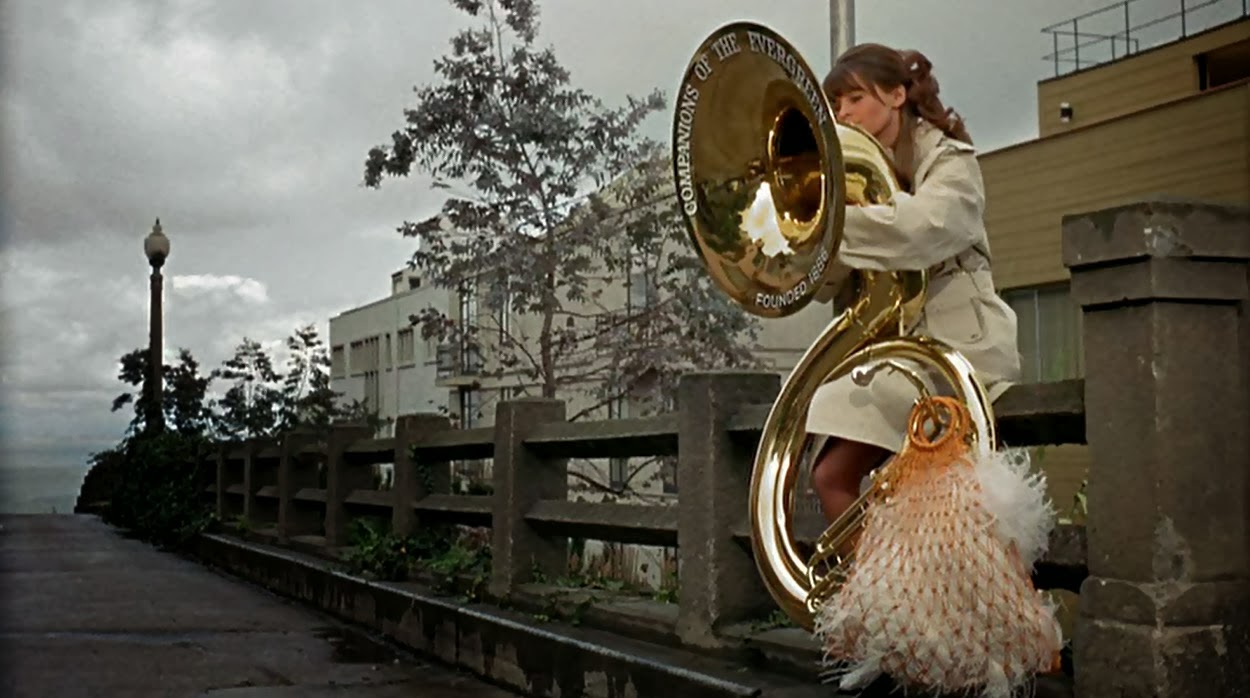
This was tougher. We both agreed that these films deserved recognition for their formal chops and ability to upset and enchant in equal measure. Their of a kind, when you get right down to it. Women punished for expecting to wait on men, now ghosts in their own lives. Richard Lester uses his pop-psychedelic montage to its greatest imaginable effect, crafting a world of facades where it's easy to understand how pain is hidden and ignored. It's easier to pretend we fit in than to really look at ourselves and our suffering. Kuroneko places the same story in the context of historical Japanese art. Kaneto Shindo presents a fourth wall-smashing miasma where women are at the mercy of men corrupted by war and honor, or lack thereof. Both are haunting, both are splendid, both uniquely cinematic stories.
Caméra d'Or – Albert Finney for Charlie Bubbles
As David pointed out in his late show-edition of the comeback special Finney only directed one movie. Like Brando before him, all it took was the failure of a film he cared about for him to kind of drop out of the artistic vanguard. Still shows up for a paycheck, and in largely decent movies, but ever since Charlie Bubbles that twinkle's been missing from his eye. Finney has a knack for innovation that proved he wasn't just idling between takes working for Tony Richardson and Karel Reisz. He dreamt a lot of ingenious devices people are still copying, discovered Liza Minelli and all the while gave one of his best performances. Not bad for a first try, is it? We almost gave the prize to Marcello Fondato, but Finney's been given almost no credit for the elegiac Charlie Bubbles so we're hoping to right some of that egregious wrong. Now, how about a blu-ray, world?
Prix du Jury – Doktor Glas
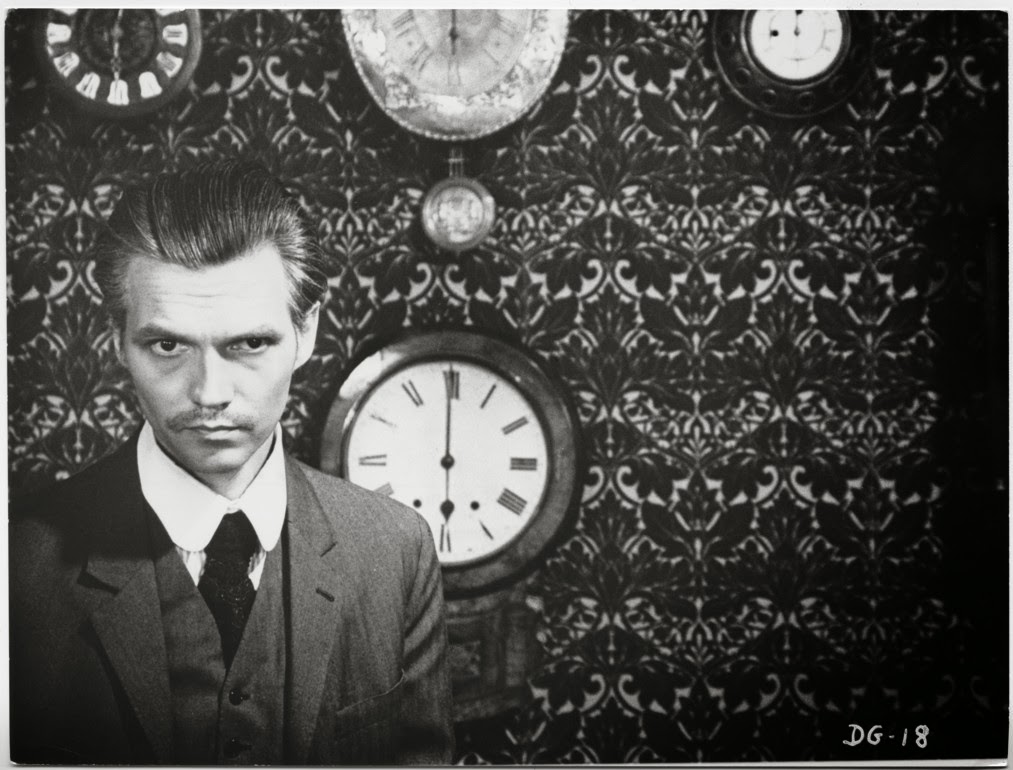
Speaking from personal experience, Mai Zetterling's Doktor Glas was the ideological pièce de résistance of the Totally Illegal Film Festival. The Long Day Closes shut us all up with its suspenseful gymnastics and raw imagery, but Doktor Glas had us all talking. About motivation, about patriarchy, about abortion, about murder, about justifications. Any film that can get a room full of people volleying interpretations at each other is worth talking about. Doubly so considering that no one talks about Zetterling. Criminal, we say! Criminal!
Prix du scénario – Firemen's Ball
Bitterly funny and warmly cynical, Firemen's Ball ties you into knots with its many strains and schools of humour, its sly critique of authority and coterie of non-plussed faces. Though directed in a style that would inform every third major American classic of the 70s, without its razor sharp script, one of the finest of an unprecedented era of charming malcontented masterpieces. And as dark as it gets, it never loses its cock-eyed wit, and makes you smile ever broader with every new defeat.
Prix d'interprétation féminine – Lisa Gastoni for Grazie, Zia
Quite simply she's the whole film. The rest is D.O.A. Gastoni, who was not often asked to do more than look disturbingly gorgeous, seems weighted down not just by her lot in life but by the script, and her weariness is transcendent. She retains her irresistibility, her adorable remove, the untouchable quality that makes you fall for her, but her melancholy seems in danger of outweighing it. That battle is by far the most compelling conflict in the film. Her performance makes this horrible, horrible movie worth watching. That is no mean feet.
Prix d'interprétation masculine – Woody Strode for Black Jesus
Strode is the ultimate underrated American performer. No Oscars, no Golden Globes, no retrospectives programmed around him, no tacky portraiture available in the lobby of similarly tacky Vegas hotels or wild west gift shops. He was never stretched by American directors, so much as they leaned on his chiseled features for support whenever they needed an illustration of winsome sturdiness. Not handsome so much as monumental. It took an Italian (and not Sergio Leone) to put Strode's face in the context it so richly deserved. His performance is undercut slightly by dubbing (not bad dubbing, by any means) but he's so perfectly attuned to the character of a martyr in rags that even though his death is inevitable (see: title) it becomes high tragedy. We cannot look away. We don't want to.
Prix de la mise en scène – Miklós Jancsó
Even before his tragic passing there was no question that Jancsó was the only pick for Director. As I've said 150 times, he remains the only filmmaker good enough to have two films, which, it should be noted could not be more different even if they are quite evidently the work of the same man, in competition for the highest honor at Cannes. How did this titan become, in Adrian Curry's words, "something of a forgotten man?" Perhaps it was that he was constantly denied the Palme? Or that it appears as though the majority of his films never made it to the US? Maybe he was just too embedded in his mythic modernism? Whatever excuse we've come up with isn't going to do anymore. He was a genius who made several undeniable works of beauty and he deserves more than what we've given him. As far as I'm concerned that ends today.
Showing posts with label capricious summer. Show all posts
It was the best of times, it was 1968.
Over at Shadowplay, you'll find, next to a eulogy for Shirley Temple, David Cairns' latest issue of our '68 Comeback Special. This week he's got Jiří Menzel's Capricious Summer, a thing of aimless, ageless beauty. I fell hard for this film when I bought Criterion's Czech New-Wave boxset a few years ago. After the rich, politically charged farce of Closely Watched Trains, Menzel rightly felt he deserved a break from such serious cinema. Or rather, tension and plotting so fab, it plays like a splendid high-wire act. What better way to celebrate than with an actual high-wire act? Capricious Summer is about a group of men bewitched in different ways by the appearance of a magician, or rather, his voluptuous assistant. Its pleasures are myriad. Jana Preissová, the assistant, is one of the screen's most lithe and enduring sirens (Menzel sure had an eye. Try not to bond for life with Closely Watched Trains' naughty telegraphist played by Jitka Zelenohorská, whose only fault is that her name isn't Jitka Bendová like I thought it was. To be famous for having a pervy station agent stamp your butt in one of the most erotic scenes in history, you couldn't have a better name than Bendová. Alas...).
Preissová does little but walk about collecting donations in an orange leotard and black face mask, but she's the kind of beauty you feel you've known all your life. Unsurprisingly, the three men at the heart of the story fall madly in lust with her. Watching her perform a pantomime of the high wire act in form-fitting pink cloth jumpsuit is unspeakably sensual. Watching the men watching her is an immense joy. Menzel works wonders with hidden depths. What looks like an attempted rape ends in an unexpected nap; the look on Preissová's face when she realizes what's happened is almost enough to give this film the top prize. But charming enchantments like this are rarely the sort of film that net fancy awards, for which the world is a shameful place sometimes. It's tempting to want to give Rudolf Hrusínský best actor or split the actress prize between Míla Myslíková and Preissová, for representing the problems of need vs. want so splendidly, but that prize would have to rest in Menzel's hands, who draws out their essence like a sorcerer. Hrusínský doesn't appear to have a great deal of range, playing sad, flummoxed and angry and sort of shuffling through every frame, but Menzel fits him in a world of such faded splendor, that he appears to have the dynamism of Brando at his best. And the women don't do quite enough to earn the prize, but Menzel projects them onto this backdrop in a way that renders them earthbound angels. And that is rather the heart of Capricious Summer. When you are a sad man with no ambition, a beautiful woman can be the most important thing in the world for a short time, even if your wife is, for all intents and purposes, perfect for you. On a more personal note, I cribbed a little from Capricious Summer when I made my film House of Little Deaths. I was totally in love with the way Menzel filmed his enchantress and tried to take a little of that magic for myself. That film has yet to be seen by a large audience, but here's a little look (best I could do on short notice) at what I was up to and how much I love this magical little movie.

Preissová does little but walk about collecting donations in an orange leotard and black face mask, but she's the kind of beauty you feel you've known all your life. Unsurprisingly, the three men at the heart of the story fall madly in lust with her. Watching her perform a pantomime of the high wire act in form-fitting pink cloth jumpsuit is unspeakably sensual. Watching the men watching her is an immense joy. Menzel works wonders with hidden depths. What looks like an attempted rape ends in an unexpected nap; the look on Preissová's face when she realizes what's happened is almost enough to give this film the top prize. But charming enchantments like this are rarely the sort of film that net fancy awards, for which the world is a shameful place sometimes. It's tempting to want to give Rudolf Hrusínský best actor or split the actress prize between Míla Myslíková and Preissová, for representing the problems of need vs. want so splendidly, but that prize would have to rest in Menzel's hands, who draws out their essence like a sorcerer. Hrusínský doesn't appear to have a great deal of range, playing sad, flummoxed and angry and sort of shuffling through every frame, but Menzel fits him in a world of such faded splendor, that he appears to have the dynamism of Brando at his best. And the women don't do quite enough to earn the prize, but Menzel projects them onto this backdrop in a way that renders them earthbound angels. And that is rather the heart of Capricious Summer. When you are a sad man with no ambition, a beautiful woman can be the most important thing in the world for a short time, even if your wife is, for all intents and purposes, perfect for you. On a more personal note, I cribbed a little from Capricious Summer when I made my film House of Little Deaths. I was totally in love with the way Menzel filmed his enchantress and tried to take a little of that magic for myself. That film has yet to be seen by a large audience, but here's a little look (best I could do on short notice) at what I was up to and how much I love this magical little movie.
The '68 Comeback Special: The Upthrown Stone
David Cairns and I have discovered that in reviewing any year at Cannes, there are going to be films that slip through the cracks. David made an excellent point after I made one of my essays on the '68 festival that looking at years that didn't get cancelled and trying to gauge the fate of the films that never got their day in the sun, the results are inconclusive. As late as 2012 this phenomenon took the Egyptian film After The Battle, a competition entry that received pretty poor notices, into obscurity just as quick as it threatened to make it a global sensation. Just think, a few positive reviews and it might have found its way to the Internet with English subtitles for us to start questioning what it was doing there in the first place. Every Cannes has a runt or two, but the world's most important film festival also has a way of losing track of its kids every year. To this day I've never found working subtitles to the 2010 entry Chongqing Blues, from director Xiaoshuai Wang, who might not be Wong-Kar Wai but he's an Arthouse lightweight at least. It's just sort of scrawled in the bylines that some films have to fade into obscurity so we can appreciate the importance of the few that wind up with the awards and money. Take a look through the Wikipedia pages of every Cannes lineup and see what I mean. Hell, I'd put some money on many people having forgotten some of the winners. Just the name of the game, I guess. Which brings me to Feldobott Kő or The Upthrown Stone.
If you count the two films by Miklós Jancsó, Hungary had three films at Cannes, which ties it for second most represented country with Czechoslovakia, losing by one to the UK. Not bad, all things considered. Jancsó's The Red and the White is the best remembered of the three, The Confrontation has a minor reputation but I'd never heard of The Upthrown Stone before last year.
It'd be slightly dishonest of me to spend much time on the story or script, as I only really 'got' about half of it. But I don't need an illustrated guidebook and a flashlight to know good filmmaking when I see it. Director Sándor Sára has to be commended for making his images satisfying and wholesome and not in the Davey & Goliath sense. His stark, often purposely underexposed black and white compositions and the images he finds/creates do a number on your brain, then seem to slowly make their way to your stomach and start nourishing you. The material here is bleak, but the sense of outrage meeting love for human courage, animal beauty and the sanctity of the ground beneath our feet and the trees over our heads, could keep you alive during a hunger strike. The sequence towards the end of two horses tied together is the kind of thing you never forget; ditto the faces of the gypsies our hero photographs during a government mandated health inspection, none too subtly echoing the holocaust. The boy may be in disbelief but his camera and Sára have no choice. There is no faking the faraway look in the many eyes that stare through the lens and right into us. I do hold out hope that someone's going to track down the rights to this film, translate it and give it the resurrection it deserves but in the meantime, even in a butchered, pixely, untranslated, cropped .avi file, it's still a powerful experience. Outrage and the need to change things for the better is something one doesn't need language for. We all know the look in someone's eyes. The one that says "enough is enough."
An interesting footnote: the Czech films bear far more stylistic similarities to each other than the Hungarians. Firemen's Ball, Capricious Summer and A Report on the Party & The Guests all share a current of bitter, dark humour, all make heavy use of close-ups of the befuddled and/or menacing faces of their characters, use fairly classical editing and the staging makes use of the fore and background. There's a sense of both claustrophobia and agoraphobia, so to speak, allowing us to get lost in an abstract sea of people and conflicting ideas. Now, obviously the fact that 2/3 of the Hungarians were made by the same guy, but Sára and Jancsó have, beyond political conviction and a appreciation for big, open landscapes, nothing much in common. This could be because no one in the world made films like Jancsó at the time (Theo Angelopoulos could be called a stylistic contemporary, though obviously the men had vastly differing sensibilities), but Sára directs here like he's connecting beautiful tableau of suffering, mimicking his protagonist's interest and evolution as an artist. Both are valid approaches and as we'll see Jancsó was no slouch. I can't fight the feeling that something is being forgotten here...something important.
When I went looking for it all I could find was a TV rip with no English subtitles. So, like Chongqing Blues before it, I watched it deaf, so to speak, with only a meager plot summary in front of me. Turns out it works even if I didn't always know what was happening.
The movie revolves, indeed the plot seems to orbit its lead like a satellite, around a young student who isn't allowed into a state sponsored film school because his father was just arrested very publicly. Humiliation and anger leads him down a different path working for a land surveyor out in a rural area away from hypocrisy of the state...or so he thinks. It isn't long before he starts seeing that the peasants whose land he works are under the thumb of the government too. Everyone suffers, everybody gets ground down. Maybe picking up his camera again is the best thing he can do.
It'd be slightly dishonest of me to spend much time on the story or script, as I only really 'got' about half of it. But I don't need an illustrated guidebook and a flashlight to know good filmmaking when I see it. Director Sándor Sára has to be commended for making his images satisfying and wholesome and not in the Davey & Goliath sense. His stark, often purposely underexposed black and white compositions and the images he finds/creates do a number on your brain, then seem to slowly make their way to your stomach and start nourishing you. The material here is bleak, but the sense of outrage meeting love for human courage, animal beauty and the sanctity of the ground beneath our feet and the trees over our heads, could keep you alive during a hunger strike. The sequence towards the end of two horses tied together is the kind of thing you never forget; ditto the faces of the gypsies our hero photographs during a government mandated health inspection, none too subtly echoing the holocaust. The boy may be in disbelief but his camera and Sára have no choice. There is no faking the faraway look in the many eyes that stare through the lens and right into us. I do hold out hope that someone's going to track down the rights to this film, translate it and give it the resurrection it deserves but in the meantime, even in a butchered, pixely, untranslated, cropped .avi file, it's still a powerful experience. Outrage and the need to change things for the better is something one doesn't need language for. We all know the look in someone's eyes. The one that says "enough is enough."
An interesting footnote: the Czech films bear far more stylistic similarities to each other than the Hungarians. Firemen's Ball, Capricious Summer and A Report on the Party & The Guests all share a current of bitter, dark humour, all make heavy use of close-ups of the befuddled and/or menacing faces of their characters, use fairly classical editing and the staging makes use of the fore and background. There's a sense of both claustrophobia and agoraphobia, so to speak, allowing us to get lost in an abstract sea of people and conflicting ideas. Now, obviously the fact that 2/3 of the Hungarians were made by the same guy, but Sára and Jancsó have, beyond political conviction and a appreciation for big, open landscapes, nothing much in common. This could be because no one in the world made films like Jancsó at the time (Theo Angelopoulos could be called a stylistic contemporary, though obviously the men had vastly differing sensibilities), but Sára directs here like he's connecting beautiful tableau of suffering, mimicking his protagonist's interest and evolution as an artist. Both are valid approaches and as we'll see Jancsó was no slouch. I can't fight the feeling that something is being forgotten here...something important.
Subscribe to:
Posts (Atom)


