The New School of Directors

With the oscars over and Danny Boyle and David Fincher having been treated like Hollywood royalty for a couple of months, I thought it time to put some of my thoughts on a school of filmmakers and set them apart stylistically and temporally. Ok, so for a while I had lumped Jim Jarmusch in with these guys, but then I set some ground rules and I have myself a school. I call them the New School cause that's the best I can do. I could call them the crazy colorful, oddly sexual, violent school of hyper editing and excellent cinematography, but that doesn't have the same kind of pizazz as Nouvelle Vague or Neo-Realism. Anyway, I'll also take a second to tell you who not to confuse them with, because their trends are similar, but time is a key factor. There's the Old School of off-hollywood types who made audacious and challenging films that have made them famous iconoclasts. They all got started in the 80s and have become big deals in the art world. I mean Jim Jarmusch, Lars Von Trier, David Lynch, Gus Van Sant, Terry Gilliam, and Stephen Soderbergh. They could get almost any film made today if they wanted to, but they will always be just this side of the system. Then there are the Second Wavers (post New Hollywood) Ridley Scott, Michael Mann, Jonathan Demme, Paul Schrader, and James Cameron who have a visual style, really firm grasp on storytelling, and fearlessness to walk into new territory who have influenced the new school. Then there are the way-too-stylish generation X filmmakers: Quentin Tarentino, Robert Rodriguez, Luc Besson, Tim Burton, and John Woo; the fellows who need to get back to their roots before they become irrelevant. Oh, and if anyone's wondering how I get my homework done, so am I. So onto the point of the post, the New School. The New School's films are characterized by an incredible visual sense, vivid color or inventive use of black and white, an unconventional approach to editing, stories about youthful issues given a subtle political edge, timelessness of theme, homage to older generations of filmmakers (especially American), literary scripting and pacing, they often turn genre conventions on their head, and have a preternatural command of their mise-en-scene. They all got their start in the 1990s with small films and now have accumulated reputations and a recognizable style. There's a catch of course, they haven't always made great films. In fact with a big enough budget they can look pretty foolish. I always look at it this way, when a director makes a bad film for a lot of money, every dollar he earns goes towards a film with a brain a few years down the line. That's why I only included the films I consider to be entirely theirs and deserving of artistic merit. Almost all of them have new films slated to come out in the next year or so. Let's look at our players.

Paul Thomas Anderson
Films: Hard Eight, Boogie Nights, Punch-Drunk Love, There Will Be Blood

The youngest of all of them Paul Thomas has directed perhaps the greatest film of the last 10 years, There Will Be Blood. A professed fan of Max Ophuls and Jean Renoir, Anderson's films are all about the shortcomings of men and their efforts to save themselves from being pulled under a terrifying current of self-destruction. Technically brilliant, Anderson loves sprawling narratives that span time and fortune and he almost always plays with color; look at the montages at the start of Punch-Drunk Love and the deep colors of its heroes wardrobe. A man who believes in the tragic power of love, familial and romantic, Anderson makes films as great as his favorite directors.

Mathieu Kassovitz
Films: Métisse, Assasin(s), The Crimson Rivers, La Haine

Now before you say anything, let me start by saying that he hasn't made a decent film since 2000. That out of the way, he has made great films and his next one looks like it might be pretty great, so I'll just say now that I'm calling him great because I've seen how great he can be and now how great he'll be again. Cute, Paris born Mathieu Kassovitz, best known for acting in Munich and Amelie, got the world's attention with 1995's La Haine, his second full-length feature and one of his many with Vincent Cassel. His films take on violence, murder, race relations, ethnicity, and all the confusion that results when you mix hate with any of them. Proving just as adept at comedy as he is with horror, Kassovitz tries to stir humanity into his viewer, sometimes with stark visuals, sometimes with a bald headed Vincent Cassel reciting lines from Taxi Driver, he can always excite.

Wes Anderson
Films: Bottle Rocket, Rushmore, The Royal Tenenbaums, The Life Aquatic With Steve Zissou, The Darjeeling Limited

Wes Anderson, whatever else may be said of him, has perhaps the most specific production design of any filmmaker who ever lived. In 2001, with his greatest film The Royal Tenenbaums, he proved that just the proper amount of quirkiness can help articulate one of the most endearing stories ever made. Like Yugoslavia's Dusan Makavejev, every frame, every second of his movie has been written to be viewed in a specific way. The beautiful colors, the costumes, every prop, every line, every glance, and every piece of set-dressing, no matter how trivial has been designed to within an inch of its life by its tireless auteur. Born in Houston, Anderson has made a name for himself with his queer characters and their father issues, and he has never been bested in his congruence of wierd elements. He burst onto the scene with his tribute to the French New Wave, 1998's Rushmore, a screamingly funny story of a boy not content with normality or mediocrity. Rushmore is the story of every kid who with wild dreams who never fit in, the story of Wes, and all the world's greatest filmmakers. A legion of imitators (Jared Hess, David O. Russell, Zach Braff) have yet to make a film as heart-warming and delightfully absurd as his best work.


Danny Boyle
Films: Shallow Grave, Trainspotting, Vacuuming Completely Nude In Paradise, 28 Days Later..., Millions, Sunshine, Slumdog Millionaire
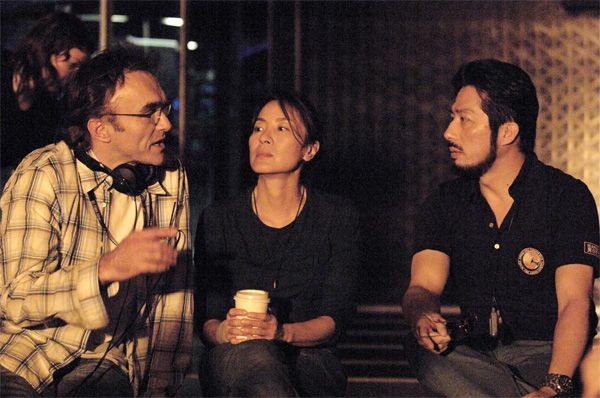
Manchester's Danny Boyle is an anomaly if ever there was one, like David Fincher, he broke through to the mainstream completely by accident and on his own terms. His feature debut Shallow Grave set the tone for the rest of his career; furiously paced, set to a driving techno score, populated by truly fascinating characters who learn both sides of wealth and understand what makes friendship and family work, at the highest cost there is. His films examine human beings at their wit's end through fantastic and very real circumtances. Hallucinatory, colorful, otherworldly, and always miles ahead of the competition, Boyle's films have been something I've always looked forward to because he always bends or breaks genres thoughtfully and leaves behind a host of memorable characters in his path. The mark of a good director, to me, anyway, is when they can make one great horror film and move on. Like Stanley Kubrick and William Friedkin, Boyle gave the world one of the most incendiary horror films in 28 Days Later... which features one of the most powerful climaxes in film history. He's shown the world the talents of Ewan Macgregor, Cillian Murphy, Naomie Harris, Dev Patel, Kelly Macdonald, and Irvine Welsh and along with Ang Lee he's the only one who's received an academy award for his direction; he's been overdue for 14 years.


Todd Haynes
Films: Poison, Safe, Velvet Goldmine, Far From Heaven, I'm Not There
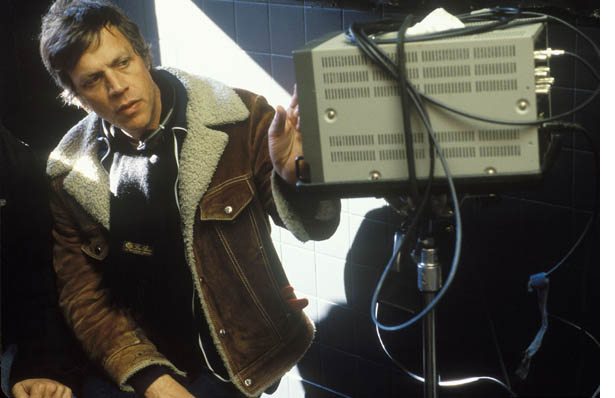
One of the gay community's most pronounced filmmakers, Todd Haynes' style has the immediacy of Spike Lee and the narrative strength that only comes from studying Douglas Sirk. His films Far From Heaven and Safe, apart from featuring Julianne Moore's strongest performances, are brilliant depictions of what goes on beneath the surface of human emotion and relationships. Haynes' filmography shows a love of melodrama and a love of music; passion and the effects that being in the limelight has on that. Though I wouldn't call I'm Not There an unqualified success, it did give Heath Ledger a chance to look normal and gorgeous one last time before his death; his segments are easily the best of the film. Todd Haynes frequently puts the horrors of adult life through the eyes of a child or an impressionable sort; he shows that our decisions effect the youngest lives more than anyone else and his courage and art will continue to effect younger generations.

Wong Kar Wai
Films: As Tears Go By, Days of Being Wild, Chungking Express, Ashes of Time, Fallen Angles, Happy Together, In The Mood For Love, 2046, My Blueberry Nights
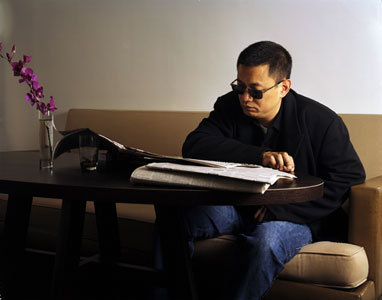
Wong Kar Wai may love American cinema more than any other director here. His films, from his debut As Tears Go By to his milestone Chungking Express to his latest My Blueberry Nights all revel in their debt to the films of the golden age of Hollywood. Even his Jidai-Geki epic Ashes of Time owes more than a little to the films of Otto Preminger and Orson Welles. As for Welles, Kar Wai is finishing up a remake of The Lady From Shanghai. His style and collaborations with cinematographer Christopher Doyle came to define Hong Kong cinema and apart from John Woo he was the most influential action director of the 90s. What action heroes of the last decade don't pay homage (or rip-off) the gun toting hero of his Fallen Angels. Slickly edited, his movies are the tribute to American Cinema that Jean-Luc Godard's always tried to be. To see the greatest Tracey-Hepburn film never made, watch his In The Mood For Love, and you'll leave with some of the most striking visuals in recent history; his use of neon lights and repetition is unparalleled. The repressed love of Tony Leung and Maggie Cheung is wonderful and comes to say all that lovers cannot with their words. His movies, all of them bathed in deep expressive colors are about feelings, spoken and unspoken, and all that passes between two forces, man and woman, director and cinema, time and love.

Darren Aronofsky
Films: Pi: Faith In Chaos, Requiem For A Dream, The Fountain, The Wrestler

With Just two films under his belt, Aronofsky was already a legend in film circles. Requiem for a dream is unquestionably the most famous drug movie ever made and will be fodder for dormroom cinematheques for years to come. Showing us, in what he calls his Mind-Body-Spirit trilogy how permanent the actions of mankind are, Aronofsky created lasting, bleak visions of humanity. From his grimy New York Subway mysticism of Pi: Faith in Chaos to his much lauded but stunning tale of timeless love The Fountain, Aronosky has given rise to a polarizing body of work and a whole new way to think about film. His latest, The Wrestler, is a departure for him and the other members of the New School. Shot for 6 million dollars on digital cameras, The Wrestler is an in-depth and devastating look at the life of a man who forgot how to be a human being. Mickey Rourke, in the part he was born to play, makes suffering seem palpable and Aronofsky's complete understanding of the man and his shortcomings is heartbreaking to say the least. Though things seem dark, happiness is not impossible, and the wonderfully sad ending to the Wrestler is just proof that Aronofsky is capable of awesome power.


Tom Tykwer
Films: Deadly Maria, Winter Sleepers, Run, Lola, Run, The Princess & The Warrior, Heaven, Perfume: Story of a Murderer, The International

Tom Tykwer made perhaps the biggest splash in the international cinema when his Run, Lola, Run made its way to the states. The Wuppertal, Germany born filmmaker's fast and furious reinvention of cinema theory involving jump cuts, long takes, lapses into animation, post-modern soundtrack, and a wicked sense of humour. All of a sudden recognizing Franka Potente's fiery dye job became a cultural secret handshake. His films blend political subtext and stylistic audacity as in The Princess & The Warrior and Heaven and the result are strange and undeniably entertaining. Proving that he could make brainy films in spite of a big budget, Tykwer's enormous latest films The International and Perfume: Story of a Murderer have his crazed style plastered all over them. Though The International may seem like a fairly ordinary spy film on the surface, consider that its hero is constantly defeated by the things that surround him. In a wonderful grey landscape, he's afraid of violence, gets beaten physically and mentally, is constantly thwarted by outside forces; his hands even shake uncontrollably when confronted with the film's awesome shoot out in the Guggenheim; Tykwer's comment on artistic norms. He hasn't sold out, he's just tearing the world apart from the inside.

Guillermo Del Toro
Films: Cronos, Mimic, The Devil's Backbone, Hellboy, Pan's Labyrinth

Guillermo Del Toro was for a long time the one ally I had in the horror community. His little films (made in between his big ones) made effective use of cinematography, set design and Del Toro's penchant for storytelling. Even in his big budget work, Del Toro's stories are all masterfully told; with a reliance on strong likable characters amidst unambiguously evil ones, he crafts fairytales set in the not-too-distant past or the frighteningly near future. Del Toro's fixation on the Spanish Civil War produced two of our most enchnating horror films: Pan's Labyrinth and The Devil's Backbone. Del Toro's spooky humanity and his view on the importance of community breeds hope even in the most comically dark times.

Spike Jonze, Michel Gondry & Charlie Kaufman
Films: Being John Malkovich, Adaptation, Human Nature, Eternal Sunshine of the Spotless Mind, The Science of Sleep, Be Kind, Rewind, Synecdoche, NY
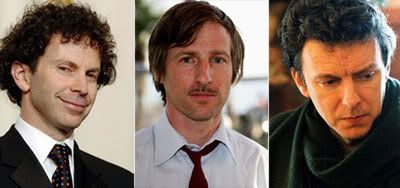
I sort of unfairly stuck these three together because they arrived on the scene in each other's work at roughly the same time and between them there are only six films. As directors, they all rely on vivid imagery, incredibly set and production design, creative storytelling about lovable losers, most from Kaufman's screenplays, ambiguously hopeful endings, and really impressive direction. Spike Jonze's films probe the psyche of failures who've finally discovered what they're good at. Using fantasy and voyeurism as his tools, Jonze finds the most exciting parts of everyday life. Gondry's set design is the work of an adult who never quite grew up, and I mean that in the best possible way. His first two films examine relationship problems from a lens I can say with some certainty had never been used before. Crafting entire worlds out of household items and populating them with the logic of a dream, Gondry makes magic out of depression and regret. His latest Be Kind, Rewind is a feel good film that revels in its message of hope despite its pratically neo-realistic setting and is funnier than half the fare at a multi-plex. Charlie Kaufman, the writer who gave Gondry and Jonze their first films, showed he was just as capable of galling cinematic majesty with his debut Synecdoche, NY. A harrowing mixture of Fellini and Woody Allen with a visual style second to none, Kaufman's film goes deep into the darkest recesses of an artistic mind and the horrors of not being able to control your legacy and in the process tells a gorgeous, elegiac tale that you'll never forget.

Alfonso Cuarón
Films: Sólo Con Tu Pareja, Little Princess, Great Expectations, Y Tu Mamá También, Children of Men,

Children of Men is a little like the password at film schools. Any film kid worth his salt will tell you how much he loved the tracking shots. I'd like to take a second and brag that I was ahead of the curve. Cuarón's films and his unmistakable style have been one of the biggest motivating forces behind my wanting to make films. Watch any of his films and you'll notice (through Emmanuel Lubezki's astoundingly gorgeous photography) that the color green always makes an appearance. Sometimes it's faint, sometimes its overwhelming; it is always wonderful. No one has navigated genres quite as smoothly as Cuarón. Sólo Con Tu Pareja, a screwball comedy about AIDS, if you can believe that, was a cautionary tale that transcends its 1991 release date. His next two, though perhaps not as sound, were aesthetically stunning; The Little Princess remains a children's classic and Great Expectations has some of the most amazing camerawork in history. Following a three year hiatus, Y Tu Mamá También arrived marking a stylistic shift and announcing one of the most distinct mise-en-scene's in a hundred years. His docudrama style, composed of gorgeous colors mixed with amazing use of long takes, invisible but brilliant technical camera work, and a blinding whir of sexuality, violence, drinking, drug use, and a love of both nature and people, Y Tu Mamá También remains a timeless piece of filmmaking. His entry in the Harry Potter series, though suffering from producer's wishes and a PG rating, is one of the best of the series and a fine film. And then came Children of Men. A nightmare given full realization, Cuarón weaves a road movie unlike any other. Clive Owen's Theo navigates politics, war, gender, genocide, assassination, loss, and trust in war-torn england, and Emmanuel Lubezki reinvents cinematography under Cuarón's direction. Like Blade Runner meets Bloody Sunday, Children of Men, like its auteur is relentless and genius.

Ang Lee
Films: Eat Drink Man Woman, The Wedding Banquet, Sense & Sensability, The Ice Storm, Ride With The Devil, Crouching Tiger, Hidden Dragon, Brokeback Mountain, Lust, Caution

Taiwanese director Ang Lee has made films championing understanding, tolerance, and harmony since his start. His first two films Eat Drink Man Woman and The Wedding Banquet examine the clash between tradition and modernity across culture and time are literate entries into the film world. His next film Sense & Sensibility is one of the easiest romantic films to watch. Though it's plot has been done and redone more times than I can count, it's never been done with the softness and sympathy of Ang Lee. Like a modern day David Lean Lee continued to navigate classic novels with his interpretations of The Ice Storm, Crouching Tiger, Hidden Dragon, Brokeback Mountain, Lust, Caution and his next film Taking Woodstock. His two chinese language films Lust, Caution and Crouching Tiger are uncompromising works of art that take roots in the films of his countrymen. Ride With The Devil, Brokeback Mountain, and the Ice Storm brilliantly evoke their time period while doting over the timelessness of falling in love for the first time. Brokeback Mountain is a beautiful tale of love repressed by norms and circumstance with a wonderful score by Gustavo Santaolalla. The Ice Storm remains a hysterically funny yet heartrending tale about youth and adulthood and how the lines begin to blur when placed under a microscope. Ride With The Devil is an engaging tale of friendship in the American Civil War wrought with excellent performances. Ang Lee makes big films and little films and almost always makes great films and the best of them are just about perfect.

Jean-Pierre Jeunet
Films: Delicatessen, City of Lost Children, Amelie, A Very Long Engagement,

Though Jeunet's color scheme and composition in the film Amelie is largely identical to Kieslowski's The Double Life of Veronique, his film is still a peerlessly quirky, charming, and inspiring tale of love. Jean-Pierre Jeunet arrived on the scene after decades of making animation with two dark films: Delicatessen, a sort of horror film about cannibalism in a dystopian future and City of Lost Children, a crooked fairy tale with the weirdness of a carnival. Delicatessen and City of Lost Children smacked heavily of Brazil, Satyricon, and Jan Svankmajer and were art directed within an inch of their lives. Jeunet's films are so uniquely imagined and thoroughly realized visions of abstruse politics. When he changed his tune and began making romantic films, his visual style and his non-linear logic remained. Amelie is the French film that all Americans tell you they enjoy when the question of foreign films come up and I've yet to meet anyone unsatisfied with A Very Long Engagement. Using Audrey Tatou (and her perfect skin complexion), Jeunet builds endearing and astoundingly pretty stories of love and the many places it takes us. A Very Long Engagement features some of the greatest images of post-war France ever dreamed up. Jeunet knows from the ordinary and he thrives on the extraordinary.

Noah Baumbach
Films: Kicking & Screaming, Mr. Jealousy, The Squid & The Whale, Margot At The Wedding

If you know Noah Baumbach and don't spend all your spare time watching films it's because he co-wrote Wes Anderson's Life Aquatic With Steve Zissou. That film's strangeness really only scratches the surface of the odd cast of neurotics who populate Baumbach's beautifully staged films. His first few features, Kicking & Screaming and Mr. Jealousy examine relationship foibles and though they are a little out of the ordinary, next to his later films, they simply can't hold a candle. The Squid & The Whale, his first post-Anderson film recounts his childhood living with his brother and separated parents in New York City. Amidst a beautiful autumnal surrounding, Baumbach's feuding brothers discover the hardships of life, lose their identity and fight desperately to get it back while all around them crumbles. In Margot at the Wedding, expertly shot by Harris Savides, we get the portrait of the artist as a young adolescent with his severely disfunctional mother played by Nicole Kidman in what may be her best role. Things spin out of control, stopping only to linger over tragic injustice, and the entire family, including Margot's sister played by Baumbach's wife Jennifer Jason-Leigh, her husband-to-be Jack Black, and overbearing neighbor Ciarán Hinds, are victims of insanity. Baumbach opens old wounds so he can show the world that we all bleed and that it's never as nice as it looks onscreen. Life is hard, strange, and through it all, beautiful.

David Fincher
Films: Alien³, Seven, The Game, Fight Club, Panic Room, Zodiac, The Curious Case of Benjamin Button

David Fincher would probably not like to be remembered for his feature film debut Alien³, but I give him more credit than he takes. The film, for all its shortcomings is good because of Fincher. His uncanny visual sense and his seriously dark vision of humanity; no one is innocent. When he appeared again with Seven, it was on his own terms. Giving his own twisted notions to the police procedural, Seven is a grimy, grey nightmare world that's still being copied by the makers of horror films. The Game started his chain of films about the underbelly of polite society and honed his ability to make audiences suspend their disbelief for the sake of a thrilling cat-and-mouse game. Fight Club has taken on a whole new meaning as the anthem film of my generation since its release in 1999. Panic Room, while not nearly as well received, is one of Fincher's strongest pieces of characterization. He one-upped himself three years later with Zodiac, a triumph of camerawork, screenwriting, and above all atmosphere. Harris Savides' blue tinted reproduction of San Francisco in the late 60s and early 70s replete with cops one step behind the killer of the title and grizzly (and often affectively humourous) murder scenes. Fincher deftly maneuvers 15 years of investigation and punches suspense and scares into a story that everyone knew the ending to with complete success. His latest The Curious Case of Benjamin Button abandons his typically dirty approach at major city crime and finds himself equally suited to the task of turning a love story into a meditation on life and death without compromising. The film is indisputably beautiful to watch, but when you think about the material, that's where Fincher's vision comes out in the open. Fincher delivers an unflinching sinister look into the human spirit, aided by characteristically magnificent production design and cinematography. Bad never looked so good as when Fincher delivers it.

Park Chan-Wook
Films: Joint Security Area, Sympathy for Mr. Vengeance, Oldboy, Lady Vengeance, I'm A Cyborg but That's Ok, Thirst

Park Chan-Wook, Korea's wildest and least-conventional auteur has done more with violence in three films than most directors do in  a life-time. Filling his movies with pain the likes of which most people dread everyday, Park has dissected revenge in his so-named trilogy, romance in his two latest features, and friendship in his first picture. If we start at the beginning, the flaws in J.S.A are mostly budgetary. A film ostensibly about the division between North and South Korea sheds the boundaries of cost and becomes an incredibly compelling story about friendship. Proving money no setback, he turned byzantinely complicated revenge stories about cause and effect into some of the most beautifully haunting films of the new millennium. Park deserves some kind of prize for the editing and story-telling he employs in Lady Vengeance, which drifts between memory and current events (making use of unbelievable amounts of footage) between prison cells, alleyways, lush apartments, machine shops and cake shops, each given a ridiculously gorgeous treatment. Ask anyone who's seen Oldboy about the hammer fight and chances are they'll fail to describe it; it's extraordinary. His latest film, Thirst leaps between ultra-violence and unendingly cute romance, something he's proven himself more than capable of mastering. Highs and lows are no object to Park and whether it's flirting or maiming, you can bet it'll be beautiful and unforgettable.

Academy Awards - Big Prizes For People Who Don't Need Them

I asked Mr. Danvers to talk about Oscar nominations so I wouldn't feel quite so alone when I start screaming at the nearest television set come February 22nd. Anyway, we've broken it down into categories to make our discussion a little easier. Basho,or anyone else for that matter, feel free to chime in anytime. Incidentally, February 22nd will be one year after my first post on this humble site of ours. Pretty cool, huh? Thank you Shaba for designing such an excellent forum for the rantings of several crazy people, and thank you, everyone else, for contributing.

Firstly, my vote for Best Picture goes to Let The Right One In. Milk, Synecdoche, NY, and Rachel Getting Married are all right up there too, but Let The Right One In is a film unlike most other films and deserves recognition for its gentle storytelling, its visual audacity, its brilliantly winding screenplay, its stellar performances, and its mind-blowing cinematography. It of course, wasn't nominated for anything. Synecdoche breaks my heart in four hundred different places and is probably the best film about artists since 81/2. Charlie Kaufman has a beautifully warped mind. What was yours?

-Scout

BEST PICTURE
1. "The Curious Case of Benjamin Button"
2. Frost/Nixon
3. Milk (Danvers, Scout)
4. The Reader (Danvers)
5. "Slumdog Millionaire"

D: It's a tie (sorry!) It was Milk until I saw the Reader in which the amount of crying in Milk was invisible to amount of crying whenever Kate Winslet is on screen. I give the Reader a little bit more though since it is truly original in the line of films that has the Holocaust in its main factors. If you are going to see it don't read what it's about every plot summary gives too much away. Category is what I expected it to be.
S: I give it to Milk cause it's got just the right amount of everything. It's Van Sant's Godfather or The Verdict. Brilliantly written, beautifully directed, tremendously shot and designed and every performance is stellar. The others up there are great, sure, but this is really the one.

BEST DIRECTING
1. David Fincher, "The Curious Case of Benjamin Button"
2. Ron Howard, Frost/Nixon
3. Gus Van Sant, Milk (Scout)
4. Stephen Daldry, The Reader
5. Danny Boyle, "Slumdog Millionaire" (Danvers)

D: I just love him.
S: Gus Van Sant deserves it. Don't get me wrong, I love Danny Boyle, I LOVE HIM! His movies are my teenage years. David Fincher, too, is one of my all-time favorites. I just think that Milk is such a strong film all around.

BEST ACTOR
1. Richard Jenkins, The Visitor
2. Frank Langella, Frost/Nixon (Danvers, Scout)
3. Sean Penn, Milk
4. Brad Pitt, "The Curious Case of Benjamin Button"
5. Mickey Rourke, The Wrestler

D: I think that he should win even though I'm pretty sure he just let the spirit of Nixon posses him for the role. I loved Mickey Rourke and all and it's great to see him back on top, but I have to give it to Frank.
S: He was Richard Nixon.

BEST ACTRESS
1. Anne Hathaway, Rachel Getting Married
2. Angelina Jolie, Changeling
3. Melissa Leo, Frozen River
4. Meryl Streep, Doubt (Scout)
5. Kate Winslet, The Reader (Danvers)

D: As much as I enjoyed Anne Hathaway's improvement in RGM, she ain't got nothin on Kate!
S: I like that everyone in this category deserves it. I didn't see The Changeling, but I'd like Melissa Leo to get it cause she, like her movie, came out of nowhere. Anne Hathaway was great; it was like she really was an addict. Kate Winslet was alright, but after you see her in one scene, you've sort of got her whole performance. Meryl Streep however, was just astounding. She did a fantastic job with a role that could so easily have gotten her into hysterics, but she did a truly great job.


BEST SUPPORTING ACTOR
1. Josh Brolin, Milk
2. Robert Downey Jr., Tropic Thunder
3. Philip Seymour Hoffman, Doubt
4. Heath Ledger, The Dark Knight (Danvers, Scout)
5. Michael Shannon, Revolutionary Road

D: Heath will most likely win.
S: Yeah, D's right on this one. To say that Dark Knight was based around his performance is putting it lightly. It's like Monster or Capote or any other film based around an incredible performance. He was great and he's too big not to win.

BEST SUPPORTING ACTRESS
1. Amy Adams, Doubt
2. Penelope Cruz, Vicky Cristina Barcelona (Danvers)
3. Viola Davis, Doubt
4. Taraji P. Henson, "The Curious Case of Benjamin Button"
5. Marissa Tomei, The Wrestler (Scout)

D: I loveeeee Penelope.
S: Well, I bought that she was a stripper.

BEST ANIMATED FEATURE FILM
1. Bolt
2. Kung Fu Panda
3. Walle (Danvers, Scout)

D: Walle will win.
S: It's a better film than most of the best picture nominees, so....

BEST ADAPTED SCREENPLAY
1. "The Curious Case of Benjamin Button"
2. Doubt
3. Frost/Nixon
4. The Reader (Danvers)
5. "Slumdog Millionaire"(Danvers, Scout)

D: loved both of them!
S: I just love the story and the way that they were able to grab this great colorful breath of life from the book. Plus who doesn't love that ending?

BEST ORIGINAL SCREENPLAY
1. Frozen River (Scout)
2. Happy Go Lucky (D)
3. In Bruges (An)
4. Milk (ve)
5. Walle (rs)

D: tooo hard to decide!!!! I didn't see Frozen River.
S: I say Frozen River because it came out of nowhere and has no ego. And I like giving big awards to women. Not to mention that this film manages to craft a universal story basically just out of a location. Courtney Hunt is a hell of a writer and that she was able to make this film for next to nothing with performers who feel like real people is pretty astounding. It's characters are all human, their flaws come desperately close to outweighing their greatest traits and the ending is tremendously understated. A simple story given weight through expert characterization.

BEST ART DIRECTION
1. Changeling
2. "The Curious Case of Benjamin Button" (Scout)
3. The Dark Knight
4. The Duchess
5. Revolutionary Road

D: I don't know.
S: Yeah, you can look at my cinematography thing for more on this, but again, Fincher creates atmosphere. His movies are knee deep in art direction.

BEST CINEMATOGRAPHY
1. Changeling
2. "The Curious Case of Benjamin Button" (Scout)
3. The Dark Knight
4. The Reader (Danvers)
5. "Slumdog Millionaire"

D: great.
S: I love Anthony Dod Mantle, but the cinematography of Benjamin Button is just awesome. Fincher has such a visual mind that even the least of his films look amazing. This one happens to look the best of all of them.

BEST COSTUME DESIGN
1. Australia
2. "The Curious Case of Benjamin Button"
3. The Duchess (Scout)
4. Milk
5. Revolutionary Road

D: Austrailia...ewwwww. I don't know.
S: Isn't that why this movie was made?

BEST DOCUMENTARY FEATURE
1. The Betrayal
2. Encounters at the End of the World (Scout)
3. The Garden
4. Man on Wire (Danvers)
5. Trouble the Water

S: Man On Wire's getting all the acclaim, but I loved Encounters. Herzog makes films that transcend time and trends and all else. They are sublime pieces of art and this one is truly spectacular.

BEST FILM EDITING
1. "The Curious Case of Benjamin Button"
2. The Dark Knight
3. Frost/Nixon
4. Milk
5. "Slumdog Millionaire" (Danvers, Scout)

D: awesome.
S: Moody and stylish, as usual. Danny Boyle's films just roll.

BEST FOREIGN LANGUAGE FILM
1. Baader Meinhoff Complex - Germany
2. The Class - France
3. Departures - Japan
4. Revanche - Austria
5. Waltz With Bashir - Israel (Scout)

D: I'm really bad. I haven't seen any of these.
S: Ok, so of these films I've only seen Waltz With Bashir but let me pitch a fit for a minute. If American distributers cared half as much about foreign films as they did about Beverly Hills Chihuahua, maybe I would have seen some of these movies. I know that Janus and Criterion are releasing Revanche sometime this year and I know that The Class won the Palme D'or at Cannes and that Waltz With Bashir is a pretty astoundingly good film. Other than that, I got nothing.

BEST MAKEUP
1. "The Curious Case of Benjamin Button" (Danvers, Scout)
2. The Dark Knight
3. Hellboy 2

D: duh.
S: Yeah, that about sums it up.

BEST ORIGINAL SCORE
1. "The Curious Case of Benjamin Button"
2. Defiance
3. Milk
4. "Slumdog Millionaire" (Scout)
5. Walle (Danvers)

D: At least for the first forty minutes
S: This is the only one of these movies whose score I can remember. Benjamin Button should have had Danny Elfman. Then they would have won.

BEST ORIGINAL SONG
1. "Slumdog Millionaire": A.R. Rahman, Gulzar("Jai Ho")
2. "Slumdog Millionaire": A.R. Rahman, M.I.A("O Saya") (Danvers, Scout)
3. Walle: Peter Gabriel, Thomas Newman("Down to Earth")

S: Imagine M.I.A. with an Oscar. HA! I love it! Her songs were another character in the film, so I think it's only fair. Plus that Peter Gabriel song didn't show up until the credits, so I say give it to M.I.A..

BEST SOUND
1. "The Curious Case of Benjamin Button"
2. The Dark Knight (Scout)
3. "Slumdog Millionaire"
4. Walle (Danvers)
5. Wanted

D: eeeeeeeeeevvvvvvveeeeeee
S: Except for Heath Ledger, the only consistently good thing about the movie

BEST SOUND EDITING
1. The Dark Knight
2. Iron Man
3. "Slumdog Millionaire"
4. Walle (Danvers, Scout)
5. Wanted

D: doot doot doot doot doot beep doot doot beep honk
S: Slick and flawless.

BEST VISUAL EFFECTS
1. "The Curious Case of Benjamin Button" (Danvers, Scout)
2. The Dark Knight
3. Iron Man

S: Yeah, I spoke with a really arrogant friend of mine who seemed ready to stake his life on Benjamin Button. Plus they nominated the thing for 49 oscars, it must be for a reason. And it did look pretty cool.
D: "Brad was like sooo old and then sooo young."
-Teenage girl walking out

My Favourite Film Number 10

This is out of sequence, but I have to doctor my thing about Aliens, because it's very workmanlike and reads more like a synopsis. Enjoy the next step in the meanwhile.

Romantic love between two people is the one sensation that I believe film can capture better than any other medium. In books it is easy to describe what love feels like, what goes on when you see your beloved’ face, hear your beloved’s name, etc. In film you can say all you need to with a glance, a gesture, or a subtle change of expression. Granted love has been misrepresented more times than I care to count, but occasionally a director will get it absolutely right and you know it right away. It’s staggering and harmonious and it makes you jump out of your chair. The swimming pool kiss between Elijah Wood & Christina Ricci in Ang Lee’s The Ice Storm, the quiet honesty of Eric Rohmer’s Love In The Afternoon, and the slow flirtation between Vittorio de Sica and Danielle Darrieux in Max Ophuls’ The Earrings of Madame De… are some of the precious few times that romance has been accurately captured on screen. There is one film, however, that stands above all others as a completely honest depiction of love between two people: David Lean’s Brief Encounter.

Brief Encounter
by David Lean
Brief Encounter tells the story of two star crossed lovers, Laura a housewife (Celia Johnson) and Alec a GP (Trevor Howard), and it pulls no punches. They are both entering their middle age, both are married, have jobs, and no interest in entering such a pact, and yet neither can deny that after meeting by chance three times, going to lunch, the pictures, and a romantic boat ride that they have fallen in love with each other. Neither is unhappy with their marriage or lives, but they feel alive when in each other’s presence, and don’t want to abandon the only thing they feel passionately about. They argue about what to do, when to break it off, how far they should allow themselves to fall from grace, until the conclusion is thrust on them like a bucket of cold water. Told in flashback on the evening the affair ends, a bleak denouement seems guaranteed from the outset and yet through Lean’s characterization the ending doesn’t feel at all like the defeat we see coming all along. Brief Encounter is that brilliant film that ends in defeat, makes it both tragic and triumphant, and still feels like victory.

To love Brief Encounter is to love Celia Johnson. Her Laura is one of cinema’s great heroines. Her voice like torn silk quavering under the stress of having to chose between two exclusive kinds of happiness; her face that of a tortured animal cruelly thrust into peril. She makes clear the pain of finding happiness in the socially unacceptable using just her eyes. Though Celia Johnson was only 37 when she played Laura through her considerable strength as an actress she makes it clear that this may be perhaps the last chance for a meaningful relation in her life. Unlike the ludicrously ageist portrayals of women scorned that populate modern films, Brief Encounter feels like the real thing. Like a cross between Simone Simon and Mary Astor, Celia Johnson’s performance may just be the saddest in film history. Her humanity and her devotion to the happiness of others makes it impossible not to sympathize with her. And because she doesn’t know what she wants, we suffer right along with her, eating up every moment of her passion finally coming unbuttoned after years in polite company, and falling down hard whenever her happiness is taken from her. David Lean, perhaps more than any other director of his time, understood how hard it is to be a woman and his early films dictate how hard the job of a female can be. How can a woman seek pleasure for herself when society’s expectations chase after her no matter how hard she tries to find privacy. Between Summetime, The Passionate Friends, This Happy Breed, Madeleine, Hobson’s Choice and Brief Encounter Lean covers just about every aspect of modern femininity in relation to the stern eyes that watch a woman every day of her life all the while refusing to pass judgment. Lean was a feminist that understood how hard it is to find yourself amidst mountainous social constructs and stiff British tradition.

Brief Encounter might be called lover’s noir; there is no murder, only human emotion; no suspect to interrogate, just a woman confessing. David Lean was a filmmaker who understood human nature and crafted plots around them that rivaled any spy thriller or detective potboiler of the time; the Hitchcock of the soul or the Clouzot of the heart. Each element builds on top of his very human drama to craft a tense, layered drama that finally makes infidelity as important as a bomb at police headquarters. The frequent use of Rachmaninov’s Piano Concerto number 2 makes every action and glance sink in. Robert Krasker’s photography, just four years before his brilliant work on The Third Man, fills the screen with shadow and dusk whenever passion is afoot. What people walk away from Brief Encounter with are typically those arresting shots in the Milford train station. Along with the footage of the trains breaking the stillness of the night air and separating the lovers each night, there are those silhouettes. There to remind the audience and our heroes that someone is always watching. Their affection for one another is constantly put on hold by the arrival by one or more people (often droll acquaintances who both live within and champion the rigid confines of the bourgeoisie lifestyle that Alec and Laura are desperately trying to escape), something that anyone in a tentative romantic situation can identify with. In fact Brief Encounter is a film I find myself in tune with each time I view it. Having been in that situation and having known other people in that situation, I can say first hand that the feelings of both Laura and Alec are as true to life as they come and for a film made in 1945, that’s saying quite a bit. When we find ourselves torn between love and responsibility, the right choice is never apparent or easy to make; here is a film entrenched in that conflict.

Watching the love between two people blossom and then tragically fail is hard to do, and it’s no easier when the people are as charming and human as Celia Johnson and Trevor Howard. And yet their love fills every inch of the screen, it is unavoidably, undeniably strong. The film was mocked at the time for showing a supposedly tumultuous love affair that contained so little tumult. Though they have the stats right (Celia Johnson and Trevor Howard kiss exactly four times on screen and spend only five days together), they have missed the point altogether. Lean was not attempting to pull the wool over anyone’s eyes. He was making what remains one of the most honest films ever made, and yet somehow came out with one of the most enthralling, heart-wrenching pieces of art ever made. This might not have the prose of Shakespeare or the color of Gone With The Wind, but when Alec¬ and Laura must say goodbye publicly without the words they’d rehearsed a hundred times over, when things go wrong in the worst way possible, we are given one of the most harrowing moments in cinematic history. What happens when you cannot say goodbye to the thing you love the most? Where do those feelings go? Brief Encounter presents questions and dilemmas that are both terrifying to consider and achingly human. Is an audience allowed to root for a woman cheating on the father of her two children with a married doctor? Perhaps the reason the film’s conflict was lambasted so is because nothing, not even Krasker’s cinematography, is black and white. Every setting and problem comes wrapped in smoke and darkness. The world seems to treat the problems of Brief Encounter with contempt; society knows the answer to their problem and has ways of dealing with middle-aged dreamers who feel passion supercedes order. Brief Encounter is bold, beautiful, funny, haunting, daring, and above all else romantic.

3 Pages on One Song

Essay on DLZ
Song by TV On The Radio
Commissioned by Stuart Bogie

You could be on an empty city street after all the people have left. Trash and old newsprint flutters around the street in a feverish wind and hits telephone polls and overturned trash bins. There’s evidence that people may have been here in the recent past, but they aren’t here now. You could be the last survivor in the dirty, moist hallways of a post-H.R. Giger spaceship, stuck in a nihilistic alien parable. You could miles underground, the last of your or any other people, just waiting. Looking around corners, feeling the moisture collecting in pools, watching everything rust. You could be driving on an abandoned highway toward some perilous errand or other, the yellow lines passing beneath your headlights monotonously. Your mind is heavy, you’re very alone. All of these images, these places in the subconscious can be reached with precisely three chords and a hip-hop drum beat that can be described as a lot of things, first and foremost: aggressive. Before the lyrics, before Tunde Adebimpe’s haunting falsetto, before Gerard Smith’s organ, before Katrina Ford’s catchy, yet foreboding “lah-lah-lah”s, before the whistling that sounds like it was recorded over your grave, before anything else, there are three low, low notes on a keyboard and a drum beat.

TV on the Radio might be said to be professionals at mastering atmosphere. Their songs are hard to peg as being a part of one particular style; on any given TV on the Radio record you’ll find a hybrid of R&B, goth rock, post-punk, funk, and hip-hop, and yet you’ll be no closer to describing their overarching sound. One thing has been true from the start, however, and that is that the music of this Brooklyn band always elicit feelings and images. Any given TV on the Radio song will put you in some place new and different in your mind. The droning beauty of “The Wrong Way” or the furious chorus of “Wolf Like Me” can take any listener to a lot of very dark places and they will undoubtedly have a damn good time exploring them. Their latest album, Dear Science, takes a less forward approach to their usual mood creation. Instead of the soundtrack to a film about the end of the world, Dear Science seems to the playlist used at the party before that same end. Much more upbeat funk and soul influences come through than the mindbendingly excellent gloom they’d perfected. A stylistic shift like this one is welcome, of course, but it’s also a welcome relief to know that not every song is completely different; I did like those spookier songs. And so on Dear Science there are a few songs that capture that older sound that many fans may pine for after the psychedelic funk of side A. Foremost among those tracks that bring back a doom-laden nostalgia is DLZ.

DLZ is, as it’s lyricist and creator Tunde Adebimpe puts it, a testament to death’s lasting effects. His lyrics strive to correct the idea that after death, your legacy is done with and you can no longer achieve anything. Anyone who, like Adebimpe, lost a friend or someone close, knows this to be false. The subject matter is very heavy and in most other hands would probably be either a slow-burning post-rock ballad or a sparse, introverted tune on a battered acoustic guitar delivered coldly and nervously. Adebimpe’s take is quite different and takes on a much angrier quality than most songwriters do when Death is the subject. Injected with Adebimpe’s slick enunciation, confident delivery and the sheer musicality of his voice, DLZ is a tough song. His opening words, delivered lightly, are cryptic; if their meaning isn’t immediately clear, certainly the message is. Adebimpe’s seething near-whisper betrays his mood even if his words don’t. “congratulations on the mess you made of things, On trying to reconstruct the air and all that brings. And oxidation is the compromise you own, but this is beginning to feel like the dog’s lost her bone”. It would appear as though Adebimpe is playing devil’s advocate, fueling his own argument. Congratulations seems to mock the subject of his berating, and oxidation immediately brings up corpse imagery; despite your best efforts, you now rot, every second you’re body lies underground, death takes its toll on your human form. Thus all you’ve achieved is as impermanent as your earthly flesh.

At about this time, that spooky organ begins it’s dance behind the drums, conga, and that same three chord synth-bass line. Death must surely be the topic of debate; if you isolate that great organ line, you might just see skeletons dancing jovially about a bonfire. “You force your fire then you falsify your deeds, your methods dot the disconnect from all your creeds. And fortune strives to fill the vacuum that it feeds, But this is beginning to feel like the dog's lost her lead” This line is a bit tougher to read, but hypocrisy is still on tap. The disconnect from all your creeds could refer to the contradictory views on death in most cultures, especially those cultivated and kept in America. In my hometown, a priest who had spent a lifetime telling widows and orphans that god had sorted it all out in a master plan couldn't handle his own grief when his brother passed away late in his life. Suddenly, his life's work seemed as shambolic as a circus fortune teller. He didn't have the answers, he was just as alone as anyone else. Worse still, what did it mean that he labored over his own personal tragedies but had swept so many lives under the rug? Did these people not mean as much as the life he had lost? No, the families of the deceased whom he had spoken to beforehand just got cheated. Some of that anger seems apparent on this song.

"This is beginning to feel like the long-winded blues of the never" His pronunciation becomes assured and quick. The word never means a lot. The music matches him beat for beat, getting louder as he gets angrier. Who can say that you will never mean anything? Who can say for sure that something will 'never' happen? "This is beginning to feel like it's curling up slowly and finding a throat to choke." He spits out words like accusations at a trial all volume and fire. Death must take someone, it comes to all of us. Someone close to him. "Barely controlled locomotive consuming the picture and blowing the crows, the smoke." Death is a train now. Crows, those that haunt cemeteries, smoke all that remains once it has taken any lingering hope of legacy, burned it as fuel and continued on its way, your memory not formidable enough to stave off becoming what all people become - dust. "Static explosion devoted to crushing the broken and shoving their souls to ghost."As if it needed to be said - death. You will be forgotten. The musical elements - organ, drums, percussion, the backing vocals, a new screaming ghost-like synth line in the back of it all - all whirling around each other behind Adebimpe's mighty cries. Nearly deafening in it's combined power. "Eternalized. Objectified. You set your sights so high." To want to achieve immortality is but the wish of a immature child. "But this is beginning to feel like the bolt busted loose from the lever." An error to be corrected, nothing special.

Just when things seem at their peak - volume, anger, argument - then comes the gut punch that carries you to the end of the tune. Quiet, the eye of the storm and then Adebimpe roars out like every kid killed before his time - the choir of the unsatisfied dead. "Never you mind Death professor" like a circular saw tearing through the notion of the afterlife and every frocked consoler who champions forgetting and moving on. "Your structure's fine, My dust is better" more bitter sarcasm as the volume reaches its peak. Your way of looking at things is the superior one to mine, that I'm dust and nothing more is acceptable. I should just move on. "Your victim flies so high All to catch a bird's eye view of who's next." Heaven exists simply so that you look down onto Earth and see which of your friends will be turned to dust next. Your life on earth is just a stepping stone - now get over it. This childish world view, designed to get children to behave has infuriated intellectuals for centuries - Adebimpe's concern is simply voiced louder. Loud enough for all to hear. "Love is life, My love is better." The horns come in beneath it all like the voice of the long dead joining in on the indictment of millions of years of backwards thinking. "Eyes could be the diamonds Confused with who's next" Who shall go next? "Your shocks are fine, My struts are better. Your fiction flies so high, Y'all could use a doctor Who's sick, who's next?" The doctor quip could be a few things - those who believe in death being the next stop could need their head examined. Those who think that they should lay down and wait for death as it grants all our wishes could also use a physician to slow the decaying down. The end draws near. "Electrified, my love is better It's crystallized, so am I. All could be the diamond Fused with who's next," My love is crystallized and I am too. Like a mosquito encased in amber, all your feelings, impact, interests, passion, all of it encased forever; it is unmoving and affects no one. You're body and everything you've done are at rest never to move again.

The message has been sent, we must now receive it. The music quiets and things return from the crazed heights they'd just reached. "This is beginning to feel like the dawn of a loser forever". Perhaps birth, perhaps death. Dawn of a loser forever. Anyone who feels life is secondary to the afterlife? Anyone who died believing they meant nothing on earth and shall forever mean nothing? Anyone who, with that in mind, decided never to make anything of themselves? Anyone who thought the love they gave in their lifetime, the skin they touched, the lives they've changed, wouldn't last longer than the seconds it takes to bury them? Adebimpe repeats the line again and again as things fizzle out, as things die. The message, the song, the voice, will live on even after everyone dies.

My Favourite Film Number 8

A digression is about to take place, one that I’ve been looking forward to ever since I started writing about movies. I’ve branched into sci-fi horror but a few times, and each time it was because zombies were involved. Now I take a moment to digress fully from the living dead and tackle a series of films I’ve loved more than any other (my affections for it rival those I reserve for Romero’s Living Dead Trilogy). This is a trilogy comprised of a film that changed science fiction forever, a film that became the first prestigious monster movie, and a movie that remains one of the most famous box-office horror stories of all time. Let’s start at the beginning, with the film that ran with the smartest ad campaign ever conceived for a movie. Close-up on an egg, not unlike an ostrich egg, cracking open and pouring light out of the center. Then a tagline: “In Space No One Can Hear You Scream.”

Alien
by Ridley Scott

In actuality, the egg looks nothing like the one used in the film it advertised, and the fact that audiences in 1979 had no clue what was about to happen was just about the coolest damn thing I’d ever heard. Imagine going into the Exorcist or The Hills Have Eyes when they were new without any idea what you’re about to see (or for that matter, imagine going into Razorback), not even a vague hint as to the nature of things; that’s what audiences got in 1979. The film starts with one of those post-Star Wars miniature ship crawls, but the one here seems different from the million others you may have seen – it’s darker, less glamorous. The ship is called the Nostromo; a commercial towing vehicle on a return trip. In what will prove to be one of many brilliantly composed, devastatingly quiet, genre-breaking moments in Alien, the crew wakes up from hyper sleep and then goes to breakfast. The first to wake is executive officer Kane and then the others follow. Captain Dallas, warrant officer Ripley, science officer Ash, navigator Lambert, chief engineer Parker and his assistant Brett all wake to discover they’re being paged by some beacon or other on a planet a fair distance away from home (which is still Earth, in case you were wondering). There is also the ship’s cat Jones, but we don’t see him wake up. After trying to get in touch with traffic control in Antarctica (a Lovecraftian device), they figure out that Mother, the ship’s computer (on “company” orders, as we’ll later see) stopped them in their tracks to follow the signal. The planet is uninhabited and the weather conditions go a long way toward explaining that – it appears to be snowing nuclear debris at gale force speeds. The landing gear snags on something while they land and Parker and Brett have to fix it while Dallas, Lambert, and Kane go exploring the planet’s craggy surface to find the source of the signal. What they find is another ship, shaped like a crab claw that made a similarly calamitous crash landing and never took off again. Inside, our explorers lose radio contact with the Nostromo and then find the remains of its pilot: a behemoth alien entombed in its seat with a hole in its chest that would indicate something has burst out. Beneath the carcass is a hole leading to a cave-like basement area where a few thousand stowaways wait for our intrepid space cadets. Kane belays down into it and sees that it is full of leathery eggs that would probably come up to Kane's waist if he stood upright. Kane is understandably fascinated and thus doesn’t run like a bastard on fire when one of the eggs opens up and like the proverbial cat he pays dearly for his curiosity. Ripley has in the meantime figured out that the signal was some kind of warning (too little, too late, eh?); Ash tells her not to worry about it.

When Dallas breaks radio silence a short while later, Kane has something stuck to his face that no one has ever seen before. Ripley refuses to let Dallas, Lambert and the incapacitated Kane back on board as it’s a direct breach of safety protocol. Her objections are over-ruled when Ash lets them in anyway, much to the third officer’s chagrin. When Dallas and Ash surgically cut Kane’s mask off, they find a pale-skinned animal with eight humanoid digits for legs all clasping his face and its tail wrapped firmly around the man’s neck. X-rays reveal that it’s got a proboscis of some kind in Kane’s throat and might be feeding him oxygen. Prodding it just makes the tail clench tighter on Kane’s neck. Making a minute incision releases highly acidic blood that promptly melts through three floors worth of ceiling stopping just short of the hull. Kane is most assuredly in some hot water – Dallas is flustered and clueless. Parker and the others get the ship running again and they take off for Earth once again. Not 24 hours after they brought Kane on board, Ash looks in on his patient and discovers a paucity of space spiders – a search of the room turns up its corpse hidden in an overhead compartment. Kane wakes up in time for one last meal before they all go back into hyper sleep. Kane really ruins the jovial mood when he starts having an attack and then a wormy thing with fangs bursts through his chest and runs away leaving everyone coated in their first officer’s blood. They jettison Kane’s body into space and set about locating the culprit – what they don’t count on is that it has been growing rapidly since its escape from their friend’s anatomy. When next we see it, it’s a much more formidable opponent than it was in its spider-crab or worm stage and it appears to have no qualms about eating people.

The ways in which Alien succeeds are almost innumerable; there’s the score, the production design, the art direction, the cinematography, H.R. Giger’s creature and ship designs, Ridley Scott’s script doctoring and direction, the stellar performances, and the scare moments. In order then? Jerry Goldsmith’s score is, along with Derek Vanlint’s cinematography, the first thing we encounter in this film. Goldsmith does a very interesting thing with his compositions. The music seems to always convey a sense of doom and/or foreboding, even during lighter moments. The scene in which the ship makes for the uninhabited planet and the crew enjoys a rare moment of cooperation; everyone’s smiling but the music tells us that they’re making a grave error and that darkness lies in store. His music also greatly helps the scare scenes unforgettable like when the Alien shows up in Ripley’s mad dash for the escape pod and the horns flare up like torches. What’s better even than his moments of orchestral-filmic synergy is when his music builds up to something and then gets quiet. When the music just ceases after a build-up, moments like the climax of the chase scene in the ducts take you fully by surprise. Perhaps Scott had something to do with it, but those moments where everything is deathly quiet except for the odd faraway clanging or industrial-sounding noise are brilliant. In fact a good deal of the film’s action sequences happen in silence and they’re much the better for it. Letting the terrific sound design take over was a wise choice in those moments; the noises that accompany the alien attacks are superbly chilling.

The production design and art direction complement each other beautifully. I think the perfect example of this is in the difference between the ships dirty underbelly where Parker and Brett spend most of their time and the sterile control room where Dallas talks to Mother, the ship’s computer. Alien was the first film to make the interior of a space ship look like an old factory, which is, let’s face it, what a commercial towing space craft would look like after years of use. This was the movie that revolutionized the sci-fi film in that regard. Star Wars took steps in that direction, but Alien was really the one. The viewer is constantly confronted (in a tasteful way) with the many corridors of the big, dirty Nostromo. The color and relative size of everything is all perfect, it’s realistic and mesmerizing and best of all Ridley Scott places his actors in the thick of them, but doesn’t give them the Lord of the Rings money shots Peter Jackson gives to every one of his scene changes. Scott keeps everything reigned in and he can basically keep wowing people because all the elements are in check. His story arch is also pretty remarkable; killing the characters he does when he does is just another way to ensure that the audience is just as confused as the crew of the Nostromo. The subplot involving Ash confuses the hell out of everyone the first time they see it. Derek Vanlint’s cinematography helps a good deal; he works no small feat in making the sets of Alien look realistic; his use of low-lighting and brilliantly placed incidentals (the flamethrower, the emergency lights, the lights on the space helmets) makes everything all the more realistic and never draws you out of the action. This is key in the scenes when the creature shows up. In the wrong hands, the alien would look painfully like a guy in a suit (as it is this almost happens a few times) and that would have been a goddamned crime. Scott and Vanlint wisely keep the critter out of sight for most of the film. Nothing kills a monster film quicker than overkill; filmmakers need to know how to tease and deliver in proper doses. I choose my words carefully here. Anyone who’s seen the design of all things Alien knows about its creator’s affinity for putting sexual undertones into his work. The movie is, ostensibly, about a forced birth, so it makes a lot of sense that the creature and his home base should be a little suggestive. This is why every possible architectural hole looks like a vagina or a sphincter, like the openings to the big derelict ship or the tops of the eggs, and why the monster has what looks like a penis with teeth in its mouth that spews a viscous secretion. Giger’s work has been praised probably more than Ridley Scott’s direction, and it stands to reason I guess, as aesthetics stay with people much longer than mechanics. And when you’ve seen three people in space suits walking into a giant vulva, you don’t soon forget it.

As for mechanics, another reason why perhaps Ridley Scott isn’t the first name that comes up in a discussion of Alien is because his direction is pitch-perfect. Ridley Scott is one of those directors who can get a film to work so organically that his direction basically disappears. In other words, Alien is a movie that never lets you know it’s a movie. There are so few times where you wonder about the making of this, the placement of that, all those thoughts comes afterwards once the magic is done. Alien sucks you in so thoroughly to its man-made world that you forget that it’s man-made. The only time that the medium is revealed are in those sly close-ups Scott employs on things like the face-hugger, but those are so subtle you don't notice them. He is dead set on making sure rapt attention is paid. And the secret ingredient that ensures we aren’t constantly focusing on the little things are the unprecedented performances. In one of the few instances that a producer has been dead right about a film’s direction, Walter Hill and David Giler decided that the Dan O’Bannon/Ronald Shussett-penned script they were handed was not nearly good enough. They took liberties and rewrote the everloving crap out of O’Bannon’s script and once Ridley Scott finally got to the set, he set about making a real film out of a B script. The dialogue is a minor miracle – to capture the feel of a real, worn-down, grimy space ship, similarly worn-down people would be needed to pilot it. So, in what would become standard operating procedure for Alien films, a handful of character-actors were hired.

Alien has exactly seven characters and if they weren’t all excellent, the movie would simply not work. Tom Skerrit as Dallas is believably over-matched and tired – his flustered claim “I just run the ship” is a wonderfully timeless line and fits so many ill-fated cinematic captains like a glove, and he seems to know it. Dallas wants desperately to feel like he knows what’s best, but he makes mistake after mistake and he’s all too aware that he’s a clueless pawn and just wants to go home. Harry Dean Stanton is one of my favorite character actors and his turn as Brett is one of his most believable. Yaphet Kotto is tremendous as Parker – he is menacing just through his sheer physicality and his dialogue delivery is prosaic and full of that sort of mechanic's bravado. John Hurt and Ian Holm, the only British faces in this British movie, are both a joy to watch. They both make whatever film they’re in much the better for having them in it, and they both command their screentime well. Watch John Hurt as they take atmospheric readings of the alien planet, he does and says so little, but he’s hypnotizing. Ian Holm’s acting becomes much better after the twist has been revealed. Go back and watch the way he deflects questions and subtly pushes all action toward one objective, then you see that his ambivalence has a much more sinister edge to it and that Holm was really doing a much better job than you thought. Veronica Cartwright was by 1979 an old hand at the damsel in distress role and in some ways her over-wrought horror is the most believable. It may be the first real performance by any woman in a sci-fi film up to that point. Sigourney Weaver was the odd man out, having only done minor film roles and stage plays in England. She walked away from Alien with the best possible rewards waiting for her – I think it’s safe to say those Oscar nods she’s accumulated wouldn’t have come about were it not for her turn as Ripley. She’s a terrific and beautiful actress and it took something as intense as Alien to get her face in front of the public’s eye. So with such competent actors handling everything glamourlessly their weariness can grow as things become more and more grim. These are seven people who were already at the end of their rope who now have even less to grasp onto. Imagine for a second being woken up in the middle of the night and asked to stay awake for another 48 hours and survive constant tests of mental endurance and then fight the smartest killing machine you’ve ever encountered. You think you’d be as collected as Nicole Kidman in The Invasion, or might you look a little more like Lambert?

Finally the movie is simply terrifying. Ridley Scott had said that he didn’t want to make a film in the tradition of the B-sci-fi the script so clearly took its cues from. He wanted to make, in his own words, “The Texas Chainsaw Massacre of science fiction.” It comes closer to being The Legend of Hell House in Space, but, its horror elements are assured in any case. The Nostromo is a huge environment so the characters are able to co-exist with the creature for long stretches of time, and yet, its darkness is reminder enough that things are bad. So when the film wants to scare you, it’s already gnawed at your fear center enough to make you susceptible and despite tremendous build-up in some cases it still manages to surprise. Ridley Scott really is some kind of genius; twist after twist and we should see it coming, but somehow we never do. Alien is unquestionably one of the greatest films ever made; it's one of the greatest sci-fi films and one of the greatest horror films, all you have to do is decide which aspects you like best, but either way you'll enjoy yourself.

Best Film of 2000 B.C.E. - 2009 C.E.

Modern Depiction of the Tree of Life

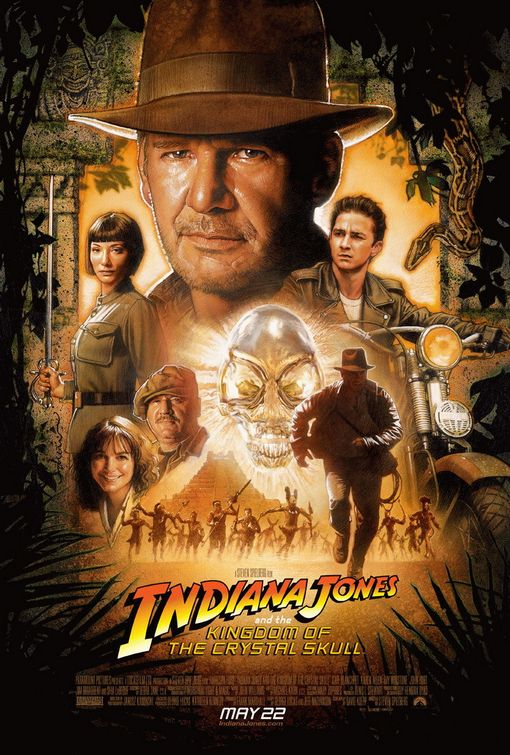
Okay you culture snobs, I think it goes without saying that you have been purposely avoiding the inclusion of Indiana Jones and the Kingdom of the Crystal Skull on your "best of 2008" lists. Spielberg's long-anticipated magnum opus clearly operates on levels of esoteric beauty and significance what has slipped under the radar. It is the timeless, cross-cultural story of the messiah archetype's journey to an ultimate reality, the Hindu concept of moksha.

Jesus-Buddha-Muhammad

Prof. Henry Jones Senior, Dr. Henry Jones Junior, and the recently-introduced Henry "Mutt Williams" Jones the third are a characterisation of the Christian idea of the Holy Trinity, expressed as a dharmic henotheistic representation. Jones Sr. is the foundational father, Yaweh, Brahma, or otherwise considered: he has paved the foundational structure upon which our road to enlightenment will be built upon. He is followed by the Jesus-Buddha figure, Indiana, who is the messiah and martyr figure. Spielberg ingeniously harkens us back nearly three decades to Indiana Jones and the Raiders of the Lost Ark, in which Indiana is crucified for trying to protect the Ark of the Covenant.

Vanguards of the New Era of Enlightenment

The ark represents not only the four cardinal virtues of both Christian and Platonist philosophy in it's fourfold geometry and tenfold (remember that in the base ten number system, ten is the unit comprised of four even quarters) commandments, but also by it's super-mundane presence in the Jungian fact of collective consciousness. The ark is the sacred knowledge of law, which Yaweh (Henry Jones Sr.) had long sought to protect alongside the blessed knowledge of all, enlightenment: the holy grail, out of which Jesus (Indiana) drank ambrosia (the Holy Water) and was bestowed with the knowledge of good & evil (and thus cured His Father, at the expense of being banished from the Garden of Eden, thus resulting in the ultimate destruction of treasury of Petra). However, this is deviating from the original topic.

A combination of Jung's "Abusive Mother" archetype and Frudian facts of the Oedipus Complex, Spielberg has all the bases covered and watched vigilantly.

Following Tibetan Buddhist tradition, the ultimate successor of the Jones lineage is found by a supernatural search: the Dalai Lama, "Junior Junior", is revealed as the perfect completion of the Triple Goddess' form.

Vishnu the Destroyer & Jesus the Preserver

Try watching Indiana Jones and the Kingdom of the Crystal Skull again with these thoughts in mind, and see if you have a change of heart. Next week I will delve further into the symbolism as it applies to the movie's turning points and thematic developments.

Best Films of 2008

Order is tough for these, they were delightful in so many different ways and inspiring in more ways than I can count. I'll keep the descriptions to paragraph length as I already made as big a deal as I could over my favorite film this year. At the bottom are Mr. Danvers' choices.

Slumdog Millionaire
by Danny Boyle

Danny Boyle is one of my favorite directors, has been for as long as I’ve loved film. Trainspotting was one of the first films I saw and viewed as something brimming with artistic merit. 28 Days Later is still one of my favorite movies; Millions is one of the most thoughtful family films I’ve ever seen; Shallow Grave remains one of the most auspicious feature debuts of all time. Slumdog Millionaire is a stylish genre bender of sorts – Danny Boyle is famous for them by now - part travelogue, part diary, part romance, part message movie. We follow the tragic love story of Jamal and Latika, two hopelessly poor, hopelessly scarred youths in the slums of Mumbai. The MIA-Heavy soundtrack is playful yet conscious, like most of Slumdog. Anthony Dod Mantle’s camera brings out the life and color of India at a pace no cinematographer has yet captured. Boyle’s characters are caught in a sweltering climate of social unrest and overwhelming odds and the worst parts are when they resign themselves to their fate as it is, quite simply, inevitable. Inevitability and destiny are under the microscope and it wouldn’t be a Danny Boyle film without a killer ending = and he more than delivers. Sometimes what you need to see are two lovers running headlong toward one another.

Let The Right One In
by Tomas Alfredson

Tomas Alfredson is some kind of genius. I wrote pretty extensively about this film after I saw it the first time and my suspicions were confirmed when I went to see it again (incidentally this was the only film this year that I felt compelled to see twice simply because I was awed by its quality. It's also one of the few that, as soon as it ended, I knew it was one of the best films I'd ever seen and felt compelled to tell any and everyone about it). This is a magical little story, one that combines filmic prose with extremes in innocence and guilt, both pulled off with ease. The story of a young vampire, the only vampire film since Near Dark with believable protagonists and vampires you could understand and sympathize with. The Twilight comparison is both inevitable and poignant; that such a brainless attempt to invent youth culture tackled the same subject matter as a little movie with a fourth of the budget and subtitles is really proof that Americans are the last people to understand what makes a good movie. Back to majesty of this yer film. Let The Right One In is a gorgeously composed movie that’s unsettling for nearly every second of it’s running time. Even during the tenderest of moments there is a feeling in the pit of your stomach like the rug’s going to get pulled any second. Tomas Alfredson is clearly a gifted man, who else could make even the most light-hearted moments feel like white-knuckle suspense. The film has you by the collar and never lets go – which is why it’s ending is so perfect because it releases you in the most perfect way.

Milk
by Gus Van Sant

Milk is a film in the finest tradition of films. Milk will be remembered as a film as grand and gripping as The Crowd, Citizen Kane, The Third Man, The Godfather, and Last of the Mohicans. Before you jump down my throat, let me clarify by saying that I don’t attempt to make quality comparisons here, I simply mean to say that it’s a sprawling political epic with a truly awesome cast of characters and a nicely winding story. It is as satisfying a filmic experience as the aforementioned classics. To watch Gus Van Sant’s best films is really something. Milk bridges the gap between his quieter films and his sappier films and is easily his best. At each turn, Van Sant and screenwriter Dustin Lance Black raise the stakes everytime there’s even the slightest lull and each actor adds to the conflict in their own unique way. Sean Penn is remarkable and more than reminds everyone why he was once considered the greatest American actor alive – he still is. When he’s directed by the best and has such a likeable character to inhabit, Sean Penn is a maelstrom. By the film’s inevitable conclusion – which is handled with the grace of an aria – it’s still heart-breaking and mesmerizing. Milk is a special achievement.


Rachel Getting Married
by Jonathan Demme
It’s almost not a movie – were it not for Demme’s cheating the Dogme manifesto by making one half of his film’s titular marriage a musician, you could almost not tell that this was staged. Jonathan Demme is a pretty excellent filmmaker and this may just be his crowning achievement as a director of actors. Anne Hathaway in particular is stunningly human – friends of mine criticize me for this, but when it appears as though you’re watching people do things, that’s when I feel an actor has done his or her job. A lot of people expect grand playing and soliloquizing or strange behavior from performers. For me it’s all in the realism. Here, some of our greatest performers – Anna Deavere Smith, Deborah Winger, Rosemarie Dewitt, Tunde Adebimpe – disappear inside their roles. Bill Irwin is never not Paul, Rachel and Kym’s anxious father plagued with troubling memory, his excitement almost frightening because of the man’s intensity. Tunde Adebimpe, an infectiously funny man in person, is the reserved husband to be, just trying to fit in and not get brow-beaten at his own wedding. Anne Hathaway. Anne Hathaway where have you been all this time? Good god, you’ve been wasting yourself! It’s a movie that takes your hand and guides you through one of the most entertaining and troubling weekends ever filmed.

[Rec]
by Jaume Balagueró & Paco Plaza

I had no expectations. I literally watched [Rec] thinking it would be passable, at best. So I watched it on my computer one night; it has yet to find U.S. Distribution of any kind. Even on youtube, even with digital cinematography and shaky-cam, even with the noise from the apartment above me this movie scared the hell out of me. If you’ve ever watched horror films – any era, any type – and wished that the people would behave like ordinary people, this is your film. Finally, reality and horrific images blend perfectly. Were it not for my knowledge of the nature of this film, I would have been fooled by its opening. A reporter and her camera man spend the evening with the firemen at a firehouse in an urban Spanish neighborhood; they kill time mostly until finally the bell rings and they go on call with Alex and Manu. They don’t find a fire, but they do find an apartment building stricken by a virus of some kind. Then the doors are locked from the outside, the whole building quarantined and the pace becomes break-neck. This film, shot on cameras that a newscrew doing a human interest story would actually use, feels like a dogme horror movie; the cutting is seemless and it hardly ever feels like a film. More so, even than The Blair Witch Project or 28 Days Later, this feels like the real thing. The way in which directors Jaume Balagueró & Paco Plaza utilize the space and personalities of each person is thrilling. When you can’t tell that you’re watching a film, when you are so drawn in that you hurry from one 8 minute segment to the next, when you’re terrified of an image that couldn’t be more than 17 inches long, a filmmaker has done his job.

Synecdoche, NY
by Charlie Kaufman
When I saw Synechdoche, NY, Charlie Kaufman was there to answer any and all questions we had. I couldn’t think of a single question he could answer. I was too awestruck to think of a single thing to want him to clarify. Sure, there’s plenty here that doesn’t make sense on the surface, but together all those crazy-ass elements form a movie that neatly personifies perfection despite a weirdness so overwhelming you simply have to shake your head. To watch the story of disintegrating theatre director Caden Cotard is basically to stare death in the face; that this movie started its conceptual life as a horror movie is no surprise. The movie starts inconspicuously enough; a man is married, perhaps things aren’t all well. He has a crush on the ticket girl in his movie theatre and he dislikes the work he’s doing. Just after we buy that maybe this will be an ordinary movie, Caden begins seeing an increasing number of specialists to see about his declining health (the most bizarre of them is the marital counselor with the swollen ankles who follows him everywhere he goes and gets some of the film’s best lines). It’s maybe two-thirds of the way into the movie, when a mammoth zeppelin crosses the skyline of an increasing claustrophobic world that you realize that in no way is this movie ordinary. This movie is like Sweet Movie, Metropolis, Brand Upon The Brain, and pressed in a waffle iron. It is one of the most extraordinary movies ever made and is the reason movies are made – Charlie Kaufman gives us elements that wouldn’t work as anything other than as film. To borrow a phrase from Werner Herzog, he is a ‘soldier’ of cinema.

Be Kind, Rewind
by Michel Gondry
Michel Gondry always picks the worst time to release films. When Eternal Sunshine came out in 2004, it was just about a month after the academy awards; people were worried voters would forget about it. Maybe they did; Kate Winslet was only nominated for best actress and it only won best original screenplay (right again, Hollywood!). Anyway, Michel Gondry has a much less emotional attached film, but a much more hysterical film for us. Be Kind, Rewind is a lovely movie about movies; Mike (Mos Def) is the manager of Elroy’s (Danny Glover) video rental place and things are looking bad. It’s about to close down because they’re losing business to DVD rental places. Due to a Charlie Kaufman-esque mishap, Jerry (Jack Black), Mike’s screw-up buddy, touches his recently magnetized hands to all of the video tapes and erases them. Mike comes up with a solution that will solve both of their problems; the two of them recreate each of the films they destroyed in 20 minutes by themselves. It’s probably the most creatively designed film Michel Gondry has done yet and it utilizes his flair for zany effects and found-object art. Jack Black and Mos Def, despite their character urges (Mos Def’s mumbling, Jack Black’s craziness) carry the film with no problem. Nearly every second of Be Kind, Rewind works, as Gondry fills it all with his double-take inducing production design and because the underplayed performances of everyone from Sissy Spacek to Paul Dinello; I laughed all the way through this and still felt like I was watching a movie instead of a series of crass lines stacked on top of each other held together by the most perfunctory of plots. Everything seems designed to bring out the best in Gondry and his crew’s strengths.

Reprise
by Joachim Trier

Scandinavia is on a role. If you’ve never heard of Reprise, that’s not something to be ashamed of. It came to the US for the 2007 Sundance Festival and then disappeared back across the Atlantic for a full year before it finally showed up again to play tiny little theatres like the County in Doylestown, which is where I saw it. This is why a year-end tally is tough, because I can’t very well have seen the damn thing before this year, but I liked it better than easily half of the other films I saw this year. So, let’s enter the heavily stylized but still stirringly realistic world of Danish Joachim Trier’s Reprise. Philip and Erik are best friends and aspiring writers who send off their manuscripts on the same day. Philip suffers from depression and his mood doesn’t improve when he unsuccessfully attempts to get back together with his one-time girlfriend Kari. Eventually, and not without problems, the two reconcile, but it doesn’t seem made to last. Though Erik has a good many problems of his own, he tries as hard as he can to make Philip see the light and improve his mood. Neither is perfect and each has his own way of dealing with problems and it makes for a compelling character study, the simplicity and integrity of which is remarkable. Erik is motivated genuinely by friendship to help Philip and often suffers for it in slightly off-kilter ways. That’s the beauty of Reprise; it strays occasionally into the unrealistic, but it never becomes less than possible. It has a quirky sort of realism to it, uncommon to most American films. Trier has a stylistic acumen akin to his cousin Lars, but Reprise is ten times cooler and easier to watch than any film in Von Trier’s canon. It also has the distinction of featuring the greatest use of any Joy Division song in cinema; the opening montage of the parade set to “New Dawn Fades” is like a whole new manifesto, a breath of fiery, crass and undeniably human life.

Youth Without Youth
by Francis Ford Coppolla
Here's why I hate the American people. Because American studio heads don't think that the American viewing public can handle a movie without explosions. And even more infuriating than this is that, for the most part, they're right. Americans wouldn't have liked this movie, at least not the people who went out to see Hancock, just as a for example. Ok, so here's why people wouldn't like this movie: it's a Byzantinely complicated movie about Tim Roth as a mathematician and philosopher who becomes an all around transcendental genius who ages backwards by 50 years after being struck by lightning. He becomes entrenched in vague Nazi intrigue, travels the world, meets a woman who speaks in tongues that get older everynight after SHE gets struck by lightning and the ending is ambiguous and depressing. I eat this stuff up, but I'm not everybody. This film is technically a year old, but as my invitation to the Telluride film festival must have gotten lost in the mail, I didn't see it until sometime this summer. And so it makes my list and all y'all can just deal with it. And you know why, because this film is beautiful. Mihai Milamaire Jr's cinematography is flooring; it's a good sign when a third time photographer makes something that rivals the best of Vilmos Zgismond and Nestor Almendros. Tim Roth does a pretty excellent job and Bruno Ganz makes much more of this role than he does with his spot in The Reader. The beautiful Alexandra Maria Lara's performance is really something; she's high-energy and subtle all at once. Coppolla may have lost something of his once-grand hold over movie-goers, but in my mind he hasn't lost his power to enchant. This is a gorgeous story about missed opportunity and legacy. What lasts is not always what is most important, and no one knows that more than Francis Ford Coppolla. Youth Without Youth is a frenetic slice of science-fiction spun like the yarn of war-time intrigue.

Paranoid Park
by Gus Van Sant
In another festival related delay, I was only able to see Paranoid Park at the tail end of 2008 and so here it is. Thank heavens I got over myself and did actually see it, for a while I was too proud to go see a skateboarding movie. I should have known better. The last in Van Sant’s trilogy on disaffected youth (rounded out by his masterful Elephant and Last Days, which I haven’t seen yet), Paranoid Park is a wandering, anomic powerhouse, which has a bit more direction and purpose than Elephant and is one of those rare films that understands what youths actually sound and look like. Our protagonist is a mumbly, awkward skateboarder, halfway between social groups and woefully overwhelmed by just about everything. His involvement in the murder of a security guard puts his alienation into overdrive, but it also helps him sort out a few priorities he’d been willfully ignoring. This, like David Gordon Green’s Snow Angels or Let The Right One In, captures the dialect of teenagers damn near perfectly, as Van Sant’s films always do. Watch the scene where our hero falls in love - a borrowed Nino Rota cue follows his gaze upon his decidedly unfeminine crush - it's devastating and it's clever. Van Sant’s experimental films are always a pleasure as they make expert use of montage, slow motion, long takes, haziness, and jump cuts makes for a breezy viewing experience, one that sums up the joys and agonies of being that age with the precision of a bomb defuser.

Mr. Danvers says:
Slumdog Millionaire - great! fun, in a terrified-of-orphanages-in-India kind of way.

The Dark Knight - too long for me but Heath was such a good actor.

Son Of Rambow - this was extremely cute and funny! Even when there were ten year olds smoking cigarettes.

Vicky Cristina Barcelona - probably not as great as the other films on this list but it might be my personal favorite film of the year! Penelope Cruz is amazing.

Rachel Getting Married - halfway through the film I thought that Anne Hathaway was actually addicted to crack.

Happy Go Lucky - simple but fun. I'd like to see it again and get a better opinion, I really liked it when I first saw it.

Milk - this better get best picture or I'm going to cry. The whole entire theater had an emotional breakdown towards the end.

WALL-E - Who's the cutest robot ever?