Showing posts with label The '68 Comeback Special. Show all posts

The '68 Comeback Special - The Awards

I've always wanted to be on a film festival jury, and now here's my chance! Sure it's off the books, but hell, Ima embrace it! With the right honorable David Cairns as my co-juror, we deliberated long and hard, smoked hundreds of cigarettes, drained the '68 Comeback Special greenroom of all its whiskey and wine, and made four hundred paper cranes out of unused ballot sheets. It was tense, it was nerve-wracking, it was deeply erotic. And here, ladies & gentlemen, are our decisions.

Palme d'Or – Capricious Summer

I'm beyond thrilled we decided on this. It's a film I fell head-over-heels in love with the first time I saw it and it's the sort of film that rarely walks away with the big win. It's slight, it's lovely, its ambitions are much more about improving your mood and lulling you into a cinematic spell. It's a joy, pure and simple, and runs a cool 74 minutes, occupying the same fugue state as Terence Davies The Long Day Closes and Jacques Tati's M. Hulot's Holiday, spaces of play tinged with bittersweet melancholy. You may not have your life changed, but you'll almost certainly want to live in these films.

Grand Prix – Petulia / Kuroneko
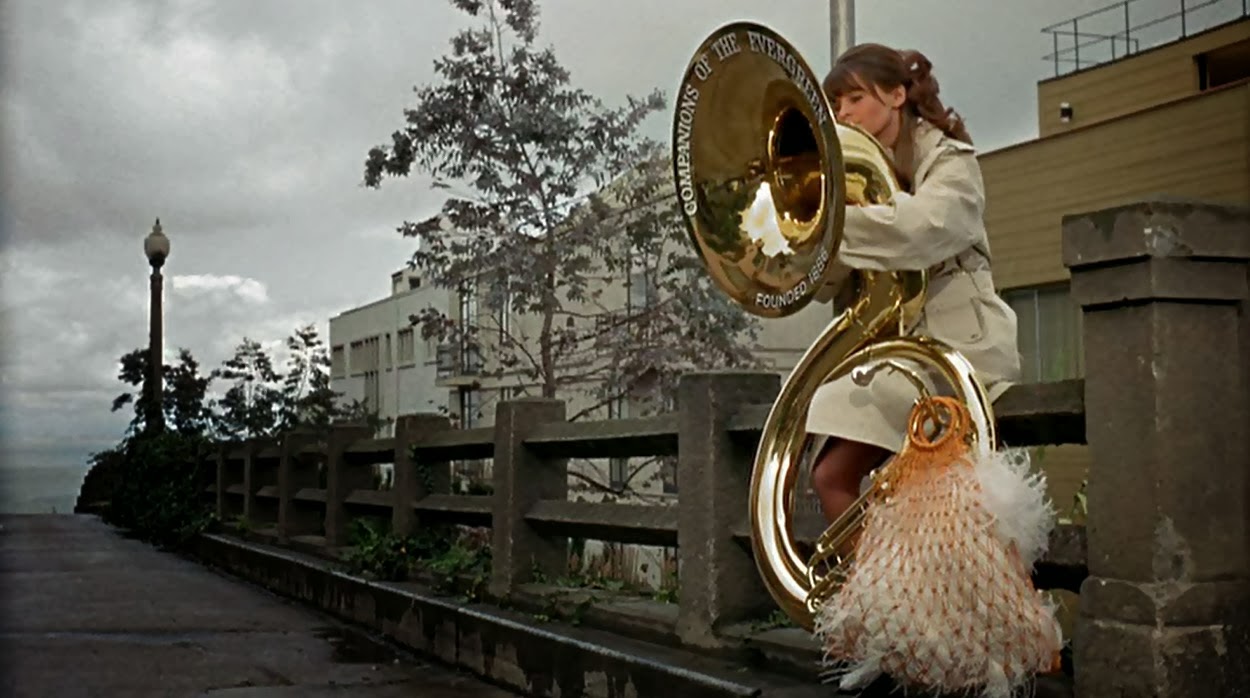
This was tougher. We both agreed that these films deserved recognition for their formal chops and ability to upset and enchant in equal measure. Their of a kind, when you get right down to it. Women punished for expecting to wait on men, now ghosts in their own lives. Richard Lester uses his pop-psychedelic montage to its greatest imaginable effect, crafting a world of facades where it's easy to understand how pain is hidden and ignored. It's easier to pretend we fit in than to really look at ourselves and our suffering. Kuroneko places the same story in the context of historical Japanese art. Kaneto Shindo presents a fourth wall-smashing miasma where women are at the mercy of men corrupted by war and honor, or lack thereof. Both are haunting, both are splendid, both uniquely cinematic stories.

Caméra d'Or – Albert Finney for Charlie Bubbles

As David pointed out in his late show-edition of the comeback special Finney only directed one movie. Like Brando before him, all it took was the failure of a film he cared about for him to kind of drop out of the artistic vanguard. Still shows up for a paycheck, and in largely decent movies, but ever since Charlie Bubbles that twinkle's been missing from his eye. Finney has a knack for innovation that proved he wasn't just idling between takes working for Tony Richardson and Karel Reisz. He dreamt a lot of ingenious devices people are still copying, discovered Liza Minelli and all the while gave one of his best performances. Not bad for a first try, is it? We almost gave the prize to Marcello Fondato, but Finney's been given almost no credit for the elegiac Charlie Bubbles so we're hoping to right some of that egregious wrong. Now, how about a blu-ray, world?


Prix du Jury – Doktor Glas
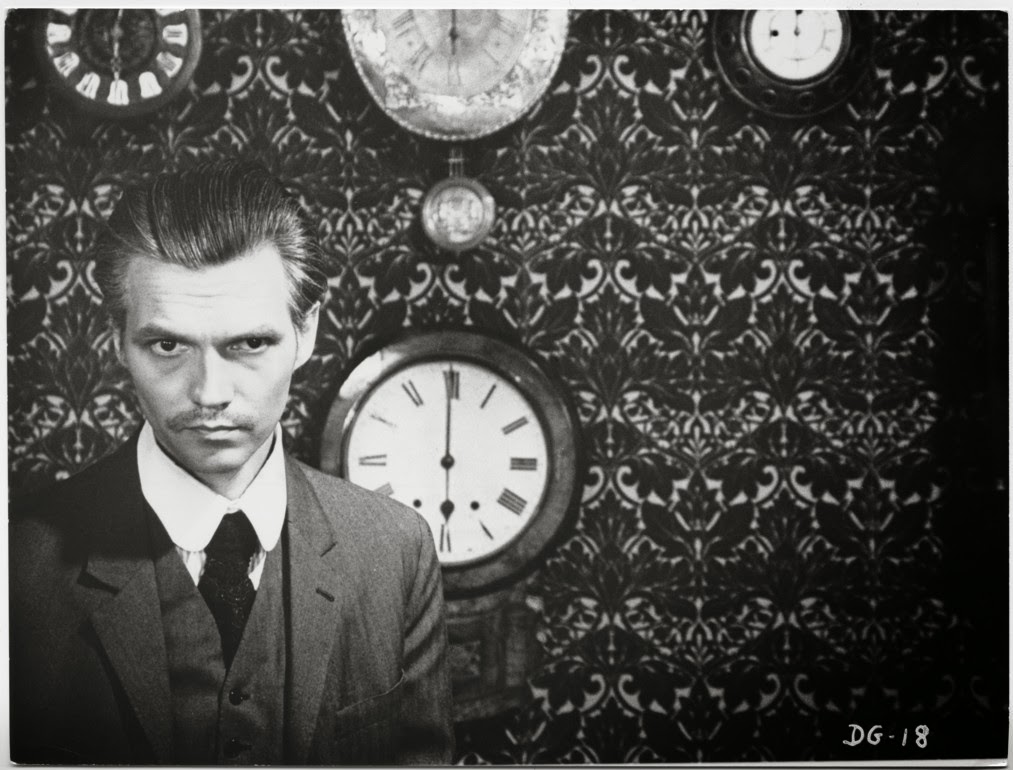
Speaking from personal experience, Mai Zetterling's Doktor Glas was the ideological pièce de résistance of the Totally Illegal Film Festival. The Long Day Closes shut us all up with its suspenseful gymnastics and raw imagery, but Doktor Glas had us all talking. About motivation, about patriarchy, about abortion, about murder, about justifications. Any film that can get a room full of people volleying interpretations at each other is worth talking about. Doubly so considering that no one talks about Zetterling. Criminal, we say! Criminal!

Prix du scénario – Firemen's Ball

Bitterly funny and warmly cynical, Firemen's Ball ties you into knots with its many strains and schools of humour, its sly critique of authority and coterie of non-plussed faces. Though directed in a style that would inform every third major American classic of the 70s, without its razor sharp script, one of the finest of an unprecedented era of charming malcontented masterpieces. And as dark as it gets, it never loses its cock-eyed wit, and makes you smile ever broader with every new defeat. 

Prix d'interprétation féminine – Lisa Gastoni for Grazie, Zia

Quite simply she's the whole film. The rest is D.O.A. Gastoni, who was not often asked to do more than look disturbingly gorgeous, seems weighted down not just by her lot in life but by the script, and her weariness is transcendent. She retains her irresistibility, her adorable remove, the untouchable quality that makes you fall for her, but her melancholy seems in danger of outweighing it. That battle is by far the most compelling conflict in the film. Her performance makes this horrible, horrible movie worth watching. That is no mean feet. 

Prix d'interprétation masculine – Woody Strode for Black Jesus

Strode is the ultimate underrated American performer. No Oscars, no Golden Globes, no retrospectives programmed around him, no tacky portraiture available in the lobby of similarly tacky Vegas hotels or wild west gift shops. He was never stretched by American directors, so much as they leaned on his chiseled features for support whenever they needed an illustration of winsome sturdiness. Not handsome so much as monumental. It took an Italian (and not Sergio Leone) to put Strode's face in the context it so richly deserved. His performance is undercut slightly by dubbing (not bad dubbing, by any means) but he's so perfectly attuned to the character of a martyr in rags that even though his death is inevitable (see: title) it becomes high tragedy. We cannot look away. We don't want to.

Prix de la mise en scène – Miklós Jancsó

Even before his tragic passing there was no question that Jancsó was the only pick for Director. As I've said 150 times, he remains the only filmmaker good enough to have two films, which, it should be noted could not be more different even if they are quite evidently the work of the same man, in competition for the highest honor at Cannes. How did this titan become, in Adrian Curry's words, "something of a forgotten man?" Perhaps it was that he was constantly denied the Palme? Or that it appears as though the majority of his films never made it to the US? Maybe he was just too embedded in his mythic modernism? Whatever excuse we've come up with isn't going to do anymore. He was a genius who made several undeniable works of beauty and he deserves more than what we've given him. As far as I'm concerned that ends today. 

The '68 Comeback Special: Peppermint Frappé

And so we come to end of this particular experiment, fittingly on one of the more experimental films that played the 1968 Cannes Film Festival. David Cairns and I have now written about every film in competition, re-throwing the cursed Fest in the theatres of our mind. I admit it's tough to feel too bad for Carlos Saura, whose autumnal wet dream Peppermint Frappé is the subject of the final review of the '68 Comeback Special, as he seemed to have a film at every other festival. Pity Geraldine Chaplin who may very well have walked off with Best Actress. She isn't my pick (Lisa Gastoni gets my vote for making that celluloid califig Grazie Zia, a film otherwise barely preferable to suicide, worth watching) but she undoubtedly would have been the talk of the press. She plays two women who have to represent the split halves of a dentist's retarded sexual ideal (Buñuel tried this a decade later in That Obscure Object of Desire, which is less fun, if also less kitschy). She's meek and passive as the dentist's assistant, passionate and unknowable as his friend's lover. She has to be simultaneously hot and cold as the temptress and drowned as the frump; the issue isn't that she's not great, simply that Saura isn't asking all that much of her. Being too afraid to say no on the one hand and on the other so full of sexual energy that you dance spontaneously every few scenes isn't really all that difficult a range to grasp. Saura's probably making a point about the man they orbit, a barely repressed bourgeoise meant as a stand-in for the worst of the Franco-ite Spanish aristocracy, but it does limit Chaplin from really earning best actress, at least to this false juror.

Give Saura this: Chaplin has maybe the best introduction any character's ever been had:


I really do need to watch more of Saura's films. Working under Franco meant masking his rage in symbolism, which makes for fascinating, if occasionally too cool viewing. Cria Cuervos doesn't quite hit me the same way Spirit of the Beehive does. It wasn't until the 80s that he was allowed to make his kind of movie without worrying about an 'editor' standing behind him looking for subtext. The issue then became that his fellow countryman hated what he did with himself after Franco died because the subject matter felt too typically Spanish, or anyway the kind of Spanish Franco wanted from the national artists. Making bold, lusty musicals with a battery of flamenco dancers was seen as regressive and a slap in the face to artists who suffered under Fascism. Poor Saura had been making anti-fascist films the whole time and just wanted to speak above a whisper for once. For what it's worth his interest in song and dance is foregrounded here. As I mentioned Chaplin dances Many many times, with the dentist (played by rather unappealing José Luis López Vázquez) and without. As subtext it doesn't always work but as an opportunity for Saura to freely indulge in something that appealed to him, instead of all the Freudian tiptoeing around the Generalisimo, it's really pretty touching. It excuses more hamfisted skulduggery like when our man makes his lady friend work out in a prototype exercise rowboat. It boggles in the moment but in hindsight it's tough not to smirk at. The incisive and the ridiculous dance almost as much as Chaplin, and it's compelling until you think too hard about it. I might be more fond of his 1960 Cannes entry Los Golfos, a neo realist gang film that meets between Los Olvidados, Rebel Without A Cause and I Vitelloni, but there's no denying the haunting effulgence of Peppermint Frappé.

And it just wouldn't be the '68 Comeback Special if I didn't take a moment to relate Saura's covert politicking with the cancellation of its one outlet. Saura did so much to nestle a potentially dangerous X-Ray of Spanish society into an erotic psychodrama and how did the supposed revolutionaries minding the shop react? By ignoring the possibility that he had anything to say. Infuriating, no? I may have issues with Peppermint Frappé as I did with a lot of the films in competition but they can't compare with my anger at the party who shut down the festival. The movement, spearheaded by established directors, didn't think for a second that the issues plaguing Czechoslovakia, Poland, Hungary, the UK or Spain could meaningfully compete with their experience. A criminal lack of empathy from artists whose filmographies were largely founded on the political and personal problems of middle class white Parisians. That the men who made A Man and a Woman, Elevator To The Gallows, Jules and Jim and Le Chinoise would turn a blind eye to international cinema when it needed most to be seen is all the more disgusting because no one cares or talks about what went missing when the curtains closed. If the festivals showing Jafar Panahi's missives from House Arrest were cancelled, would it be so easy to stay on the side that spoke the loudest? All I hope is that we learn and that in reviewing these films David and I have made you curious enough to seek out this misplaced piece of history. I can't give the festival back to those who needed it: Saura, Jiří Menzel,  Sándor Sára, Albert Finney, Peter Collinson, Menahem Golan, the recently deceased Miklós Jancsó, Kaneto Shindō, Carlo Lizzani, Witold Leszczyński, Bahrudin Čengić, Marcello Fondato or the long gone Mai Zetterling, Valerio Zurlini, Aleksandr Zarkhi and Rudolf Noelte. Nothing can. But we can't let their art vanish. Not again.

It was the best of times, it was 1968.

Over at Shadowplay, you'll find, next to a eulogy for Shirley Temple, David Cairns' latest issue of our '68 Comeback Special. This week he's got Jiří Menzel's Capricious Summer, a thing of aimless, ageless beauty. I fell hard for this film when I bought Criterion's Czech New-Wave boxset a few years ago. After the rich, politically charged farce of Closely Watched Trains, Menzel rightly felt he deserved a break from such serious cinema. Or rather, tension and plotting so fab, it plays like a splendid high-wire act. What better way to celebrate than with an actual high-wire act? Capricious Summer is about a group of men bewitched in different ways by the appearance of a magician, or rather, his voluptuous assistant. Its pleasures are myriad. Jana Preissová, the assistant, is one of the screen's most lithe and enduring sirens (Menzel sure had an eye. Try not to bond for life with Closely Watched Trains' naughty telegraphist played by Jitka Zelenohorská, whose only fault is that her name isn't Jitka Bendová like I thought it was. To be famous for having a pervy station agent stamp your butt in one of the most erotic scenes in history, you couldn't have a better name than Bendová. Alas...). 

Preissová does little but walk about collecting donations in an orange leotard and black face mask, but she's the kind of beauty you feel you've known all your life. Unsurprisingly, the three men at the heart of the story fall madly in lust with her. Watching her perform a pantomime of the high wire act in form-fitting pink cloth jumpsuit is unspeakably sensual. Watching the men watching her is an immense joy. Menzel works wonders with hidden depths. What looks like an attempted rape ends in an unexpected nap; the look on Preissová's face when she realizes what's happened is almost enough to give this film the top prize. But charming enchantments like this are rarely the sort of film that net fancy awards, for which the world is a shameful place sometimes. It's tempting to want to give Rudolf Hrusínský best actor or split the actress prize between Míla Myslíková and Preissová, for representing the problems of need vs. want so splendidly, but that prize would have to rest in Menzel's hands, who draws out their essence like a sorcerer. Hrusínský doesn't appear to have a great deal of range, playing sad, flummoxed and angry and sort of shuffling through every frame, but Menzel fits him in a world of such faded splendor, that he appears to have the dynamism of Brando at his best. And the women don't do quite enough to earn the prize, but Menzel projects them onto this backdrop in a way that renders them earthbound angels. And that is rather the heart of Capricious Summer. When you are a sad man with no ambition, a beautiful woman can be the most important thing in the world for a short time, even if your wife is, for all intents and purposes, perfect for you. On a more personal note, I cribbed a little from Capricious Summer when I made my film House of Little Deaths. I was totally in love with the way Menzel filmed his enchantress and tried to take a little of that magic for myself. That film has yet to be seen by a large audience, but here's a little look (best I could do on short notice) at what I was up to and how much I love this magical little movie. 

The '68 Comeback Special: Black Jesus

There are naturally a few places where I split with popular opinion, at least with regard to relevant criticism. I love a bunch of things few others care about but more damningly I hate a few films that cinephiles really love. Hating A History Of Violence isn't the best way to let other critics know that you know what you're talking about. But hate it I do. Ok, maybe not hate, but it struck me as too intensely silly and ham-fisted (ye gods that music) to be taken seriously. I was missing something everyone else saw clear as day. Last year's darling Upstream Color did nothing for me, ditto Network, every Quentin Tarantino film after Jackie Brown, Fight Club, Amelie, Star Wars, Full Metal Jacket, Barry Lyndon, the films of Brian De Palma, and, finally the collected oeuvre of Sergio Leone. That last is of particular relevance to today's entry in the '68 Comeback Special, wherein David Cairns and I talk a little about every film that never got a shot at the Palme D'or after a protest cancalled the 1968 Film Festival. I admit up front that before I'd seen a foot of his distinctively styled films, my dad had cursed Leone's name up and down. He hated the man's films, didn't understand why everyone loved them, put up with the many half-truths and anachronisms or how haltingly dull they were. Now, as a kid I took it as gospel, as I did most everything he said, but I got older and curious and everybody else seemed to love them so I gave them a chance. I should have listened to my dad. Leone had an eye, sure, but he also had a way of making handsome people look like they'd been sculpted out of cow shit. He sucked the energy and life out of every single scene by making it last six or seven times as long as the stakes would reasonably allow. I got on bended knee and prayed for Once Upon A Time West and The Good, The Bad & The Ugly to please god end already how many times can we watch the same shit happen over and over again?!?! I didn't believe anything, I didn't care about anything, I didn't like anything. I didn't mind the bit in For A Few Dollars More where the villains go on a blue-hued drug trip, but that was about all I got out of the whole canon. To put it mildly, I'm not in the majority. 

I'd always been curious what it would look like if an editor went at a Leone with a chainsaw, cut all the extraneous horseshit, took out the Hanna-Barbera sound effects and gave them a sense of purpose beyond fanning the western genre with a palm frond while carrying it on your back like a princess through the streets of a backlot Arabian kingdom. I suspect it would look like Valerio Zurlini's morbid but moving Black Jesus (note: if you were to go the reverse direction and amp up the cartoon-style antics to break it out of its taxidermied sluggishness, you get Gore Verbinski's The Lone Ranger - win-win, either way). It's worth pointing out that it was David's review of Black Jesus as part of his series over at Mubi's Notebook, The Forgotten, that got the ball-rolling on this whole endeavor! I'm happy to give my two cents because I think the film's good enough to cover twice. Zurlini proves himself Leone's painterly equal, framing fore and background objects with the precision of a glassblower. He's much more influenced by war photographers, attaining a docu-realistic quality to a lot of the action, but he wasn't completely quit of the shadow of John Ford, which Leone wore like a bear skin cloak. After all, playing his Petrice Lemumba stand-in was the great Woody Strode, whom Ford loved dearly and had already turned into a christ figure in the unjustly forgotten Sergeant Rutledge, after a lifetime of playing supporting roles in classics. He's dubbed, unfortunately, but his face is pan-lingual and he's easily my favourite movie Jesus. The ironic thing is that he doesn't look a thing like the African extras that fill out the margins of the film. He looks a little divine, as David pointed out in his review, but he also has movie star charisma leaking out of his pores. There is no mistaking Woody Strode's cheekbones for the softer features of Petrice Lemumba. The ideal candidate to play him would have been Malcolm X, but a few factors, including his 1965 assassination, made that impossible. X easily could have been the subject of this film if Lemumba had managed to survive. Strode was however the best possible man for the job because he could stare into the middle distance and make you reconsider every mean thing you've ever said or done. That quality made him the quiet soul of many American films since the early 40s. In '68 audiences were given two opportunities to assess Strode's gifts and his place in cinema history. Refused leading man stature in the states he went to Italy and worked for both Zurlini and Leone. Only one of them gave him the spotlight. 


Leone killed Strode ten excruciating minutes into Once Upon A Time In The West, casting him because John Ford had done so first. He's not an actor, he's window dressing. Zurlini, on the other hand, saw that Strode had immense gifts as a performer and tried as hard as he could, through a language barrier, to allow him the space in which to deliver the performance of his career. Ultimately the Leones of the world would win and Strode would be reduced, like so many other American character actors, into rounding out the overstuffed cast lists of shitty Italian jungle movies, a prop used to raise money instead of an actor. But forget that for a minute, because his work here is commendable. So far that matter is Zurlini. He's a gifted image-maker, but what I loved most about it was the way he handles silence. There are long, aching stretches where no one speaks, but it's an organic, rather than a formalist boast as it is in Once Upon A Time. The story: a deposed leader is caught by white colonialist forces. They try him in an ad hoc court secreted away from the people who believe in him. Lemumba has little to say to his oppressors, knowing they have no right to judge him, and not wanting to give them the satisfaction of acting like the man they think he is. Jean Servais, his interrogator, does most of the talking. Meanwhile a few other criminals are brought to the cells along with him, and they'll be killed just for being confined to the same cell with him. The title of the film is a bit of a spoiler and Zurlini plays a diabolical waiting game. Servais and his men have all the power, so in prolonging his trial and imprisonment, they're toying with Strode, just as our director does with the audience. Every second of silence, every overheard scream from some other poor sap being tortured elsewhere in the building is a little reminder that bad men will alway wield all the power. The sound design makes it seem like you can hear every whisper for miles around.  Zurlini conjures a powerful atmosphere, and I like that he's not saying that Lemumba was specifically christ-like, but that as long as the wrong people are in charge, christ-figures are gonna keep coming out of the woodwork to combat them. One could easily make a film that turns Malcolm X into Jesus, and I'd pay good money to see it. The wrong guys with the right ideas always get killed because that's the dynamic we choose over and over again. The burial of Black Jesus after Cannes (possibly) prevented both Zurlini and Strode from being recognized. It's impossible to say if the film winning the Palme d'Or would have made a difference in either man's career, but the what-if makes me furious all the same, especially while Sergio Leone enjoys an untouchable reputation as one of our greatest artists. Now, that's hardly on par with wrongful crucifixion, but life's full of little trials like that. All we can do is be on the right side of history. 

12 Years A '68 Comeback Special

David Cairns continues our joint look at the films of the never-concluded 1968 Cannes Film Festival. This week's entry, Marcello Fondato's I Protagonisti, one of the more thoughtful entertainments of the festival. In a schedule full of very dark political and social fables and ghastly british romps through tie-dyed modernity, it was a relief to see Fondato executing pans, dollies and tracking shots with practiced ease, though remarkably David says this was his first film. It also features one of my personal obsessions: Lou Castel. What do you need a map? I've already given you a hyperlink. It's up there! See it?


Meanwhile, I have to draw the viewers to a piece I have over at Mostlyfilm.com, my first for them, on one of the best films of 2013, Steve McQueen's 12 Years A Slave. I had a great time and the fellas running the shop over there are topnotch! Looking forward to doing more work for them and pretending for a brief second I live somewhere with a European release schedule. Feedback most welcome!

The '68 Comeback Special: Here We Go Round The Mulberry Bush

Here it is. The worst film of the '68 Cannes Film Festival. David Cairns, gallantly undertaking the challenge with me, knew this day would come. Wisely, he challenged me to a game of logic in order to see which of us would have to review it. Naturally I accepted and on the day some men in a van pulled up and threw a canvas bag over my head. They drove me around the Bucks County area for several hours blasting Neil Diamond at a deafening volume until I relented and agreed that anything would be better than that. What I failed to see was that the real test David had set for me was not to show up at all. Clever bastard. He always has the endgame in sight. So with a heavy heart, I returned once more to Clive Donner's Here We Go Round The Mulberry Bush. 


To the strains of one of the very worst movie theme songs (an already ignominious category) ever composed, by "Stevie Winwood and Traffic" a boy rides around on a bike, but he's quickly replaced with poorly solarized scenes of grabbed asses and skin and horrid fabric rubbing against one another like blind rhinoceros. Stevie would become Steve as a way to distance himself from the crime he helped commit.  Clive Donner wasn't so lucky. He had his name on a proto-Director's Guild roster, preventing him from making pictures in Chile under the assumed name Carlos Tegulchipec-Whizzington. He tried but they stopped him at the airport and sent him home to think about what he'd done. He tried again three hours later and they handcuffed him to a radiator. Not his radiator, mind you. This is all information I've culled from the very helpful, entirely fictitious making-of book Don't Carry On, Clive by Ted Rumsfjord, former columnist for the Lancashire Nooner until his dismissal for having written the book and thus having something, anything to do with the movie Here We Go Round The Mulberry Bush. Everyone who came near it suffered or had to do backflips to avoid suffering. As it should be. The film is ghastly, a candy-coloured rubbing of our collective nose in the sticky awful of England's rampaging teenaged id. It's no less horrible an experience than sleeping in a porn-happy 16 year old's bed after he's been instructed not to change his sheets for eight months. You there yet? It's like sitting in a girl's dorm toilet, unable to move or speak, while listening to the sound of the boy's dorm on headphones. I could go on. It's a film that feels like the Dorian Gray of the Swinging Sixties London. Every face looks like battered fish before it touches the scalding hot oil that will render it delicious. Every song has none of the edgy beauty brought by wonderful cads like Jimmy Page, David Gilmour or Keith Moon. The Spencer Davis Group is not The Yardbirds. They aren't even The Strawberry Alarm Clock. And Here We Go Round The Mulberry Bush is no The Knack...and How To Get It.

From chapter 4, Rumsfjord writes: On set Donner receives script pages from a messenger boy on a bike. The boy doffs his cap revealing two glowing horns. The boy's laughter as he rides off, an echoing husk far deeper than the boy's years suggest him capable of, will haunt Donner anytime the producer suggests an extra bottom make it into the shot. Donner reads the pages during a lunch of Gin & Vermouth. Star Barry Evans knocks on the door. Some of the locals had learned what they were up to and chased him up a tree like a cat. Director of Photography Alex Thomson is dispatched to bring him down. Evans would like it greatly if they moved to a safer location. No good, replies Donner, as they've recieved threatening letters from every town for miles. The people of Battersea sent a very vicious missive threatening to sacrifice Vanessa Howard by encasing her in bronze. Just the same Evans insists on changing hotel rooms every night under different names and won't leave Donner's trailer until he agrees. Shooting commences. Production Manager Basil Keys is revealed to be Andreas Baader in disguise and the police are called, but he's gone before they arrive. There's a scuffle when Mike Sarne and his crew ride through town on their way to film Joanna. Donner and Sarne taunt each other from across the town square. The art directors of both films begin throwing punches. Evans hears of the fight  and the budget increases as he demands a series of fake mustaches to be brought to his hotel room every morning for his selection. 

"Screenplay by Hunter Davies, from his novel." What hubris! What gall! He just came right out and took credit for it like it was no big deal! When the authorities came to his door following the London premiere he'd fled to Denmark in a baker's truck. When the truckdriver discovered him, he forced Davies to sit in the dough and be baked along with the bread like Cornel Wilde's benefactor in The Naked Prey. He survived, just barely. He still lives and breathes and puts pen to paper while Dickens, Fitzgerald and Westlake lay dead in the ground, unable to write another word. No less an authority of stuff than John Lennon took a break from shooting rapidfire Heroin and being an asshole to slag off Davies work. One of the first things we hear main person (words like 'actor', 'hero', 'protagonist' just don't seem right under the circumstances) say is "Knickers! I'm knicker-obsessed!" Projectionists across the United Kingdom begin kicking their instruments when they hear that phrase but alas some prints remain intact and play to the end. If you're watching at home in the present and haven't fled to the next room to call your sponsor, you've fixed yourself a tall drink. Whether or not you choose to watch the remaining 90 minutes is a question you and whiskey need to seriously ponder. I went ahead. After several minutes of Barry Evans riding around on his bicycle pontificating like a horrible fucker, I wondered if the whole film took place here on a basketed-tenspeed not unlike that Speed-themed episode of Father Ted. Alas. He gets off the bike and starts hitting on women, real and imagined. I wish desperately a bus had hospitalized him and the rest of the film was in his unconscious, sort of like The Singing Detective. Ha! HAH! Fate laughs in my face as they parade one warmed over type after another, including poor Denholm Elliott (Like Donner, he's long deceased. Coincidence? Who can say...), Judy Geeson, and Adrienne Posta as a cockney version of Nicole 'Snooki' Polizzi from The Jersey Shore. If you're not terrified, you're not paying attention. People lived in fear for years that they'd enter a cinema and the reels would have been switched at random by members of the Red Army Faction and they'd have to watch even the opening seconds of this dire sex farce. The word 'farce' obviously implies that all the door slamming and creeping around in a big house trying to place the right dick in the correct hole during one of the film's many lowpoints is successful. It isn't. You should be deeply ashamed if you thought it was. 

I could continue, give you a play by play of every horrid looking thing Evans eats, every woman who refuses to sleep with him, accompanied by constipated reaction shots and sad trombone, I could trot out the much contested Clive Donner is Hitler argument favoured by many. Clive Donner wasn't Hitler. Of course not. That would be ridiculous. There's proof he could point to but he still felt the need to make a film about how great and heroic a job killing The Fuhrer was just so that during the junket no one could look at the director and say "This film must have been difficult to make, what with you're BEING...Oh, I see...but explain Here We Go Round The Mulberry Bush?" He must have heard those words six or seven dozen times throughout the 70s. Mobs of reformed Teddy Boys used to chase him around Salford, newly galvanized into picking up their old hooligan ways by the film, taunting him while waving sharpened canes and umbrellas. "Fink you can get away wivvat Richard Lester pastiche? We'll show you!" I could go on and on and on and on and on...but it's Christmas. Or rather, Boxing Day. So let's take a different path, shall we readers? Let's remember that cinema is a gift, a magical, mystical enchantment capable of curing every malady from a frown to disease (I am legally compelled to point out, yet again, that I'm not a doctor) and just because we're given coal shaped like Mulberry Bush doesn't mean we can't overcome, like the Whos of Whoville. I do think Donner deserves to be remembered for better things. That Hitler movie? It's called Rogue Male and it's really rather good. It's got Peter O'Toole, a performance to be prized in a movie that does deserve it. Lord know he often settled for less but Donner earned the right to put my favourite actor in his film.  So this Boxing Day, don't remember that time your one aunt got so drink she got herself uninvited from future gatherings, remember when you thought everything in the world was under the Christmas tree, including the scripts for those George C. Scott-Dickens adaptations. We take the good with the bad and forget about Vampira, The Nude Bomb, Charlie Chan and the Curse of the Dragon Queen and instead remember that we kinda laughed at What's New Pussycat? Didn't we? Merry Christmas and Box bless us everyone.

The Curious Case of the '68 Comeback Special.

David Cairns tries very hard to have something nice to say about Mike Sarne's Joanna and he has better luck at it than I would have, but let's be honest: Joanna is a very difficult film to love. I remember reading a bit of Paul Schrader's early criticism and found the angry young man even less keen on it than either of us, so we're part of a long, proud tradition of hating this very pompous wash in the waters of trendy stupidness. Note that on the poster below the quote calling it one of the best of the year isn't attributed to anyone, because only a phantom with no stake in our dimension could possibly have the sand to say something that suicidally careless. In a festival that gave us a work by Richard Lester (among his finest, it must be noted), the guardians of the coissette also felt that the appetite of the average festival-goer for brit pop would not be sated by merely one work in that vein, so let in a few more crude imitations. Joanna isn't as bad as they got, but they're a good argument for the auteur-only policy that seems to guide most Cannes these days. Take a look in on David's entry (with a very important guest spot from the good lady wife, her indoors) for a more in depth look at why letting counterfeit auteurism in isn't always the best idea. It's a very entertaining read.

The '68 Comeback Special: Les Gauloises Bleues

Godard rarely gives coherent interviews anymore. His films and his own statements mostly come out the same - beguiling and pointless. You wanna learn why he did anything back in the day, you're shit out of luck. He still has a lot of politique and defensive rigamarole to doll out to whatever unfortunate sod seeks him out for a word or two, but goddamned if I can figure out what drives him to edit his beautiful nonsense anymore. His movies are still totally fascinating but I also won't pretend I know what goes on or that they're 100% or even 65% successful. The unspoken subtext of his overthrowing the Cannes film festival in 1968, which David Cairns and I have been profiling film-by-film, was that he was kissing the kind of trendy stylistic, genre flaunting gymnastics he'd created goodbye. Cinema, such as it was, was now his enemy. That very year he made Un Film Comme Les Autres, which you were meant to flip a coin to determine which reel went first because the images were the same no matter which one you picked. Nobody told me this before I watched the interminable thing, and here I was looking for a story behind all the talk of revolution on the lawn of a car manufacturer. I felt uncomfortable; it felt to me like Godard and his friends were forcing workers to enter into disputes they didn't think needed fighting. The colorful excesses and russian roulette montage of Pierrot Le Fou, Bande à part and Contempt were over. Long live the new flesh and all that. Godard throwing in the towel and picking up a hammer meant a lot for cinema. The french new wave was over, for one thing, and Godard was no longer the reigning champ of cinephilia-inflected cinema. This left a gaping hole which I'm willing to bet every young director yet to be discovered wanted to fill. Philippe Garrel and Jacques Rivette stepped up to the plate and began documenting life in post-68 France with their unique voices, neither wanting to be, nor pretending to be Godard. They were honest and fanciful in new, exciting ways, finding naturalism and surrealism good company. Attemping to be Godard would have been ridiculous. Nobody told that to critic Michel Cournot. 

From what I've been able to divine Cournot wrote criticism throughout the 60s (Thanks to the inestimable David Ehrenstein for his correction on this matter!), but then, what important French director of that age didn't? He apparently had a beautiful voice as a writer. In '67 Godard put him in Weekend, and he liked so much of what he saw on set that he vowed to do that again sometime. To make his first and only film he snagged Annie Girardot, a young Bruno Cremer, and Jean-Pierre Kalfon, all fresh from the Jacques Brel film Bonnot's Gang, and most tellingly Anne Wiazemsky, lately Godard's girlfriend. He once more retreated to a remote countryside location with a camera crew and just like last time Godard was calling the shots. Ok, perhaps that's unfair. Les Gauloises Bleues, the resultant film, is only available in a poorly transferred TV-to-VHS-to-AVI rip and no one's taken the time to translate it into English. Cournot himself said that the script "bears the same relation to the film as a catalogue of plane parts does to a trans-Atlantic flight." Vincent Canby opined that this particular flight was missing a set of functioning wings. My remedial french isn't quite enough to help me sort out what goes on so there's a chance that the film is a completely distinct statement from Weekend and all the rest of le cinema du Godard and a profound statement about the Holocaust to boot (images of bleak railways and a few choice words on walls say he was at least gesturing in that direction).........but there's an equally good chance this is just microwaved New Wave leftovers.

Instead of the bright primary colours of Pierrot and Weekend, Cournot shoots in muted pastels, but his model is unmistakable (even the fake blood, right out of Weekend, seems a duller shade). There are many long takes broken up by soundless inserted clarifying scenes, instead of being thrust into those scenes as we surely would in Godard's hands. There are pointless images shoved in our faces as if to provoke with their having nothing to do with each other. This doesn't really work. Putting an illustration from a Babar The Elephant book after photographs of dead bodies mostly just highlights how much better the trick's been pulled off before. Continuity is routinely flaunted, time is jumped like a velvet rope, and Cournot presents his actors and their emotions with complete irreverence. Cournot also borrows HEAVILY (ok he just fucking steals) from Antonioni's Red Desert and L'Ecclise. I don't want to write off the possibility that in missing out on whatever the plot linking this dour game of pantomimes I'm missing a masterpiece of French deconstructionism, but there just might be a reason Cournot's the one New Wave Director no one's ever heard of. I realize this entry's heavy on hypotheticals which is appropriate even if it can't be all that satisfying to read, so, my apologies.
There are a few ironies at work. Godard's output lately (since 1973 really) has been mostly inscrutable or too oblique for me, but at least they come with subtitles. Les Gauloises Bleues does not because it's never made it past French TV. Why? Very probably because Godard himself (with Gauloises co-writer Claude Lelouch in tow) shut the festival down before it could play. Or maybe Lelouch knew he had co-signed a dreary bit of word-vomit and could have cared less if it ever screened. Conjecture, I know, I know, but the point is we can only point a finger at so many people and Godard's definitely got silver halide on his hands. Les Gauloises Bleues is now just as unreadable and confusing as anything Godard attempted following his post-cinema conversion. Stranger still, not only did Godard cut Cournot's directing career short, he also in essence kept making films with what looks an awful lot like Cournot's softer, still very-compelling image, and too-excitable, too-easy approach to montage. Cournot was doing his best Godard imitation in Les Gauloises Bleues, but all Godard wanted to do was make films that looked and acted like Les Gauloises Bleues. Over and over again. Words, irreverent presentation of people, contempt for coherence and an elastic sense of time, place and genre. It's tempting to think of Gauloises as the missing link between late narrative work like La Chinoise & Weekend and conversational theorems like Un Film Comme Les Autres & Le Gai Savoir (it's not a million miles away from One PM or Tout Va Bien either). 
There isn't an awful lot that I can say beyond my half-guesses and hypothesizing except to say that even denied his words Bruno Cremer is a commanding screen presence. He's one of my favourite actors and he does great work just existing in that anguished, angry way he does. I detect him doing a dry-run for his tough-parent act in Un Jeu Brutal. And there's something everyone can appreciate nestled in here: a mesmerizing score by Krzysztof Penderecki. Penderecki could also be heard amplifying the weird in Je T'aime Je t'aime across the coissette, which weirdly this also kinda resembles. If the film works for me at all, it's his doing. He ignites Cournot's best images and makes you forget they've been cribbed. Those moments, when the image and music work together in a haunting harmony, almost make you wish he'd tried again. 

The '68 Comeback Special: Playing Soldiers

David Cairns and I have been digging into the films and events of the 1968 Cannes Film Fesitval, the fest who knew too much... The thing that pisses me off about the '68 Cannes Film Festival being cancelled is in part the phony piousness of the wealthiest members of the 'revolution' but more so because of the films they insisted no one see. Certainly if the slate had all been made up of the likes of Here We Go Round The Mulberry Bush, I think even Richard Lester could have been talked into protesting. That wasn't the case, as we know well. Even most of the failures were interesting (the loathesome Joanna, a kind of proto-Eat Pray Love, at least gropes around in the dark for ideology though it in no way 'gets' it) and the vast majority of the films that screened were fascinating and heartfelt, most brimming with radical political conviction. 1966-1972 were probably the most radical years of international cinema and the '68 fest could have been ground zero; it did ended up being a kind of groundhog day, predicting a few more years of hardcore socialist/marxist cinema, but the movements died down all around the art. Since that period, the lineups have been split between the political and the mainstream, but it'd be tough to think of a year that was so dogmatically bisected as 1968. Or rather it's tough to imagine another year in which Here We Go Round The Mulberry Bush was the rule one on end of the competition and Bahrudin Cengic's punishing morality tale Playing Soldiers was representative on the other.

A young blonde boy rides a train to an orphanage full of Serbian soldiers (the subtitles made it a little tough for me to be sure of their ethnicity but that made sense to me) heading back from the front. World War 2 is still raging and as soon as he gets off the train he's going to be confronted with the mirror image of this gang of embittered, battle-weary men. He's being sent to an orphanage, his parents having recently exited his life. The catch: the orphanage is for the children of soldiers killed by the Nazis and he's a German. If the other boys knew of his parentage, they'd dispatch him with the same ruthlessness with which they murder a German Shepherd the minute the boy gets off the train. If they'd kill a dog for having the word "German" in its breed, imagine what they'd do to the child of party members? The man who runs the orphanage knows the boy's secret and has agreed to take him in anyway and hide this little fact from the other kids. He's the only person we meet who seems entirely good-hearted. Naturally he gets his faith in the innocence of children shaken and his partner is punished for good measure. All things considered the Lord of the Flies kids (the one point of comparison everyone makes) seem less evil because their beliefs are deliberately a little abstract. Playing Soldiers' politics are real and the story leaves quite a mark. The film is ultimately a humanist tract, it just comes by its conviction in the most painful way imaginable.
Playing Soldiers is in synch with Lord of the Flies in more than a few ways. Peter Brook and Cengic were both fans of murky black and white photography which acts as a kind of haze in which people become shades; where actions and their consequences are muddled. Water imagery gets used in both; there's a sexual assault in a shower room that could hardly be more terrifying, and shots of the boys emerging from a muddy pool puts one in mind of the denizens of Elias Merhige's Begotten emerging like the first men from primordial slop. I like the film as a precursor to Guillermo Del Toro's The Devil's Backbone, another unremittingly bleak boys' own adventure story. Shockingly, Del Toro has more faith in the decency of children than Cengic; things get bad in Devil's, but never quite as bad as they get here. Del Toro makes his distinction between the acts of children and adults separate enough to allow camaraderie across class and politics. Greed and childhood are the real enemy, though Franco doesn't exactly walk away unscathed. Cengic's after the idea of inherited ideology and pursues it in a way that never feels fictitious. The orphans of the committed must become committed themselves absent their parents guidance - they're all political muscle though they don't quite grasp what it is they're upset about. They've turned their anger at losing their parents into anger at the Nazis, a sly trick from our director. The first appearance of a chalk mark swastika has the same gut-knotting effect as the titular 'M' on Peter Lorre's shoulder or Janet Leigh's Ford custom 300 refusing to sink into the swamp behind the Bates Motel. It fucks with our sympathy. We cringe when we see the swastika, not because of what it means to us, but because it means the kids have turned on our young hero and his days are officially numbered. He's turned the Hitler youth paradigm inside out and its no less frightening to see kids trying to murder a young German who has no more real affiliation with the Nazi party than they do. A child with a gun aiming it another child will always disturb. Even today, in a ruddy awful print with functional-at-best subtitles, this was one of the more harrowing films I've ever seen. And it was never given the chance that the work of veterans Truffaut and Godard in past years because they'd fought so hard to close down screens. 

The Blood of the '68 Comeback Special

When we screened Dr. Glas at the Totally Illegal Film Festival, the 'judges' were torn about whether its title character was in the right and where ace director Mai Zetterling stood on the issue of his guilt. It was a debate that raged for a half hour or so until The Long Day's Dying shut us up. David Cairns, lucky so-and-so, reviewed it as part of our joint unearthing of the wonders and horrors of the ill-fated 1968 Cannes, and reminds me why the project seemed like such a good idea to begin with. He's able to draw some beautiful conclusions about '68's dominant filmic language and direction (motions I second wholeheartedly) and gets at the beautiful oddness of Zetterling's camera. She was no cut-rate Bergman, he's quick to point out, but she did have her predecessors. What struck me upon first viewing was that it didn't seem to belong in 1968, but David grounds it and points out that boldness doesn't necessarily excuse a few trends wrapped in florid (if seductive) grammar. She was ahead of her time, but only just, and she puts as many feet in the recent, unfashionable past as the future. And so David once again proves once again that when our alien overlords finally arrive and start cracking the whip, we'll need that gigantic brain of his to help keep the human race alive.
Oh, and dig this Saul Bass-inspired poster. It gives the film the impression of being the first of Brian De Palma's pervy Hitchcock plagiarisms, instead of a richly nuanced but bleak and nightmarish look at sexual abuse. The film really is fascinating and worth the time it might take to track it down. No other film at Cannes that year could possibly have ignited the same amount of furious debate. There's sexual abuse of the same stripe in Petulia, but Lester's very clear who the enemy is. If George C. Scott had decided to off Richard Chamberlain that'd put the films on equal footing. You really must see it so we can talk more! Well...go on! What on earth are you waiting for?

The '68 Comeback Special, Born to be Wildly Pretentious

David Cairns straps on his helmet and jumps on his hog for this week's '68 Comeback Special for a look at rogue cinematographer-turned-director Jack Cardiff's Girl on a Motorcycle. This film was met with howls of laughter and stark, outraged silence when I screened it last. I found it a suffocatingly hip proto-giallo with no murder, making the film an exercise in building tension and never releasing it. Cardiff, who is one of the greatest cinematographers in history, never really found his, uh, instrument as a director. The film of his I've enjoyed the most was a post-Dirty Dozen colonialist actioner called Dark of the Sun, perhaps it lacked the pap-psychology of Girl and was free of the unearned pretensions of this and his early, literary films. I've never understood why so many great cinematographers turn to directing and the care and patient craft they're known for just vanishes...but then maybe I've answered my own question. Nevertheless Cardiff sneaks a few beautiful shots in between the rear-projection and the oblique circus of the body. Alain Delon as a professor of sex is plenty hilarious, so it wasn't all bad.


The '68 Comeback Special: Kuroneko

As it is all Hallow's Eve today and David Cairns and I thought there was no better way to celebrate than by choosing the spookiest film of the 1968 Cannes Film Festival, Kaneto Shindo's masterpiece of the uncanny Kuroneko. It's not the scariest film of the fest if we count Here We Go Round The Mulberry Bush (Zing! Here all week...) but it's the film that after nearly 50 years has lost none of its power to haunt. As a huge, bordering on obsessive fan of Shindo and his first horrific masterwork Onibaba, I went looking for any and all of his work and found only this and Naked Island, which is as great as you've no doubt heard it is. Kuroneko, however, was better than merely excellent, it was bewitching. I fell head over heels in love. Later when Janus revived the print and sent it around the US, I took my then girlfriend with me to see it and she was so frightened I felt she might leave me on the spot for making her witness such a horrifying descent into the stuff of nightmares. It's the kind of film that taps into your childhood fears and anxieties; I felt like I'd seen it in a past-life. 

I can't imagine what it must have been like to have been in that first audience , if indeed it did actually play before the fest was cancelled. Horror films are a rarity on the croisette (how killer would it be if a straight-up fright film took home the Palme one of these days?) and to have something this frightening staring you down must have been a bolt from the blue. From the sun-dappled credit sequence to that bravura shot of the men wandering through tall grass picking up where Onibaba left us, it's clear to me that Kuroneko was always going to be the film that walked off with the top prize....but it didn't. Nothing did. Now we can only guess. Admittedly I have a history with the film and have loved it a long time, but even turning that off as best as possible, no other film that year was as interested in scraping the outer reaches of the medium to let new light in. No other film takes half the risks of form and style. The video below presents some of the film's opening act with no comment, sound effects or dialogue. Look how beautifully it communicates its story through style. Look at the way Shindo masters the environment, how effortlessly he talks to you, spinning narrative like a spider does its web. 


Kuroneko is a film told in several presentationally disparate acts. A horrific, silent opening gives way to an overly friendly dialogue enshrouded in mysterious scenery which leads to a grisly, abrupt end. This rhythm repeats itself until we're comfortable with it then suddenly we're miles away on a newly-dead but still angry battlefield. War has come down to two men fighting tooth and nail among piles of corpses. This shifts again soon. Shindo allows only time enough to think we know what happens next before yanking the rug out from under us with a plot device, sound effect, or unforgettably jarring image. Then he keeps going. Kuroneko is the film in the '68 lineup that breaks the most ground in its fusion of overt theatricality and cinematic possibility. The effects feel like paeans to silent cinema and certainly the state it leaves you in is much closer to the realm of Häxan or Nerves than Night of the Living Dead or The Haunting. Nothing here seems all that difficult to achieve, but who would think to reach in this direction. Nobuhiko Ôbayashi's Hausu would later pull off a similar trick, but had a little more help from modern editing advancements and it also doesn't ask you to suspend disbelief. Kuroneko is only able to get away with murder because of the immediacy of its direction, script and editing. It demands that you keep up, only to blindside you with invention or slowly envelope you in a miasma of impending terror. 

I believe this to be Shindo's answer to Mizoguchi's much loved (by myself among Many others) Ugetsu Monogotari. In that film, based on a couple of old folk tales, two men leave their spouses behind to go to war and come home as heroes only to find their wives haven't fared half as well. Ugetsu isn't what you'd call a horror film and indeed any of the reverence it's inspired among cineastes is because of its lyrical direction not because it snuck a ghost story into an Oscar-nominated period piece. Ugetsu is a great, great movie and as with all late-period Mizoguchi there is an invisible efficiency to its harsh storytelling, but Kuroneko, on the other side of the genre, works harder to earn your respect. Shindo was a lover of Mizoguchi's films, as evinced by his documentary about the director's life included on the special edition Ugetsu DVD from Criterion. Kuroneko, which like Ugetsu is based loosely on a folk tale, can be seen as both a rebuttal and tribute to the earlier work. The story elements are the same, indeed everything down to the make-up over the eyebrows of its female leads seems culled from Ugetsu. He takes the eerie beauty of that film and retrofits it as horror, with textures turning from ominous but gentle mist to brittle, spun glass. Sympathy and a second chance aren't out of the question for Mizoguchi's heroes; Shindo was much less romantic.

The genius of Onibaba is that its horror lay in manipulating the real world, in the things that people are capable of doing to each other (and of course that mask). It's quite a pleasant surprise to learn that Shindo was equally at home dealing with the supernatural and/or the totally unnatural. But of course the story's foundation is in the horror of human nature. Though it's only one of many, one of the more terrifying images in the movie is of that first scene of the marauding soldiers filing out of the woods, coming to take what isn't theirs. The men are noiseless (like so much in Shindo's cinema) and without so much as a warning shot end two lives and ruin another. The unstoppable randomness of violence is something we all fear in some way or another and nothing drives this home more than the opening of Kuroneko. Shindo proves himself a filmmaker with an incredible grip on human nature and proves himself a humanist and a realist, even as he spins a truly fantastic, unspeakably dreadful yarn.

The 68 Comeback Special, The 68 Comeback Special


Over at Shadowplay you'll find David Cairns on the rather good, always beguiling Je T'Aime Je T'aime, by Alain Resnais. Resnais' Modus Operandi always resembled a failed experiment in time travel (this is what made him so good), so it makes sense that he'd actually make a film about a time traveller. If it never reaches the highs of Marienbad, Providence, or Hiroshima Mon Amour I think it's because he imposed rules and a structure on himself, which hems him in just a hair too much. When the '68 Comeback Special draws to a close I might revisit this fascinating work just for fun. But go and enjoy David's take on the film which is typically fantastic! And participate in his erotic questionnaire while you're at it. 

The '68 Comeback Special: The Upthrown Stone

David Cairns and I have discovered that in reviewing any year at Cannes, there are going to be films that slip through the cracks. David made an excellent point after I made one of my essays on the '68 festival that looking at years that didn't get cancelled and trying to gauge the fate of the films that never got their day in the sun, the results are inconclusive. As late as 2012 this phenomenon took the Egyptian film After The Battle, a competition entry that received pretty poor notices, into obscurity just as quick as it threatened to make it a global sensation. Just think, a few positive reviews and it might have found its way to the Internet with English subtitles for us to start questioning what it was doing there in the first place. Every Cannes has a runt or two, but the world's most important film festival also has a way of losing track of its kids every year. To this day I've never found working subtitles to the 2010 entry Chongqing Blues, from director Xiaoshuai Wang, who might not be Wong-Kar Wai but he's an Arthouse lightweight at least. It's just sort of scrawled in the bylines that some films have to fade into obscurity so we can appreciate the importance of the few that wind up with the awards and money. Take a look through the Wikipedia pages of every Cannes lineup and see what I mean. Hell, I'd put some money on many people having forgotten some of the winners. Just the name of the game, I guess. Which brings me to Feldobott Kő or The Upthrown Stone. If you count the two films by Miklós Jancsó, Hungary had three films at Cannes, which ties it for second most represented country with Czechoslovakia, losing by one to the UK. Not bad, all things considered. Jancsó's The Red and the White is the best remembered of the three, The Confrontation has a minor reputation but I'd never heard of The Upthrown Stone before last year.
When I went looking for it all I could find was a TV rip with no English subtitles. So, like Chongqing Blues before it, I watched it deaf, so to speak, with only a meager plot summary in front of me. Turns out it works even if I didn't always know what was happening. The movie revolves, indeed the plot seems to orbit its lead like a satellite, around a young student who isn't allowed into a state sponsored film school because his father was just arrested very publicly. Humiliation and anger leads him down a different path working for a land surveyor out in a rural area away from hypocrisy of the state...or so he thinks. It isn't long before he starts seeing that the peasants whose land he works are under the thumb of the government too. Everyone suffers, everybody gets ground down. Maybe picking up his camera again is the best thing he can do.

It'd be slightly dishonest of me to spend much time on the story or script, as I only really 'got' about half of it. But I don't need an illustrated guidebook and a flashlight to know good filmmaking when I see it. Director Sándor Sára has to be commended for making his images satisfying and wholesome and not in the Davey & Goliath sense. His stark, often purposely underexposed black and white compositions and the images he finds/creates do a number on your brain, then seem to slowly make their way to your stomach and start nourishing you. The material here is bleak, but the sense of outrage meeting love for human courage, animal beauty and the sanctity of the ground beneath our feet and the trees over our heads, could keep you alive during a hunger strike. The sequence towards the end of two horses tied together is the kind of thing you never forget; ditto the faces of the gypsies our hero photographs during a government mandated health inspection, none too subtly echoing the holocaust. The boy may be in disbelief but his camera and Sára have no choice. There is no faking the faraway look in the many eyes that stare through the lens and right into us. I do hold out hope that someone's going to track down the rights to this film, translate it and give it the resurrection it deserves but in the meantime, even in a butchered, pixely, untranslated, cropped .avi file, it's still a powerful experience. Outrage and the need to change things for the better is something one doesn't need language for. We all know the look in someone's eyes. The one that says "enough is enough."


An interesting footnote: the Czech films bear far more stylistic similarities to each other than the Hungarians. Firemen's Ball, Capricious Summer and A Report on the Party & The Guests all share a current of bitter, dark humour, all make heavy use of close-ups of the befuddled and/or menacing faces of their characters, use fairly classical editing and the staging makes use of the fore and background. There's a sense of both claustrophobia and agoraphobia, so to speak, allowing us to get lost in an abstract sea of people and conflicting ideas. Now, obviously the fact that 2/3 of the Hungarians were made by the same guy, but Sára and Jancsó have, beyond political conviction and a appreciation for big, open landscapes, nothing much in common. This could be because no one in the world made films like Jancsó at the time (Theo Angelopoulos could be called a stylistic contemporary, though obviously the men had vastly differing sensibilities), but Sára directs here like he's connecting beautiful tableau of suffering, mimicking his protagonist's interest and evolution as an artist. Both are valid approaches and as we'll see Jancsó was no slouch. I can't fight the feeling that something is being forgotten here...something important.

The '68 Comeback Special: Grazie, Zia

As David Cairns and I have been highligting the films of the '68 Cannes Film Festival, I was wondering which of us would hit upon a true disaster first. Turns out, that would be me. I try, always, to find something likable in even the most detestable works of trash (I am a card-carrying member of the Joe D'Amato fan club, after all), and Grazie, Zia came close to defeating me. It starts with the cartoon intro. An insidious pop song with a shrieking girl chorus plays over too-loud drums while an impish, exaggerated cartoon avatar of wheelchair-bound hero Lou Castel races around the credits against a backdrop that suggests Hanna-Barbera approximating Laugh-In for even less money than they typically spent. Then, before the song has played for an entire verse, the other music comes in...the somehow even-more-saccharine Ennio Morricone piece that will pop up every six or seven minutes from then on to remind audiences to feel something, anything! The soundtrack tries for innocence or insouciance and comes off cloying and obnoxious, which might be fine except it never. Fucking. ENDS! 

Once we've gotten enough of that piece stuck in our heads, against all odds the pop song then returns for another few bars. The first image we're treated to when the misguided titles have stopped flashing? Lou Castel writhing in pain during electroshock treatment. The movie might have been intended as a joke, a pop-art cartoon satirizing the idle rich, but Castel has not been let in on this joke. He injures you with his screaming, and no amount of mock playfulness can hide the torment he's going through. The movie hasn't started and it's clear that with Salvatore Semperi, we are in the hands of a truly sadistic director, someone on par with Michaels Bay or Winner. 


The trailer below is important because it gives you a sense of everything that goes wrong. There's the focus on the breasts and vaginas of humiliated, sad women over faces or dialogue (no subtitles, but believe me you don't need them). Castel freaks out like a petulant child, not like someone plagued by massive internal conflict. You'll see the editing attempting to forge some coherent tone or shape. You'll notice not only the grating pop song from the credits, but towards the end that deathless Morricone tune that plagues the soundtrack like a rash it can't shake. The accidental glamour of the players. The pigheaded image-making and the overbearing, unattractive confidence. Watch this so you might be spared the whole ugly picture.

In its defense: a performance from Lisa Gastoni that's so good it doesn't seem possible she gave it. This from the pin-up girl from the Gamma One films? She drips with a unique melancholia, at once sad, neglected, conflicted, rich, empty and powerless. Her intended doesn't appreciate her fully and Castel (playing her nephew) does, but in a deeply upsetting way. Which makes her feel worse? Semperi tries to undercut her at every turn by disrobing her and making her purely an object of lust whenever it suits him, but she evidently sensed she might never get another shot at heavy-lifting like this and never does anything less than awe-inspiring work. I don't think she was ever as beautiful on screen and she certainly never commanded the frame in this way, her dark eyes effortlessly pulling you in. The script makes a hash of her character but she's better than the material. Of course she'd almost have to be as Grazie, Zia feels like a fratboy power fantasy (a rich boy seduces his appealing older, unfulfilled relation) rather than the scathing social commentary it wants to be. 

Also in the film's corner: Lou Castel. Any film with Castel is interesting enough to watch at least once. Don't question me on this. It's a fact of science! This film's biggest misstep? Putting Castel, a live wire who so ruthlessly grabs your sympathies in Fists In the Pocket, in a wheelchair. Not only is he stuck delivering warmed-over political-ish dialogue (for all his fuckery, his character doesn't actually seem to believe in anything), he can't even stand up and walk away, let alone explode with anger, run around or hide in shadow. Everything that makes Fists in the Pocket seem like a revelation, something both outside of and in the guts of the time that spawned it, are why Grazie, Zia feels totally inessential and useless. It wants to have thought of the conceit of Fists in the Pocket first, so rather than be subtle about its apocalyptic implications it saws them off like shotgun barrels and begins blasting up the place like William Holden in The Wild Bunch. Its overt politics are second-hand Godard but rather than playful and knowing they're childish and snide. Godard, for his part, had said everything he could by 1967 in a completely oblique fashion that plays as subtle if only because it's wrapped in thirty layers of text, subtext, supertext, metatext, megatext and context, then chewed up and spit out for our second digestion. When you reach 1965, you feel permanently a step behind him; not always a good feeling. How do you fully enjoy something that feels like it was deliberately not made for you? Grazie, Zia is even further behind that. Worse still is that all its best elements and style are begged, borrowed or stolen. 
Nothing is explained, up to and including everything Castel, Gastoni and her fiance Gabriele Ferzetti do, say or feel. Everything in Grazie, Zia simply happens because Semperi had seen these things happen before in better films and that was motivation enough. Lou Castel is here as a man who wants to murder his family because he did the same thing in Fists in the Pocket. This has the effect of making him seem like he survived that film and found a new family to terrorize, rather like Patrick Vive Ancorra only, needless to say, far less fun. To waste Lou Castel is criminal. To make him borderline slappable is unthinkable. Rarely are actors so impossibly fascinating. He twitches and sparks fly. Semperi relies on this to make his film compelling when he isn't lifting devices wholesale. Pop music appears because he'd heard it in Masculin Féminin, La Chinoise, L'Avventura and L'Eclisse. The framing and contrast are right out of Bellocchio's China Is Near. The relationship dynamic between Gastoni and Castel is straight out of Bertolucci's Before The Revolution. To add insult to injury, Semperi boosted Revolution's cinematographer Aldo Scavarda, (who, along with Ferzetti, is a hostage from L'Avventura). Even worse, if clearly a coincidence: Bertolucci is now actually confined to a wheelchair due to health problems, as if Semperi wasn't content with stealing from him and took his health while he was at it. That's how powerfully awful this film feels. The editing becomes crisp and angular just as Castel reads a Diabolik comic, suggesting the serialized work of Franju (rather than Bava - Semperi would have needed an actual sense of humour to crib from him), whose work we suddenly feel we're watching second-hand, as if Castel had found one of his films while channel surfing. The political subtext makes the film feel like like a forerunner to Animal House and Revenge of the Nerds about bringing the wealthy elite off their pedestal. Except that Semperi acts like one of the cardigan sporting villains from those movies, looking down on everyone with equal, unearned contempt. It's Snobs Vs. Snobs, and no one wins. As soon as I saw the game he was playing I began joylessly waiting for the incest I knew must surely be on the way, pining for the overblown and misguided La Luna. I knew anything that Bellocchio and Bertolucci flirted with, Grazie, Zia would mount like a drunken coed playing truth or dare. Every Cannes has a dud or two. If only this had been the lone misstep in the 1968 line-up. Unfortunately, greater crimes await us...